

A garden fountain is the only garden feature you can hear from inside the house. That sound — water falling a short distance into water — is why fountains have anchored courtyards, cloisters and farmyard corners for centuries: it cools a hot afternoon by suggestion, masks the street, and gives a garden a centre that works in every season, including the ones when nothing flowers.
These 75 water fountain landscape ideas treat the fountain as landscape first and ornament second: the right type, in the right place, built of materials that age gracefully, planted kindly, and kept moving without fuss. Its near cousin, the waterfall, is covered in rock garden waterfall pumps, liners and stone; this post owns the fountain itself.
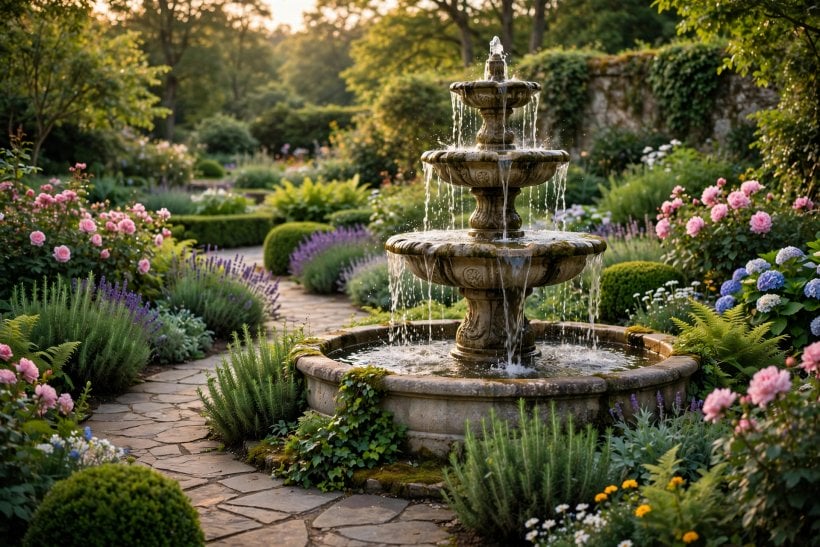
1. Water Fountain Landscape Ideas at a Glance
The central entity is the garden fountain: a recirculating water feature set into a planted landscape, whose attributes are its type and scale, its siting, its basin and materials, the planting around it, its pump and water care, and the wildlife it draws. It is judged by three tests: does it sound right, does it look inevitable in its spot, and does it stay a pleasure in February as well as July?
| Question | Short answer |
|---|---|
| What matters most: looks or sound? | Sound. Choose the drop height and basin depth by ear; the look can be planted around afterwards. |
| Does a fountain need mains plumbing? | No. Nearly all garden fountains recirculate from their own basin; they need topping up, not a water supply. |
| What is the biggest mistake? | A fountain too small for its space, or stranded in lawn with nothing planted to marry it to the garden. |
| Is the upkeep heavy? | Light but regular: clear leaves, keep the pump intake clean, top up in hot weather, protect in hard frosts. |

2. Choosing the Fountain Type
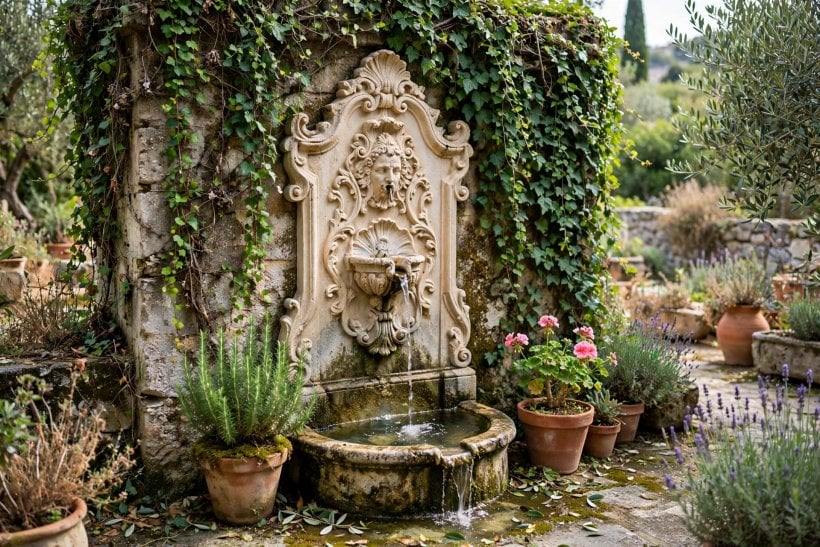
Type follows temperament. A tiered fountain is a ceremony; a bubbling urn is a whisper; a wall fountain is a picture with a soundtrack. Decide how present you want the water to be, then choose the form that speaks at that volume.
1. Choose a Tiered Fountain for a Formal Centre
Two or three shallow tiers give the classic falling-water sound and a silhouette that organises a whole garden around it. Best where paths cross or a courtyard needs a middle.
2. Let a Bubbling Urn Whisper in a Small Garden
Water welling up through a drilled urn or stone and sliding back down its sides makes sound without splashing — the right volume for small plots and near seating.
3. Use a Wall Fountain on a Boundary
A spout and basin against a wall or fence uses almost no floor, sounds generous, and turns a dead boundary into the garden’s destination.
4. Stand a Pedestal Fountain in a Planting Bed
A single raised bowl among planting gives birds a bath, the garden a focal point, and costs the least ground. Raised water reads further across a garden than ground-level water.
5. Bury the Basin for a Disappearing Fountain
Water bubbling from a millstone, boulder or pot and vanishing into a hidden reservoir below gravel: all sound, no visible pond, and the safest form where small children visit.
6. Choose a Modern Blade or Cube for a Clean Garden
A sheet of water off a metal blade, or a still cube with a bubbling top, suits contemporary planting and small urban gardens where ornament would clutter.
7. Let a Solar Fountain Serve the Sunniest Corner
Panel-driven fountains run when the sun shines and rest when it does not — an honest rhythm for an ornament, and no cable to bury. Expect gentle, not grand, effects.
8. Group Three Small Fountains Rather Than One Giant
In a long garden, a rhythm of small water moments along a path beats a single monument nobody sits near. Sound that follows you is better than sound you visit.
9. Pick a Spout-and-Trough for a Cottage Garden
An old-style spout filling a stone or zinc trough suits vegetable gardens and cottage planting, and doubles as the watering-can filling station.
10. Match the Fountain’s Scale to the Garden’s, Generously
The classic error is timidity. A fountain should be visible and audible from the garden’s main seat without looming; when torn between sizes, experience sides with the larger.
11. Let One Fountain Be Enough
Water is a strong note. Two feature fountains compete and cancel; let one perform and give the rest of the garden’s water jobs to bird baths and a simple wildlife pond edge.
3. Siting: Where the Water Belongs

Half of a fountain’s success is chosen before it exists: in the chair where you will listen to it. Site by ear and eye from the seats you actually use, and let convenience — power, topping up, leaf fall — have its honest say.
12. Site It Within Earshot of the Main Seat
The fountain’s first audience is you, at coffee, in the chair you always take. Place the water where that chair can hear it without strain.
13. Give It a Backdrop, Never Bare Sky
Water reads against darkness: a hedge, a wall, deep planting. A fountain silhouetted against open lawn and sky disappears exactly when the sun is on it.
14. Keep It Clear of Heavy Leaf-Dropping Trees
Leaves are the fountain’s eternal tax. A spot away from the big autumn shedders halves the cleaning and keeps the basin from turning to soup each fall.
15. Favour a Little Shade Over the Basin
Full fierce sun warms the water and feeds green algae. Dappled shade or afternoon shade keeps the water clearer and the sound’s corner cooler to sit in.
16. Put It Where the Path Already Pauses
A bend, a gate, a crossing: places where people naturally slow are where a fountain will be enjoyed rather than passed. Borrow the garden’s existing rhythm.
17. Mind the Splash Zone When Siting Near Seating
Every fountain throws a fine drift on windy days. Keep chairs and cushions just outside the splash ring, close enough to hear, dry enough to use.
18. Plan the Power Route Before the Position Is Final
The pump needs electricity. A site that requires an heroic cable trench across the lawn will be resented forever; let the sensible power route shortlist the spots.
19. Make Topping Up Easy
Evaporation and splash steal water weekly in summer. If the hose or a watering can cannot reach the basin in one trip, the fountain will run dry and the pump will suffer.
20. Set It to Greet, Not Block, an Entrance
A fountain near a gate or door — offset, audible as you arrive — gives a garden a handshake. Centred in the thoroughfare it becomes an obstacle with plumbing.
21. Consider the View From the Kitchen Window
The window you stand at daily deserves the fountain in its sightline. Gardens are looked at from indoors for more hours than they are sat in, in most climates.
22. Leave Winter in the Siting Decision
A spot that drains, can be covered, and does not collect freezing runoff will save the basin and the pump when hard frost arrives. Site for the worst month, not the best.
Before any of this becomes permanent, rehearse it. Stand the fountain — or a stand-in of crates and a running hose — in the candidate spot for a weekend and live with the rehearsal: listen from the chairs at different hours, watch where the splash actually lands in a breeze, see the feature against its backdrop at noon and at dusk. More fountains are rescued by a two-day rehearsal than by any other step in this post, because siting errors are the ones set in stone, sometimes literally. The water will tell you where it wants to be, if you give it the chance before the base is built.
4. Basins, Stone and Honest Materials
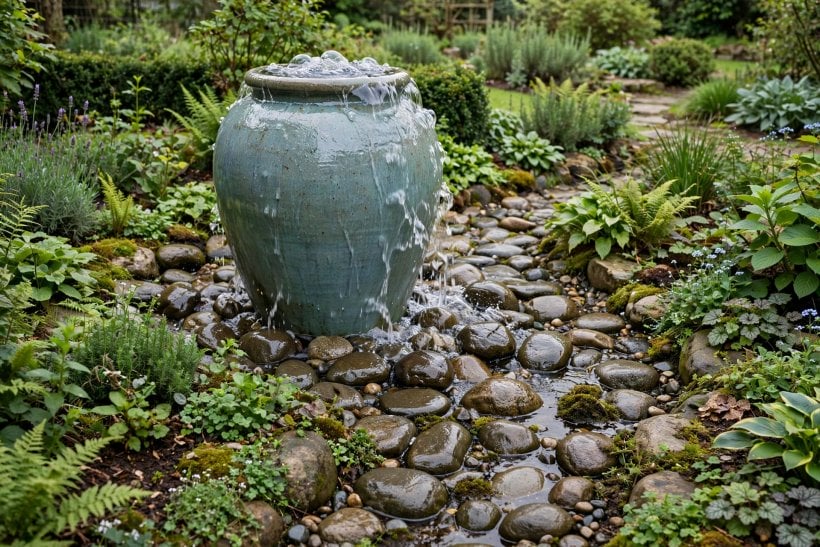
A fountain’s materials decide whether it looks better in ten years or merely older. Choose things that weather: stone, cast stone, terracotta, zinc, weathered timber. Avoid finishes whose only direction is downhill.
23. Choose Stone or Cast Stone for Permanence
Real stone is the forever material; good cast stone ages close behind it, softening and greening in the same places. Both take frost and time with dignity.
24. Let Terracotta Serve Small and Sheltered Fountains
Clay pots and bowls make charming small fountains, but frost can flake them. In cold gardens, treat terracotta as seasonal or shelter it through the hardest months.
25. Use Zinc and Galvanised Metal for Troughs
Metal troughs and tanks give the cottage and farmyard look, hold water forever, and gain character as they dull. Keep them out of full fierce sun if hands will touch the rim.
26. Avoid Resin Where You Want Heirloom Weight
Lightweight resin fountains have their place on balconies and rented plots, but in a permanent garden their lightness reads in the sound and the stance. Buy weight where you can.
27. Build the Base Like a Small Foundation
A fountain out of level spills from one side and looks drunk forever. A compacted, level base of gravel and slab — checked twice — is the unglamorous making of the whole feature.
28. Line Hidden Reservoirs Properly
For disappearing fountains, the buried reservoir does the real work: a sturdy grid over a lined pit, gravel above, and access to the pump that does not require excavation.
29. Give the Basin Depth Enough to Stay Cool
Shallow water heats, greens and evaporates fastest. A deeper basin is calmer water in every sense and kinder to the pump that lives in it.
30. Let Moss and Patina Arrive Uninvited
The green film on stone, the moss in a shaded joint: these are the fountain growing into the landscape. Scrub the waterways, forgive the surfaces.
31. Match Metal Spouts to the House’s Hardware
A spout in the same family as the door furniture and tap metals ties the feature to the house quietly. Mixed bright metals jangle; aged ones harmonise.
32. Choose One Statement Boulder Where Stone Is Scarce
A single drilled boulder fountain concentrates the budget in one honest object and never dates. Around it, gravel and planting do the rest for almost nothing.
33. Keep a Spare of Any Fragile Part
If the fountain has a finial, a small tier or a clay bowl that frost might take, buying its twin now — while the model exists — is the cheapest insurance in the garden.
5. Planting Around Water
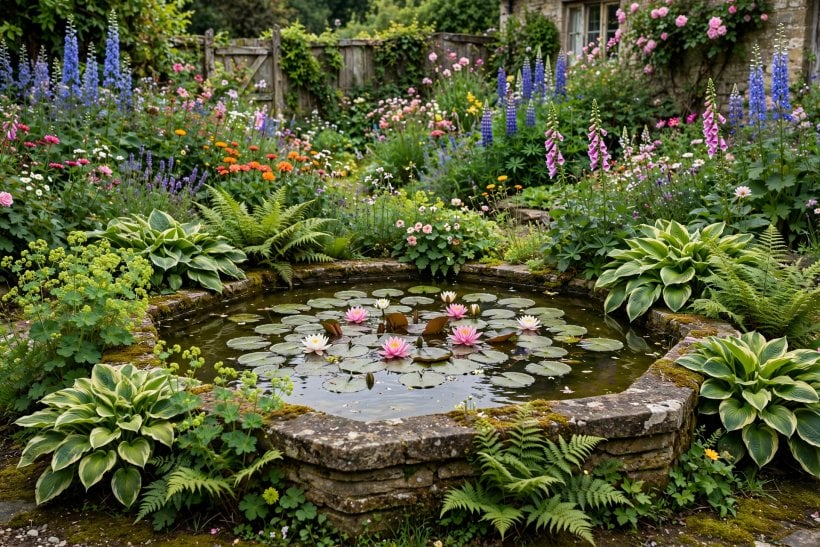
A fountain standing in bare gravel is an object; a fountain rising from planting is a place. The planting’s jobs are to hide the basin’s rim, soften the geometry, and choose the moisture the splash provides — the same marriage of water and planting that backyard landscaping ideas builds at garden scale.
34. Hide the Basin Rim With Low Planting
The rim is the fountain’s machinery showing. Low mounds of foliage at the waterline tuck it away and make the water appear to rise from the garden itself.
35. Plant the Splash Zone With the Thirsty
Ferns, hostas, iris and other moisture-lovers belong where the drift lands. Planting that enjoys the fountain’s accident turns a maintenance fact into the lushest corner you own.
36. Keep One Tall Accent Behind the Water
A grass, a small multi-stem tree or a tall perennial screen behind the fountain gives it the dark backdrop it needs and makes falling water visible, drop by drop.
37. Repeat the Fountain Planting Elsewhere, Dry
Echo two of the fountain’s plants in a dry bed across the garden. The repetition ties the water corner into the whole design instead of leaving it a decorated island.
38. Use Scented Plants Where People Linger
If a seat sits near the water, plant for the nose: herbs, scented geraniums, a rose trained nearby. Sound plus scent is the garden’s most remembered combination.
39. Keep Roots and Liners in Honest Conversation
Vigorous roots find liner seams and reservoir grids. Give thirsty trees and bamboo their distance, and let the planting near the mechanics stay well-behaved.
40. Let Evergreen Structure Carry the Fountain in Winter
When the water stops, the corner should still compose: evergreen mounds and the fountain’s own silhouette carry it until spring, with the stillness itself a kind of feature.
41. Plant Pockets in Gravel for the Disappearing Fountain
Where water vanishes into gravel, low creeping plants in pockets soften the field and mark the reservoir’s edge without hiding its trick entirely.
42. Grow a Climber Up a Wall Fountain’s Wall
A wall fountain gains a century when planting climbs around it. Keep growth off the spout’s fall line so the water’s music stays clean and unsplashed.
43. Add Marginal Plants Only Where Water Is Permanent
True water-edge plants belong at ponds, not recirculating basins. Borrow their look with moisture-loving lookalikes at the rim rather than planting the basin itself.
44. Mulch the Fountain Beds Openly
A clean mulch or gravel collar around the base keeps mud from splashing the stone and reads as care. Neglected collars are where good fountains start looking abandoned.
6. Pumps, Power and Keeping Water Clear
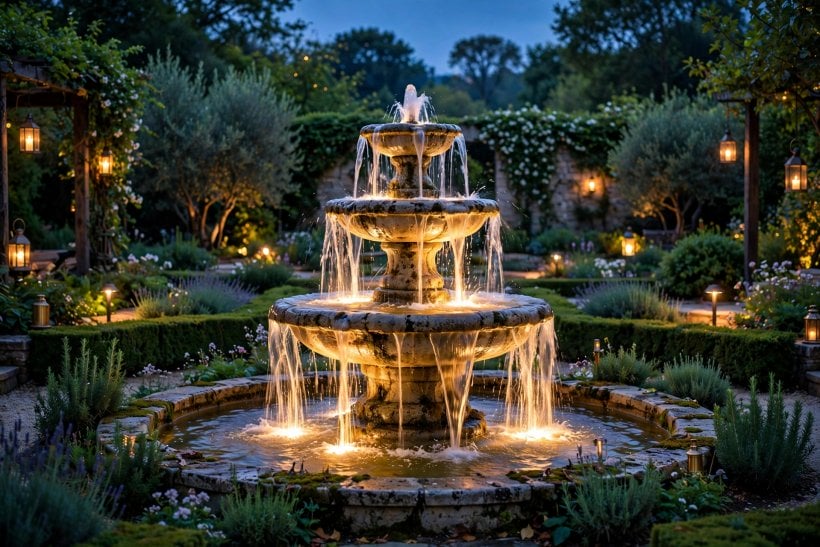
The machinery is humble — a small pump, a cable, a filter sponge — and its whole care regime fits in a short paragraph, provided it happens regularly. Everything in this section stays general on purpose: follow the maker’s guidance for your own pump, and let a qualified electrician own anything beyond a plug.
45. Size the Pump to the Lift, With Something in Reserve
A pump straining at its limit is noisy and short-lived. Choose for the height the water must climb, then one step calmer, and the sound you hear will be water, not machinery.
46. Keep the Intake Clean as a Weekly Habit
Leaves and algae felt on the intake are the fountain’s common cold. A weekly lift, rinse and refit in the growing season prevents most failures outright.
47. Run the Water Daily if You Can
Moving water stays clearer, discourages mosquito breeding, and keeps seals wet and happy. A timer makes the habit automatic and the garden’s mornings musical.
48. Top Up Before the Pump Thirsts
A pump run dry overheats and dies quietly. In hot spells, check the level as you would a pet’s bowl — little and often beats rescue.
49. Skim Leaves Before They Sink
Floating leaves are a net’s ten-second job; sunken leaves are next month’s sludge and smell. The fountain rewards the gardener who passes with a net.
50. Scrub the Waterways, Not the Patina
Algae in the fall of the water is slippery and unsightly — brush the channels. The green tint on outer stone is age and charm. Learn the difference and clean selectively.
51. Use Shade and Movement Against Green Water
Before any treatment, try the honest two: more shade over the basin, more hours running. Most green water is sunlight plus stillness, and both are design choices.
52. Winterise Before the First Hard Frost
Drain or protect the pump, empty fragile bowls, and either keep water moving through mild spells or shut the feature down properly. Ice is the one force no basin argues with.
53. Keep Cables Armoured, Buried or Honestly Routed
Power to water deserves respect: outdoor-rated fittings, protected cable runs, and a switch you can reach. Anything doubtful belongs to an electrician — see the siting checks in §9.
54. Let Rain Top the Fountain Up
An open basin in a rainy climate refills itself much of the year. Simply notice the seasons when it cannot, and make those your topping-up season.
55. Replace the Pump, Not the Fountain
When sound fades after years, the pump is usually the whole story. The stone outlives several pumps; budget the feature as masonry once, machinery occasionally.
One more care principle ties this section together: keep the water kind to its visitors. A garden fountain is a drinking station for birds, bees and the occasional frog, and the gentlest regime — movement, shade, skimming, scrubbing — keeps it clear without turning it into a chemical bath. Where treatments are used at all, choose the ones made for wildlife-visited water and follow their labels exactly; but reach for them last. Most cloudy basins are cured by the unglamorous trio of shade, motion and a clean intake, and the fountain that runs on those stays what it was built to be: the garden’s water, shared.
7. Wildlife, Still Corners and Evening
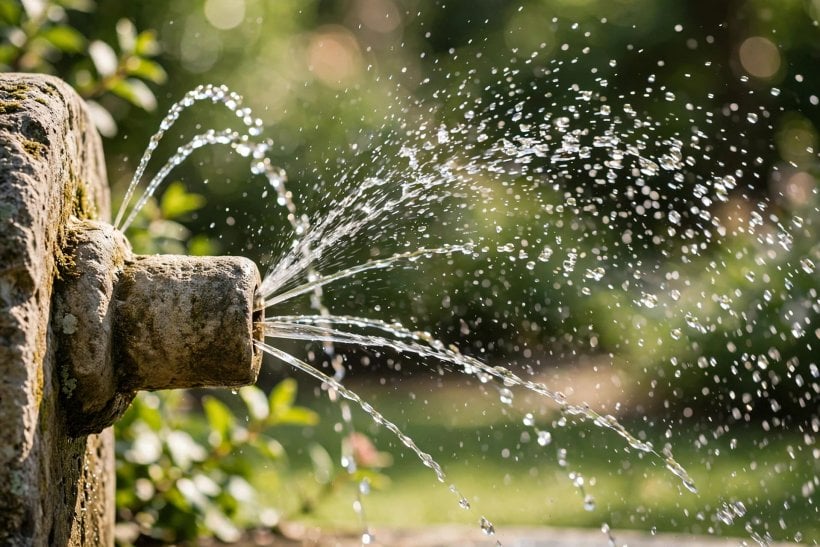
A fountain is a wildlife instrument whether you planned it or not: birds will bathe, bees will drink, dragonflies will hunt over it. Design a little for them, and for the evening version of the garden, and the feature doubles its working hours — the same welcome wildlife friendly garden planning extends across a whole plot.
56. Give Birds a Shallow Edge to Stand In
A sloping stone or shallow shelf at the basin’s edge turns the fountain into a bath. Watching bathing birds is, owners report, the feature’s surprise main event.
57. Set a Bee Stone in the Splash Zone
A rough stone sitting just proud of shallow water gives insects a safe drinking place. Small kindness, constantly used in summer.
58. Keep One Corner of the Basin Undisturbed
Frogs and newts find garden water on their own schedule. A planted, unlit corner of the basin lets the fountain be habitat as well as theatre.
59. Light the Falling Water, Not the Garden
One low light aimed at the fall of water makes the fountain glow like a lantern after dark. Floodlighting the whole corner kills the effect and the moths’ evening alike.
60. Let the Fountain Soundtrack the Evening Seat
Terraces and patio ideas gain a room’s worth of atmosphere from audible water nearby; if your evenings happen on a terrace, let the siting (§3) put the fountain in its earshot.
61. Choose Stillness Where Reflection Is the Point
Not every water moment should move. A still dark basin near the fountain mirrors sky and planting — the quiet counterpoint that makes the moving water musical by contrast.
62. Keep Night Lighting Off the Wildlife Corner
Darkness is habitat. Confine the fountain’s light to the fall of the water and let the basin’s planted edges stay dark for the creatures that use them.
63. Plant Evening Scent Near the Water
Night-scented stocks, jasmine or honeysuckle near a fountain seat deliver the garden’s most luxurious free effect: cool air, moving water, scent arriving together.
64. Watch the Fountain in Rain Before Changing It
Rain on a fountain is the feature’s hidden performance — every surface drumming, the basin brimming. Live through a wet season before deciding anything about it is wrong.
65. Let the Zen Corner Borrow the Fountain’s Calm
A gravel-and-stone meditation corner, in the spirit of japanese zen rock garden layouts, pairs naturally with one small water sound — borrow the pairing wherever the garden needs a quiet room outdoors.
8. Small Gardens, Patios and Tiny Plots
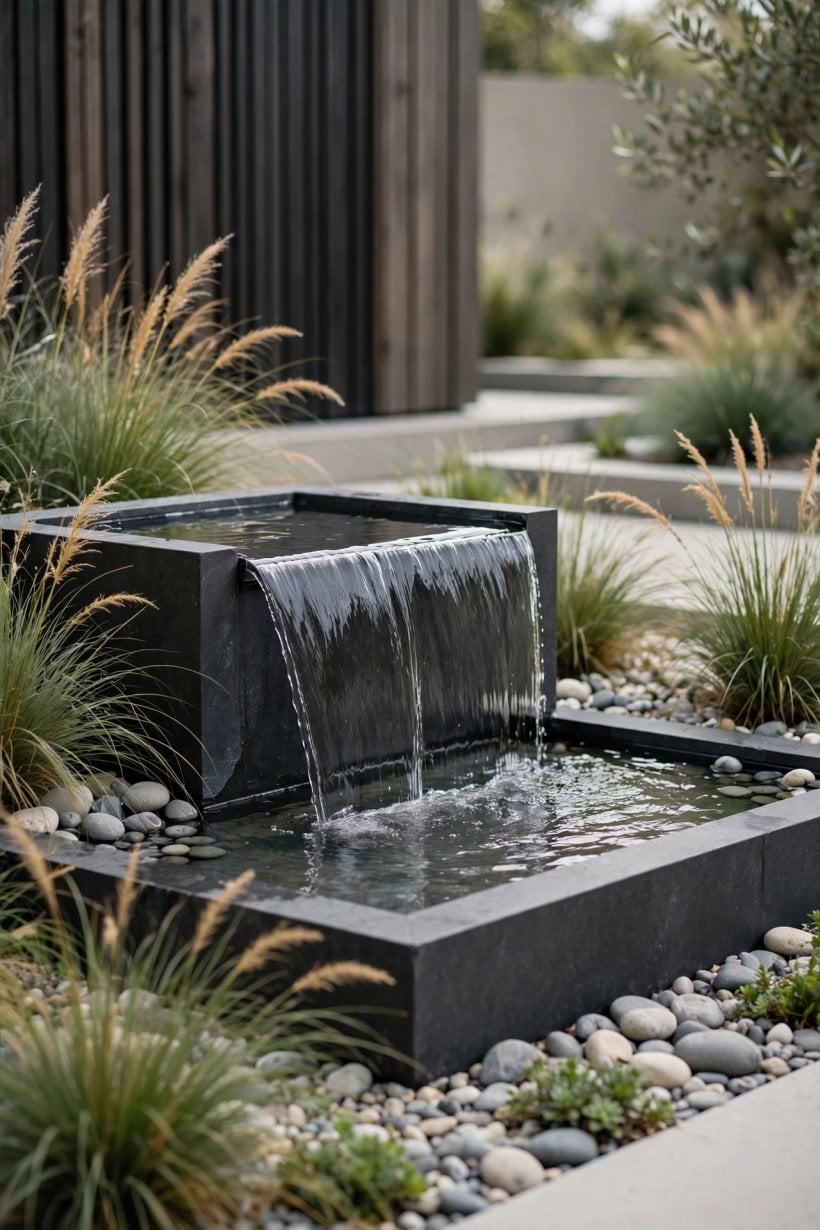
Small gardens gain the most from fountains, because sound expands a space the eye has finished measuring. A tiny plot with water in it feels like a place; without, it can feel like a leftover — a truth the front-garden treatment in front yard landscaping ideas also relies on.
66. Steal the Wall, Keep the Floor
On a small patio, a wall fountain gives full sound for zero floor area — the best exchange rate in small-garden design.
67. Let a Bubbling Pot Anchor a Container Corner
One drilled pot bubbling among grouped planters turns a container collection into a composition, and moves house when you do.
68. Use the Corner Nobody Plants
Every small garden has a shady triangle where nothing thrives. A fountain needs no sun worth mentioning and turns the dead corner into the destination.
69. Scale the Sound to the Neighbours
In close quarters, a bubbling or sheet effect is neighbourly where a tall tiered fall is a broadcast. Small gardens share air; choose the quiet voice.
70. Put the Reservoir Under a Seat
Bench-over-reservoir designs hide the machinery in the furniture and keep every hand-span of a tiny plot working twice.
71. Add a Fountain to a Pergola’s Shade
Under a pergola, water sound plus shade plus scent is the complete summer room. Small plots should stack their pleasures in one place like this.
72. Let One Tall Spout Give a Tiny Garden Height
A slim vertical fountain draws the eye up in a plot with no room for a tree, borrowing the sky the way tall planting would.
73. Choose Solar Where Cables Cannot Go
Rented and listed gardens that forbid buried cable can still have moving water on sunny days — the honest trade of the solar fountain, accepted gladly.
74. Make the Balcony Fountain a Tabletop One
A small bowl, a tiny pump, a handful of stones: the principle scales down to a balcony table and still delivers the sound that started this whole list.
75. End Small: One Fountain, Excellently Kept
In a tiny plot the fountain is half the garden’s events. Keep it clean, running and planted kindly, and it will carry the whole plot’s reputation.
9. Checks and Mistakes: Before the First Spadeful
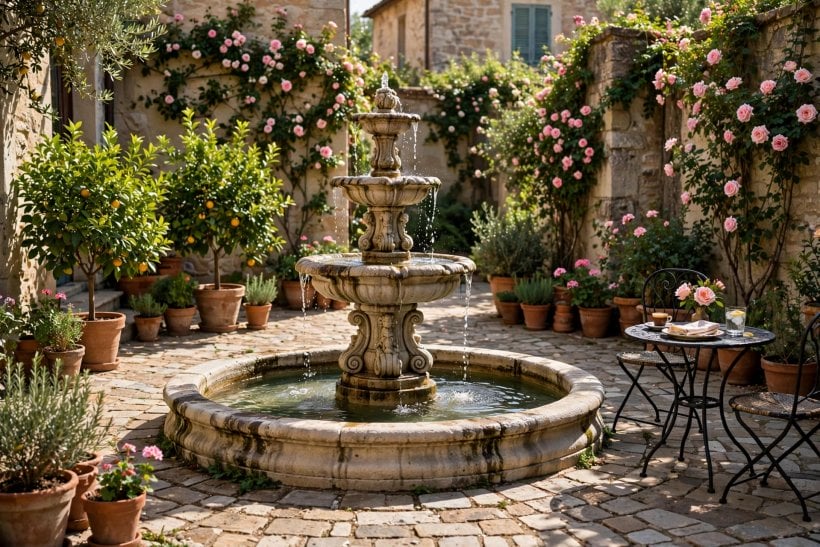
Check the level of the site twice before building — water reports every slope honestly and forever. Confirm the power route with an electrician before the position becomes a trench-driven regret; electricity and water are a pairing that deserves professional respect, not optimism. Measure the splash in a breeze by testing the assembled fountain before planting its splash zone. Ask where the leaves fall in October, and move the fountain or accept the net as a way of life. The common mistakes are predictable: a fountain too small for its garden, stranded in open lawn with no backdrop or planting; a basin too shallow to stay cool; a pump sized to the brochure rather than the lift; and the forgotten winter, which cracks more basins than every other error combined. Site it by ear, build it level, plant it in — the rest is weather.
10. Costs and Pulling It Together
Costs sort into three honest bands. The fountain body — stone, cast stone or metal — is the one real purchase, and it is a decades-long one; resin and terracotta sit lower, masonry sits higher, and the difference shows in year ten, not month one. The machinery is the smallest band: a pump, a cable run, and replacement pumps across the years cost little beside the masonry, provided the electrical work is done properly once. Installation effort — levelling, trenching, planting the corner in — is the band owners most often underestimate and most control themselves, since it is largely labour and patience. Pull the project together in order: choose the seat you will listen from, site by ear, build level, plant the corner, then run the water for a month before judging. A fountain is the rare garden feature that gets better as everything around it grows — buy the honest version once, and let time do the decorating.
Final Considerations
A water fountain earns its place by working on days when the garden offers nothing else: grey mornings, still evenings, the weeks between flowerings. Keep the sound gentle, the basin planted in, the pump cared for and the winter respected, and the feature will repay you in the currency gardens deal in — reasons to go outside. For the wider ground it stands in, backyard landscaping ideas carries the planning further; for moving water at larger scale, the waterfall treatment linked at the start of this post is the fountain’s bigger sibling.



0 Comments