
A good coffee corner turns a rushed morning into a small ritual. You do not need a remodel, just a clear spot, the right order of things, and storage that keeps counters calm.
These 15 ideas for a coffee station in kitchen spaces of every size will help you plan one that looks good and works on a tired weekday.
1. At a Glance: What a Kitchen Coffee Station Needs
Every successful setup answers the same questions: where will it live, what will you make there, and where will everything go afterwards? Decide those three things first and the styling becomes easy. If you want more inspiration before you start, browse our home coffee bar design ideas, which show how much character a compact drinks corner can carry.
| Question | Short Answer |
|---|---|
| How much space do you need? | A short run of counter, a cabinet bay, a trolley or even a deep shelf can be enough. |
| What belongs on show? | The machine, daily cups and one or two beautiful things; everything else can hide away. |
| What do people forget? | Water access, a nearby bin, power points and somewhere to put hot items down. |
| What makes it feel finished? | One tray or board defining the zone, consistent containers and a small styling layer. |
| What should you check first? | Counter height, cupboard clearance for machine lids, socket positions and heat and steam clearances. |
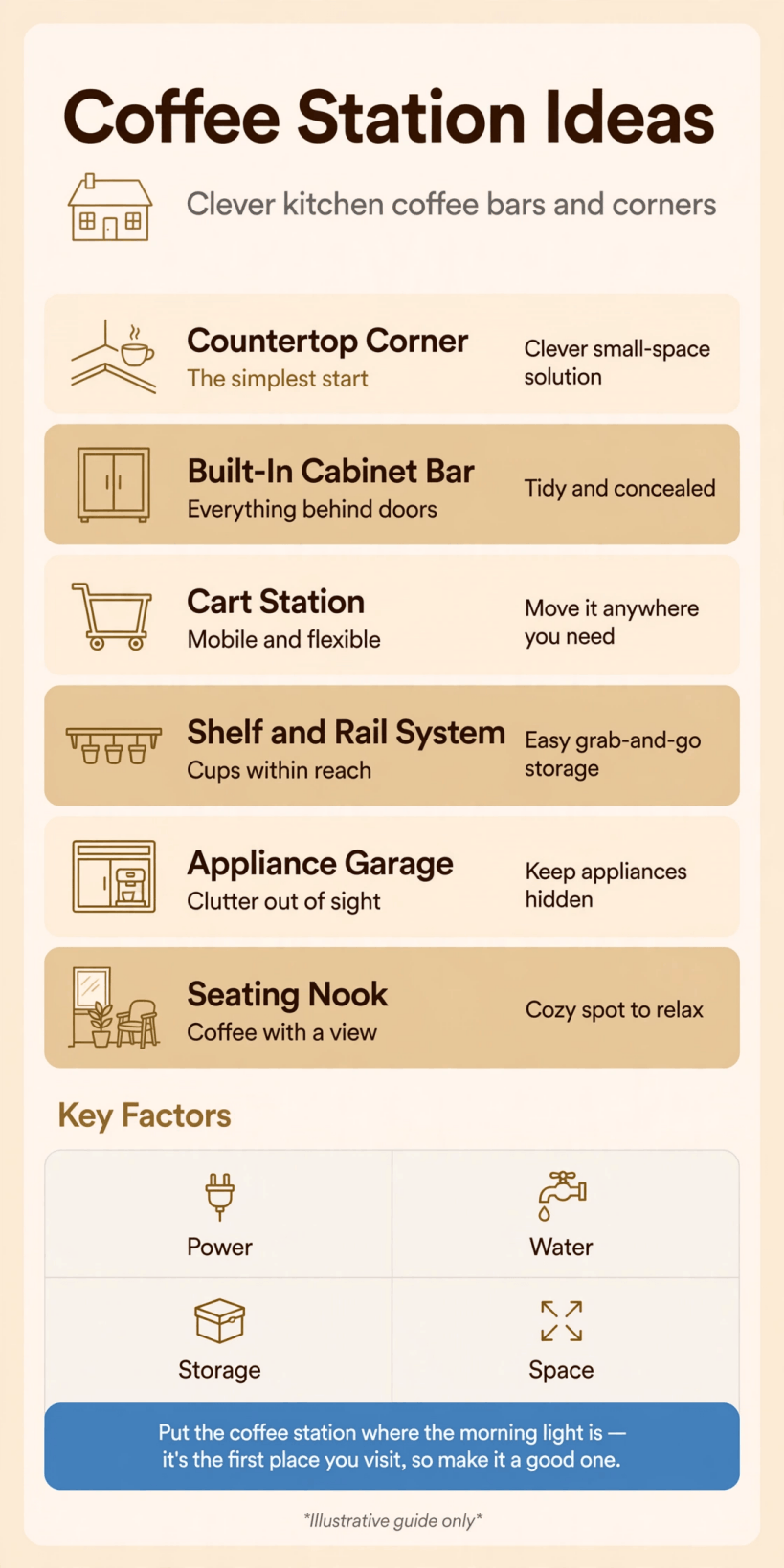
A one-page summary of the layout, storage and styling decisions that make a coffee corner easy to live with every day.
Think in the order you actually make a drink: beans or pods, machine, cup, milk or sweetener, then a spoon and somewhere for drips. Lay your station out in that sequence and you will stop crossing the kitchen with a dripping mug. Keep the footprint honest, too. A station that steals all your prep space will be resented by whoever cooks, so protect a clear stretch of worktop first and let coffee take what remains.
2. Choosing the Right Spot in the Kitchen
Location decides everything else, so walk your morning route before you buy anything. Stand where you wake up, where you fill the kettle or tank, and where cups currently live, and look for the spot that shortens that walk. These first three ideas cover the most reliable locations.
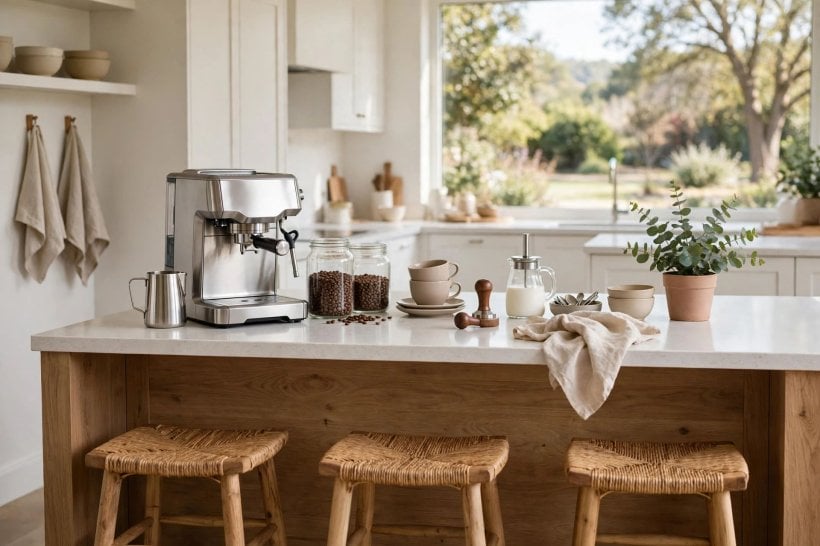
1. The end-of-counter station. Claim the last stretch of worktop, ideally near a wall that gives you a backdrop and a socket. A tray under everything marks the territory, keeps drips contained and lets you slide the whole setup aside when you need the counter for baking or a big shop.
2. The between-cabinets bay. A single cabinet-width bay, with the machine below the wall cupboards and supplies in the cupboard directly above, creates a tidy vertical station. Check that the machine lid or portafilter still clears the underside of the cupboards before you commit to the spot.
3. The window-adjacent corner. A corner near natural light makes morning drinks feel like a pause rather than a task. Keep beans and grounds in opaque containers here, since light and warmth are unkind to them, and choose a small plant or picture ledge to finish the view.
3. Countertop Coffee Bars That Earn Their Space
If you have counter to spare, a countertop bar is the simplest and most flexible route: no building work, easy to rearrange and easy to take with you if you move. The secret is editing. A countertop station should hold the daily kit only, with refills and extras stored elsewhere, or it will slowly swallow the whole work surface.
4. The tray-defined bar. One generous tray or wooden board under the machine, cups and canisters turns loose objects into a designed station. It also makes cleaning honest work: lift the tray, wipe the counter, put it back, rather than shuffling ten items every time.
5. The raised-shelf bar. A low riser or shelf at the back of the counter lifts cups and canisters above the machine zone, doubling storage without widening the footprint. Keep the heaviest items low and the pretty ones up high, and the station will feel layered rather than crowded.
6. The two-machine family bar. Households that split between espresso and filter, or coffee and tea, can run two small stations side by side on one shared tray system, with a kettle in the middle. Give each side its own cups and supplies so the morning queue moves without negotiation.
4. Cabinet and Pantry Coffee Stations
Hiding the station behind doors suits kitchens that double as living space, and anyone who loves clear counters. A cabinet station takes a little more planning, especially around heat, steam and power, but the payoff is a kitchen that resets to calm the moment the doors close.

7. The appliance-garage station. A counter-level cabinet with a lift-up or retractable door hides the machine while keeping it plugged in and ready. Confirm ventilation and clearances with the machine guidance, and add a pull-out shelf if reaching the water tank is awkward.
8. The pantry shelf station. Give one pantry shelf over completely to coffee: machine at counter height if possible, or kettle and pour-over kit if not, with beans, filters and cups on the same shelf run. A pantry station keeps supplies and making in one place, which speeds up restocking.
9. The converted cabinet bay. Removing doors from one upper cabinet, or dedicating one base cabinet and its counter above, creates a framed niche that reads as intentional furniture. Paint or paper the back panel to give the niche its own character, a trick borrowed from our colourful tiny house interior ideas.
5. Small Corners, Renters and Tiny Kitchens
Small kitchens do not rule out good coffee; they just demand a vertical mindset and honest editing. If you are short on space, think like the compact-home planners in our modern tiny house interior ideas: every object should earn its place, and storage should climb the wall rather than spread across the counter.

10. The wall-shelf station. Two sturdy shelves above a small machine or kettle station carry cups, canisters and a plant, while the counter below holds only what gets hot. This suits renters because shelves are easy to fit and simple to make good when you leave, subject to your tenancy terms.
11. The single-drawer station. Dedicate the drawer directly below your machine spot to everything coffee: beans, filters, spoons, spare parts and a small cloth. A drawer station keeps the counter almost empty, which in a tiny kitchen feels like gaining a whole second workspace.
6. Carts, Dressers and Freestanding Stations
Freestanding furniture solves the no-counter problem and adds character that built-in cabinetry rarely matches. A cart can roll away for parties, a dresser can hold a surprising amount of kit, and both can move house with you.

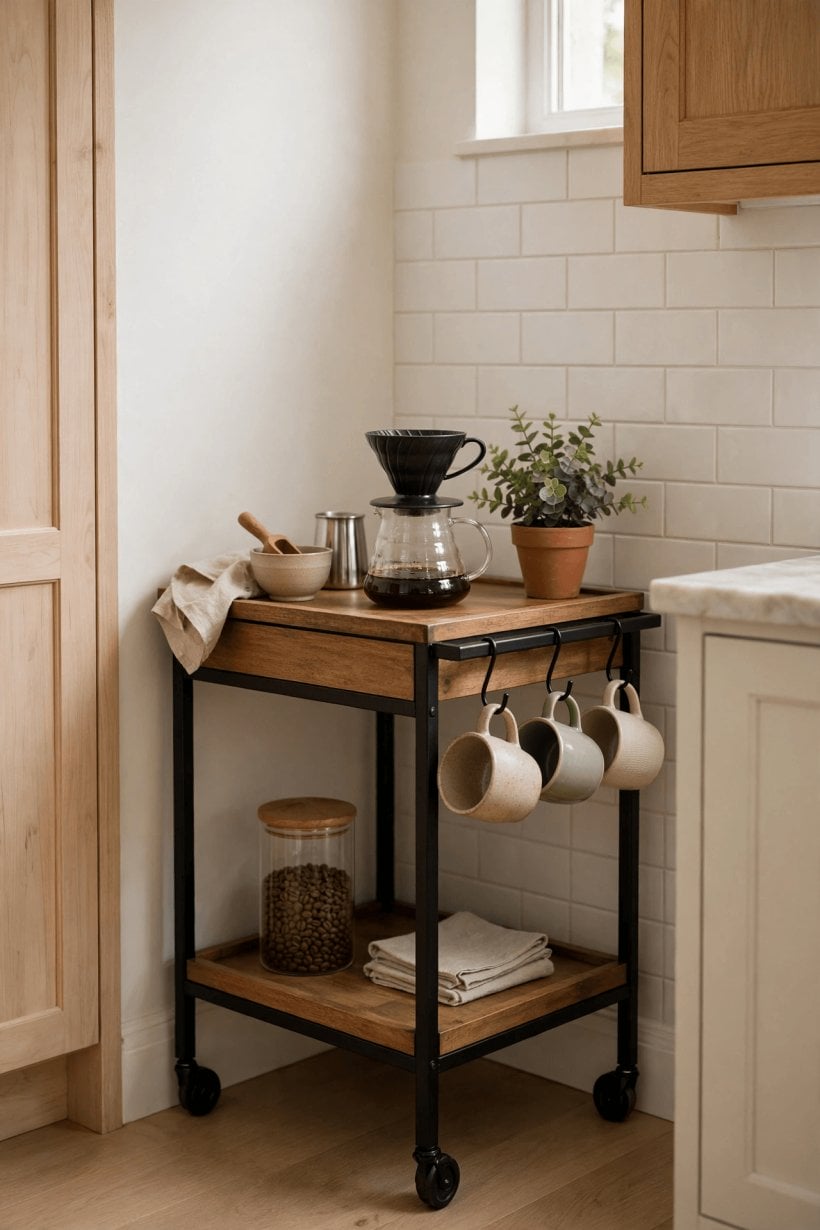
12. The rolling cart bar. A sturdy trolley with a top tier for making and lower tiers for storage is the most flexible station of all. Choose lockable wheels, keep heavy bottles low, and park it near a socket so the cable run stays short, safe and out of walkways.
13. The dresser or sideboard station. A low dresser gives you a generous top for machines and drawers below for everything else, from cups to linens. Protect the top surface from heat and drips with a tray or stone board, and style the wall above it like a sideboard, with art or a mirror.
7. Styling Touches That Make It Feel Like a Cafe Corner
Styling is not decoration for its own sake; it is the signal that this corner is a pleasure, not a utility zone. Keep the palette close to your kitchen’s own colours, repeat one material two or three times, and let the ideas in our guide to tiny house interior paint colours help if a painted backdrop or cabinet interior is part of your plan.
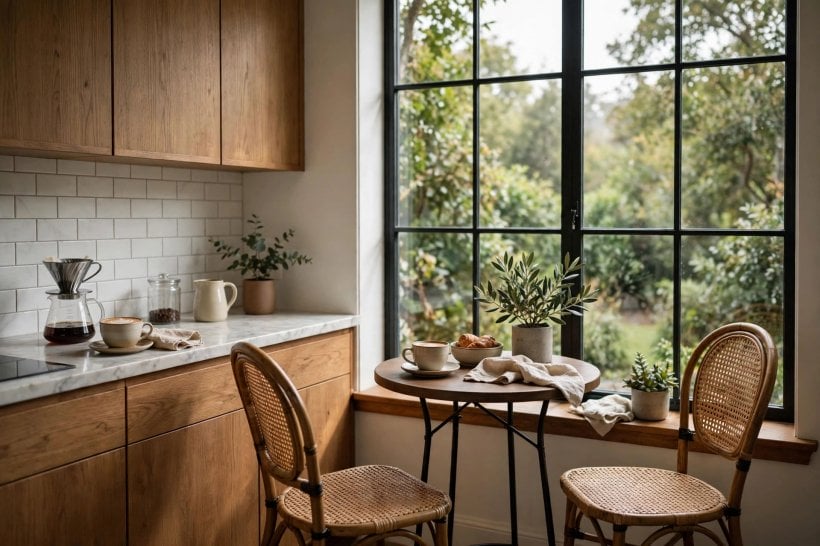
14. The backdrop moment. One deliberate backdrop, whether a painted panel, a row of tiles used as a splash zone, a framed print or a small shelf with a plant, turns appliances into a scene. Keep it wipeable and heat-aware, and stop at one moment rather than decorating every surface.
15. The matching-container set. Decanting beans, sugar and pods into a family of similar containers is the fastest visual upgrade there is. Label them honestly, keep quantities small so contents stay fresh, and store the bulk bags elsewhere. Uniform containers calm even a busy station instantly.
8. Storage and Organisation That Keep Counters Calm
The stations that survive are the ones with a home for everything, including the unglamorous things: filters, descaler, spare seals, the manual you always need and the cloth for drips. Plan storage in three layers. Daily items live within arm’s reach of the machine. Weekly items, like spare beans and extra cups, can sit higher or deeper. Rare items can live in another cupboard entirely, as long as you know where they are.

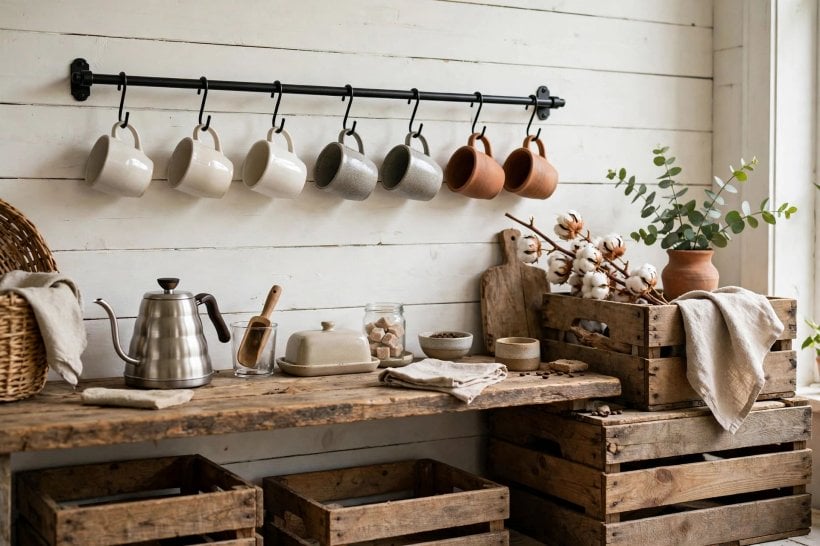
Hooks under a shelf hold daily cups and free a surprising amount of space. A shallow box or caddy corrals pods and sachets so they stop migrating around drawers. If closet-style organisation appeals to you, the principles in our tiny house closet design ideas translate directly: group by frequency of use, give each group a container, and review the contents every few months. And build in a tiny landing zone, even just a coaster or small mat, for the hot mug while you close doors, find the milk or answer the door.
9. Water, Power, Heat and Everyday Cleaning
Practicalities decide whether a station is loved or abandoned. Water comes first: if your machine has a tank, you need a comfortable way to fill it, which usually means a spot within reach of the sink or room for a filled jug on the counter. Machines that plumb in need professional advice and local code checks, so confirm requirements with your installer and, where relevant, your city or county, rather than improvising.
Power comes next. Keep cables short, dry and off hot surfaces, avoid trailing leads across walkways or the sink, and never overload a single socket with several heat-producing appliances at once; if you are unsure about your circuits, ask a qualified electrician. Heat and steam need clearance above and behind machines, and cupboard stations need the doors open while brewing so steam escapes. For cleaning, favour stations you can wipe in one pass: trays that lift out, containers that go in the wash, and a small bin or compost caddy close enough that grounds never travel across the kitchen.
10. Costs and Practical Checks Before You Buy Anything
One last habit separates a good station from a great one: a weekly two-minute reset. Empty the drip tray, wipe the tray or board underneath, check beans, pods and filters against your shopping list, wash the cloth, and return every cup, spoon and canister to its home. That tiny routine stops the slow creep of clutter, keeps flavours fresh, and means Monday morning starts with a calm corner and a clear counter, not a search for a clean mug while the machine beeps at you.
A coffee station can cost almost nothing, rearranged from what you own, or grow into a small furniture and appliance project, so set a comfort level before shopping. Spend first on the things that affect daily use: a machine you are happy to operate half asleep, a tray or cart that truly fits, and containers that seal well. Styling extras can arrive later, one piece at a time, and second-hand furniture often makes the best freestanding station.
Before buying, measure three times: the footprint, the height clearance including opening lids and lifting portafilters, and the depth with cables and plugs behind the machine. Check socket positions against your plan, confirm how you will fill and empty the machine in that exact spot, and think about who else uses the kitchen at the same hour. If you are comparing homes or planning a bigger kitchen project, our guide to tiny houses for sale and rent and our tiny house building design ideas will help you judge how much space a daily ritual like this really deserves.
Final Considerations
The best coffee station is the one that disappears into your routine: quick to use, quick to clean and pleasant to look at while the machine warms up. Start with location, add storage in layers, style one small moment, and live with it for a week before buying more. Small, honest adjustments after real mornings will always beat a grand plan drawn in the abstract.


0 Comments