

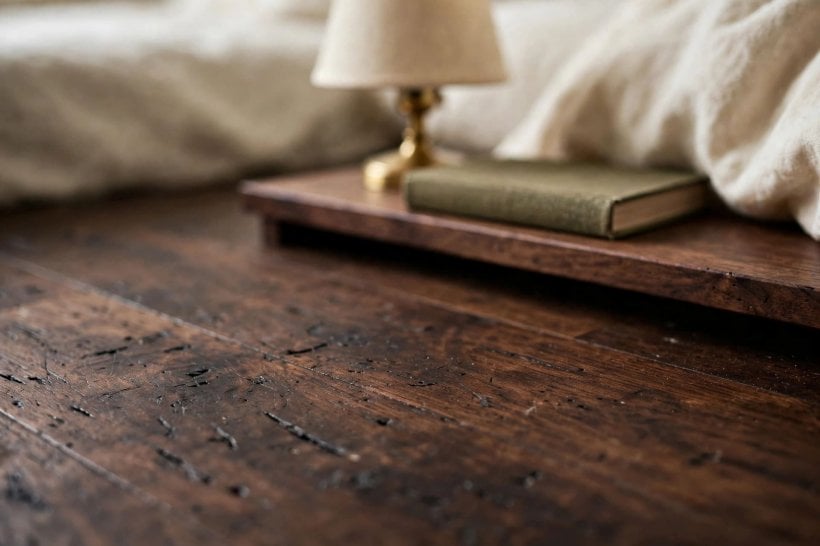
Dark wood floors give a bedroom instant depth. They ground pale bedding, make colours feel richer, and turn an ordinary room into somewhere that feels calm, warm and deliberately designed. These ideas cover layouts, colours, storage and restful styling, so you can enjoy the drama of a dark floor without the room ever feeling heavy or gloomy.
1. Dark Wood Floor Bedroom Ideas at a Glance
The secret to a successful dark floor is contrast with control. The floor is the darkest, largest surface in the room, so everything above it should be planned in layers: soft pale textiles at bed height, mid-tone furniture to bridge the gap, and lighting that warms the wood rather than fighting it. Bedrooms built around dark hardwood floors bedroom schemes work best when the floor is treated as the anchor, not an obstacle, and when at least one large light surface, usually the bedding or a rug, restores the balance.
| Decision | Popular Directions | What To Think About |
|---|---|---|
| Wood tone | Walnut brown, espresso, dark oak, near-black stain | How much warmth the room needs and how the tone looks in your light |
| Bedding | Crisp white, warm cream, soft grey, muted patterns | The main contrast layer and the easiest thing to change seasonally |
| Rug | Large pale rug, vintage-style pattern, natural jute or wool | Softness underfoot, lightening the floor area and defining the bed zone |
| Walls | Warm white, soft sage, deep accent behind the bed | Whether you want calm contrast or a fully cocooning scheme |
| Furniture | Mid-tone wood, black metal, upholstered headboard | Avoiding furniture that vanishes against the floor or clashes in tone |
| Lighting | Warm lamps, wall lights, layered low lighting | Bringing out the grain and keeping evenings restful |
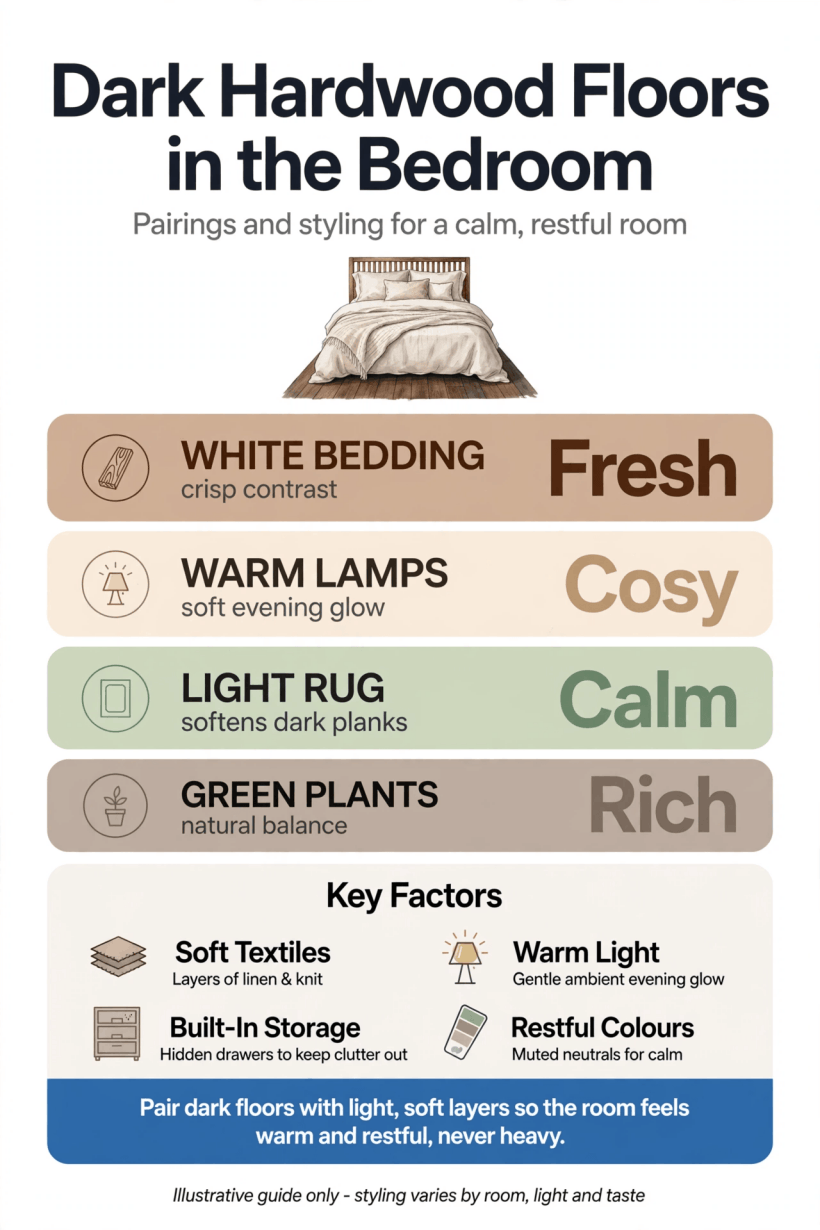
A visual summary of the main decisions in this post, from wood tone and bedding contrast to rugs, storage and lighting.
2. Layouts That Let the Floor Breathe
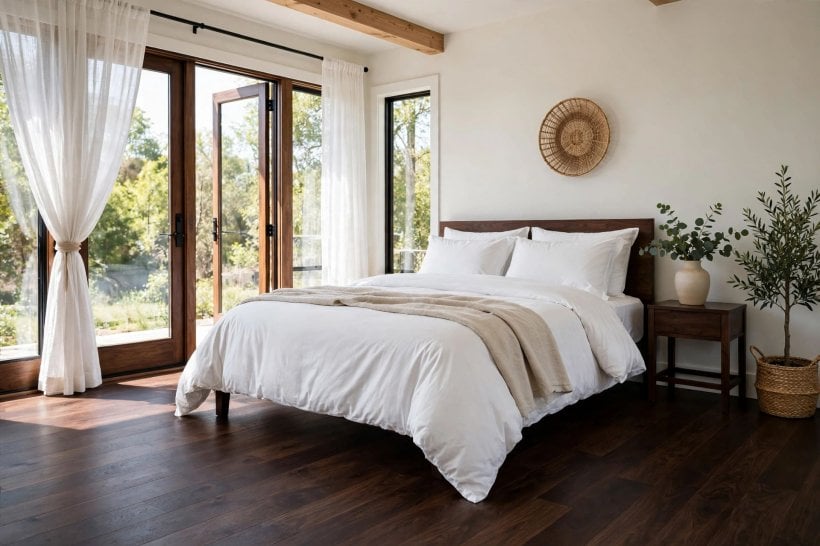
Start with the bed, because on a dark floor its placement reads more strongly than in a pale room. Centring the bed on the main wall gives the floor a symmetrical frame and leaves even walkways on both sides, which keeps the room feeling ordered. In a long room, placing the bed across the narrower end shortens the visual tunnel and lets the floorboards run invitingly towards it. Avoid pushing every piece of furniture against the walls: a dark floor looks its best in generous, uninterrupted runs, and floating the bed slightly into the room with a rug beneath it shows off more of that surface.
Keep the floor as clear as you can. Dark wood shows the room’s tidiness honestly; clutter at floor level reads twice as messy against it. Choose furniture with legs rather than plinth bases where possible, because seeing the floor continue underneath lifts the whole scheme and makes a small room feel larger. Leave a comfortable walkway at the foot of the bed rather than filling it with a bench you have to edge around, unless the room is genuinely wide.
Daylight direction matters too. Note where the sun enters and how it rakes across the boards; a layout that keeps the brightest patch of floor clear will glow, while wardrobes parked in that patch waste it. This kind of honest observation is the backbone of tiny house bedroom ideas, where every layout decision is earned by the room’s real light and shape.
3. Choosing the Right Dark Tone
Not all dark floors are the same, and the differences decide the mood. Walnut tones bring warmth and visible grain, suiting rooms that get cool northern light. Espresso and near-black stains are sleeker and more dramatic, working beautifully with white bedding and black metal details, but they ask more of your lighting and show dust more readily. Dark oak sits happily between the two, forgiving in tone and timeless in feel.
Test any finish in the room itself, by daylight and lamplight, before committing. A tone that looks rich in a showroom can tip into flat black in a dim bedroom, and grain that charms you in a small sample can feel busy across a whole floor. If you are choosing a stain for existing boards, remember that the wood beneath sets limits: your finisher can advise what the boards will accept, and a sample patch in a hidden corner is worth the small wait.
Whatever tone you choose, let it be the only very dark surface at low level. Dark floor, dark rug and dark bed base together will swallow the light; dark floor with a pale rug and a mid-tone bed is the combination that sings. Finish matters as well: a matte or satin finish keeps the mood calm and hides everyday marks better than a high gloss, which can feel formal and show every scuff in a restful room.
4. Bedding and Colour Pairings That Work
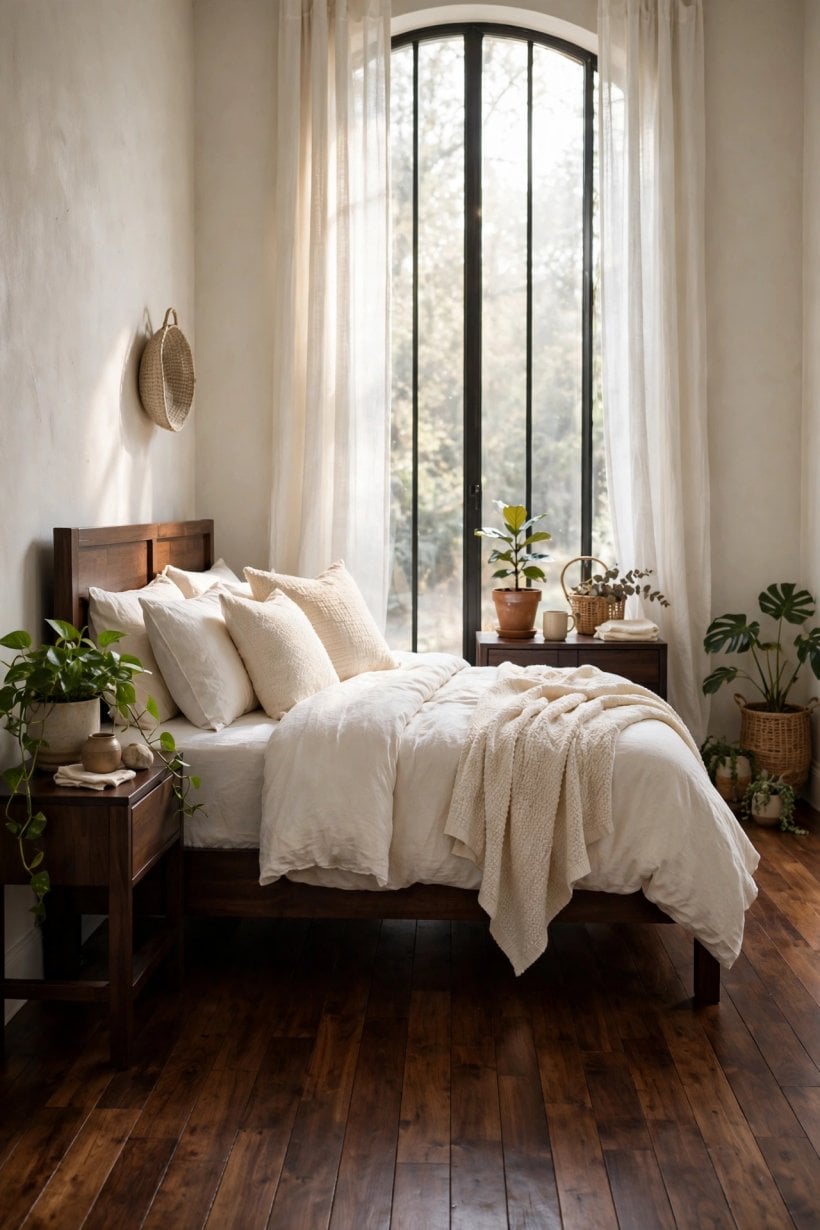
Bedding is your main instrument for tuning the room. White and warm cream bedding against a dark floor is the classic for a reason: the contrast is crisp, the bed becomes the bright centre of the room, and the look suits everything from modern to traditional furniture. Layer the white with texture rather than colour at first: a quilted throw, a linen duvet, a knitted blanket at the foot. Texture is what stops high contrast from feeling stark.
Soft colour works beautifully too. Muted sage, dusty blue, clay and warm grey all sit peacefully over dark wood, bringing colour without shouting. Use them in the bedding and one or two cushions, then echo the colour once elsewhere, in a lampshade, a picture or a chair, so the scheme feels gathered. Strong jewel tones can be gorgeous in small doses, a velvet cushion or a throw, but a whole bed in saturated colour over a dark floor can feel heavy; balance is a dose decision, not a ban.
Walls follow the same logic. Warm white walls keep the room bright and let the floor star; a deep colour on the wall behind the bed creates a cocoon that many people love for sleep, provided the bedding stays pale and the lighting is warm. Sample generously and live with the samples through a full day, the same patient method used in colorful tiny house interior schemes, where colour is tested against real light before it is trusted.
5. Rugs: The Light Layer the Floor Needs
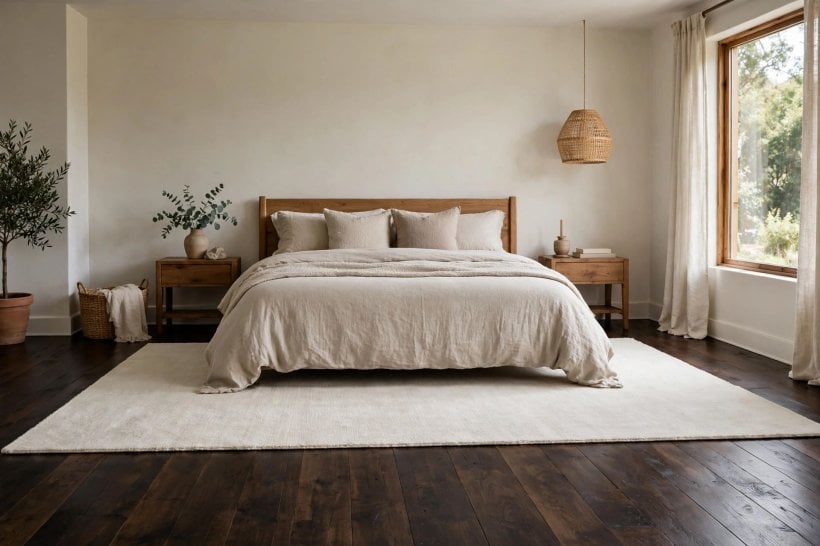
A rug is not an accessory on a dark bedroom floor; it is part of the structure of the scheme. It softens the step out of bed, lightens the largest dark area in the room, and defines the sleeping zone in open or large rooms. Size is the first rule: the rug should extend well beyond the bed on both sides and at the foot, so you step onto it, not off its edge. A rug that only just peeks out from under the bed looks apologetic and does none of its jobs properly.
Colour and pattern come next. A pale, softly textured rug in wool or a wool-look finish gives the strongest lift and a calm background for patterned bedding. A vintage-style patterned rug brings character and is wonderfully forgiving of everyday marks, suiting a relaxed, collected scheme. Natural fibres such as jute add warmth and texture in a lighter register than the floor, though they are less plush under bare feet, so many people layer a smaller soft rug over them at the bedside.
Think about care honestly. Pale rugs show marks; dark floors show dust. Together they simply ask for a regular, light routine rather than perfection, a vacuum in the traffic lanes and a shake outside now and then. The households that stay calm about this are the ones planned like tiny house living room ideas, where beautiful surfaces are always matched to the way people really live on them.
6. Furniture Tones and the Headboard Moment
Furniture over a dark floor needs tonal judgment. Pieces in the same depth as the floor can disappear against it, which is sometimes the goal for a calm, low-contrast scheme, but more often leaves the room feeling like everything sank. Mid-tone woods, painted finishes in warm whites or soft colours, and black metal accents all hold their own against dark boards. A useful trick is to hold a fabric or wood sample against the floor in daylight: if the piece reads as a clear step lighter or deliberately darker, it will work; if it nearly matches but not quite, it will look like a mistake.
The headboard is the room’s headline and your best chance to bridge floor and bedding. An upholstered headboard in a pale or mid-tone fabric softens the whole wall, adds comfort for reading in bed, and mediates between dark floor and light bedding better than any other single piece. A wooden headboard in a tone a step or two lighter than the floor keeps the scheme warm and architectural. Tall headboards suit dark floors particularly well, because they claim wall height and stop the bright bed from feeling like it floats.
Bedside tables deserve the same thought. They are seen against both floor and bedding, they carry lamps that pool light on the boards, and they are where clutter gathers. Choose tables with a drawer or shelf so the surface can stay clear, and keep their tone in the family you have chosen rather than introducing a fourth wood. Consistency at the edges is what makes a room feel designed, a lesson repeated throughout bedroom interior design for tiny houses, where small rooms punish every mismatched note.
7. Storage That Keeps the Floor Clear
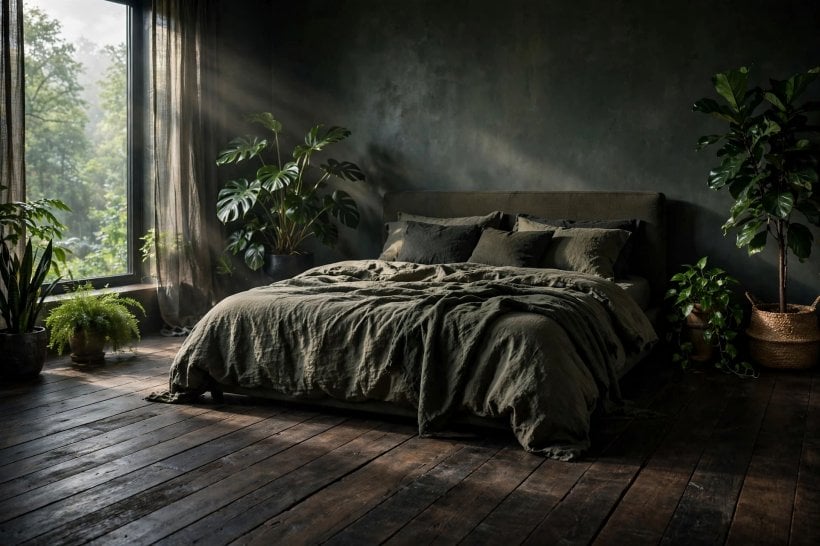
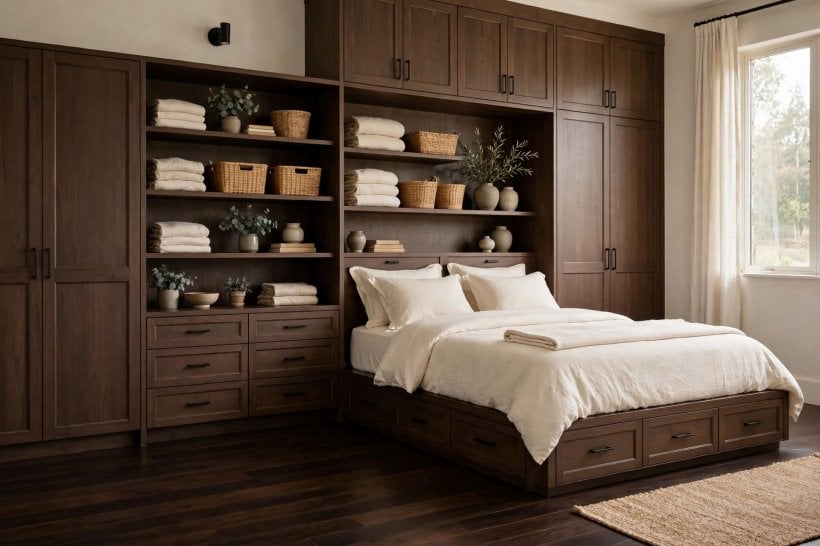
Storage planning matters more in a dark-floor bedroom than almost any other, because everything left on the floor shows. Start with the wardrobe question: fitted wardrobes in a pale or mid-tone finish lighten the room’s largest furniture block and give you a door for everything, while freestanding pieces add character but need space around them. If wardrobes are dark too, break them up with paler bedding and a light rug so the room keeps its breathing layers.
Under-bed storage is the dark floor’s best friend. Drawers or boxes on smooth runners hold spare bedding, out-of-season clothes and everything that would otherwise live in piles, and they slide out without dragging across the boards. Choose boxes with lids, because a dark floor telegraphs dust, and open baskets under a bed collect it visibly. A blanket box or a low bench at the foot of the bed can hold throws and cushions, provided the room’s walkway survives it; measure first, and be honest about the squeeze.
Small storage finishes the job: a tray on the dresser for the day’s jewellery and watch, a hook rail inside the wardrobe door for tomorrow’s outfit, and a lidded basket for the laundry that otherwise becomes a floor feature by Wednesday. These unglamorous systems are exactly what make the serene bedrooms in tiny barn house interior tours possible; the calm is stored, not styled, into existence each morning.
8. Lighting That Loves Dark Wood
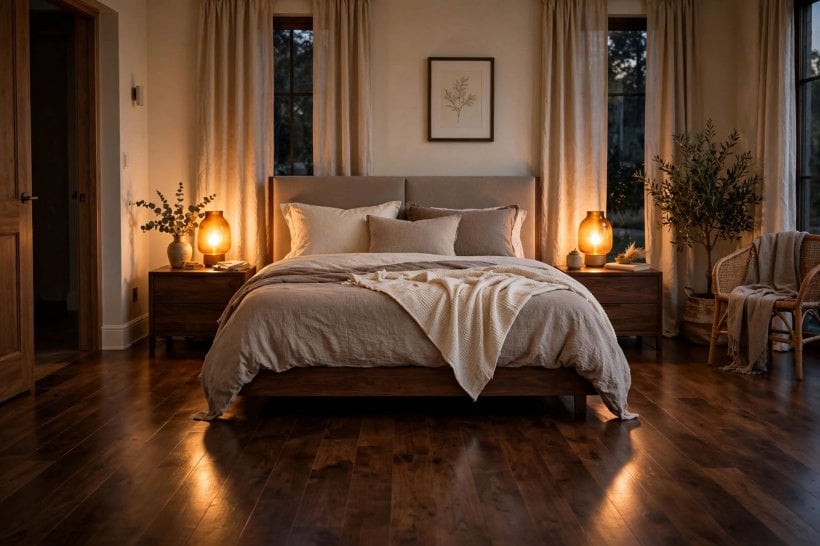
Dark wood drinks light, so plan lighting in layers and aim it with intent. Ceiling light alone will flatten the grain and leave the floor’s edges in gloom; warm lamps at bedside height do the opposite, pooling light across the boards and picking out the grain at the exact hours the room is most used. Choose warm-toned bulbs for bedrooms on dark floors, because cool light can make rich brown wood look grey and tired.
Wall lights free the bedside tables and wash gentle light upward, flattering for faces and kind to the room at night. A low, shaded lamp on a dresser adds a third pool of light that makes the far side of the room feel inhabited rather than forgotten. If you read in bed, give each side its own light with its own switch; shared lighting compromises are a nightly irritant that good planning removes in one decision.
Natural light deserves management too. Sheer curtains or soft blinds temper harsh sun that would bleach one patch of floor over the years, while still letting the room wake up bright. In the evening, blackout linings behind prettier curtains protect sleep without changing the daytime look. Light, handled in layers like this, is the difference between a dark floor that feels moody in the good way and one that merely feels dim, a principle the compact experts behind how to build your own tiny house apply in rooms half this size.
9. Small Bedrooms and Rental-Friendly Ideas
A small bedroom with a dark floor can feel like a jewel box rather than a compromise, if you scale the layering honestly. Keep the bedding pale, the rug light and as large as the room allows, and the furniture few and leggy. Mirrors earn their place here, doubling both light and the sense of space; one large mirror opposite or beside a window will do more for a small dark-floored room than any other single addition. Curtains hung high and wide make the window, and therefore the room, feel bigger.
If the floor is not yours to change, as in a rental, everything in this post still applies in reverse: you are simply layering over a given floor instead of choosing it. A large pale rug is the renter’s renovation, covering most of the boards and resetting the room’s whole palette in an afternoon. Removable touches, bedding, throws, lampshades, a headboard cushion panel hung from hooks, carry the rest of the transformation, and all of it leaves with you.
Small rooms also reward ruthless editing. One chair, not two; a single generous bedside table shared by design rather than two squeezed ones; art in one strong piece instead of a scatter of small frames competing with the floor’s drama. The edited discipline of tiny house bathroom ideas, where nothing survives that does not earn its place, turns a small dark bedroom from a challenge into the cosiest room in the house.
10. Care, Costs and Long-Term Living
Dark floors ask for a realistic care routine, not a precious one. Dust and light debris show sooner on dark boards, so a soft broom or vacuum in the traffic lanes a couple of times a week keeps the room looking cared for with minutes of effort. Felt pads under every furniture foot are non-negotiable; they prevent the scratches that dark finishes display cruelly. Keep a mat at the door if the bedroom opens from a hall where grit gathers, and deal with spills promptly, as you would on any real wood floor.
Costs vary with the route you take. Refinishing existing boards in a dark stain is the gentlest route when the wood beneath is sound, and a finisher can tell you honestly whether your boards will take the colour evenly. New solid or engineered dark flooring costs more and should be chosen for the room’s conditions, with the fitter’s advice on preparation and acclimatising the boards before laying. Rugs, bedding and lighting, the layers that make the floor work, can be added in stages as budget allows, which makes this a scheme you can grow rather than one you must buy all at once.
Over years, a dark floor is a forgiving backdrop for changing taste: bedding colours can wander from white to sage to clay, furniture can be painted, art can change, and the floor holds the room steady through all of it. Choose the floor and its first layers well, keep the care routine light and regular, and the bedroom will stay the calm, grounded room you planned, long after brighter trends have moved on.
Final Considerations
A dark wood floor is not a problem to be solved but a foundation to be balanced: pale bedding above it, a light rug beneath the bed, mid-tone furniture bridging the two, and warm layered lighting to bring out the grain. Plan storage so the floor stays clear, choose tones in the room’s real light, and let the layers do the work. Do that, and a room built on dark hardwood floors bedroom styling becomes what it should be: deep, calm and restful, the easiest room in the house to fall asleep in and the hardest to leave on a slow morning.



0 Comments