

A tropical home is built around air, shade and greenery. Wide openings, deep verandas, natural materials and planting that reaches right up to the walls turn the climate from something to fight into the main pleasure of the house. These ideas cover layouts, colours, costs and the practical details that keep a breezy, leafy home comfortable all year.
1. Tropical Home Design at a Glance
Every successful tropical design starts with the same three moves: lift the living spaces into the breeze, shade every opening before the sun reaches it, and let the garden do half the decorating. A true tropical home works passively first, with orientation, roof overhangs and cross-ventilation doing the heavy lifting, so that fans and other cooling are a top-up rather than the whole plan. Get those bones right and the styling, all rattan, timber, linen and green, almost arranges itself.
| Decision | Popular Directions | What To Think About |
|---|---|---|
| Layout | Open plan living, rooms around a courtyard, raised floor | Catching the breeze and keeping private rooms quiet and shaded |
| Roof | Steep pitch with deep overhangs, veranda all round | Shedding heavy rain and shading walls through the day |
| Walls and openings | Louvres, large sliding doors, screens, high windows | Airflow you can tune, plus security and insect control |
| Materials | Timber, bamboo, stone, terracotta, woven cane | How each material copes with humidity, sun and rain |
| Colours | Warm whites, leaf greens, earthy browns, ocean accents | Keeping interiors calm against lush planting outside |
| Planting | Shade trees, palms, dense borders, potted greens | Shade, privacy and cooling, balanced against upkeep |
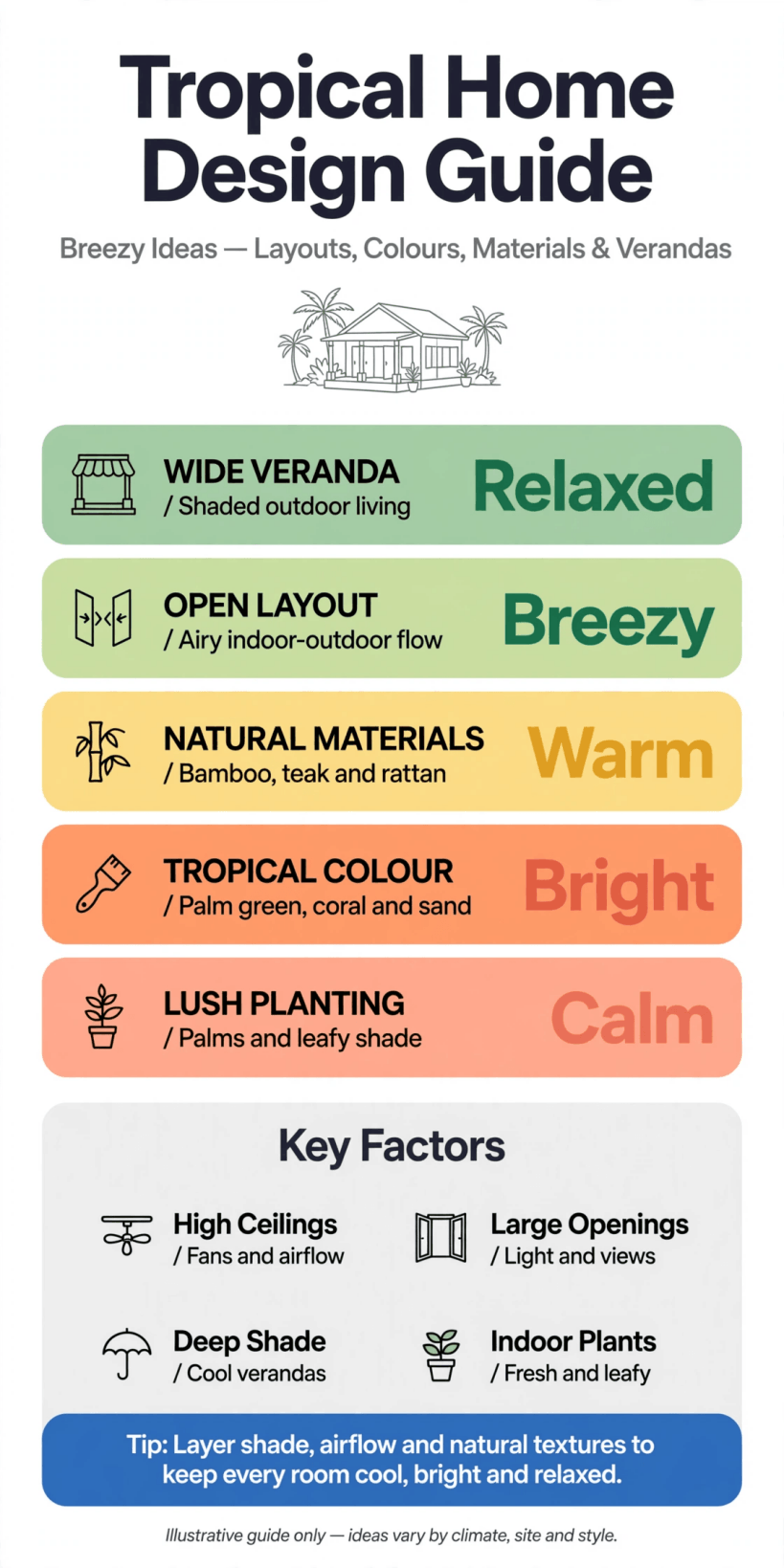
A visual summary of the main decisions in this post, from layout and roofing to materials, colours and planting.
2. Layouts That Catch the Breeze
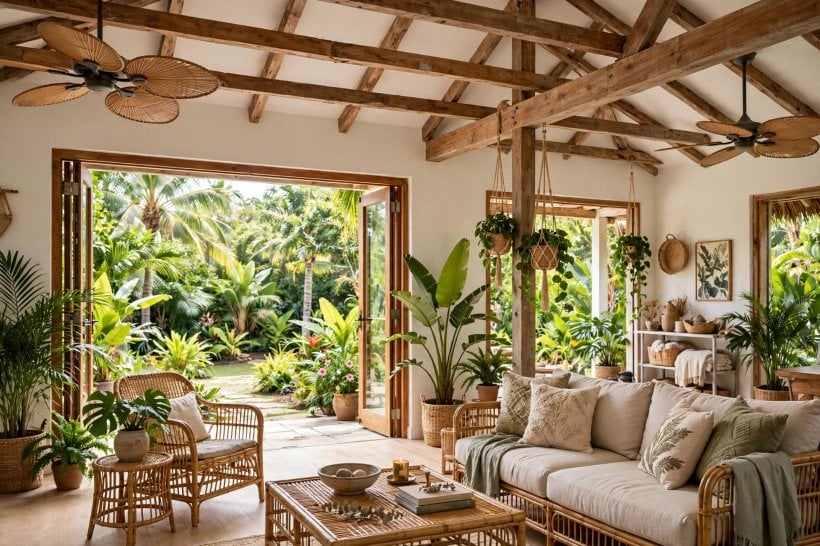
Plan the house around moving air. Long, narrow floor plans work better than deep square ones, because a breeze can pass through a slim house in a straight line, entering low on the shaded side and leaving high on the other. Put the living spaces where the evening breeze lands, bedrooms where the mornings stay cool, and keep corridors short or open-sided so they act as air channels rather than blockages. A central courtyard is the classic move: it pulls light and air into the middle of the plan, gives every room a green view, and creates a private outdoor room at the heart of the house.
Raising the living floor, even by a few steps, lifts the rooms into cleaner air, protects against heavy rain pooling at the door, and creates shaded, useful space beneath for storage, laundry or a hammock. Verandas deserve to be treated as rooms in their own right: a deep veranda on the sunny side shades the wall behind it, extends the living space for most of the year, and becomes where the household actually lives at breakfast and dusk. In plan after plan, the veranda is the difference between a house that merely looks tropical and one that lives that way.
These principles scale down gracefully, which is why they appear again and again in how to build your own tiny house guidance: small homes in warm climates succeed or fail on airflow and shade long before finishes are chosen. Arrange the furniture with the same discipline, keeping low pieces under the breeze path and tall storage against walls that do not carry the main openings.
3. Roofs, Overhangs and Rain
The roof is the hardest-working part of a house in the tropics. A generous pitch sheds heavy rain quickly and quietly, and deep overhangs are non-negotiable: they shade the walls from high sun, keep driving rain off the windows, and let you leave openings ajar in a downpour so the house keeps breathing. Extend the roof over the veranda in one clean sweep where you can, because a single broad roof reads calmer than a patchwork of lean-tos, and it protects the outdoor room as well as the interior.
Under the roof, air matters as much as cover. A ventilated roof space, with air allowed in at the eaves and out at the ridge, carries heat away before it radiates down into the rooms. Light-coloured roofing reflects more sun than dark finishes, which is worth weighing against the look you want; in many regions a pale metal roof over a ventilated cavity is the quiet workhorse of a cool house. Ceiling height helps too: tall ceilings let hot air gather above head height, and a ceiling fan stirring that air makes rooms feel several degrees kinder.
Rain management finishes at ground level. Wide gutters, downpipes that discharge well away from the walls, and paths or gravel that let water soak away rather than splash back are unglamorous details that decide whether the house feels fresh or damp by the end of the wet season. Plan them with the roof, not after it.
4. Openings: Louvres, Screens and Shade
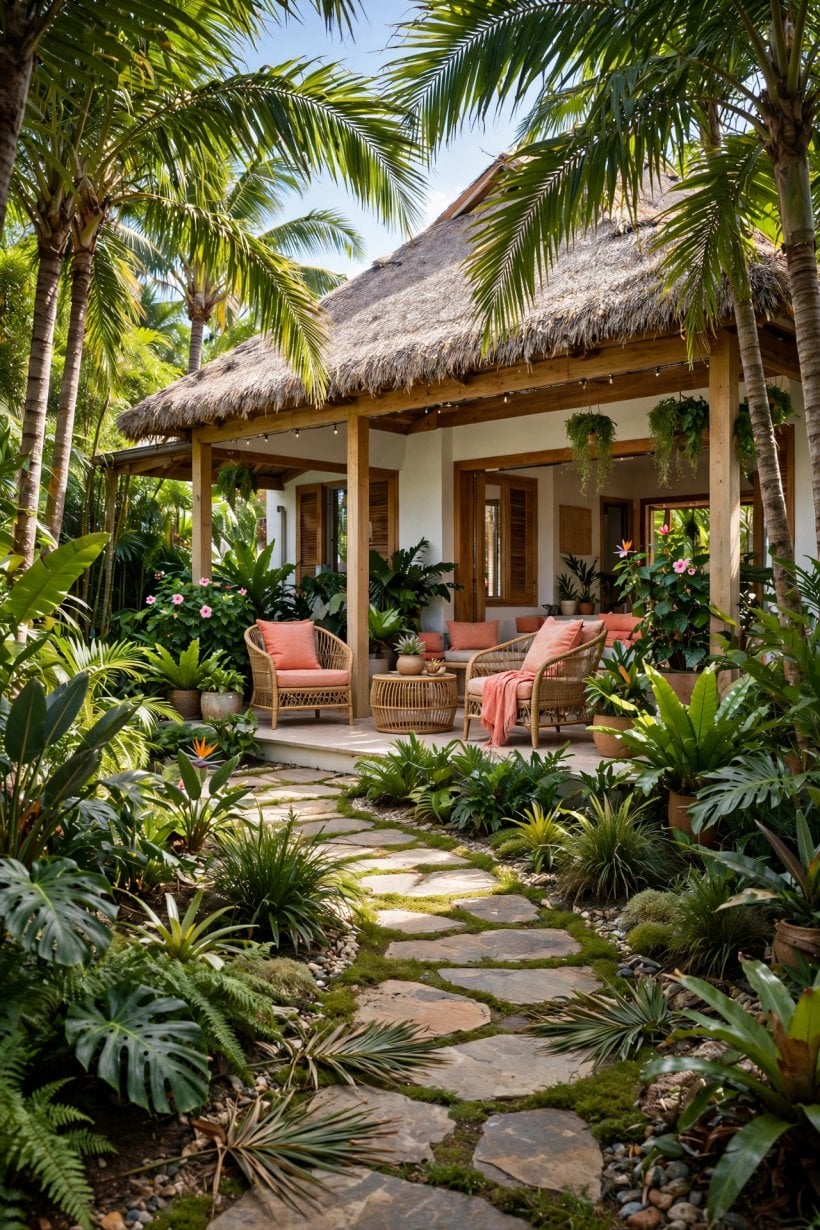
Windows in a tropical house are really adjustable walls. Louvred panels, top-hung shutters and large sliding doors let you tune airflow hour by hour: wide open for the evening breeze, angled against a squall, closed and latched in a storm. Place openings opposite each other for cross-ventilation, and remember that a small high window can do as much work as a large low one, because warm air leaves at the top. Clerestory windows under the roofline are especially effective, releasing heat while keeping privacy and shedding rain.
Screens are the quiet heroes. Fine insect mesh on the main openings lets the house stay open at night, which is when the cooling matters most, and screen doors on the veranda keep the threshold easy for children, guests and armfuls of shopping. Decorative screens and breezeblock panels earn their place too, filtering sun into patterned shade, giving privacy from the street, and letting air through where a solid wall would cook. Timber slat screens over a west-facing wall can transform the room behind it from the hottest in the house to the most pleasant.
Shade the glass from outside wherever possible. External blinds, shutters and planting stop heat before it enters, while internal curtains mostly decorate the warmth that is already in. This layered thinking about light and heat is the same habit you see in tiny house living room ideas, where every opening is asked to do two jobs at once.

5. Materials That Love Humidity
Choose materials that treat humid air as normal weather rather than an attack. Timbers with natural durability, properly finished stone, terracotta and concrete all settle into tropical life gracefully, ageing with character instead of fighting a losing battle. Bamboo and woven cane bring the lightness the style is loved for, in screens, ceilings, furniture and lampshades, and they are at their best used where air moves around them. Where timber meets the ground or the weather, detailing matters more than species: keep end grain off wet surfaces, let water drip clear of walls, and choose finishes your local climate has already tested.
Inside, floors want to be cool underfoot and easy to sweep: stone, tile and polished concrete all qualify, and they shrug off wet footprints from the garden in a way carpet never will. Keep timber floors for the raised, drier parts of the house, and let rugs be light, washable and few. In kitchens and bathrooms, lean on ventilation and materials that dry quickly; a bathroom with a louvred high window and a door that can stand open to the veranda will stay fresher than one sealed around a small extractor.
Furnishings follow the same rules. Rattan, cane and teak furniture suits the climate and the look in equal measure, and loose covers in cotton or linen can be washed as often as the season demands. The relaxed, natural palette of tiny barn house interior design translates surprisingly well here: honest materials, simply detailed, allowed to show their grain and weave.

6. Colours: Calm Rooms, Lush Outlooks
With so much green pressing at the windows, interior colour can afford to be calm. Warm whites and soft neutrals on the walls keep rooms feeling airy, reflect the daylight deep into the plan, and give the planting outside the role of main colour. Timber tones in the furniture and flooring add the warmth, while woven textures, baskets, mats and cushions, stop pale rooms from feeling bare. This quiet background is also forgiving: it suits every season and every change of soft furnishings without a repaint.
Accent colour, when it comes, borrows from the landscape. Leaf and palm greens deepen the connection to the garden; ocean blues and teals cool a sunlit room beautifully; terracotta, ochre and clay echo earth and roof tiles and warm up the evenings. Use accents where they can be changed: cushions, throws, art, a painted door, a single chair. A whole wall in a strong colour can be glorious in a shaded room, but test it through the day first, because tropical light is generous and will amplify whatever you choose.
Bedrooms often take the calmest version of the palette, pale walls, white or natural bedding, one green or blue note, because sleep comes easier in a cool-looking room. The layering approach mirrors tiny house bedroom ideas at their best: a restful base, personality added in washable, changeable layers, and nothing precious in the path of sun and breeze.
7. The Garden Is Half the House
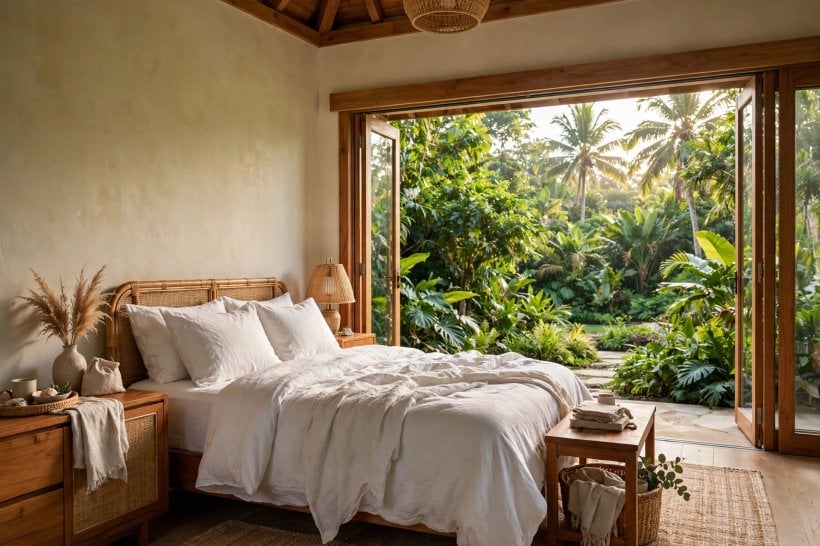
In the tropics, planting is architecture. A well-placed shade tree cools the roof and walls more cheaply than any gadget, screens the house from neighbours, and turns the view from every window into a green one. Palms give height and movement without heavy shade, while dense lower planting, shrubs, ferns and broad-leafed plants, cools the ground, softens the edges of verandas, and gives the private, jungle-edge feeling that makes these homes so loved. Plant in layers, canopy, mid-storey and ground cover, and the garden will look established years sooner.
Plan the practical side with the same care. Keep vigorous roots away from paths, drains and the house itself, and give fast-growing plants room to reach their real size; a garden planted for its mature dimensions needs far less pruning than one planted for the photograph. Paths should stay passable in the wet season, on stone, gravel or decking that drains, and outdoor lighting at low level makes the garden usable after dark without flooding it with glare.
Even a small plot can deliver the essentials: one shade tree, a green screen along the boundary, pots of herbs and flowers near the kitchen door, and a patch of lawn or ground cover where children and dogs actually go. The planning discipline is identical to good tiny house landscaping ideas: shade first, privacy second, beauty as the natural result of both, and upkeep you can honestly sustain.

8. Outdoor Rooms and Slow Evenings
The veranda, deck or courtyard is where a tropical house earns its keep, so furnish it like a room, not an afterthought. A dining table that seats the household plus guests, chairs you can linger in, a daybed or hammock in the shadiest corner, and a fan overhead for still evenings will see more real life than the formal rooms inside. Outdoor kitchens can be as simple as a bench, a sink and space for a grill near the door; the luxury is in the shade, the breeze and the short trip to the table.
Lighting outdoors should be warm, low and few: enough to eat by, read by and find the steps, never a floodlit glare that flattens the garden and invites every insect in the neighbourhood. Candles and lanterns on the table do the decorative work, and they move with the party. Ceiling fans above the seating stretch the comfortable hours at both ends of the day, and on still, humid nights they are the difference between retreating indoors and staying out under the stars.
Privacy finishes the room. Screens, planting and level changes carve the outdoor space into a place that feels held rather than exposed, the same trick that makes the interiors in colorful tiny house interior features feel generous despite their size: clear zones, honest materials, and one or two joyful notes of colour against the green.

9. Costs: Where the Money Works Hardest
Spend first on the passive bones, because they pay you back every day and are miserable to retrofit: orientation, roof form and overhangs, ventilated roof space, ceiling height, and openings placed for cross-breeze. These are decisions, more than purchases, and most cost little extra when they are in the design from the start. Screens, ceiling fans and external shading come next in value; they are modest items that multiply the comfort of everything else.
Materials are where budgets are won or lost. Locally available timber, stone and tile usually beat imported alternatives on price, delivery and, importantly, on how well they suit the climate and how easily local trades can repair them. Ask builders and suppliers what lasts in your area and believe them; the tropics are honest about materials, and the evidence is standing on every street. Where a premium material matters most, at touch points like door handles, taps and the kitchen bench, spend there and economise on the large quiet surfaces.
Running costs deserve a line in the plan too. A house that needs mechanical cooling only on the stillest nights, that dries its own bathrooms with moving air, and whose garden shades its walls will be cheaper and pleasanter to live in for decades. Get quotes for the whole picture, structure, shading, screens and planting, rather than shaving the passive features to protect a finishes budget you can upgrade later.

10. Practical Details and Honest Drawbacks
Tropical living has a maintenance rhythm, and the house should be designed to make it easy. Timber wants periodic oiling or refinishing where sun and rain reach it; metal fixings near the coast should be chosen for corrosion resistance; gutters and roof valleys need clearing before the wettest months. None of this is heavy work, but all of it is real, and access matters: a roof you can reach, gutters you can clear and screens you can remove to wash will actually get maintained.
Wildlife is the other honest topic. Open, breezy houses share their evenings with geckos, frogs and insects, and the design answers are screens, sealed food storage, and gaps closed at the junctions where creatures actually enter. Standing water is the enemy: design it out of the garden, empty it from trays and pots, and the mosquito pressure drops noticeably. Damp is managed the same way, by airflow and sunlight rather than by sealing the house against its own climate.
Finally, build for the storms your region actually gets. Latches that hold shutters and doors, roof fixings specified for local wind, and a plan for securing outdoor furniture turn frightening weather into a routine. A house designed with this respect for its climate, like the bathrooms planned in tiny house bathroom ideas where ventilation and water are handled first and styling second, stays beautiful because its practicalities were never an afterthought.
Final Considerations
A tropical home succeeds when the climate is treated as the client: catch the breeze, shade the glass, shed the rain, and let the garden supply the colour and the coolth. Put the budget into those passive bones, choose materials your region trusts, furnish the outdoor rooms properly, and keep the maintenance rhythm light but regular. Do that, and the house will feel like the best version of its place, open, green and calm, in every season of the year.

0 Comments