
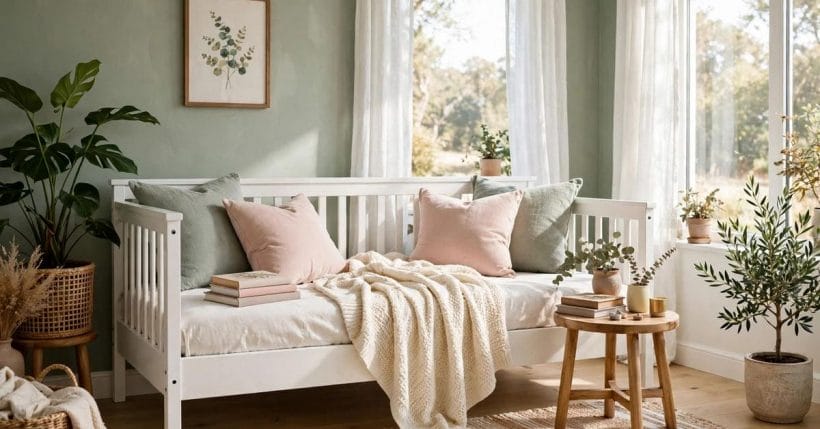
A daybed room is one of the hardest-working rooms in a home. By day it behaves like a sitting room, a reading corner or a home office with a comfortable seat. By night it turns into a proper bed for a guest, a teenager or anyone who needs a place to sleep. The trick is not the daybed itself. It is everything around it: the frame, the cushions, the storage and the light. Get those right and the room never looks like a bedroom pretending to be a lounge, or a lounge with a bed shoved into it. Get them wrong and neither role works well.
This guide looks at daybed rooms as a whole. It covers frames, day styling, night setup, small rooms, guest use, layers, storage, light and the mistakes that spoil the dual role. The aim is a room that feels finished in both modes, without buying twice or rebuilding anything.
1. What Makes a Daybed Room Work
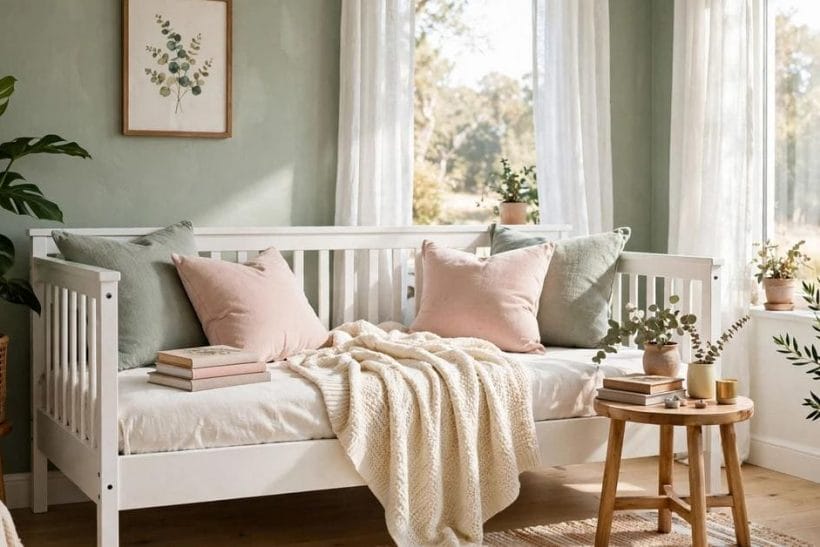
A daybed room works when the change between day and night takes minutes, not a full room rearrangement. The daybed stays in one place. The cushions that make it a sofa by day become the backrest, the bolsters or the spare pillows by night. The bedding lives nearby, not in another room. A small table, a lamp and a place for a book stay useful in both modes. That is the whole test: if switching modes means moving furniture, the room is not set up yet.
The second test is honesty about who sleeps there. A daybed for an occasional overnight guest can be simpler than one a teenager sleeps on every night. A nightly bed needs a proper mattress, good support and bedding that stays comfortable night after night. An occasional guest bed can lean more toward sofa comfort, with bedding brought out for the stay. Neither is wrong, but building for the wrong use is how daybed rooms end up uncomfortable. Decide the main use first, then choose the frame and mattress to match it.
Think of the room in zones rather than as one open space. The daybed zone holds the frame and its cushions. A second zone holds a chair, a table or a desk that works while the daybed is in sofa mode. A third zone, often just a cupboard or a chest, holds the night bedding. When each zone has a job, the room reads as designed rather than improvised, and guests understand how to use it without being told.
2. The Frame: Form First
The frame decides how the room looks and how the bed feels. A wooden frame with a back and two arms reads as a sofa by day and holds cushions in place. A metal frame with a low back reads lighter and suits a modern room, but needs bolsters or large cushions to look like seating rather than a bare bed. A frame with a trundle underneath hides a second bed for extra guests, which suits family homes, though the trundle needs floor clearance to pull out.
Frame height matters more than people expect. A low frame sits at sofa height and feels natural for sitting, but can feel low for getting in and out of bed, especially for older guests. A higher frame feels more like a bed and less like a sofa. There is no single right height; the right one depends on who uses the room most. Sit on the frame before buying, if you can, and picture both modes: sitting with a book, and lying down to sleep.
Support under the mattress is the quiet part of the frame. Slats, a solid base or a sprung base all change how the mattress feels. Slats need to sit close enough together that the mattress does not sag between them. A solid base feels firmer. Whatever the base, check it before dressing the bed: lie down, roll to the edge, sit up. A frame that creaks or flexes under normal use will annoy in both modes, so it is worth checking early rather than living with it.
3. Day Styling: Sofa Mode
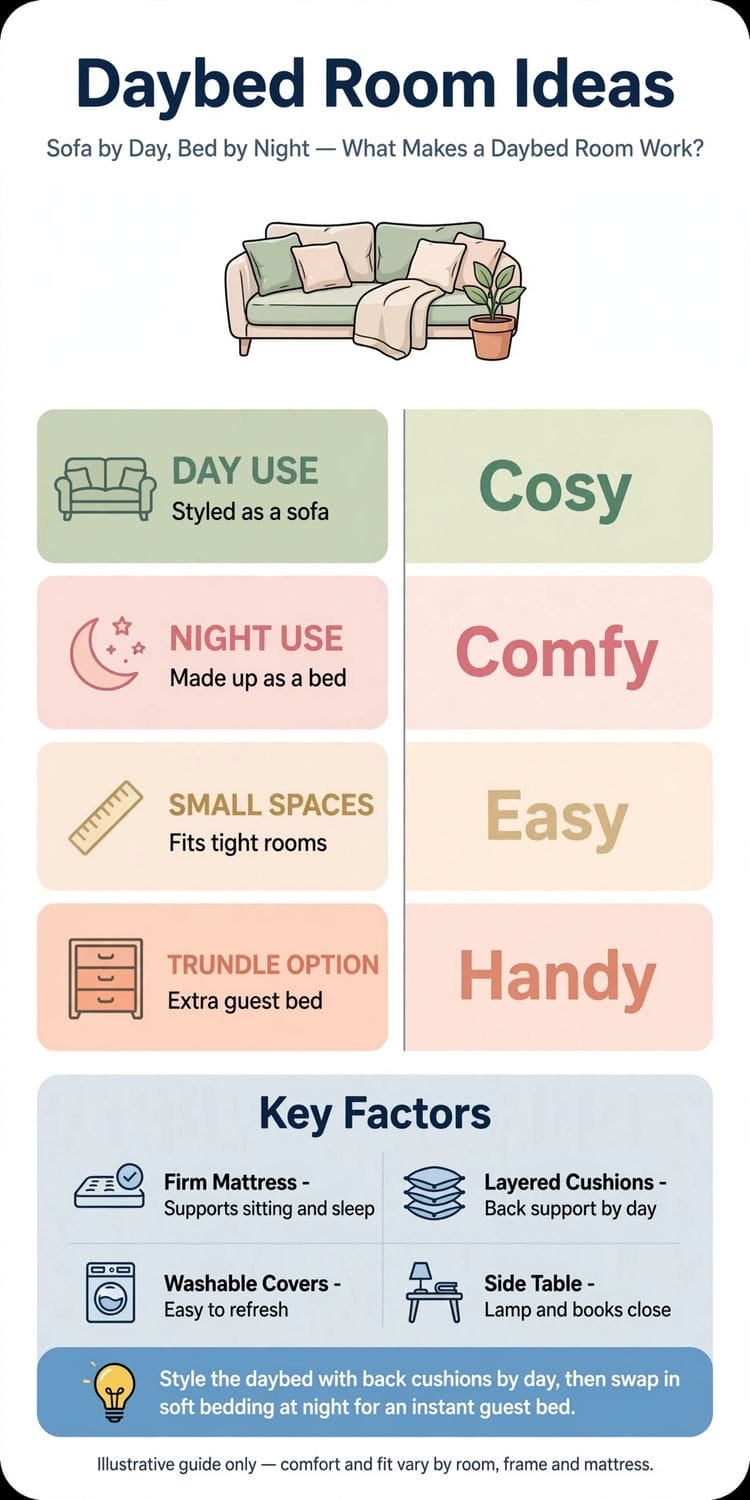
Day styling is what stops a daybed room looking like a spare bedroom. Large cushions along the back turn the frame into a sofa back. Bolsters at the ends act as arms. A throw folded across one corner adds colour and warmth without looking like bedding. The goal is a seat someone would choose for an afternoon of reading, not a bed with cushions piled on it.
Colour does a lot of the work. A daybed dressed in the room’s main colours, with one or two accent cushions, reads as part of the room. Bedding colours hidden underneath do not matter by day, so keep the visible layer to the room palette. If the room leans calm and pale, keep the daybed calm and pale. If the room is bold, let the daybed join in. A daybed that clashes with its room always looks like an afterthought.
Keep the day surface clear. A daybed buried under spare pillows, folded blankets and laundry stops being a seat. Two or three large cushions, one bolster each end at most, and one throw is plenty. Everything else belongs in storage. This is the simplest rule in the whole guide and the one most often broken: a daybed that cannot be sat on without clearing it first is not working as a sofa.
4. Night Setup: Bed Mode
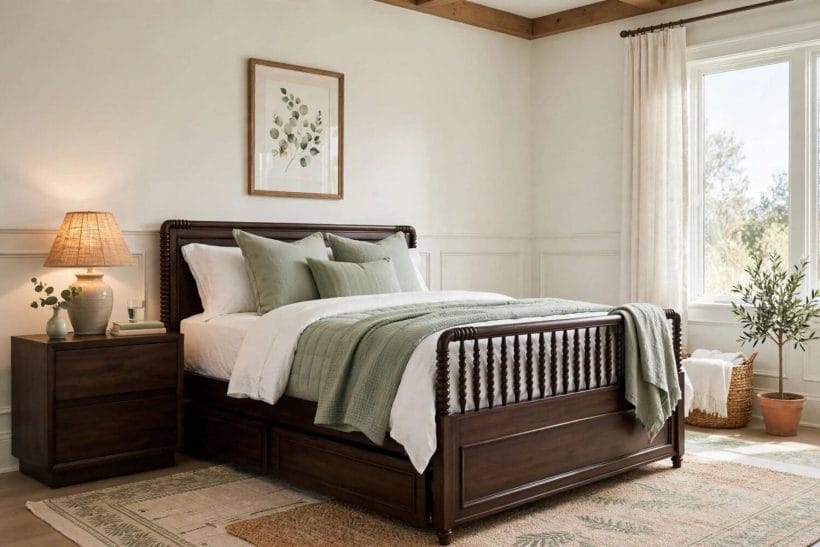
Night setup should take under five minutes. The usual sequence is simple: move the day cushions to a chair or a storage bench, lay the fitted sheet, add the duvet or blankets, and place a sleeping pillow at one end. If the sequence needs more steps, something is stored in the wrong place. Bedding kept in the same room, in a chest, a cupboard or under-bed storage, keeps the changeover short.
The sleeping surface deserves the same attention as any bed. A thin mattress chosen for sofa looks will feel thin at three in the morning. A mattress of reasonable depth, with a topper if the frame sits firm, makes the difference between a guest who sleeps well and one who politely says they slept fine. Pillows matter too: one firm and one soft option covers most sleepers, and both should be clean, aired and ready rather than fetched from elsewhere.
Think about the small things a guest needs at night: a lamp they can reach from the bed, a glass of water, a phone charger nearby, and a clear path to the door. These cost nothing and change how welcome the room feels. A daybed room that works at night is not just a bed in a room; it is a room that has thought about the person sleeping in it. For broader bedroom ideas, see our Scandinavian bedroom ideas, which share the same calm, layered approach.
5. Small Rooms and Corners
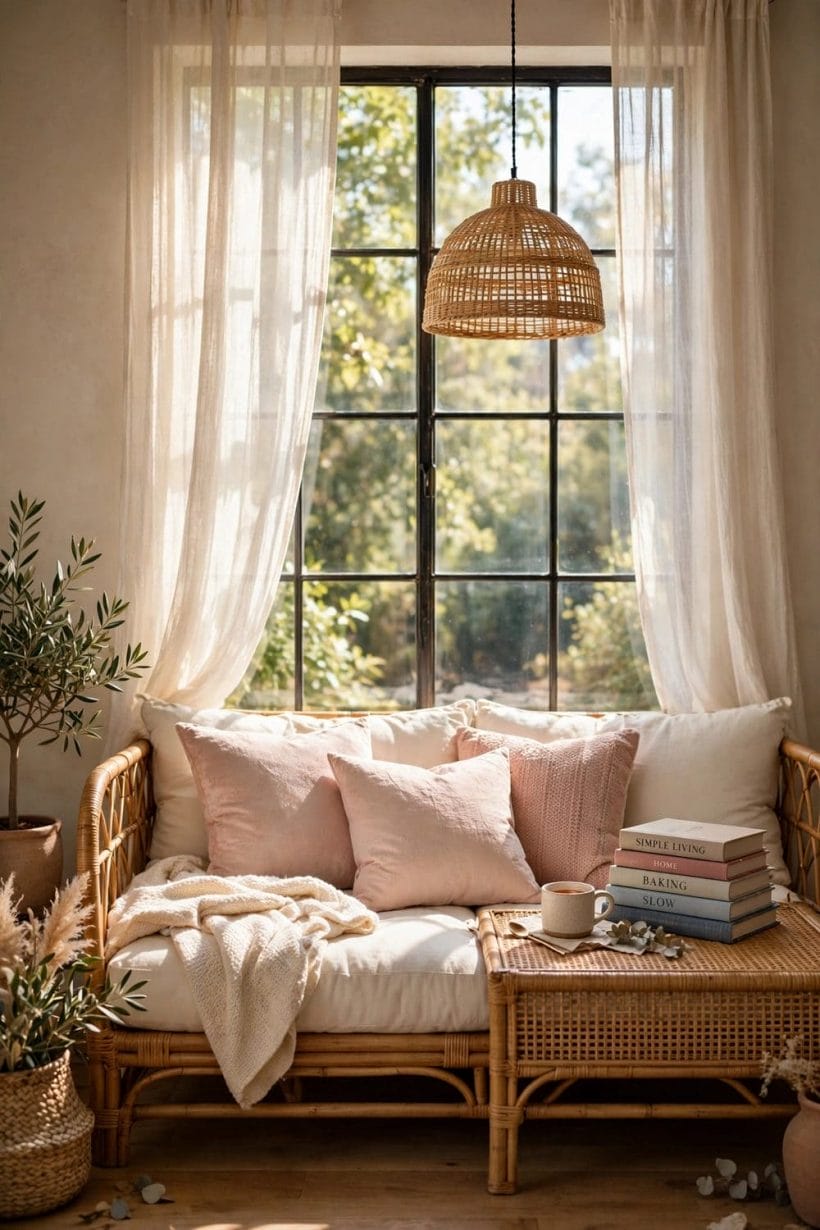
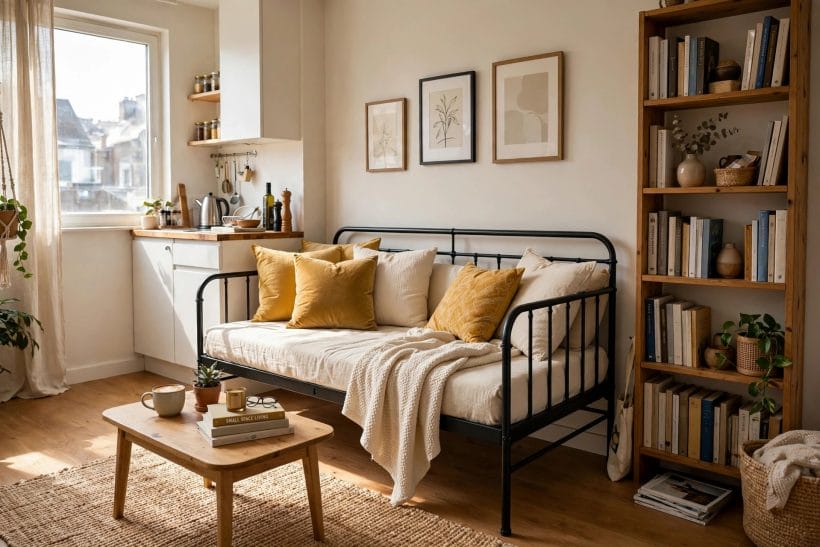
Daybeds suit small rooms because one piece of furniture does two jobs, but small rooms punish clutter fast. In a tight room, choose a frame without bulky arms, keep the colour palette light, and let the daybed sit against the longest wall so the floor stays open. A daybed pushed into a corner gains a natural back and one natural arm from the walls, which means fewer cushions are needed to make it read as seating.
Measure twice before choosing. Leave room to walk around at least two sides of the frame, room to pull out a trundle if there is one, and room for a small table. A daybed that fills a room wall to wall leaves nowhere to stand while making the bed, and making the bed becomes a chore that puts people off using the room. Floor space around the frame is not wasted space; it is the space that makes both modes usable.
Vertical space helps small daybed rooms. Shelves above the daybed hold books and a lamp without taking floor space. A wall-mounted reading light frees the bedside table. Hooks on the wall hold a robe or a bag. These small moves keep the floor clear, which is what makes a small room feel larger than it is. A compact room with clear floors feels generous; a larger room full of furniture feels cramped.
6. Guest Rooms That Earn Their Keep
A guest room that sits empty most of the year is a luxury many homes cannot afford. A daybed room earns its keep by being a real room the rest of the time: a reading room, a hobby room, a homework spot or a quiet office. The daybed is the seat for those uses, not a bed waiting for a guest. This changes how the room is decorated: it gets the good lamp, the comfortable chair and the bookshelf, because it is used daily.
When guests do come, the room should convert without a major clear-out. That means the desk or hobby table keeps its own place and does not sit on the daybed. It means guest bedding has a permanent home in the room. And it means the room is kept tidy as a matter of routine, not tidied in a panic the night before guests arrive. A room used daily stays ready; a room used rarely gathers clutter that must be moved before anyone can sleep there.
Consider what guests actually do in the room besides sleep: they read, charge a phone, hang clothes, and want a little privacy. A chair, a hook or two, a small mirror and a waste bin cover most of it. None of these need to be special guest items; they are the same things that make the room pleasant daily. A guest room that earns its keep is simply a good room that also sleeps people well. For a different take on a hard-working small space, see our she shed ideas.

7. Cushions, Throws and Layers
Cushions are the daybed’s wardrobe, and they do more work than any other single item. Large square cushions along the back create the sofa. Long bolsters at the ends create arms. Smaller accent cushions add colour. At night, the large cushions can stack at one end as a headboard, or move to a chair. The trick is choosing cushions that look good in both roles: firm enough to sit against, soft enough to sleep near.
Throws add warmth and texture. A chunky knit throw across a corner looks inviting by day and becomes an extra layer at night. A lighter cotton throw suits warmer rooms. One throw is enough; two throws start to look like bedding storage. Washable covers matter here more than anywhere: daybed cushions get sat on daily, leaned on, spilled on and slept near. Covers that come off and wash keep the room fresh without replacing anything.
Layering is about depth, not quantity. A fitted base cover in a plain colour, large back cushions in the room palette, one accent colour, and one throw gives a finished look. Adding more layers rarely improves it and usually makes the night changeover longer. If a cushion is never sat against or slept near, it is decoration taking up seat space, and the room is better without it.

8. Storage Around the Daybed
Storage decides whether the day-to-night change is quick or a chore. The best storage sits within arm’s reach of the daybed: a chest at the foot, a cupboard beside it, drawers underneath, or a bench that holds bedding and doubles as seating. Bedding stored in the room converts the bed in minutes. Bedding stored elsewhere converts it eventually, after a trip to another room and a search.
Under-bed storage suits daybeds well, especially drawers built into the frame or flat boxes that slide beneath. Keep night bedding in one box and spare cushions in another, so nothing needs sorting at bedtime. Label nothing; just keep the system simple enough that a guest could find the bedding without asking. Simplicity is the point: if the system needs explaining, it is too complicated.
Day storage matters too. Books, chargers, remotes and reading glasses need a home that is not the daybed itself. A small shelf, a side table with a drawer, or a basket beside the frame keeps the day surface clear. Clutter migrates to flat surfaces, and a daybed is the largest flat surface in the room, so it attracts clutter first. Giving small things their own place protects the daybed’s job as a seat. For storage ideas that suit small rooms, see our bookcase ideas.

9. Light, Colour and Texture
Light changes how a daybed room feels in both modes. Daylight makes it a pleasant sitting room; soft evening light makes it a restful bedroom. A main light for general use, a reading lamp by the daybed, and ideally a dimmer or a low lamp for night-time cover the range. The reading lamp should sit where a seated reader and a lying guest can both reach it, which usually means at the head end of the frame.
Colour should stay calm where people sleep and lively where they sit, which sounds like a conflict but is not. The solution is a calm base with lively accents: pale walls and bedding, stronger colour in cushions, art and one throw. By day the accents lead and the room feels bright. By night the accents move aside and the calm base takes over. One room, two moods, changed by moving cushions rather than repainting walls.
Texture keeps a calm palette from feeling flat. A woven throw, a linen cushion, a wooden frame and a soft rug give the eye and the hand something to enjoy without adding colour. Texture also helps the daybed read as seating: a sofa is a textured object, while a bare bed looks flat. Layering two or three textures across the frame, the throw and the rug is enough. More textures start to compete, and the room loses its calm.
10. Mistakes That Spoil the Dual Role
The most common mistake is buying the daybed for looks alone. A beautiful frame with a thin mattress fails at night. A deep, soft frame that swallows sitters fails by day. Test both modes before committing: sit for a while, lie down, sit up, and imagine doing it daily. A daybed is furniture that gets used twice as hard as a sofa or a bed alone, so it needs to pass both tests, not one.
The second mistake is letting the room become a dumping ground. Because a daybed room is often a spare room, it collects boxes, drying laundry and outgrown toys. Once the room fills with storage, neither mode works: the seat is buried and the bed cannot be made. Protect the room’s job. If storage must live there, give it closed cupboards so the daybed zone stays clear and the room keeps its purpose.
The third mistake is forgetting the guest’s viewpoint. A room arranged for the owner’s daily use can forget the overnight guest: no lamp within reach, no place for a suitcase, bedding stored two rooms away, a door that sticks. Spend one night in the room yourself, or walk through the guest’s evening step by step. The fixes are usually small and cheap, and they are what turn a daybed room from a clever idea into a room people genuinely enjoy staying in. For the wider design context, see our tiny house designs and interior design ideas, and for a living-room companion to this room, our craftsman living room ideas.
Final Considerations
A good daybed room is a room with a clear plan: a frame that suits both sitting and sleeping, cushions that build a sofa by day and step aside at night, bedding stored in the room, and light that works for reading and resting. None of it needs to be expensive. It needs to be thought through once, then it works daily without fuss.
Start with the main use. If the room sleeps someone nightly, put the mattress first. If it hosts guests a few times a year, put the sofa look first and keep the bedding ready. Either way, keep the changeover under five minutes, keep the day surface clear, and keep the room in daily use so it stays ready. A daybed room that is used daily is a room that is loved, and a room that is loved is one guests feel welcome in.





0 Comments