
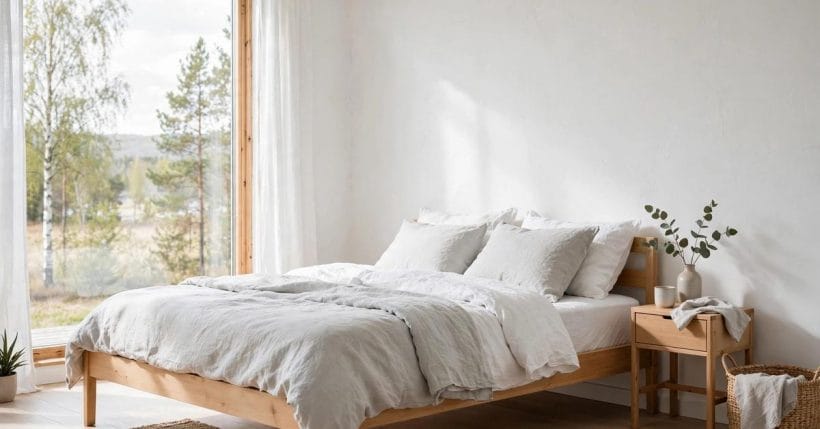
A Scandinavian bedroom is a room that helps you rest. White walls, pale wood, soft textiles, and daylight do most of the work. Nothing shouts. Nothing crowds. The ideas below gather seventy-five Scandinavian bedroom ideas, from the palette and the bed to storage, light, and the small corners that make the room calm.
Scandinavian style is sometimes reduced to “white room, wooden floor.” That misses the point. The style is about light, material, and restraint: natural wood, layered textiles, and a room that breathes. The ideas below keep to that fuller picture.
1. The Palette and the Light
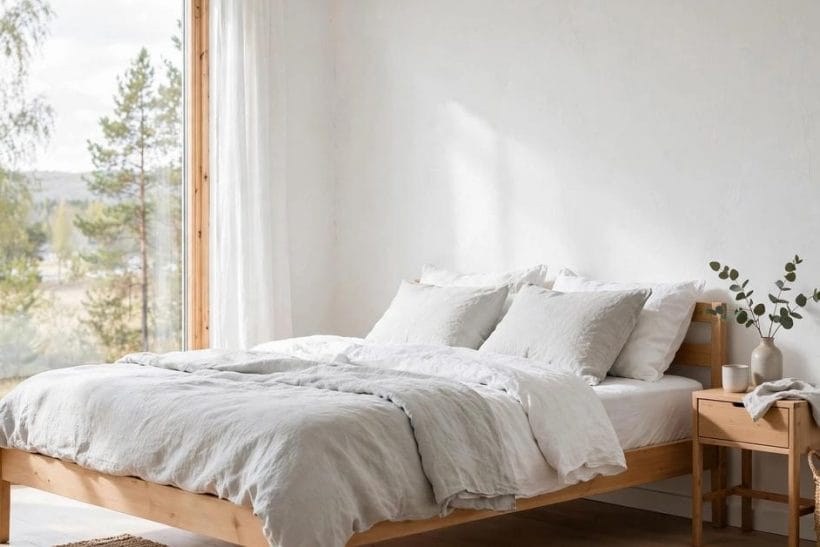
Start with colour and light, because everything else in a Scandinavian bedroom answers to them. White walls bounce daylight. Pale wood warms it. A few muted accents keep it from feeling cold.
| Item | What it is |
|---|---|
| White Walls, Warm White | Choose a warm white, not a blue white. |
| One Muted Accent Wall | A single wall in pale grey or sage gives the room depth without breaking its calm. |
| Pale Wood Floors | Light oak or birch floors are the Scandinavian bedroom's foundation. |
| Daylight as the Main Light | Let daylight do the work by day: sheer curtains, clear windowsills, and no heavy drapes blocking the glass. |
| Soft Evening Lamps | In the evening, small warm lamps replace daylight. |
| The Black Accent | A touch of black — a frame, a lamp, a handle — gives a pale room definition. |
| Grey as the Bridge | Grey bridges white and wood. |
| Beige for Warmth | Beige linen, wool, and wood add warmth without colour. |
| The Low Wooden Bed Frame | A low frame in pale wood keeps the room grounded and open. |
| White Linen Bedding | White linen is the Scandinavian default: breathable, soft with washing, and calm to look at. |
| The Layered Bed | Layer a sheet, a duvet, and a throw, so the bed can be adjusted through the night. |
| The Small-Bedroom Bed | Tiny bedroom ideas show beds sized to small rooms, where a double bed and a walkway must share the floor honestly. |
| Two Duvets, One Bed | Two single duvets on one bed let each sleeper choose their warmth. |
| The Knit Throw | A chunky knit throw across the foot of the bed adds texture and warmth. |
| Pillows, Edited | Two sleeping pillows and two soft extras are enough. |
| The Bed Against the Wall | In a small room, pushing the bed against one wall frees floor space. |
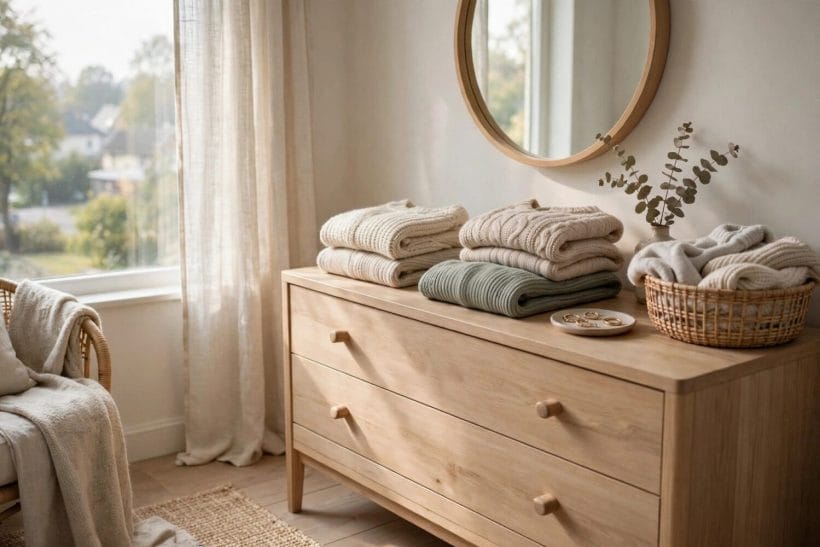
| The Pale Wood Dresser | A dresser in pale oak or birch holds clothes without darkening the room. |
| The Simple Nightstand | A nightstand needs a drawer, a surface for a lamp and a book, and nothing else. |
| The Wooden Bench at the Foot | A bench at the foot of the bed holds tomorrow's clothes and today's throw. |
| The Ladder Shelf | A leaning ladder shelf holds throws and magazines without a heavy bookcase. |
| The Rattan Chair | A rattan or cane chair adds natural texture beside a bed or a window. |
| The Minimal Desk | A small desk in pale wood, with one drawer, gives a bedroom a working corner without turning it into an office. |
| The Wooden Mirror Frame | A round mirror in a thin wood frame suits a Scandinavian wall. |
| The Open Rail | An open clothes rail in wood and steel suits a capsule wardrobe. |
| Built-In Wardrobes, Painted White | Wardrobes painted the wall colour disappear into the room. |
| Under-Bed Drawers | Drawers under the bed hold out-of-season bedding and spare blankets. |
| The Linen Basket | A large basket in natural fibre holds laundry and looks like furniture. |
| The Closed Nightstand Drawer | Charge cables, books, and medicines belong in a drawer, not on the nightstand. |
| The Hallway Overflow | When the bedroom cannot hold everything, a hallway cupboard takes the overflow. |
| The Seasonal Swap Box | One box per season, swapped twice a year, keeps wardrobes honest. |
| The Jewellery Tray | A small tray on the dresser gathers daily pieces in one place. |
| The Hidden Charging Spot | A drawer with a charging point hides phones overnight. |
| Wool Throws in Winter | A wool throw over the duvet adds warmth without weight. |
| Linen Curtains, Sheer | Sheer linen curtains soften daylight without blocking it. |
| The Wool Rug by the Bed | A wool rug beside the bed warms the first step of the morning. |
| Cotton Cushions, Muted | Cushions in muted cotton — grey, beige, dusty blue — add comfort without colour noise. |
| The Knit Pouf | A knit pouf beside the bed is a footrest, a side table, and a seat in one. |
| Layered Curtains | Sheer linen by day and a heavier curtain by night give privacy and warmth. |
| The Natural Fibre Rule | When choosing textiles, prefer natural fibres: wool, cotton, linen. |
| The Unobstructed Window | Keep windowsills clear and curtains light, so daylight reaches deep into the room. |
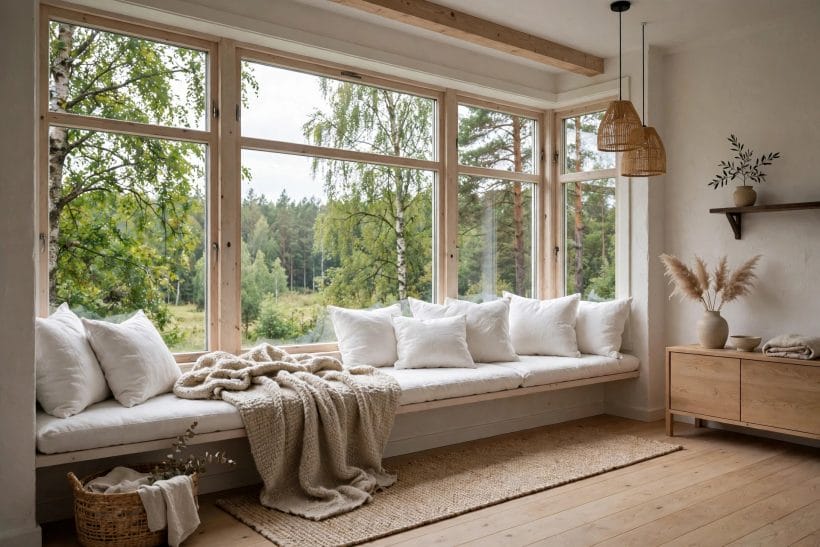
| The Window Seat | A window seat with a cushion and a throw turns a window into a reading corner. |
| Candles in the Evening | Candles are a Scandinavian evening habit: a few on a tray, lit at dusk, blown out before sleep. |
| The Paper Pendant | A paper pendant lamp gives soft, diffused light over the bed or the room's centre. |
| Bedside Wall Lights | Wall lights beside the bed free the nightstand and give reading light without a lamp base. |
| The Mirror Opposite the Window | A mirror opposite a window doubles the daylight in the room. |
| The Dimmer on Every Light | Every bedroom light should dim. |
| The Wall-Mounted Nightstand | A nightstand fixed to the wall frees floor space and looks light. |
| The Platform Bed With Storage | A platform bed with drawers underneath gives a small room a wardrobe's worth of storage without extra furniture. |
| The Single Artwork Rule | One artwork on the wall, chosen well, suits a small room better than a gallery wall. |
| The White Ceiling Trick | Painting the ceiling the same white as the walls lifts a low room. |
| The Sliding Wardrobe Door | Sliding doors save the swing space a hinged door needs. |
| The Fold-Down Desk | A fold-down desk gives a small bedroom a workspace that vanishes when the work ends. |
| The Light Rug, Not Dark | A light rug keeps a small room open. |
| The Vertical Storage Rule | Use the walls, not the floor: shelves high, hooks high, storage up. |
| Dusty Blue Bedding | Dusty blue bedding cools a white room without chilling it. |
| Sage Green Touches | Sage green, in a throw or a cushion, links the room to the garden outside. |
| Terracotta, Used Once | A terracotta pot or a single cushion warms a pale room. |
| Blush Pink, Muted | Muted blush, in linen or art, softens a white room without making it sweet. |
| Charcoal Bedding for Contrast | Charcoal bedding against white walls gives a room depth and a modern edge. |
| The Natural Wood Accent | When in doubt, add wood, not colour. |
| The One Bold Print | One bold print — a geometric cushion or a graphic throw — gives a calm room a focal point. |
| The Windowsill Plant | One or two plants on the windowsill catch the light and soften the window frame. |
| The Hanging Plant | A hanging plant in a corner adds green without taking floor or shelf space. |
| The Large Floor Plant | A large plant in a corner anchors a room and fills an empty corner. |
| Dried Flowers and Branches | Dried flowers and bare branches suit Scandinavian rooms, where natural material matters more than fresh colour. |
| The Herb Pot on the Sill | A herb pot on the bedroom windowsill is a small, scented pleasure. |
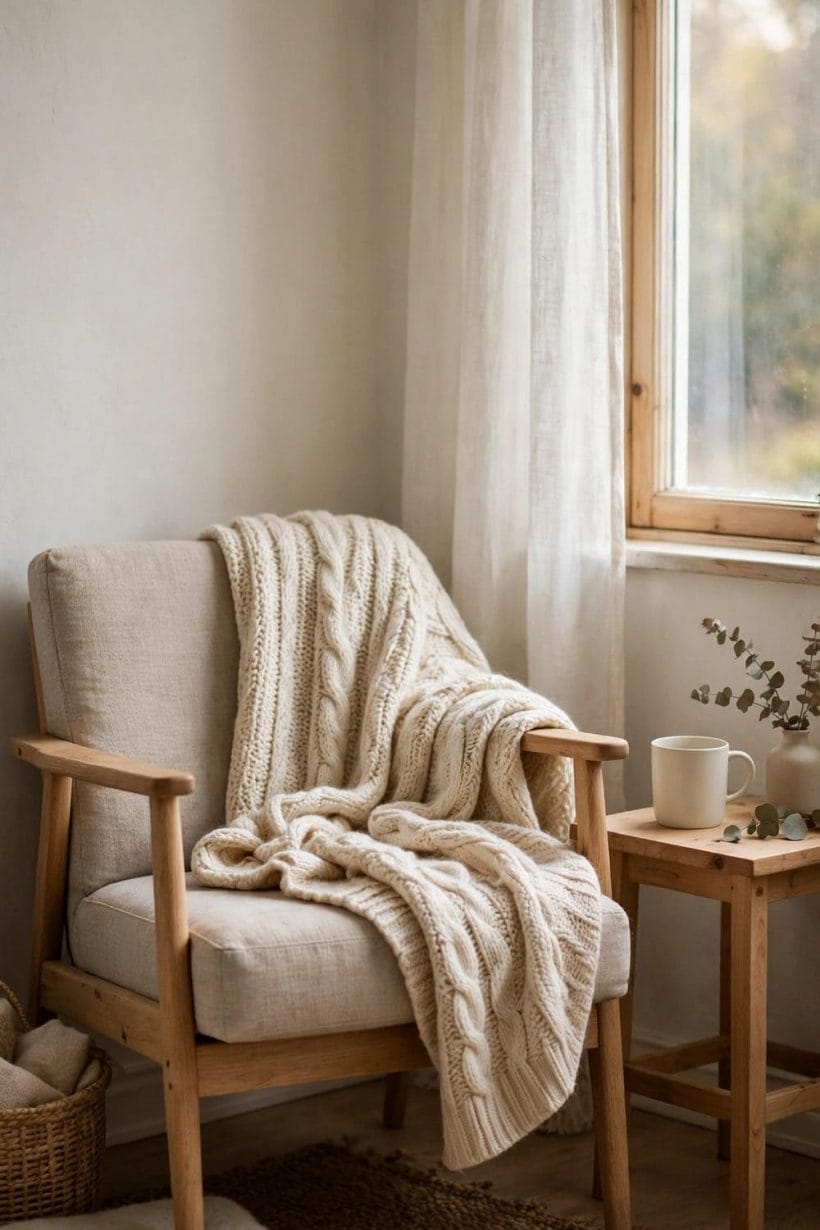
| The Reading Chair Corner | A comfortable chair, a lamp, and a small table make a reading corner. |
| The Book Stack | A small stack of books on the nightstand or the sill makes a room feel lived in. |
| The Scent of the Room | A candle, a diffuser, or fresh linen gives a bedroom a scent. |
| The Ensuite Calm | A bedroom's calm should continue into its bathroom. |
| The Nothing Corner | Leave one corner empty. |
1. White Walls, Warm White
Choose a warm white, not a blue white. Warm white keeps the room soft in winter light, when a cold white turns grey.
2. One Muted Accent Wall
A single wall in pale grey or sage gives the room depth without breaking its calm. Keep the other walls white.
3. Pale Wood Floors
Light oak or birch floors are the Scandinavian bedroom’s foundation. They reflect light and warm the room underfoot.
4. Daylight as the Main Light
Let daylight do the work by day: sheer curtains, clear windowsills, and no heavy drapes blocking the glass.
5. Soft Evening Lamps
In the evening, small warm lamps replace daylight. Two bedside lamps beat one ceiling light for a calm room.
6. The Black Accent
A touch of black — a frame, a lamp, a handle — gives a pale room definition. Keep it to a few small pieces.
7. Grey as the Bridge
Grey bridges white and wood. Pale grey bedding, a grey throw, or a grey rug ties the palette together.
8. Beige for Warmth
Beige linen, wool, and wood add warmth without colour. A beige room feels calm rather than clinical.
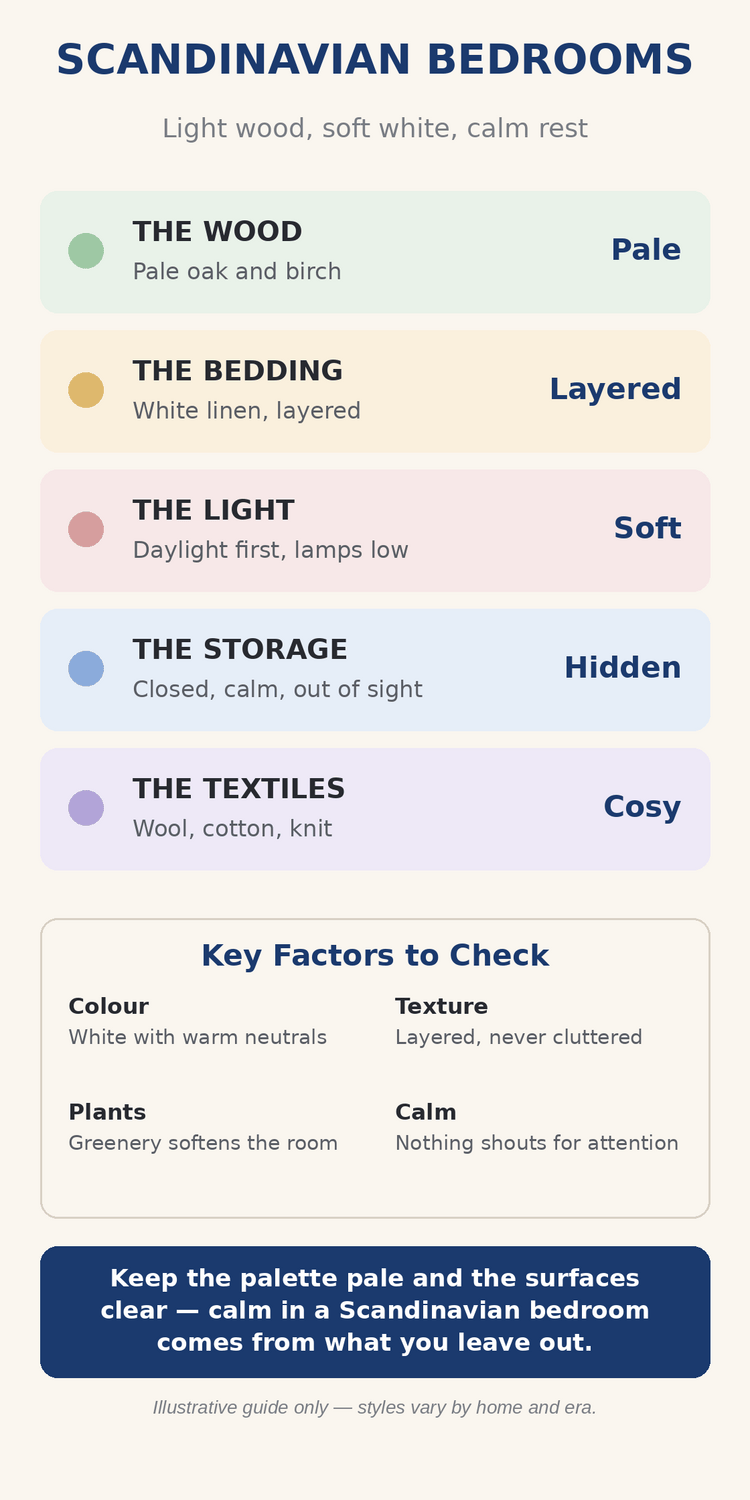
Light direction changes the palette. A north-facing room gets cool, indirect light, so warm whites and pale woods stop it feeling cold. A south-facing room gets strong, warm light, so cooler whites and greys stop it feeling washed out. Test paint colours on the wall, in the room’s own light, at morning and evening, before committing to a whole room. A colour that looks perfect on a swatch card can turn pink or grey on a wall, and the only cure is a second coat. Flooring undertones matter the same way: a floor with a warm undertone suits warm whites, while a floor with a cool undertone suits cooler ones, and the two should be chosen together, not apart.
2. Beds and Bedding
The bed is the room’s centre, so it should be simple, well made, and layered with textiles that invite rest.
9. The Low Wooden Bed Frame
A low frame in pale wood keeps the room grounded and open. High headboards crowd a small room; low frames do not.
10. White Linen Bedding
White linen is the Scandinavian default: breathable, soft with washing, and calm to look at. Layer it rather than ironing it flat.
11. The Layered Bed
Layer a sheet, a duvet, and a throw, so the bed can be adjusted through the night. Layers look inviting and sleep better.
12. The Small-Bedroom Bed
Tiny bedroom ideas show beds sized to small rooms, where a double bed and a walkway must share the floor honestly.
13. Two Duvets, One Bed
Two single duvets on one bed let each sleeper choose their warmth. It is a Scandinavian habit that solves the blanket tug-of-war.
14. The Knit Throw
A chunky knit throw across the foot of the bed adds texture and warmth. Choose wool or a wool blend for a throw that lasts.
15. Pillows, Edited
Two sleeping pillows and two soft extras are enough. More pillows become a nightly chore of stacking and unstacking.
16. The Bed Against the Wall
In a small room, pushing the bed against one wall frees floor space. It suits single sleepers and children’s rooms best.
The mattress is the bed’s hidden half, and it deserves the same attention as the frame. Firmness is personal: some sleepers want a firm surface, others a soft one, and the only reliable test is lying on it for a while, not pressing it with a hand in a shop. Bed height matters too, especially for older sleepers or anyone with stiff joints: a bed that is easy to sit on and rise from is a bed that gets used happily for years. A headboard, or the lack of one, changes the room as well: a padded headboard suits readers, while no headboard suits a room where the wall itself, perhaps with art, does the talking. Bedding care closes the loop: natural fibres wash well and soften with time, and a bedding rotation — two sets swapped through the week — keeps the bed fresh without daily effort.
Bedding weight changes with the seasons, and a Scandinavian bed should change with it. A heavier duvet suits winter nights, while a lighter duvet or a flat sheet suits summer, and the swap is part of the room’s seasonal rhythm rather than a chore. Store the out-of-season duvet clean and dry, in a bag that breathes, so it returns fresh rather than musty. Pillow care follows the same rhythm: pillows should be aired, washed as their labels allow, and replaced when they no longer hold their shape, because a flat pillow undoes the comfort of the best mattress and the softest linen.
3. Wood and Furniture
Scandinavian furniture is light, simple, and made to be used. Pale wood, clean lines, and a few well-chosen pieces beat a crowded room.
17. The Pale Wood Dresser
A dresser in pale oak or birch holds clothes without darkening the room. Keep its top clear except for a lamp or a plant.
18. The Simple Nightstand
A nightstand needs a drawer, a surface for a lamp and a book, and nothing else. A small stool can do the same job.
19. The Wooden Bench at the Foot
A bench at the foot of the bed holds tomorrow’s clothes and today’s throw. It suits rooms with space to spare.
20. The Ladder Shelf
A leaning ladder shelf holds throws and magazines without a heavy bookcase. It suits corners and narrow walls.
21. The Rattan Chair
A rattan or cane chair adds natural texture beside a bed or a window. It keeps the room’s palette warm and light.
22. The Minimal Desk
A small desk in pale wood, with one drawer, gives a bedroom a working corner without turning it into an office.
23. The Wooden Mirror Frame
A round mirror in a thin wood frame suits a Scandinavian wall. It reflects light without adding visual weight.
24. The Open Rail
An open clothes rail in wood and steel suits a capsule wardrobe. Keep it edited, or it becomes clutter on display.
Mixing wood tones is a skill worth learning. A room with one wood tone can feel flat, while a room with three clashing tones can feel accidental. The middle path is two related tones: pale oak and birch together, or ash and pale pine, with the difference small enough to feel deliberate. Secondhand pieces suit this approach, because a found dresser or chair brings a wood tone and a story that new furniture cannot copy. Scale matters as much as tone: a large dresser in a small room crowds it, while a small dresser in a large room looks lost. Measure the wall and the piece together, and leave breathing room around furniture, so each piece can be seen and reached.
4. Storage That Stays Calm
Scandinavian calm depends on storage that hides the mess. Closed storage, used consistently, keeps the room’s surfaces clear.
25. Built-In Wardrobes, Painted White
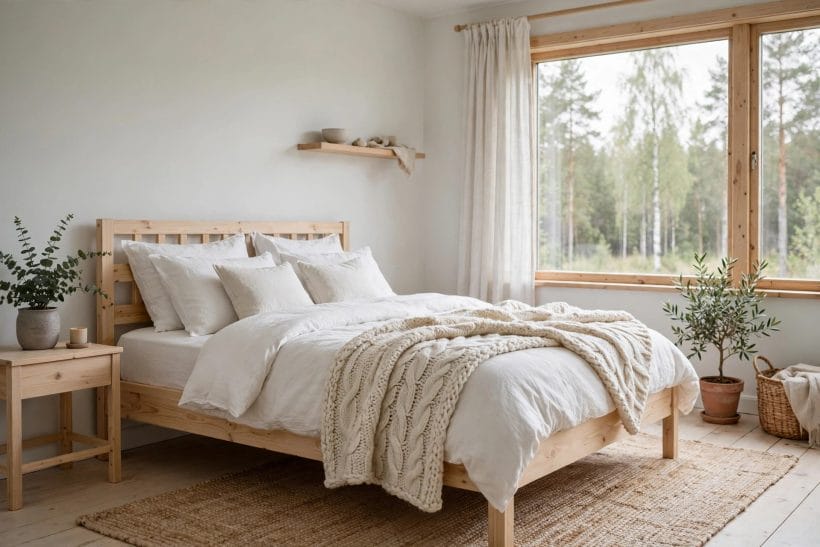
Wardrobes painted the wall colour disappear into the room. Handles in wood or leather keep them warm.
26. Under-Bed Drawers
Drawers under the bed hold out-of-season bedding and spare blankets. They suit rooms without a large wardrobe.
27. The Linen Basket
A large basket in natural fibre holds laundry and looks like furniture. Choose one with a lid for a calmer line.
28. The Closed Nightstand Drawer
Charge cables, books, and medicines belong in a drawer, not on the nightstand. One drawer keeps the surface calm.
29. The Hallway Overflow
When the bedroom cannot hold everything, a hallway cupboard takes the overflow. The bedroom stays a bedroom, not a store.
30. The Seasonal Swap Box
One box per season, swapped twice a year, keeps wardrobes honest. What does not fit the box does not stay.
31. The Jewellery Tray
A small tray on the dresser gathers daily pieces in one place. It stops the scatter of rings across surfaces.
32. The Hidden Charging Spot
A drawer with a charging point hides phones overnight. The room sleeps without glowing screens on show.
Storage stays calm through a weekly reset, not a yearly purge. Once a week, return what drifted: books to the shelf, clothes to the drawer, chargers to their spot. The reset takes minutes when it is weekly and hours when it is yearly, which is why the habit matters more than the storage system. One drawer at a time is the way to declutter a room that has drifted: empty it, keep what belongs, move what does not, and stop. Donations leave the house promptly, or they become a new pile by the door. Labelling helps in shared rooms, where one person’s system is another person’s mystery, and a label on a box or a drawer keeps the peace.
5. Textiles and Layers
Textiles make a Scandinavian bedroom soft. Wool, cotton, and linen, layered and natural, do more than any decoration.
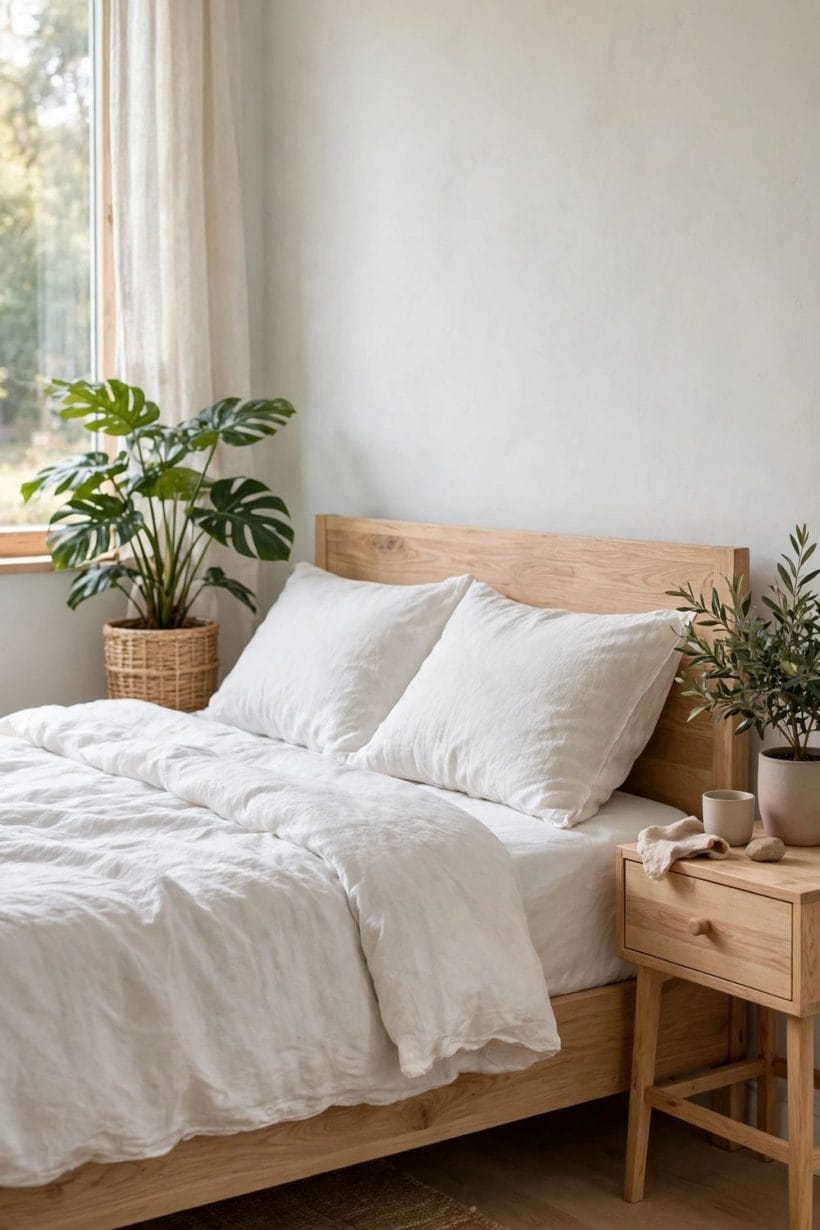
33. Wool Throws in Winter
A wool throw over the duvet adds warmth without weight. It is the first layer to reach for on a cold night.
34. Linen Curtains, Sheer
Sheer linen curtains soften daylight without blocking it. They suit windows that face a garden or a quiet street.
35. The Wool Rug by the Bed
A wool rug beside the bed warms the first step of the morning. Choose a flat weave for easy cleaning.
36. Cotton Cushions, Muted
Cushions in muted cotton — grey, beige, dusty blue — add comfort without colour noise. Two or three are enough.
37. The Suite Bedroom Link
Luxury master suite ideas show textiles at a larger scale, where a sitting area and a dressing corner join the bedroom.
38. The Knit Pouf
A knit pouf beside the bed is a footrest, a side table, and a seat in one. It suits rooms that need flexible furniture.
39. Layered Curtains
Sheer linen by day and a heavier curtain by night give privacy and warmth. Both layers should hang simply, without swags.
40. The Natural Fibre Rule
When choosing textiles, prefer natural fibres: wool, cotton, linen. They breathe, they age well, and they suit the room’s palette.
Textile care is part of the style, not an afterthought. Wool throws should be aired and washed as their labels direct, not thrown in with everything else. Linen softens with washing and should be line-dried where possible, because tumble heat hardens it. Cotton cushions need their covers removed and washed on a cycle, or they slowly grey. Seasonal swapping keeps textiles fresh: wool and heavier weaves in winter, linen and lighter cottons in summer, with the out-of-season set stored clean and dry. A textile that is cared for lasts years and looks better with age, while a neglected one looks tired within a season.
Texture, more than pattern, is what makes Scandinavian textiles interesting. A room with linen, wool, cotton, and knit together feels rich even in one colour, because each material catches light differently and feels different to touch. Pattern, where it appears, should be quiet: a stripe, a check, or a simple geometric, in muted tones that sit with the palette rather than against it. Bold patterns have their place, but in a calm bedroom they should be the exception — one cushion, one throw — while texture does the everyday work of making the room feel layered and soft.
6. Light and Windows
Scandinavian rooms are built around light, because northern winters are dark. Windows, lamps, and candles all play a part.
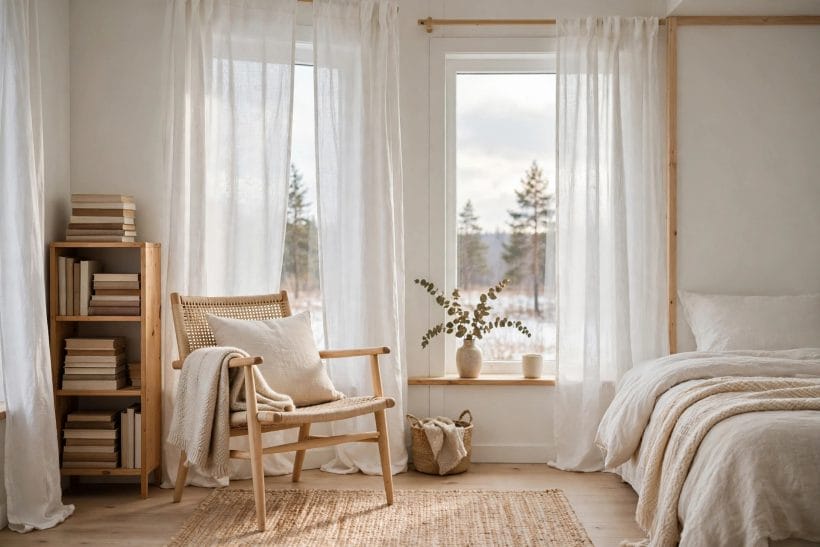
41. The Unobstructed Window
Keep windowsills clear and curtains light, so daylight reaches deep into the room. A cluttered sill blocks light and calm.
42. The Window Seat
A window seat with a cushion and a throw turns a window into a reading corner. It suits wide windows and quiet rooms.
43. Candles in the Evening
Candles are a Scandinavian evening habit: a few on a tray, lit at dusk, blown out before sleep. Never leave them burning unattended.
44. The Paper Pendant
A paper pendant lamp gives soft, diffused light over the bed or the room’s centre. It is light and inexpensive, and it suits the style.
45. Bedside Wall Lights
Wall lights beside the bed free the nightstand and give reading light without a lamp base. Choose a warm bulb and a dimmer.
46. The Asian Design Link
Asian home design ideas share the Scandinavian love of light, wood, and empty space, and the two styles borrow well from each other.
47. The Mirror Opposite the Window
A mirror opposite a window doubles the daylight in the room. It suits narrow rooms, where light struggles to reach the far wall.
48. The Dimmer on Every Light
Every bedroom light should dim. Bright light is for mornings; dim light is for evenings, and the room should do both.
A lighting plan has three layers: daylight, task light, and evening light. Daylight comes from windows kept clear and curtains kept light. Task light comes from bedside lamps and wall lights, aimed where reading happens. Evening light comes from dimmers and candles, low and warm, for winding down. Blackout matters for sleep: a sheer curtain that suits the day will not darken the room at night, so a second layer, or a blind behind the sheer, gives the room both day and night modes. Morning light matters too: a room that wakes dark feels heavy, so the blackout layer should open easily, not fight its cord every morning.
7. Small Scandinavian Bedrooms
Small rooms suit Scandinavian style, because the style is already about less. The trick is choosing fewer, lighter pieces.
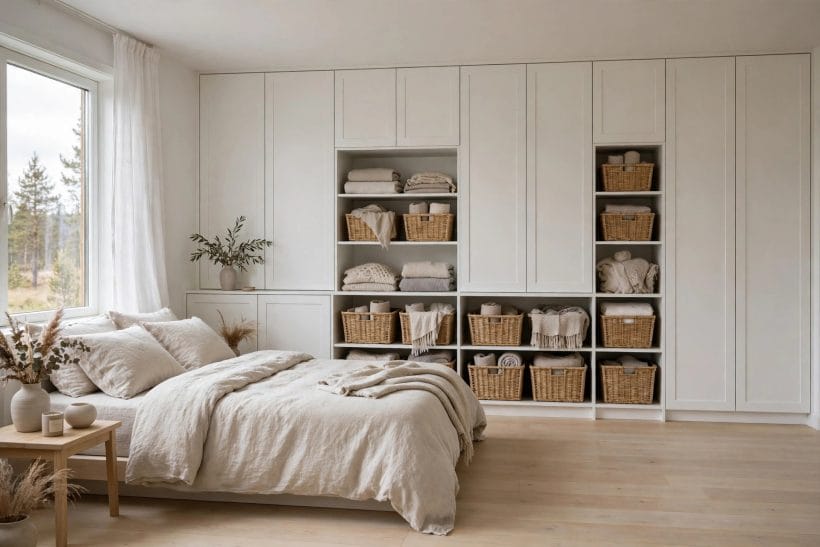
49. The Wall-Mounted Nightstand
A nightstand fixed to the wall frees floor space and looks light. It suits rooms where every centimetre of floor matters.
50. The Platform Bed With Storage
A platform bed with drawers underneath gives a small room a wardrobe’s worth of storage without extra furniture.
51. The Single Artwork Rule
One artwork on the wall, chosen well, suits a small room better than a gallery wall. Let the room breathe around it.
52. The White Ceiling Trick
Painting the ceiling the same white as the walls lifts a low room. A contrasting ceiling presses down on a small space.
53. The Sliding Wardrobe Door
Sliding doors save the swing space a hinged door needs. They suit narrow rooms where a door arc would block a path.
54. The Fold-Down Desk
A fold-down desk gives a small bedroom a workspace that vanishes when the work ends. It suits rooms that must do two jobs.
55. The Light Rug, Not Dark
A light rug keeps a small room open. A dark rug anchors it, and in a small room that anchor can feel like a weight.
56. The Vertical Storage Rule
Use the walls, not the floor: shelves high, hooks high, storage up. Floor space is the scarcest thing in a small room.
Small rooms benefit from every trick that keeps the floor visible. A bed on legs shows floor beneath it, which reads as space. Wall-mounted lights free the nightstand and the floor below it. Mirrors double light and depth, but they should reflect something pleasant — a window, a plant, a calm wall — not a cluttered corner. Door swing matters in a small room: a door that opens into the room eats a quarter of the floor, while a sliding door or a door that opens outward gives that space back. Multifunction furniture earns its place twice: a bench that stores, a desk that folds, a stool that becomes a table.
8. Colour Accents, Kept Quiet
Scandinavian rooms are not colourless. They use colour sparingly: one muted accent, repeated a few times, against white and wood.
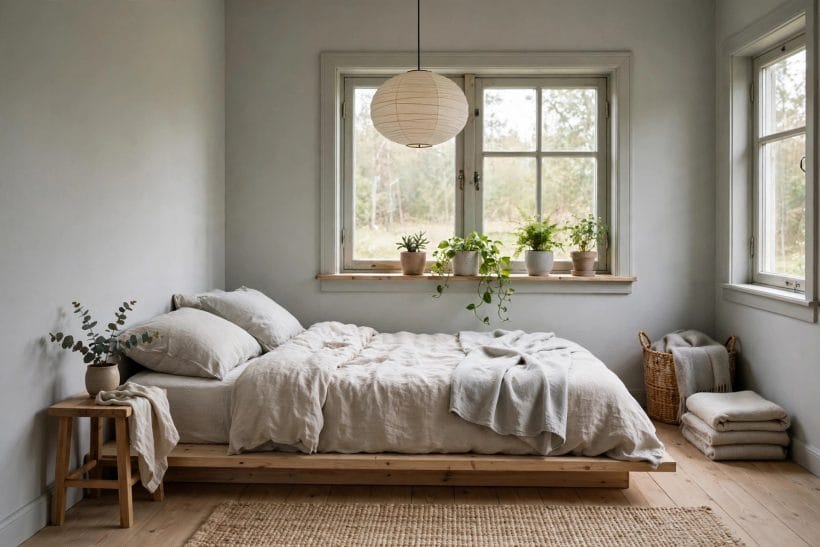
57. Dusty Blue Bedding
Dusty blue bedding cools a white room without chilling it. It suits north-facing rooms, where the light is already cool.
58. Sage Green Touches
Sage green, in a throw or a cushion, links the room to the garden outside. It suits rooms with a garden view.
59. Terracotta, Used Once
A terracotta pot or a single cushion warms a pale room. Used once, it is an accent; used everywhere, it is a theme.
60. The Tuscan Contrast
Tuscan style bathrooms show the opposite approach — warm, rich, and ornate — which is why the contrast clarifies what Scandinavian calm is not.
61. Blush Pink, Muted
Muted blush, in linen or art, softens a white room without making it sweet. Keep it to one or two pieces.
62. Charcoal Bedding for Contrast
Charcoal bedding against white walls gives a room depth and a modern edge. It suits larger rooms, where dark bedding does not crowd.
63. The Natural Wood Accent
When in doubt, add wood, not colour. A wooden tray, a wooden frame, or a wooden stool warms a room without changing its palette.
64. The One Bold Print
One bold print — a geometric cushion or a graphic throw — gives a calm room a focal point. One is a statement; two compete.
Colour in a Scandinavian room follows a quiet proportion: one dominant tone, usually white, one secondary tone, usually wood or grey, and one accent, used sparingly. The accent should be tested before it is committed: a throw or a cushion in the accent colour, lived with for a week, tells you more than a paint chart. Art can carry the accent too, and art is easier to change than a wall. When the accent appears in three places — a cushion, a throw, a print — it feels deliberate. When it appears in ten, it feels like a theme, and a theme is louder than Scandinavian calm wants.
9. Plants and Nature
Plants bring the outdoors into a Scandinavian bedroom, and they suit the style’s love of natural material and living things.
65. The Windowsill Plant
One or two plants on the windowsill catch the light and soften the window frame. Choose plants that suit the room’s light.
66. The Hanging Plant
A hanging plant in a corner adds green without taking floor or shelf space. It suits small rooms and high ceilings.
67. The Large Floor Plant
A large plant in a corner anchors a room and fills an empty corner. One large plant beats five small ones for calm.
68. Dried Flowers and Branches
Dried flowers and bare branches suit Scandinavian rooms, where natural material matters more than fresh colour. They last, and they ask nothing.
69. The Dream-Home Garden Link
Dream homes show bedrooms opening to gardens, where the plant inside and the garden outside become one green view.
70. The Herb Pot on the Sill
A herb pot on the bedroom windowsill is a small, scented pleasure. It suits rooms with morning sun and a cook in the house.
Plants need the room’s light honestly assessed. A plant that wants bright light will fade on a north-facing sill, while a plant that wants shade will scorch in a south-facing window. Watering should follow the plant, not a calendar: check the soil, water when it is dry, and let pots drain, because standing water rots roots faster than drought. Pets add a general caution: some common houseplants are unsuitable around animals that chew leaves, so check before placing a plant low where a pet can reach it. Grouping plants together helps them all, since grouped plants share humidity, and a group reads as one green statement rather than scattered pots.
10. Calm Corners and Finishing Touches
The last ideas are the room’s quiet corners: a chair, a book, a candle, and the feeling that the room is finished, not just furnished.
71. The Reading Chair Corner
A comfortable chair, a lamp, and a small table make a reading corner. It gives the bedroom a use beyond sleeping.
72. The Book Stack
A small stack of books on the nightstand or the sill makes a room feel lived in. Keep the stack short and current.
73. The Scent of the Room
A candle, a diffuser, or fresh linen gives a bedroom a scent. Choose one scent and keep it consistent.
74. The Ensuite Calm
A bedroom’s calm should continue into its bathroom. Double shower ideas show the ensuite half of a calm suite, where two can start the day without crowding.
75. The Nothing Corner
Leave one corner empty. A room with nothing in one corner feels larger and calmer than a room filled to every edge. Emptiness is a Scandinavian idea too.
Calm corners are built from routines as much as furniture. A morning routine — bed made, curtains opened, room aired — sets the room for the day. An evening routine — light dimmed, phone charged outside the room, book on the nightstand — sets it for sleep. The phone-free habit deserves emphasis: a bedroom that charges phones elsewhere sleeps better, because the room stops being an office annex. Scent completes the corner: one consistent scent, from a candle or a diffuser, becomes the room’s signature, and changing it weekly makes the room feel unsettled. The empty corner, left deliberately bare, is the final routine: a daily reminder that the room does not need filling.
Final Considerations
Seventy-five ideas, one habit: keep it light, keep it natural, keep it edited. White walls and pale wood give the room its light. Layered textiles give it warmth. Closed storage keeps it calm. Plants and candles give it life. Everything else is a choice within those lines.
Start with the light and the bed, because those are the room’s two jobs: waking and sleeping. Add storage until the surfaces are clear. Add textiles until the room feels soft. Then stop. A Scandinavian bedroom is finished not when there is nothing more to add, but when there is nothing more to take away.
Over time, a Scandinavian bedroom should change slowly, not all at once. Swap a throw with the seasons, change art when it stops pleasing you, and let plants grow and move as they will. The room’s calm comes from this slow evolution, not from a single decorating day. When something stops working — a chair nobody sits in, a shelf that gathers clutter, a colour that jars — remove it and live with the gap for a week before replacing it. Often the gap is the improvement, and the room is better for the space than for the replacement.
A Scandinavian bedroom also ages with its owner. Tastes change, needs change, and the room should be allowed to change with them: a chair moved to a better corner, a colour accent swapped for another, a storage piece added when life grows more complicated. The style’s restraint makes change easy, because fewer pieces mean fewer decisions, and a room built on light, wood, and textiles absorbs a new piece without a redesign. Keep the bones — the pale walls, the wood floor, the clear windows — and let the rest evolve. A room that evolves stays loved longer than a room frozen at its first photograph.
Sleep itself is the room’s final test, and it is worth designing for directly. A cool, dark, quiet room sleeps better than a warm, bright, noisy one, so the bedroom’s habits — windows opened for air before bed, blackout closed, screens left outside — matter as much as its furniture. Bedding should suit the sleeper’s warmth, not the shop’s display, and pillows should suit the sleeper’s position, not the set they came in. A room designed around sleep, rather than around photographs of sleep, is a room that earns its calm every night, not just on the day it was decorated.

0 Comments