
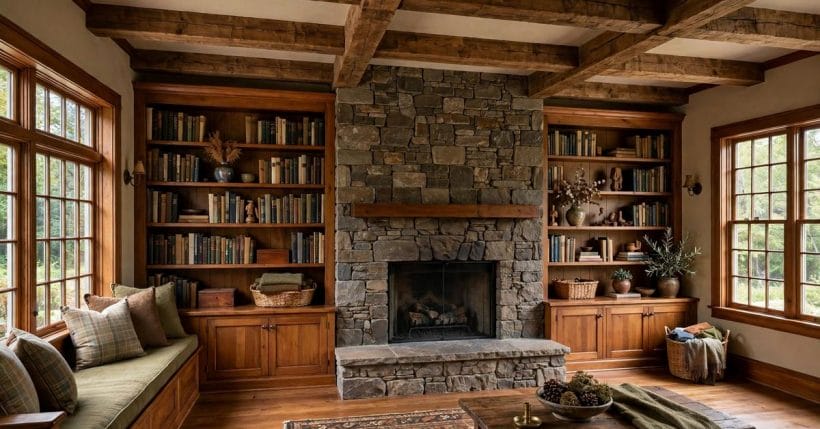
The craftsman living room is built from honest materials and visible structure: wood beams, stone fireplaces, built-in bookcases and furniture that shows its joints. It is a style that rewards patience — rooms assembled slowly, from good materials, rather than decorated all at once. These seventy-five ideas cover the structure, the furniture and the details that make the style work.
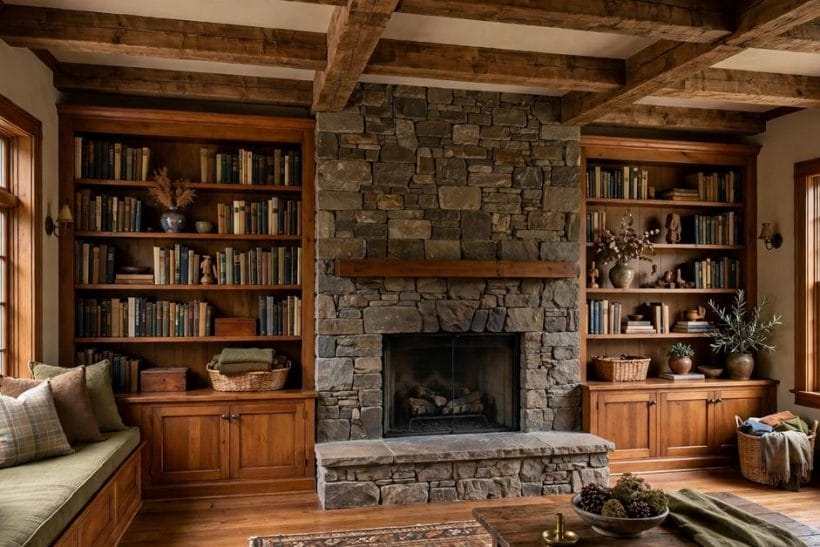
Craftsman style appears across the house — bathrooms, exteriors and porches all have their own versions — but this post stays in the living room. Fireplaces, bookcases, beams and seating are the subject here, and everything below belongs to that one room.
1. Beams and Ceilings
The craftsman ceiling is a room’s crown: exposed beams, warm wood and honest structure shown rather than hidden. It sets the tone for everything below it.
1. Exposed ceiling beams
Dark wood beams across a lighter ceiling give a craftsman room its structure and rhythm. Keep them chunky and simple, and let them run the full span of the room.
2. A coffered wood ceiling
A grid of wood coffers adds depth to a ceiling without needing ornament. Simple crown molding ideas treat ceiling trim the same way. Paint or stain the coffers to match the room’s trim for a unified look.
3. A beamed inglenook ceiling
Lowering the ceiling over a fireplace inglenook makes the fireside feel intimate. Beams at the lower level mark the change without needing a wall.
4. Wood panelling overhead
Tongue-and-groove wood panelling on a ceiling warms a room in a way plaster cannot. Use it in a smaller room or over a seating area rather than everywhere.
5. A skylight between beams
A skylight set between existing beams brings daylight into a craftsman room without disturbing its structure. Frame it in matching wood so it reads as part of the ceiling.
6. White ceiling, dark beams
A white or cream ceiling between dark beams keeps a craftsman room bright while preserving its structure. The contrast is the classic craftsman look.
7. A beam as a room divider
A single heavy beam across a ceiling can mark the line between living and dining areas without a wall. It divides the space while keeping it open.
8. Reclaimed beams
Reclaimed timber beams bring age and character that new wood cannot match. Check them for soundness and treat them for pests before installing.
Beams carry more than a ceiling; they carry the room’s history. A beam that shows its grain, its pegs and its age tells visitors that the house was built by people who cared about structure, and that message shapes how the whole room is read. When adding beams to a room that lacks them, match their scale to the room — too heavy and they press down, too light and they look like decoration rather than structure.
Ceiling height changes how beams should be used. In a room with generous height, heavy beams add grandeur without pressing down, while in a lower room the same beams can feel oppressive. Match beam depth to ceiling height, and where height is limited, use shallower beams or a lighter stain so the ceiling still reads as structured without weighing on the room.
2. Stone Fireplaces
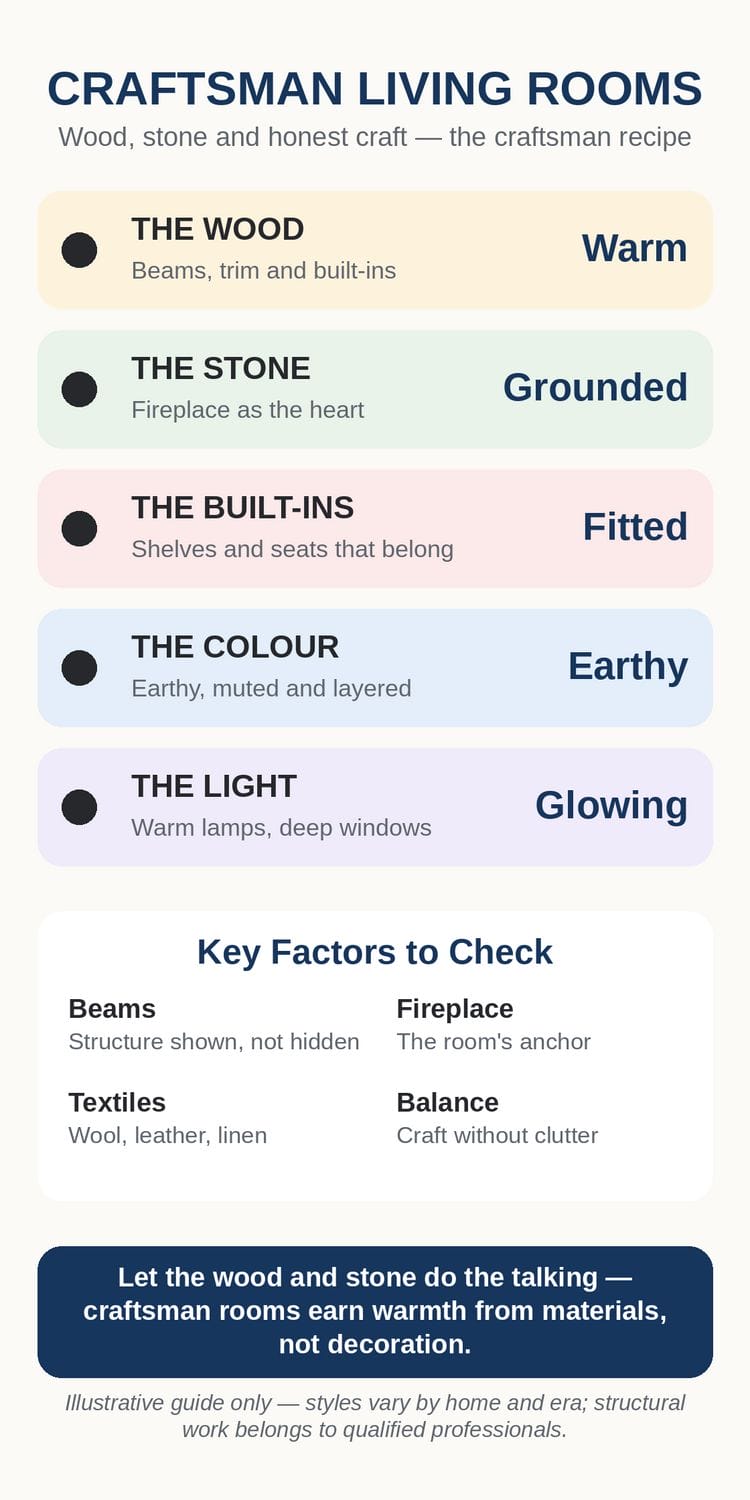
The fireplace is the heart of the craftsman living room: stone, substantial and built to be used, with a mantel that holds the room’s history.
9. A river rock fireplace
River rock gives a fireplace a natural, gathered look that suits the craftsman love of local materials. Keep the mortar joints tight and the stones varied.
10. A stone fireplace with a wood mantel
A thick wood mantel over a stone firebox is the craftsman fireplace in its simplest form. Fireplace wall designs cover the wall side of the same feature. Choose a mantel timber that matches the room’s trim.
11. A fireplace with built-in seats
Seats built into the fireplace wall on either side of the fire create an inglenook for reading and conversation. Cushion them in a durable fabric.
12. A tiled fireplace surround
Handmade tiles around a firebox add colour and craft to a stone fireplace. Choose earthy glazes — green, brown, rust — that suit the palette.
13. A fireplace as the room’s anchor
Placing the fireplace on the room’s longest wall and arranging furniture around it makes it the natural focus. Rustic fireplace ideas take the same feature in a rougher direction. Everything else in the room can then be quieter.
14. A corner fireplace
A fireplace set into a corner suits smaller craftsman rooms, freeing the main walls for bookcases and windows. Angle the seating to face it comfortably.
15. A fireplace with storage
Firewood storage built into the fireplace wall — a niche or a recessed box — keeps logs handy and adds to the room’s honest, working character.
16. A simple stone hearth
A broad stone hearth, extending into the room, gives a fireplace presence and a place to set things down. Keep it clear of clutter so the stone shows.
A fireplace used daily needs a hearth that can take it: stone that resists heat and soot, a firebox lined properly, and tools that are actually used rather than displayed. The prettiest fireplace in a craftsman room is the one with a worn hearth and a stack of logs beside it, because it shows the room is lived in rather than staged. Build for use first and appearance will follow.
3. Built-In Bookcases
Built-in bookcases are craftsman furniture at architectural scale: they hold books, display craft and make walls work harder.
17. Bookcases flanking the fireplace
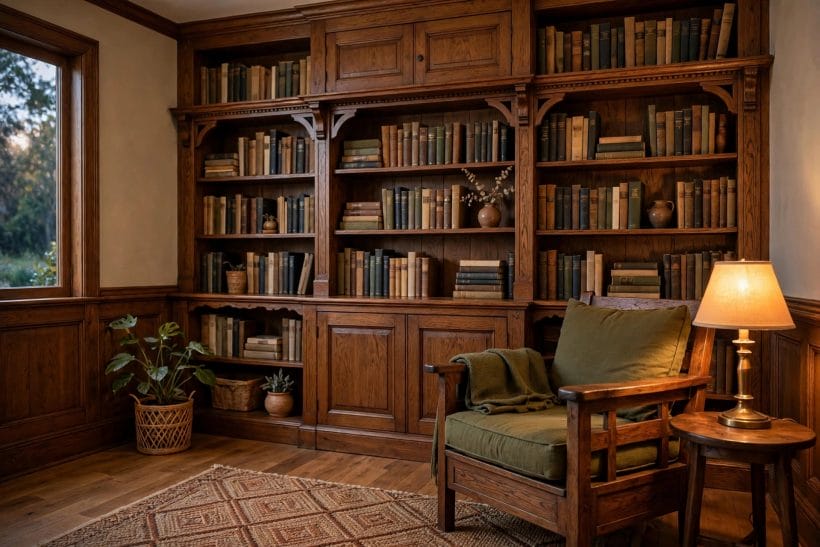
Bookcases built on either side of the fireplace frame the fire and give the room’s main wall a finished, symmetrical look. Fill them with books first, ornaments second.
18. A full wall of bookcases
A whole wall of built-in bookcases turns a living room into a library. Break the run with a window seat or a display niche so it does not feel like a shop.
19. Low bookcases under windows
Low bookcases beneath windows give storage without blocking light. Top them with a cushion and they double as extra seating.
20. A bookcase with glass doors
Glass doors on the upper section of a bookcase protect special books while keeping them visible. Use plain glass, not leaded, for a quieter look.
21. Bookcases with a ladder rail
A brass or wood ladder rail along tall bookcases is both practical and evocative. It suits rooms with high ceilings and serious book collections.
22. A reading nook in a bookcase
A recessed seat built into a run of bookcases makes a reading nook that feels private even in a shared room. Add a lamp and a cushion and it is complete.
23. Painted vs stained bookcases
Stained wood bookcases suit the classic craftsman look, while painted ones suit a lighter, updated version. Either works if the colour matches the room’s trim.
Bookcases reveal their owners, which is why they suit craftsman rooms so well. A bookcase filled with books that have actually been read — spines worn, volumes in no particular order, a few laid flat — feels honest in a way a styled shelf never does. Fill built-ins with what you own and love, and let the arrangement grow naturally rather than decorating it all at once.
A bookcase that reaches the ceiling needs a way to reach its top shelves, or those shelves become dead space for dust. A small step stool kept nearby, or a ladder rail fitted from the start, keeps every shelf usable. If neither suits the room, keep bookcases to a height that can be reached comfortably and use the wall above for art instead.
4. Window Seats and Inglenooks
Craftsman rooms are built for sitting: window seats for looking out, inglenooks for gathering round the fire, and both for quiet hours.
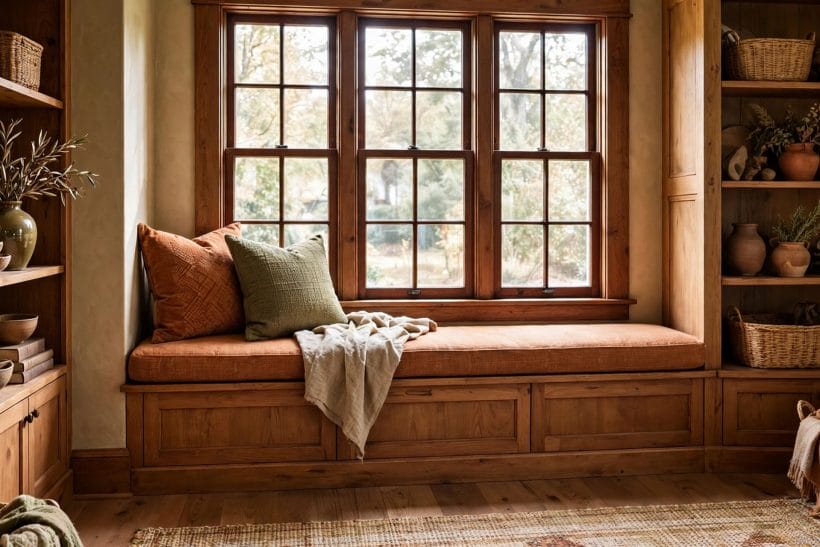
24. A window seat with storage
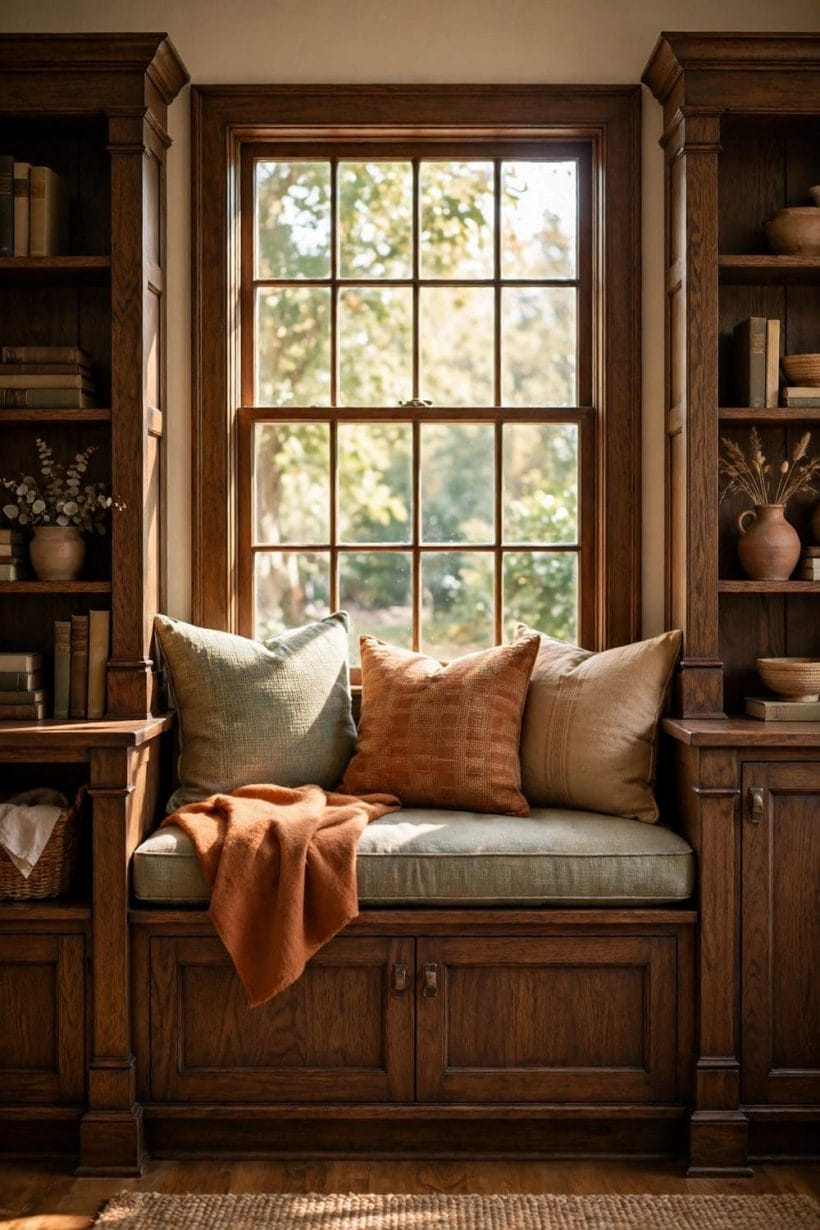
A window seat with drawers or cupboards beneath it gives a room seating and storage in one piece of joinery. Cushion it thickly and add back pillows.
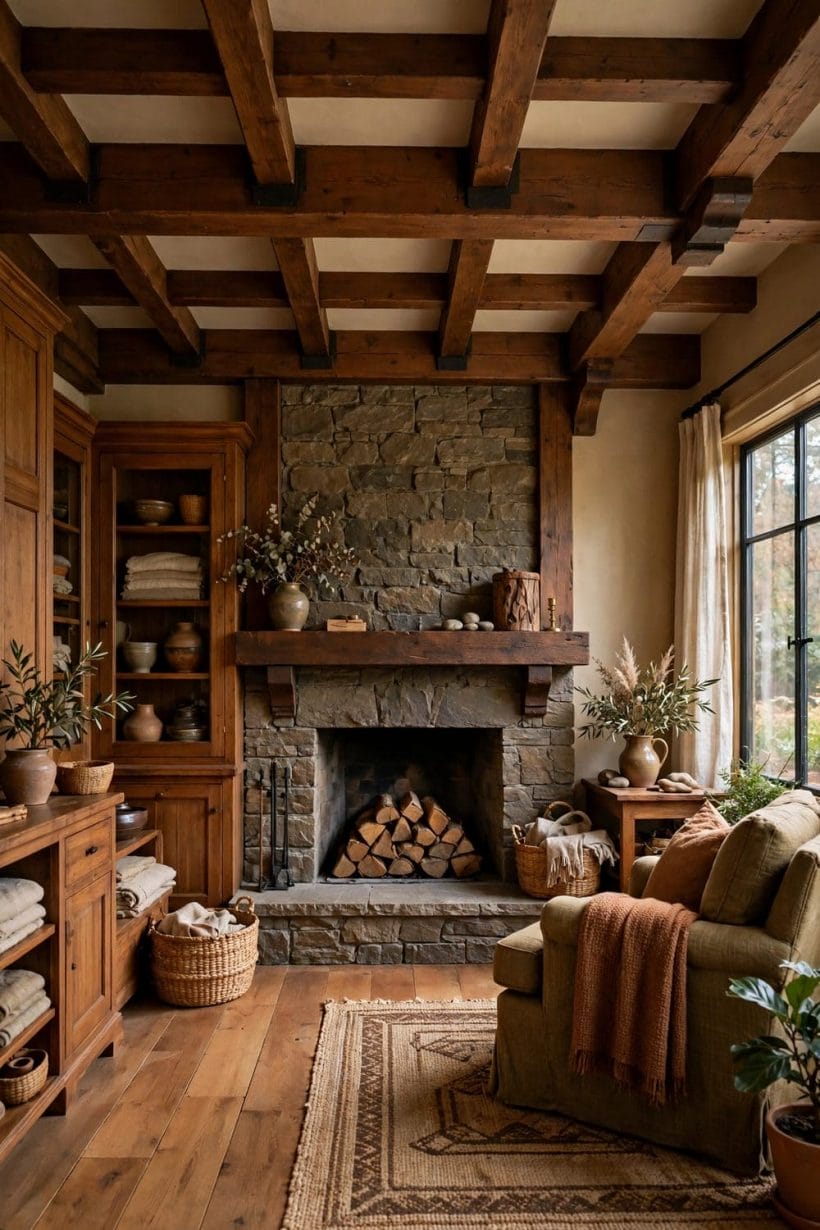
25. An inglenook by the fire
An inglenook — a recessed fireside seating area — is the craftsman room’s most sociable feature. It needs a fire, two seats and low light to work.
26. A bay window seat
A seat fitted into a bay window gives a room a sunny reading spot and a view. Keep the cushion simple and the pillows few.
27. A seat under a staircase
The space under a staircase, fitted with a seat and shelves, turns dead space into a favourite corner. It suits smaller craftsman homes particularly well.
28. A window seat for guests
A wide window seat doubles as an extra bed for occasional guests. Make the cushion firm and keep bedding nearby.
29. A fireside bench
A simple wooden bench beside the fireplace gives extra seating without the bulk of another chair. It can move where it is needed.
30. A reading chair by the window
A single comfortable chair placed by a window, with a lamp and a small table, is the smallest version of a craftsman sitting place. It needs nothing more.
A window seat is only as good as its cushion and its light. A thin cushion over hard joinery will go unused, while a thick cushion, a back pillow and a lamp nearby will make the seat the most contested spot in the house. If a window seat is built but never sat in, the fault is rarely the seat’s position; it is usually the comfort of the sitting itself.
5. Mission Furniture
Mission furniture — straight lines, solid oak, visible joinery — is the craftsman room’s natural furniture. It is honest, heavy and built to last.
31. A mission oak sofa
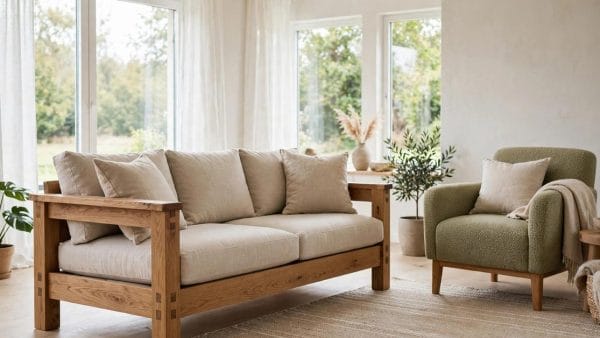
A mission sofa, with its straight lines and exposed wood frame, anchors a craftsman room. Luxury master suite ideas use the same anchoring idea in a bedroom. Upholster it in leather or a sturdy woven fabric.
32. A mission rocking chair
A mission rocking chair by the fire is the room’s invitation to slow down. Choose one with a comfortable seat height and a solid frame.
33. A mission coffee table
A low, square mission coffee table with a wood or tile top suits the craftsman room’s horizontal lines. Coffee table pictures show the same piece in other styles. Keep its top clear except for one or two objects.
34. A mission bookcase
A freestanding mission bookcase, with its distinctive slatted sides, holds books beautifully and suits rooms without built-ins.
35. A mission sideboard
A mission sideboard against a dining-side wall gives storage and a serving surface. Its straight lines suit the room without competing with the fireplace.
36. A Stickley-style chair
A chair in the Stickley manner — vertical slats, solid arms, honest joints — brings the craftsman movement’s ideals into a single piece. Buy the best-made version you can afford.
37. Leather upholstery
Leather suits mission furniture because it ages visibly and well, gaining character rather than wearing out. Choose a natural, uncorrected leather where possible.
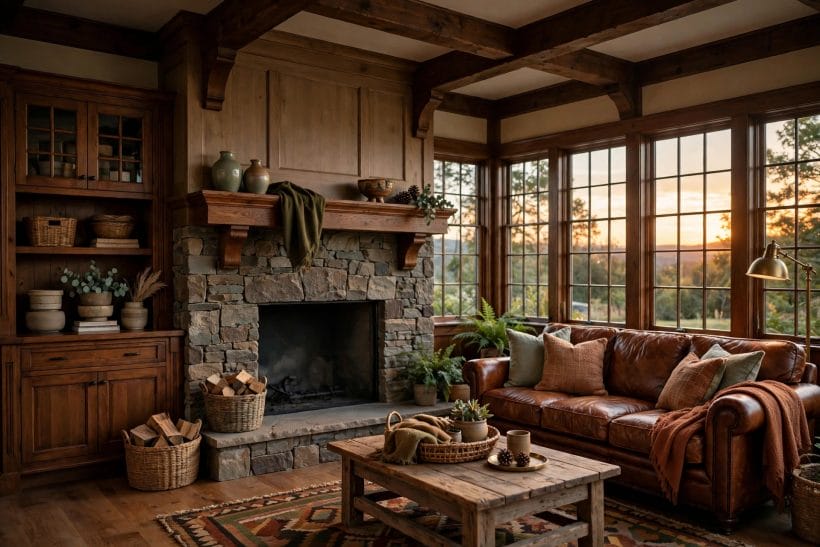
38. A mission lamp
A mission table lamp with a mica or stained-glass shade gives warm, low light that suits evening in a craftsman room. Place it where it lights a chair, not the whole room.
Mission furniture rewards a buyer who checks joints the way a craftsman would. Look for mortise-and-tenon joints that are tight and flush, pegs that sit proud by a fraction, and a finish that lets the wood’s grain show through rather than hiding it under a thick coat. Furniture made this way costs more because it takes longer to make, and that time is visible in every joint.
Wood species matter in mission furniture, because each brings its own grain and colour to the room. Quartersawn oak, with its distinctive ray fleck, is the classic mission timber, while cherry darkens beautifully with age and walnut brings a deeper tone. Choose one dominant timber for a room’s mission pieces so the furniture reads as a set rather than a collection of unrelated woods.
6. Wood Trim and Wainscoting
Craftsman trim is woodwork you can feel: broad casings, deep baseboards and wainscot that gives walls a lower, warmer half.
39. Broad window casings
Wide, flat window casings in stained wood give craftsman windows weight and presence. Keep the profile simple — flat boards with a small cap, not ornate moulding. Trim molding ideas cover the same woodwork family.
40. A plate rail
A plate rail around a room’s upper wall displays plates and pottery while breaking up a tall wall. It is a practical craftsman detail with a long history.
41. Wainscoting in the living room
Wood wainscoting to chair height, capped with a simple rail, warms a living room’s lower walls and protects them. Paint it or stain it to match the trim.
42. A picture rail
A picture rail lets art hang without nails in plaster and adds a horizontal line that suits craftsman rooms. Hang pictures from it with cord and hooks.
43. Deep baseboards
Tall baseboards in stained wood ground a craftsman room and protect its walls. Match them to the door casings for a unified look.
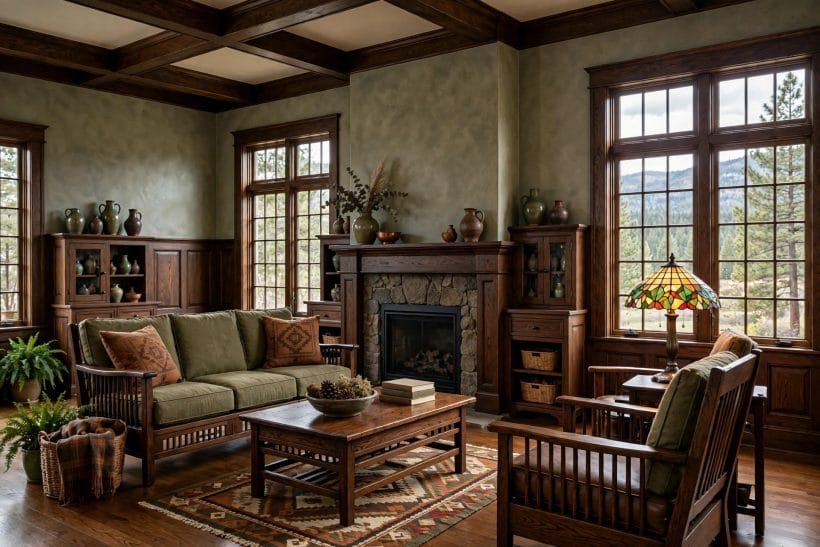
44. A wood ceiling beam trim
Trim applied to ceiling beams — a simple cap or a boxed beam — finishes the beams and ties them to the room’s other woodwork.
45. Door casings to match
Door casings in the same profile and finish as window casings give a room a coherent woodwork scheme. Consistency matters more than elaboration.
Trim is the room’s handwriting: consistent, legible and personal. When trim profiles change from room to room without reason, the house feels patched together, while a single profile carried through a home ties its rooms into one story. If you are adding trim to a craftsman room, copy an existing profile from elsewhere in the house rather than inventing a new one.
7. Colour and Textiles
Craftsman colour is earthy and muted: greens, browns, rusts and golds drawn from nature, with textiles that add warmth and pattern without shouting.
46. An earthy palette
Greens, browns, ochres and rusts form the craftsman palette, drawn from wood, stone and soil. Use them in muted tones rather than bright ones. Brown living room ideas let one warm colour lead in the same way.
47. A green accent wall
A deep sage or olive accent wall behind a fireplace or bookcase adds depth without breaking the palette. Test it in the room’s light before committing.
48. Wool throws
Wool throws in earthy patterns add warmth to sofas and chairs and suit the craftsman love of natural materials. Drape one, do not fold it away.
49. A patterned rug
A rug with a geometric or nature-inspired pattern in muted colours anchors a craftsman seating group. Choose wool for durability and warmth.
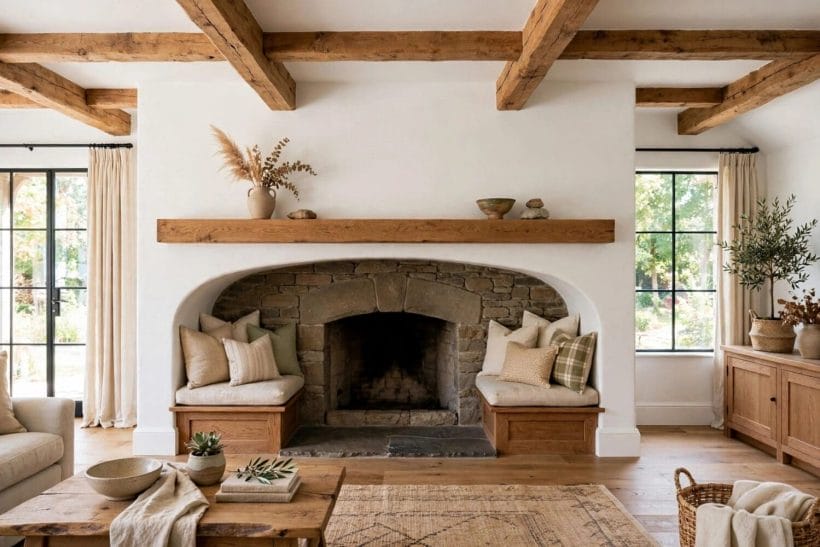
50. Linen curtains
Plain linen curtains in a natural tone soften craftsman windows without hiding their woodwork. Hang them to the floor for a tailored look.
51. Cushions in nature colours
Cushions in moss, rust, gold and brown echo the room’s palette and add comfort. Mix solid colours with one or two simple patterns.
52. A quilt as a throw
A handmade-style quilt, draped over a sofa arm or a chair back, adds craft and colour to a craftsman room. It suits the movement’s love of handwork.
53. Brass and copper accents
Brass and copper — in lamps, trays and hardware — warm a craftsman room’s wood and stone. Use them sparingly so they read as accents, not as theme.
Colour in a craftsman room should feel gathered rather than chosen: colours that occur in wood, stone, wool and clay, mixed the way nature mixes them. A palette pulled from the room’s own materials — the beam’s brown, the stone’s grey, the rug’s rust — will always harmonise, because every colour in it already belongs to something real in the room.
Textiles soften the hard surfaces of a craftsman room — wood, stone, leather — and without them the room can feel severe. A rug underfoot, a throw over a chair arm, curtains at the windows: each adds a layer of softness that makes the room inviting rather than merely impressive. Choose textiles in the room’s own palette so they warm it without competing with it.
8. Lighting the Craftsman Room
Craftsman lighting is low, warm and layered: table lamps and sconces rather than a single bright ceiling light, with firelight as the final layer.
54. Table lamps with warm shades
Table lamps with mica, amber glass or linen shades give the warm, low light craftsman rooms need. Place them beside chairs, not in the middle of the room.
55. Wall sconces
Wall sconces in wood and metal, fitted beside the fireplace or along a long wall, add light without cluttering surfaces. Choose simple, straight-lined designs.
56. A central pendant
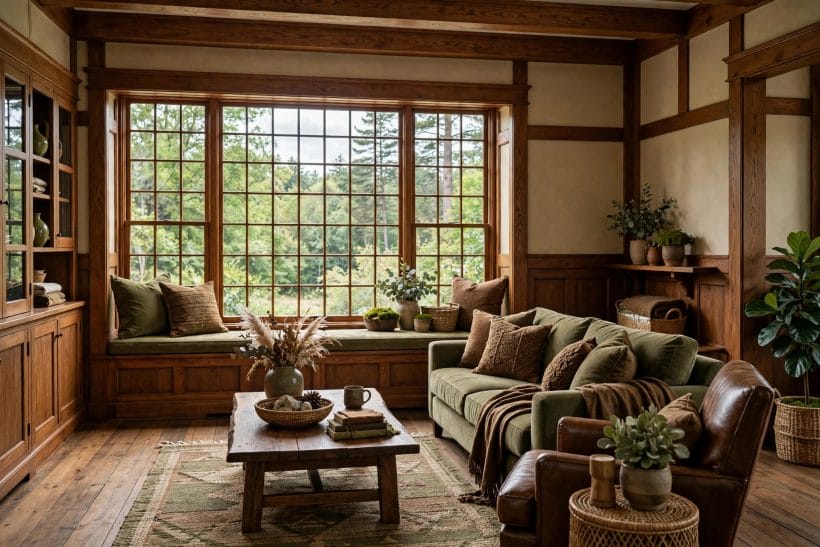
A single pendant with a warm shade can light a craftsman room’s centre without the harshness of recessed lights. Hang it low enough to feel intimate.
57. Firelight as lighting
A real fire, where the house allows it, is the craftsman room’s best light: flickering, warm and social. Plan seating to face it.
58. Dimmer switches
Dimmers on every light circuit let a craftsman room move from bright daytime to soft evening with one touch. They are the cheapest improvement a room can have.
59. Natural light first
Craftsman rooms were designed around natural light, with windows placed for sun through the day. Keep window treatments light so daylight does its work.
60. A reading lamp
A dedicated reading lamp beside a favourite chair — adjustable, warm and bright enough to read by — is the craftsman room’s most-used light.
Evening light transforms a craftsman room more than any other single change. As daylight fades and lamps come on, wood glows, stone deepens and the room draws inward around its fire and its chairs. Design the lighting for that hour first — low lamps, warm shades, a dimmer — and let daytime take care of itself, since daylight is generous to craftsman rooms on its own.
9. Art, Rugs and Details
Details finish a craftsman room: a few pieces of art, a good rug, pottery on a shelf — chosen slowly and placed with care.
61. Arts and Crafts prints
Prints in the Arts and Crafts manner — nature motifs, muted colours, simple frames — suit craftsman walls. Hang few, and hang them at eye level.
62. Pottery on display
A few pieces of studio pottery, displayed on a shelf or a mantel, add craft and colour. Group them in odd numbers and leave space around each piece.
63. A handwoven rug
A handwoven rug, whether an antique or a good reproduction, grounds a craftsman seating group. Choose a pattern that echoes the room’s colours.
64. A collection, edited
A collection — books, pottery, photographs — displayed with restraint suits a craftsman room better than a crowded shelf. Edit regularly.
65. A clock on the mantel
A simple wood clock on the mantel adds a craftsman detail that is also useful. Choose a design with visible joinery and a quiet face.
66. Plants in the room
A few sturdy plants — a fern, a snake plant, a potted tree — soften a craftsman room’s wood and stone. Keep them healthy; a dying plant undoes the effect.
67. A fireplace tool set
A well-made fireplace tool set, hung beside the fire, is both practical and decorative. Choose iron or brass to match the room’s hardware.
68. Family photographs
Framed family photographs on a bookcase or a wall make a craftsman room personal. Use simple wood frames that match the room’s trim.
Details should be added the way a room is lived in: one at a time, over years, as objects are found, given or made. A room decorated all at once from a single shop looks complete but feels anonymous, while a room assembled slowly carries the marks of its owners’ lives. Let the details accumulate, and edit them occasionally, keeping only what still earns its place.
Art should be hung where it can be seen properly, not where a blank wall happens to be. A print hung too high, or in a dark corner, might as well not be there, while the same print at eye level beside a chair becomes part of daily life. Hang art at the height of the people who will look at it, in light that flatters it, and give each piece enough wall to breathe rather than crowding several together.
10. Small Craftsman Rooms
Craftsman style suits small rooms well, because it is built from structure and material rather than from scale. A small room can be thoroughly craftsman.
69. A small room, fully trimmed
Even a small room benefits from full craftsman trim — broad casings, deep baseboards, a plate rail. The trim gives the room character that furniture alone cannot.
70. Built-ins instead of furniture
Built-in bookcases and window seats save floor space in a small craftsman room while adding its character. Build them to fit the room exactly.
71. A light palette for small rooms
A lighter version of the craftsman palette — cream walls, pale wood, sage accents — keeps a small room bright while preserving its character.
72. One fireplace, well placed
A small room needs only one fireplace, placed on its best wall, to feel thoroughly craftsman. Arrange the room’s seating around it.
73. Mirrors for light
A mirror placed opposite a window doubles the light in a small craftsman room. Frame it in wood to match the trim.
74. Vertical storage
Tall, narrow bookcases use wall height in a small room without taking floor space. Fill them from the bottom up so they look grounded.
75. A small room’s rug
A rug that fits under the front legs of the seating, rather than wall to wall, defines a small room’s living area without shrinking it.
A small craftsman room benefits from one generous gesture: a full-height bookcase, a real fireplace, a window seat done properly. One substantial feature gives a small room character that a dozen small touches cannot, because it shows ambition rather than compromise. Spend the budget on one thing done well, and let the rest of the room stay simple around it.
Final Considerations
A craftsman living room is never bought whole. It is assembled over years — a beam here, a bookcase there, a chair that will outlive its buyer — until the room feels as if it grew that way. Start with the structure, choose furniture that shows its making, and let the details accumulate slowly.

0 Comments