

You live well in a tiny apartment by giving every job a place, keeping only what earns its space, and resetting the room a little every day. A tiny apartment is one space doing the work of several rooms — sleeping, cooking, working, relaxing, and storing everything you own — so it rewards clear zones, furniture that does more than one job, and storage that uses the full height of the room. This guide takes you through the whole system, from the first declutter to the nightly reset.
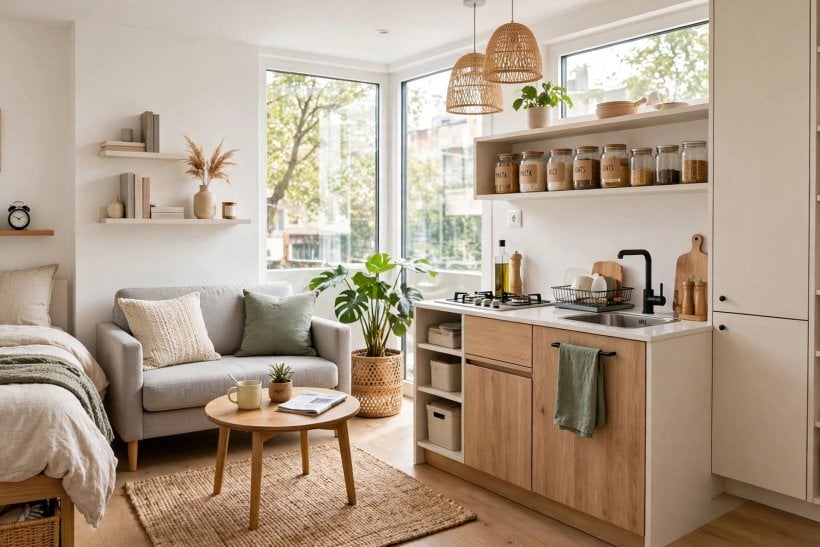
1. Start With What You Have: Measure and Map the Space
Before you buy a single basket or shelf, measure the apartment properly. Note each wall, the position of doors, windows, radiators, and outlets, and the ceiling height, and measure your largest furniture pieces as well. A simple sketch stops the two most common mistakes: buying furniture that almost fits, and arranging a room around a door swing or a heater you forgot was there.
Look at the sketch and name the jobs the space must do: sleeping, sitting, eating, working, cooking a real meal, and storing clothes, cleaning supplies, and the awkward items nobody plans for. You will not give each job its own room. You will give each job a defined area, a time of day, or a piece of furniture that folds, slides, or flips between roles. That decision, made in advance on paper, is what makes the rest of this guide work.
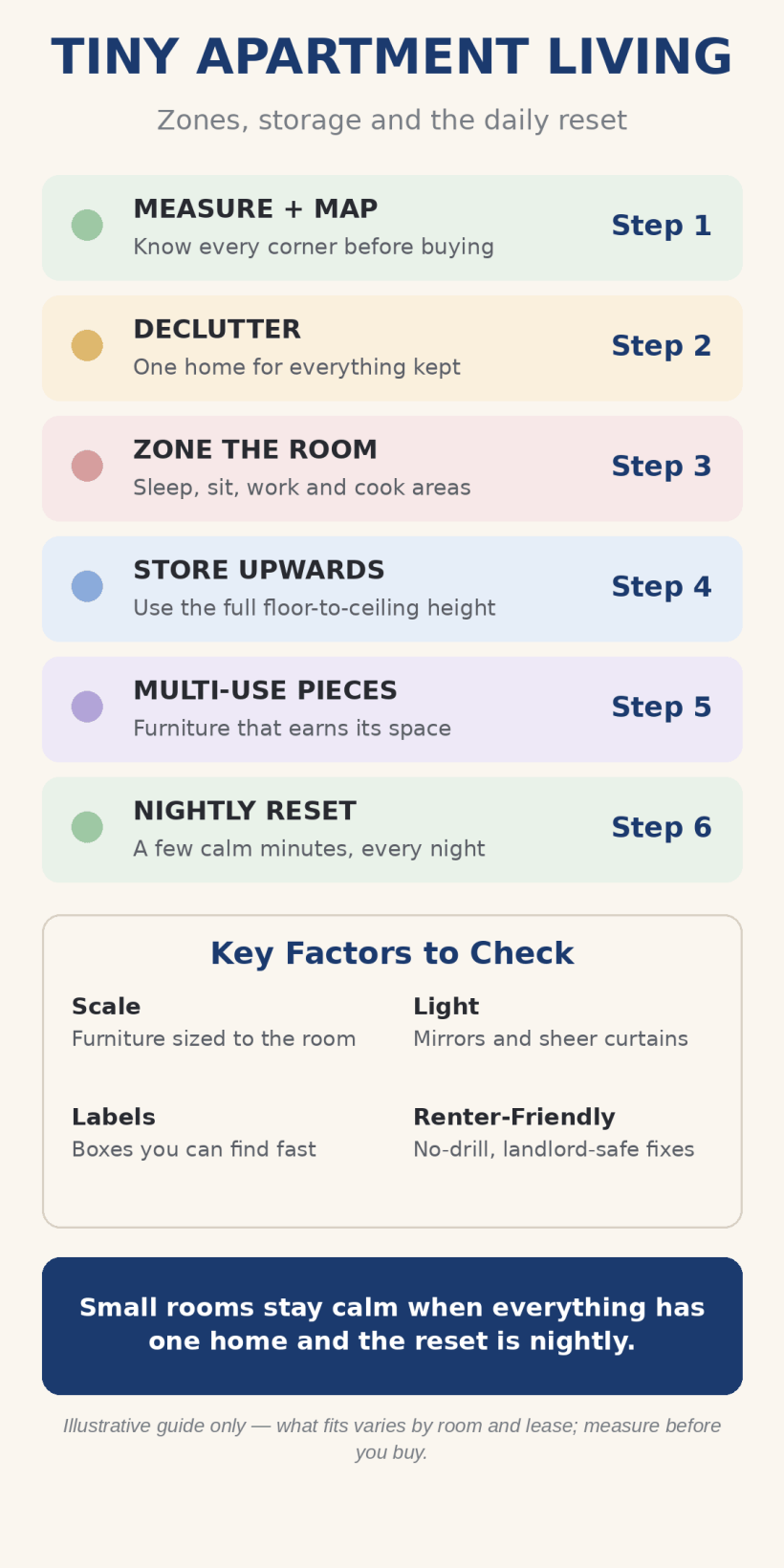
2. The Mindset: Keep Less, Use Everything
Tiny apartment living rewards the intentional. Every object takes floor, shelf, or counter space away from something else, so the question is never whether an item is nice. It is whether you use it, love it, and have a home for it. If the answer to the last part is no, the item becomes clutter.
Adopt a one-in, one-out habit once your first clear-out is done: a new jumper means an old one leaves. This is not about owning almost nothing. It is about keeping the volume of your belongings matched to the storage you actually have, so the apartment stays calm instead of slowly refilling.
What counts as a tiny apartment?
Listings and cities use studio, micro, and tiny differently, and no one size defines the term everywhere. In practice it means a compact home, often a studio or small one-bedroom, where living, sleeping, and cooking overlap and storage is limited. If one room must do several jobs and every cupboard counts, you are living tiny, whatever the label on your lease.
3. Decluttering Without Stripping Your Life Away
Declutter in categories, not in panic. Work through clothes, books, papers, kitchen items, and sentimental things in that order, keeping what you use and what genuinely matters. Ruthless does not mean joyless: a tiny apartment should still contain your favorite books, your good pan, and the picture you love — just not three of everything, plus boxes you never opened after moving in.
Give everything that survives a home in the same pass. An item without a home will migrate to the floor, the chair, or the counter, and in a tiny apartment that is visible from every seat. If you cannot find a home for something you want to keep, another item has to leave, a storage solution has to change, or the thing belongs elsewhere — a family member’s garage, or a scanned copy instead of a paper file.
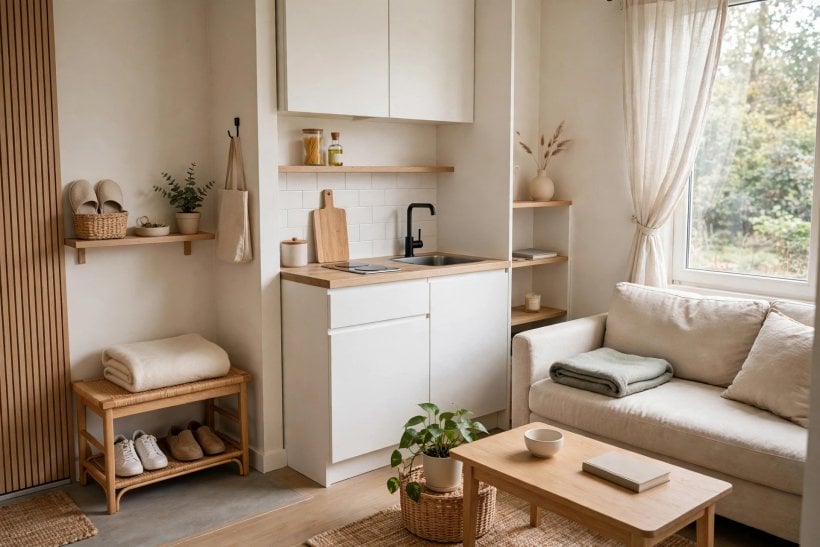
4. Zones: One Room, Several Jobs
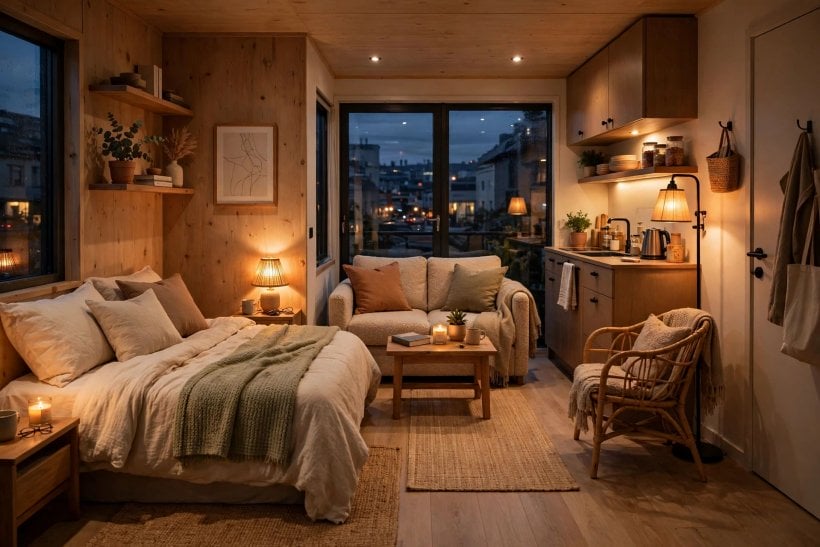
Zoning is what stops a tiny apartment feeling like a bedroom with a kitchen in it. You do not need walls. A rug defines the sitting area. A bookcase or open shelf divides sleep from living while letting light through. A curtain gives a sleeping corner privacy at night and disappears during the day. Facing furniture inward, keeping walkways clear, and giving each area its own small light source all reinforce the sense that you have rooms, even when you do not.
Keep the zones honest about how you live. If you work from home five days a week, the work zone deserves a real desk, not a dining-table corner you clear twice a day. If you rarely eat at a table, a fold-down table for two beats a fixed table for four that becomes a dumping surface. Let the plan follow your actual week. Reviewing varied tiny house floor plans is a good way to steal zoning ideas, because those layouts solve the same one-space, many-jobs problem.
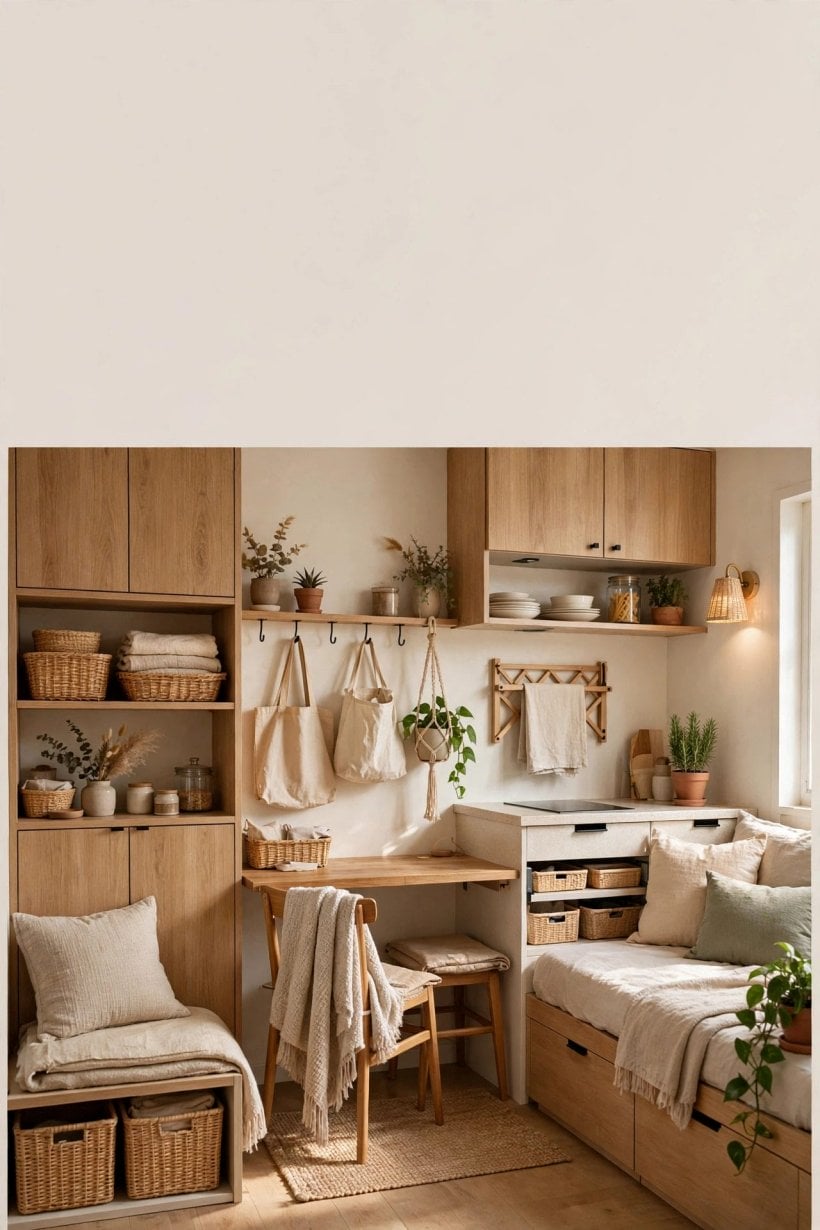
5. Storage From Floor to Ceiling
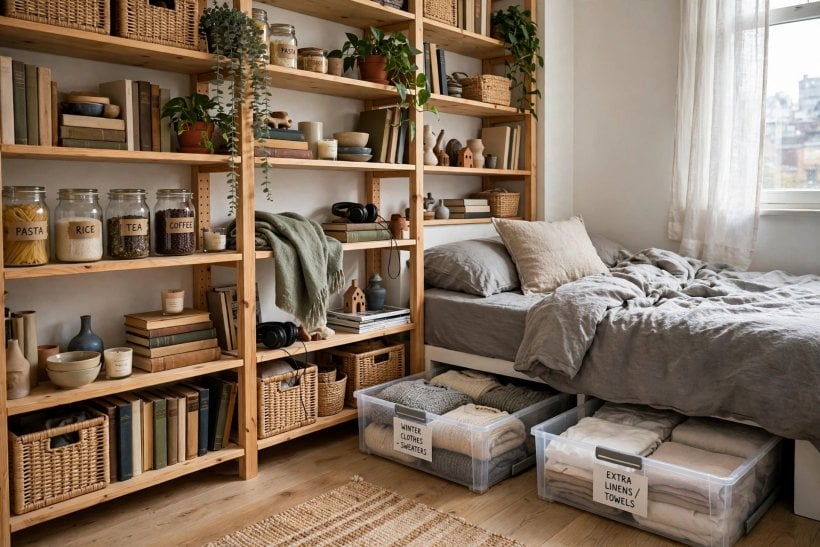
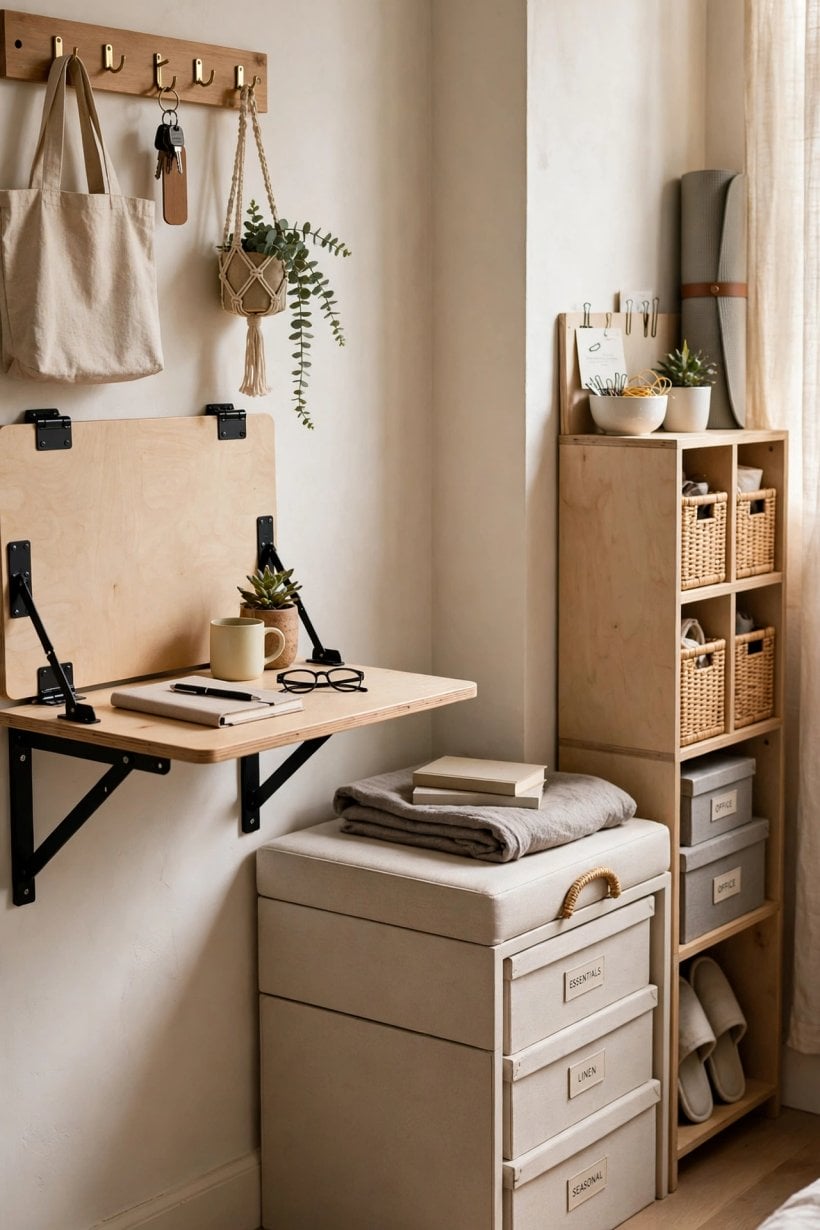
In a tiny apartment, storage is a system, not a cupboard. Use the full height of the walls with tall shelving, hooks, and rails, so floor space stays free for living. Use the hidden volume others waste: under the bed, inside an ottoman, behind doors, above the wardrobe, and in the gap above kitchen cabinets. Use the inside of cupboard doors for spices, lids, and cleaning bottles. Each space is small; together, they are the difference between an apartment that works and one that overflows.
The storage rules that hold the system together
- Store by frequency: daily items at hand height, weekly items higher or lower, rare items in the hardest-to-reach places.
- Store where it is used: bedding near the bed, cleaning supplies near the mess, coats and shoes by the door.
- Use containers you can see into or label: a box you cannot identify becomes a box you never open.
- Leave a little empty space: a shelf that is completely full cannot accept one new thing without a clear-out.
For more ways to find space you did not know you had, work through our tiny house storage ideas and adapt the ones built for cupboards and awkward corners. Measure before you buy storage furniture, and prefer one tall, narrow piece over two short, wide ones.
6. Furniture That Earns Its Footprint
Choose furniture by jobs per square foot. A sofa bed hosts guests. A storage ottoman is a seat, a footrest, a coffee table with a tray on top, and a blanket box. A fold-down table is a desk by day, a dining table by night, and almost nothing when folded away. In a tiny apartment, single-use furniture is a luxury and multi-use furniture is the norm.
Scale matters as much as function. Apartment-size pieces — a slimmer sofa on legs, armless chairs, a narrow desk — leave breathing room that bulky furniture destroys. Keep walkways genuinely walkable, leave space to open every door and drawer fully, and resist the bargain that is slightly too big: a piece that blocks a cupboard will annoy you every day.
7. A Tiny Kitchen That Actually Cooks
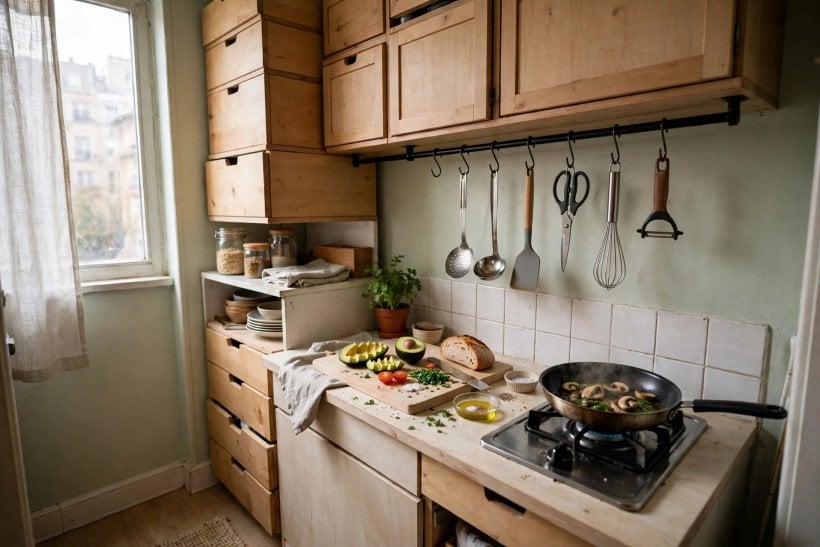
A tiny kitchen works when tools are few, multi-use, and stored where they are used. Keep equipment that handles many jobs — one good knife, a pan that works on the hob and in the oven, a pot that covers soups and pasta — and let go of single-use gadgets. Hang what you can on a rail, stack with shelf risers, and keep the worktop clear, because it is also your serving space.
Shop and stock in rhythm with the space. Smaller, more frequent shops suit a tiny fridge and one food cupboard better than a huge weekly load with nowhere to go. Keep a short list of meals you can make from what you store well, rotate a modest set of staples, and do a quick weekly fridge check so nothing dies at the back. Cook simple most nights, and wash up as you go, because a sink full of dishes is visible from everywhere.
8. Sleep, Work, and Everyday Routines in the Same Space
The sleeping area deserves more respect than the leftover corner it often gets. Give it proper bedding and a clear rule that the bed is not a wardrobe, desk, or laundry pile. If you sleep on a sofa bed or folding bed, the daily making and putting away is the act that turns a bedroom back into a living room, and it anchors the apartment’s routine. Ideas from tiny house bedroom ideas and tiny bedroom ideas — beds with storage below, curtained nooks, uncluttered styling — work just as well behind a bookcase divider.
Working from home in the same space requires a boundary, even if it is only a ritual. A work-only desk, a chair you sit in to work and leave to relax, and a closing routine — laptop shut, notebook away, lamp off — tell your brain the day is over when you cannot close an office door. Keep work equipment in its zone, and take calls from the same spot, rather than letting work colonize the sofa, bed, and kitchen table by turns.
9. Light, Color, and Air: Making It Feel Bigger
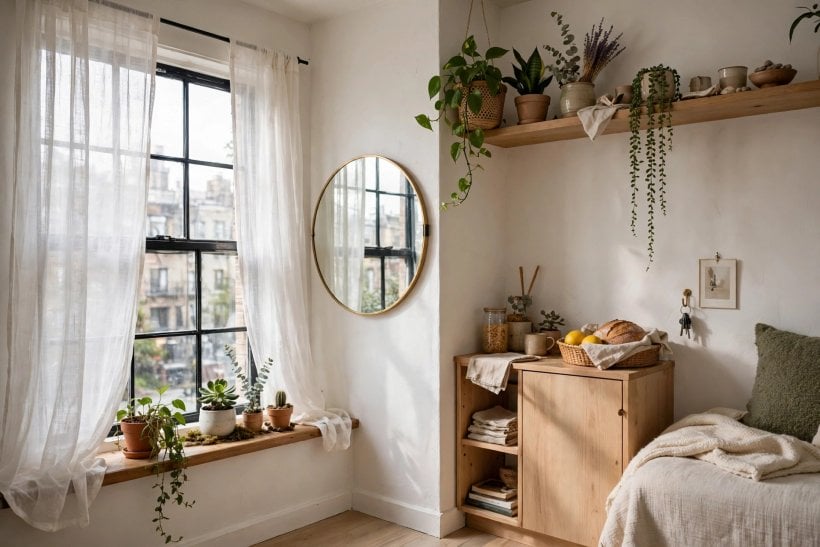
Light is the cheapest space you will ever add. Keep window treatments sheer or fully open during the day, and place a mirror where it reflects a window or a lamp rather than a cluttered corner. Layer your lighting — a ceiling light for general brightness, a lamp for evenings, a small light in the kitchen and by the bed — so the apartment can be bright for tasks and calm for rest.
Color and air do the quieter work. Pale, consistent colors on walls and large pieces make the space read as one calm whole, with stronger color kept to cushions and art. Keep some surfaces deliberately empty, and open windows daily where you can. Plants belong here too: a trailing plant on a high shelf and a pot by the window add life without taking any floor space.
10. Cleaning and Reset Routines That Keep It Livable
A tiny apartment gets untidy fast and tidy again fast, which is why routine beats effort. A short nightly reset — dishes done, surfaces cleared, clothes put away, bag packed for the morning — takes minutes and means you wake up in a calm home instead of yesterday’s mess. Making the bed does the same work in the morning: in a space this size, a made bed is half the room tidied.
Split deeper cleaning into small, frequent pieces rather than a weekend marathon. One job a day — bathroom, floors, laundry, bins, fridge check — keeps everything within reach. Keep cleaning supplies few, multi-use, and stored together. The less you own, the less there is to clean around: the systems maintain each other.
11. Guests, Partners, and Pets in a Small Footprint
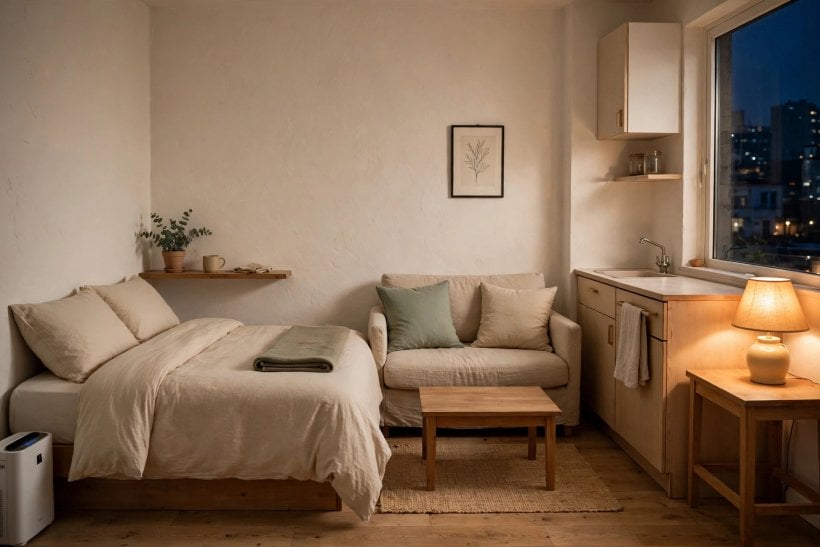
Tiny does not mean unsociable. Invite fewer people at a time, plan it properly, and use the flexible furniture you chose for exactly this moment: the sofa bed, folding chairs, and drop-leaf table opened up. An air mattress that stores flat, spare bedding in the ottoman or under-bed box, and a clear bathroom shelf make overnight stays comfortable without dedicating permanent space to them. A meal at a small table with people you like is not a lesser version of entertaining.
Couples and pets add negotiation, not impossibility. Partners need agreed zones, honest storage shares, and a way to be alone together — headphones, a reading corner, a walk — because privacy here is created by routine more than by doors. Pets need a defined place of their own, and a lease check before anything else. Whatever your household, everything and everyone has a place, and the reset is a shared job.
12. Renter-Friendly Changes and Mistakes to Avoid
Most tiny apartments are rented, so make changes you can reverse: adhesive hooks rated for the weight, tension rods, freestanding shelves, and rugs to define zones, instead of drilling or painting anything your lease forbids. Check the lease before a pet, a lock change, or any fixture, and keep a record of the condition you moved into. If you are weighing renting small against owning small, our tiny house vs apartment renting comparison sets out the trade honestly, and our tiny house laws by state overview is the place to start if that comparison turns into a plan.
- Oversized furniture: the bargain sofa that eats the room and blocks the cupboards.
- Storage without a system: boxes bought before measuring, filled without labels, and never opened again.
- Keeping everything just in case: duplicates and someday items consuming the space today needs.
- No reset routine: letting a day of clutter become a week of it, in a home with nowhere to hide it.
- Ignoring light: heavy curtains, one harsh bulb, and dark corners shrinking a small home further.
- Decorating before organizing: styling shelves that should have been decluttered.
13. Frequently Asked Questions
How do you live comfortably in a tiny apartment?
By zoning the space, storing vertically and out of sight, choosing multi-use furniture, and resetting the room daily. Comfort here comes from systems, not square footage: every job has a place, and everything you own has a home.
What size is considered a tiny apartment?
There is no single agreed size, and listings use the term loosely. It generally describes a compact studio or small one-bedroom where living, sleeping, and cooking overlap. Judge it by whether it fits your zones and storage, not by the label.
How do I maximize storage in a tiny apartment?
Use the full height of the walls, the space under the bed, the insides of doors, and furniture with storage built in. Store by frequency and by place of use, label containers, and keep a little space empty so the system can breathe.
Can a couple live in a tiny apartment?
Yes, many do, provided zones, storage, and routines are agreed rather than assumed. A fair share of the wardrobe and shelves, and small daily privacy habits, make the difference.
How do I keep a tiny apartment clean?
Little and often: a nightly reset, one small cleaning job a day, and washing up as you cook. Owning less helps — there is less to move, dust, and put away.
How do I make a tiny apartment feel bigger?
Maximize natural light, add a well-placed mirror, keep colors calm and consistent across large pieces, and keep the floor visible. A decluttered, zoned room feels bigger than a larger room full of clutter.
What should I not buy for a tiny apartment?
Bulky single-use furniture, single-use kitchen gadgets, duplicates, and anything just in case. If you cannot name its job and its home before you buy it, do not bring it through the door.
Final Considerations
How to live in a tiny apartment comes down to this: measure first, keep only what earns its place, zone the room around your real life, store from floor to ceiling, and reset a little every day. Start with the declutter and one honest floor plan this week, add storage and furniture only where the plan calls for it, and let the routines hold the result. Lived that way, a tiny apartment stops feeling like a compromise and starts feeling like what it is — a small home, deliberately run, that gives you back time and calm.


0 Comments