

An eclectic living room does not follow one style — it collects the pieces you love and makes them sing together. Done well, it feels personal, layered and joyful: part vintage hunt, part colour confidence, part comfortable family room.
These seventy-five ideas explain the rules behind the mix, so your room looks curated rather than cluttered. If you are working with a compact space, pair them with our tiny house living room ideas.
1. Eclectic Living Room at a Glance: The Golden Rules of Mixing
Eclectic style is not “anything goes”. It works when a few quiet rules hold the collection together: a repeated colour thread, a balance of old and new, and enough breathing space between treasures. Start with this overview, then dive into the details.
| Element | Eclectic Approach | Why It Works |
|---|---|---|
| Colour | One thread colour repeated in every corner | Ties unrelated pieces into one story. |
| Pattern | Mix scales: one large, one medium, one small | Patterns feel playful instead of fighting. |
| Furniture | Different eras, similar visual weight | Variety without anything looking lost or oversized. |
| Vintage finds | One hero piece per view | Character without the junk-shop effect. |
| Textiles | Layered rugs, throws and cushions | Softness balances bold furniture and art. |
| Displays | Grouped collections, edited often | Stories on shelves, not dust on every surface. |
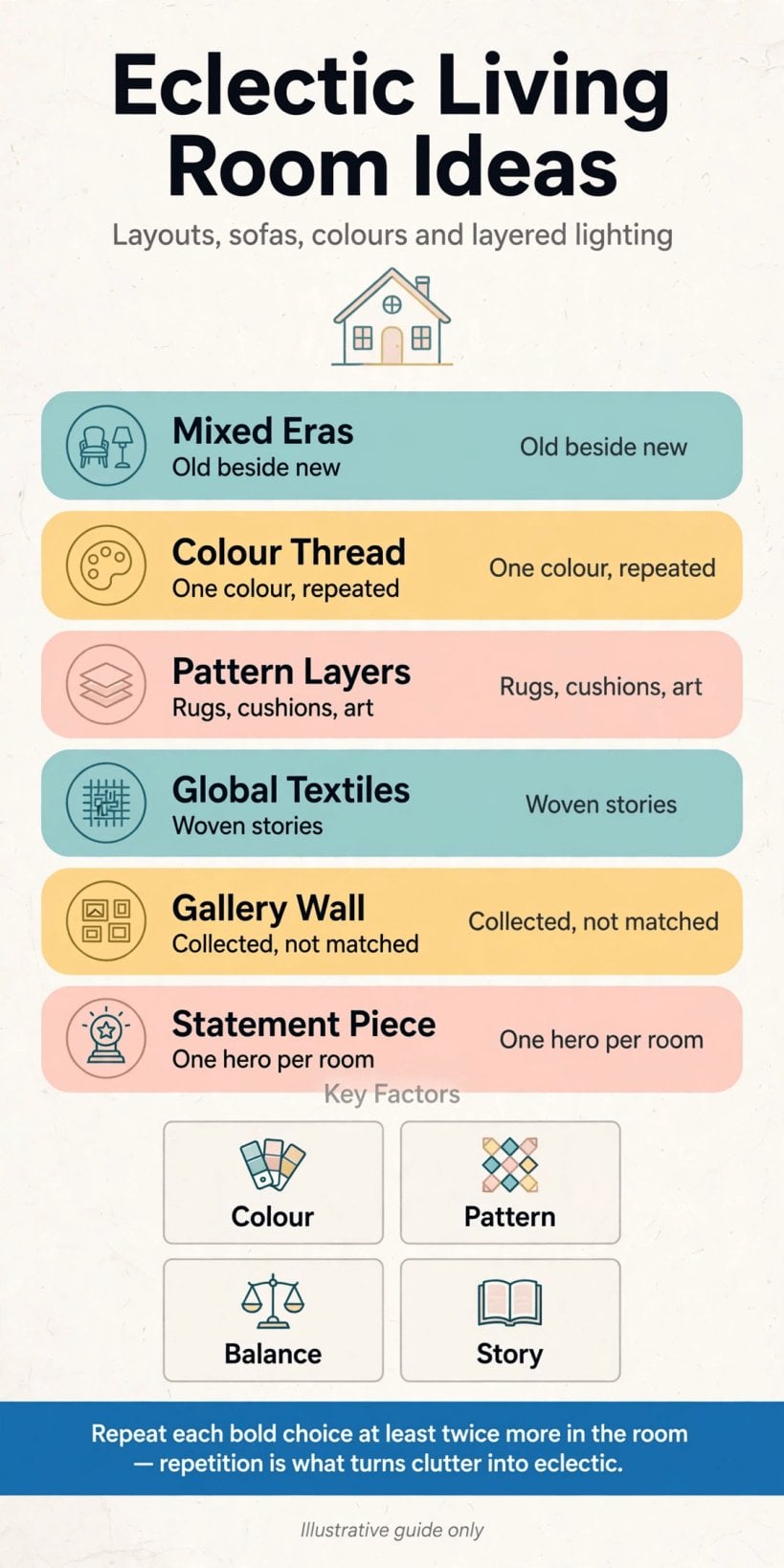
At a glance: repeat a colour, mix pattern scales, balance old with new, and edit — those four habits make any collection look intentional.
Idea 1: Choose a Thread Colour
Pick one colour — rust, teal, mustard, ink blue — and repeat it in at least three places around the room. The repetition is invisible magic: wildly different pieces suddenly read as one deliberate scheme.
Idea 2: Keep One Element Quiet
If the sofa is bold, calm the rug; if the art is loud, quiet the curtains. Giving the eye one restful element per view stops a collected room tipping into visual noise.
Idea 3: Mix Eras, Match Weight
A mid-century chair can sit happily beside a Victorian side table if their visual weight feels balanced. Avoid pairing one huge, dark piece with several tiny, pale ones — the room will feel lopsided.
Idea 4: Repeat Shapes as Well as Colours
Echo a curve — in a mirror, a lamp base and a chair back — and unrelated objects start to rhyme. Shape repetition is the quiet glue in most magazine-worthy collected rooms.
Idea 5: Use Neutrals as the Canvas
Calm walls, a plain floor or a neutral sofa give colour and pattern somewhere to perform. You can always add more colour; a quiet base lets you change the mix seasonally.
Idea 6: Follow the 80/20 Instinct
Roughly: let most of the room come from one or two families of style, and season with the rest. The dominant share brings calm; the minority share brings the surprise and personality.
Idea 7: Group, Don’t Scatter
Collections look intentional in clusters — three vases together, books in stacks, art in a gallery — and messy when sprinkled one per surface. Gather your treasures into composed little scenes.
Idea 8: Edit Ruthlessly, Rotate Often
The secret stylists share: take things away. Box up a third of your objects, live with the calmer room, then rotate pieces back in when you fancy a change. Editing is free decorating.
Colour is the thread through all of this; our colourful tiny house interior ideas show the same confidence in small rooms.
2. Colour Confidence: Palettes That Welcome Everything
Colour is what makes guests call a room brave. The trick is not using every colour — it is choosing a family, repeating it, and letting warm neutrals and natural materials hold the whole joyful mixture together.
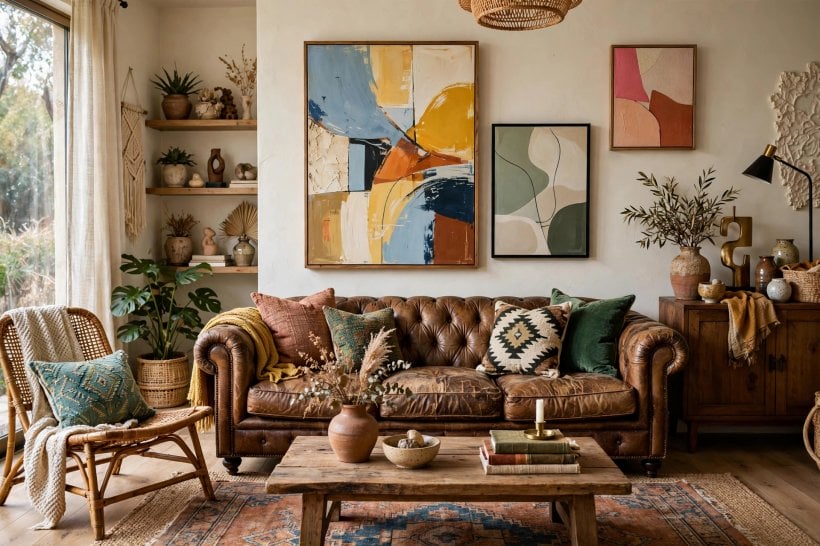
Idea 9: Jewel Tones on a Deep Base
Emerald, sapphire and ruby pieces glow against deep walls or dark wood. Jewel tones share a richness that makes them natural partners, even when the furniture styles beneath them differ wildly.
Idea 10: Warm Earth Colours as Peacemakers
Terracotta, ochre, olive and warm brown flatter almost every other colour and every skin tone in the room. When a mix feels harsh, adding an earthy textile usually settles it.
Idea 11: One Wall in a Bold Colour
A single painted wall — behind the sofa or the bookcase — gives the room a stage set. Keep the other walls quiet and repeat the wall colour in two small accessories across the room.
Idea 12: Colour-Blocked Furniture
Paint a bookcase, sideboard or door in a saturated colour and let it be the room’s anchor. Painted furniture is the cheapest bold move available, and it is reversible when tastes change.
Idea 13: Let the Rug Set the Palette
A patterned vintage-style rug often contains five or six colours in harmony. Pull your cushion, art and accessory colours from the rug and the scheme will coordinate itself almost automatically.
Idea 14: Black Accents for Definition
A few black notes — picture frames, a lamp, a side table — sharpen soft colours and stop a pastel-heavy mix feeling sugary. Black is the outline pen of a collected room.
Idea 15: Metallics as Neutrals
Brass, aged gold and antique silver work with every colour family and add the glint that makes rooms feel finished. Mix two metal finishes at most, and repeat each at least twice.
Idea 16: Test Colours in Daylight and Lamplight
Eclectic schemes live or die by evening light. Check fabric and paint samples at the times you actually use the room; warm bulbs can turn a fresh green muddy or a red glorious.
3. Pattern Mixing Like a Pro
Pattern is where eclectic rooms earn their name. The professional method is simple: vary the scale, share a colour, and give each pattern room to breathe with solid blocks between them.
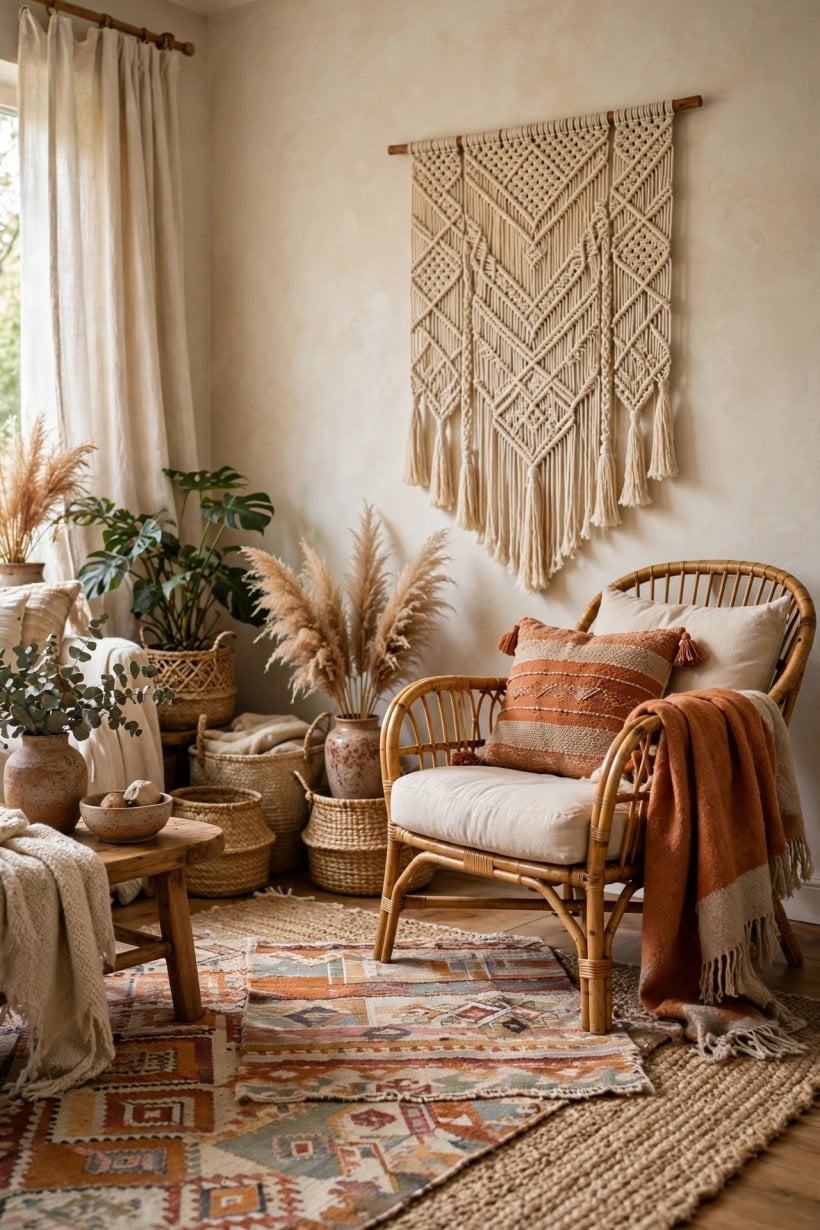
Idea 17: The Three-Scale Rule
Combine one large-scale print, one medium and one small: a big floral curtain, a medium stripe cushion, a tiny dotted throw. Because the scales differ, the eye reads harmony instead of clash.
Idea 18: Share One Colour Across Prints
Patterns that share even one colour look related. A plaid, a floral and a geometric can sit together happily if each contains your thread colour somewhere in its design.
Idea 19: Stripes as the Peacemaker Print
Stripes get along with nearly everything. When two patterns fight, adding a striped cushion or throw between them often settles the argument — stripes are the Switzerland of prints.
Idea 20: Animal Print as a Neutral
A small dose of leopard or zebra — one cushion, a footstool — behaves like a neutral in collected rooms, adding texture and wit. Keep it to one piece per view so it stays chic.
Idea 21: Patterned Curtains, Plain Sofa (or the Reverse)
Choose your pattern hero: either the big upholstery or the window treatment leads, and the other supports in solids or tiny prints. Two heroes competing at full volume exhausts the eye.
Idea 22: Mix Cultural Textiles Thoughtfully
Ikat cushions, a kilim rug and mudcloth-style throws bring world-traveller warmth. Buy the best quality you can, credit their origins where you share them, and let each piece have space to be admired.
Idea 23: Checks and Plaids for Structure
A plaid throw or checked armchair adds order to floaty florals and abstracts. The geometry of checks reassures the eye, which is why they pair so well with romantic patterns.
Idea 24: Repeat a Motif
If your rug has a diamond, find a cushion with a diamond. A repeated motif — even a loose one — across two or three textiles makes the mix feel designed rather than gathered by accident.
4. Sofas, Seating and Layout That Welcome Conversation
Eclectic seating is a gathering, not a matching set. Anchor the room with one comfortable sofa, then collect chairs with character around it, arranged for talk first and television second.
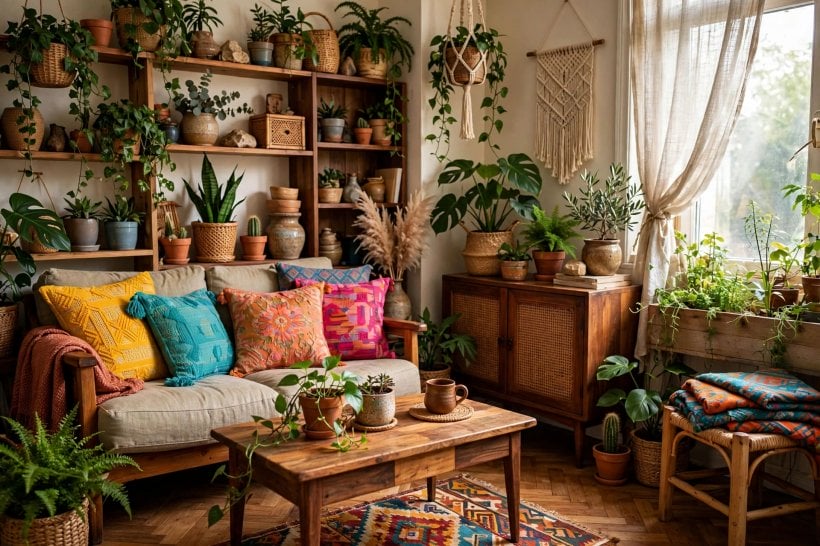
Idea 25: A Neutral Sofa as the Anchor
The sofa is the priciest piece, so a calm colour there buys freedom everywhere else. Dress it with the boldest cushions and throws you own and swap them whenever the room needs new energy.
Idea 26: Mismatched Armchairs, Deliberately
Two different armchairs look intentional when they share a scale, a colour family or matching cushions. Place them as a pair across from the sofa and the mismatch becomes the design.
Idea 27: A Vintage Leather Chair for Warmth
Worn leather adds age, warmth and a note of the clubroom that flatters bright textiles. Hunt for solid frames and good springs; the patina is the point, not a problem.
Idea 28: A Statement Swivel or Sculptural Chair
One chair with a strong silhouette — curved, winged or sculptural — gives the room its exclamation mark. Keep its neighbours simpler so the silhouette can be properly admired.
Idea 29: Conversation-First Layout
Angle chairs toward each other around a shared table or rug, with no seat more than a comfortable chat away. Rooms arranged for people get used; rooms arranged for screens feel empty at parties.
Idea 30: A Bench or Ottoman as Flexible Seating
An upholstered bench or big ottoman seats extra guests, props feet and holds a tray, all in one movable piece. In collected rooms it is also a fine place to show off a bold fabric.
Idea 31: Layer a Small Chair by the Window
A reading chair, a floor lamp and a tiny table in the window corner create a second scene in the same room. Eclectic rooms love these little destinations within the whole.
Idea 32: Keep Traffic Lanes Clear
Collected does not mean crowded. Leave clear paths from door to door, and space to walk around the rug’s edge; breathing room is what separates curated from cluttered, every single time.
Layout logic matters even more in miniature; see our smart tiny house design ideas for zone-planning in tight footprints.
5. Vintage Finds and Second-Hand Treasures
Vintage pieces give eclectic rooms their soul — and their stories. Buy slowly, choose solid construction over perfect finish, and let one hero per view carry the history while newer basics do the supporting work.
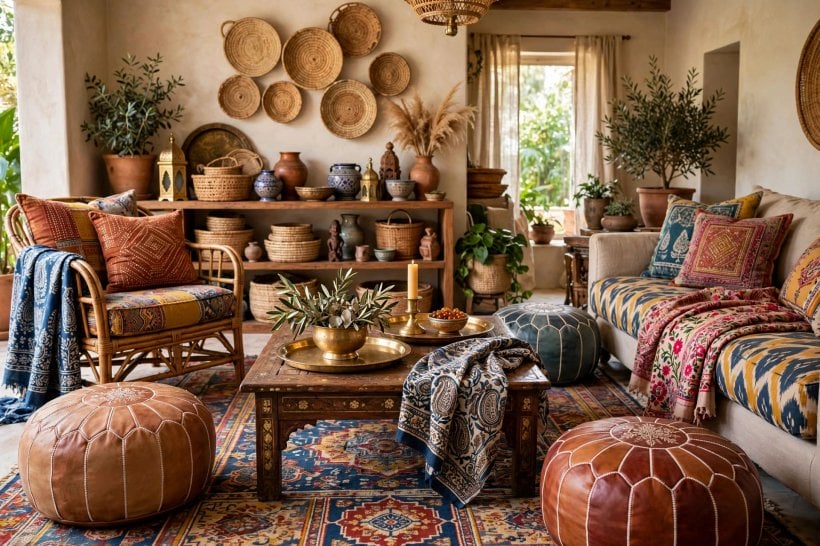
Idea 33: A Hero Sideboard
A mid-century or earlier sideboard anchors a wall, hides clutter and stages lamps, art and drinks beautifully. It is usually the best-value vintage buy, costing less than new equivalents of similar quality.
Idea 34: Reupholster a Quality Old Chair
Older chairs often have superb frames under tired fabric. Reupholstering one found chair in a joyful modern print creates the ultimate eclectic piece: old bones, new personality, nobody else owns it.
Idea 35: Vintage Trunks as Coffee Tables
A sturdy trunk or old chest makes a coffee table with storage and a past. Add a tray on top for drinks stability, and enjoy the conversation it starts with every guest.
Idea 36: Old Ladders and Crates as Shelving
A leaning ladder shelf or stacked crates give casual, movable storage with farmhouse soul. Style them with books, plants and baskets, and re-stack whenever the room needs a shuffle.
Idea 37: Inherited Pieces, Restyled
Family pieces earn their place fastest when styled confidently: grandmother’s chair with a modern cushion, the old clock on a painted wall. Sentiment plus styling beats sentiment plus apology.
Idea 38: Second-Hand Ceramics and Glass
Mismatched vintage vases and glassware, grouped by colour, make collections that cost little and glow in lamplight. Charity shops and estate sales are treasure fields for patient hunters.
Idea 39: Repair and Revive Before Replacing
A wobbly chair reglued, a drawer re-lined, brass polished — revival is the eclectic ethos. Simple repairs keep good pieces in service and stories in the room for another generation.
Idea 40: Know When to Walk Away
Musty upholstery, structural damage and pieces needing costly electrical work are rarely bargains. The discipline to skip flawed finds keeps a collected room feeling treasured rather than rescued.
6. Walls, Art and Gallery Displays
Walls are the largest canvas in the room, and eclectic style treats them as a gallery of your life: art you love, mirrors that double the light, and shelves that tell stories.
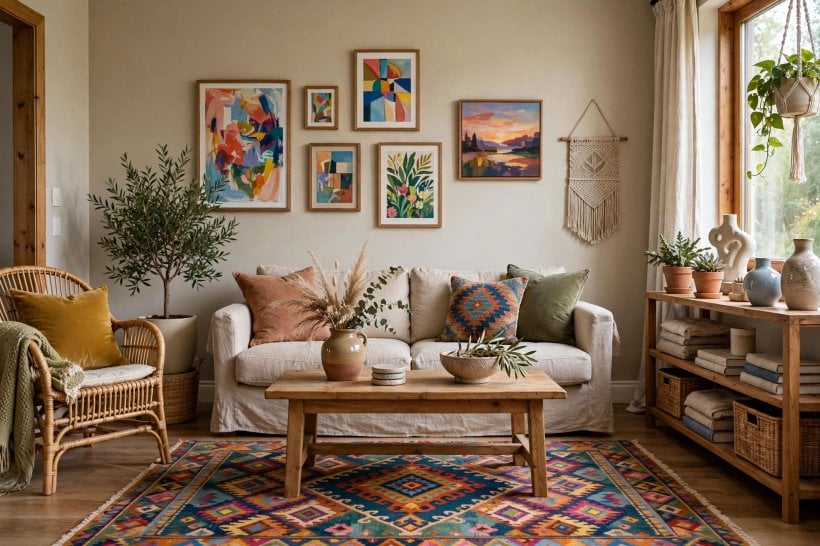
Idea 41: A Gallery Wall With Mixed Frames
Combine paintings, prints, photos and a small mirror in mixed frames, unified by spacing rather than matching. Lay the arrangement on the floor first and hang the largest piece slightly off-centre.
Idea 42: One Oversized Artwork
A single large canvas or framed textile opposite the sofa gives the room a focal point that organises everything else. Bold rooms often need just this one confident gesture on the walls.
Idea 43: Mirrors for Light and Echo
A vintage mirror bounces daylight, doubles candlelight and echoes shapes from around the room. Group small mirrors in a gallery, or let one ornate mirror star above the mantel.
Idea 44: Picture Ledges for Rotating Art
Shallow ledges let you layer and swap art, records and postcards without new holes. They suit collectors whose favourites change with the seasons — and whose walls have suffered enough.
Idea 45: Textile Wall Hangings
A woven hanging, a beloved quilt or a framed piece of fabric adds softness, pattern and sound absorption. Textiles warm rooms with hard floors and echo the cushions below them.
Idea 46: Painted Bookcase Backs
Paint the inside back of shelves a deep or contrasting colour and books and objects pop like exhibits. It is an afternoon’s work that makes even paperbacks look like a collection.
Idea 47: Hang Art at Sitting Eye Level
Living-room art is mostly viewed from sofas, so hang centres lower than hallway height. Your gallery should converse with the seated, not loom over them — comfort is the point.
7. Textiles and Layered Softness
Textiles are the fastest, cheapest way to make a collection feel cosy: rugs anchoring, throws draping, cushions mixing. Layer them generously, but let each layer be visible.
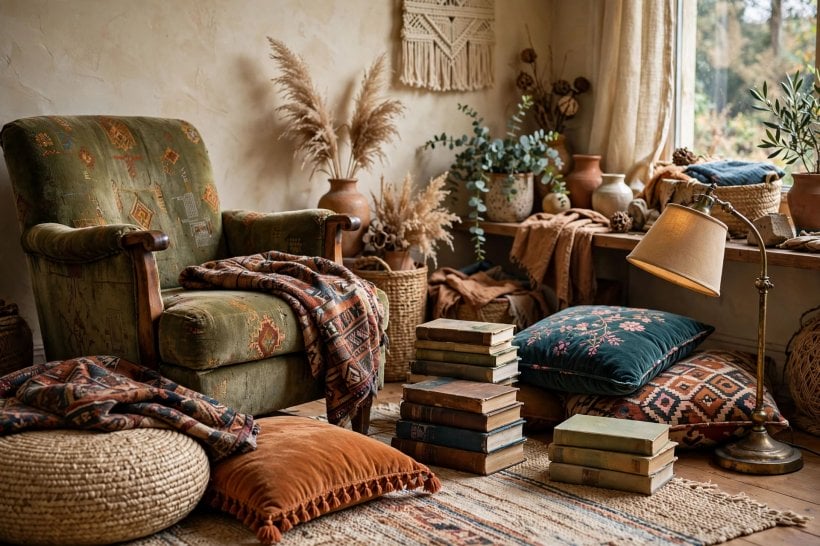
Idea 48: Layer Two Rugs
A large plain jute or wool rug under a smaller patterned vintage-style one gives size and pattern in one move. The layered edge frames the seating and hides the fact that neither rug was perfect alone.
Idea 49: Cushions in Odd Numbers and Mixed Shapes
Combine squares, a lumbar and one round cushion per sofa, in your mixed prints and solids. Odd groupings look relaxed; matching pairs look showroom. Choose relaxed.
Idea 50: Throws Draped, Not Folded Away
A throw over a chair arm or sofa back is colour, texture and invitation in one gesture. Rotate throws seasonally — light cotton for summer, deep wool for winter evenings.
Idea 51: Curtains With Personality
Velvet, linen with a border, or a cheerful print: curtains are the room’s largest textile and deserve a vote in the scheme. Hang them high and wide so windows feel generous.
Idea 52: A Textile Ottoman or Pouf
A fabric pouf adds a soft pattern block at floor level, extra seating and a footrest. It is also the easiest place to use a print you love but could not commit to on a sofa.
Idea 53: Mix Textures as Much as Patterns
Velvet beside linen, wool beside cotton, a nubby weave beside a smooth one: texture variety is what makes a room feel rich when the light drops and colours mute.
Idea 54: A Basket of Spare Blankets
Keep rolled blankets in a handsome basket by the sofa for film nights and chilly guests. Practical storage that doubles as a soft, sculptural object is peak eclectic thinking.
8. Lighting, Lamps and the Evening Glow
Collected rooms are at their best after dark, when lamplight pools on textures and colours deepen. Plan at least three light sources at different heights, none of them the ceiling light alone.
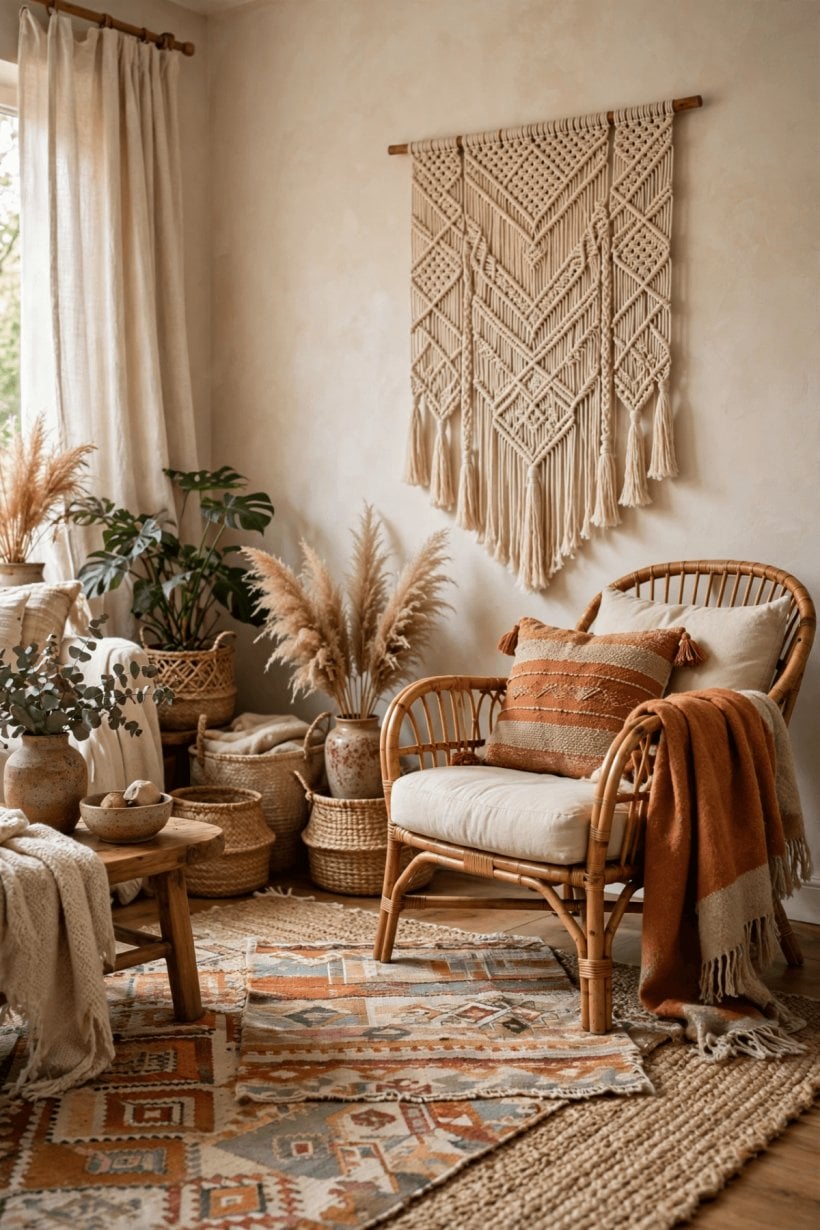
Idea 55: A Vintage Floor Lamp
An arc, tripod or pharmacy-style vintage lamp gives reading light and sculpture in one. Place it where chairs actually are, not where the socket diagram suggested on paper.
Idea 56: Mismatched Table Lamps, Matched Bulbs
Different lamp bases suit eclectic rooms perfectly; what must match is the light itself. Fit the same warm bulb type in every lamp so the glow unifies what the shapes diversify.
Idea 57: A Pendant or Chandelier With Character
Overhead, choose one fitting with personality — beaded, rattan, aged metal or coloured glass. It is the room’s ceiling jewellery and the first thing to catch the eye at dusk.
Idea 58: Picture Lights and Shelf Spots
A small picture light over your best artwork, or spots washing a bookcase, adds gallery polish. These low glows make collections look valuable because they are lit like treasures.
Idea 59: Candles in Collected Holders
Brass sticks, glass jars and ceramic holders gathered on a tray give flickering layers no bulb can copy. Group them where their light catches metallics and glass for maximum sparkle.
Idea 60: Dimmers Everywhere You Can
Dimming turns one lighting scheme into three moods. Where rewiring is not an option, smart bulbs or plug-in dimmers achieve the same flexibility for lamps in minutes.
Idea 61: Light the Corners, Not Just the Centre
A small lamp in the darkest corner stops the room shrinking at night and shows off whatever you place beside it. Corners are display opportunities that darkness wastes.
Layered light works the same in sleeker rooms; see our modern tiny house interior ideas for a calmer take on the principle.
9. Shelves, Objects and Collected Displays
This is where your life goes on show: books, travel finds, plants and oddities. The craft is in grouping — colour stories, breathing space and a few large pieces anchoring the small ones.
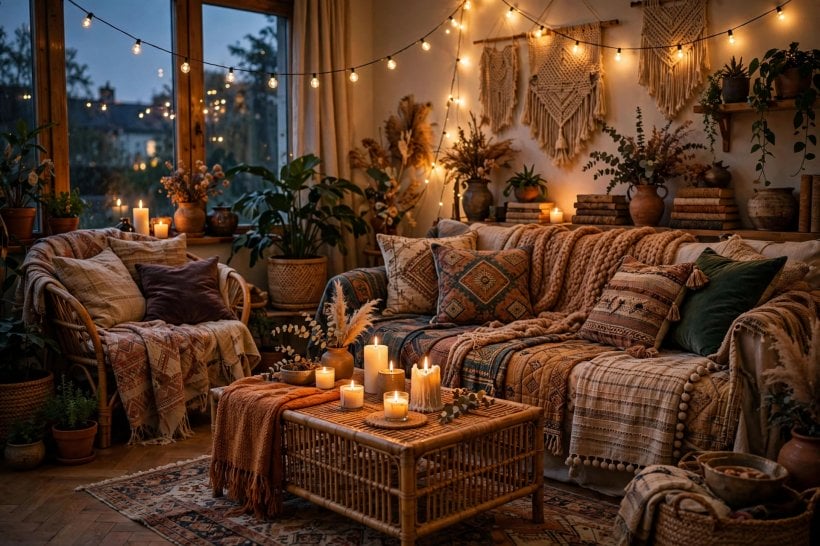
Idea 62: Books by Colour in Sections
Arrange some shelves by colour and others by size, mixing in horizontal stacks. Colour-blocked books become pattern themselves, and the mix keeps it from looking like a bookshop stunt.
Idea 63: The Rule of Three for Objects
Group objects in threes at varied heights — tall, medium, small — and displays compose themselves. Leave empty space around each group; the gaps are what make the groups read.
Idea 64: Plants as Living Sculpture
A trailing plant on a shelf, a bold leafy pot on the floor and herbs on the sill add the green every collected room needs. Vary pot materials to match your mix: clay, brass, basket.
Idea 65: Travel Finds With Stories
Display the bowl, textile or carving from a real trip where guests will ask about it. Objects with stories are the difference between a collected home and a styled set.
Idea 66: A Bar Cart or Tea Trolley
A vintage trolley styled with glassware or a tea set adds ceremony and sparkle, and wheels to wherever the gathering is. It is also a forgiving home for pretty bottles and books.
Idea 67: Boxes and Baskets That Hide the Rest
Remotes, chargers and card games live in lidded boxes and baskets that suit the scheme. Eclectic rooms stay serene when the modern clutter has beautiful places to disappear into.
Idea 68: Rotate Displays Seasonally
Swap shelf objects with the seasons — shells for pinecones, bright ceramics for deep glass. Rotation keeps collections feeling alive and gives every treasure its turn in the light.
10. Finishing Touches and Keeping the Mix Cohesive
The final ideas are habits as much as purchases: the small repeats, scents, sounds and edits that keep a joyful room from drifting into jumble as life adds more stuff.
Idea 69: A Signature Scent and Soundtrack
A room’s welcome includes its smell and sound. A favourite candle or simmering herbs, and music at conversation level, complete the sensory mix your eyes have been enjoying.
Idea 70: Repeat Wood Tones Across the Room
Mixed woods are welcome here, but repeat each tone at least twice — the sideboard echoes the frame, the stool echoes the mantel — so variety reads as rhythm, not accident.
Idea 71: One Unifying Rug or Curtain Fabric
If the room ever feels scattered, one large textile that contains your main colours will pull it together. It is the fastest cohesion fix in the eclectic toolkit.
Idea 72: A Reading Basket by Every Good Chair
Current books and magazines in a basket beside each main chair make the room both lived-in and tidy. It is styling that serves the reader first and the photograph second.
Idea 73: Seasonal Swaps, Not Seasonal Overhauls
Change cushion covers, one throw and the mantel display with the seasons. Small rotations refresh the room constantly without storage crises or shopping lists.
Idea 74: Photograph the Room to See It Clearly
A phone photo flattens your room into a picture and reveals what your eyes excuse: the cluttered corner, the lopsided shelf. Edit from the photo, then enjoy the room again.
Idea 75: Let the Room Keep Evolving
The best collected rooms are never finished. Leave a shelf gap for the next find, a wall space for the next picture, and permission for the room to grow up alongside you.
Small rooms can hold just as much personality; our tiny house bedroom ideas prove the eclectic spirit works at any scale.
Final Considerations
Build your mix on the quiet rules — a thread colour, balanced scales of pattern, grouped collections and regular editing — and you can welcome almost any piece you love. Spend first on the anchor sofa, lighting and the rug that sets your palette; let vintage hunts supply character over time rather than forcing a finished look in one weekend. Costs vary from charity-shop finds to reupholstery projects, so phase the room and enjoy the hunt. For more collected-home inspiration, explore our tiny barn house interior ideas and tiny house home office ideas next.


0 Comments