
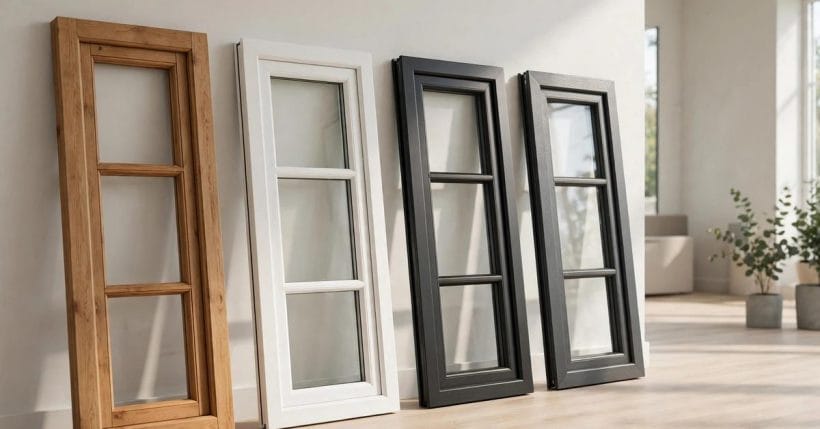
Every window quote promises the same things — warmth, quiet, security, no more draughts — and every frame material claims to do it best. The honest differences between windows are quieter than the brochures: what the frame is made of, how the glass is built, how the warranty actually reads, and how well the whole unit is fitted.
This guide is the what-to-check version of window buying: frame materials in general terms, glazing and hardware checks, and the warranty questions that matter years after the fitting crew has gone. No brand verdicts, no invented test results — just the specification, read properly.
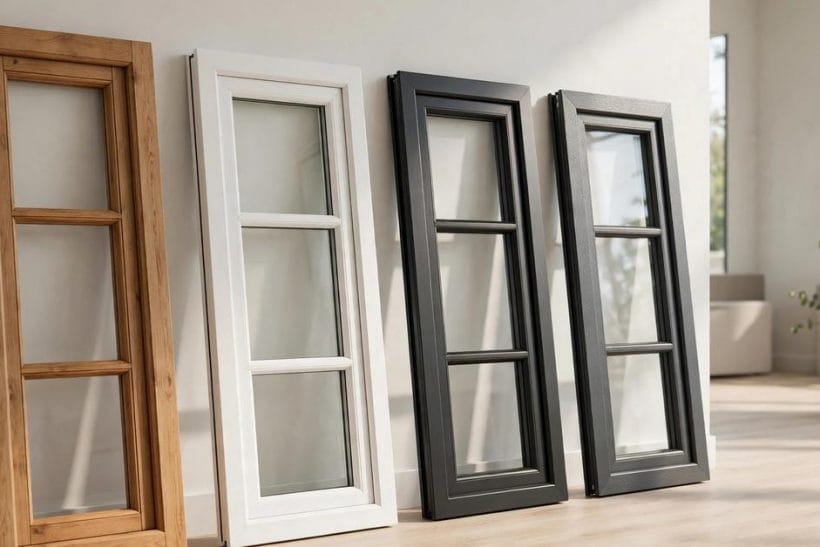
1. Window Buying at a Glance
Scope first. This post owns one decision: choosing windows on their materials and paperwork. Its neighbours handle the architectural end of the same openings — clerestory windows for high glass and light — while here everything serves the frame, the pane and the written promise behind them.
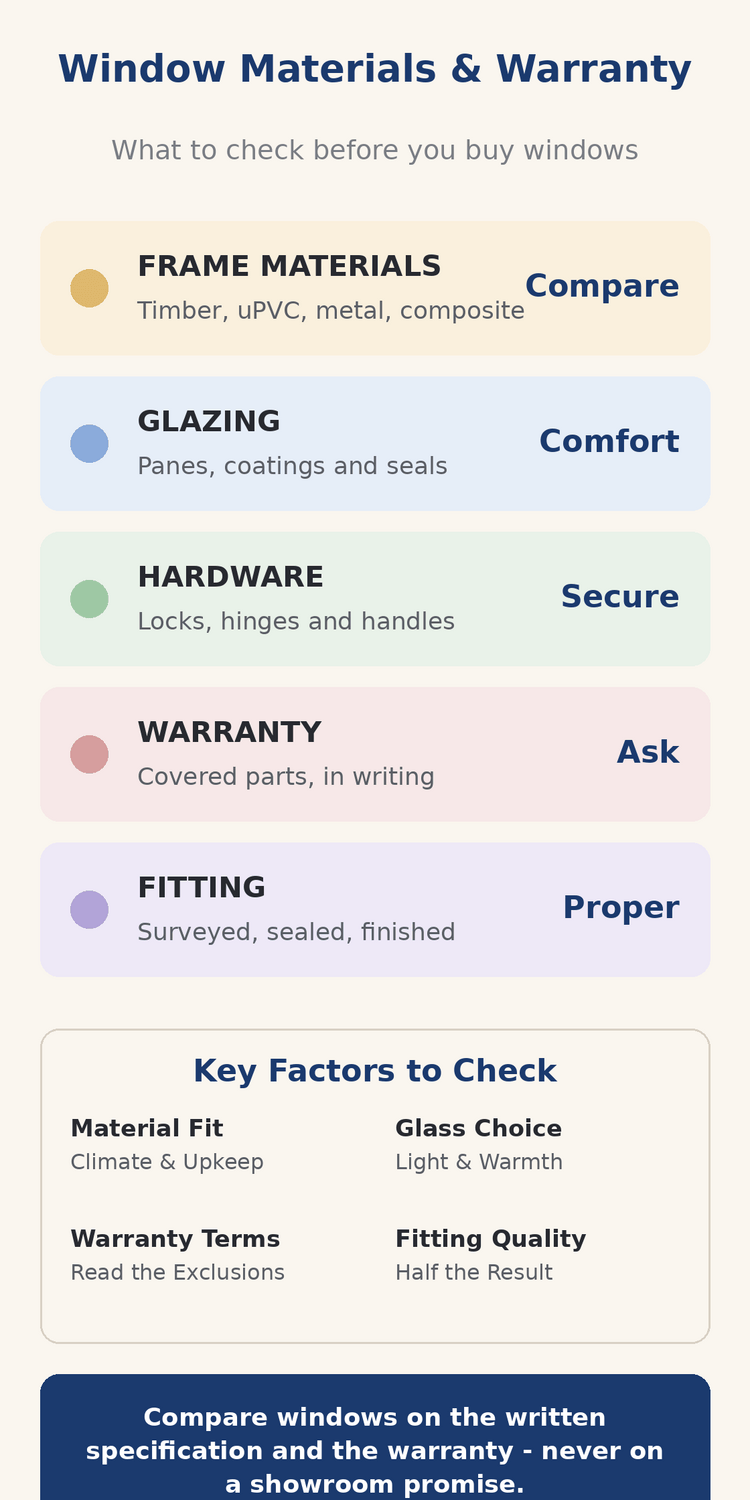
The five checks in the table are the whole purchase in miniature. Work down them in order and most window quotes become easy to compare.
| Check | Character | What it means |
|---|---|---|
| Frame Material | The Long Decision | uPVC, timber, aluminium or composite — each trades upkeep, looks and lifespan differently |
| Glazing | Comfort Layer | Panes, coatings and seals decide warmth, light and condensation behaviour |
| Hardware | Daily Contact | Locks, hinges and handles are the parts you touch and the parts that wear |
| Warranty | The Written Promise | What is covered, for how long, and what is quietly excluded |
| Fitting | Half the Result | A good window badly fitted performs like a bad one |
2. Frame Materials in General Terms
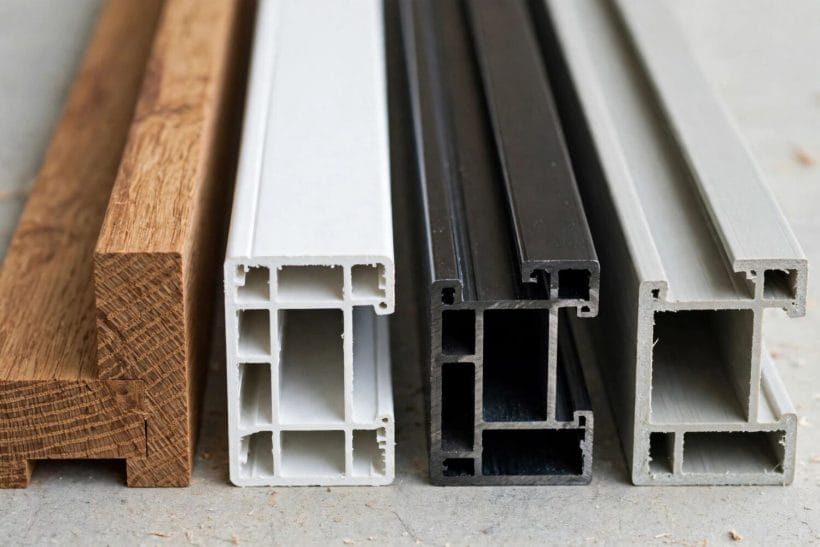
1. uPVC: the low-upkeep default
uPVC frames ask for little beyond washing, insulate well at ordinary sizes and suit most budgets. Their limits are aesthetic and structural: slimmer sightlines are harder to achieve, very large units may need reinforcement, and dark colours on sunny elevations deserve a careful question about heat movement. Ask for the material’s full name rather than its nickname: ‘composite’ covers several different constructions, and the differences between them are exactly what you are paying to understand.
2. Timber: character with a maintenance rhythm
Wood frames suit period houses and conservation settings, can be repaired rather than replaced, and age gracefully when their paint or stain is maintained on schedule. That schedule is the honest price of timber — go in expecting periodic refinishing and it is a pleasure; ignore it and the frame pays.
3. Aluminium and composite: slim and strong
Aluminium gives slim frames and large panes, with modern thermal breaks answering the old cold-frame objection; composite frames pair a timber or aluminium face with a low-upkeep core. Both sit at the considered end of a quote — the checks in this guide (seals, warranty, fitting) matter more, not less, at that level.
3. Glazing: What the Panes Do
4. Double and triple, in proportion
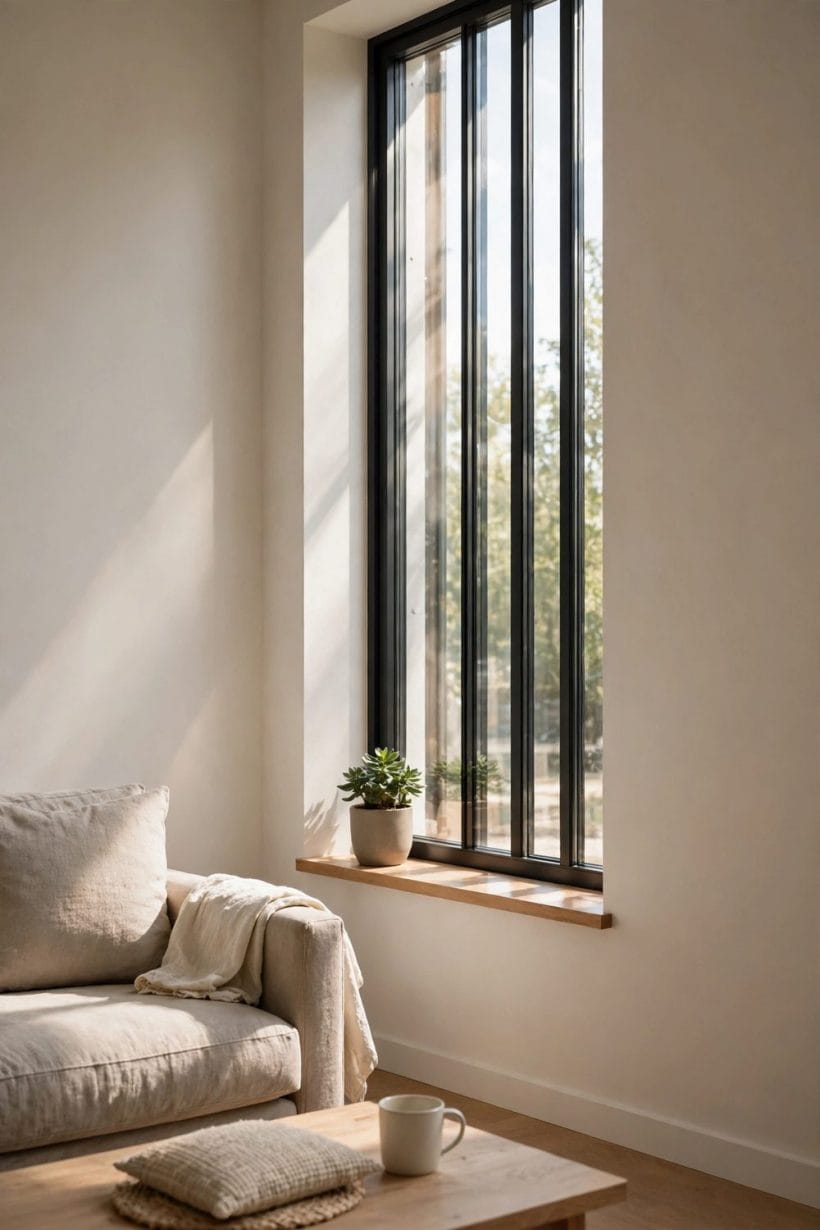
More panes help in cold, exposed or noisy settings and help less where a sheltered double unit already performs. The right question is not which is best in the abstract but which matches the room — a north bedroom and a south living space rarely want the same glass. Note, too, that misting between the panes means the seal has already failed, while misting on the room-side surface is a ventilation question instead — the two are often confused at the survey stage.
5. Coatings and the sealed unit
Modern units carry invisible coatings that keep heat in and manage solar gain, sealed around gas fills and spacer bars. What to check is simple: the unit is a sealed system with a warranty of its own, and its specification — coating, spacer, safety glass where required — is written on the quote, not described in adjectives.
6. Condensation tells the truth
Mist on the room-side glass is a ventilation and warmth conversation; mist between the panes means the sealed unit has failed. That distinction is why the tiny house window condensation explainer is worth a read before any quote meeting — you will know which kind of condensation a salesman is actually describing.
4. Hardware, Seals and Moving Parts
7. Locks and security, stated plainly
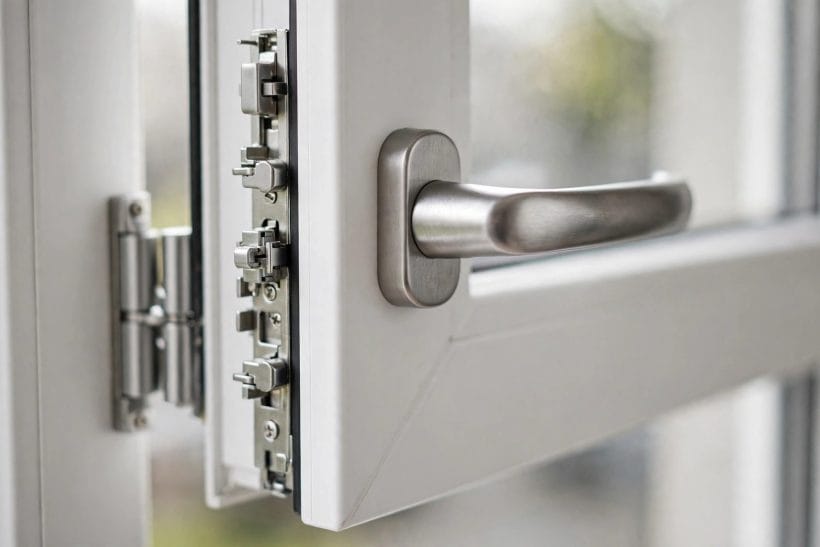
Multi-point locking and robust handles are standard expectations on modern windows, but check what the quote actually lists rather than assuming. Security is a written specification — hardware named, standards referenced — not a reassuring adjective in a brochure. Handles deserve a hand test in the showroom: the lever you like looking at should also be the lever an older relative can work without thinking.
8. Hinges, openers and the weight of glass
Large sashes lean on their hinges every day. Ask how the chosen hardware is rated for the sash size and weight in your quote, and open and close a sample unit if you can: smooth, even movement now is the best predictor of it in ten years.
9. Seals are consumables — plan for them
Gaskets and seals age faster than frames. A practical check: are replacement seals available for the profile you are buying, and are they covered or excluded in the warranty? It is a small question that separates thoughtful specifications from hopeful ones.
5. Comfort Claims, Read Carefully
10. Ratings are comparisons, not promises
Energy labels and acoustic figures let you compare one window with another on the same scale — that is their job. They do not promise a specific room temperature or silence level, because walls, fitting and ventilation share the result. Use ratings to rank quotes; do not let them be sold as guarantees.
11. Style debates worth having
Some choices are genuinely two-sided — the awning vs sliding windows debate, for instance, where rain behaviour and ventilation style pull in opposite directions. A good supplier argues these honestly with you; a poor one pretends your house has no trade-offs. Keep both documents — the product warranty and the installer’s workmanship terms — in one folder with the final invoice; a claim years later is only ever as good as the paperwork kept for it.
12. Safety glass where life happens
Low glass, doors and bathrooms carry safety-glazing requirements in most codes. Confirm the quote specifies safety glass in those positions by name — it is a compliance point, not an upgrade, and discovering its absence after fitting is an expensive afternoon.
6. The Warranty: What to Check
13. Separate the warranties hiding in one
A window usually carries several promises at once: frame, sealed unit, hardware and finish, sometimes from different parties with different clocks. Ask for each term listed separately, in writing. One blended headline figure is marketing, not a warranty.
14. Parts, labour — and who does the work
Check whether the warranty covers fitting labour as well as parts, and who performs warranty work if the installer is no longer trading. Guarantees backed by an insurer or a manufacturer scheme answer that question better than a local promise alone. Insurance requirements sometimes specify lock standards for accessible windows; a quick check with your insurer before ordering costs nothing and can shape the specification in time.
15. Exclusions and conditions
Read what voids the promise: unauthorised alterations, neglected maintenance, coastal or high-heat conditions, condensation between panes after a stated point. None of this is sinister — warranties are contracts — but the time to learn the conditions is before signing, not inside a claim.
7. Measuring, Survey and Fitting
16. The survey is part of the product
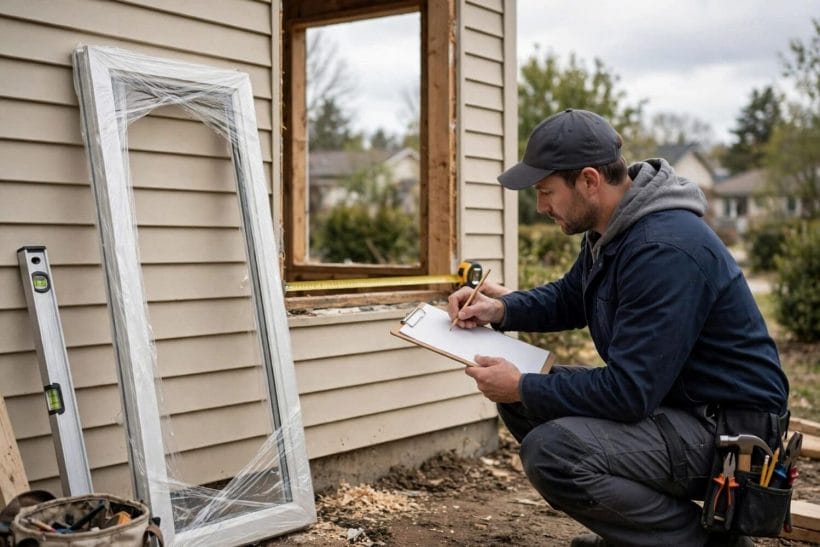
Windows are made to measure from a professional survey, not from the measurements taken at the sales visit. Confirm a technical survey happens before manufacture, who is responsible for its accuracy, and what happens to the price if the survey changes the specification.
17. Fitting quality decides performance
Sealing, packing, fixing and making good are where rated windows become real ones. Ask how openings are sealed, how sills and reveals are finished, and whether fitting is by the supplier’s own crews or subcontractors — the answer belongs in the quote comparison, next to the frame material. Keep the maker’s care sheet with the warranty papers; following it is both good upkeep and the simplest defence if a finish claim is ever questioned.
18. The day itself
Agree the practicalities in advance: access, protection of floors and furniture, disposal of the old units, and making-good of plaster and trim. None of it is technical; all of it is the difference between a tidy project and a resentful one.
8. Comparing Quotes Like-for-Like
19. Same specification, or no comparison
Two quotes are comparable only when frame material, glazing specification, hardware, safety glass and fitting scope all match. Build a simple line-by-line table from the written quotes — the exercise alone usually explains the price gap better than any negotiation.
20. Written beats remembered
Everything that matters should exist on paper: specification, warranty terms, fitting scope, exclusions, and what happens if the survey changes anything. Verbal assurances given in a showroom have a half-life measured in days; the contract is the product you actually bought. Photograph the finished work room by room on completion day; dated photographs settle most ‘was it like that?’ questions before they have the chance to become disputes.
21. The trim test
Window decisions sit beside trim decisions — the same check-the-specification habit that serves baseboard designs and other moulding choices applies here: material, profile and finish, in writing, before anyone orders. Houses reward people who read specifications; windows are simply where that reward is largest.
9. Dressing the Finished Window

22. Treatments complete the opening
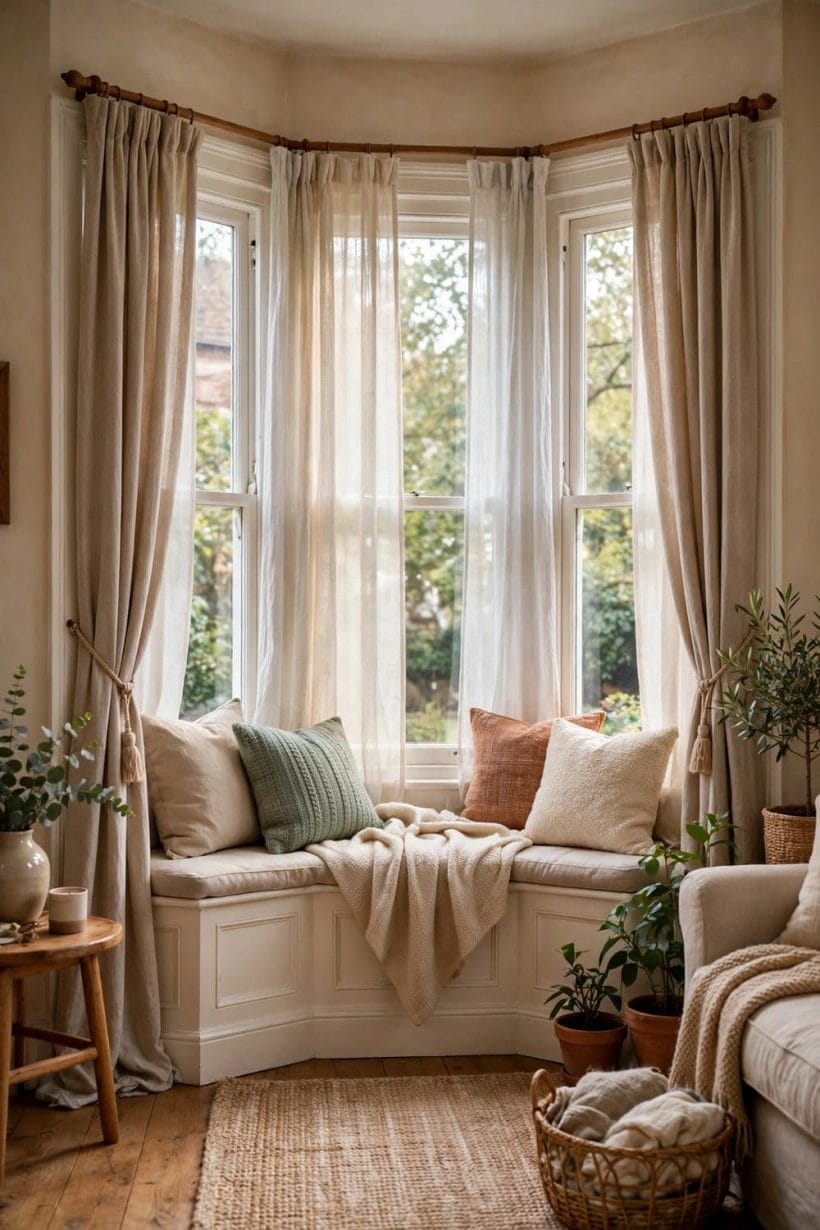
Frames chosen, the opening still needs its clothing. The styles surveyed in window valance ideas show how much of a window’s character arrives after the fitters leave — plan fixings and clearances for them while the window specification is still on paper. Heavy interlined curtains change how a window feels through the winter; if they are planned, mention them early, because the reveal depth and sill projection may need to allow for them.
23. Layered curtains on a single rod
For rooms that need both sheers and blackout weight, double curtains without a double rod solves the hardware problem neatly. Worth deciding early: deep reveals and wide trims change which curtain solutions the finished window can take.
24. Care from day one
Keep the paperwork — specification, warranty, care instructions — somewhere findable, and note the seal and hardware checks in a calendar rather than in memory. Windows maintained lightly and regularly rarely become emergencies; windows ignored become quotes. If two quotes differ wildly in price, the specification comparison usually explains why — and where it does not, asking the question is itself the most useful thing you can do.
10. Questions to Ask Before You Sign
25. The material questions
Which frame material is quoted, and why does the supplier recommend it for these openings? What are the glazing specification, the hardware standard and the safety-glass positions — each in writing? If any answer is an adjective instead of a specification, keep asking.
26. The warranty questions
What exactly is covered — frame, unit, hardware, finish, labour — for how long, by whom, and with what exclusions? Is the guarantee transferable if you sell, and is it backed if the installer stops trading? These are ordinary questions; good suppliers answer them without blinking. Keep the snagging list on paper as you walk round; small things noticed in the first week are quick fixes, while the same things noticed in month six become arguments.
27. The fitting questions
Who surveys, who fits, how are openings sealed and finished, and what does the price include for disposal and making good? With those answers written down, the choice between suppliers usually makes itself — which is precisely why this guide ends with questions rather than a verdict.
Final Considerations
Windows are bought on a specification or bought on a promise, and only one of those survives contact with a decade of weather. Compare frame materials in general terms, read the glazing and hardware lines closely, separate the warranties hiding inside the headline figure, and treat fitting as half the product. Do that, and whichever windows you choose, you will know exactly what you bought — which is the whole job of a buying guide.


0 Comments