

An entryway mirror earns its place three ways at once: it bounces light into a hall, gives the room a focal point, and offers a last check before you leave. Below are 105 ideas in one numbered roundup, covering shapes, sizes, frames, placements, lighting, storage pairings and styles, so you can shortlist the options that fit your hall, your walls and your budget.
1. Entryway Mirrors at a Glance: Start With These Six
Before the full roundup, six starter ideas cover most homes. Choose the shape for the mood, size for the wall, and hang the mirror so its centre sits near average eye level, adjusting for consoles and tall households. Always plan the fixings around the mirror’s weight and your wall type, and decide what the mirror will reflect, because that view is effectively a second picture in the room.
| Check | Simple guidance | Why it matters |
|---|---|---|
| Shape | Round softens, rectangular structures, arched adds height | Shape sets the tone before finish is even noticed |
| Size | Roughly two-thirds the width of the console or wall section below or around it | Too small looks lost; too large can crowd doors and switches |
| Height | Centre near eye level; leave a small gap above a console surface | Everyone should be able to use it without stooping or stretching |
| Reflection | Aim at a window, artwork or plants, never at clutter or a blank door | The reflection is half of what a mirror shows you |
| Fixings | Match plugs and screws to plasterboard, masonry or studs; use two fixings for wide mirrors | Mirrors are heavy, glass and unforgiving of weak fixings |
| Light | Add a sconce, pendant or lamp if the hall has no daylight | A mirror in a dark hall reflects darkness |
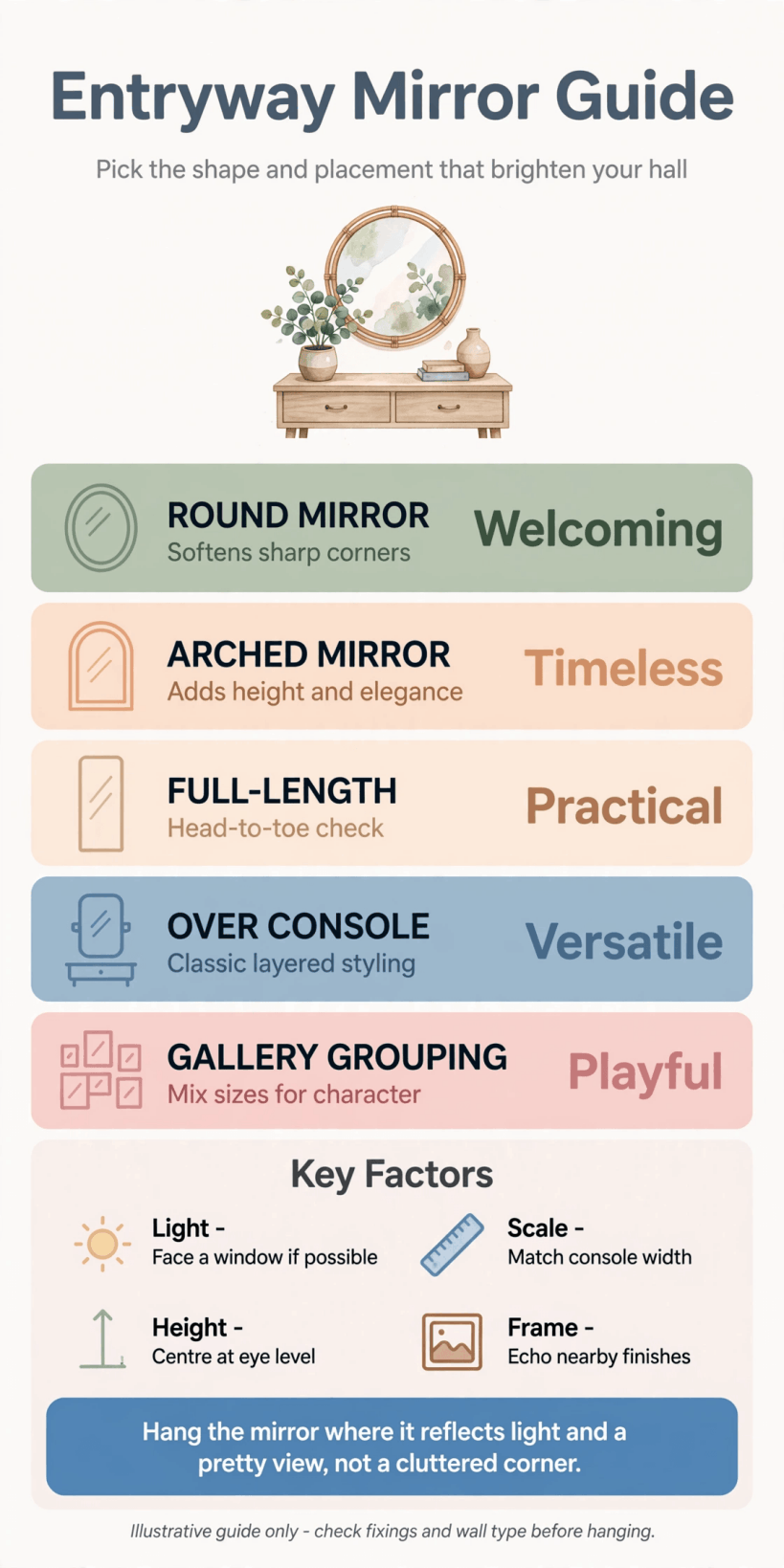
At a glance: the shape, size, height, reflection, fixing and light checks behind every idea that follows.
1. The classic round. A medium round mirror over a console is the safest all-rounder, softening boxy halls and suiting almost any style.
2. The full-length leaner. A tall mirror leant, and safely secured, against the wall gives a head-to-toe check and a relaxed, layered look.
3. The slim rectangle. A simple upright rectangle adds structure and height where a round shape would feel too soft.
4. The arch. An arched top borrows the language of doorways and windows, making a plain hall feel more architectural.
5. The mirror over a console. The timeless pairing: mirror centred over a narrow table that catches keys, post and a lamp.
6. The double. Two matching mirrors side by side widen a wall, suit double consoles and create a pleasing rhythm.
2. Shapes That Set the Tone
Shape is the first thing a visitor reads, so let it carry the mood you want, calm, formal, playful or architectural. This group explores the main families, and the proportions advice echoes tiny house living room ideas, where one strong shape per wall usually beats several competing ones.
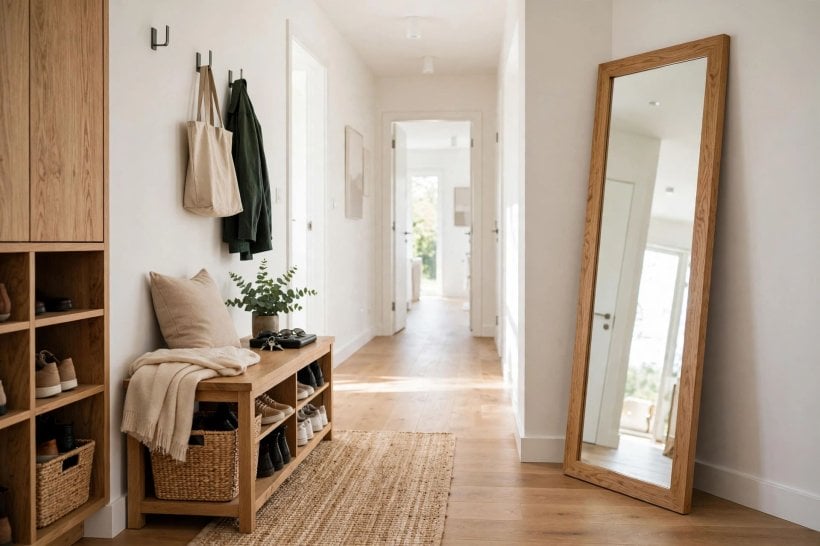
7. Oversized round. Go large with a single circle to fill a wide wall and reflect the maximum light.
8. Small round pair. Two small circles at slightly different heights feel informal and work above a bench.
9. Oval upright. An oval lengthens a low-ceilinged hall while keeping the softness of a curve.
10. Oval horizontal. Turn the oval sideways over a long console for a calm, landscape feel.
11. Pill or capsule. The elongated rounded rectangle is modern, friendly and ideal over narrow vanities and consoles alike.
12. Soft square. A square with rounded corners bridges modern and traditional schemes without sharpness.
13. Sharp rectangle. Crisp corners suit contemporary halls and echo rectangular doors and panels.
14. Tall arch with a shelf. Some arched designs add a small shelf at the base for keys and sunglasses.
15. Cathedral arch. A pointed, gothic-leaning arch brings drama to period homes and plain walls alike.
16. Sunburst. A central mirror with radiating rays is part mirror, part sculpture, and needs little else on the wall.
17. Organic blob. A freeform, wavy outline feels playful and artistic, best on an otherwise simple wall.
18. Hexagon. A single hexagon, or a honeycomb cluster, gives a geometric note that suits modern schemes.
3. Size, Scale and Hanging Height
Most disappointing mirrors are simply the wrong size or hung at the wrong height. Use these twelve checks before you buy, measuring the wall, the furniture below and the people who will use it, much as you would when planning any of the layouts in bedroom interior design for tiny houses.
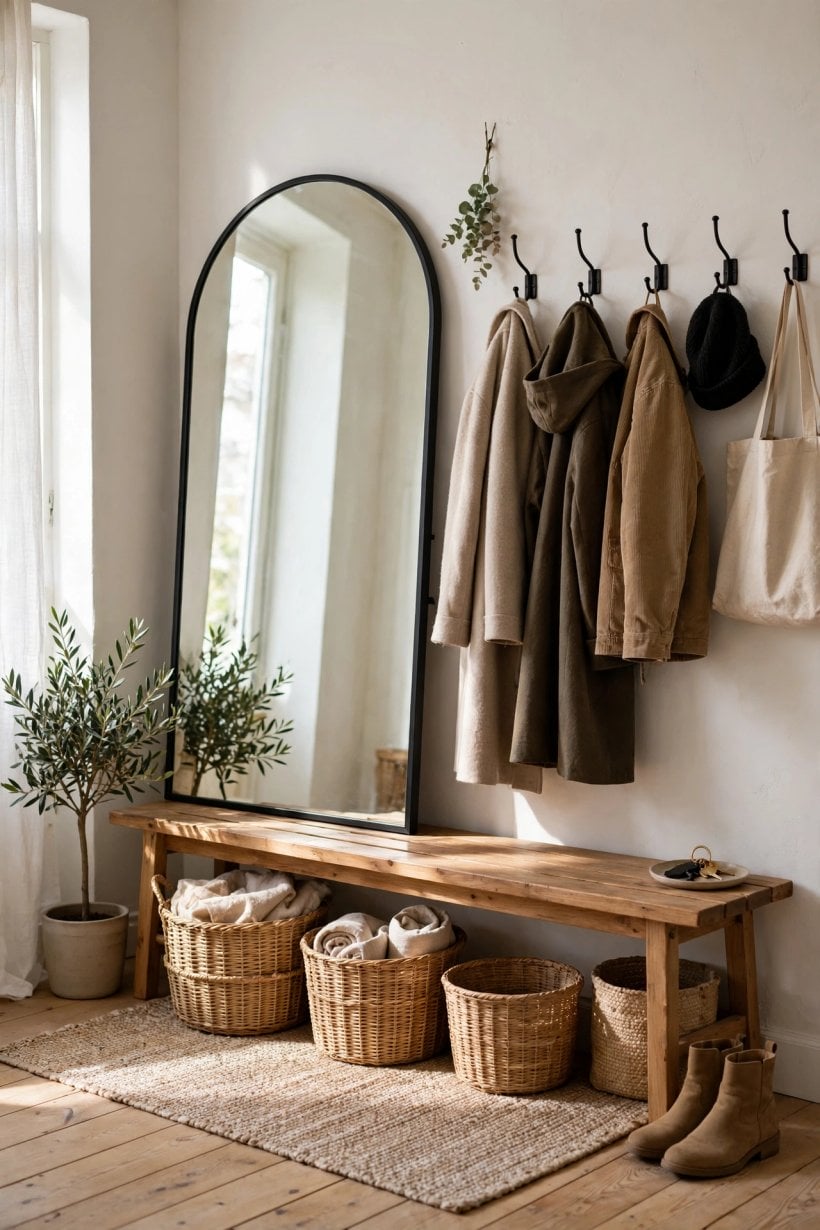
19. Two-thirds rule. Choose a mirror roughly two-thirds the width of the console beneath it for balanced proportions.
20. Fill the panel. On a panelled wall, size the mirror to sit neatly inside one panel section.
21. Floor to ceiling. A full-height mirror panel makes a narrow hall feel twice its width.
22. Just the head and shoulders. In a tiny hall, a modest mirror at face height is enough for its daily job.
23. Centre at eye level. Hang the centre around average standing eye level, then adjust for your household.
24. Mind the gap. Leave a hand’s width between a console top and the mirror’s lower edge.
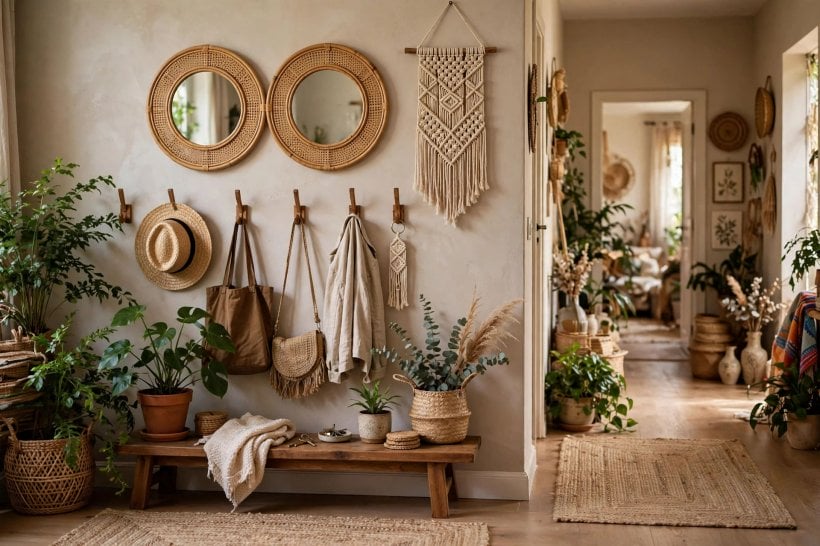
25. Clear the door swing. Check that an opening door can never strike the frame or glass.
26. Clear the switches. Leave light switches and thermostats accessible and visually uncrowded.
27. Wide over wide. A horizontal mirror stretches a long, low console and a wide wall together.
28. Tall over tall. A vertical mirror emphasises ceiling height in a compact but tall hall.
29. Tape it first. Mark the outline in painter’s tape and live with it for a day before drilling.
30. Photograph the tape. A phone photo reveals proportion problems that the eye forgives in person.
4. Frames and Finishes
The frame decides whether a mirror feels rustic, glamorous, minimal or traditional. Match it to something already in the hall, a floor, a door handle, a stair rail, so the mirror belongs to the room, a trick used throughout tiny barn house interior ideas with natural timber and black metal.
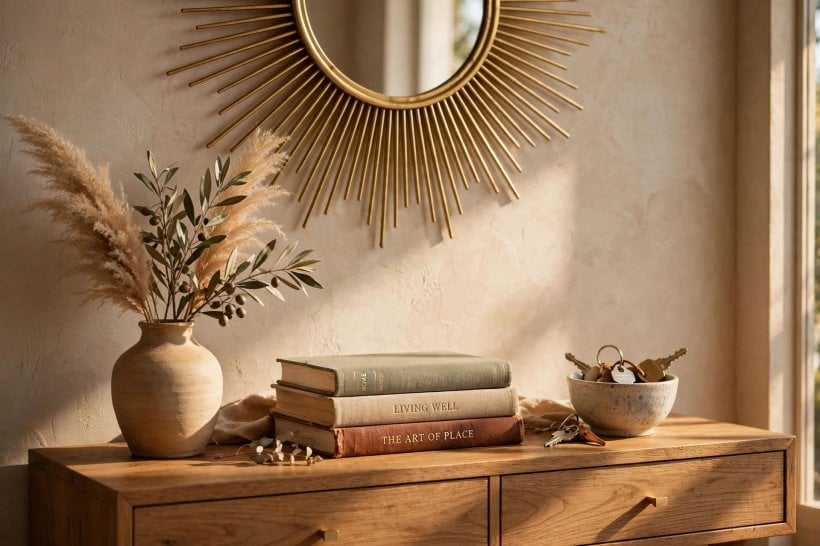
31. Natural oak. Pale timber softens white halls and pairs with woven baskets and linen.
32. Dark walnut. A deep timber frame adds formality and looks rich against pale walls.
33. Reclaimed wood. Weathered timber brings texture and suits country, coastal and rustic schemes.
34. Thin black metal. A fine black edge is the modern default: graphic, light and easy to repeat in hooks and lights.
35. Brushed brass. Warm brass lifts green, navy and charcoal walls and echoes classic door furniture.
36. Antique gold. A softly aged gilt frame is the choice for traditional and vintage-leaning halls.
37. Chrome or nickel. Cool, bright metal keeps a scheme crisp and suits grey and white palettes.
38. Frameless. Polished edges and no frame give the purest, most contemporary reflection.
39. Bevelled edge. A bevel catches light like a frame while staying frameless and elegant.
40. Rattan or cane. Woven surrounds bring a relaxed, natural note and soften hard hall surfaces.
41. Rope frame. A coiled rope edge leans coastal and works with pale wood and stripes.
42. Painted to match. Painting a wooden frame the wall colour creates a quiet, built-in feeling.
5. Placement Ideas for Every Layout
Where the mirror hangs matters as much as which one you choose. These placements cover the common hall shapes, from a wall opposite the door to the awkward space under the stairs, and they draw on the same use-every-corner thinking as tiny house bathroom ideas.
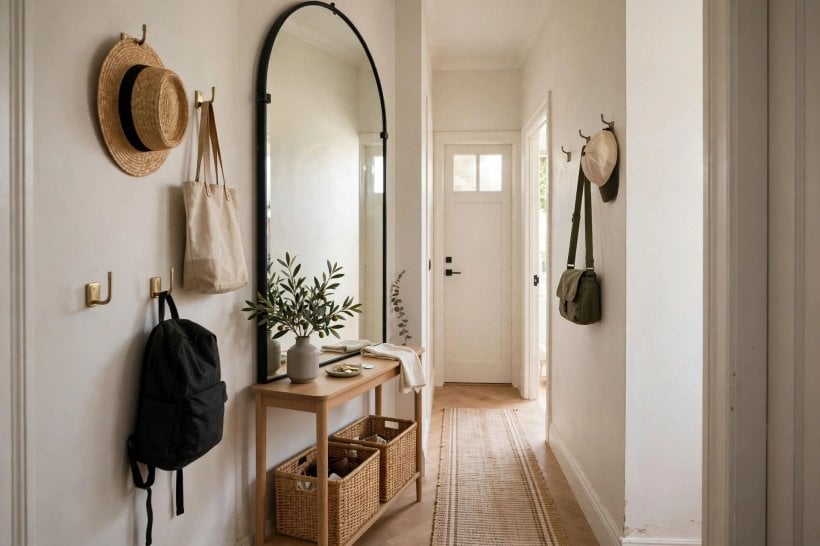
43. Opposite the front door. The classic position for a first impression and a final check, provided the reflection is a pleasant one.
44. Beside the front door. A mirror on the side wall catches sidelight and keeps the door wall clear.
45. At the end of a corridor. A mirror on the end wall pulls light down a dark passage and shortens it visually.
46. Over the radiator. Use the dead wall above a radiator, with suitable clearance, for a mirror and a slim shelf.
47. Under the stairs. A mirror in an under-stair nook turns a dumping ground into a deliberate dressing corner.
48. On the stair wall. A series of small mirrors climbing the stairs adds sparkle and rhythm.
49. Between two doors. A narrow upright mirror makes use of the pier of wall between doorways.
50. Over a bench. The bench-and-mirror pairing handles shoes, bags and a last look in one compact station.
51. Inside a porch. A small mirror in an enclosed porch keeps the ritual at the threshold itself.
52. On a panelled wall. Centre the mirror in the panelling for a tailored, architectural result.
53. Facing a window. Opposite glass doubles daylight and greenery; check for glare at different times of day.
54. In a dark corner. Angle or place a mirror to throw borrowed light into the hall’s gloomiest corner.
6. Light, Colour and What the Mirror Reflects
A mirror is only as good as its light and its view. These ideas tune both, coordinating the mirror with wall colour and lamps so the reflection flatters the room and the people in it, a principle shared with colourful tiny house interior ideas.
55. Sconces either side. Wall lights flanking a mirror give even, flattering light at face level.
56. A pendant in the reflection. Position the mirror to catch a statement ceiling light and double its effect.
57. Backlit glow. A mirror with concealed lighting behind it floats softly and suits evening arrivals home.
58. Reflect the garden. Aim the mirror at a window onto planting so the hall borrows green, moving views.
59. Reflect artwork. Let a mirror give a favourite picture a second showing across the hall.
60. Avoid the clutter view. Never aim a mirror at shoe piles, bins or the back of a door.
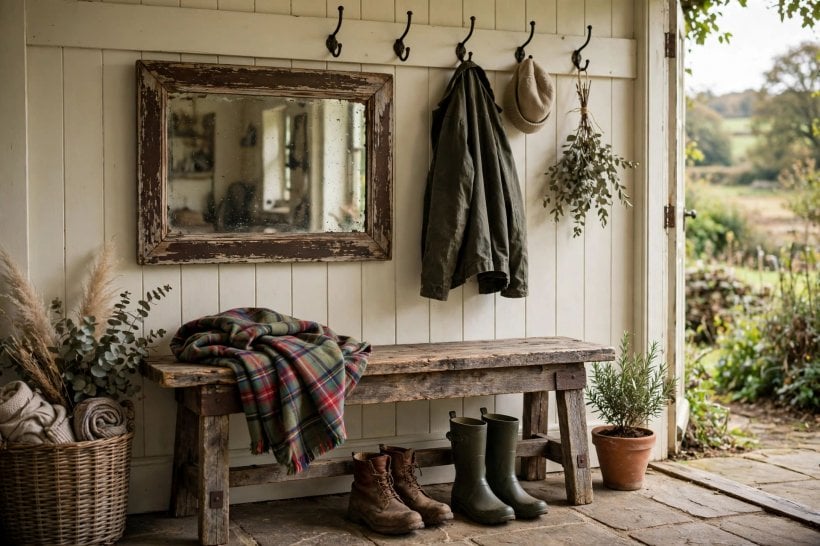
61. Dark wall, bright frame. A pale or metallic frame keeps a mirror present on a deep-coloured wall.
62. Pale wall, dark frame. A black or walnut outline stops a mirror disappearing into a white hall.
63. Tinted glass. Smoked or bronze-tinted mirror glass feels moody and hides smudges kindly.
64. Antiqued glass. Foxed, aged mirror adds character and softens reflections in traditional homes.
65. Candlelight test. Check the evening reflection with lamps on; it should glow, not glare.
66. Two mirrors, one reflection. Angle a second mirror to carry light around a bend in an L-shaped hall.
7. Pairing Mirrors With Consoles, Benches and Storage
The mirror is the top half of a working station; these pairings finish the bottom half. Think in complete arrangements, surface, storage, seating and a place for everything, as in the multi-tasking furniture plans within tiny house bedroom ideas.
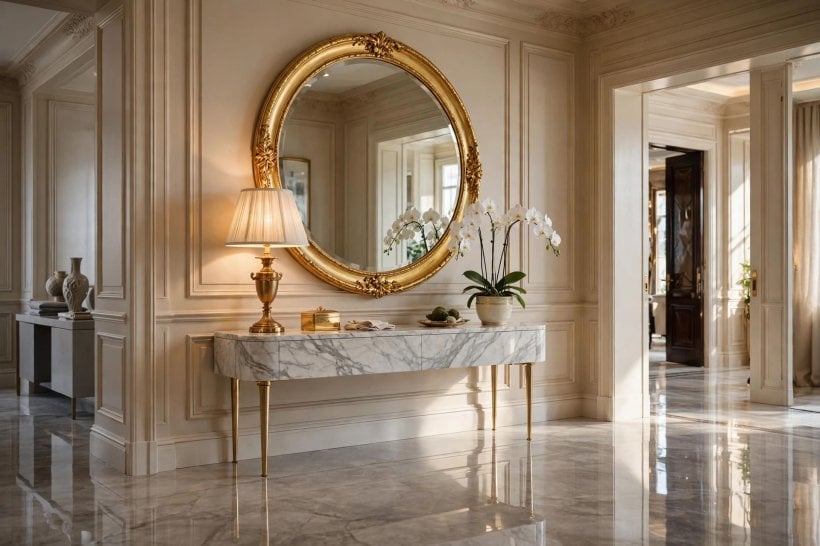
67. Console and tray. Add a shallow tray under the mirror to corral keys, coins and post.
68. Bench and baskets. Baskets under a bench hide shoes while the mirror above keeps the corner looking designed.
69. Hooks in a row. A line of hooks beneath or beside the mirror handles coats without a bulky stand.
70. Mirrored cabinet. A shallow mirrored cabinet hides gloves, chargers and dog leads behind the glass.
71. Mirror with a ledge. A built-in ledge holds a phone, a plant and a small dish for jewellery.
72. Ladder shelf pairing. Lean a mirror beside a ladder shelf for a relaxed, layered storage wall.
73. Umbrella stand balance. Balance a tall mirror with a tall stand or vase on the other side of the console.
74. Boot room mirror. A robust, wipeable framed mirror suits muddy-boot territory and garden doors.
75. Dressing corner. Add a stool and a small drawer unit to make a mini dressing area of a spare corner.
76. Family command centre. Combine the mirror with a noticeboard and calendar on an adjoining wall section.
77. Guest-ready pairing. A mirror, a spare hook and an empty hanger make guests feel expected.
78. Pet station. Hooks for leads and a towel beneath the mirror keep dog-walking gear in one place.
8. Styles and Themes to Try
With shape, size and station planned, style becomes the enjoyable layer. These twelve themes show how the same basic mirror idea changes character with frame, colour and companions, much as planting themes transform a plot in tiny house landscaping ideas.
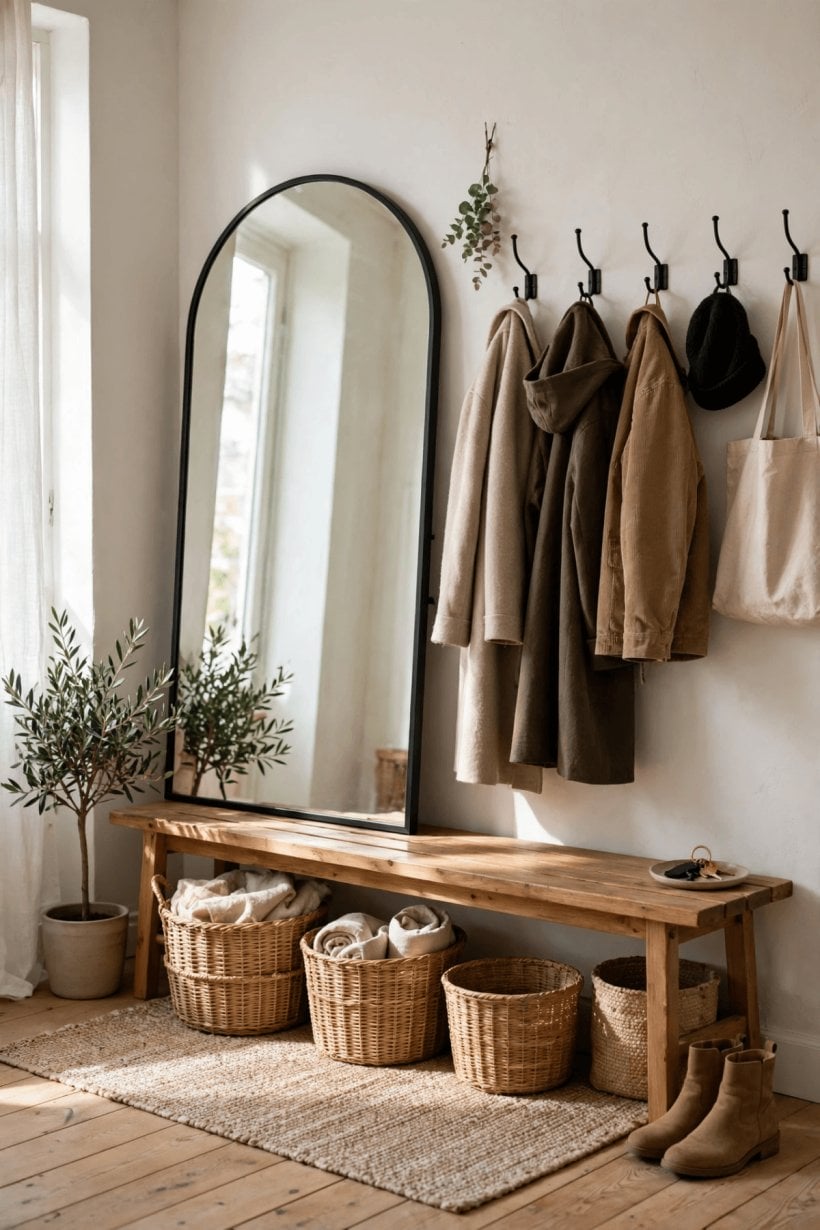
79. Scandinavian pale. Light wood, a round shape and a white wall for calm, airy simplicity.
80. Modern minimal. Frameless glass, a black console and nothing on the wall that is not needed.
81. Classic traditional. A gilt or walnut rectangle over a polished table with a lamp each side.
82. Farmhouse. Reclaimed timber, a bench and woven baskets for a warm, worked-in welcome.
83. Coastal. Rope or whitewashed frames, stripes and a bowl for shells and keys.
84. Industrial. Grid-style windowpane mirrors in black metal echo factory windows and suit brick and concrete.
85. Art deco echo. Stepped or fan shapes in brass bring period glamour to a plain hall.
86. Bohemian collected. A cluster of small, mismatched mirrors gathered over time and hung as one composition.
87. Japandi calm. A capsule shape in pale wood with a single branch in a vase beneath.
88. Colour-block bold. A mirror frame painted in the hall’s accent colour ties a brave scheme together.
89. Heritage checkerboard. Pair an arched mirror with classic tiled flooring for a timeless entrance.
90. Gallery wall anchor. Let the largest mirror anchor a wall of prints, plates and photographs around it.
9. Small, Narrow and Rental-Friendly Ideas
Little halls and rented homes need lighter-touch thinking: lean rather than drill where your agreement requires, choose slim profiles, and let one mirror do the work of several. These final styling ideas keep impact high and holes in the wall low.
91. Leaning, secured. Lean a tall mirror on a console or the floor and fix it with a discreet safety strap.
92. Over-door hanging. A lightweight mirror on over-door hooks needs no fixings at all.
93. Adhesive-rated light mirror. Only for genuinely light mirrors and suitable surfaces, following the fixing maker’s guidance exactly.
94. Slim profile, big glass. A fine-framed mirror maximises reflective area on a narrow pier of wall.
95. Corner mirror. A mirror in the corner of a square hall reflects two walls and feels surprisingly generous.
96. Mirrored tiles. A small grid of mirror tiles adds sparkle where a single large mirror will not fit.
97. Folding screen mirror. A hinged mirrored panel can stand in a corner and fold away when needed.
98. Mirror on an easel stand. A stand-mounted mirror moves rooms with you, ideal for renters and reshuffles.
99. One tall, one job. In the smallest hall, a single tall mirror replaces mirror, art and light-bouncer in one.
100. Keep the floor clear. Wall-hung everything, mirror included, makes a tiny hall feel calmer and larger.
101. Second-hand find. Vintage mirrors bring quality frames at modest prices; check the glass and fixings before hanging.
102. Paint a tired frame. A sound old mirror with a fresh painted frame is the cheapest transformation on this list.
10. Hanging, Safety and the Final Three Ideas
The last three ideas are about keeping everything, and everyone, safe and looking good for years. However beautiful the mirror, it must be hung for its weight and wall type, with suitable fixings, ideally into studs or masonry where needed, and with two points of support for wide pieces so it cannot swing or tilt.
103. Safety film or backing. Choose mirrors with a safety backing that holds fragments together if the glass is ever broken, especially in busy family halls.
104. The annual check. Once a year, test fixings for movement, check cords or straps for wear, and clean the glass with a soft cloth and mild cleaner.
105. The seasonal refresh. Restyle the console beneath the mirror with the seasons, a branch, a bowl, a different lamp shade, and the same mirror feels new four times a year.
Two closing cautions save most regrets. Never hang a heavy mirror on a single weak fixing or on unknown wall material, and never place glass where a swinging door, a carried ladder or an enthusiastic dog can reach it. When in doubt about wall type or weight, use a competent handyperson; the cost is small beside the value of the mirror, and of the confidence that it will stay exactly where you put it.
Final Considerations
One hundred and five ideas reduce to a handful of habits: choose the shape for the mood, size the mirror to the wall and the furniture, hang it at a height real people can use, and control what it reflects and how it is lit. Pair it with a working station of hooks, storage and a surface for keys, and hang it safely for its weight and your walls. Do those things and almost any style on this list, from a farmhouse leaner to a grid of black metal, will succeed.
Start with the at-a-glance checks, tape the outline on the wall, and live with the idea for a day before you drill. Then enjoy the transformation: a brighter hall, a composed first impression and a far more useful last look at the door. Few single purchases work as hard in a home as a well-chosen mirror, and the right one will quietly earn its place every single day.

0 Comments