
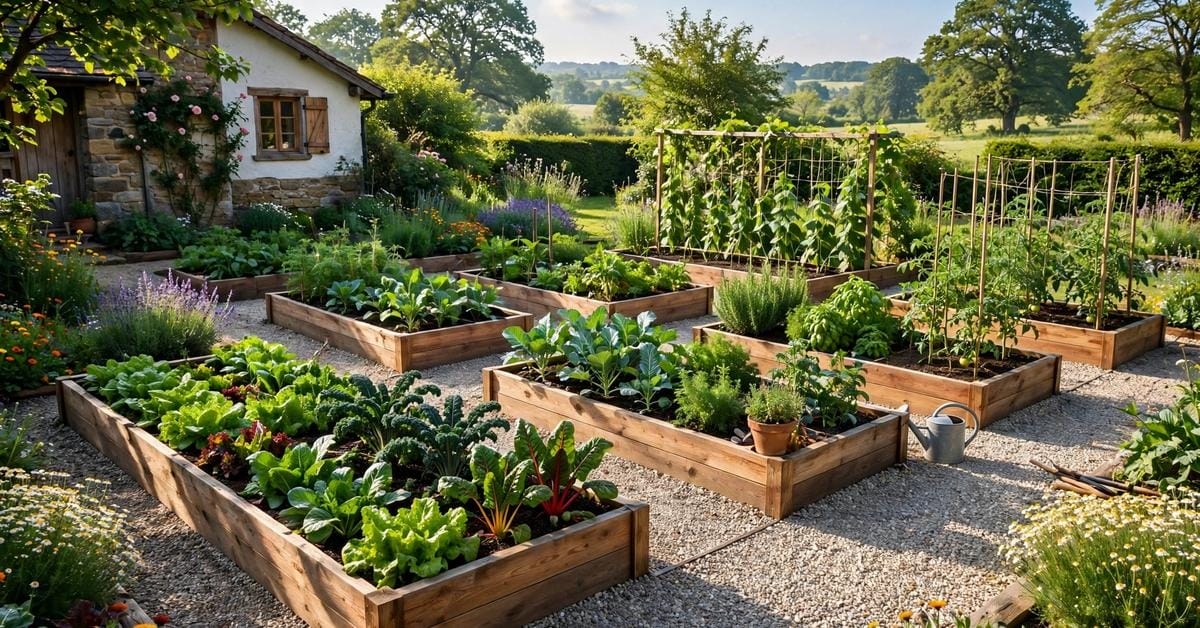
A raised garden bed is the simplest bargain in gardening: a frame, a fill of good soil, and in exchange the gardener gets drainage, depth and a working height that knees forgive.
These seventy-five ideas treat the raised bed as landscape design in miniature: how to place and shape beds so the garden composes, fill and feed them so crops thrive, and plant and keep them so each season starts ahead of the last.
1. Raised Garden Bed Ideas at a Glance
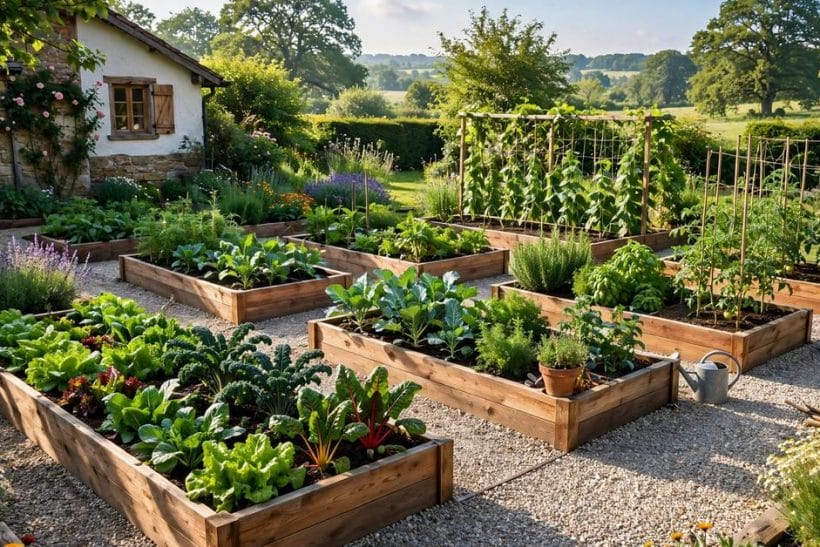
A raised garden bed is a planting bed built up inside a retaining frame — timber, stone, metal or brick — and filled with soil above the garden’s own level.
| Question | Short answer |
|---|---|
| What is a raised bed, as opposed to a border? | A border sits at ground level in the garden’s own soil; a raised bed is a contained depth of chosen soil above it — warmer, better drained, and never walked on. |
| How deep should the fill be? | Deep enough for the crops’ roots with room to spare — salads are content shallow, roots and hungry vegetables want the deepest fill the frame allows. |
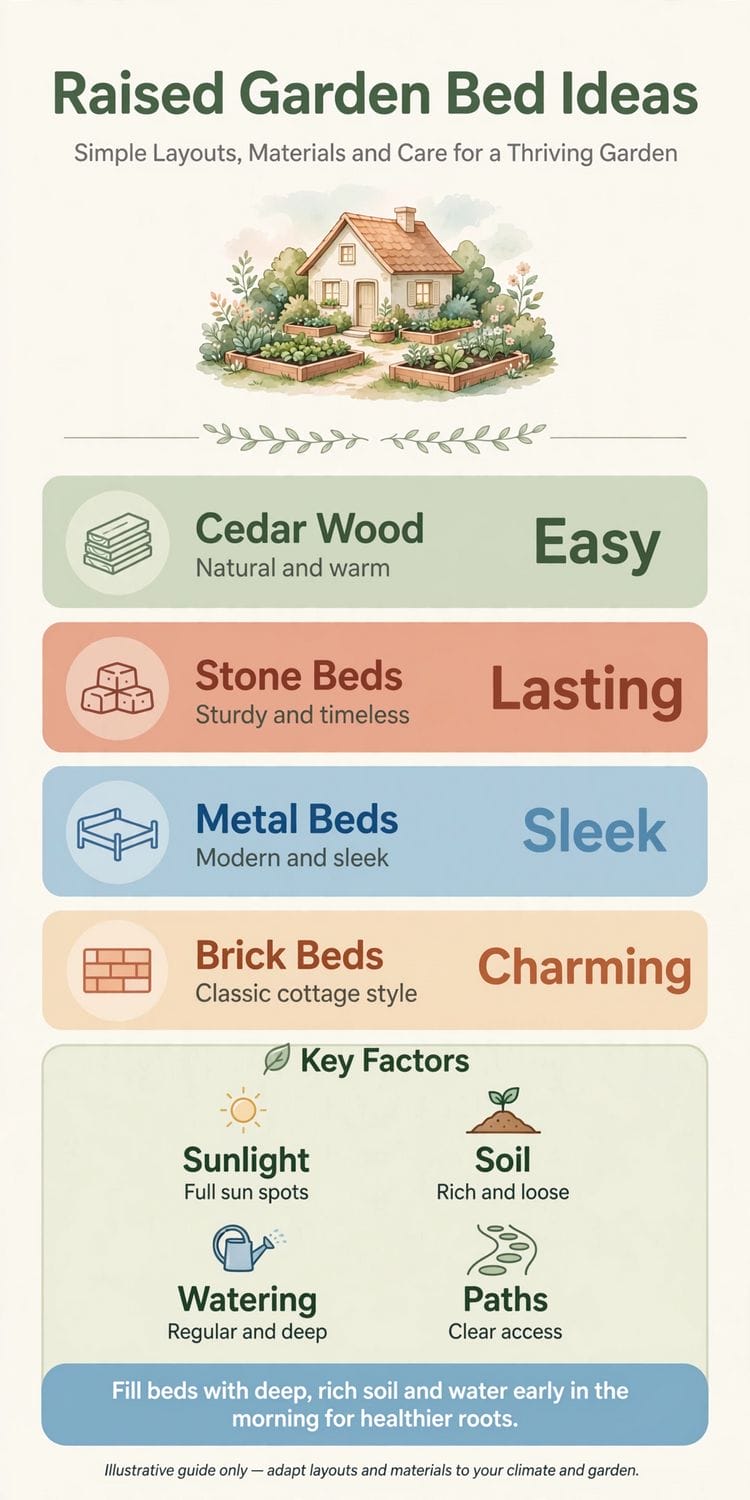
| What should the frame be made of? | Whatever suits the garden’s fabric and will last: timber for warmth, stone for permanence, steel for a crisp modern line, brick for a walled garden. |
| How often does a bed need watering? | More often than the ground, because it drains freely — mulch well, water at the base in the cool of the day, and group beds by thirst. |
| Can raised beds grow anything besides vegetables? | They are at their best mixed: herbs in the driest bed, soft fruit along a back edge, flowers running through as working plants for pollinators. |
2. Reading the Garden First: Light, Slope and Access
A raised bed succeeds or fails on decisions taken before any timber is cut: where the sun actually falls, how the ground slopes, and whether the gardener can reach, water and harvest without a fight. The broader site-thinking in coastal landscaping ideas applies inland too — read the ground honestly first, then place the beds.
1. Put the hungriest beds in the longest sun
Vegetables and most herbs are sun crops, and a raised bed cannot be moved once it is filled.
2. Keep one bed in partial shade for leaves and herbs
Salads, spinach and many soft herbs scorch and bolt in relentless afternoon sun. A bed that takes morning light and afternoon shade is not the leftovers — it is the leaf bed, and a garden with both kinds outproduces one that is all glare.
3. Run long beds along the light, not across it
A long bed laid so its length catches the sun evenly grows evenly from end to end.
4. Level each bed on a slope rather than tilting it
A tilted bed waters downhill and starves its top end. Build the frame level, stepping the base into the slope, so rain and watering spread evenly and the soil stays where it was put.
5. Terrace a steep garden bed by bed
On a real slope, a flight of level beds, each retained at its downhill edge, turns an awkward bank into the garden’s most productive ground — flat working platforms with paths between, instead of one long slide.
6. Leave paths wide enough for a barrow and a kneeler
Paths are not leftover ground; they are the garden’s workspaces. A path that fits a wheelbarrow, a kneeling pad and a bucket is wide enough; anything narrower makes every harvest a negotiation with the plants.
7. Reach every centre from a path, never by stepping in
The whole point of the raised bed is soil that feet never compact. Size each bed so its middle is within a comfortable reach from a path on one side, or from paths on both — and hold the rule even when a weed sits temptingly in the centre.
8. Put beds for daily picking near the kitchen door
Salads, herbs and garnish crops earn their keep by being picked little and often. Beds for them belong on the shortest route from the kitchen; the slow crops — roots, brassicas, stored onions — can take the far end of the garden.
9. Keep a water point within easy reach of every bed
Raised beds dry faster than the ground around them, because they drain freely and catch the wind.
10. Shelter young beds from the prevailing wind
Wind rocks seedlings, dries soil and chills growth. A bed tucked on the lee side of a fence, hedge or the house keeps its warmth; where the garden is open, the first bed built can shelter the second.
11. Group beds by thirst so watering stays simple
Leafy crops drink constantly; Mediterranean herbs prefer life lean and dry. Beds grouped by water need turn one chore into two easy rounds, and nothing drowns or thirsts by accident.
3. Shapes and Arrangements: Beds That Compose a Garden
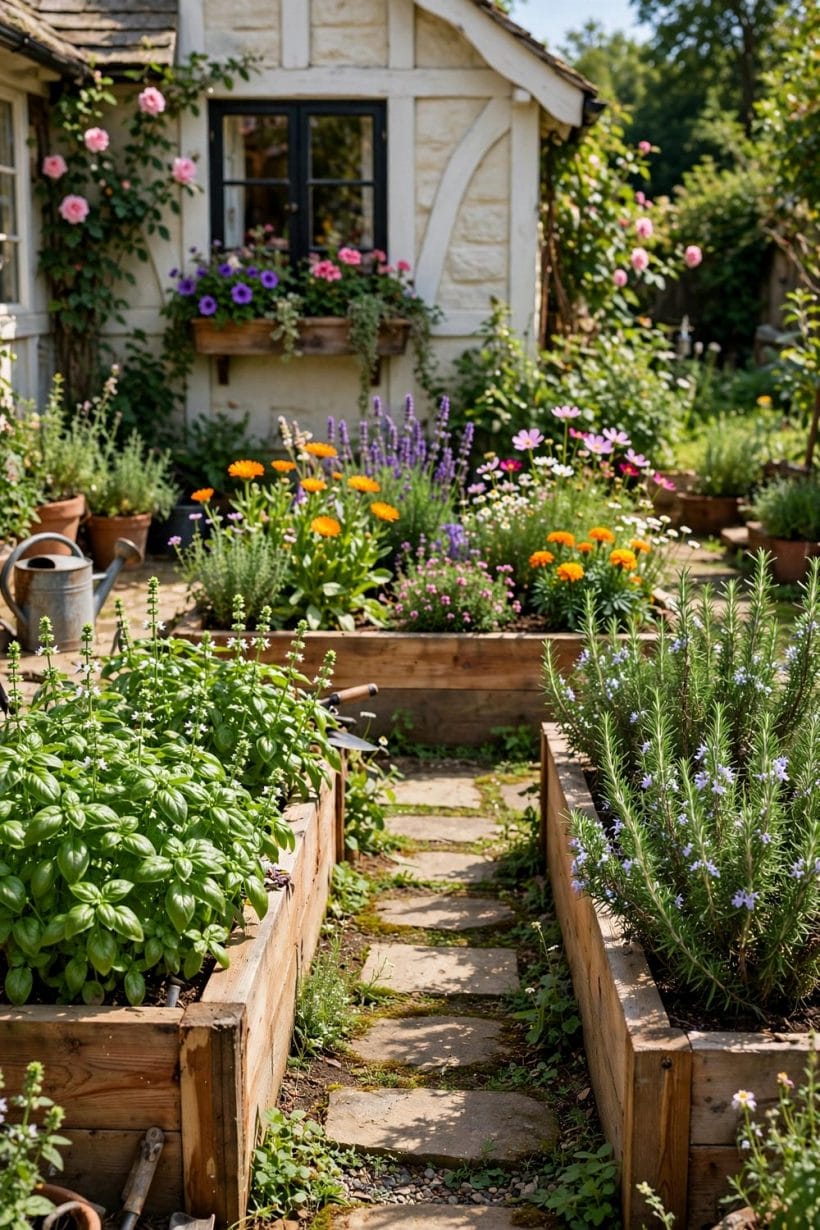
Raised beds are architecture at ankle height: their shapes draw the garden’s plan on the ground. Between them, surfaced simply, the paths become the garden’s floor — the surfacing thinking in gravel patio ideas transfers directly to the runs between beds.
12. Start with one rectangle done properly
A single level, well-filled rectangle teaches everything: soil behaviour, watering rhythm, what the household actually eats. One bed done properly beats four done hopefully, and it sets the standard the rest of the garden copies.
13. Run a long bed along a fence to borrow its shelter
The strip along a fence is often the garden’s wasted edge. A raised bed there borrows the fence’s wind shelter and warmth, gives climbers something to aim for, and turns boundary into harvest.
14. Pair beds with a path between as a working aisle
Two parallel beds with a path down the middle form the kitchen garden’s classic module: work one side, then the other, with the barrow parked between. Repeated, the module becomes a whole allotment in miniature.
15. Make an L of beds to turn a corner into a room
Two beds meeting at a corner enclose a small working court — a place for the bench, the pots and the watering can. Corner courts are where gardens gain their sense of rooms.
16. Build a U-shaped group around a standing space
Three beds around a paved or gravelled standing square put a whole bed garden within a turn of the heel. It is the kindest arrangement for gardeners who kneel rather than bend, and for very small plots.
17. Use a keyhole arrangement in a small garden
A round or squared bed with a notch cut into one side lets the gardener stand inside the shape and reach everything. In a tiny garden it trades path for planting more cleverly than any rectangle can.
18. Break a long run with a cross path
A very long bed without a break becomes a trek: every weed at the far end waits while you walk around.
19. Stagger bed heights down a slope for a terraced read
Beds of differing heights stepping down a slope read as intentional terracing and put the highest — and its crops — at the easiest working height.
20. Keep one narrow bed for cut-and-come-again crops
A slim bed near the path’s edge, given to salads and herbs that are snipped daily, keeps the picking crops in one quick round.
21. Frame a lawn or terrace with matching beds
A pair or run of identical beds edging the lawn gives the whole garden its structure and makes the working area read as part of the design, not an apology behind it.
22. Repeat one bed shape so the garden reads designed
Whatever shape is chosen — rectangle, L or keyhole — repeating it is what turns beds into a garden. Mixed shapes suggest accidents; repetition suggests intention, and visitors read the difference instantly.
4. Frames and Materials: Timber, Stone, Metal and Brick
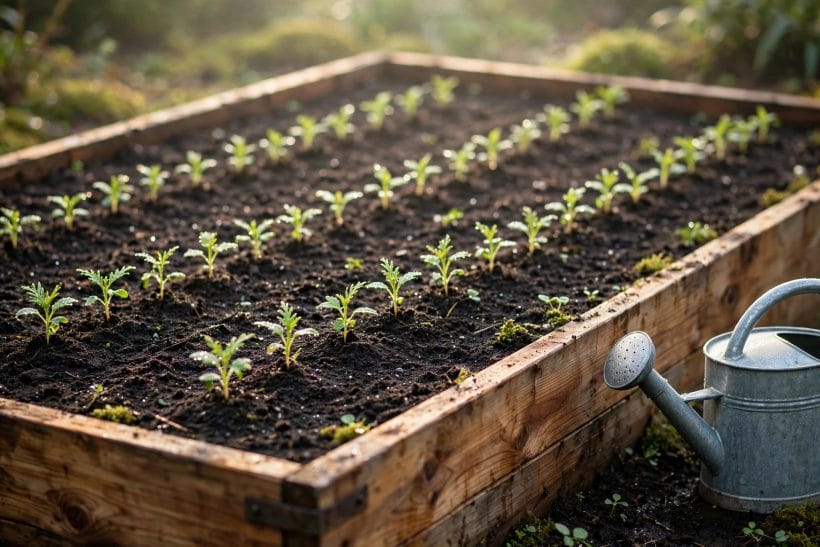
The frame is the part of the raised bed that is seen every day and touched every season, so its material sets the garden’s tone as much as its budget.
23. Choose timber for warmth and easy building
Timber is the forgiving classic: quick to build, kind to kneel against, easy to repair board by board.
24. Use stone where the bed should feel permanent
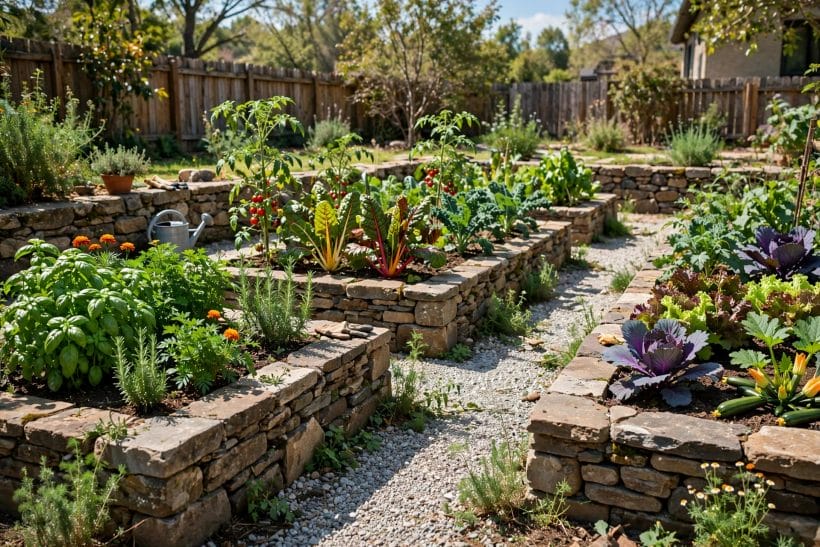
A stone-walled bed reads as part of the garden’s geology — built once, settled forever. It suits gardens near stone houses and walls, and its thermal mass coddles warmth-loving plants at its sunny face.
25. Let weathered steel edge a modern garden
Thin steel edging, left to take its rusted finish, draws the crispest lines a bed can have and nearly vanishes against the soil.
26. Brick suits a walled or cottage garden
Brick frames echo brick houses and garden walls, and a double course gives a top edge wide enough to sit on with a cup of tea.
27. Sleeper-style timbers for a chunky, rustic bed
Heavy square timbers stacked two or three high make beds that feel built rather than assembled — right for rustic gardens and big, bold planting. Their weight is their fixing; they ask only for level ground.
28. Woven willow or hazel hurdles for a soft edge
Woven panels make the gentlest frames: low, soft and cottage-plain, they suit herbs and flowers especially. They are the least permanent option and age into the garden rather than against it — replacement is renewal, not repair.
29. Rendered block where a crisp line is wanted
Blockwork rendered and painted gives a bed the clean, almost architectural finish of Mediterranean and modern gardens. The paint colour can tie the beds to the house’s trim and make the whole plot read as one design.
30. Use reclaimed materials only when you know their past
Old timber, stone and brick are full of character, but a bed grows food. Never build with material whose history is unknown — timber treated with old preservatives or soaked in anything doubtful has no place around soil that feeds people; ask, and walk away from vague answers.
31. Line the inside faces to slow rot and soil loss
A liner against the frame’s inside face keeps soil from washing through joints and slows the damp that rots timber from within. Keep the base open for drainage; the liner is for the walls, not the floor.
32. Cap the top edge wide enough to sit on
A flat cap along the frame’s top is the bed’s hardest-working detail: a seat while weeding, a shelf for pots and tools, a perch for the harvest basket.
33. Match the bed material to the house’s own fabric
Beds built from the house’s own palette — its brick, its stone, its timber tone — look inevitable rather than installed. When in doubt, copy the nearest permanent material and let the planting provide the contrast.
5. Soil, Filling and Drainage: The Working Inside
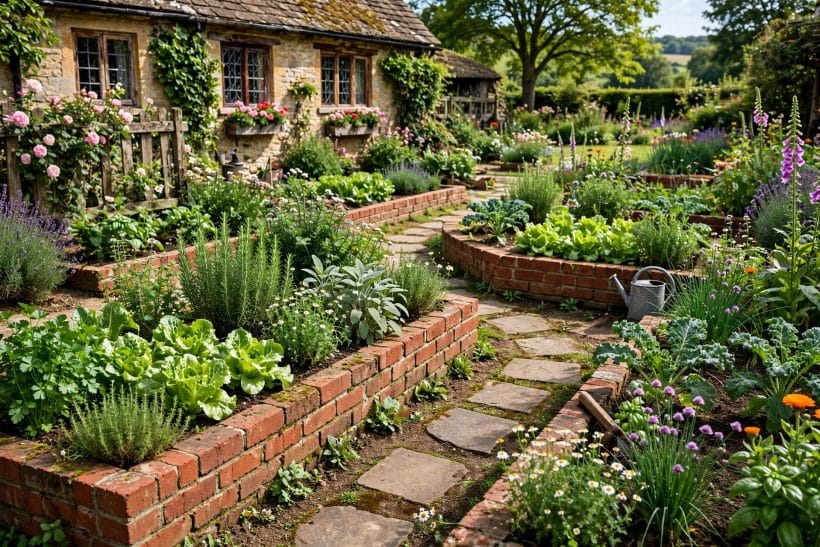
A raised bed is, in the end, a container of soil with pretensions — its harvests are decided by what fills it.
34. Fill in layers: bulky matter below, fine soil above
Deep beds need not be solid topsoil. A base of bulky organic matter — prunings, straw, rough compost — topped with good topsoil and compost fills the depth honestly, feeds slowly as it settles, and turns garden waste into bed.
35. Mix compost through the top layer every season
The top layer is where roots feed and seeds start. A generous dressing of compost forked through it each season replaces what the crops took and keeps the surface open and dark.
36. Keep the fill just below the rim so water stays in
Soil heaped to the brim sheds water off its edges every time it rains. A fill that sits a hand’s breadth below the rim holds water where the roots are and stops the surface washing over the paths.
37. Break up the ground beneath before filling
A bed set on compacted, undisturbed ground can behave like a bathtub. Fork the base open so roots and water pass through, and the bed connects to the garden’s own soil life below.
38. Let deep beds drain freely at the base
Raised beds forgive wet gardens precisely because they drain. Never line the bottom with anything impermeable; if water stands in a bed, the answer is drainage below and grit in the mix, not a barrier.
39. Mulch the surface to hold moisture and quiet weeds
A mulch of compost, leaf mould or straw over the surface between crops slows evaporation, softens rain impact and keeps weed seeds in the dark. It is the cheapest watering system a bed can have.
40. Top up little and often as the fill settles
New fills sink as their organic matter condenses — it is settling, not failure. A barrow of compost each season restores the level and feeds the bed in the same trip.
41. Feed the soil, not just the plants
A bed managed organically — compost, mulch, rotation, rest — grows more fertile each year, while a bed fed only plant by plant grows dependent. The soil is the crop that makes all the others possible.
42. Keep a compost corner feeding the beds
Beds eat compost in quantities that make bought bags a poor plan. A simple compost corner near the beds turns their own trimmings into next season’s top-up, and the wheelbarrow journeys stay short.
43. Treat unknown soil with suspicion before growing food
Soil of unknown history — from cleared plots, old yards or imported loads — deserves caution before it grows salad.
44. Rest one bed under a green cover crop in rotation
A bed sown with a living cover crop for a season rests without going weedy: roots open the soil, foliage covers it, and the whole is dug in or mulched down as feed for the next crop.
6. Vegetables in Raised Beds: The Kitchen-Garden Core
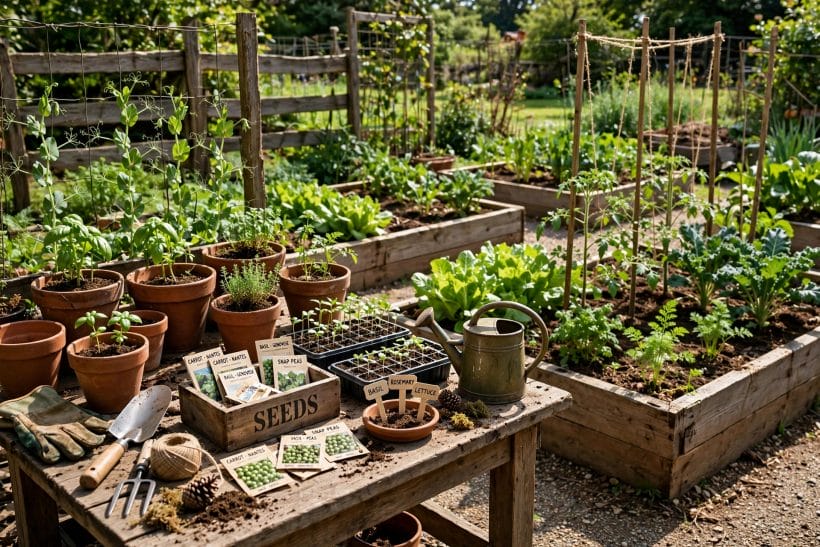
Vegetables are what raised beds were invented for in most gardens: control of soil, drainage and access in exchange for harvests that justify the building.
45. Grow salads where you can pick them daily
Cut-and-come-again leaves are the raised bed’s perfect tenants: shallow roots, quick growth, endless small harvests. A bed of them near the door changes what a household eats more than any single crop.
46. Give climbing beans and peas a frame at the bed’s back
Climbers belong at the bed’s shady side, on a frame or net, where they harvest vertically and shade nothing else.
47. Keep roots in the deepest, stoniest-free bed
Carrots and parsnips fork and sulk in stony, fresh-manured ground. Give roots the bed with the deepest, oldest, most settled fill and they repay the favour straight and long.
48. Plant in short rows across the bed, not along it
Rows across a bed’s width are reached from the paths on either side, thinned without standing on soil, and harvested in arm-length sections. The across-row habit is what makes a metre of bed behave like three.
49. Sow little and often for a rolling harvest
A short row of salad or radish sown every few weeks beats one heroic sowing that matures in a single glut.
50. Interplant fast and slow crops in the same bed
Quick radishes between slow cabbages, lettuce under young sweetcorn: interplanting uses the gaps a slow crop leaves in its youth. The fast crop is eaten before the slow one needs the room.
51. Rotate crop families from bed to bed each year
Moving each plant family to a different bed each season starves the pests and diseases that wait in soil for their hosts. Four beds make a natural rotation; even two beds alternating is better than none.
52. Edge a vegetable bed with low herbs or flowers
A border of chives, parsley or marigolds around a vegetable bed is not decoration: it confuses pests, feeds pollinators and marks the bed’s edge for the mower and the eye.
53. Give perennial vegetables a settled bed of their own
Asparagus, rhubarb and globe artichokes sit in one place for years and resent disturbance. A dedicated bed at the rotation’s edge, improved deeply once, houses them while the annual beds rotate around it.
54. Net the brassicas rather than spraying
Cabbages and their kin draw butterflies and pigeons with reliability. A simple mesh over hoops excludes both without chemistry, and a netted raised bed is a five-minute job rather than a construction project.
55. Leave one square for whatever the season suggests
Every bed plan should keep a little unplanned room — for the seedling a neighbour offers, the packet bought on a whim, the experiment.
7. Herbs, Fruit and Flowers: The Company Planting
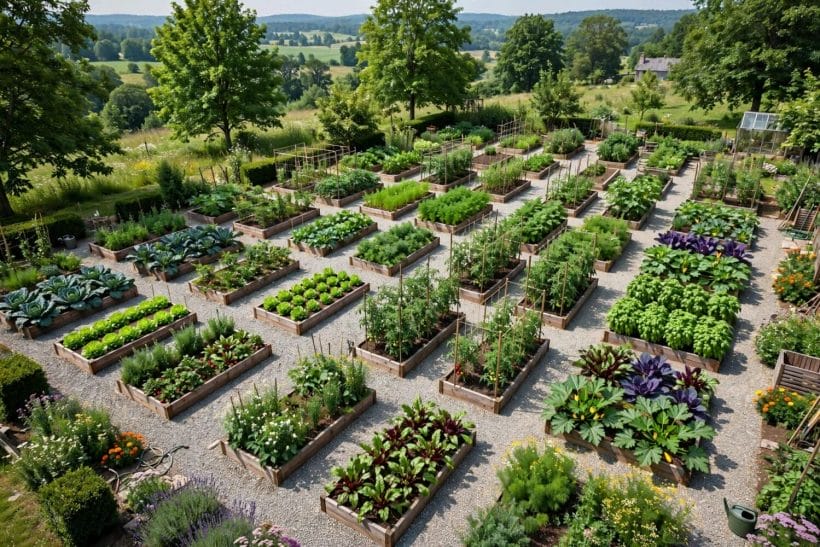
The beds around the vegetables carry the garden’s flavour, scent and pollinators. Herb beds double as the cook’s larder, fruit beds as the household’s patience made edible, and flowers run through both as working plants — the mixed, living edge that container garden ideas achieve in pots, a raised bed achieves in the ground.
56. Keep culinary herbs in the driest, sunniest bed
Thyme, rosemary, sage and oregano want what vegetables do not: lean soil, sharp drainage and full sun. One dry bed for the Mediterranean herbs keeps them pungent and long-lived instead of lush and short.
57. Give mint and its spreading cousins a bed or pot of their own
Mint planted loose in a shared bed becomes the bed. Grow it alone — in its own small bed, a buried pot or a corner it may rule — and its spread is a virtue rather than a takeover.
58. Train soft fruit along the bed’s sunny back edge
Raspberries, currants and gooseberries fruit happily along a bed’s back wires, leaving the front for lower crops. The bed’s edge gives the canes their support and the gardener a picking path at hand height.
59. Underplant fruit with flowers that draw pollinators
Fruit sets only where pollinators call. Low flowers beneath the canes and bushes — flowering before and during the blossom — bring the bees to exactly the right address at exactly the right week.
60. Run a flower strip through the vegetable beds
A strip of simple annuals down one bed’s edge feeds insects, breaks the green monotony and supplies the house with cut flowers as a by-product. It is the hardest-working ornament in the garden.
61. Grow cutting flowers in one dedicated bed
Flowers grown for the vase want what vegetables want — rich soil, water, succession sowing — and a bed of their own keeps the picking from stripping the borders.
62. Let self-seeders colonise the bed corners
Calendula, borage, nigella and their kin sow themselves into corners and gaps, softening the geometry and feeding bees for free. The gardener’s job is editing, not planting: remove the surplus, keep the volunteers that land well.
63. Plant scented herbs where a path brushes them
Lavender, rosemary and scented geraniums planted at a bed’s path edge release their scent every time a skirt or a shopping bag brushes past.
64. Keep one bed deliberately loose for insects
A bed at the garden’s quiet end, planted densely and cut late, shelters the insects and birds the tidy beds depend on.
65. Harvest herbs in the morning and dry the surplus
Herbs cut after the dew dries but before the day’s heat carry their fullest flavour. What the kitchen cannot use fresh dries in bunches for winter — the raised bed’s harvest, still working in January.
8. Paths, Edges and Seasonal Care
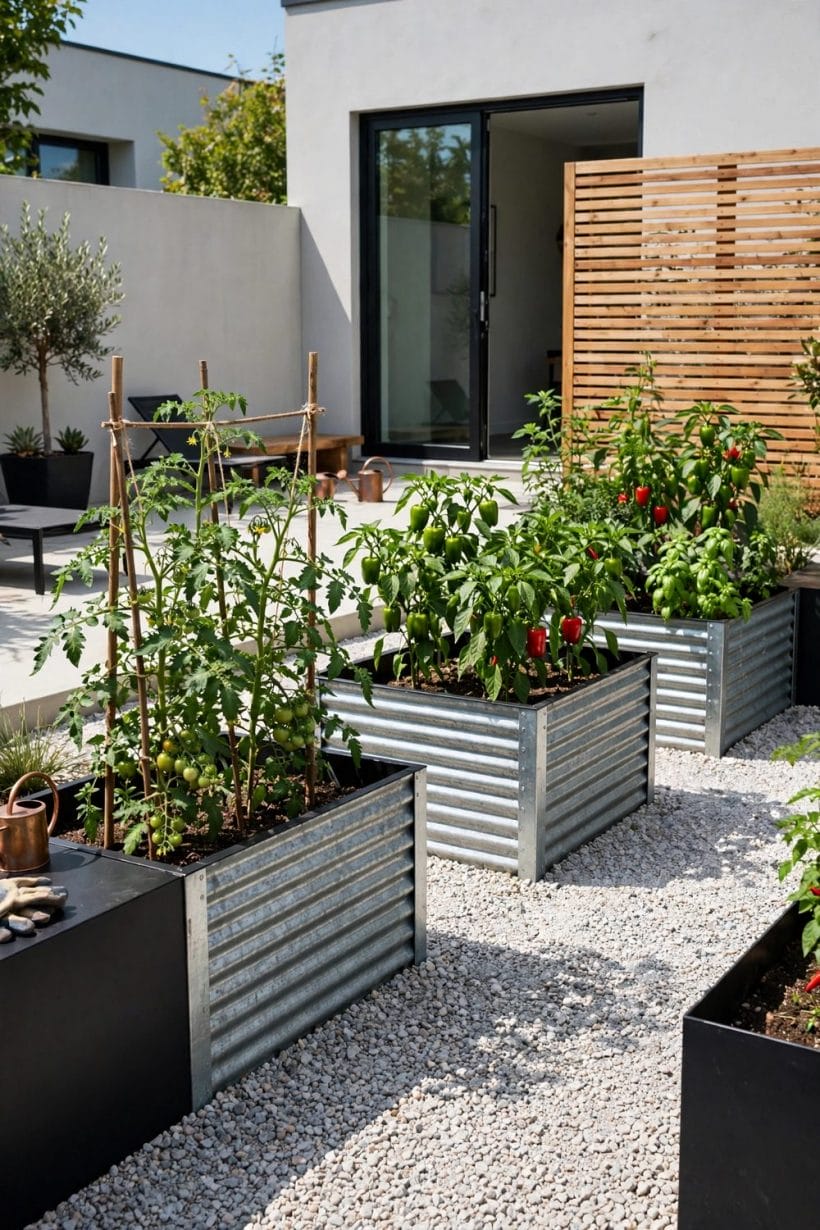
Beds are kept by their edges and reached by their paths, and the year’s rhythm — clearing, mulching, mending — is what keeps a bed garden improving instead of merely ageing. The tool end of this rhythm lives naturally with the kit in garden shed ideas; the water that borders the beds is the ground of pond ideas — both are the raised-bed garden’s close neighbours.
66. Surface the main paths so winter picking stays clean
A path used in January for kale and leeks needs a surface that forgives mud: gravel, slabs or bark over a firm base. Grass paths between beds look soft and behave like a swamp by winter, and the whole route — from the garden gates to the furthest bed — is only as clean as its worst stretch.
67. Edge paths crisply so soil stays in the bed
A defined path edge — a board, a stone kerb, a steel strip — stops the eternal migration of soil onto path and path onto soil.
68. Clear and re-mulch beds in autumn, not in spring panic
The autumn round — clear the spent crops, weed once properly, mulch thickly — sets up a spring of planting rather than rescue work. Beds cleared in autumn are ready the first fine day.
69. Sow green manure on empty beds over winter
Bare soil over winter washes, compacts and weeds. A sown cover crop holds it, feeds it and covers it in green; come spring it is dug in or laid as mulch and the bed starts fed.
70. Mend frames and re-level edges in the quiet season
Winter is the frames’ maintenance window: replace the rotten board, re-level the settled corner, oil the cap. Small repairs done yearly keep a timber bed young for decades.
71. Keep tools within the bed garden itself
A tool store, trug basket and the watering kit kept at the beds — not back at the house — turns ten-minute visits into weeding sessions.
72. Water at the base, early or late, never overhead at noon
Water belongs on the soil, at the roots, in the cool of the day. Soaker lines or a can at the base deliver it where it counts and keep foliage dry — the simplest disease control a bed can have.
73. Record what grew where in a simple garden notebook
Rotation fails when memory fails. A notebook — paper or phone — noting each bed’s crop each season takes a minute and saves the classic error of beans following beans into tired soil.
74. Renew one bed a year rather than all at once
Soil improvement, frame repair and replanting spread over a yearly round keeps the work light and the garden always partly at its best. One bed renewed annually is a garden permanently in good repair.
75. Step back each season and move one thing that failed
Every bed garden holds one mistake in plain sight — the bed in shade, the crop nobody eats, the path too narrow. Moving one thing per season, honestly chosen, is how a good garden stays honest.
9. Checks and Mistakes: Before the First Purchase or the First Fitting

The bed garden’s classic mistakes are all early ones: beds placed where the light was guessed rather than watched, frames built too wide to reach across, and fill skimped because the soil order felt extravagant.
Safety deserves its plain sentences: never grow food in soil or reclaimed material of unknown history, keep manure and compost fully rotted before it meets salad crops, and check local rules before diverting roof water or grey water to beds.
Finally, judge a new bed after a full year, not a month. Settling, drying and the first rotation all teach their lessons in the first four seasons, and a bed that survives its first year understood will be improved for a decade.
10. Costs and Pulling It Together
Costs follow the same order as the work: frames are a single build, fill is the one large first purchase, and everything after — compost, mulch, seed — is small money spent seasonally.
Pull it together by repeating one decision everywhere: one frame material, one path surface, one edge detail. Repetition is what makes a collection of beds read as one designed garden, whatever was spent on it.
Final Considerations
A raised-bed garden succeeds quietly: soil that deepens every year, harvests that arrive in armfuls, and work done standing or kneeling at a civilised height.
Start with the light and one bed built properly, and the rest of the garden tends to fall into place behind them.



0 Comments