
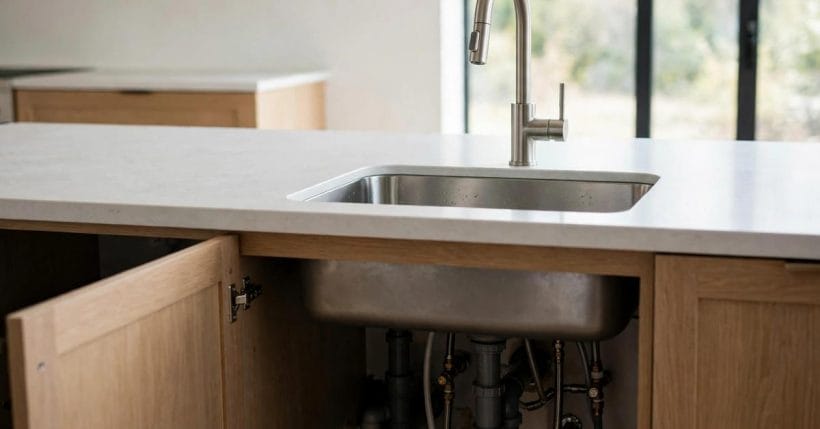
A garbage disposal sits out of sight beneath the kitchen sink, grinding food waste so it can be flushed away with water through the household drains. It is a small unit with a large effect on daily kitchen life: it changes how leftovers are cleared from plates, how often the bin needs emptying, and how much attention the sink area demands after cooking. Because the unit is hidden behind a cabinet door, it is easy to choose one on looks or habit alone, yet the checks that matter most are practical ones about fit, feed type, power, controls, drainage and electrical supply. A careful look at each of those areas before choosing will help any household find a unit that suits its sink, its cabinet space and the way its kitchen is really used.
It helps to begin with the kitchen itself rather than with any single unit. A household that cooks daily and clears large amounts of vegetable peelings and plate scrapings places different demands on a disposal than a household that cooks lightly and rarely. The size of the sink, the space beneath it, the plumbing already in place and the position of electrical points all shape what can be fitted safely and sensibly. For wider kitchen planning, kitchen ideas can help set the scene, while the sections below stay with the disposal itself throughout, because this is a fitted appliance whose installation belongs to qualified plumbing and electrical professionals from start to finish.
1. Start With the Sink Underneath
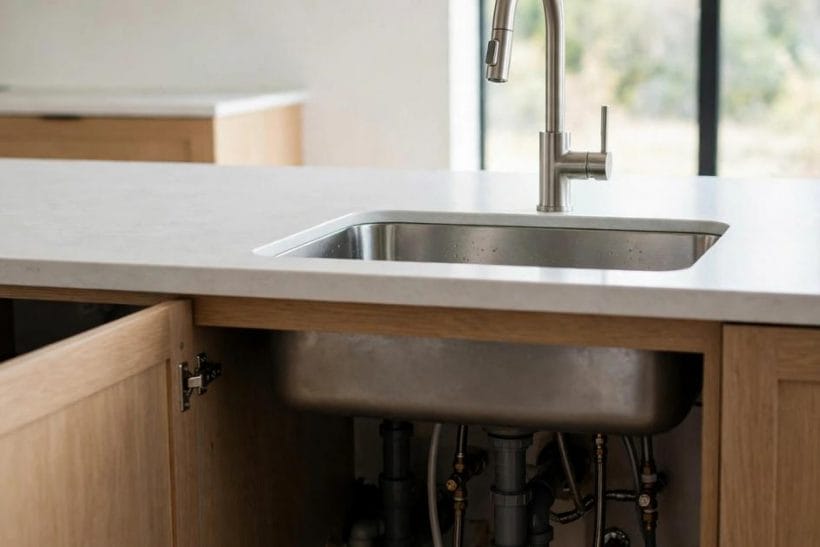
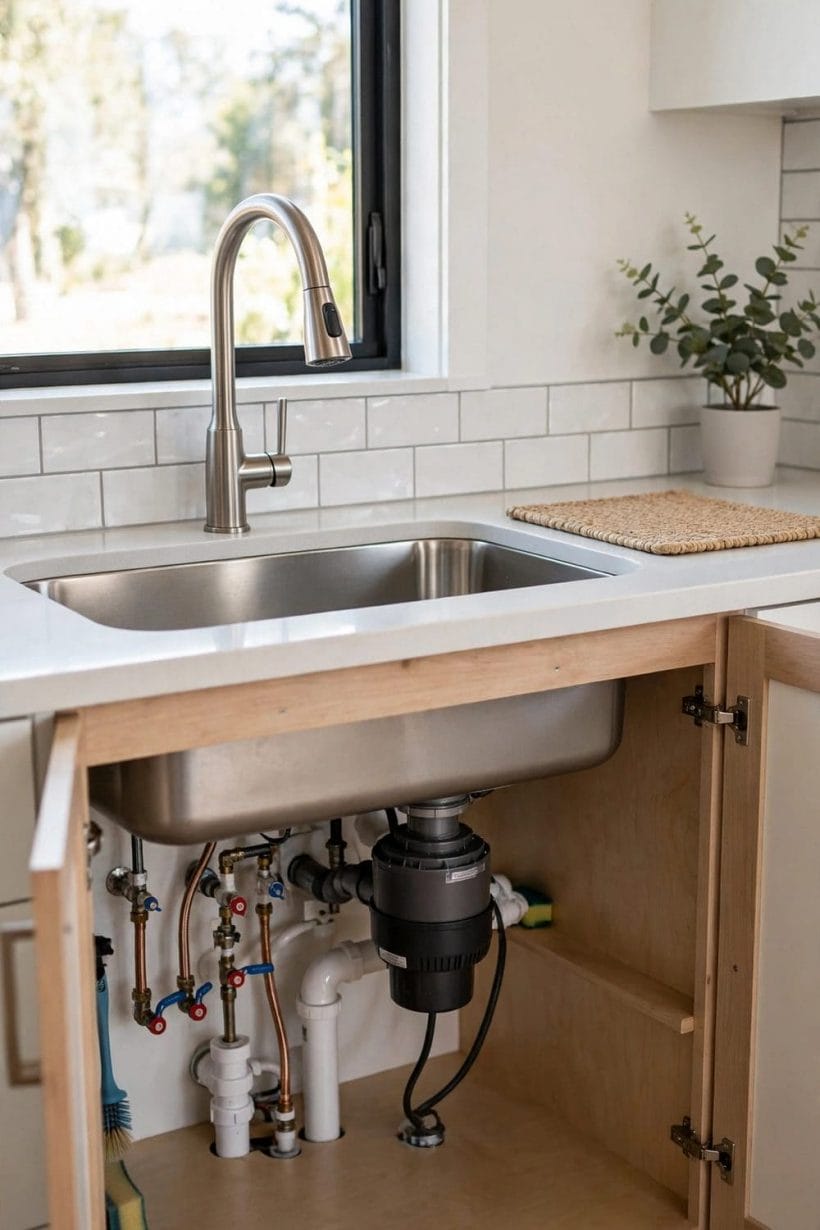
Every disposal hangs from the sink drain, so the sink itself is the natural starting point. The drain opening, the depth of the basin and the material of the sink all affect how a unit mounts and how securely it sits. A deep basin leaves less room beneath for the unit and its pipes, while a shallow basin leaves more, and that difference alone can decide whether a taller or more compact unit is the sensible choice. It is worth opening the cabinet and looking at the space with fresh eyes, noting where the drain sits, how far the basin drops below the worktop, and what else already shares the cabinet.
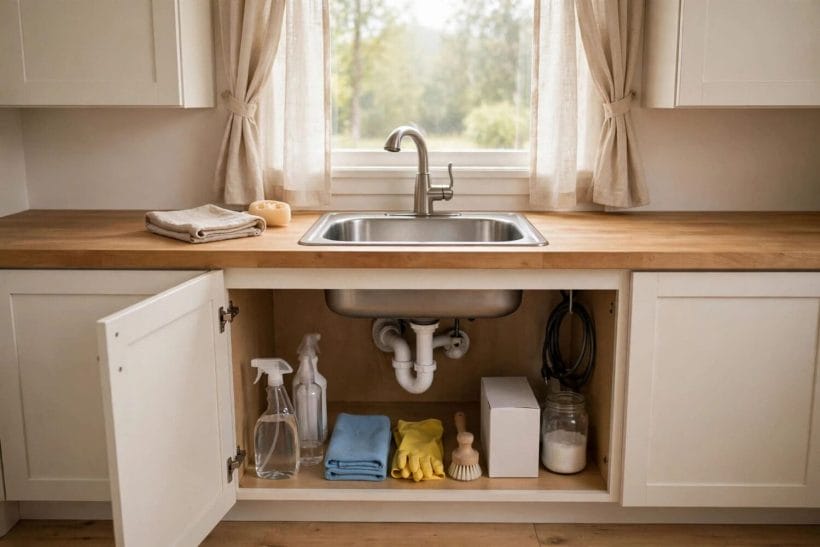
The cabinet beneath the sink is rarely empty, and what lives there matters just as much as the sink above it. Cleaning supplies, a bin, a water filter or a dishwasher connection may already occupy the space a disposal would need, and a unit fitted into a crowded cabinet becomes awkward to reach, hard to clean around and difficult to service. Clearing the cabinet and picturing the unit in place, with room around it for pipes, for the power lead and for a hand to reach the reset control, gives a far truer sense of fit than any catalogue photograph. The general sink checks in how to choose the right bathroom sink cover the same habit of starting from the fixture rather than the appliance, even though the room is different.
2. Understand the Feed Types
Disposals generally fall into two feed types, and the difference is worth understanding before anything else is compared. In a continuous-feed unit, the unit runs while the switch is on, so food waste can be added gradually while water runs through the sink. In a batch-feed unit, a lid or stopper must be in place before the unit will run, and waste is processed in separate loads rather than added while the unit is running. Neither type is right for every household, and the choice comes down to how the kitchen is used and who uses it.
A household with children, or with several people sharing the cooking and clearing up, may value the extra guard that a batch-feed design provides, since the unit cannot run with the sink opening uncovered. A household that clears plates steadily after large meals may prefer the steady rhythm of a continuous-feed unit, where waste goes down as it is scraped from plates. Thinking honestly about who stands at the sink, how quickly meals are cleared and how comfortable everyone is with a running appliance will point toward one type or the other far more reliably than any general recommendation could.
3. Check the Fit Under the Sink
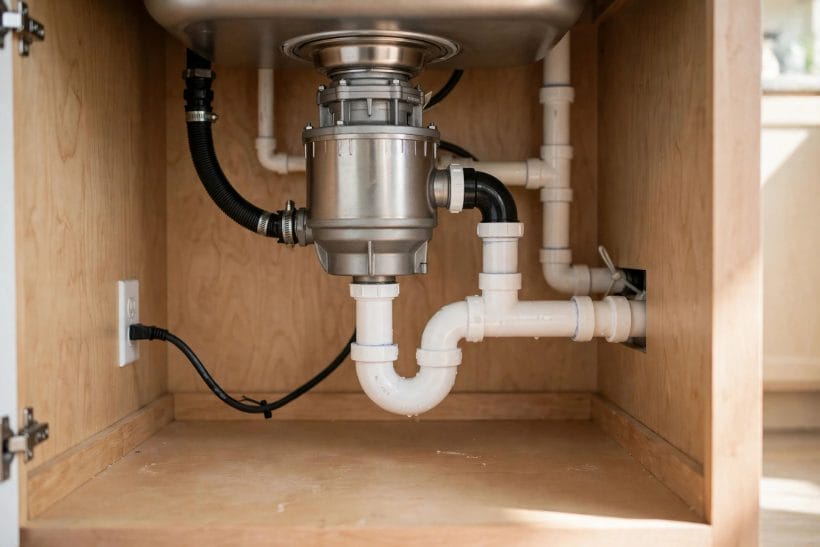
Fit is the check that causes the most trouble when it is skipped, because a unit that looks modest in a photograph can still prove too tall, too wide or too awkwardly shaped for the cabinet it must live in. The height from the drain to the cabinet floor, the depth from the back wall to the cabinet door, and the width left free once existing pipes are accounted for all need to be considered together. A unit that fits in one direction but crowds the trap or presses against the cabinet wall is not truly fitted, and cramped pipework can make later servicing needlessly difficult.
It is also worth checking how the unit connects to the drain and to the waste pipe, since different sinks and plumbing layouts call for different fittings. The trap, the dishwasher connection where one exists, and the run of pipe to the wall all share the same small space, and each bend and joint needs room to sit without strain. A professional installer will assess all of this on site, but a householder who has already noted the clearances, photographed the existing pipework and cleared the cabinet will make that visit far more productive. In a compact home, where every shelf and cupboard is already spoken for, that preparation matters even more, as the layout ideas in tiny house bathroom layouts show for small rooms generally.
4. Look at Power in General Terms
Power is usually described in general terms such as light, everyday or heavy household use, and those broad bands are a useful starting point as long as they are not treated as precise measures. A household that mainly disposes of soft vegetable peelings and small amounts of plate waste places lighter demands on a unit than a household that regularly clears larger quantities of tougher scraps. Matching the broad power band to the household’s real cooking habits avoids both an underpowered unit that struggles and an oversized unit that takes up more cabinet space than the household ever needed.
It is important not to treat power figures as a contest, since a higher rating on paper does not automatically mean a better result at the sink. The way the unit grinds, the steadiness of its mounting and the flow of water through it all shape how it performs day to day, and those qualities cannot be read from a single number. Asking how the unit handles everyday waste, how it sounds while running and how it is mounted will tell a buyer far more than comparing ratings in isolation. Any comparison should stay with general terms, since precise performance claims vary with the sink, the plumbing and the waste itself.
5. Think About Noise and Vibration
A disposal is used at the busiest moments of the day, often while others are eating, talking or winding down nearby, so noise deserves a place high on the checklist. Some units run more quietly than others, and the difference is usually felt in the steadiness of the mounting, the insulation around the unit and the way vibration travels through the sink and worktop. A unit that shakes the sink or rattles the cabinet will be noticed every time it runs, however well it grinds, while a steadily mounted unit fades into the background of normal kitchen sound.
There is no substitute for hearing a unit run where possible, or at least for asking careful questions about how it is mounted and insulated. Rubber mounting parts, a firm connection to the sink flange and a cabinet that does not amplify vibration all help, and a professional installer can advise on what will suit a particular sink and worktop. Households with open-plan kitchens, where the sink area flows into the living space, will feel this check more keenly than households with a separate kitchen, so the layout of the home should guide how much weight this check carries.
6. Choose Controls That Suit the Household
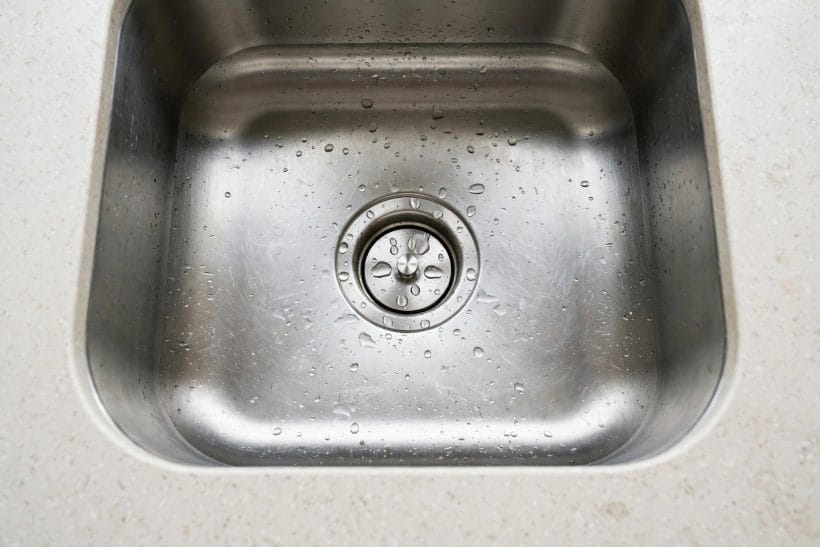
Controls decide how the unit is switched on and off, and the options are worth comparing in plain terms. A wall switch keeps the control beside the sink and familiar to anyone who uses the kitchen, while an air switch places a small button on the worktop or sink surround that works through air pressure rather than electricity at the point of touch. Some units offer a remote control, which suits households where the sink area is shared or where a wall switch would sit awkwardly. Each option changes the daily routine slightly, and the right one is the one every regular user finds easy and safe to reach.
Safety around controls matters most where children use the kitchen or where visitors may not know the unit is fitted. A control that is clearly placed, easy to identify and out of reach of small hands reduces the chance of the unit being switched on accidentally, and a batch-feed design adds a further guard where that worry is strong. It is worth standing at the sink and picturing the motion of switching the unit on and off, with wet hands and with the tap running, since the control that feels natural in that moment is the one that will be used correctly for years.
7. Consider Drainage and Plumbing Connections
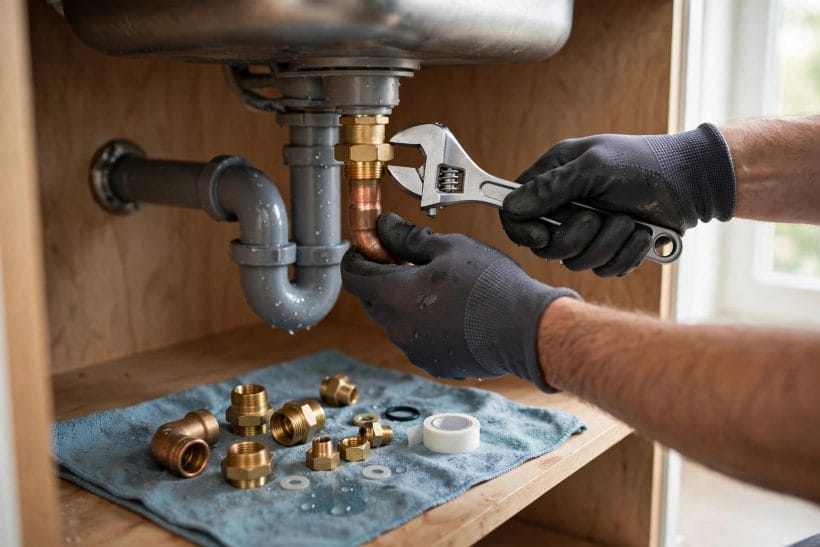
A disposal does not work alone: it depends on the household drains and on the plumbing that connects it to them. The trap beneath the sink, the waste pipe to the wall and the wider drainage system all need to cope with ground food waste carried away in water, and older or narrower plumbing may need attention before a unit is fitted. A professional plumber will assess the existing pipework, the fall of the pipes and the condition of the trap, and will advise whether anything needs changing before installation goes ahead.
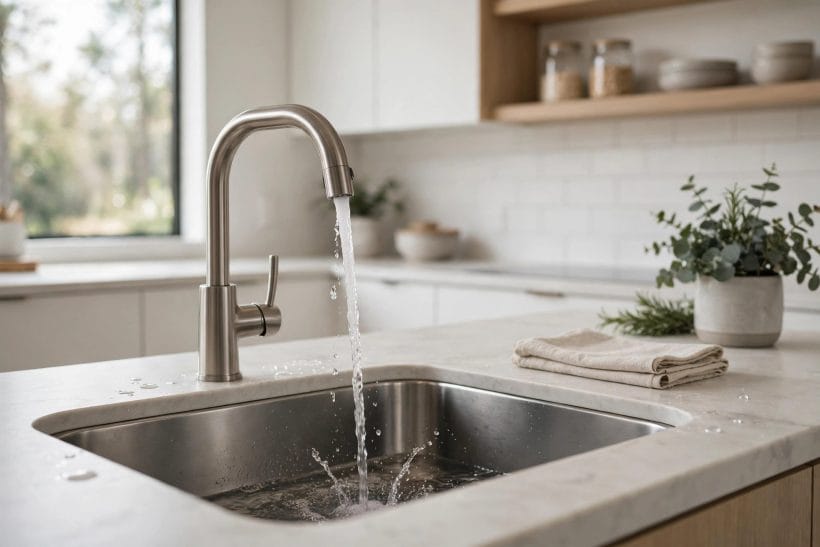
Water flow is part of the same check, since a disposal should always run with a good flow of cold water to carry waste through the pipes. Households with low water pressure or with a history of slow drains should raise this with their installer rather than assuming a new unit will solve an old drainage problem. The same professional-only framing applies to any related fixture work, and the general finish and fitting checks in bathroom faucet finishes show the same habit of checking the whole fixture, not just the headline appliance. Where a dishwasher shares the sink plumbing, its connection also needs to be checked so that both appliances drain properly without interfering with each other.
8. Plan for Electrical Supply Safely
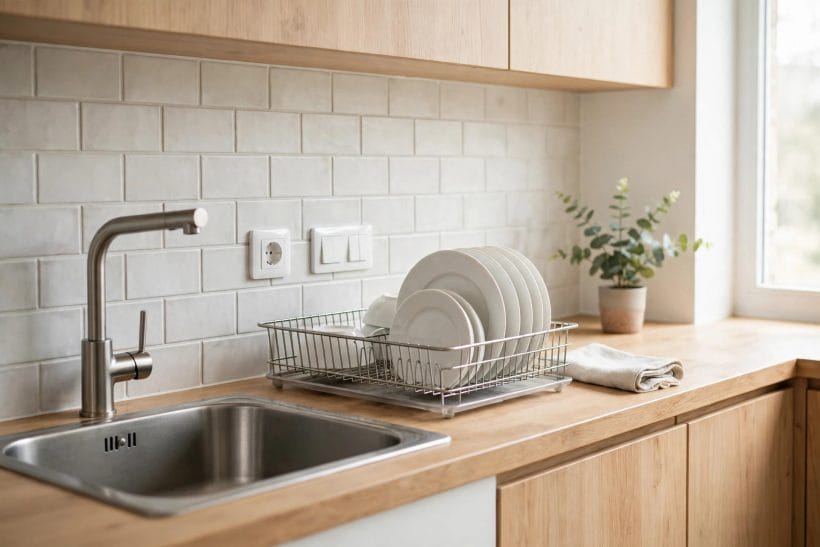
Every disposal needs electricity, and the supply must be planned as carefully as the plumbing. The position of the socket or connection point, the route of the lead and the protection of the circuit all fall to a qualified electrician, who will confirm that the supply is suitable and safely installed. A socket tucked behind the unit where it cannot be reached, or a lead draped across pipes and sharp edges, is a problem waiting to happen, so the electrical layout deserves the same attention as the pipework.
Householders should never attempt electrical work themselves, and should never run a disposal from a makeshift or overloaded supply. The installer will check that the circuit is protected, that the connection is accessible for servicing, and that the control switch is placed where it can be reached safely with wet hands kept away from live parts. Where the kitchen has no suitable point near the sink, the cost and disruption of adding one should be weighed before the unit is chosen, since it may affect which control type and which position make sense. Electrical work belongs to professionals throughout, without exception.
9. Weigh Upkeep and Everyday Care
Day-to-day care is the check that decides whether a disposal stays pleasant to live with or slowly becomes a chore. Running cold water before, during and after use, feeding waste gradually rather than all at once, and avoiding materials that do not belong in a disposal are habits worth learning from the start. The maker’s instructions for the particular unit should always be followed, since they cover what may go down the unit, how it should be cleaned and where the reset control sits if the unit ever stops.
Cleaning itself should be simple and safe: a unit that is easy to flush through, with no awkward corners trapping waste, will stay fresher with less effort. It is worth asking how the unit is cleaned, how often its splash guard needs attention, and how the reset control is reached, since a control buried behind pipes will be hard to use when it is needed most. A household that understands these small routines before buying will use the unit confidently from the first day, while a household that discovers them afterwards may find the unit becomes a source of small daily frustrations instead of a help.

10. Ask About Fitting and Aftercare
Fitting is a professional job, and choosing who fits the unit matters as much as choosing the unit itself. A qualified plumber and electrician will confirm the fit, the plumbing connections and the electrical supply together, and will test the unit with water running before leaving the kitchen. It is worth asking what the fitting includes, how long it should take, and what happens if the existing plumbing or wiring needs attention, so that there are no surprises on the day. A clear written outline of the work, agreed before fitting begins, protects both the householder and the installer.
Aftercare deserves the same attention, since even a well-fitted unit will one day need a reset, a check or a repair. Asking how servicing is arranged, whether parts are readily available and what the maker’s cover includes will save trouble later, and keeping the instructions and the installer’s details in an easy place means help is at hand when it is needed. For wider small-room planning, tiny bathroom ideas show how the same habit of planning for access and servicing pays off in compact spaces, and the same principle holds beneath the kitchen sink. A unit chosen with fitting and aftercare in mind is a unit that will serve the household calmly for years.
Final Considerations
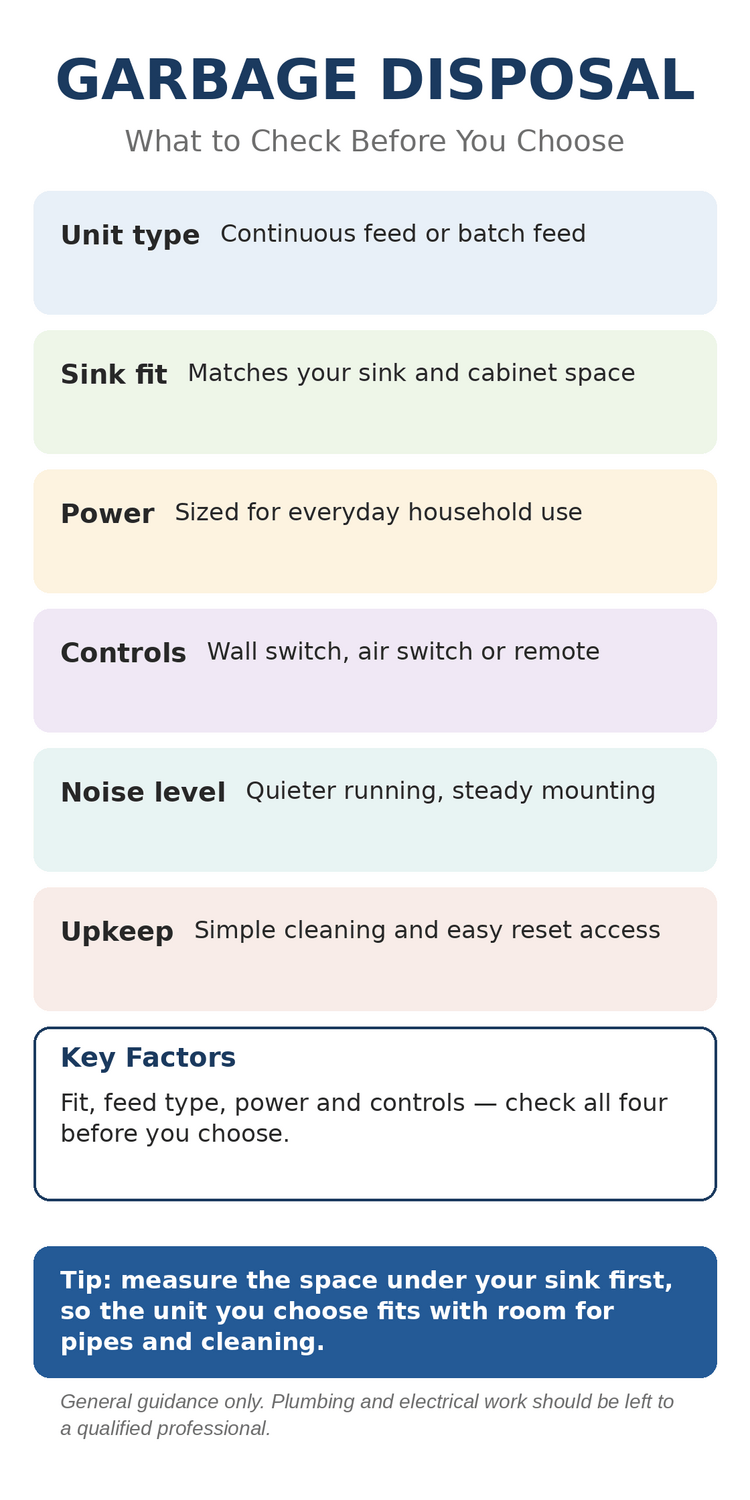
A garbage disposal earns its place by quietly handling everyday kitchen waste, and the checks in this guide all point toward the same goal: a unit that fits the sink, suits the household’s cooking habits, runs steadily and can be serviced without fuss. Feed type, fit, power in general terms, noise, controls, drainage, electrical supply, upkeep and fitting each deserve a moment of thought before the choice is made, and none of them should be decided on a single claim or photograph alone. Taking the time to open the cabinet, note the space, consider who uses the kitchen and talk to qualified professionals will lead to a steadier decision than any hurried purchase.
Where a household is unsure whether a disposal suits its plumbing, its drains or its daily routine, a professional assessment is the sensible next step, and the water-related checks in water softener what to check show the same careful approach applied to another fitted water appliance. A disposal is not essential in every kitchen, and a household that rarely produces suitable waste may find its bin and compost arrangements already serve it well. For those who do choose one, however, a careful choice made on fit, controls and professional fitting will repay itself every time the plates are cleared and the kitchen returns to calm.



0 Comments