
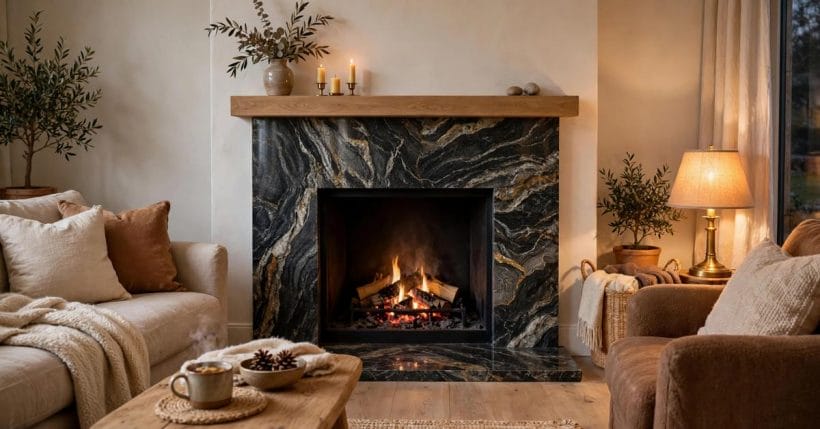
A granite surround can change the whole feeling of a living room without changing anything else in it. The stone frames the fire, anchors the seating around it, and gives the eye somewhere calm to rest, even in a room full of soft furnishings and colour. When people look through pictures of granite fireplace surrounds, they are usually looking for that balance: a material with presence that still feels like home, rather than a showpiece that takes over the room.
Granite suits that job because every slab carries its own pattern. Some slabs are bold and veined, some are quietly speckled, and some sit somewhere in between, with soft movement that only shows itself in daylight. That variety is part of the appeal, and it is also the reason a surround should always be judged from a real sample held beside the wall colour, the floor, and the timber in the room, rather than from a photograph alone. Light changes stone, and a slab that looks gentle in a bright showroom can read much darker beside a north-facing window at home.
This guide stays with the granite surround itself: the stone, the way it meets the mantel and the hearth, and the cosy styling that lets the stone lead. The fire, the flue, and the fitting of the surround belong to qualified professionals and to local rules, and nothing here is a substitute for their advice. Where a related idea deserves its own fuller treatment, this guide points to it, so the granite story itself stays clear and uncluttered.
1. What a Granite Surround Brings to a Room
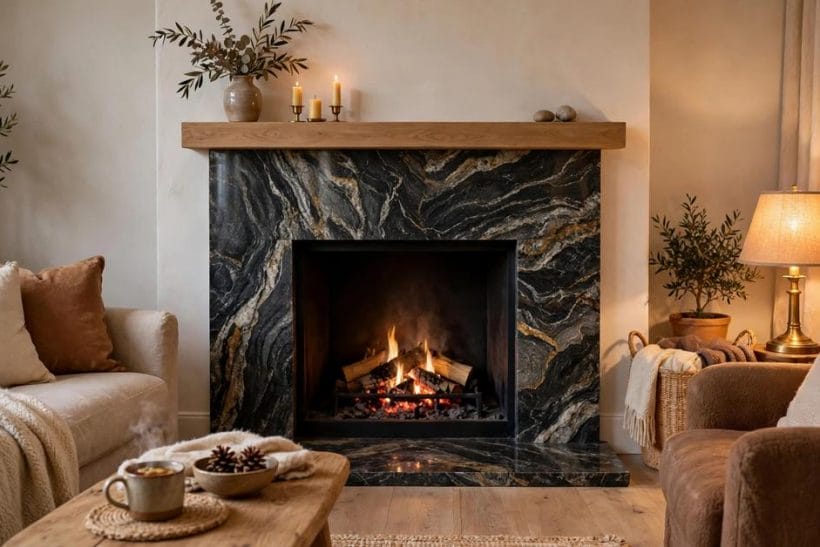
A surround does more than edge the fire opening. It sets the scale of the whole fireplace wall, it decides whether the fire feels like a quiet corner or the centre of the room, and it gives the mantel shelf a firm, finished base to sit on. Granite brings weight to that job in a good way. The stone reads as solid and settled, and even a slim surround in pale granite can make a small room feel more considered, because the eye reads the frame as one calm piece rather than a collection of trims and joins.
Pattern is the first thing to notice when you compare slabs. A strongly veined slab draws attention and can carry a plain room on its own, while a finely speckled slab recedes and lets cushions, curtains, and timber do more of the talking. Neither choice is better in itself. The right choice is the one that matches the mood you want in the evening, when the fire is lit and the room is at its most used. A busy pattern can feel lively by day and restless by lamplight, while a quiet pattern can feel calm by day and a little flat at night, so it helps to look at samples in both lights before deciding.
Finish matters too, in a quieter way. A polished surface reflects lamplight and makes veining stand out, which suits a room that already has shine from glass, metal, or a polished floor. A softer, honed surface absorbs light and gives a more muted, tactile feel, which suits rooms built around wool, linen, and natural timber. There is no need to settle this from a catalogue description. Hold the sample, turn it toward the window, then toward the lamp, and notice which version you keep returning to.
Scale is the other early decision. A surround that stops neatly around the fire opening feels traditional and contained, and it leaves wall space above for a mirror or a simple shelf display. A surround that runs higher up the wall, or wider than the fire itself, feels more modern and architectural, and it can make a low ceiling feel taller by drawing the eye upward. Both approaches work with granite, because the stone can be cut as a frame, as a set of panels, or as one broad slab, subject to what your installer advises for your wall and your appliance.
2. Dark Granite: Drama Without Heaviness
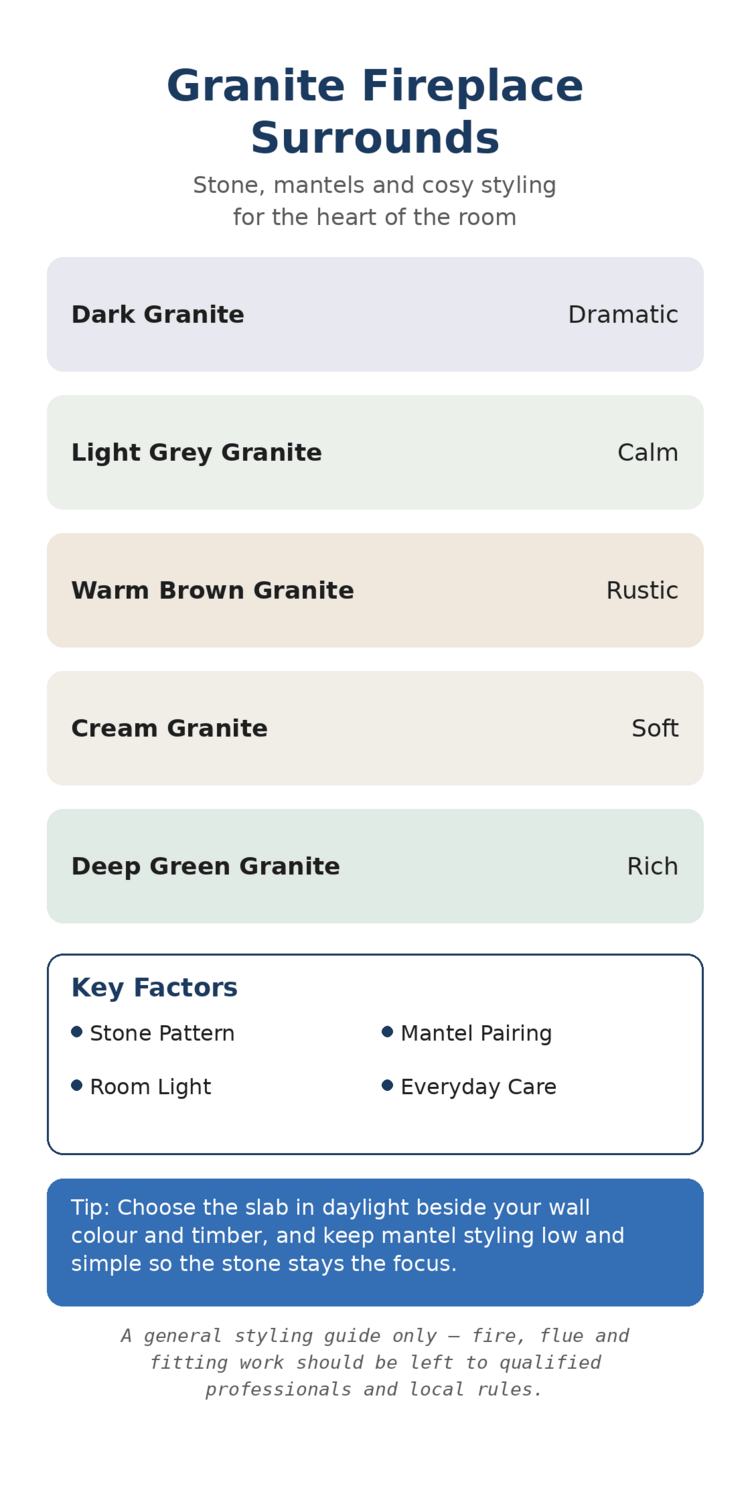
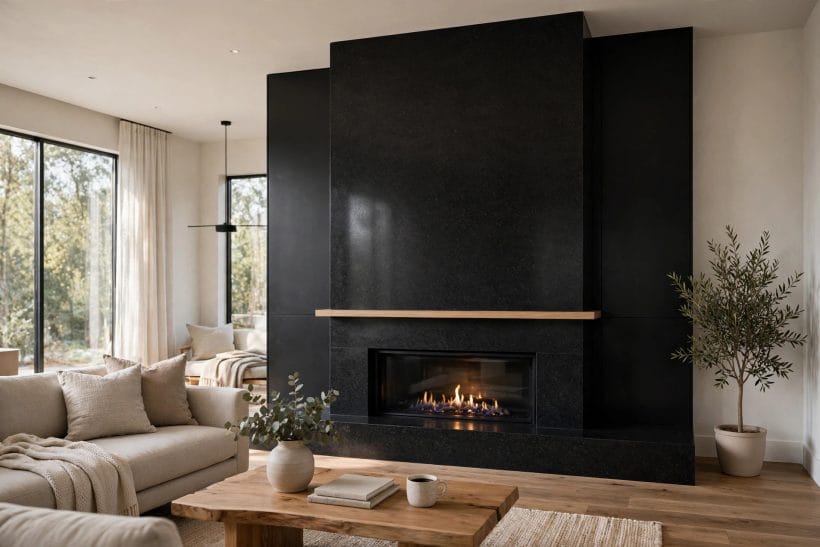
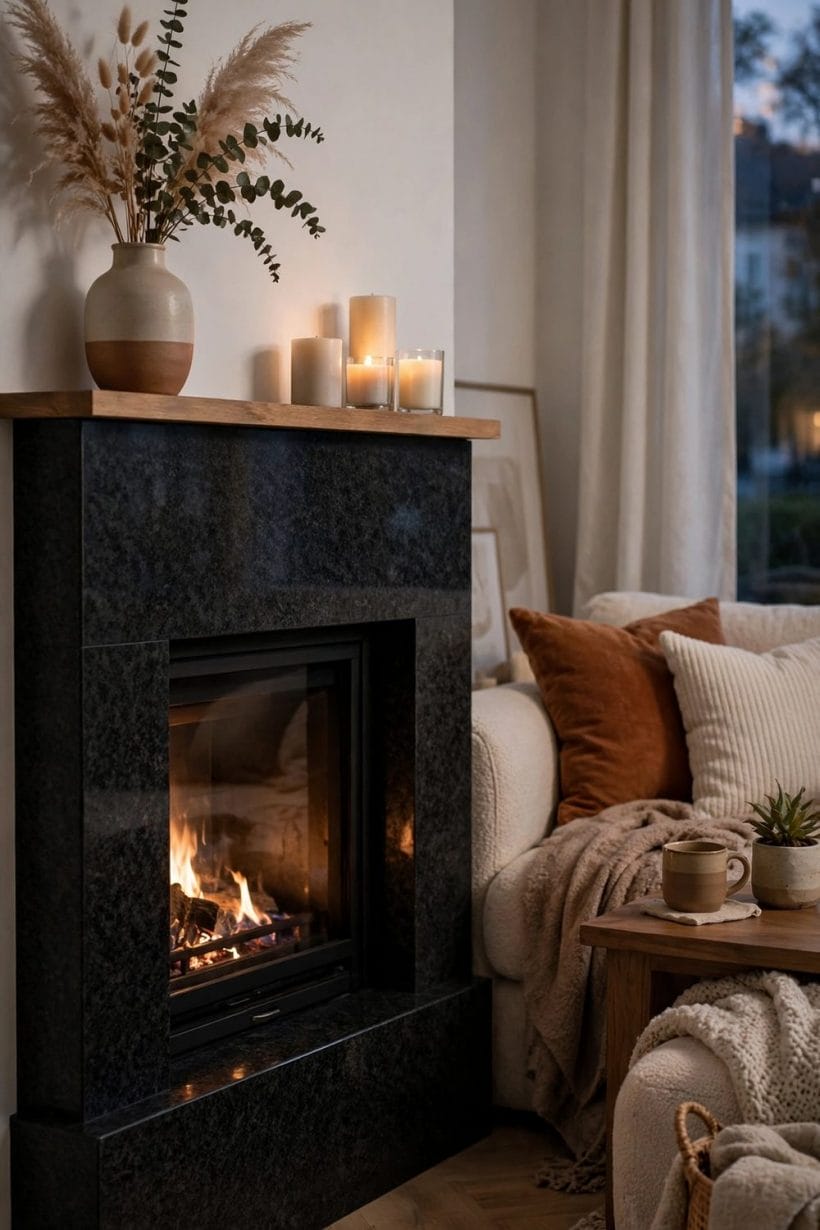
Dark granite is the most dramatic member of the family, and it is often the first slab people picture when they think of a granite surround. Deep charcoal and near-black stone, with veining in grey, gold, or white, can give a plain living room an immediate focal point, and it pairs beautifully with pale walls, because the contrast does the work without any extra decoration. In a room with light sofas and a pale rug, a dark surround can anchor the seating group and stop the room from feeling washed out.
The risk with dark stone is heaviness, and it is easily avoided. Keep the mantel shelf light in tone, whether that means pale timber or a painted shelf, and keep the display on it low and simple. A dark surround already carries plenty of visual weight, so tall objects crowded along the shelf can make the whole wall feel top-heavy. A single vase, a pair of candles, and some breathing space will usually do more for the composition than a full shelf.
Lighting helps dark granite more than any other colour in this guide. A lamp to one side of the fire, rather than a single overhead light, lets the veining catch the light in the evening and keeps the stone from reading as a flat dark block. If the room has a window opposite the fire, daylight will do the same job by day, and the stone will shift subtly as the light moves. That changing quality is one of the pleasures of natural stone, and it is worth checking with a sample before you commit, because a slab that looks uniform in a photograph may be far more varied in person.
Dark granite also forgives a busy household in a practical sense. Everyday marks show less readily on a dark, patterned surface than on a pale, plain one, which makes it a sensible choice for a room where the fire is lit often and the seating is used every day. That is a styling consideration, not a promise about any particular slab, and your supplier can advise on care for the stone you choose.
3. Light Grey Granite: Calm and Easy Pairing
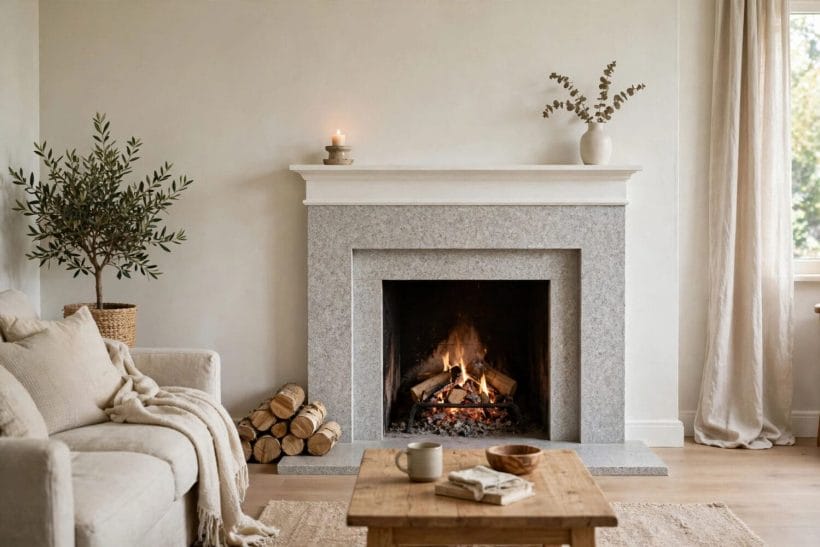
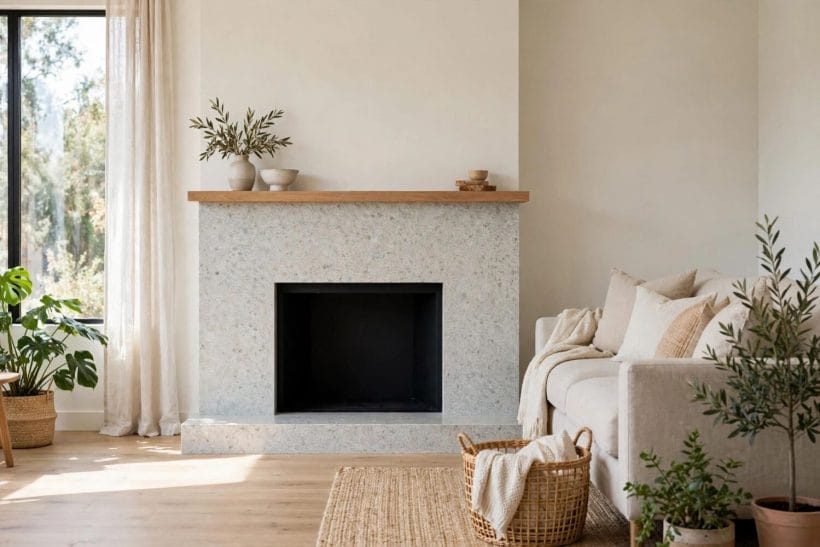
Light grey granite is the quiet achiever of the group. Finely speckled and soft in tone, it brings the solidity of stone without the drama of dark veining, and it pairs with almost any wall colour, from warm white to soft sage to pale blue. If your room already has a strong sofa colour, a patterned rug, or timber with a lot of character, light grey granite is often the safest way to add a stone surround without starting a competition for attention.
A white or pale painted mantel sits naturally with light grey stone, and the combination feels fresh rather than formal, especially in a room with pale curtains and a light floor. Timber also works, particularly pale oak or ash, which warms the grey without darkening the room. The pairing to avoid is a mantel that tries to match the granite exactly in tone, because stone and timber in the same grey can look flat together. A little contrast, even a gentle one, keeps both materials readable.
Light granite shows the room around it more honestly than dark stone does, so the styling around the fire matters a little more. A tidy log basket, a soft throw folded over an armchair, and a rug that reaches toward the hearth will all read clearly against pale stone, and they help the fireplace feel like part of the seating group rather than a separate feature. For ideas on shaping that wider room, the guide to tiny living room ideas looks at how small rooms balance a fireplace with seating, storage, and light.
Because light stone is so calm, it is a good choice for a room where the fire is one pleasure among many, rather than the single focus. It will not demand attention when the fire is unlit, and it will sit quietly behind conversation, reading, and everyday life, which is exactly what many living rooms need.
4. Warm Brown Granite: Rustic Warmth
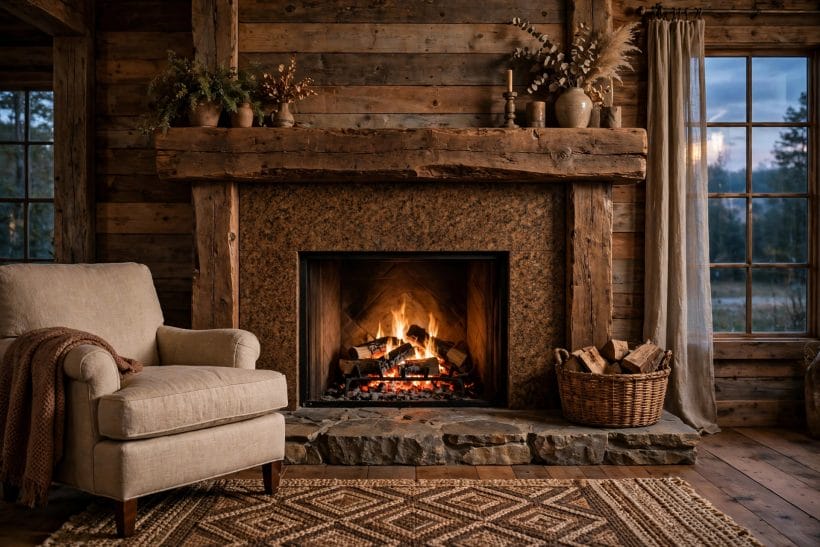
Warm brown granite brings a cabin feeling into an ordinary living room, even without any other rustic details. The stone carries tones of bronze, rust, and soft gold, and it sits beautifully with chunky timber, woven textures, and the warm light of a winter evening. In a room with wooden floors and a wool rug, brown granite can feel like it was always meant to be there, rather than a new addition.
A chunky timber mantel beam is the natural partner for this stone, and the combination is one of the most forgiving in the whole guide. The timber softens the stone, the stone grounds the timber, and neither material needs much help from decoration. A basket of logs beside the hearth, a simple plant on the beam, and a chair drawn close to the fire are usually enough, and the room will feel complete without a styled display.
Brown granite also works well with deeper wall colours, such as warm plaster, soft green, or a muted clay tone, because the stone picks up the warmth in the room rather than fighting it. If the walls are very pale, the stone will stand out more strongly, which can be a pleasure in a large room and a little strong in a very small one. A sample held against the wall in daylight will tell you quickly which way your room leans.
For the wider question of how a mantel shelf should sit with a stone surround, including beams, floating shelves, and more formal mantel shapes, the guide to fireplace mantel ideas explores mantel forms in their own right, while this guide keeps its focus on the granite itself.
5. Cream Granite: Soft Light for Small Rooms
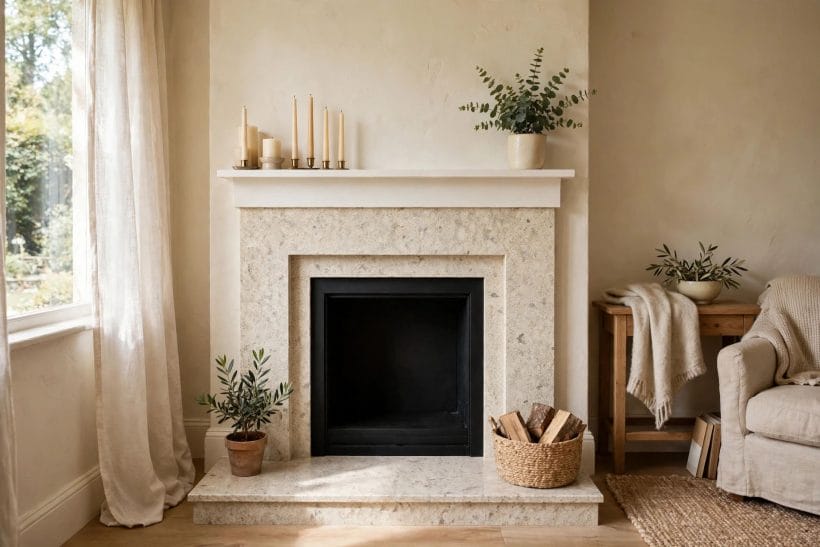
Cream granite is the gentlest stone in this guide, and it is often the best choice for a small or dark room. Pale, softly speckled, and warm rather than cold, it reflects light back into the room and makes the fireplace wall feel open, even when the fire itself is unlit. In a cottage sitting room or a compact apartment living space, cream granite can make the difference between a fireplace that dominates the room and one that quietly belongs in it.
A white mantel shelf is the obvious partner, and it works because the shelf and the stone read as one pale frame, with the fire opening as the dark centre. That simplicity suits rooms where the furniture is already doing a lot, whether through colour, pattern, or texture. If you prefer timber, choose a pale timber and keep the shelf slim, so the overall effect stays light.
Styling for cream granite should stay soft and low. Tall, dark objects on the mantel can unbalance a pale surround, while candles, a small plant, and a few books in pale covers keep the mood calm. The hearth deserves the same gentle treatment: a woven basket, a soft rug edge, and a chair close by will do more for the room than any formal arrangement.
Cream stone does ask for a little more attention in everyday care, simply because pale surfaces show dust and everyday marks more readily than dark ones. That is not a reason to avoid it, but it is a reason to ask your supplier about routine care for your particular slab, and to choose it with open eyes if the fire sits in the busiest room in the house.
6. Deep Green Granite: A Rich Traditional Note
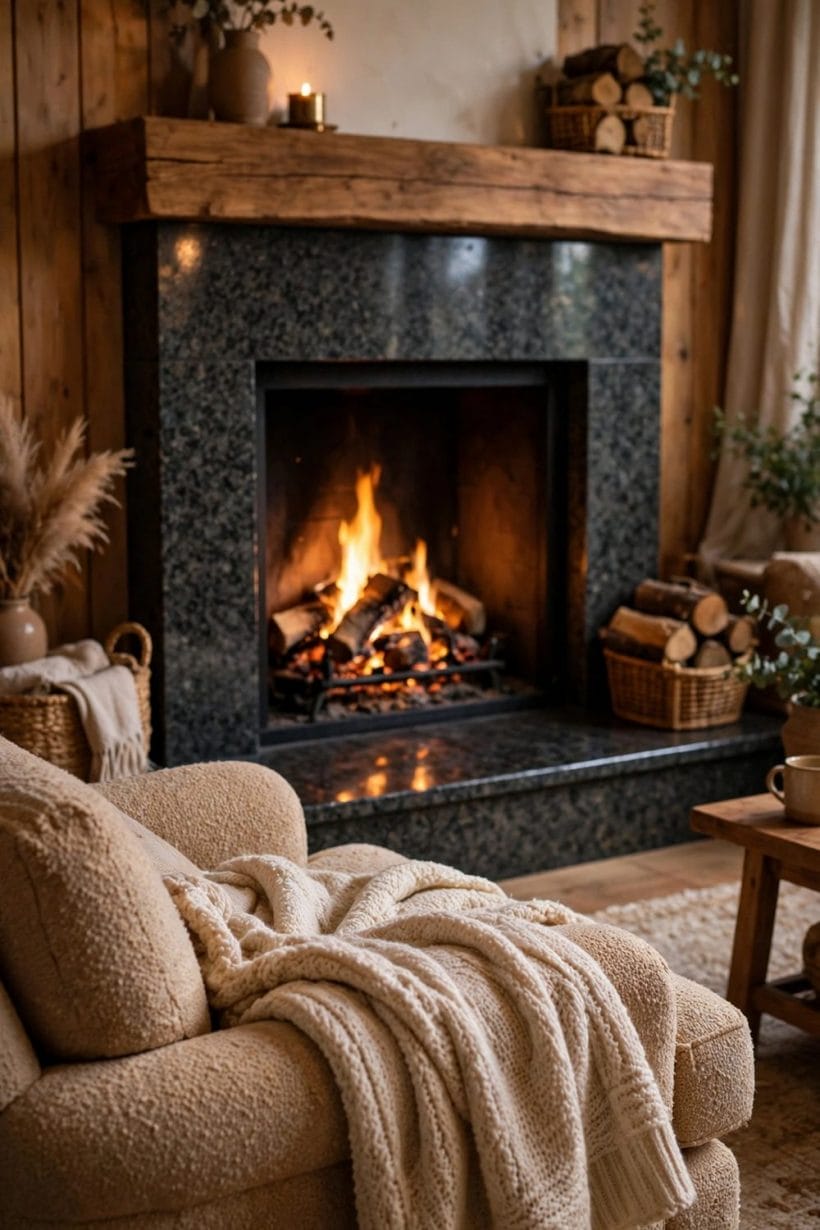
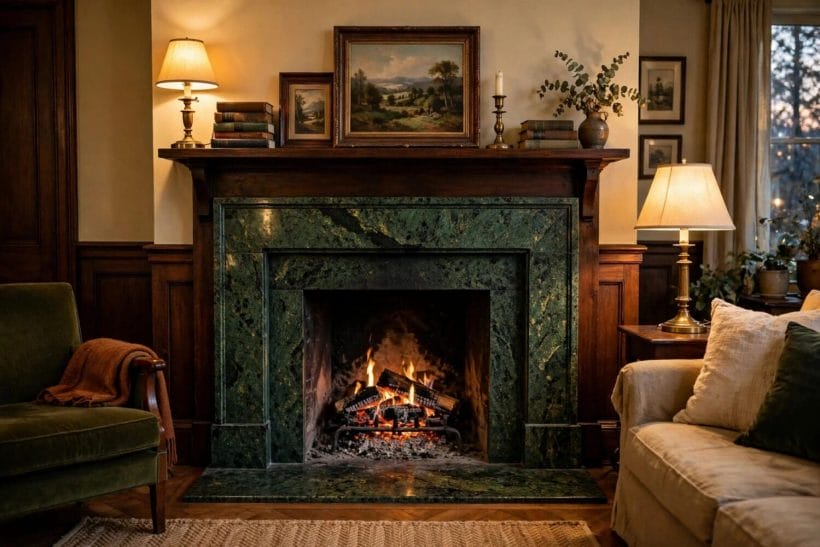
Deep green granite is the most traditional stone in this guide, and it carries a sense of history that the other colours do not. Rich, dark green with veining in gold and black, it suits rooms with dark timber, leather, books, and the kind of furniture that improves with age. In a study, a library corner, or a traditional living room, green granite can feel like a piece of heritage, even in a newly built house.
Dark timber is the natural mantel partner here, and the combination rewards a room that already has wood panelling, a dark floor, or timber furniture. The stone and the timber share a depth of colour that makes the fireplace feel settled and serious, and the room around it can stay simple without feeling empty. Pale walls will make the green stand out more sharply, while deeper wall colours will let it blend into a warm, enveloping room.
Because green granite is so distinctive, it is best allowed to lead. A mantel crowded with objects will compete with the veining, while a restrained shelf, with a few books and a single candle or vase, lets the stone speak. The same restraint applies to the hearth: a plain rug, a comfortable chair, and a lamp nearby are enough, and the fire itself provides the movement and warmth.
Green granite is also a useful reminder that natural stone varies. Two slabs from the same family can look quite different, one more veined and one more even, so the sample you approve should be the guide for what arrives, and any questions about matching or variation are best settled with your supplier before fitting is arranged.
7. Mantels That Sit Well With Granite
The mantel shelf is part of the surround story, even though this guide is about the stone. A mantel frames the top of the granite, gives you a shelf for a few treasured objects, and sets the tone for the whole fireplace wall. Timber is the most versatile partner: a chunky beam for rustic rooms, a slim floating shelf for modern rooms, and a shaped timber mantel for traditional rooms all sit happily with granite, because timber warms stone in a way that few other materials do.
A painted mantel is another option, and it is worth considering when the room already has painted joinery, such as bookcases or window frames, that you want the fireplace to echo. White and soft sage are common choices, and they work particularly well with light grey and cream granite, where the pale shelf and the pale stone read as one calm frame. The painted-surround story itself, including how painted finishes change brick, stone, and timber fireplaces, is told in full in the guide to painted fireplaces, which keeps this guide free to stay with granite.
Whatever mantel you choose, proportion matters more than decoration. A shelf that is too deep can shadow the granite below it, while a shelf that is too shallow can look lost above a broad stone frame. Your installer can advise on what suits your wall, your appliance, and the local rules that apply to your home, and that advice should always come before any fixing is planned. The fire, the flue, and the surround fitting are professional work, not a weekend project, and the mantel is part of that same professional picture.
Keep the shelf itself simple once it is in place. Granite already gives the wall its character, so the mantel does not need to carry a display to justify itself. A few objects, some space between them, and a clear view of the stone below will serve the room better than a crowded shelf.
8. The Hearth and the Wall Around the Stone
The hearth is the flat stone surface at the foot of the fire, and it deserves as much thought as the surround itself. In granite, the hearth is often cut from the same stone as the surround, which gives the fireplace a unified, finished look, with the frame and the base reading as one piece. That unity is particularly effective in modern rooms, where a continuous stone surface from wall to floor feels calm and architectural.
In traditional rooms, the hearth can also be a contrast: granite above, with a different stone or a simple tiled surface below, can break up a large fireplace wall and give the room a more layered feel. Either approach works, and the choice usually comes down to whether you want the fireplace to read as one bold feature or as a composition of related parts. Your installer and supplier can advise on what suits your appliance and your floor, and on how the hearth meets the surrounding floor finish.
The wall around the surround matters too. A granite frame on a plain plaster wall will stand out clearly, which suits rooms where the fireplace is the main feature. A granite frame set against timber panelling, brick, or a painted wall will blend more, which suits rooms where the fire is part of a larger wall of joinery or storage. For rooms where the fireplace sits between shelves and cupboards, the guide to fireplace built-ins looks at that wider wall in its own right.
One practical point is worth stating plainly. The surround, the hearth, and the wall behind them all interact with heat, and the clearances and materials that are safe for your appliance depend on the appliance, the flue, and local rules. Those decisions belong to a qualified installer, who will check the appliance guidance and the rules that apply to your home. A styling guide can help you choose the look, but it cannot replace that professional check.
9. Cosy Styling That Lets the Stone Lead
Cosy styling around a granite fireplace is mostly about restraint. The stone is already doing the decorative work, so the room around it can stay soft and simple: a rug that reaches toward the hearth, a chair angled toward the fire, a throw folded over an arm, and a lamp that gives warm light in the evening. Those few elements make the fireplace feel lived-in without hiding the granite behind them.
Texture is more useful than ornament here. Wool, linen, woven baskets, and natural timber all sit comfortably beside granite, because they soften the stone without competing with it. Smooth, shiny objects can also work, particularly with polished dark granite, but they are best used sparingly, so the room keeps its warm, tactile feeling. A single brass candle holder or a glass vase can catch the light beautifully, while a shelf full of shiny objects can start to feel busy.
Colour in the seating and textiles should echo the stone, not match it exactly. With dark granite, warm neutrals and soft rusts feel welcoming. With light grey granite, pale blues, sage, and warm whites feel calm. With brown granite, creams and deep greens feel grounded. With cream granite, almost any soft colour works, because the stone itself is so gentle. With green granite, creams, warm browns, and deep reds feel traditional and rich. Those are starting points for your own eye, not rules, and a sample of the stone beside your fabric swatches will settle the question faster than any list.
What sits above the mantel deserves its own consideration, and it is a subject with its own guidance. If you plan to hang art above the fire, the guide to hanging art above a fireplace covers placement, heat, and fixing in detail, so this guide can stay with the granite below it. The short version for styling purposes is simple: keep whatever sits above the mantel lower and quieter than the stone, and let the granite remain the strongest element on the wall.
10. Everyday Care and What to Check Before You Choose
Before you choose a granite surround, a few checks will save disappointment later. Look at a sample in your own room, in daylight and by lamplight, beside your wall colour and your floor. Ask your supplier whether the slab you approve is the slab that will be fitted, and how much natural variation to expect across the surround and the hearth. Ask your installer about the appliance guidance and local rules that apply to your home, and about how the surround, mantel, and hearth will be fitted as one professional job.
Everyday care for granite is usually straightforward, and your supplier is the best source for routines that suit your particular slab. In general terms, soft cloths and gentle cleaning suit natural stone better than harsh treatments, and spills are best dealt with promptly rather than left to sit. Anything beyond routine care, including any treatment or repair to the stone, is best discussed with your supplier or installer, rather than improvised, because the wrong treatment can affect the finish.
Think about the life of the room, not just the day the surround is fitted. A fireplace in a busy family room will be leaned on, bumped by furniture, and used through many winters, so a stone and a finish that suit that life are worth more than a dramatic sample that only looks good in isolation. A fireplace in a quiet reading corner can carry a more delicate pattern, because it will be looked at more than it is lived around. Matching the stone to the room’s real life is the most practical styling decision in this whole guide.
For a broader survey of fireplace photographs across materials, including marble, brick, tile, and timber surrounds alongside granite, the guide to fireplace photos puts granite in context, while the guide to interior design ideas helps place the fireplace within the wider room. Both are useful companions once the granite choice itself is settled, and neither replaces the professional advice that fitting a fireplace requires.
Final Considerations
A granite fireplace surround rewards a slow choice. Look at samples in your own light, beside your own colours, and choose the stone that still pleases you after a few days of looking, not just the one that impresses in the first moment. Dark granite brings drama, light grey brings calm, warm brown brings rustic warmth, cream brings soft light, and deep green brings a rich traditional note, and each one can be the right answer in the right room.
Keep the mantel simple, keep the styling low, and let the stone lead. Ask professionals about fitting, clearances, and local rules, and ask your supplier about care for the slab you choose. If you are still browsing for inspiration, a second look through pictures of granite fireplace surrounds, this time with your own room in mind, will often make the choice clear, because you will start to notice which stones feel like home and which ones merely photograph well.
That feeling is the real test. A surround that feels right in your room, in your light, with your furniture around it, will give pleasure for many winters, long after the novelty of a new feature has faded. Choose with your room, not just your eye, and the granite will repay that care every time the fire is lit.


0 Comments