

A great girls bedroom should feel personal, calm and easy to live in — a place to sleep well, play freely, read quietly and keep everyday things in order.
This guide gathers 75 practical ideas covering colour, beds, storage and study corners, so you can build the room in stages and let it grow with her.
1. Girls Bedroom at a Glance: Colours, Beds, Storage and Study Corners
Start with the four decisions that shape everything else: the colour palette, the bed, the storage system and a small place to study. Get those right and decor becomes easy to layer, swap and refresh as tastes change, without repainting or refurnishing the whole room every couple of years.
| Aspect | A good starting point | Why it helps |
|---|---|---|
| Colour | One soft main colour, one accent, plenty of white or warm neutral | Keeps the room bright and lets bedding and art carry the personality |
| Bed | The right size for the room, with usable space underneath or beside it | Sleep quality improves and the floor stays free for play and dressing |
| Storage | Closed boxes for clutter, open shelves for favourites | Tidying takes minutes because everything has an obvious home |
| Study corner | A desk near natural light, a supportive chair and task lighting | Homework, drawing and reading get a settled, screen-light routine |
| Lighting | Warm ceiling light, a reading lamp and a gentle night light | One room works for bright play, focused study and winding down |
| Layout | Bed against a wall, clear walkway, play space in the middle | The room feels bigger and is safer for younger children |
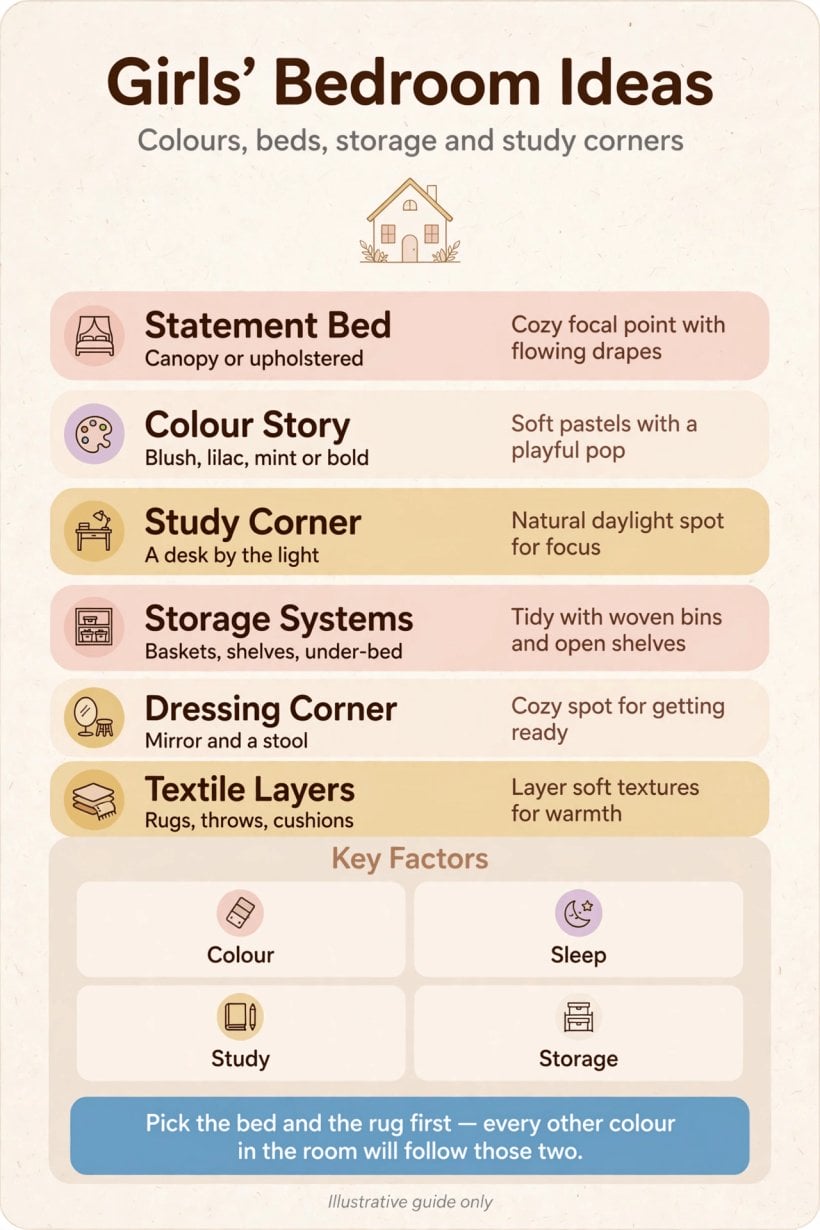
At a glance: balance one calm base colour with practical storage, a comfortable bed and a dedicated corner for study and reading.
For more compact-room thinking, these tiny house bedroom ideas show how small bedrooms can still fit sleep, storage and study zones comfortably.
2. Colour Palettes That Feel Fresh for Years
Colour sets the mood before any furniture arrives. Choose a base that works in natural and evening light, then let textiles and artwork bring the stronger shades, because those are far cheaper and easier to change later.
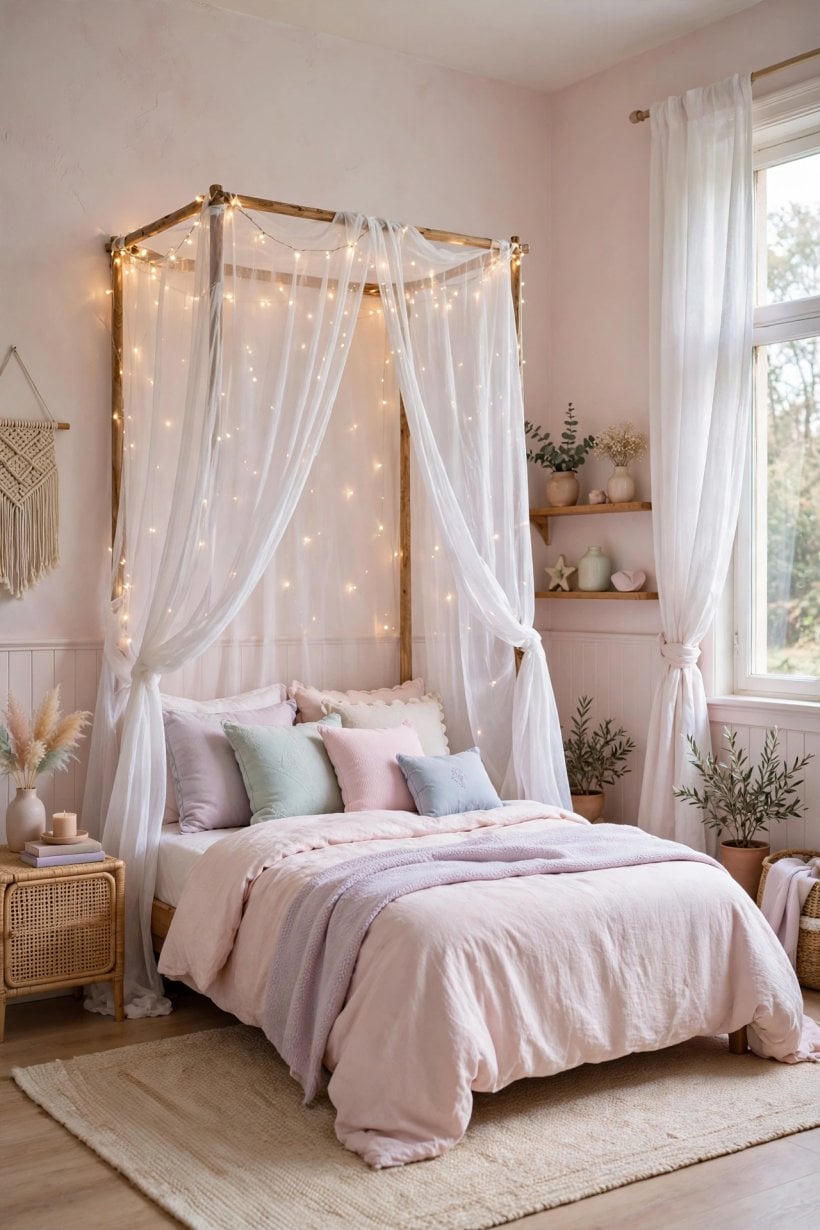
- 1. Soft blush and warm white. A gentle pink on one wall with warm white elsewhere feels cosy without darkening a small room or overwhelming bolder bedding choices.
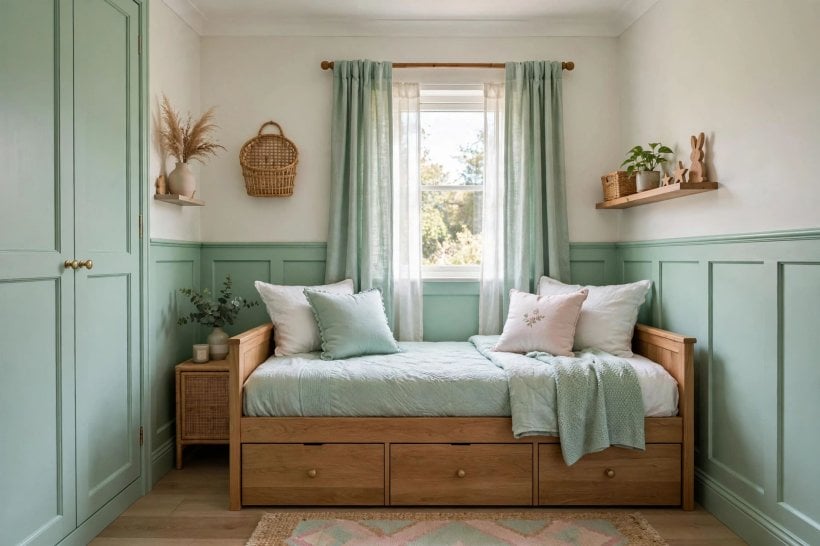
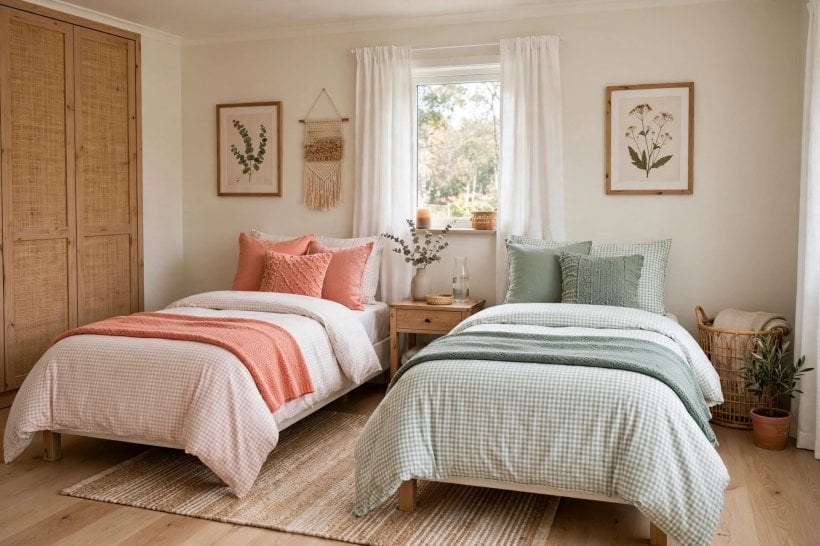
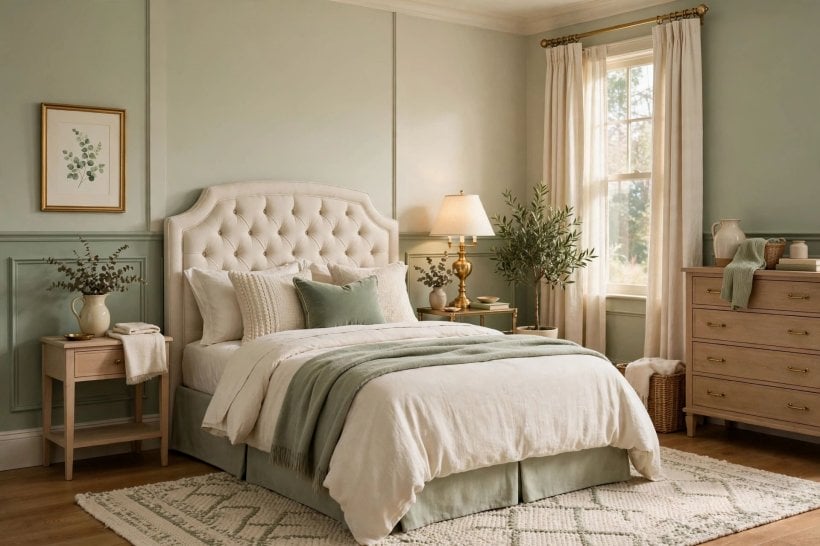
- 2. Sage green calm. Muted green pairs beautifully with natural wood, cream textiles and brass details, and it suits both younger children and teenagers equally well.
- 3. Powder blue serenity. Pale blue walls feel fresh and airy, especially with white furniture, woven baskets and a patterned rug to add warmth underfoot.
- 4. Lavender with grey undertones. A greyed lavender reads sophisticated rather than sugary, and it flatters silver, white and pale oak furniture in most lights.
- 5. Butter yellow brightness. Soft yellow lifts a north-facing room, reflects daylight kindly and combines happily with sage, blush or classic navy accents.
- 6. Coral accent energy. Keep walls neutral and use coral in cushions, a throw and one artwork, so the energy is easy to dial up or down.
- 7. Classic navy and white. Deep navy on a lower wall or headboard wall adds drama, while white above keeps the ceiling feeling high and the room crisp.
- 8. Rainbow, but muted. Dusty versions of rainbow colours in a rug, bunting and cushions give a playful spectrum without shouting from every surface at once.
- 9. Neutral base, colourful textiles. Warm greige or soft white walls let you reinvent the scheme each season simply by swapping bedding, cushions and a single poster.
If you are testing shades, these tiny house interior paint colours explain how light changes a colour through the day.
3. Beds and Bedding for Better Sleep
The bed is the largest piece of furniture and the heart of the room. Prioritise a supportive mattress, breathable bedding and a frame that earns its footprint, either with storage below or a shape that leaves generous floor space.
- 10. Low platform bed. A low frame is safer for younger children, makes bed-making easier for small arms and keeps sightlines open in a compact room.
- 11. Storage drawers underneath. Deep drawers swallow out-of-season clothes, spare bedding and board games, removing the need for an extra chest in a tight layout.
- 12. Daybed for guests. A daybed with cushions works as a sofa by day and a sleepover bed by night, especially with a pull-out trundle below.
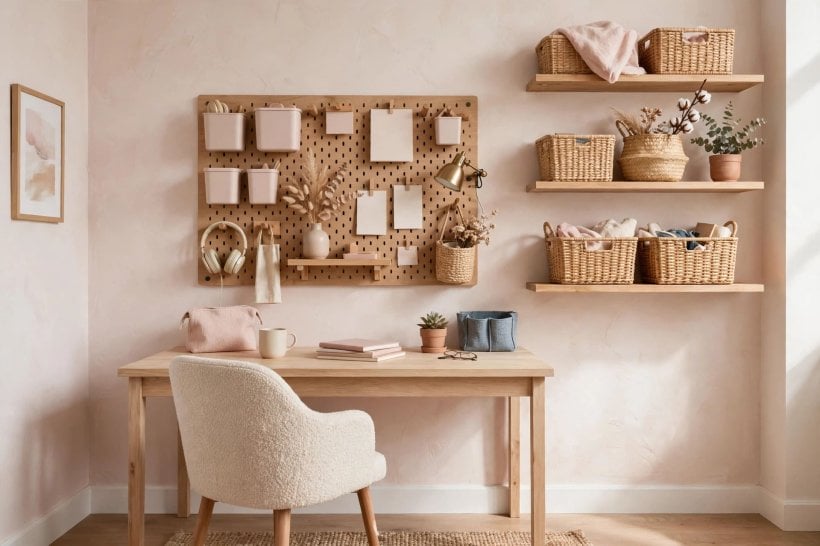
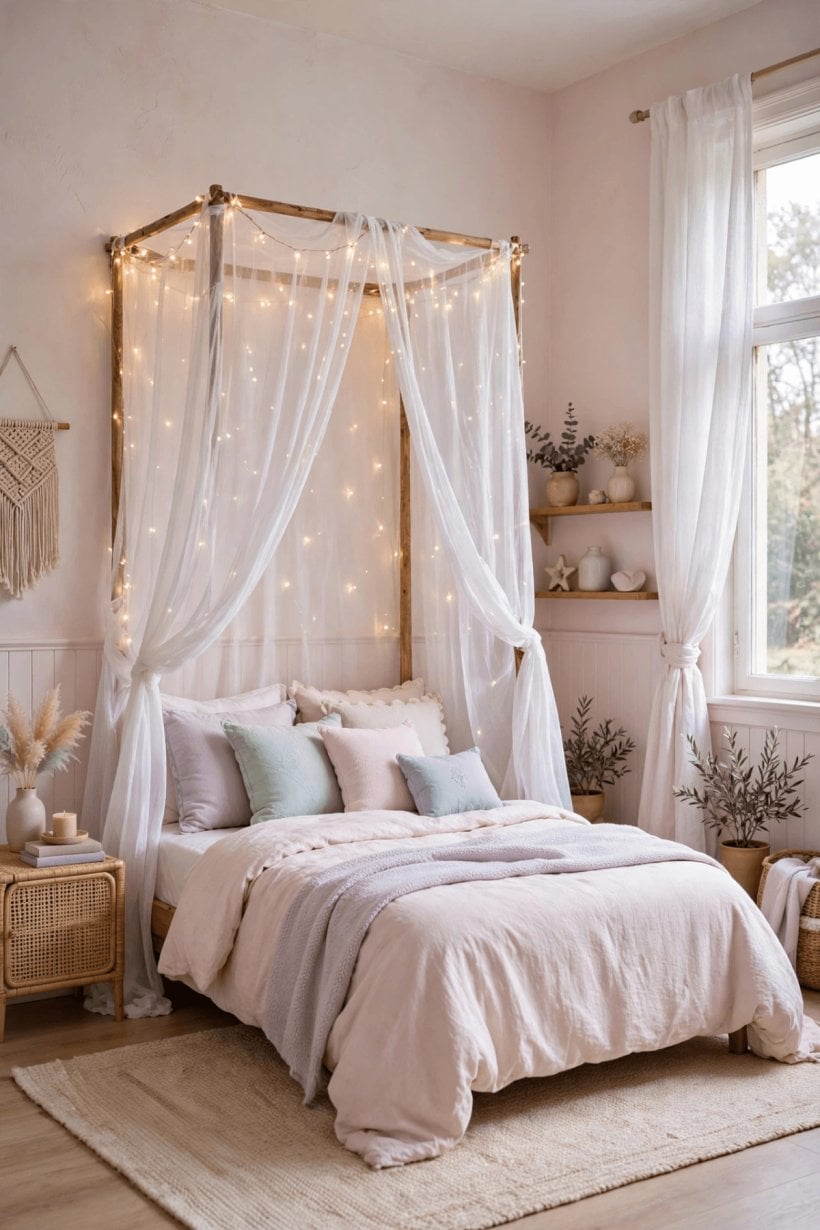
- 13. Four-poster, scaled down. A slim modern canopy frame adds fairytale character without bulk, and sheer curtains can be added or removed as she grows.
- 14. Upholstered headboard. A padded headboard makes reading in bed comfortable, softens knocks and gives the colour scheme one generous block of texture.
- 15. Loft bed over a desk. Raising the bed frees the floor beneath for study or play, provided the ceiling height, guard rails and ladder all feel safe and sturdy.
- 16. Bunk beds for siblings. Bunks remain the classic shared-room answer; choose a model with a proper staircase and storage treads if the footprint allows it.
- 17. Layered bedding. A washable duvet, a lighter quilt and one throw create flexible warmth, while mixed patterns in the same palette look collected, not messy.
- 18. A reading pillow. A firm wedge or hug pillow supports backs during chapter books and audiobooks, encouraging a calm pre-sleep routine every single evening.
4. Storage That Keeps Floors Clear
Good storage is really about habits: if a five-year-old can put something away in ten seconds, she usually will. Mix closed storage for visual calm with open storage for the treasures she reaches for daily.
- 19. Labelled cube shelves. Cubes with labelled boxes sort toys, crafts and clothes into findable families, and labels with pictures help pre-readers tidy independently.
- 20. A wardrobe with adjustable rails. Rails and shelves that move let the same wardrobe serve dresses at six and longer coats and outfits at sixteen.
- 21. Under-bed boxes on wheels. Wheeled boxes glide out easily for train sets, dolls or trainers, and glide back so the floor resets in seconds.
- 22. Wall hooks at her height. A row of sturdy hooks holds dressing gowns, bags and dress-up clothes, turning an everyday habit into simple wall decor.
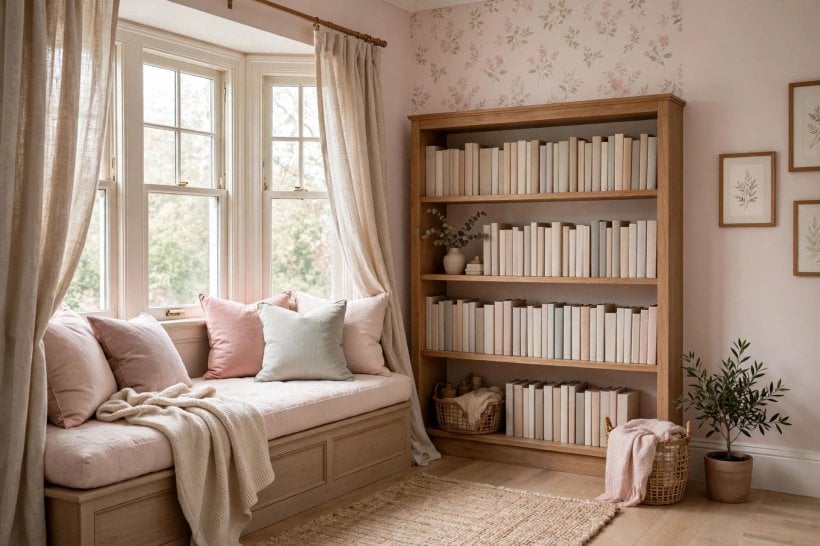
- 23. A book sling or front-facing shelf. Front-facing book storage lets young readers choose by cover, keeps favourites visible and prevents the nightly avalanche from a deep bookcase.
- 24. Dresser with deep drawers. Deep drawers suit folded clothes better than shallow ones; add simple dividers so socks, tops and pyjamas each keep their own territory.
- 25. Toy rotation boxes. Keep half the toys in a closed cupboard box and rotate monthly — old toys feel new again and the room stays calmer.
- 26. A bedside caddy. A hanging caddy holds a book, water bottle, tissues and a torch, which is especially handy for top bunks and loft beds.
- 27. Clear shoe and accessory pockets. An over-door pocket organiser displays hair accessories, gloves and small bags, using vertical space that would otherwise go completely to waste.
Closet planning matters too — these tiny house closet design ideas are full of small-space wardrobe tricks worth borrowing.
5. Study Corners and Homework Zones
A study corner does not need to be large; it needs to be consistent. The same small desk, chair and lamp used daily builds a homework habit, and a defined edge helps work stay at the desk rather than spreading across the bed.
- 28. Desk by the window. Natural light supports focus and mood, but position the screen or book to avoid glare and add a blind for bright afternoons.
- 29. Wall-mounted fold-down desk. In very small rooms a folding desk disappears after homework, instantly returning the floor to play, dance practice or den building.
- 30. A chair that fits. Feet should rest flat and elbows sit near desk height; an adjustable chair grows with her and protects posture during longer projects.
- 31. Pegboard organiser. A pegboard above the desk keeps pens, scissors and headphones visible, tidy and off the work surface where books need to spread.
- 32. One-drawer rule. A single desk drawer for current homework prevents paper drift; finished work moves weekly to a folder, box or the recycling.
- 33. Cable and charger station. A small charging spot at the desk keeps devices out of the bed and cables off the floor, a simple sleep-friendly boundary.
- 34. Pinboard for goals and art. A cork or fabric board displays timetables, certificates and current artwork, making effort visible and the corner feel genuinely hers.
- 35. Bookshelf beside the desk. Reference books, dictionaries and current reads within arm’s reach reduce the get-up-and-wander moments that break concentration into pieces.
- 36. A calm colour boundary. Painting the study alcove a slightly deeper shade, or adding a rug under the desk, signals this is the focused zone of the room.
For older children, these tiny house home office ideas adapt surprisingly well to teen study spaces.
6. Lighting for Sleep, Reading and Play
Layered lighting lets one room do three jobs. Bright, even light suits play and getting dressed; focused light suits reading and homework; and very low, warm light tells the body that bedtime is approaching.
- 37. Warm-white ceiling light. A soft, warm ceiling fitting with a dimmer covers playtime and tidying without the harsh, clinical feel of blue-toned bulbs.
- 38. Clip-on reading light. A clip light on the headboard or bunk rail gives a pool of light for reading that will not keep a sibling awake.
- 39. Fairy lights, safely placed. Battery fairy lights in a jar or along a shelf add evening magic without trailing mains cables across the floor.
- 40. A gentle night light. A low amber night light near the door helps midnight trips to the bathroom while barely disturbing sleep at all.
- 41. Desk lamp with an adjustable arm. An angled task lamp lights the page, not the eyes, and folds away when the desk becomes a craft table.
- 42. Blackout-lined curtains. Darkness supports melatonin and longer sleep, especially in summer; pair blackout lining with a prettier sheer for daytime softness.
- 43. A star or nature projector. A slow, dim projector can be a calming wind-down ritual for younger children, switched off once sleepiness arrives.
- 44. Touch lamps for independence. A tap-on bedside lamp lets children manage light themselves, which helps enormously during the night-waking years.
7. Walls, Art and Personal Touches
Personality belongs on the walls, where it is cheap to change and easy to enjoy. Keep the fixed elements calm and let posters, photos and her own artwork tell the current chapter of her story.
- 45. A gallery wall she curates. Matching frames with changeable prints let her rotate drawings, photos and postcards, learning composition while the wall stays coherent.
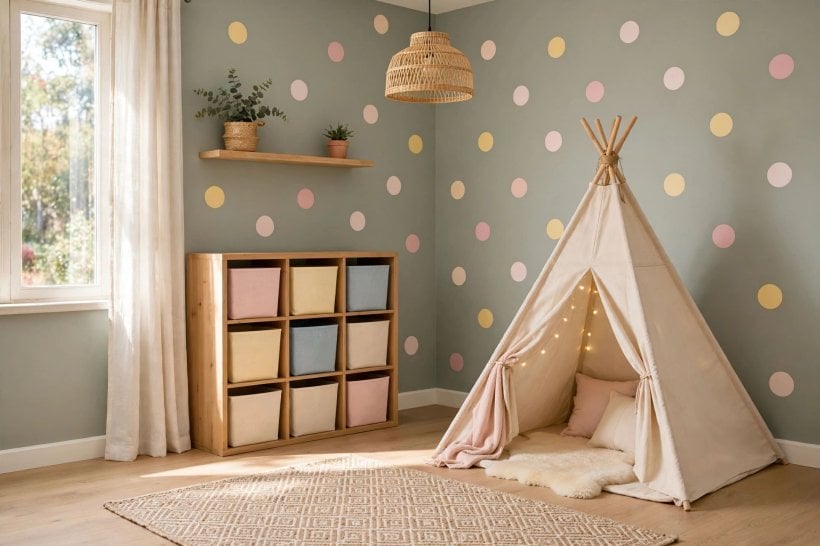
- 46. Removable wall decals. Stars, dots, arches or botanicals add pattern without commitment, and they peel away cleanly when tastes inevitably change direction.
- 47. A painted arch headboard zone. A soft painted arch behind the bed creates a focal point for the price of a tester pot and an afternoon.
- 48. Washi-tape picture frames. Tape frames cost pennies, never damage paint and make a rotating exhibition of school art feel properly celebrated.
- 49. Name or initial letters. One wooden or fabric initial above the bed personalises the room for siblings and photographs beautifully for family albums.
- 50. A world map or nature print. One larger educational print earns its wall space twice: decoration by day and a curiosity prompt at bedtime story time.
- 51. Bunting in her colours. Fabric bunting softens straight lines, uses leftover craft fabric and can move to party duty in the garden when needed.
- 52. A mirror at safe height. An acrylic safety mirror supports dressing independence and bounces light into darker corners of the room.
Love bold colour stories? This colourful tiny house interior tour shows confident colour used in small spaces.
8. Windows, Curtains and Soft Furnishings
Textiles do the quiet work of comfort: they absorb sound, soften light and make a room feel finished. Choose washable, hard-wearing pieces in the high-traffic spots and keep the precious items up on shelves.
- 53. Layered curtains and sheers. Sheers soften daytime glare while lined curtains handle privacy, warmth and darkness once the evening routine begins.
- 54. A washable rug. A low-pile, washable rug defines the play zone, cushions small knees and survives the inevitable juice and paint incidents.
- 55. Cushions in threes. Three cushions in coordinating fabrics dress the bed for daytime reading without creating a nightly mountain to clear away.
- 56. A soft throw for story time. One shared throw on the bed or chair becomes part of the bedtime ritual and adds a welcome layer in winter.
- 57. Roman blinds for small windows. Blinds sit neatly inside the frame, free the wall beside the window for furniture and avoid fabric pooling on the floor.
- 58. Patterned bedding, plain walls. Letting bedding carry the pattern keeps redecorating cheap: one new duvet set can transform the whole room in minutes.
- 59. A cushioned window seat. If a deep sill or alcove exists, a simple cushion turns it into the most requested reading spot in the house.
- 60. Seasonal swaps. Lighter cotton layers in summer and a fleece blanket in winter teach children that rooms, like wardrobes, change with the year.
9. Layouts for Small and Shared Rooms
Layout beats square footage. Measure first, tape the furniture footprints on the floor, and keep a clear path from door to bed to wardrobe — a room that flows well feels twice its size.
- 61. Bed along the longest wall. Placing the bed lengthwise frees a continuous play rectangle and stops the room feeling chopped into awkward leftovers.
- 62. Zones, not rows. Sleep, study and play zones — each with its own rug, light or colour cue — help siblings share without constant negotiation.
- 63. Mirrored layouts for siblings. Matching beds, lamps and shelves on each side of a shared room prevents fairness arguments before they even start.
- 64. A low divider shelf. A waist-high open shelf can split a shared room, store books on both sides and still borrow light across the space.
- 65. Door-swing check. Always plan around the door arc and wardrobe doors; furniture that blocks a swing will annoy every single day.
- 66. Corners for calm. A beanbag, cushion and small bookshelf in one corner creates a retreat for overwhelmed moments and quiet reading alike.
- 67. Vertical everything. Tall, slim furniture and wall shelves draw the eye up and keep precious floor clear in genuinely tiny rooms.
- 68. A folding play table. A small folding table handles crafts, puzzles and tea parties, then hangs on a hook behind the door afterwards.
Shared-space inspiration continues in these tiny house living room ideas, where zoning makes small footprints feel generous.
10. Growing With Her: Toddlers to Teens
The smartest rooms evolve in layers. Spend on the bed frame, storage carcasses and window dressings that can stay, and let the inexpensive layers — bedding, art, cushions and paint accents — carry each new age and interest.
- 69. Convertible toddler-to-single bed. A bed that extends or converts avoids a second purchase within a few years and keeps a familiar sleep space.
- 70. Toy storage that becomes book storage. Cube shelves that once held teddies later hold novels, vinyl or study files, so the furniture never becomes obsolete.
- 71. A desk that starts as a craft table. A sturdy small table serves colouring at four, homework at nine and exam revision at fifteen with just a chair upgrade.
- 72. Swap the theme, keep the scheme. When princesses give way to astronomy, change bedding and prints but keep walls and furniture — the refresh costs very little.
- 73. Add a vanity or grooming spot. For teens, a small mirror, good light and a drawer for grooming bits at the desk end adds independence without a new furniture suite.
- 74. Space for friends. A fold-up guest mat, spare pillow and a clear patch of floor acknowledge that social life now happens at home too.
- 75. Let her lead the refresh. A mood board she makes herself — colours, prints, one dream item — turns each update into a shared project rather than a surprise makeover.
That long view echoes these modern tiny house interior ideas: invest in the bones, refresh the layers.
Final Considerations
Before you buy anything, measure the room, note where the radiator, sockets and window sit, and decide which of the four anchors — colour, bed, storage or study corner — matters most this season. The rest can follow in stages, which keeps costs qualitative and manageable: textiles and paint are the low-cost refresh, while beds, wardrobes and made-to-fit storage sit at the higher end of a typical budget.
Above all, build the room with her, not just for her. A space that stores her real life, lights her real books and reflects her real interests will be loved far longer than a perfectly matched showroom scheme — and it will adapt, idea by idea, as she grows.


0 Comments