

A pool feels finished only when the ground around it works as hard as the water itself. Planting softens hard edges, stone keeps feet steady, decking creates room to linger, and privacy planting turns a swim into a retreat. This guide gathers seventy-five practical ideas you can mix for sun, shade, slopes and small yards, starting with the choices that shape everything else.
1. Start With the Shape of the Whole Yard
Before choosing a single plant, look at how people arrive, where they sit, and where towels, toys and drinks will land. Good backyard landscaping ideas always solve movement first, then add beauty. Borrow the zoning habit from tiny house landscaping ideas: every square metre earns its place, even beside a generous pool.
| Focus | Best for | Watch out for |
|---|---|---|
| Plants | Softening edges, shade and seasonal colour | Leaf drop into the water and thirsty roots |
| Stone | Paths, coping, walls and slip-aware surfaces | Heat underfoot and glare in full sun |
| Decking | Lounging zones and level changes | Drainage underneath and regular sealing or oiling |
| Privacy planting | Screening neighbours and wind | Overgrown height and blocked light |
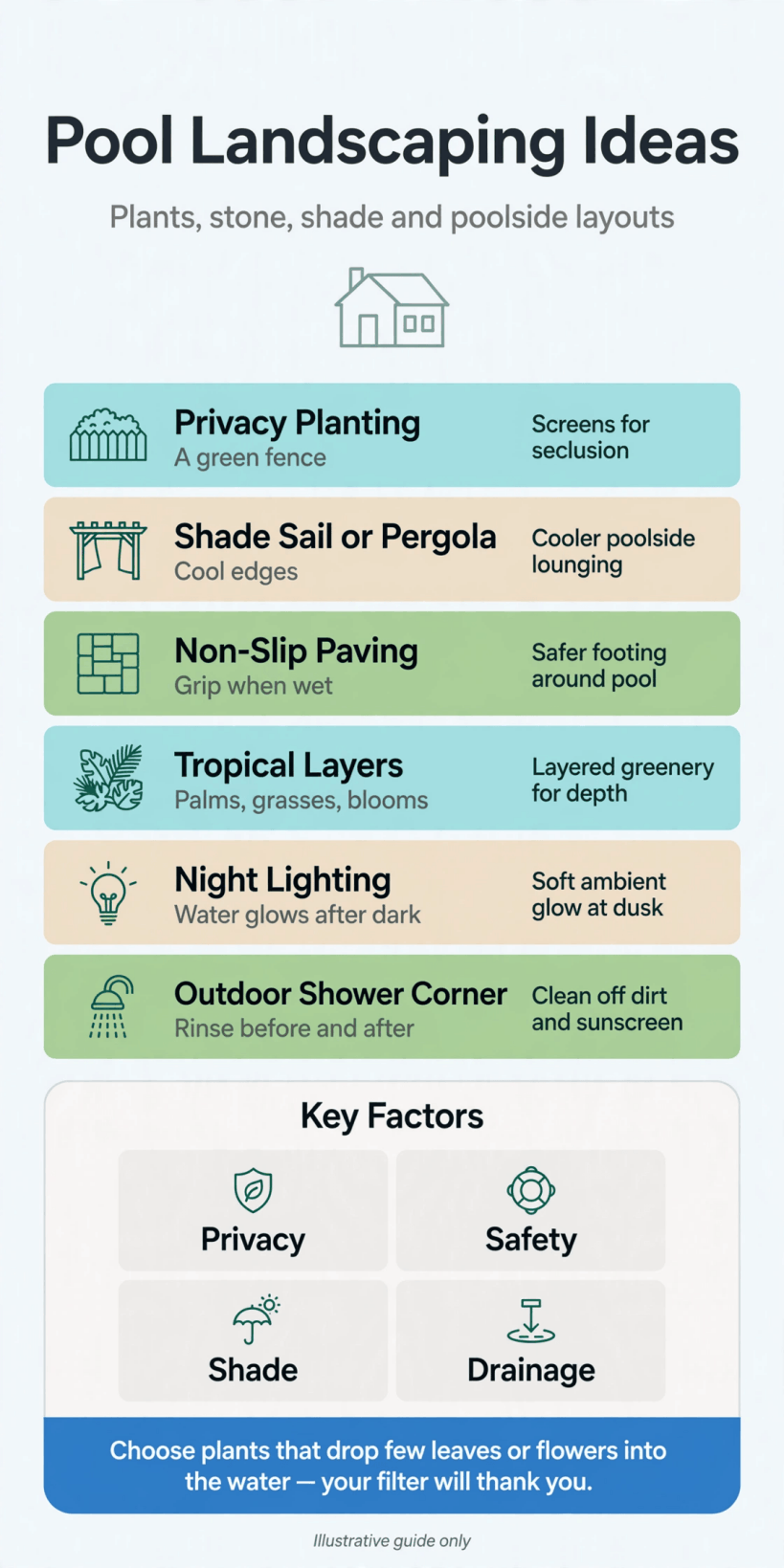
At a glance: balance plants, stone, decking and privacy planting before you buy anything.
1. Map the sun path: note where sun and shade fall morning and afternoon, then place seating, tender plants and play space where conditions already suit them best.
2. Draw three zones: separate wet, dry and lounging areas clearly, so dripping swimmers never cross the dining spot and guests always find a dry route.
3. Keep a service route: leave a clear, wide path for cleaning equipment, plant care and furniture moving, hidden behind planting where possible.
4. Frame one focal point: choose a tree, sculpture, fire bowl or planted urn as the view from the house, and let other details stay quieter.
5. Plan the night view: decide early where lights, candles and reflections should fall, because wiring and sleeves are far easier before paving is laid.
6. Respect the waterline: keep soil, mulch and loose gravel set back from the edge, so rain and splashes do not wash debris straight in.
7. Leave breathing room: resist filling every corner; open space around water feels luxurious, calms the design and makes small yards seem larger.
8. Check local rules early: fencing, gates, drainage and setback requirements vary by place, so confirm what applies locally before ordering materials or planting screens.
2. Plants That Earn Their Place Beside Water
The best poolside plants cope with reflected heat, splashes and occasional drought, and they drop as little litter as possible. Group plants by water need, keep thirsty favourites in pots, and repeat a few reliable varieties rather than collecting one of everything. Tidy, architectural foliage usually outperforms fussy flowers this close to water.
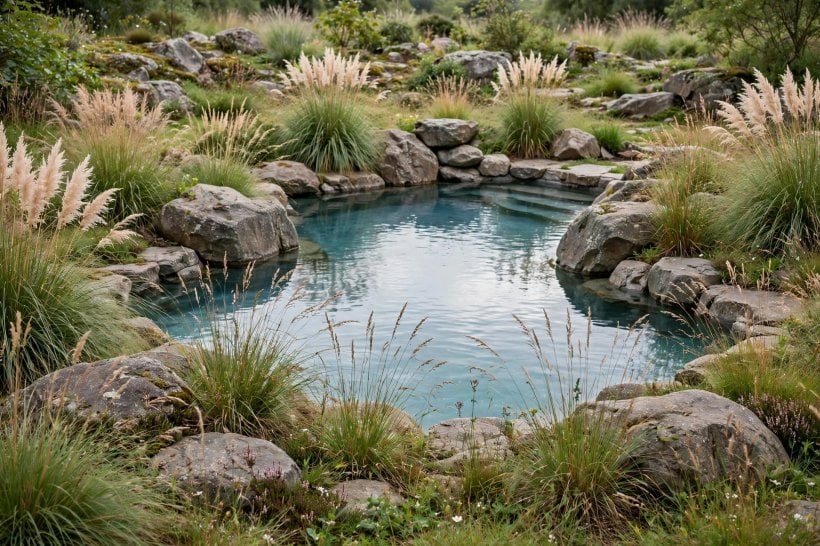
9. Use architectural foliage: bold leaves give a resort feeling without constant deadheading, and they look good reflected in still water at dusk.
10. Plant in bold drifts: groups of five or more of one variety read as calm and intentional, while single scattered plants look restless.
11. Choose low-litter varieties: ask locally which plants hold their leaves and flowers, because skimming fallen petals daily quickly stops feeling relaxing.
12. Add grasses for movement: ornamental grasses sway, soften stone and catch evening light, but site them back from the edge to contain seed.
13. Grow herbs near seating: rosemary, lavender and thyme in pots perfume warm air, tolerate dry conditions and stay useful for outdoor cooking.
14. Try succulents in hot spots: sun-baked corners that scorch other plants suit succulents in raised planters, where drainage is sharp and winter wet is limited.
15. Shade roots with groundcover: low planting cools soil, suppresses weeds and knits beds together, provided it stays clear of paths and coping.
16. Repeat one flower colour: a single repeated colour through the season ties mixed planting together and makes the water colour feel deliberate.
3. Stone, Coping and Paths That Stay Practical
Stone brings structure, but beside water it must be slip-aware, comfortable and easy to clean. Compare samples wet and dry, in sun and shade, before committing. These rock landscaping ideas show how stone can shape a whole garden, while this guide to landscaping rock types, from lava and river pebbles to slate, helps you choose finishes that suit bare feet.

17. Pick pale coping in hot sun: lighter stone stays kinder underfoot, defines the edge clearly and makes the water look brighter.
18. Test texture when wet: a surface that grips in the showroom may polish smooth when soaked, so test samples with wet feet first.
19. Edge paths with river pebbles: a narrow pebble band drains freely, marks the route and stops mulch drifting onto paving.
20. Build a low stone seat wall: a wide, flat-topped wall gives overflow seating, towel space and a perch for drinks without extra furniture.
21. Use boulders as anchors: one or two generous boulders placed at bed corners look natural and stop corners being clipped by feet and hoses.
22. Lay stepping stones through planting: broad, level stones keep a garden route dry and invite a slower walk around the water.
23. Add a stone water feature wall: a simple sheet of falling water masks neighbourhood noise and adds cooling sound on still evenings.
24. Keep joints tight and even: narrow, well-filled joints are easier on feet, simpler to sweep and less likely to harbour weeds.
4. Decking That Creates Rooms, Not Just Platforms
Decking earns its cost when it becomes an outdoor room: a place to eat, read, dry off and watch the light change. Keep boards running in one calm direction, plan where furniture actually sits, and leave access to drains and services. Timber, composite and tile-topped systems each age differently, so choose for your climate, budget and appetite for maintenance, and check locally what installers recommend for wet areas.

25. Extend decking beyond the loungers: allow walking space behind chairs so nobody shuffles sideways past a reclining swimmer.
26. Build a shallow step, not a drop: gentle level changes feel safer at dusk and help children and older guests move confidently.
27. Add a built-in bench: fixed seating along one edge stores cushions below, seats many people and keeps the deck edge tidy.
28. Create a dining platform: a slightly raised or rug-defined dining zone separates eating from splashes and gives evenings a clear destination.
29. Run boards toward the view: board direction quietly leads the eye; point it at the garden, not at a fence or shed.
30. Hide storage in deck boxes: toys, covers and cleaning gear disappear into weatherproof boxes that double as extra seating.
31. Frame the deck with planting: soft foliage at the corners takes away the platform look and blends the structure into the garden.
32. Leave an access hatch: a discreet removable panel over valves and drains saves dismantling boards when something needs attention.
5. Privacy Planting That Feels Like a Retreat
Privacy works best in layers: a tall layer to block sightlines, a middle layer to fill gaps, and a low layer to hide stems and fences. Mix evergreen structure with seasonal interest, and stagger plants rather than lining them up like soldiers. For water-wise structure, borrow from xeriscaping with rocks, native plants and water-wise design, and invite wildlife with ideas from creating a wildlife-friendly garden in your backyard, keeping bird-friendly planting a little away from the water itself.
33. Plant a staggered double row: offset rows close gaps faster than a single line and look like a garden, not a barrier.
34. Use pleached or trained trees: clear stems with leafy tops screen overlooking windows while keeping the ground open for paths and seating.
35. Grow climbers on a trellis: a slim trellis with evergreen climbers gives privacy in narrow yards where a hedge would eat the space.
36. Mix heights deliberately: tall, medium and low layers stop the tunnel effect and let breezes filter through instead of swirling.
37. Screen the neighbour, not the sky: angle planting only where sightlines actually are, so you keep openness and light everywhere else.
38. Add a green corner for changing: a planted nook near the house gives swimmers a private spot for robes and towels.
39. Choose wind-firm varieties: in exposed yards, flexible, deep-rooted plants survive storms better and drop less debris into the water.
40. Keep a trimming plan: little and often beats a yearly battle; set a seasonal reminder before screens outgrow their space.
6. Shade, Shelter and Comfort Through the Day
A pool yard without shade is only pleasant for part of the day. Combine one fixed shelter with flexible options you can move as the sun travels: umbrellas, sails, planted shade and a simple pergola. Think about glare on the water, a shady spot for small children, and a dry corner where books and phones survive. Comfort details like outdoor rugs, side tables and robe hooks turn a swim stop into a place people stay.
41. Plant one real shade tree: nothing cools like a tree canopy; choose a suitable, locally recommended variety and plant it at a safe distance.
42. Stretch a shade sail: sails shade loungers without posts in the way, and can come down for winter storms.
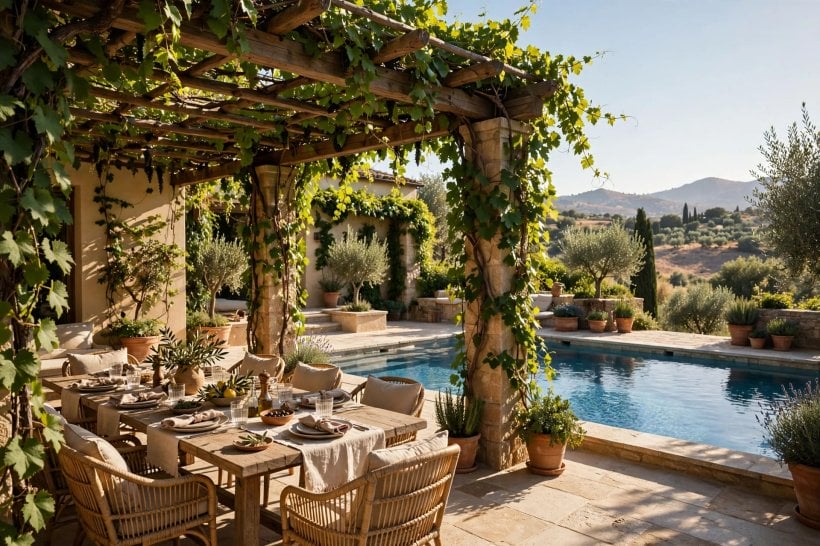
43. Build a slim pergola: a pergola over the dining end defines the room and carries climbers, lights and a retractable canopy.
44. Use a cantilever umbrella: an offset umbrella shades the shallow end or a reading chair without a pole in the middle.
45. Create a cabana corner: curtains, cushions and a low table make a sheltered retreat for non-swimmers to stay part of the day.
46. Add an outdoor rug: a washable rug under seating softens decking, catches drips and marks the dry zone clearly.
47. Install robe and towel hooks: hooks on a warm wall or fence post keep towels off the ground and out of the water.
48. Keep a drinks station: a small trolley or built-in shelf for water and glasses reduces trips through the house with wet feet.
7. Small Pools and Plunge Pools With Big Character
Small water needs bold, simple surroundings. One surface, one plant palette and one strong piece of furniture will look calmer than many small features competing. Mirrors, pale paving and vertical planting borrow light and space, while built-in seating removes the need for bulky chairs. Even a plunge pool can feel like a resort with a bench in the water, a green wall behind it and somewhere soft to sit with a book afterwards.
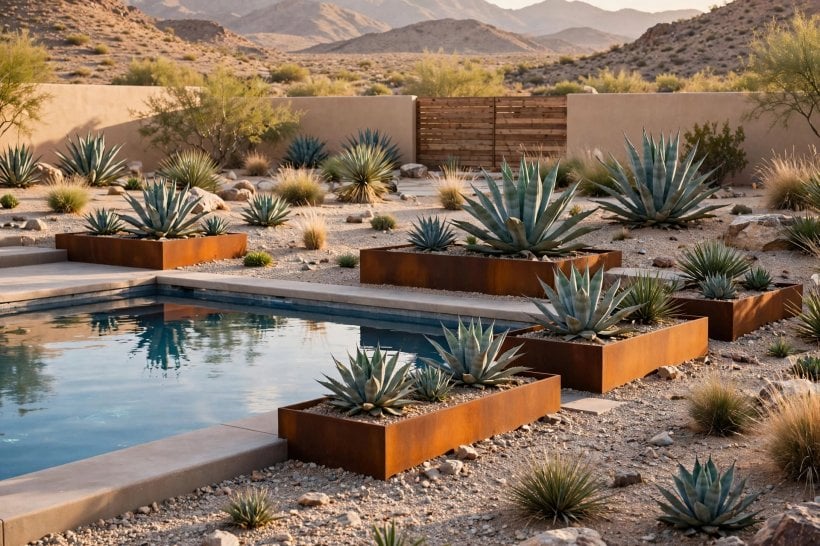
49. Use one paving material throughout: a single surface makes a small yard feel larger and keeps maintenance blissfully simple.
50. Grow a green wall: vertical planting gives lushness without stealing floor space, ideal along a boundary fence.
51. Build seating into the edge: a wide coping bench or in-water ledge gives perching space without furniture clutter.
52. Choose a pair, not a set: two excellent loungers look intentional; five mismatched chairs look like storage.
53. Add a mirror or pale wall: reflected light brightens shaded corners and doubles the green in small spaces.
54. Keep pots in one family: matching pots in varied sizes look collected and calm, and can move with the seasons.
55. Light the steps and edge: in a compact yard, good lighting is the difference between elegant and hazardous after dark.
56. Plant scent at nose height: a jasmine or herb planter near the bench perfumes the small space where you actually sit.
8. Lighting, Safety and Evening Atmosphere
Evenings are when a pool yard earns its keep, but light must guide feet before it flatters planting. Mark steps, edges and gates first, then add softer layers in trees and along paths. Safety and beauty support each other: a well-lit route, a clear edge and a visible gate help everyone relax. Keep controls simple, put timers on the boring lights, and check locally which safety barriers and gate rules apply to your home.
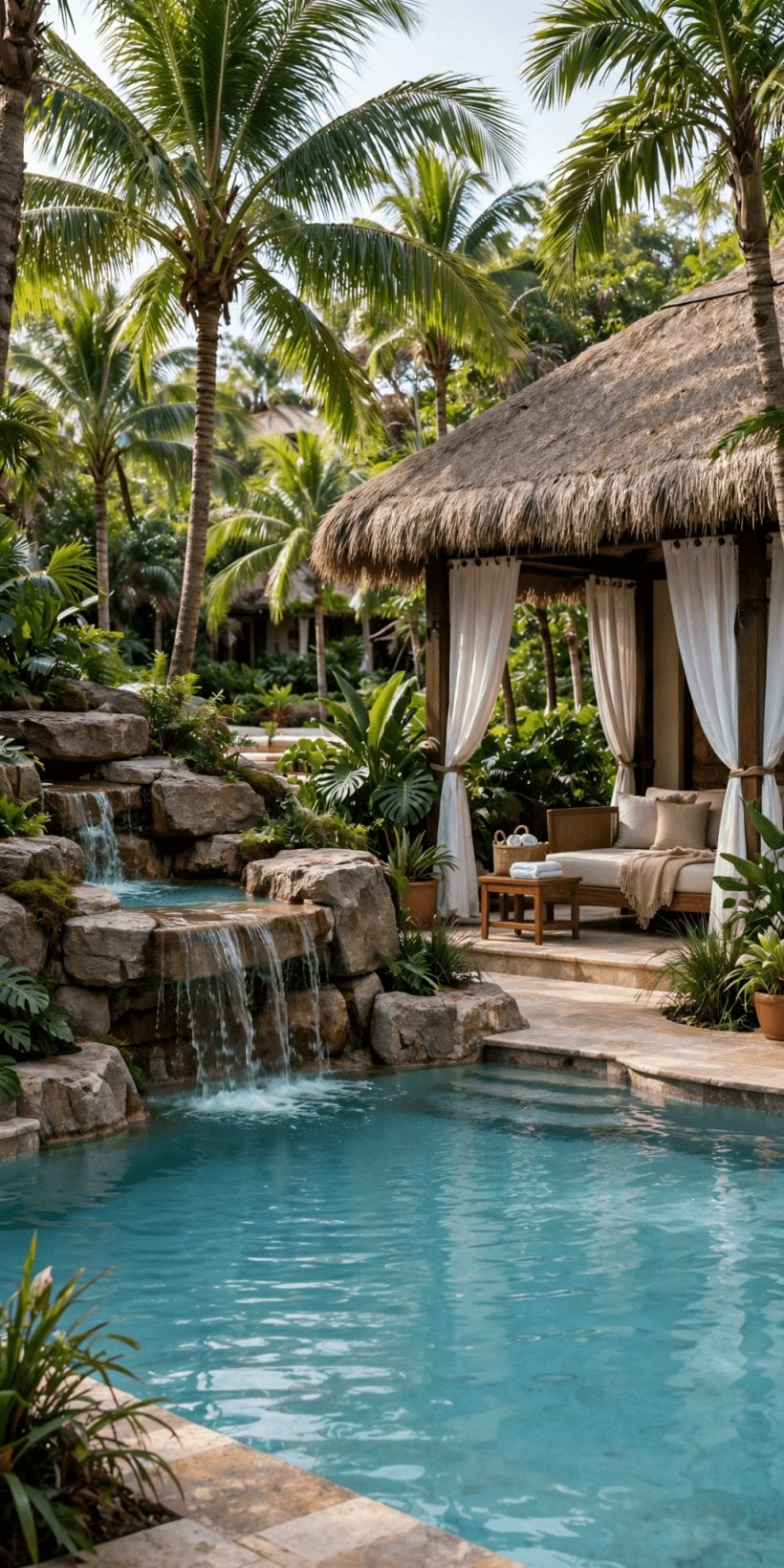
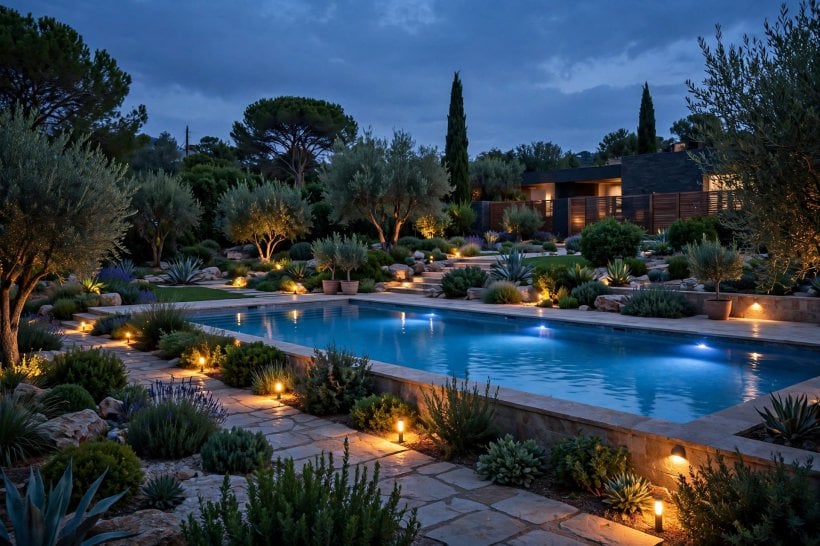
57. Light the edge, not just the water: a gentle line of light at the coping makes the boundary obvious to evening guests.
58. Uplight one tree: a single lit canopy gives drama and depth without turning the yard into a stadium.
59. Use warm light near seating: warmer tones flatter skin and food, and feel calmer than bright white floodlighting.
60. Add solar markers on paths: simple markers guide the route from house to water on dark nights between seasons.
61. Keep gates self-closing: check hinges and latches regularly, and confirm the arrangement meets the rules where you live.
62. Store chemicals out of sight: a ventilated, lockable store away from seating keeps the retreat feeling and the yard safer.
63. Make a non-slip night route: texture, light and a handhold where levels change protect guests carrying drinks and towels.
64. Put lights on timers: timers handle the routine, so the yard is welcoming when you get home and dark later at night.
9. Low-Maintenance Moves That Save Every Weekend
The smartest pool yards are designed for the hour you actually have, not the weekend you imagine. Reduce leaf drop, automate watering, choose surfaces that hose down, and keep planting in a few large, accessible beds. Every feature you add should answer one question: does this make care easier or harder? If harder, it needs to be beautiful enough to justify itself, or it belongs in a pot you can retire.
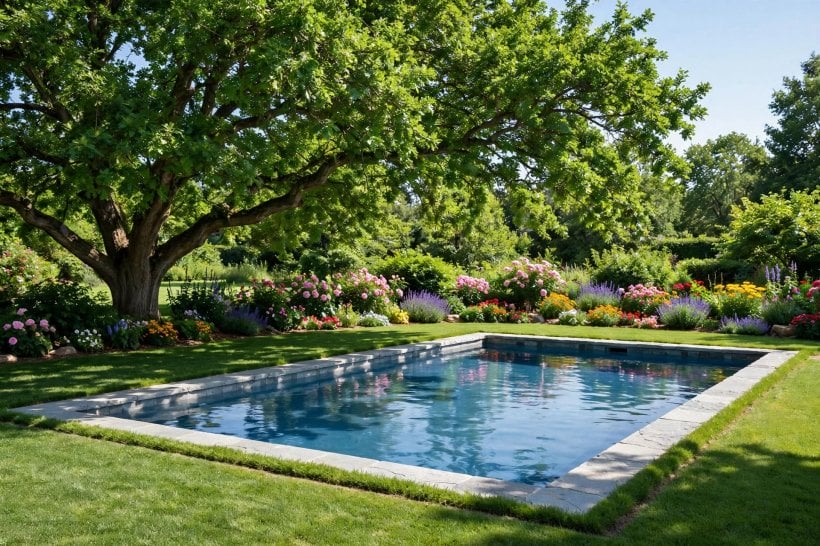
65. Install drip irrigation: targeted watering keeps beds healthy, splashes less soil and uses water where roots actually are.
66. Mulch deeply, away from the edge: a generous mulch layer in beds cuts weeding and watering, set back behind a firm edging.
67. Choose large beds over many small ones: fewer, bigger beds are faster to weed, water and replant than scattered pockets.
68. Keep a leaf net routine: a quick skim and net after windy days stops debris sinking and staining.
69. Pick furniture that stacks or folds: off-season storage is painless when every piece has a planned home.
70. Grow perennials as the backbone: long-lived plants return each year, so seasonal pots only need to add colour, not carry the design.
10. Finishing Touches That Make It Yours
Once structure, planting and privacy work, personality is the final layer. Art, colour, scent and sound make a pool yard memorable, and they are the cheapest elements to change as tastes evolve. Add them slowly, live with the space through a season, and notice where people actually gather. The best finishing touch is usually the one that serves that gathering spot: shade where readers sit, a table where talkers linger, a warm light where swimmers climb out.
71. Hang weatherproof art: a metal panel or mosaic on the fence gives the eye a destination beyond the water.
72. Add one bold colour: cushions, pots or a painted bench in a single confident colour lift green and stone instantly.
73. Include a fire bowl for cool evenings: firelight extends the season and gives non-swimmers a warm centre; site it safely and check local rules.
74. Plant a night-scented corner: evening fragrance near the dining spot makes ordinary weeknight swims feel like a holiday.
75. Keep a guest basket ready: spare towels, sunscreen and a dry bag by the door make invitations easy and spontaneous.
Final Considerations
Start with movement, safety and drainage, then layer plants, stone and decking in that order, and let privacy planting mature while you enjoy the simple version. Photograph the yard in each season, note what annoyed you, and fix one thing at a time. Whether your style leans lush, minimal or natural, the most successful pool landscaping is the kind that fits your climate, your rules and your real weekends — checked locally, planted patiently, and loved often.


0 Comments