

Green brings calm, freshness and a connection to planting that few colours match, which is why it works so beautifully in a bathroom. This guide to planning a green master bathroom covers shades, layouts, vanities, tiles and space-saving fixtures, with practical advice on light, storage, costs and care, so your scheme feels restful on day one and still feels right years later.
1. Green Bathroom at a Glance: What to Decide First
Decide the depth of green before you decide anything else, because it drives every later choice. Pale sage and misty green-grey shades behave almost like neutrals: they keep small rooms light, hide water marks kindly and pair with almost any metal finish. Mid greens, such as leaf, eucalyptus and soft olive, bring clear colour while staying liveable. Deep forest, emerald and near-black greens create a cocooning, evening feel, but they ask more of your lighting and look best with warm whites, timber or brass to lift them.
Next, decide where the green will live. Paint is the cheapest and most changeable carrier, tiles are the most permanent, and a vanity sits between the two as a strong, contained block of colour. Many successful rooms use green in one main place and echo it gently in another, a towel, a plant or a painted stool, rather than spreading strong colour everywhere. Finally, check the room’s natural light and size honestly, test large samples on the wall and beside the floor, and confirm how the shade behaves in the artificial light you actually use at night and on winter mornings.
| Decision | Options to weigh | Practical note |
|---|---|---|
| Shade depth | Pale sage, mid leaf and olive, or deep forest and emerald | Test at large scale; deep shades need stronger, warmer lighting |
| Where green lives | Paint, tiles, vanity, or a combination with one clear lead | Paint is easiest to change, tiles are the longest commitment |
| Layout | Keep existing positions, or move plumbing for a better plan | Moving soil and water points usually drives cost and time |
| Vanity | Painted, timber, floating or floor-standing, single or double | Storage needs and cleaning habits should shape the choice |
| Tiles | Format, finish, grout colour and how far tiling extends | Matt finishes and mid-tone grout are forgiving day to day |
| Fixtures | Wall-hung, compact and corner options for smaller rooms | Space-saving fittings can make a tight layout feel generous |
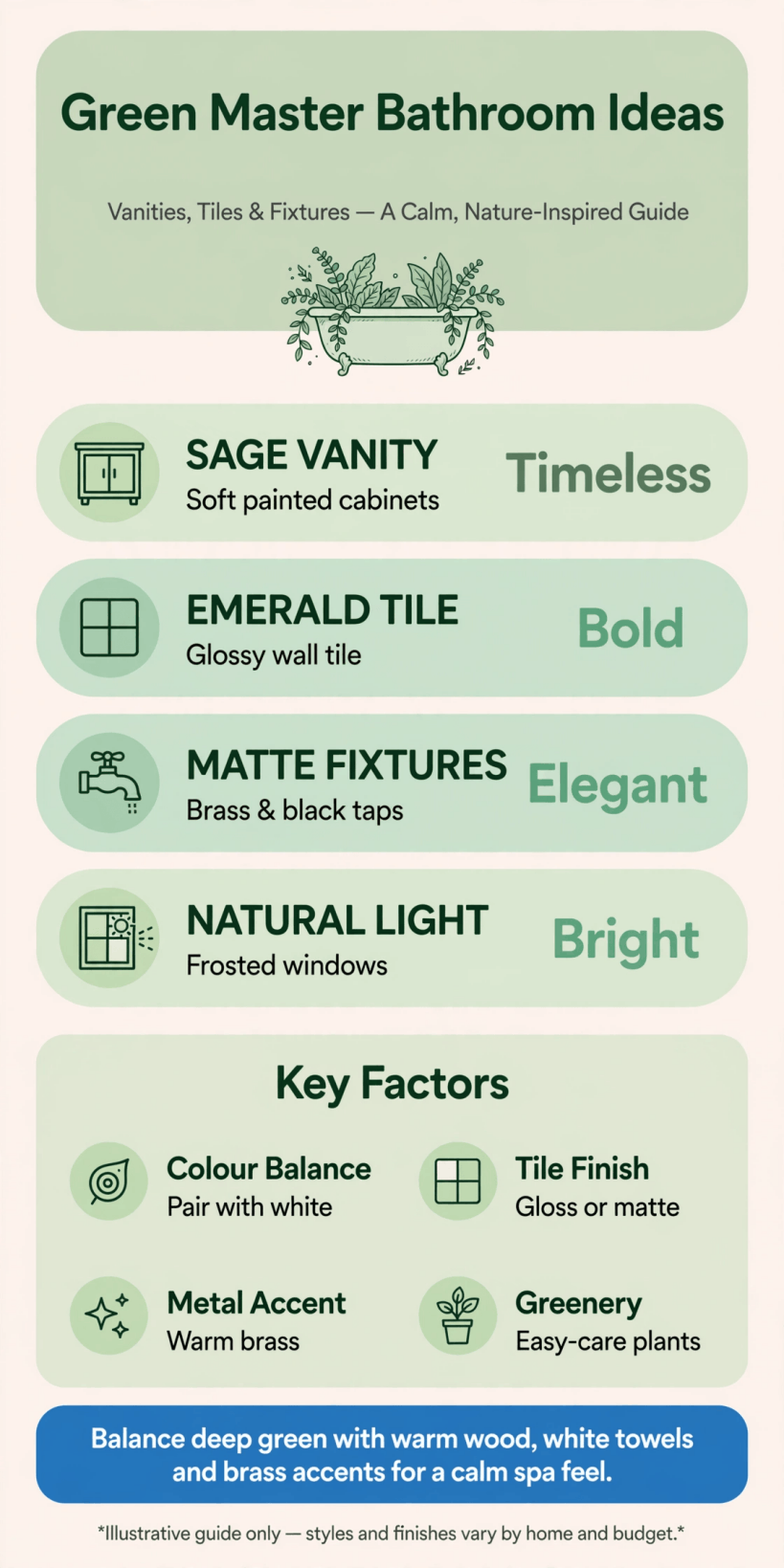
An at-a-glance summary of the shade, layout, vanity, tile and fixture decisions behind a green bathroom.
2. Choosing Your Green: Sage, Forest, Olive and Emerald
Green is a family, not a single colour, and its undertones decide how a room feels. Blue-greens, including teal-leaning shades, feel cool, clean and spa-like, especially with white sanitaryware and chrome. Yellow-greens, such as olive and moss, feel warmer and earthier, suiting timber, terracotta accents and north-facing rooms that need warmth. Grey-greens mute the colour into something quiet and architectural, which is why sage remains so popular in bathrooms that must also work as calm, early-morning spaces.
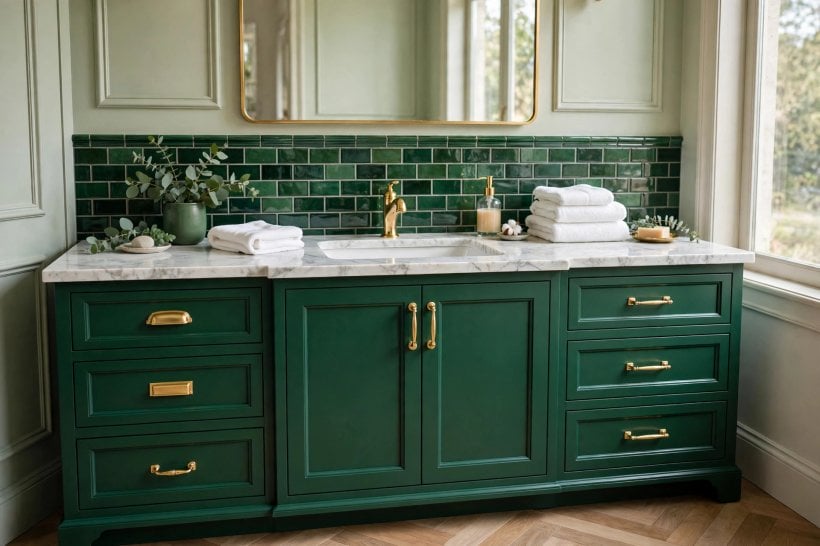
Sample generously and judge in place. Paint a large board you can move around the room, prop tile samples against the wall and floor, and look at everything together in daylight and lamplight, because green shifts more than most colours between the two. Check the shade against your skin tone in the mirror, too: a very cool green can be unflattering at a dressing mirror, while a slightly warmer one is kinder. The test-first approach mirrors the advice in colourful tiny house interior ideas, where living with samples always beats guessing from a chart.
3. Layouts That Make Green Feel Calm, Not Dark
Layout comes before decoration. Keep the door swing, window and plumbing positions in mind, and arrange the room so the first view from the door is a composed one, usually the vanity and mirror rather than the toilet. In an en suite, a wall-hung toilet and a floating vanity free up floor area, making the room easier to clean and visually larger, which matters even more when walls are a deeper shade. If you are keeping the existing layout, green is an ideal refresh colour, because paint and tiles can transform the feel without moving a single pipe.
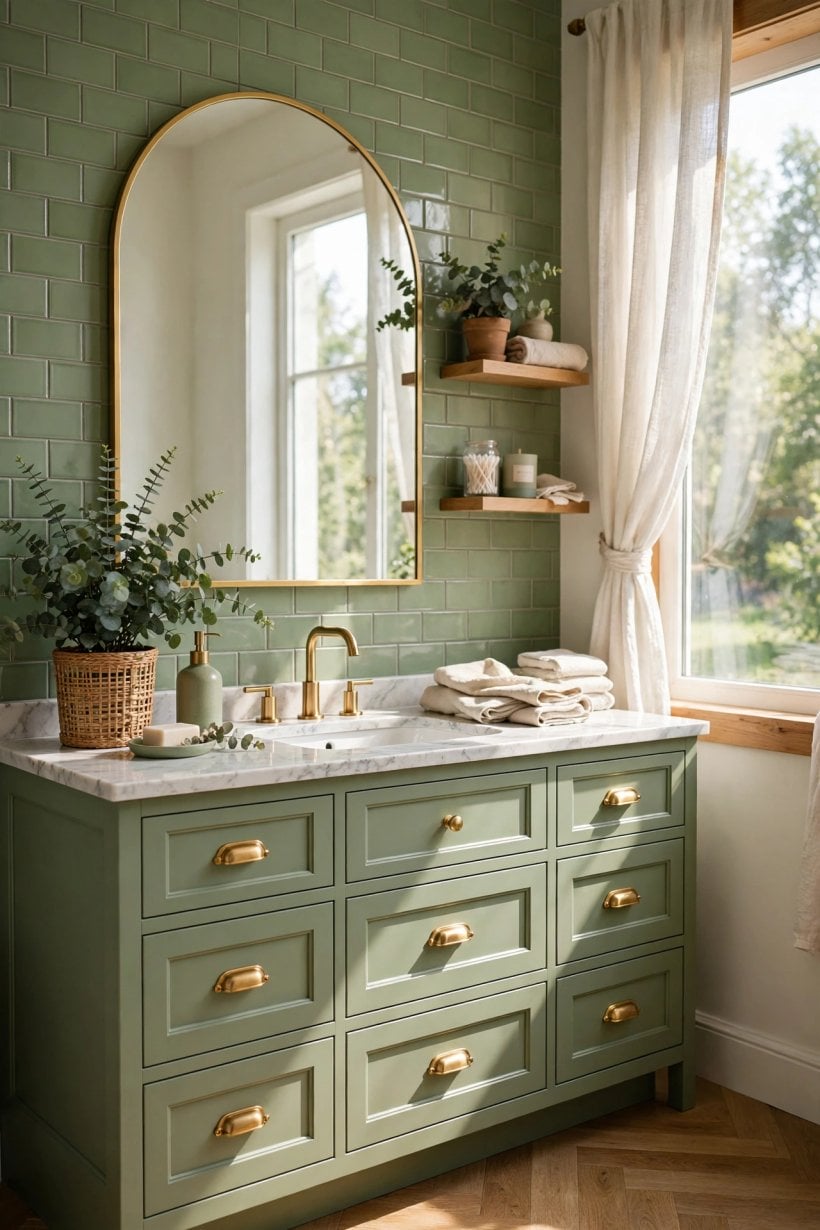
Where you can change the plan, think in zones: a wet zone for shower or bath, a dry zone for the vanity, and a clear path between them. A walk-in shower with a single glass screen keeps sightlines open and lets a green tiled wall run uninterrupted, while a bath under a window gives deep green walls a natural highlight. Small rooms benefit from large-format tiles and a limited palette, ideas explored further in tiny house bathroom ideas, where every centimetre of floor and wall is made to earn its place.
4. Vanities: Painted, Timber and Floating
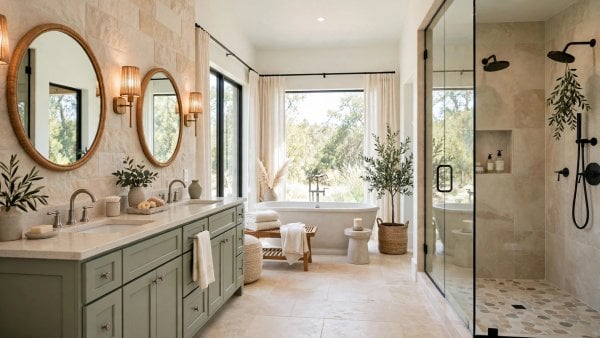
The vanity is often the best place to commit to green. A painted vanity in sage, forest or olive gives you a generous block of colour that can be repainted later, unlike tiles, and it looks especially good with a pale stone-look or white top that keeps the arrangement light. Shaker and simple slab fronts both take colour well; handles in brushed brass, black or chrome then set the temperature of the whole scheme. Timber vanities offer the reverse arrangement, letting green walls or tiles lead while the wood brings warmth and grain.
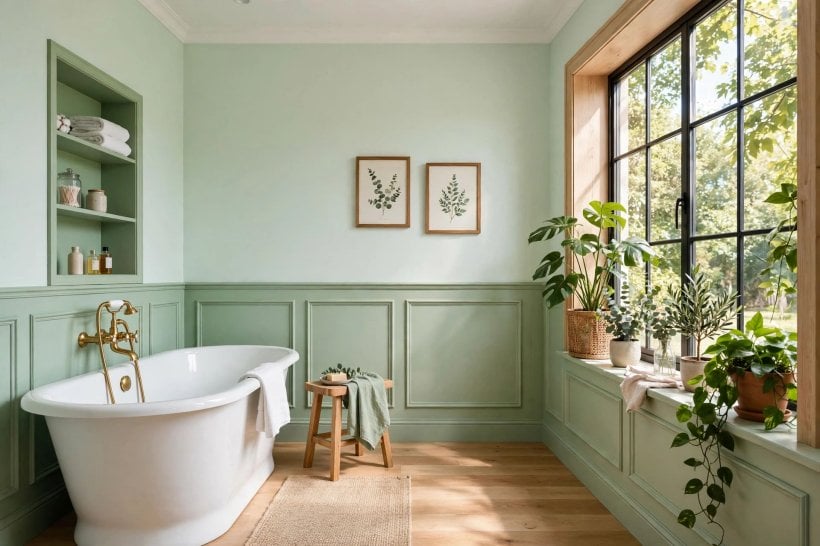
Choose the format for your routine, not just the photograph. Drawers usually store daily items better than cupboards, a double vanity only earns its width if two people genuinely get ready together, and a floating unit shows more floor but offers less storage than a floor-standing one. Check that doors and drawers clear the toilet, bath and door swing, and leave comfortable knee and elbow room at the basin. Good vanity planning is the bathroom equivalent of the careful furniture sizing in tiny house living room ideas: measure first, then fall in love with finishes.
5. Tiles: Walls, Floors and Splash Zones
Tiles carry green with depth that paint cannot match, because glaze, texture and grout lines all play with light. Glossy tiles bounce light and intensify colour, suiting darker greens in smaller or internal bathrooms; matt and handmade-look tiles soften colour and feel calmer and more contemporary. Vertical stacking can make walls feel taller, horizontal laying widens a room, and a herringbone or chevron pattern adds movement where the rest of the scheme is plain. Decide how far tiling runs: full height in a shower, half height with paint above elsewhere is a practical, economical pattern.
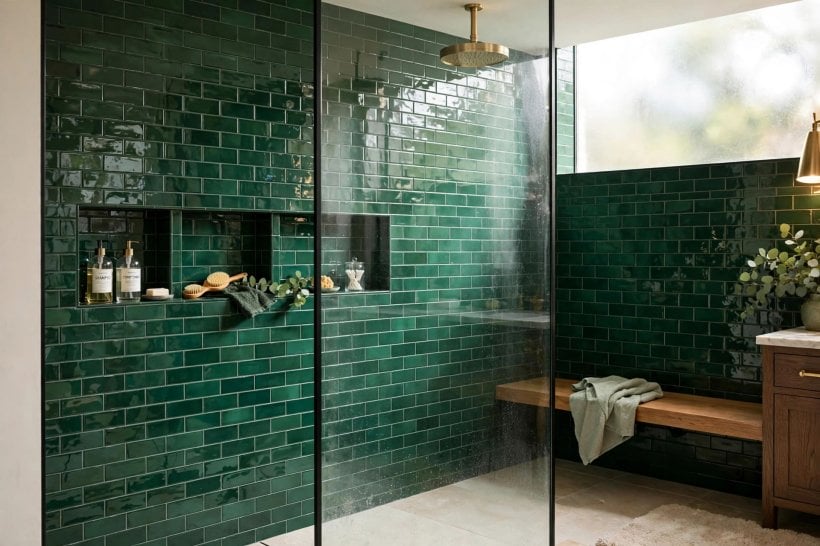
Grout is a design decision, not an afterthought. Matching grout quietens the pattern and reads as one coloured surface; contrasting grout, pale on deep green or dark on pale green, turns tiling into a graphic grid. Mid-tone grout is the forgiving choice for floors and busy family rooms, where very pale grout can be hard to keep looking fresh. Always seal grout where the maker advises, confirm tiles suit walls or floors as intended, and order samples to view wet, if you can, because water deepens tile colour noticeably in a shower.
6. Space-Saving Fixtures for Smaller Rooms
Compact fittings have improved enormously, and a green scheme gains confidence when the room itself works well. Wall-hung toilets with concealed cisterns, short-projection basins, corner basins for cloakroom-sized spaces and slimline vanities all return precious floor area. A shower over a bath with a well-fitting screen suits households that want both options, while a compact walk-in shower with a single fixed screen often feels more spacious than a cramped enclosure with a door. Heated towel rails can replace a radiator and keep towels aired in a damp room.
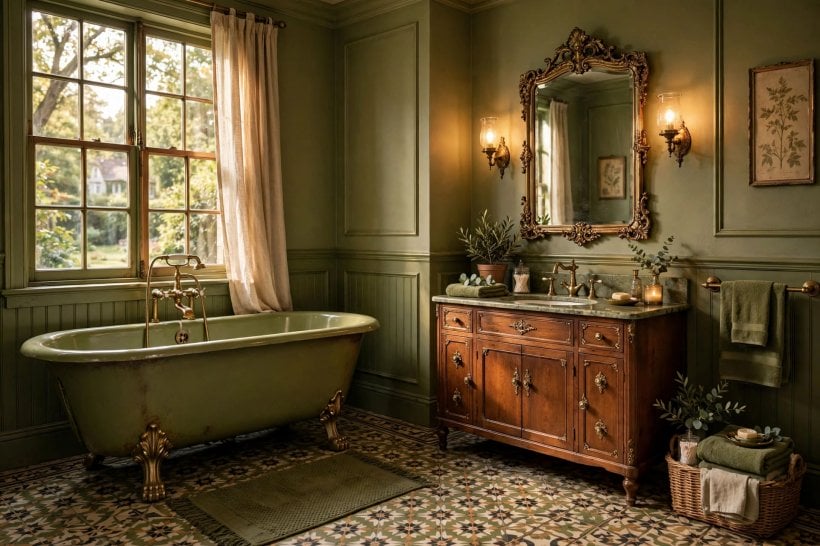
Storage is the other space-saver. A mirrored cabinet puts daily items behind the mirror you already need, recessed niches in a shower keep bottles off the floor, and a vanity drawer with dividers ends the morning rummage. Keep the floor as clear as possible in a small room and use walls for hooks, rails and shelves. These principles are second nature in bedroom interior design for tiny houses, where built-in, wall-mounted storage is what makes a compact room feel designed rather than squeezed.
7. Light, Mirrors and Metal Finishes
Green needs good light to look its best, so plan lighting in layers. A bright, even ceiling light handles cleaning and general use, while lighting at the mirror, ideally at face level on both sides or a backlit mirror, prevents the shadows that make green feel murky and shaving or make-up difficult. Warm-white light generally flatters green and skin; very cool light can push sage towards grey. Where there is a window, keep treatments simple so daylight reaches the room, and use frosted or patterned glass rather than heavy covers.
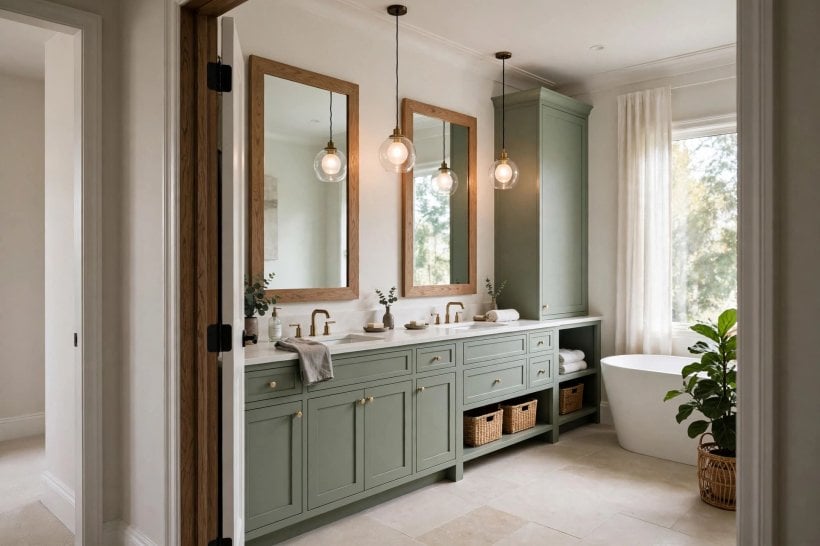
Mirrors multiply both light and the sense of space, so go as large as the vanity allows, and consider a pair over a double vanity or one wide mirror that also reflects a plant or picture. Metal finishes then tune the scheme: brass and brushed gold warm green beautifully, chrome keeps it crisp and classic, and black gives a modern edge against pale sage. Choose one main finish and repeat it on taps, handles, light fittings and the mirror frame, so the room reads as one decision rather than several.
8. Storage, Laundry and the Details You Touch Daily
A bathroom succeeds on ordinary mornings, so sweat the daily details. Plan where towels hang to dry properly, where the laundry basket lives, and how cleaning products, spares and medicines will be stored out of sight but within reach. Open shelves suit a few pretty bottles and folded towels; everything else is happier behind a door. Add hooks on the back of the door, a stool or small side table beside a bath, and a plant that tolerates humidity to echo the green theme without more paint.
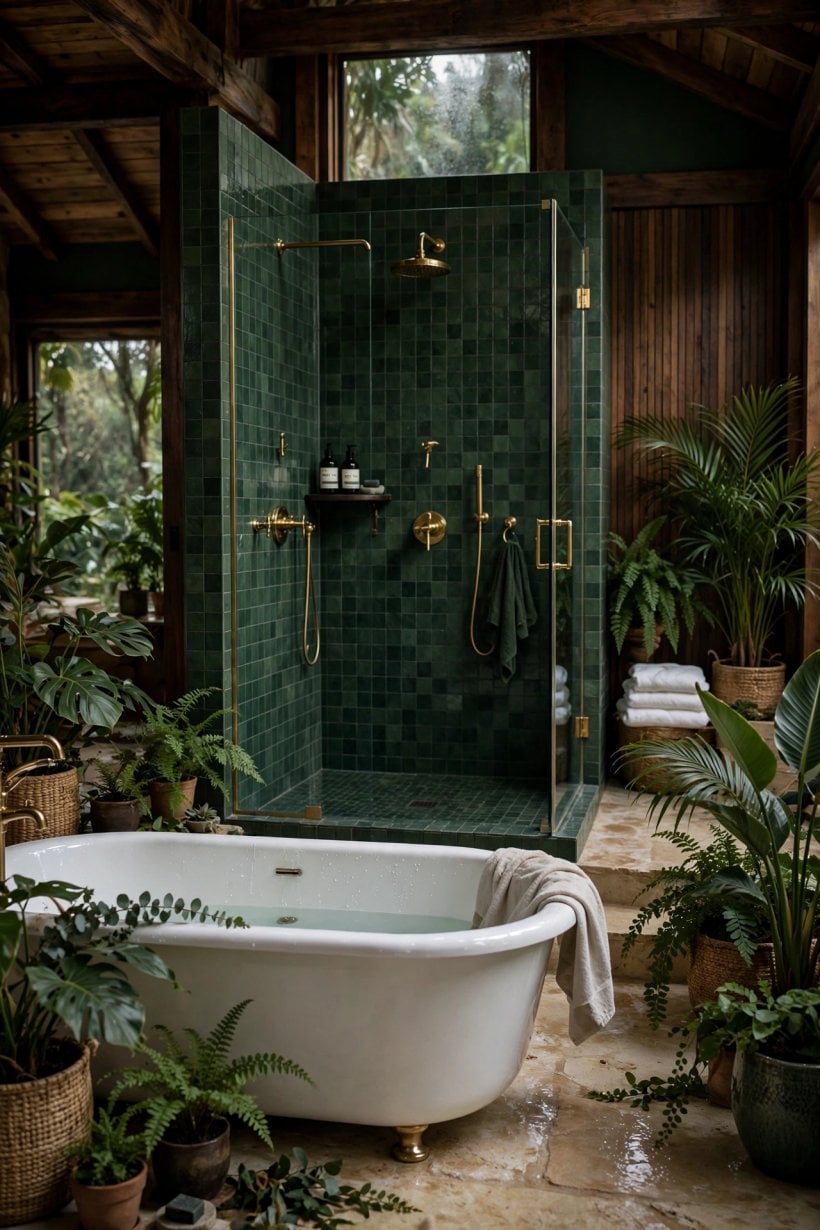
Ventilation belongs in this practical section too, because it protects everything else. An effective extractor, run on after showers, plus a window opened when weather allows, keeps condensation off painted walls and grout, discourages mould and helps towels dry. Choose bathroom-suitable paint for painted areas outside the shower, keep silicone seals in good repair, and wipe standing water from timber and painted joinery. The same care for air and planting links neatly to tiny house landscaping ideas, where positioning plants where they will actually thrive, rather than where they merely look good, is the whole secret.
9. Costs, Sequencing and Working With Trades
Bathroom costs spread across tiles, sanitaryware, brassware, joinery, trades and the unglamorous extras of waste removal, adhesives and trims, so build the budget by category rather than as one hopeful figure. Keeping plumbing in place, retaining a sound bath or shower tray, and choosing paint as the main green carrier are the reliable ways to contain spend; moving soil pipes, full retiling and bespoke joinery are where totals grow. Ask for itemised quotes that separate labour, materials and disposal, and agree who supplies what before work starts.
Sequence the job logically: strip-out and first-fix plumbing and electrics, repairs and tanking in wet areas, tiling, then sanitaryware, joinery, painting and finishing details. Order tiles, fittings and the vanity early, check every delivery on arrival, and keep the room’s one working toilet arrangement clear with your installer if this is your only bathroom. Allow a contingency for what strip-out reveals, especially in older homes. Coordinating trades and lead times is much like the staged approach in how to build your own tiny house: a written order of work prevents expensive days lost to missing parts.
10. Cleaning, Care and Avoiding Colour Regret
Green bathrooms are forgiving to live with. Mid and deep greens disguise water spots and everyday splashes better than stark white, and green tiles with a mid-tone grout keep their looks with ordinary care: a soft cloth, mild cleaners and prompt attention to limescale in hard-water areas. Avoid abrasive pads on glazed tiles, painted vanities and plated taps, rinse cleaning products off grout, and re-seal grout or silicone when it begins to fail, because small maintenance here protects the waterproofing behind your tiles.
Colour regret usually comes from skipping samples, not from choosing green itself. If
One last practical habit is worth adopting before the first shower is taken: photograph every wall, the inside of the vanity and the tile patterns in good light, and keep those photographs with your paint and tile records. Photographs make future touch-ups, insurance conversations and matching replacement parts far simpler, and they capture the room at its best as a reference for how grout, silicone and paint should look when they are healthy. If a stain, crack or patch of wear appears later, comparing it with the original photograph tells you at once whether you are looking at new damage or a feature that was always there. That small archive, plus labelled leftover paint and a handful of spare tiles, turns maintenance from a guessing game into a short, confident job, and it protects the calm, green room you planned so carefully for far longer.
a finished room feels too dark, the fixes are lighting, mirrors, paler towels and accessories, long before repainting is needed. If it feels too bold, quieten it with natural textures: timber, linen, stone-look accessories and plants. Keep leftover paint labelled with its room and date for touch-ups, and keep a few spare tiles from the original batch for future repairs. Readers refreshing adjoining rooms will find sympathetic, small-space thinking in tiny house bedroom ideas, where calm colour and careful storage do the same restorative work.
Final Considerations
A successful green bathroom is a series of calm, testable decisions. Choose the depth and undertone of green with large samples in real light, decide whether paint, tiles or the vanity will carry it, and let the layout serve your routine before chasing decoration. Pick a vanity for how you store and get ready, tiles for how they behave wet and under your lighting, and compact, wall-hung or well-planned fixtures wherever space is tight. Layer the lighting, repeat one metal finish, and plan storage and ventilation as part of the design, not as leftovers.
Budget by category, keep plumbing put where you can, sequence trades in writing and hold a contingency for surprises. Then enjoy the result: a room that feels fresh in the morning, cocooning in the evening and kinder to daily mess than an all-white scheme. Green has lasted in bathrooms because it flatters light, water, timber and skin alike, and with samples tested and details planned, your version of it should feel less like a trend and more like the room the house always wanted.

0 Comments