

Purslane is the edible “weed” that gardeners pull up all summer — a succulent groundcover with fleshy leaves that many cooks prize as a tangy green. Outdoors it grows itself. Indoors, it asks for one thing above all: light, and plenty of it.
This guide covers growing purslane indoors honestly — the light, pots, soil and watering it needs, how to start it, how to harvest it, and the few ways it usually goes wrong.
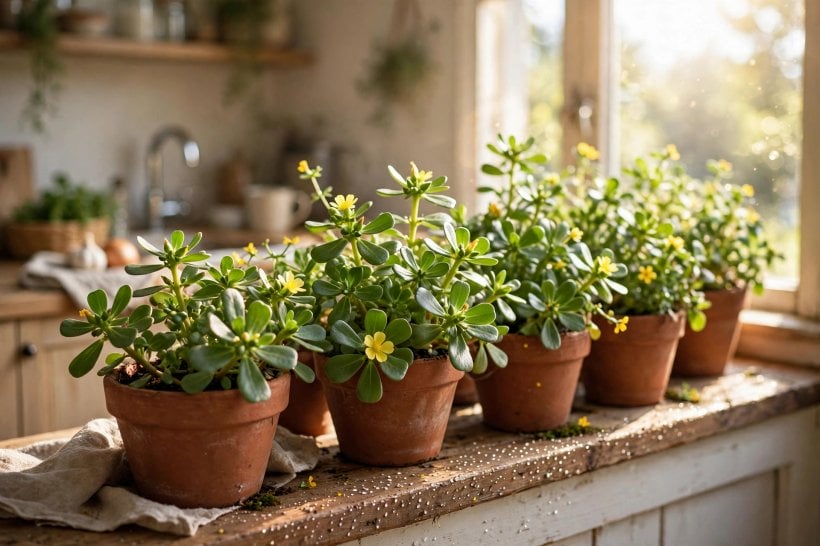
1. Growing Purslane Indoors at a Glance
Purslane (Portulaca oleracea) is a low, spreading succulent annual that grows wild in warm soils all over the world and is eaten as a leafy vegetable in many cuisines. As a houseplant subject it is unusual: not an ornamental that tolerates a pot, but a sun-loving outdoor plant that will live indoors only when its outdoor conditions — strong light, sharp drainage, warmth, lean soil — are honestly reproduced on the windowsill.
| Can purslane grow indoors? | Yes, in a pot — provided it gets the brightest light you can offer. Light, not feeding or fussing, is what decides success. |
| What light does it need? | The sunniest window you have, for as many hours as possible, or strong supplemental light. In dim rooms it stretches, thins and gives up. |
| What soil and pot? | A light, gritty, free-draining mix in a pot with drainage holes. Purslane is a succulent: wet feet are its main indoor killer. |
| How much water? | Less than you think. Water when the mix has dried, then let it dry again — it stores moisture in its fleshy leaves and stems. |
| Why grow it inside? | For the kitchen: fresh tangy leaves for salads and cooking, grown a step from the chopping board, and outside the reach of garden weather. |
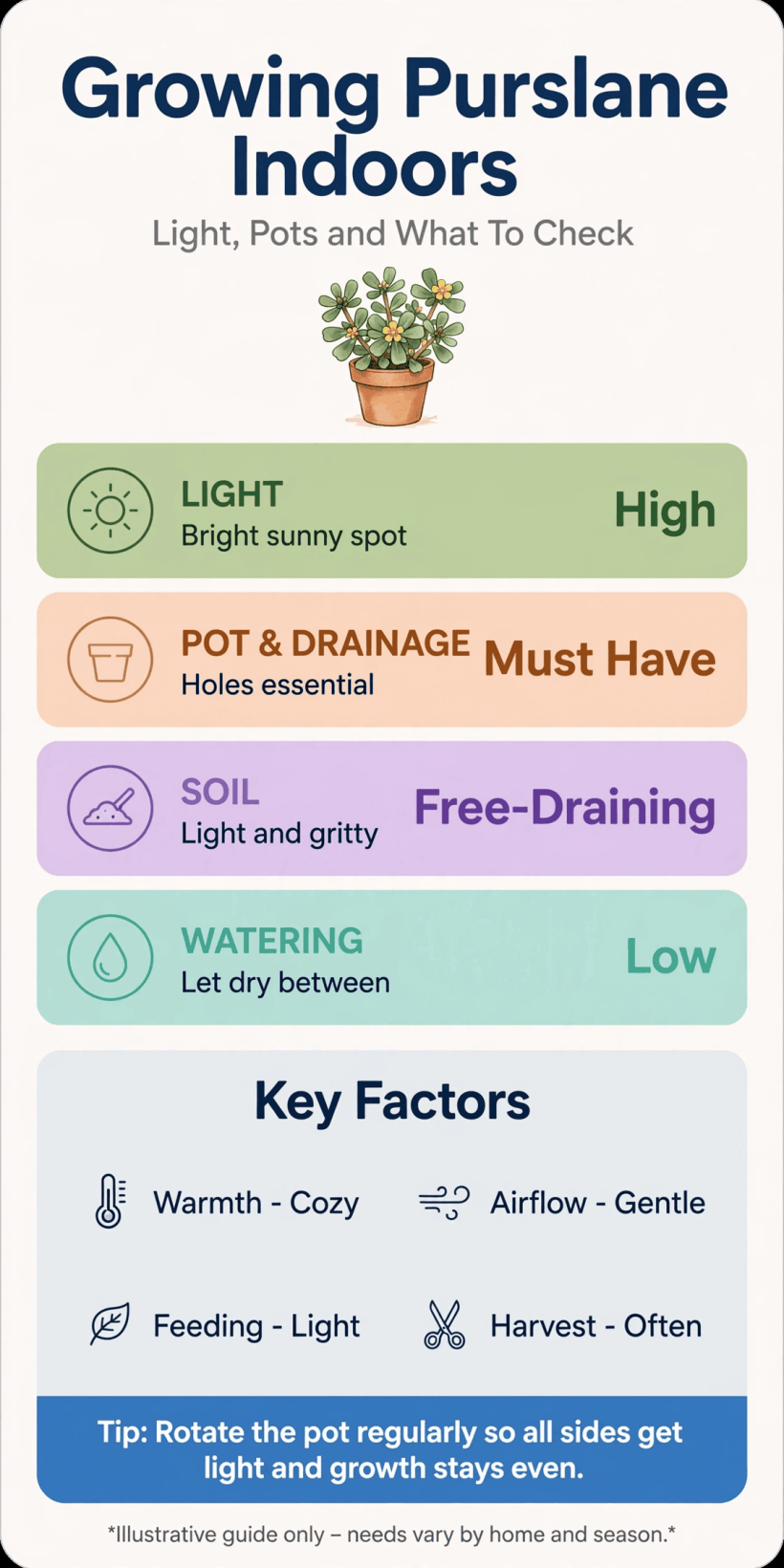
At a glance: bright light, gritty soil, a pot that drains, and a dry-out between waterings — reproduce a sunny doorstep and purslane is content.
2. What Purslane Is — and What It Is Not
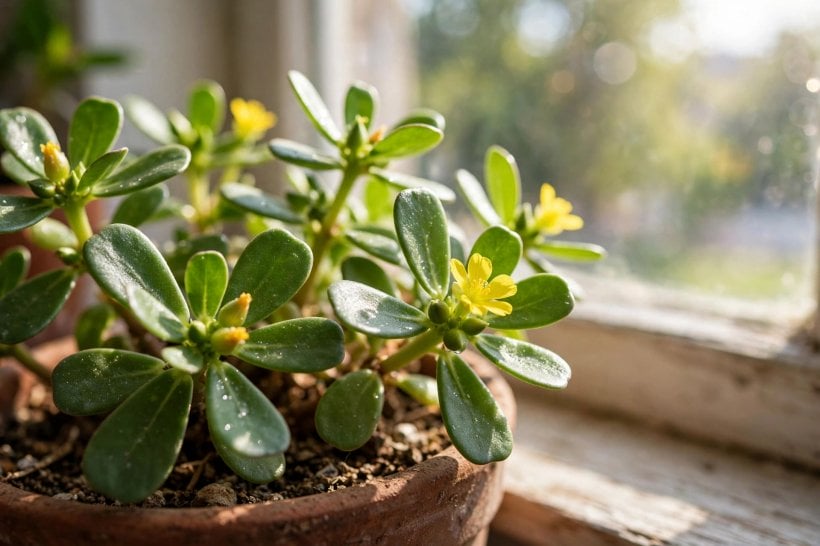
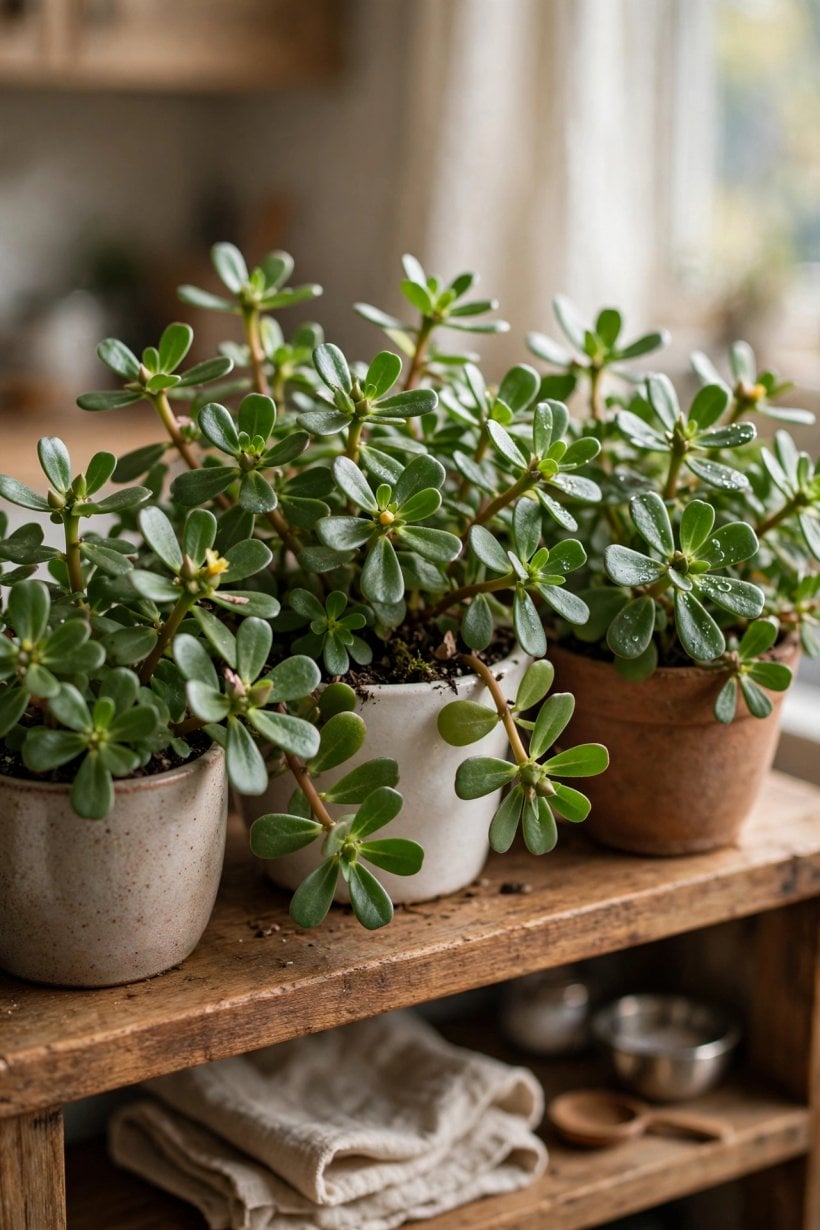
Know the plant before the pot. Common purslane is a warm-season annual with smooth, reddish, spreading stems and small, spoon-shaped, succulent leaves; it seeds itself freely outdoors and is treated as a weed in many gardens, while being gathered and sold as a vegetable in others. Its ornamental cousin, moss rose (Portulaca grandiflora), is grown for flowers and is a different proposition in the kitchen. If you plan to eat what you grow, be certain of the identification — start from known seed or a known plant rather than an unidentified garden volunteer, and eat only plants you are sure of.
Set expectations by the plant’s nature. Purslane is a creature of high summer: it germinates in warm soil, grows fast in heat and full sun, and sulks in cold, dim conditions. Indoors it will not behave like a forgiving foliage houseplant, and it will not thrive on a north-facing shelf out of kindness. What it will do, given a genuinely bright sill, is give you a steady cut-and-come-again supply of leaves through its season — and for off-grid and self-reliance growers, that productivity is exactly why it appears in collections like our off-grid gardens guide, where edible plants must earn their water.
3. Light: The Make-or-Break Factor
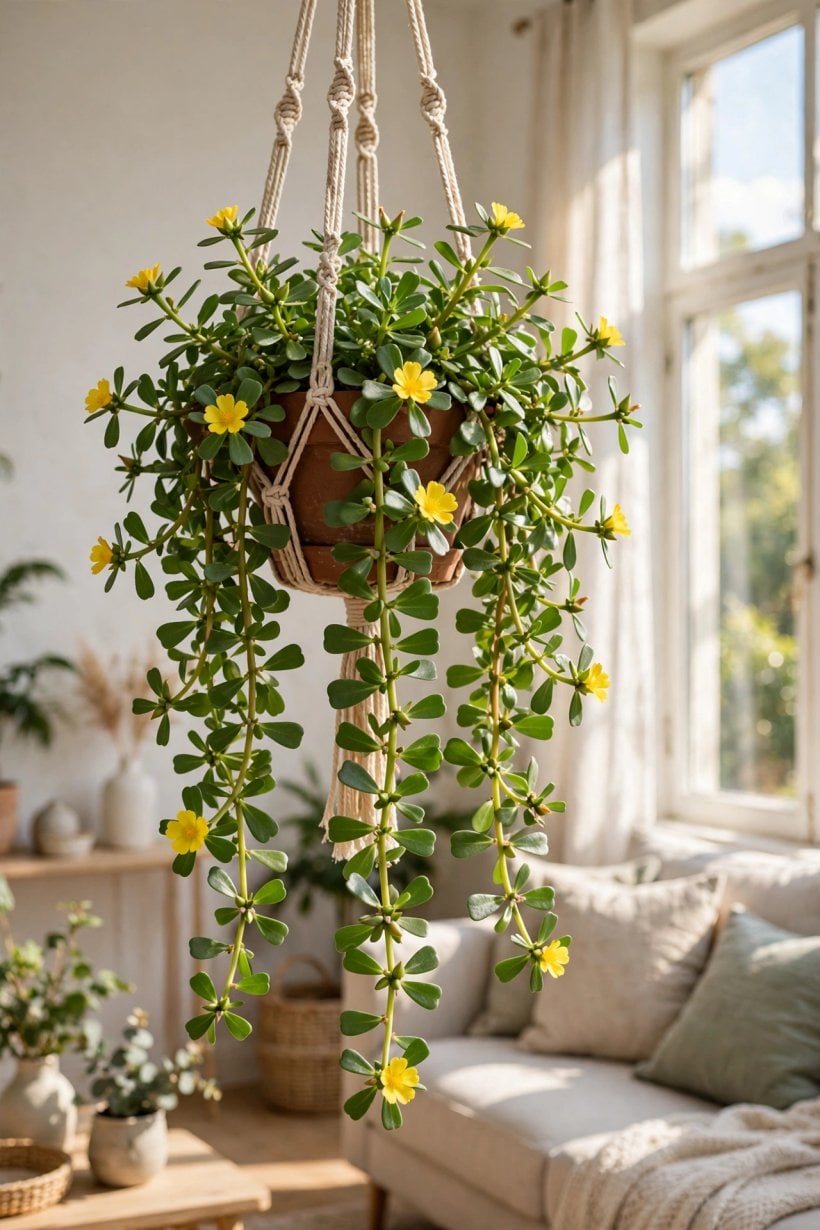
Everything else in this guide is secondary to light. Purslane evolved under open sky; indoors, even a “bright” room is a deep shade by its standards. The hierarchy is simple: a south-facing windowsill (or the equivalent in your hemisphere) is the real home; an east or west sill can work in the bright half of the year; anything further from glass will grow the plant leggy — long pale stems reaching for light, with small leaves and poor flavour.
Making the most of window light
Put the pot as close to the glass as the temperature allows, turn it regularly so all sides take a turn facing the light (the infographic’s tip, and the difference between a bushy plant and a one-sided lean), and keep the glass clean — a film of dust is a real percentage of a winter day’s light. Reflective help counts too: a light-coloured wall or a pale sill behind the pot returns some light to the plant’s shaded side.
Supplemental light, honestly used
Where window light is not enough — winter, dull climates, rooms that face the wrong way — a grow light is the honest fix, run for long days at close range. The principles in our LED grow lights for plants guide apply directly: intensity falls fast with distance, so the lamp belongs near the plant, and a simple timer keeps the day-length steady. Purslane under lights grows compactly and colours up well; it is the standard workaround for northern winters.
4. Pots, Drainage and Where It Lives
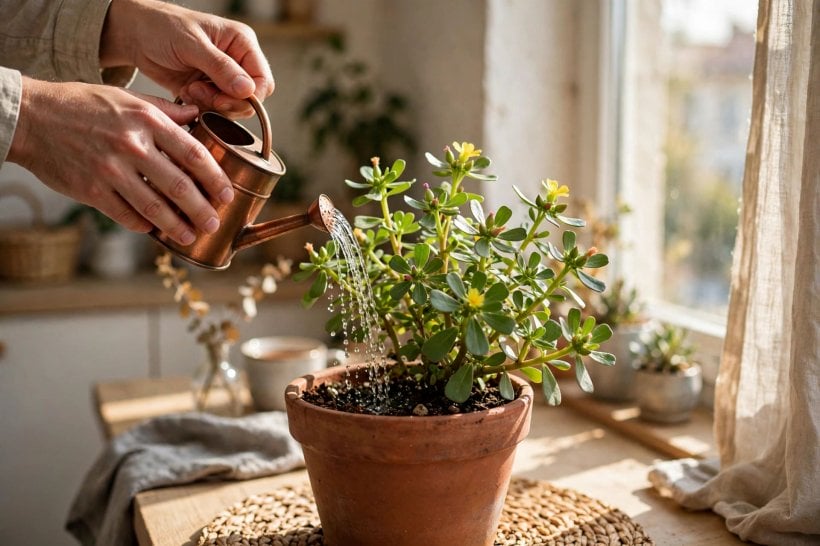
The pot’s job is drainage. Choose a container with holes — terracotta is ideal, since its porous walls let the mix dry from the sides as purslane likes — sized generously for a spreading plant: a wide, shallow pot suits its habit better than a narrow deep one, and gives you more harvest per sill. Stand it on a saucer you empty after watering; a pot sitting in its own runoff is a pot with wet feet, whatever the mix.
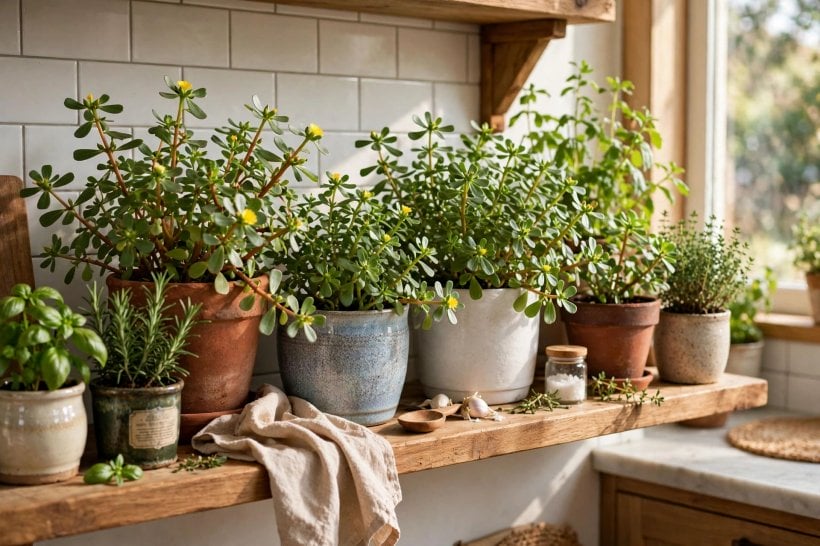
Placement follows from section 3: the brightest sill is the address. Kitchen windowsills are the natural home — light plus harvest in the same spot — and the container thinking in our container garden ideas applies: group pots where you will actually tend them, because a plant you see daily gets watered correctly, and a plant in a spare room gets watered by guess. Decorative outer pots are fine — the rustic styles in our creative log planters included — as long as the inner pot drains freely and the plant can be lifted out to check.
5. Soil and Feeding: Lean and Gritty
Purslane outdoors thrives in poor, dry, even sandy ground, and the indoor mix should honour that: a standard potting mix lightened with coarse sand, fine grit or perlite until it drains fast and feels lean. Heavy, rich, water-retentive compost grows soft, sappy growth that flops and rots at the base; a gritty mix grows the compact, firm plant that tastes of something.
Feeding follows the same logic — lightly, if at all. A plant in fresh mix has what it needs for a good while; an occasional weak feed during the fastest growth is plenty, and overfeeding produces the same soft growth as overwatering. Gardeners used to hungry container crops should recalibrate: purslane is nearer to the drought-tolerant planting in our drought-tolerant plants guide than to a tomato. When in doubt, do less — this plant’s problems indoors are almost always problems of kindness: too much water, too much food, too little light to use either.
6. Starting Purslane: Seed and Cuttings
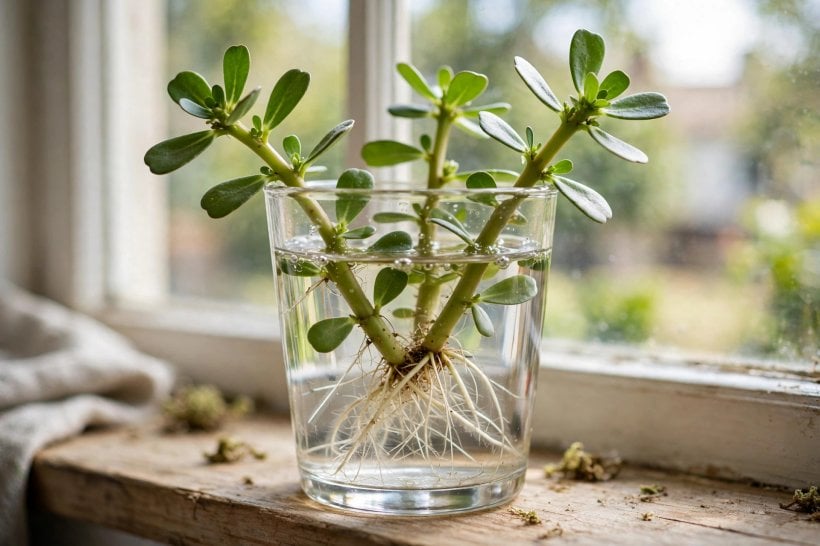
Two routes in, both easy in season. From seed: purslane seed is tiny and wants warmth and light to germinate — scatter it on the surface of the mix rather than burying it, keep the surface just moist until it sprouts, and expect it to move once the pot is warm. From cuttings: the plant’s spreading stems root with almost no encouragement — snip a healthy stem, let the cut end dry briefly, and lay or poke it into gritty mix; in warmth it roots and resumes growing as if nothing happened.
Timing matters more than technique. Start purslane when light and warmth are rising — spring into summer in most homes — and it establishes fast. A batch started in the dark of winter without a grow light is a batch set up to stretch. Succession works well: because cuttings are free and quick, many growers run two or three pots at staggered stages, harvesting the oldest hard while the youngest fills out, and retire plants that turn woody and tired rather than nursing them forever.
7. Watering: The Dry Rhythm
Water like the plant’s homeland: a thorough drink, then nothing until the mix has dried again. The fleshy leaves are a reservoir — the plant is built to wait between rains — so the indoor rhythm is the opposite of the daily-sip habit most houseplants train into their owners. Check with a finger in the mix, not by the calendar: if it is still moist below the surface, the plant is still supplied.
Two refinements. First, water the soil, not the foliage, and water in the morning where you can, so leaves and stems are dry by night — damp foliage in still indoor air is where moulds start. Second, adjust by the plant’s signals rather than a schedule: firm, plump leaves mean the rhythm is right; leaves thinning and stems going limp suggest it finally does need a drink; soft, translucent patches at the stem base mean it has had too much, and the fix is drainage and abstinence, not more care. In winter, when growth slows to a crawl in low light, water less still — the plant is idling, not growing.
8. Warmth, Airflow and the Few Pests
Purslane wants a warm room — it is a summer plant, and it stalls in cold spots, on chilly sills against winter glass, or in draughty halls. Ordinary living warmth suits it; the tender trap is the cold windowsill in a cold snap, where a night against freezing glass can damage the fleshy stems. Pull pots a few centimetres in from the glass on the coldest nights.
Airflow is the quiet partner: gentle air movement around indoor plants discourages the moulds and the small flying pests that plague still, humid corners. The usual indoor suspect is the fungus gnat, whose larvae live in damp mix — another argument for the dry rhythm of section 7, since gnat populations collapse when the surface dries between waterings. The identification and control steps in our guide to tiny flies in house plants cover the rest. Aphids can find soft new growth; a firm rinse under the tap and picking off the worst usually ends it. A plant grown lean and bright is, in practice, a plant pests mostly ignore.
9. Harvesting and Using Your Indoor Purslane
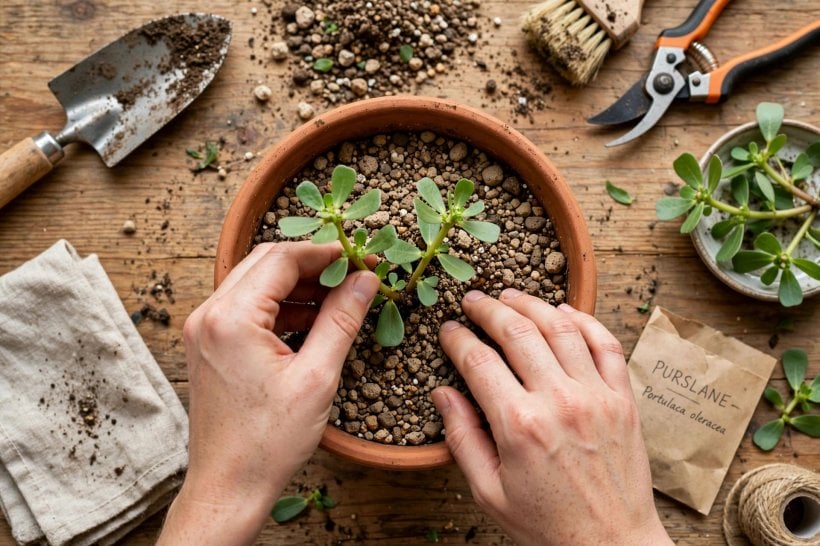
Harvest is the point of the exercise, and purslane rewards the scissors: snip stems a little above a leaf joint and the plant branches from the cut, growing bushier for the next round. Take a portion at a time rather than scalping the plant, and harvest in the morning when the leaves are at their plumpest. Regular picking is not a tax on the plant — it is the pruning that keeps it compact, which is why “Harvest — Often” sits in the infographic’s key factors.
In the kitchen, the leaves and tender stems are used fresh — folded through salads, scattered over grain dishes and eggs, or cooked briefly where a lemony, slightly salty green is wanted. Grow it clean: plants grown indoors for the table should not be sprayed with anything you would not eat, and a rinse before use is the whole processing line. And the standing caution from section 2 bears repeating once: eat only purslane you have positively identified from known seed or stock — the confidence is easy to arrange at sowing time and hard to retrofit later.
10. Problems, Causes and Fixes
Leggy, pale, reaching growth. The cause is light — almost always, and almost only. Move the plant closer to the glass or add a lamp; prune the stretched stems back and let compact growth replace them. No feed fixes a light problem. The contrast is instructive: the plants in our rock gardens and shade plants guide want exactly the conditions purslane cannot bear, and swapping their care routines ruins both.
Stems soft or blackening at the base. Overwatering and poor drainage. Let the mix dry hard, check the pot’s holes are open, repot into gritty mix if the base is going, and take cuttings from healthy stem tips as insurance — they root fast and restart the plant cleanly.
Leaves dropping or yellowing. Usually cold, or a plant that has gone from wet to drought in swings. Steady the rhythm, move it from a cold sill, and remove the worst growth. No growth at all in winter. Often simply the season: in low light and cool rooms purslane idles. Either give it the grow-light treatment or accept the pause and restart fresh cuttings when light returns — with this plant, a fresh start is cheap and usually better than a rescue.
Final Considerations
Growing purslane indoors works when you reproduce its doorstep, not your living room’s average conditions: the brightest light you can give, a gritty mix in a pot that drains, a dry pause between waterings, and the scissors used often. Every one of its common failures is a departure from one of those four.
Give it the sunny sill and it will give you back a genuinely useful kitchen plant — fast, forgiving of neglect in the watering department, and productive out of proportion to its pot. It is the rare houseplant that asks to be eaten, and thrives on it.



0 Comments