

A big window does not just light a room — it replaces a wall with the weather, the garden and the seasons. Get the glass right and it becomes the best picture the house owns; get it wrong and it is a glare, heat and privacy problem in a very expensive frame.
These 25 ideas cover the main types, frames, seats and small-home versions, plus the heat, privacy and structure checks that decide whether large glass works in real life.
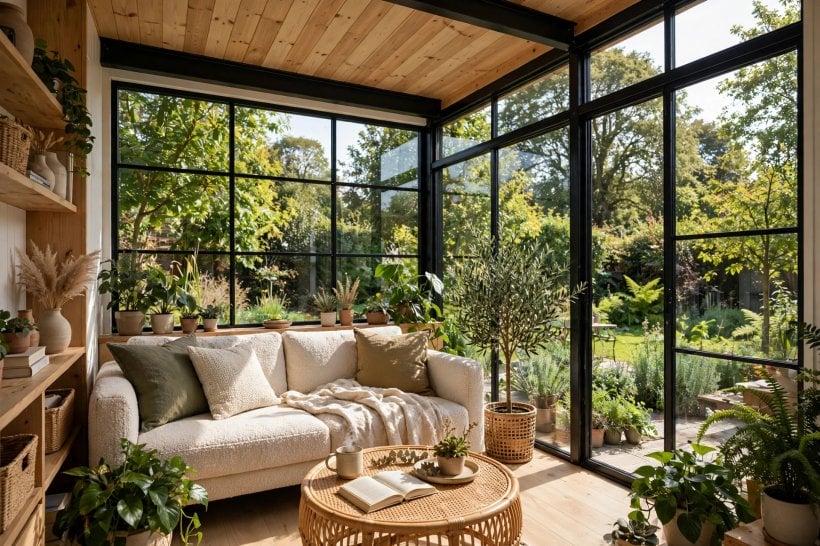
1. Big Windows at a Glance
A big window is a wall element first and a window second. Its attributes — orientation, glass area, frame material, opening panels, shading and treatment — decide a room’s light, temperature, privacy and view more completely than any furniture choice. That is why choosing a big window well means thinking like a builder about structure and heat, and like an interior designer about sightlines and curtains, at the same time.
| What counts as a big window? | Anything that dominates its wall: picture windows, floor-to-ceiling glazing, wide sliders, corner glass and bay or window-wall arrangements. |
| What is the main benefit? | Daylight and view — a room lit by a large window feels bigger, calmer and more connected to its setting. |
| What is the main risk? | Too much of a good thing: heat gain in summer, heat loss in winter, glare and lost privacy if orientation and shading are not planned. |
| Does big glass open? | Often partly — the best designs mix fixed panes for the view with opening panels placed where ventilation is actually wanted. |
| Best first decision? | Orientation. Which way the glass faces decides the light quality, the heat load and the shading it will need. |
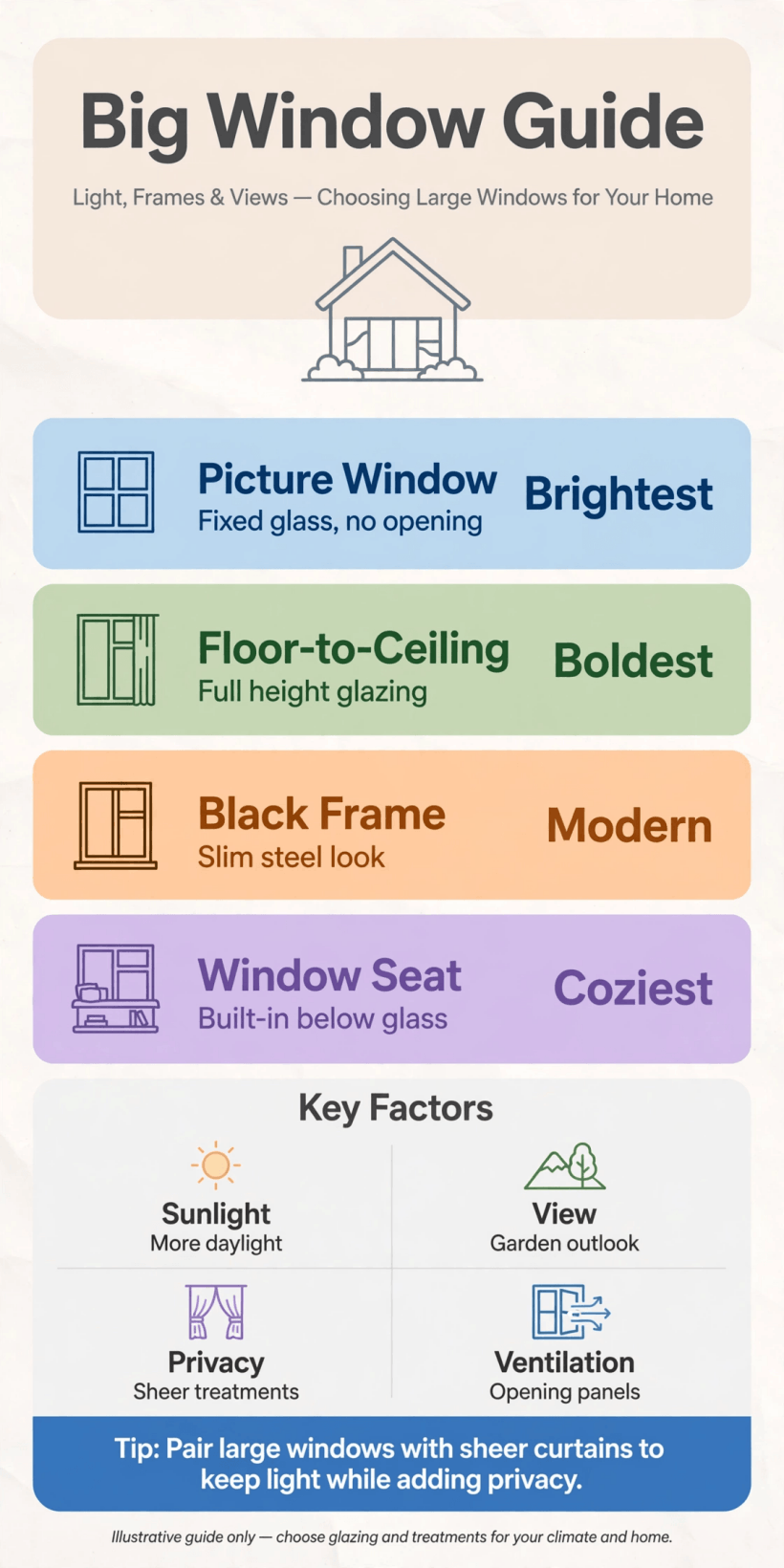
At a glance: match the type to the view, plan the shading with the glass, and keep some opening panels where air matters.
2. Picture Windows: The View, Framed
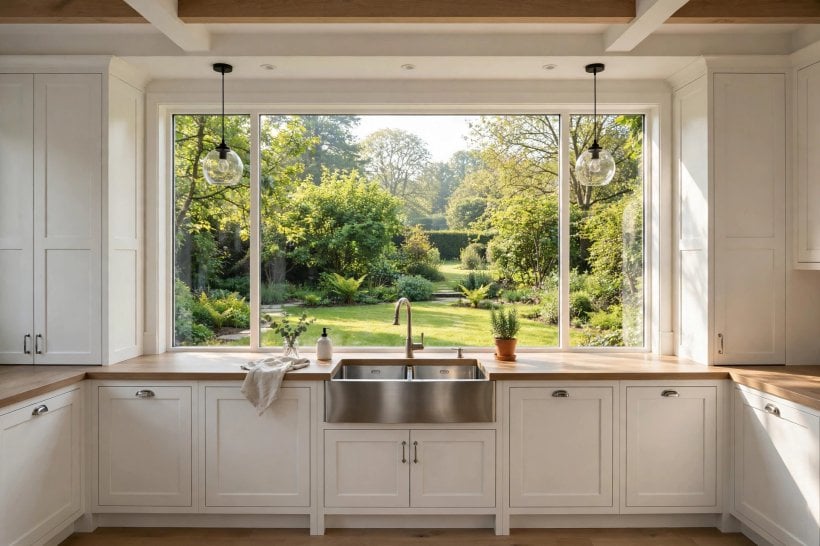
The picture window is the purest form: one large fixed pane that does not open, existing only to frame what is outside. Because it never opens, it can be bigger, slimmer-framed and better sealed than any opening window of the same size.
1. Aim a Picture Window at the Best View You Own
It sounds obvious and is constantly fumbled: the fixed pane belongs on the axis of the garden, the trees or the distance — not facing the neighbour’s wall.
2. Keep the Frame Slim and the Sill Low
A low sill puts the view into the seated sightline, which is where a living room’s view is actually consumed — from the sofa, not standing.
3. Pair It With Small Opening Windows Nearby
Fixed glass gives no air. A modest opening casement or vent panel in the same wall restores ventilation without breaking the composition.
4. Use One Large Pane Rather Than a Busy Grid
Dividing bars belong to traditional small windows. On a picture window they slice the view into postcards; the whole point is one uninterrupted frame.
5. Treat the Glass as the Room’s Artwork
Hang nothing beside it, crowd nothing under it. A picture window is the picture — the room arranges itself around it like a gallery.
3. Floor-to-Ceiling Glass
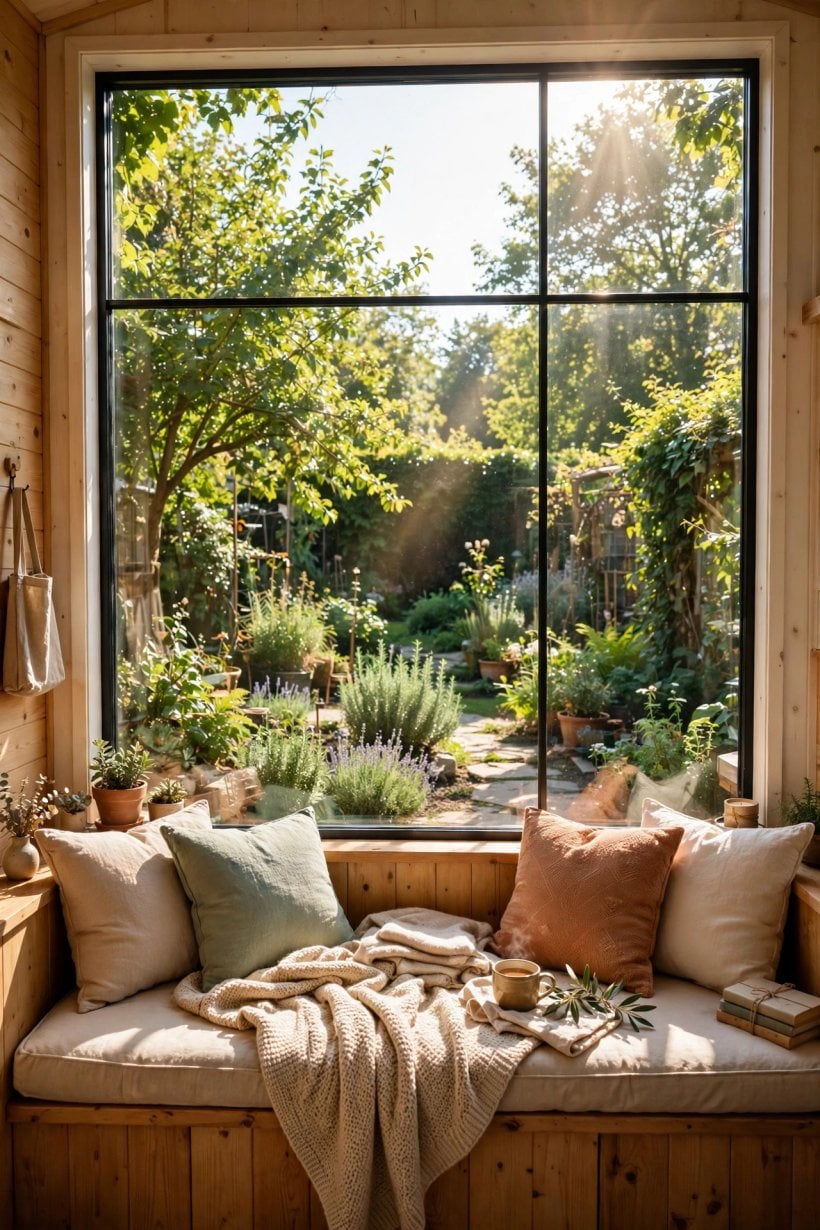
Full-height glazing dissolves the wall entirely. It is the boldest version of the big window and the one that asks most of structure, shading and budget — the same drama the tall glass in our clerestory window layouts achieves from above, floor-to-ceiling achieves from the ground.
6. Run Glass to the Floor on the Garden Side
Full-height glass works best where it replaces a wall that faced planting anyway — the garden becomes the room’s fourth surface.
7. Break the Run With One Sliding or Folding Panel
A wall of fixed glass with a single opening section gives you the view, the access and the summer evening air in one composition.
8. Plan the Shading Before the Glass, Not After
External shade — an overhang, a veranda, planting — stops heat before it enters. Internal blinds manage glare but the heat is already inside.
9. Specify Safety Glass Where People Walk Into the View
Full-height panes at ground level need toughened or laminated glass and, in many places, manifestation markings so the glass reads as a barrier, not an opening.
10. Keep Furniture Low Against Full-Height Glass
High backs and tall units against the glass cut the light and clutter the silhouette. Low, leggy furniture keeps the wall of glass clean.
4. Frames, Grids and the Black-Frame Look
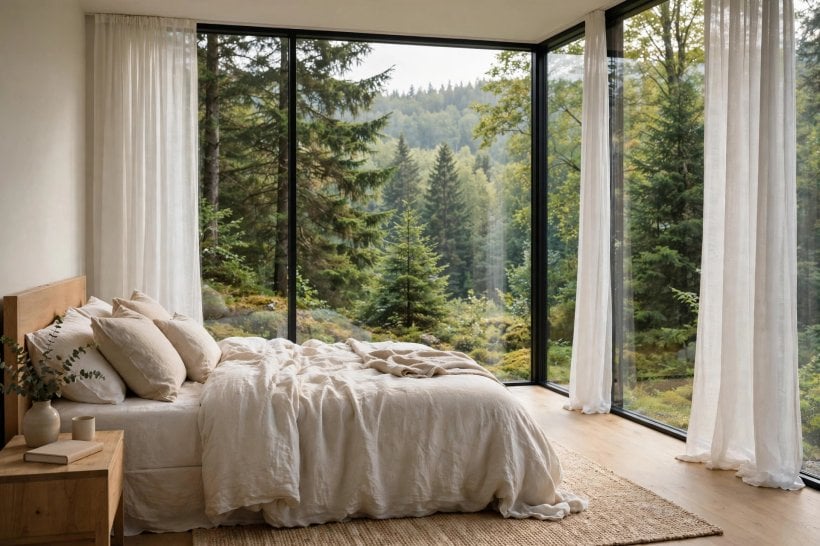
Frame choice decides whether large glass reads cottage, industrial or minimal. Slim metal frames maximise glass; chunkier timber frames warm it; the steel-look grid has become the era’s signature for a reason — it gives big panes a tailored structure, in the same spirit as the openings compared in our awning vs sliding windows guide.
11. Use Black Slim Frames for the Steel Look
Dark, thin frames draw a crisp outline around the view and suit both modern and period houses — the frame as eyeliner, not eyeshadow.
12. Choose a Grid When the House Is Traditional
A divided grid over large glass nods to heritage proportions. Keep the divisions few and large; a dense lattice fights the scale.
13. Match Frame Colour Inside and Out
Two-tone frames exist, but one colour read from both sides keeps the composition calm — decide by the interior, since that is the longer look.
14. Ask About Sightlines at Corners and Joins
Where panes meet, frame thickness doubles. Slim systems keep corner views open; chunkier ones plant a post in the middle of the panorama.
15. Let the Frame Repeat the Room’s Other Metals
Black frames with black handles, lighting and rails read as one scheme. A lone frame colour that appears nowhere else reads as an accident.
5. Window Seats, Bays and Corner Glass
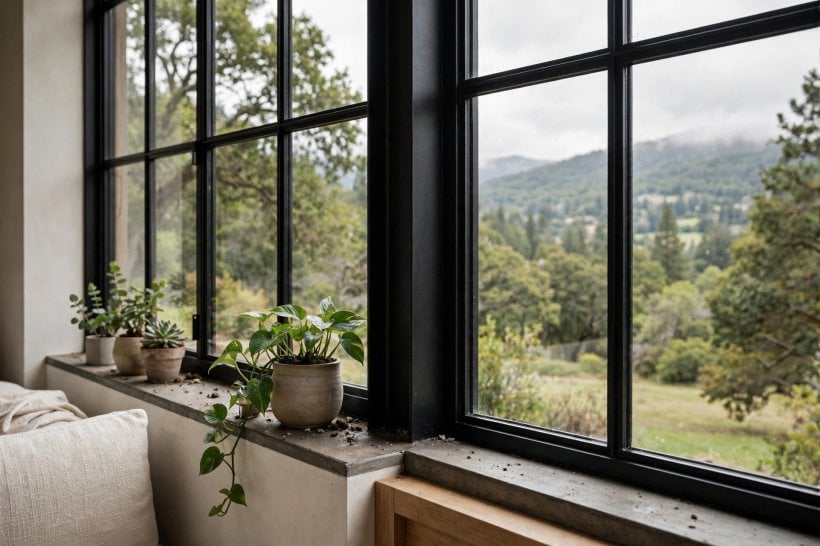
Not every big window is flat. Bays push the glass out into the garden, corners wrap it around the building, and a seat built beneath turns the window into the most fought-over chair in the house.
16. Build a Seat Into a Bay
A bay’s angled glass wraps light around a seat on three sides. Add storage drawers beneath and the bay earns its floor area twice.
17. Wrap a Corner in Glass for a Panorama
Corner glazing turns a view into a landscape. It needs structural respect — the corner post you remove was doing work — and it rewards it completely.
18. Put a Desk or Reading Chair in the Light
The classic window-seat alternative: a workspace in the bay gets the best light in the house and frees the room’s middle.
19. Deepen the Sill Into a Shelf
A deep internal sill under a big window becomes the plant shelf, book ledge and cat seat of the house — design it at a usable depth, not by accident.
20. Cushion the Seat, Light the Evening
A window seat works after dark with a reading light and a blind. Plan both at build stage and the seat is a room, not a ledge.
6. Big Windows in Small Homes and Tiny Houses
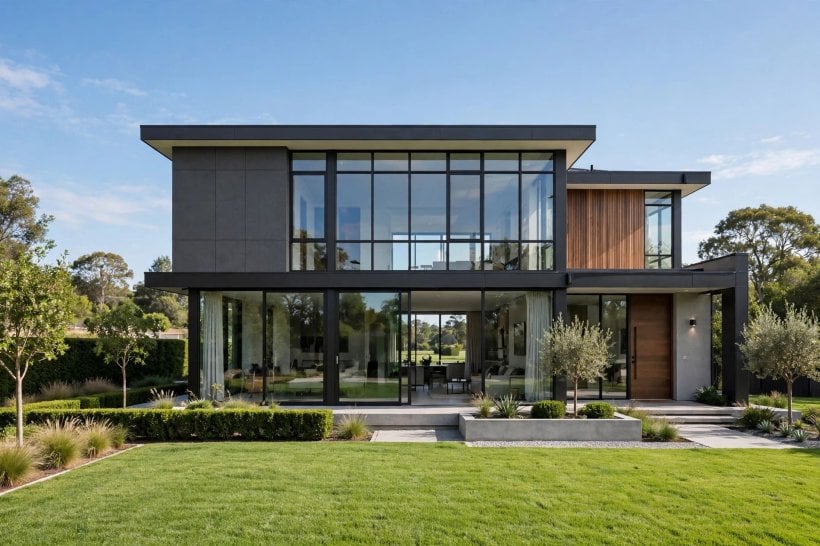
Small homes gain most from large glass, because the view is borrowed space — a tiny room with a big window lives larger than its floor plan. The catch is proportion and safety, themes our window safety glass guide covers for houses that move, and the same discipline suits any small build.
21. Give the Main Living Wall One Generous Window
One large window beats three small ones in a compact space: fewer frames, more glass, one clear view axis down the room.
22. Keep a Solid Wall for Furniture
Glass everywhere leaves nowhere for the sofa back, the storage or the art. Small homes need one honest wall as much as one glass one.
23. Use High Glass Where Privacy Is Tight
A wide, high window — clerestory-style — floods a small room with light while keeping sightlines in and out comfortably above eye level.
24. Watch the Weight and the Structure
Large panes are heavy, and in small or movable homes the wall must be framed for them. This is a sketch-stage decision, not a shopping one.
25. Let the Window Be the Colour
In a small, pale interior, the view supplies the colour and the seasons supply the change. It is the cheapest art programme a tiny home can run.
7. Heat, Glare and Privacy: Managing the Trade-Offs
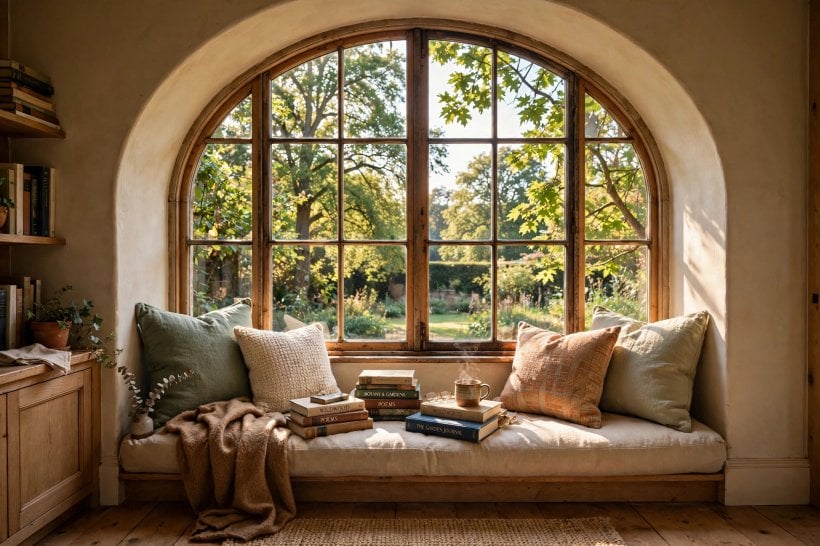
Every big window trades on three currencies. Heat: glass gains solar warmth in winter and can overheat a room in summer, with orientation deciding which dominates. Glare: low sun through large glass can make a room unusable at the hours it should be best — shading, fritting or a sheer layer are the cures, chosen by direction. Privacy: the view out is a view in after dark, so the treatment plan is part of the window, not an afterthought bought in a hurry.
The fourth currency is condensation: warm room air meeting cold glass in winter. Modern double and triple glazing with warm-edge spacers keeps the inner pane close to room temperature, and the ventilation habits in our window condensation guide handle the moisture side — big glass in a small, steamy home needs both solved together.
8. Structure and Installation Checks
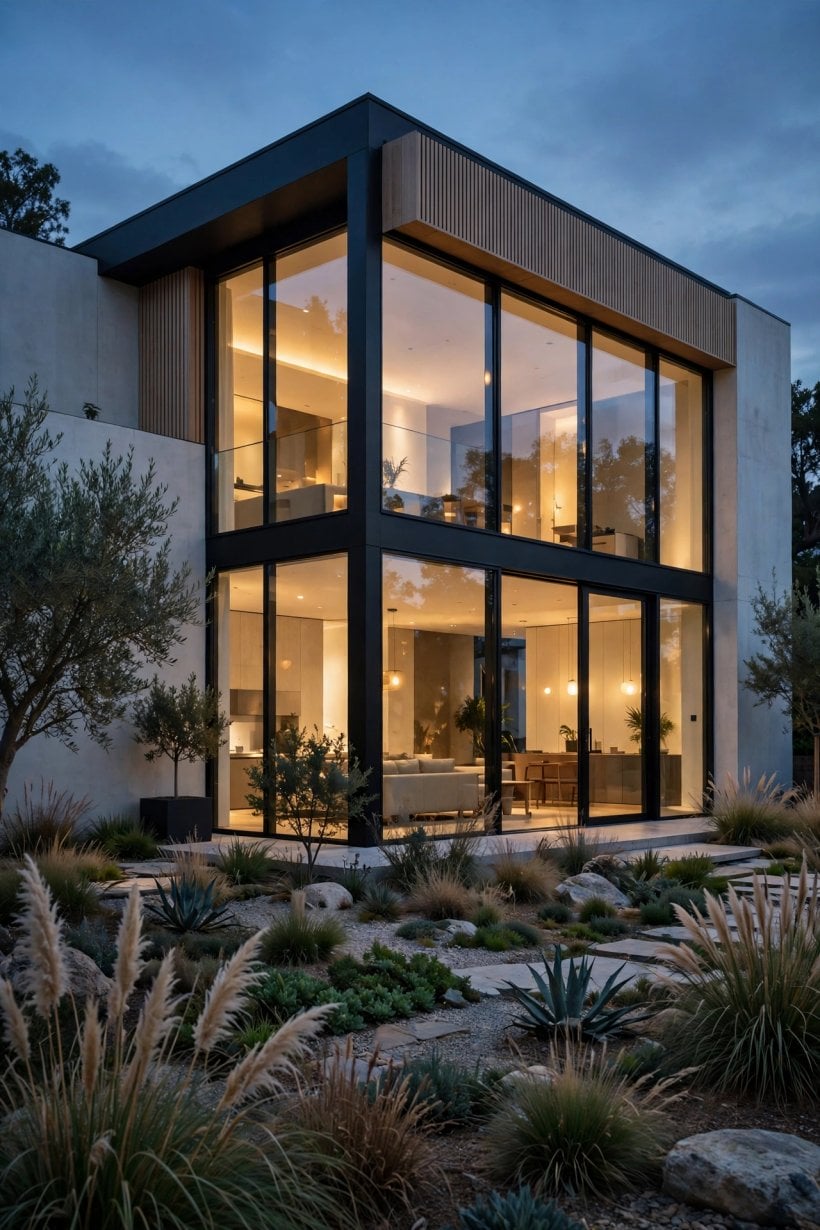
Large glass is a structural event. Removing wall to fit it means the load that wall carried goes somewhere — usually a lintel or beam engineered for the span, which is why big-window projects belong in the hands of a builder who prices the steel with the glass, not after it. Check, in order: the opening’s support, the unit’s weight and how it reaches the room (crane and access are real line items on tight plots), the sill and flashing details that keep driven rain out of the wall, and the maker’s installation tolerances — a large unit forced into an out-of-square opening will announce the fact every winter.
Glazing specification deserves the same care as the frame. In general terms: double glazing is the baseline, triple suits cold climates and noisy sites, low-emissivity coatings and gas fills are the quiet upgrades that pay in comfort, and laminated glass adds security and sound control. The ventilation planning in our tiny house ventilation guide pairs with this — big fixed glass plus planned mechanical or opening ventilation beats a house that relies on windows it then never opens.
9. Treatments for Large Glass
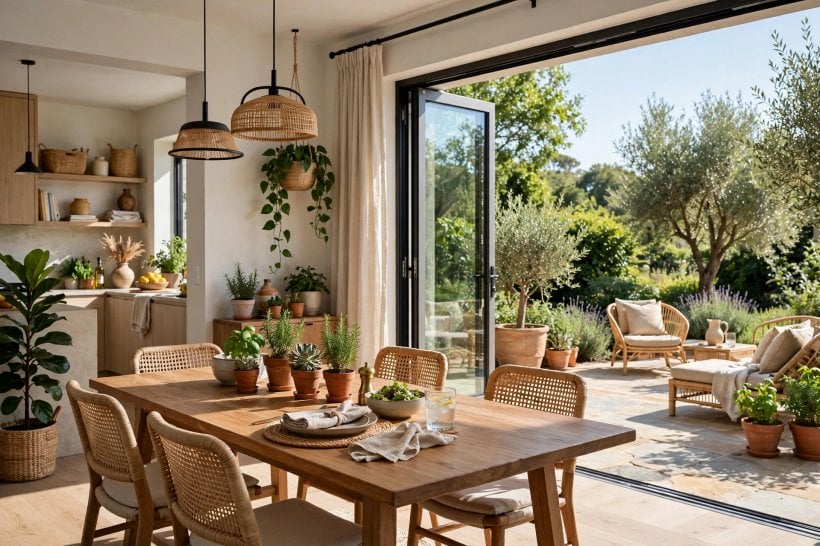
Treatments scale badly by default: curtains for a wall of glass are a fabric budget of their own, and blinds that size need motorisation or a strong arm. The graceful solutions are simple — full-height sheers that stack to almost nothing, wide-panel blinds that mirror the pane divisions, or outside treatments (shutters, awnings, planting) that do the shading before the glass. Match the treatment’s stack and hardware to the frame’s language, keep tracks ceiling-recessed where the budget allows, and always solve the after-dark privacy question for the room’s real use: a bathroom in a wall of glass is a different brief from a living room.
10. Costs and Choosing Well
Large windows cost more than the wall they replace in three places: the unit itself, the structure that makes the opening possible, and the treatments that make it livable. Quotes that carry only the first figure are not quotes for the project. Within the unit price, frame material and glazing specification move the number more than size alone — and the comfort difference between a well-specified unit and a cheap one is felt every day for decades, in condensation, draughts and fading soft furnishings.
Choose by room, not by catalogue. The living room earns the biggest glass and the best specification; bedrooms want blackout and privacy designed in; bathrooms want obscure glass or high placement. Walk the plan room by room asking what the big window is for — view, light, air or access — and let the answer set the type, exactly as the calmer rooms in our modern tiny house interiors do: every pane in those small homes is there for a stated reason, and it shows.
Final Considerations
A big window succeeds when it is planned as a wall — structure, heat, shade and privacy solved together — and fails when it is bought as a hole with glass in it. Orientation first, shading with the glass, opening panels where air matters, and one clear job per window: those four decisions carry the whole project.
Start with the room that deserves it most, and let the view do the decorating. A house with one magnificent window is richer than a house with five mediocre ones — and the light bill, in every sense, is lower.

0 Comments