

A path is the garden’s handshake — the first surface a visitor touches and the line every eye follows to the door. Flagstone walks with the softness of a woodland trail; brick walks with the order of a courtyard. Together, they cover almost every front garden a house can have.
These 30 ideas work through flagstone layouts, brick patterns, mixes of the two, joints, planting and the base work underneath — the part that decides whether the path is still handsome in ten years.
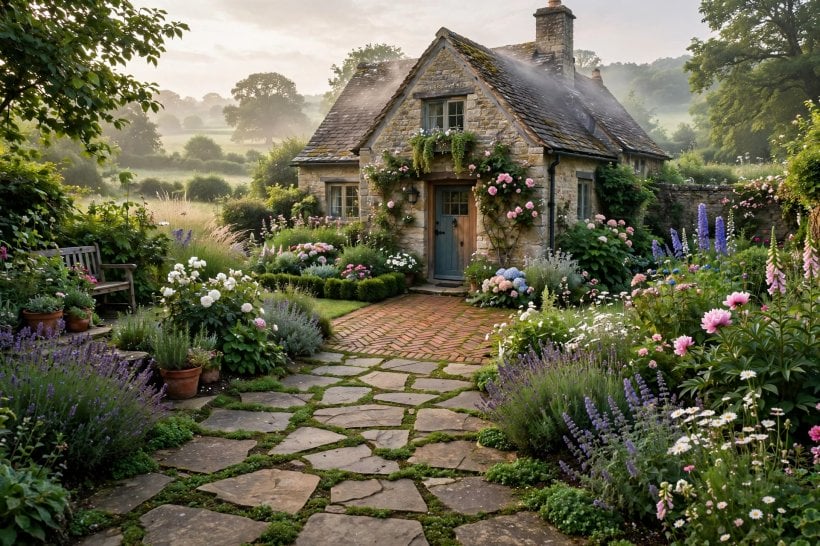
1. Flagstone and Brick Walkways at a Glance
Flagstone tile and brick walkways belong to one family: hard, natural, unit-paved paths whose character comes from the units and the pattern they are laid in. Flagstone — large, flat slabs of split stone, irregular or cut — gives an organic, relaxed line. Brick — small, regular, fired-clay units — gives geometry, rhythm and tradition. Both sit on the same foundations: a compacted base, a level bed, firm edging and joints that are finished on purpose. Choose between them by the house’s character and the path’s job, and combine them when the route changes mood along its length.
| Which suits a cottage or informal garden? | Flagstone, irregularly laid with planted joints — it relaxes into planting and forgives uneven ground gracefully. |
| Which suits a formal or period house? | Brick, in a set pattern with soldier-course edging — its regularity matches brickwork, steps and traditional detailing. |
| What decides how long a path lasts? | The base. Stone and brick both outlast their foundations when the base is shallow or soft; a proper compacted base is the whole secret. |
| Can the two be combined? | Yes — brick edging or bands within flagstone, or a change of material where the path changes purpose, are classic, deliberate-looking mixes. |
| Biggest mistake? | Laying beautiful units on an unprepared bed. The path looks fine for a season, then rocks, spreads and ponds. |
At a glance: flagstone for the relaxed line, brick for the ordered one — and the base, edging and joints matter more than either.
2. Flagstone Layouts
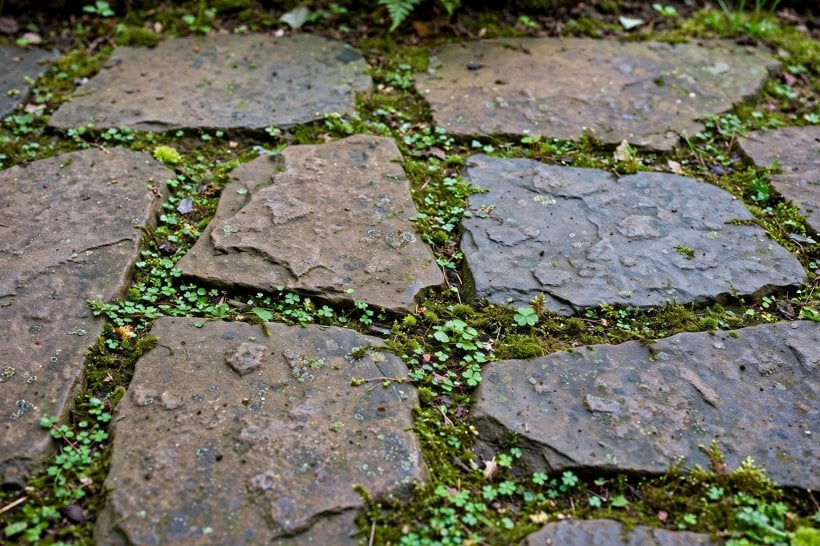
Flagstone’s unit is the large slab, and its layouts run from loose stepping stones to tight-fitted crazy paving. The dry-laid approach in our dry stack stone path guide shows the mortar-free version end to end; these ideas cover the shapes that stone can walk.
1. Lay Irregular Slabs With Tight, Honest Joints
Big, naturally shaped flags fitted closely read as one crafted surface. Wide, wandering gaps read as unfinished — fit the stones, don’t just place them.
2. Use Stepping Stones Across Lawn or Gravel
Single flags at a natural stride, bedded firm and flush with the turf, make the lightest-touch path there is — perfect for a secondary route.
3. Cut Stone for a Formal, Rectangular Field
Sawn, regular flags in a grid give flagstone a tailored register that suits modern and formal houses while keeping stone’s texture.
4. Grade the Stone Size Along the Path
Largest slabs at the start and at landings, smaller pieces between: the path feels composed rather than scattered, and walking stays easy.
5. Set Each Flag Dead Level With Its Neighbours
Stone can vary in thickness; the walking surface cannot. Bed each piece so tops align — rocking flags are a base failure, not a stone failure.
3. Brick Patterns
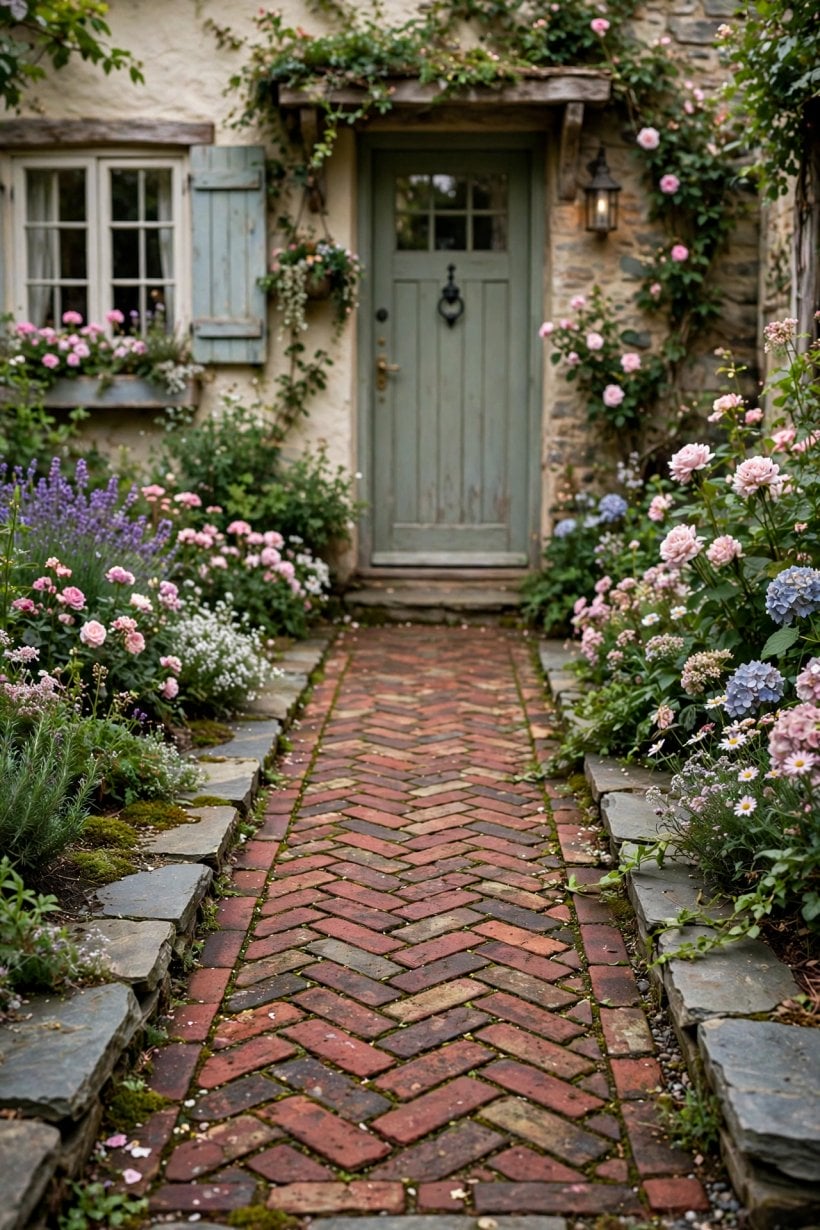
Brick’s unit is small, so pattern does the designing. The same brick laid four ways gives four different paths — the pattern lexicon below is the standard one, and the material choice behind it (which stone, which clay) is the ground our flagstone vs fieldstone comparison covers for the stone side of the family.
6. Herringbone for Strength and Tradition
The zig-zag classic. Herringbone interlocks in every direction, which is why it carries driveways and busy paths so well — and it looks like it means business.
7. Basketweave for a Quiet, Textile Rhythm
Pairs of bricks alternating direction give a woven, calmer surface that suits cottage and garden paths where herringbone feels busy.
8. Running Bond for Simple, Lengthening Lines
Bricks laid in staggered rows along the path stretch its length visually — the easiest pattern to lay and the most forgiving of a beginner’s hand.
9. A Soldier-Course Edge to Frame Any Pattern
Bricks stood on edge along both sides give every brick pattern its finished border and, more importantly, its structural restraint.
10. Use Reclaimed Brick for Instant Age
Weathered, varied reclaimed units give a new path a settled look that new brick takes years to earn. Check each unit is a paver-grade brick, not a soft wall brick that frost will flake.
4. Mixing Flagstone and Brick
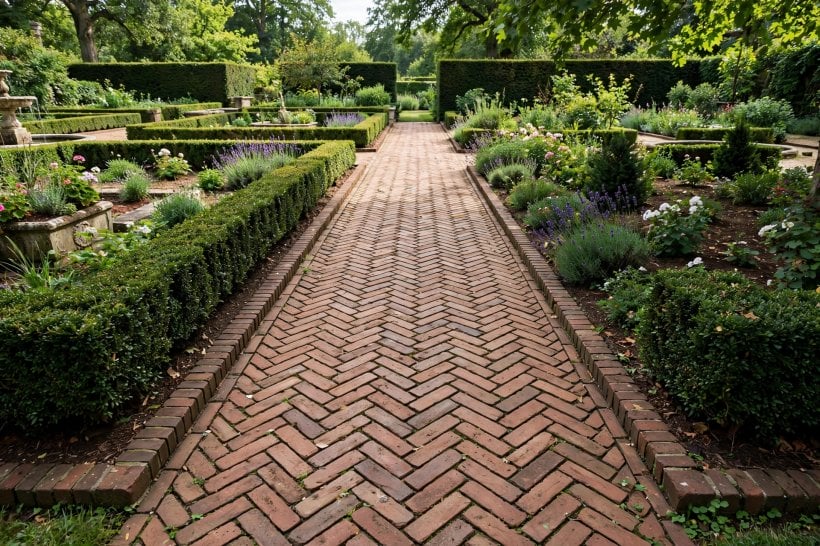
The two materials are natural partners — stone’s scale with brick’s precision — and the mixes below are the ones that look designed rather than indecisive. The shared-base thinking matches the border work in our gravel path and rock borders guide: whatever the surface, the edges carry it.
11. Edge Flagstone With a Brick Border
A brick soldier course around a flagstone field sharpens the stone’s loose shapes and stops the outer flags creeping — form and function in one course.
12. Run Brick Bands Across a Stone Path
A double course of brick crossing the path at intervals divides a long stone walk into bays and gives the eye a rhythm to travel by.
13. Change Material Where the Path Changes Job
Flagstone through the garden, brick at the door apron and steps: the materials announce the threshold more clearly than any sign could.
14. Match Tones, Not Materials
Warm brick wants warm-toned stone; blue-grey stone wants a cooler brick or a deliberate contrast. Tone is what the eye compares, not geology.
15. Keep One Material Clearly in Charge
An 80/20 split reads as design; a 50/50 split reads as two half-paths arguing. Let one surface dominate and the other accent.
5. Curves, Steps and the Entrance
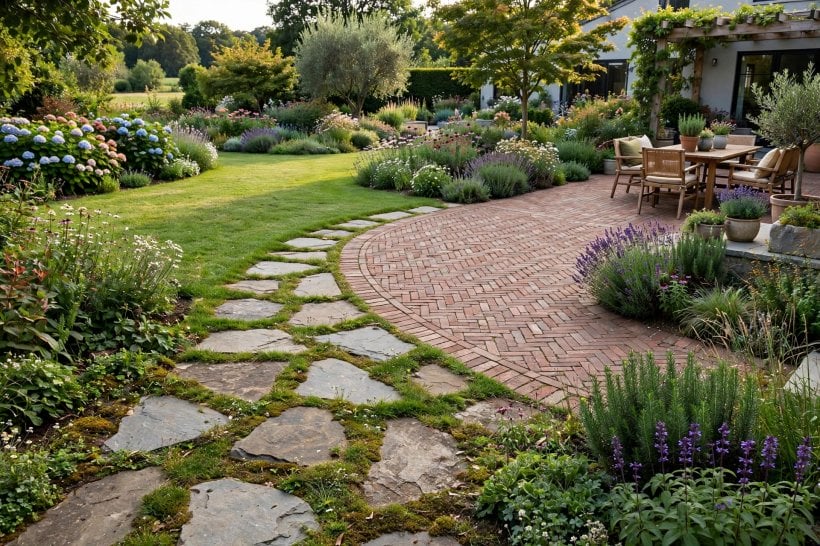
A path’s line matters as much as its surface. Straight paths are formal and direct; curved paths slow the walker and reveal the garden in stages. Both materials bend — brick by pattern, flagstone by selection — and the entrance is where their work peaks, as the approach routes in our front yard curb appeal guide show from the street side.
16. Curve Gently, and for a Reason
A curve should bend around something — a tree, a bed, a view opening. A purposeless wiggle in a short front path reads as indecision.
17. Widen the Path at the Door
An apron or landing at the entrance, broader than the path itself, gives visitors a place to stand, turn and be greeted — hospitality in plan form.
18. Build Steps From the Path’s Own Material
Stone treads on a flagstone path, brick risers on a brick one: steps that continue the surface keep the route reading as one gesture.
19. Fan Brick at a Curve or Corner
On a bend, brick units fanned with tapered joints follow the curve elegantly — a small skill that separates built paths from assembled ones.
20. Light the Line, Low and Warm
Low lights at the path’s edge mark the route after dark without flooding the garden. Steps and the door apron earn the first fittings.
6. Joints, Gaps and Planting Between Stones
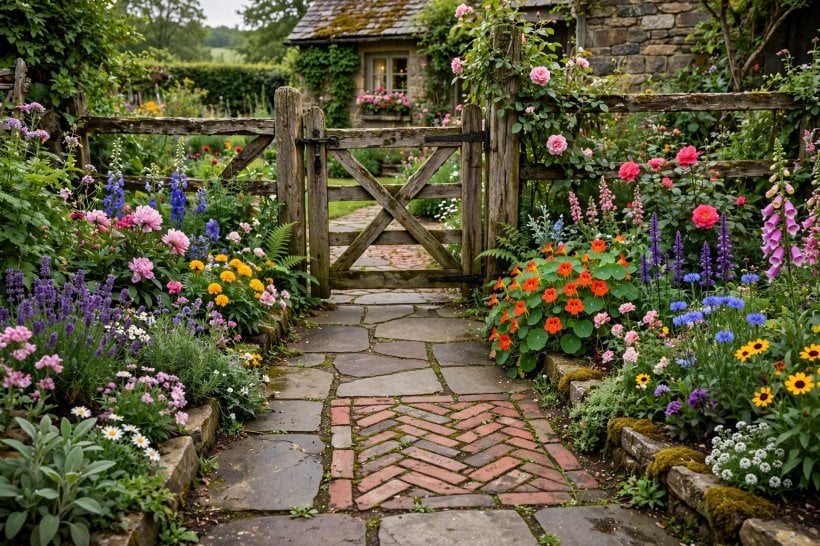
The joint is where a path’s finish is decided. Swept sand, fine gravel, mortar and living plants each give a different surface, a different maintenance rhythm and a different look — the infographic’s groundcover idea is only one of the four honest options.
21. Sweep Kiln-Dried Sand Into Brick Joints
The classic flexible finish for brick: sand locks the units, drains freely, and can be topped up in an hour when it settles.
22. Plant Low Groundcover in Flagstone Joints
Creeping, foot-tolerant plants in wide stone joints soften the path into the garden — the lived-in look, chosen deliberately and kept trimmed off the walking line.
23. Use Fine Gravel Joints for a Dry-Garden Register
Gravel-filled joints drain fast, suit Mediterranean and gravel-garden styles, and forgive the small movements that crack rigid joints.
24. Mortar Joints Where Wheels and Heels Rule
At entrances and busy routes, a mortared joint gives a smooth, firm, sweep-clean surface — the practical choice where prams, trolleys and heels pass daily.
25. Keep Joints Honest in Width
Joints are a design line: even widths look crafted, random widths look accidental. Spacer discipline during laying is what the finished path shows.
7. The Base, Drainage and Edges Underneath
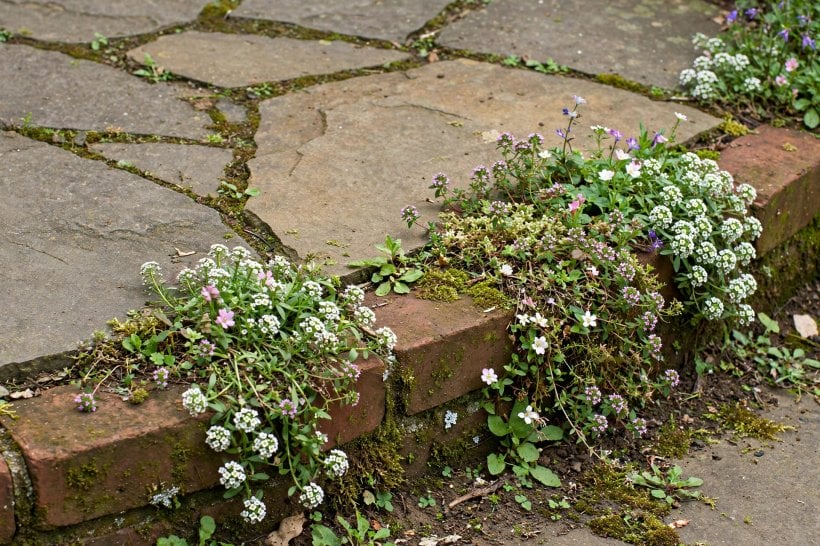
Every idea above stands on this section. A unit path is a raft: excavated ground, a compacted hardcore base, a bedding layer, the units, the joints and a rigid edge to stop the whole raft spreading. The permeable construction in our permeable pavers guide is the same stack, engineered for drainage; paths need its logic even where they don’t need its capacity.
26. Excavate and Compact a Real Base
Dig out to firm ground, lay a proper depth of compacted aggregate, and never bed units on topsoil. This invisible work is 80% of the path’s lifespan.
27. Give the Path a Gentle Fall
Water must leave the surface. A slight fall along or across the path — invisible to the eye, decisive in a storm — stops ponds and winter ice.
28. Restrain Both Edges Rigidly
Set edging — brick on edge, stone, steel or concrete haunching — before the joints go in. An unrestrained unit path walks itself apart, unit by unit.
29. Bed Brick on Sand, Stone on a Firmer Bed
Brick’s small units settle happily on a screeded sand bed; large flags want a firmer, often mortared or grit bed so their wide faces cannot rock.
30. Compact, Joint, Then Compact Again
The finishing pass most DIY paths skip: vibrate or tamp the surface, re-sweep the joints, repeat. The path you hand over should already have done its settling.
8. Colour, Stone Types and Brick Choices
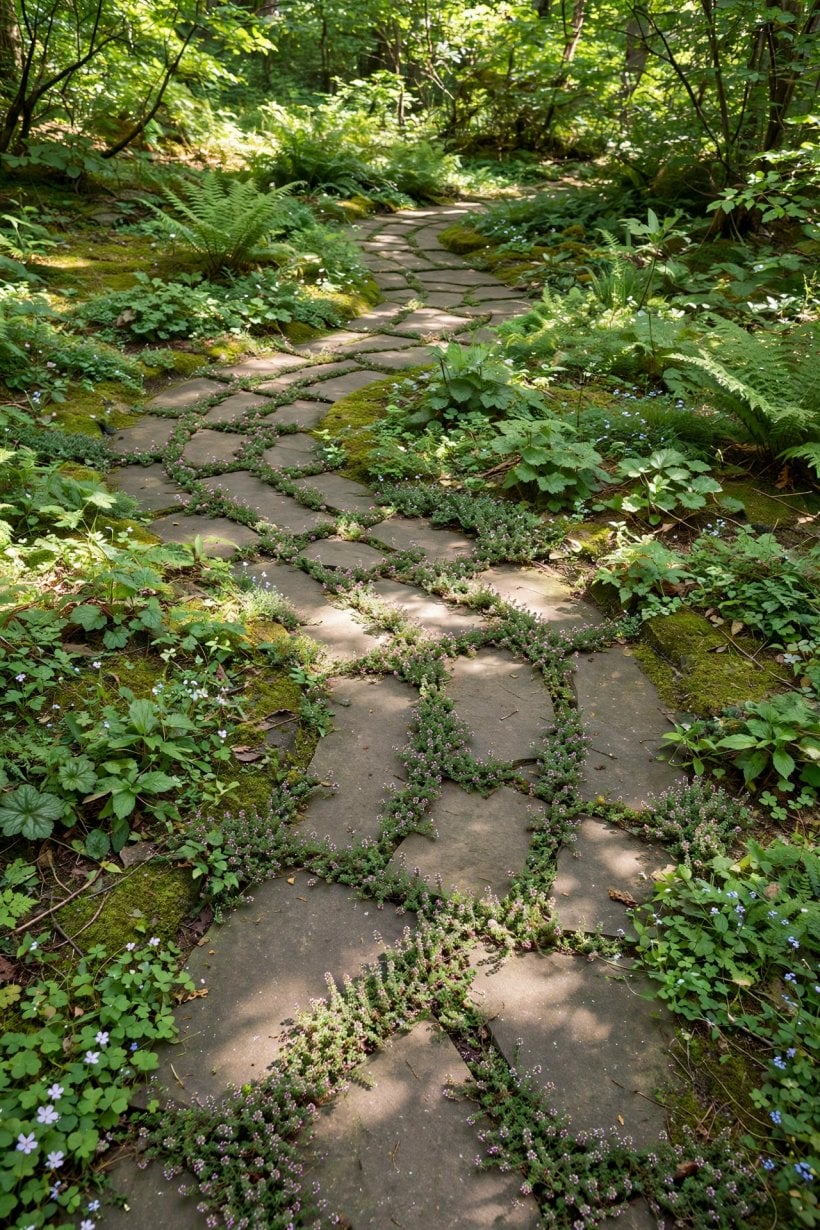
Flagstone varies by geology — sandstones run buff, gold and rust; slates and blue stones run grey and blue-black; limestones sit pale and calm. Choose against the house: warm stone with warm brickwork, cool stone with painted or rendered walls, and always view full pieces wet as well as dry, because rain darkens every path for half its life. Our landscaping rock types guide walks the stone families properly.
Brick choice mirrors it: clay pavers in reds, browns, buffs and blue-blacks, each with a texture from smooth to rustic. The discipline is the same as stone’s — paver-grade units only, frost-resistant for your climate, and colours sampled on site in real light, in a run of several units rather than a single showroom brick. Mixed intentionally, two brick tones in one pattern give a mellow, reclaimed feel; mixed accidentally, they give a patchwork nobody ordered.
9. Costs and Installation Checks
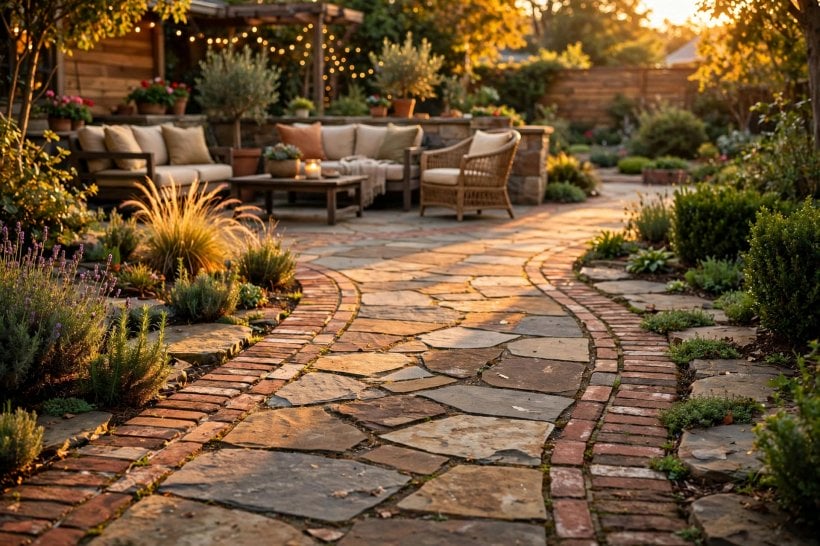
Costs split into three honest groups: the units (brick is bought by the hundred and compares kindly; large flagstone is priced by area and rises with thickness and finish), the base materials (aggregate, bedding, edging — the unglamorous third of the bill), and labour, which for unit paving is the largest share whether it is yours or a contractor’s. Any quote that prices the visible surface alone is missing the path’s real cost.
Before work starts, check: the route’s levels and where its water will go; what runs beneath it (services, roots, drainage) — a path is a trench you only want to dig once; thresholds at doors, where the finished path level must sit below damp courses and door sills; and the delivery practicalities, because tonnes of stone arrive whether the access is ready or not. For the small-plot version of the same planning, our tiny house landscaping ideas keep paths proportional — wide enough to walk with a suitcase, never wider.
10. Care: Keeping the Path Honest
Unit paths ask little and ask it regularly: sweep joints back where they scour out, lift and re-bed the rare unit that rocks before its neighbours follow, and keep soil and mulch from creeping over the edges and swallowing the line. Moss and algae in shaded joints are a shade fact, not a failure — an annual brush and, where needed, the drainage fix of idea 27 handles most of it. Brick and stone both weather handsomely; the paths that fail are not the worn ones but the spread, ponded and rocking ones, and every one of those failures was decided in section 7, on laying day.
Final Considerations
Flagstone gives a path its ease, brick gives it its order, and the base gives it its life. Choose the material by the house’s character, lay the pattern with discipline, finish the joints on purpose, and never let the visible work outrun the invisible — those choices decide whether the path is a season’s project or the garden’s permanent furniture.
Build one honest stretch first — the door apron and the first metres — and walk it for a week. A path that is right underfoot at the door will be right all the way to the gate.



0 Comments