
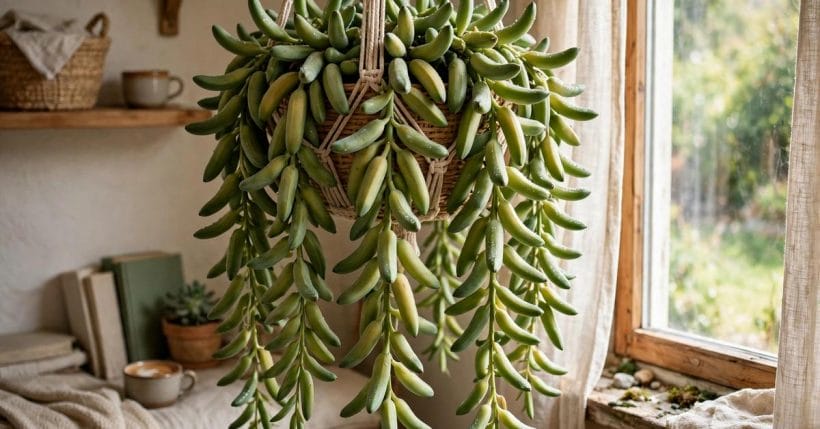
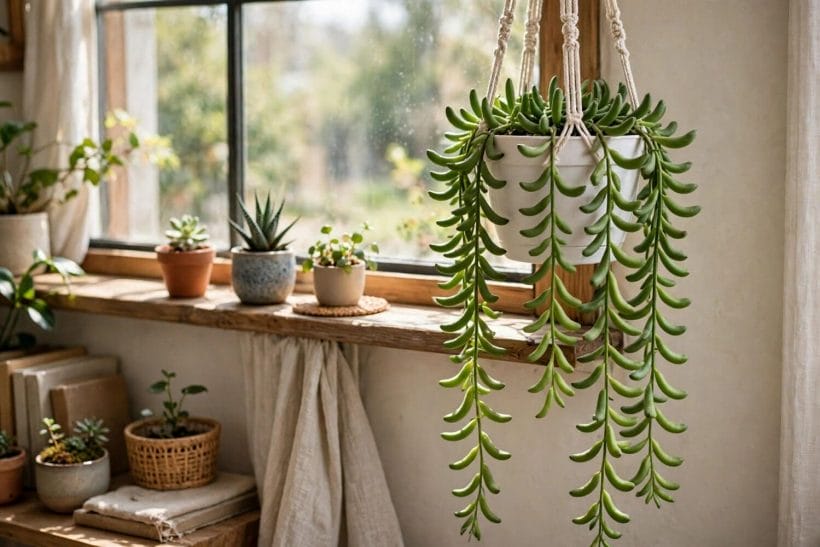
Some houseplants ask for attention every day, and some quietly get on with life while trailing gently from a shelf or a hanging basket. The plant in this guide belongs firmly in the second group. The string of bananas is a trailing succulent whose long stems carry rows of small, curved leaves shaped a little like tiny bananas, and it has become a favourite for small homes because it gives a room movement and greenery without taking up floor space. This guide covers its care in general terms only: light, water, soil, potting, trimming, propagation and the small worries that commonly arise, with the honest caveat that every home is different and no plant outcome can be guaranteed.
A trailing plant suits a small home for a simple reason. It uses the air above a shelf, a doorway or a window rather than the floor, so a room can feel greener without feeling fuller. The stems lengthen slowly over time, and a plant that is happy in its spot may eventually trail well below its pot, which is part of its charm. A plant that is less happy may grow slowly, drop leaves, or look sparse, and those signs are usually worth noticing early, while small adjustments are still easy to make. The sections below take each part of care in turn, so a new grower can build a routine that fits the plant and the room together.
1. What This Trailing Plant Looks Like
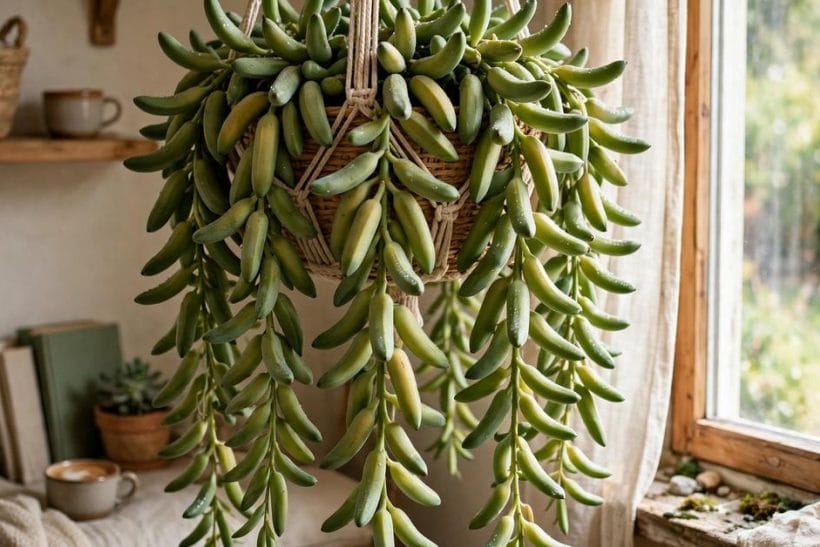
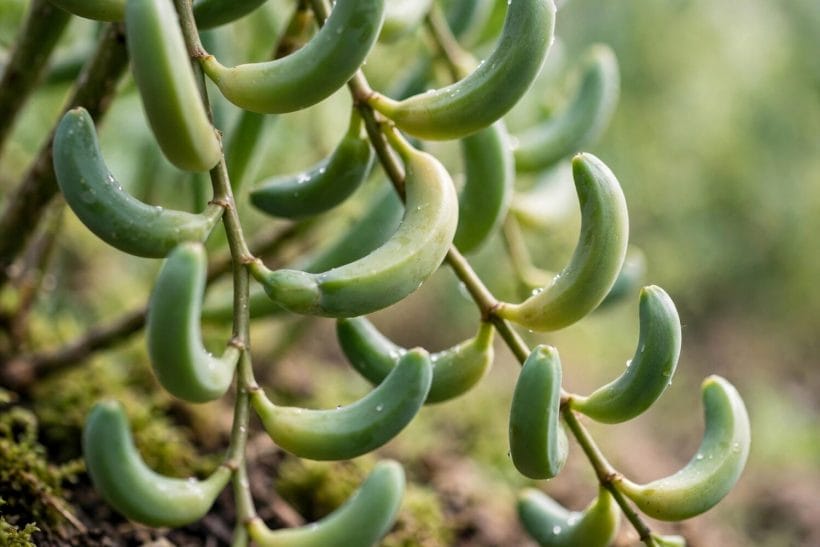
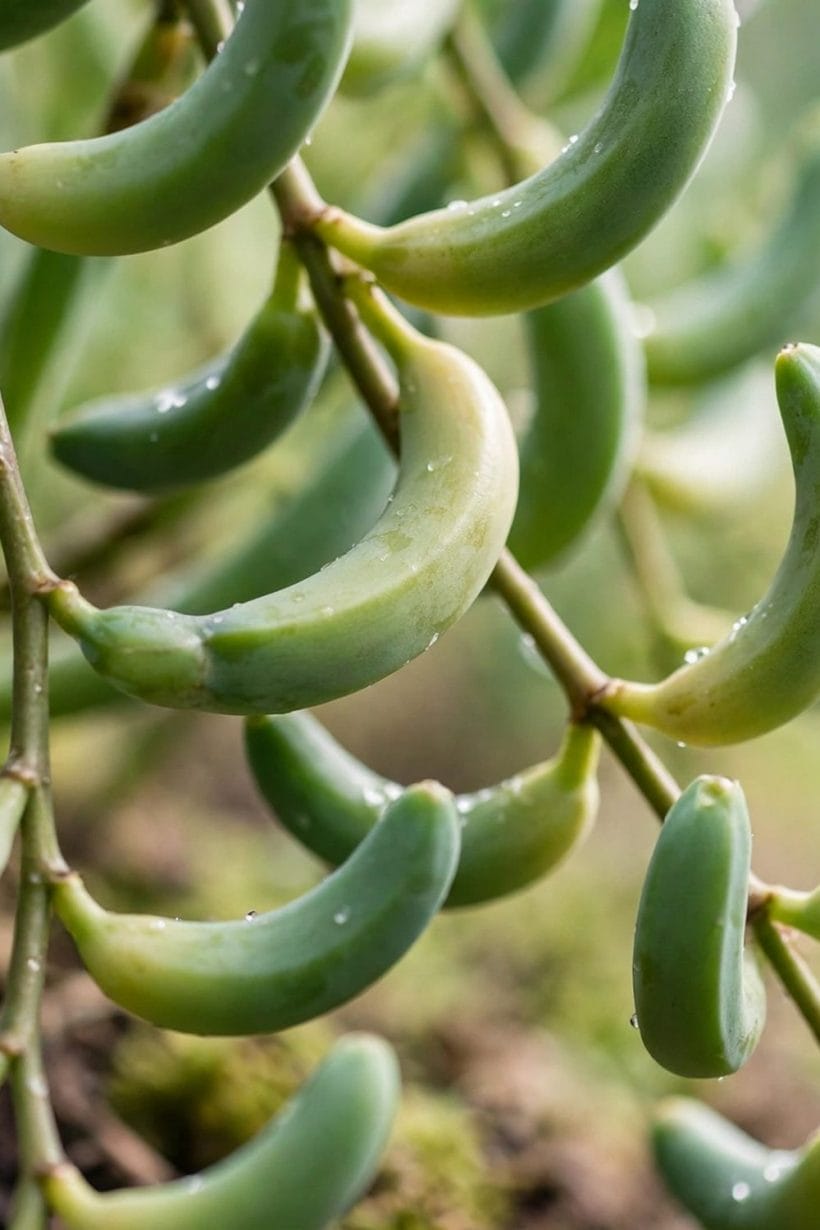
This plant is grown for its stems. Each stem is slender and flexible, and along its length sit fleshy leaves that curve gently, giving the whole plant its familiar name. New growth appears at the tips of the stems, while older growth near the pot may gradually become bare with age, which is a normal pattern for many trailing plants and not always a sign of trouble. The colour is usually a soft green, sometimes with a slightly waxy sheen, and the leaves feel plump when the plant is well hydrated and a little softer when it has gone without water for a while.
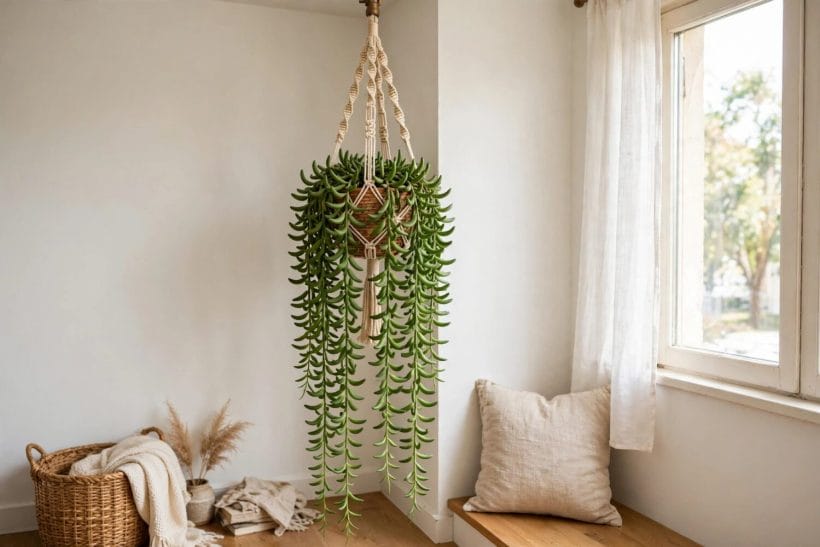
It is often sold under a botanical name as well as its common name, and labels in shops may vary, so it is worth checking the leaves rather than trusting a label alone. The banana-like curve of the leaves is the clearest clue, and it separates this plant from its close relatives, which carry round or pointed leaves instead. In a hanging basket the stems fall in soft curtains, while on a high shelf they may spill over the edge and then hang straight down. Either way, the plant looks best when its trails are allowed room to hang freely, without being bunched against a wall or tangled around neighbouring objects.
Size is a matter of patience rather than speed. A young plant in a small pot may look modest for a long while, and growth may come in bursts, with quiet periods in between. That rhythm is normal, and a plant that grows slowly is not necessarily a plant in trouble. What matters more is the general look of the leaves and stems: plump leaves and firm stems usually suggest a plant that is coping well, while soft, shrivelled or falling leaves suggest that something in the routine may need a gentle change.
2. Light That Suits It Best
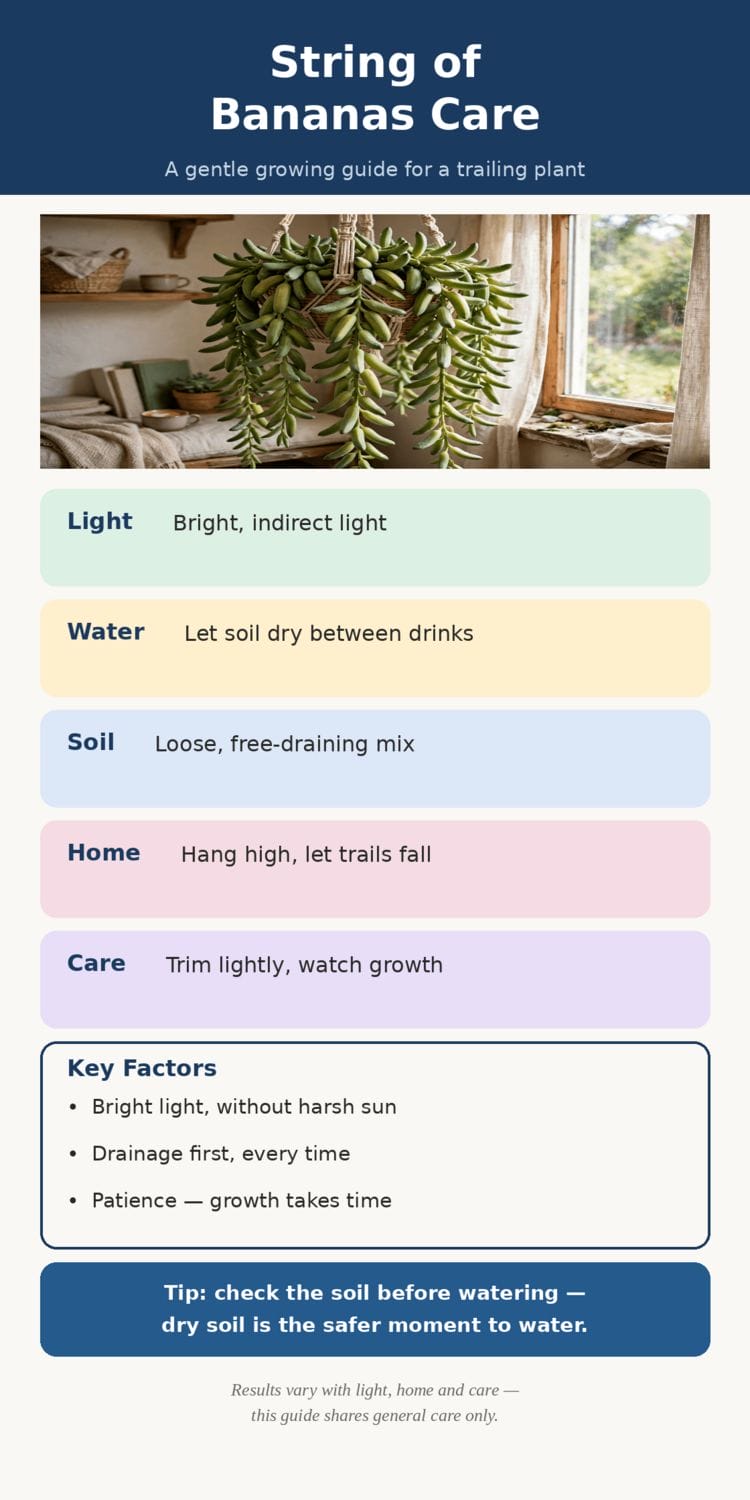
Light is the single biggest influence on how this plant behaves, and bright light suits it better than a dim corner. A spot near a window that receives plenty of daylight, without harsh direct sun beating on the leaves for long stretches, is a good starting point for most homes. Morning light is often gentler than afternoon light, and a sheer curtain can soften strong sun while still letting plenty of brightness through. If the only bright spot is a windowsill that gets very hot in summer, a small step back from the glass may be kinder to the leaves.
The plant itself will usually show whether its light suits it. Stems that stretch with wide gaps between leaves may be reaching for more light, while leaves that look faded or scorched may be getting more direct sun than they enjoy. Neither sign calls for a dramatic move. A gradual shift to a slightly brighter or slightly more sheltered spot, followed by a period of watching, is usually wiser than moving the plant around the house every few days. Plants generally prefer a settled spot to a restless one, and frequent moves can slow growth on their own.
Rooms that face away from the sun, or windows shaded by neighbouring buildings, may still suit this plant if the spot is as bright as the room allows. Growth may simply be slower there, and watering may need to be lighter, since soil in dimmer spots tends to stay damp for longer. The balance between light and water matters more than either factor alone, and a plant in a dimmer spot that is watered sparingly will often fare better than one in a bright spot that is kept constantly wet. For broader planting ideas around the home, these garden ideas for small homes show how trailing plants can sit alongside other greenery without crowding a room.
3. Watering With a Light Hand
As a succulent, this plant stores water in its leaves, so it generally prefers a light hand with the watering can. The safest habit for most growers is to check the soil before watering, and to water only when the soil feels dry. A finger pressed gently into the top of the soil gives a useful clue, and a pot that feels noticeably light may also suggest that the soil has dried out. When watering does happen, a thorough drink that reaches the roots, followed by a period of drying, usually suits the plant better than frequent small sips that keep only the surface damp.
Overwatering is the most common difficulty with this plant, and its signs can be confusing because they sometimes resemble underwatering. Soft, translucent or falling leaves may point to soil that has stayed wet for too long, while shrivelled, wrinkled leaves may point to a plant that has gone dry. The soil itself tells the story more reliably than the leaves alone: soil that is still damp well below the surface probably does not need more water yet, whatever the calendar says. A fixed watering schedule matters less than this simple check, because drying time changes with the season, the room and the pot.
Good drainage turns a watering mistake from a crisis into a recoverable slip. A pot with holes in the base lets excess water escape, and emptying any saucer or outer pot after watering stops the roots from sitting in a puddle. A plant left standing in water may suffer even if it is watered rarely, so the saucer check is worth making part of the routine. If a plant has been overwatered, the gentlest response is usually to let the soil dry out fully, keep the plant in bright indirect light, and wait, rather than reaching for extra feeds or repotting in a hurry.
4. Soil and Drainage Basics
Soil for this plant should drain freely and should not stay soggy after watering. A loose, open mix that lets water pass through, rather than a heavy mix that holds water like a sponge, is the right general aim. Many growers use a mix intended for succulents, or blend ordinary potting mix with coarse material that opens its structure, and either approach can work provided the finished mix drains well. The exact recipe matters less than the result: water poured in should drain away at a reasonable pace, and the soil should dry out between waterings rather than staying wet for days on end.
Drainage is a property of the pot as much as the soil. A pot without holes can look attractive, but it traps water at the base where roots sit, and that trapped water is a common cause of trouble. If a decorative outer pot is used, it is wise to keep the plant in a plain inner pot with holes, and to lift it out for watering, letting it drain before it goes back. A layer of stones at the bottom of a holeless pot is sometimes suggested as a fix, but it does not truly drain the soil, so it is no substitute for a hole in the base.
Fresh soil also gives the plant a better start than tired, compacted soil that has been in the same pot for a very long time. Over time, soil can settle and hold water differently, and a plant that once thrived may begin to struggle in the same pot. Repotting into fresh, free-draining mix can help at that point, though it is best done when the plant is growing actively and handled gently, since trailing stems tangle and snap more easily than they look. A small amount of care with the stems during repotting saves a good deal of tidying afterwards.
5. Choosing a Pot and a Place
A hanging basket or a pot on a high shelf both suit this plant, and the choice is mostly a matter of the room. A hanging basket lets the trails fall freely on all sides and makes a lovely feature near a window, while a shelf pot suits a room where hanging fixings are not practical. Whatever the container, it should be sturdy enough to hold the plant as its trails lengthen, and any hanging fixing should be secure, since a falling basket can damage both the plant and whatever sits below it. Fixings into a solid ceiling or wall support are a job for someone confident with the fitting, and a wobbly hook is worth replacing before the plant grows heavy.
Pot size deserves a little thought. A pot that is far too large for the plant holds a large volume of soil that stays damp for a long time, which raises the risk of overwatering. A pot that fits the root ball with a little room to grow is usually the safer choice, and the plant can move up a size when its roots have filled the current pot. Shallow pots suit this plant well, since its roots are not especially deep, and a shallow pot also dries out more readily than a deep one. When a plant does need a bigger home, the move is best made gently, keeping as much soil around the roots as possible.
The place itself matters as much as the pot. A spot with bright indirect light, away from cold draughts and away from radiators or heaters that dry the air sharply, gives the plant a steady start. Kitchens and bathrooms can suit trailing plants because the air there is often a little more humid, but steam and splashes are not helpful, so a spot away from direct spray is still wise. Growers planning a larger move may find the general guidance on transplanting a large sago palm a useful reminder of how differently large plants must be handled, since anything big or heavy is a job for experienced hands rather than a solo lift.
6. Helping Trails Grow Long
Long trails are the reward for steady, undramatic care, and there is no shortcut that reliably produces them. Bright indirect light, careful watering and a settled spot are the main ingredients, and patience does the rest. Trails lengthen from their tips, so a plant that is regularly disturbed, moved or handled roughly may grow more slowly than one left in peace. It can help to give the trails a clear fall, free of furniture edges that snag them, and to resist the urge to wind them around supports, which can bend stems and slow their growth.
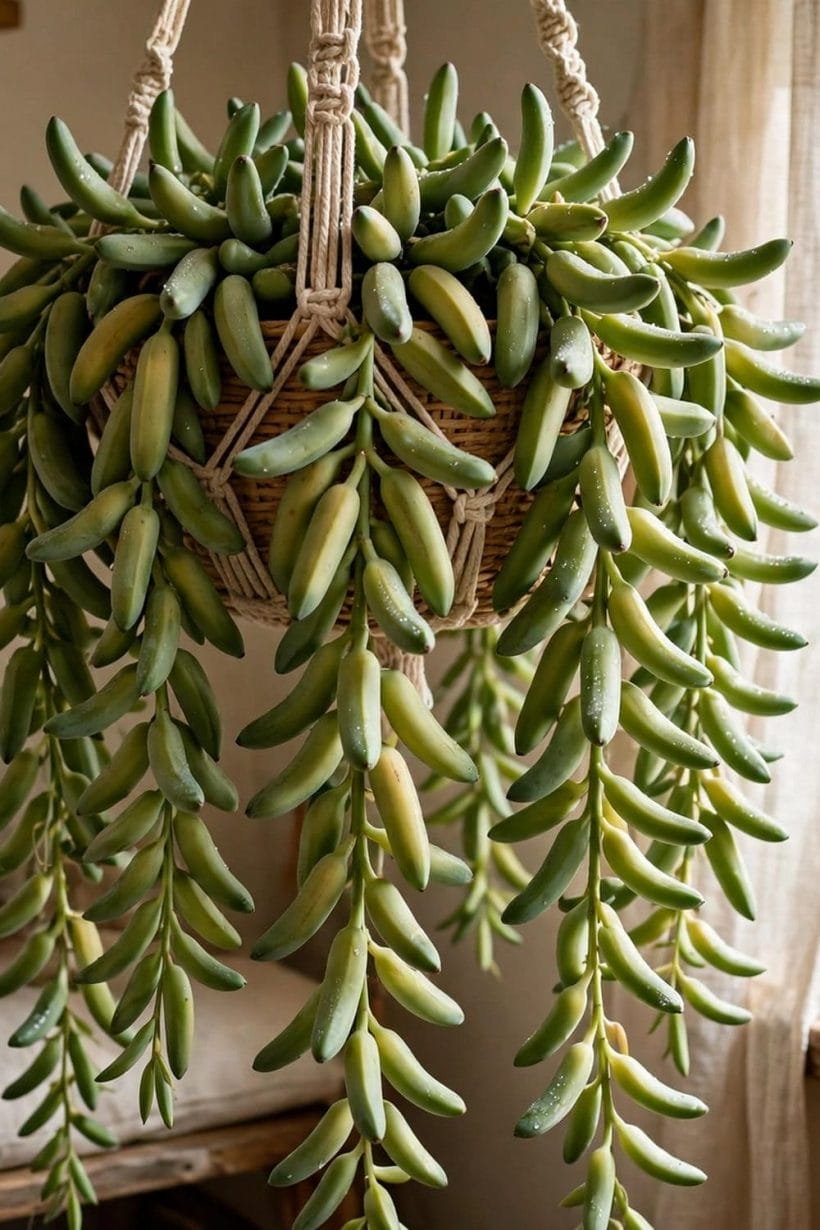
Some growers like to lay a long stem gently across the surface of the soil in the same pot, where it may root at points along its length and make the plant look fuller from above. This can work well, provided the stem is laid lightly rather than buried, and the soil is kept only lightly damp while it settles. The same idea can be used to fill a thin-looking pot: a stem looped back over the soil may thicken the top of the plant over time, while the hanging trails continue to lengthen below. Results vary, and a stem that does not root has still cost nothing but a little time.
Feeding is another area where less is usually more. A plant in fresh soil generally has enough to be going on with, and extra feeding is rarely the answer to slow growth. If feeding is used at all, it is best kept very light and infrequent, and skipped entirely while the plant is resting or struggling. A plant that is pale or slow because it lacks light will not be fixed by feeding, and a plant that is wet will not be fixed by it either. Light, water and drainage come first, and feeding, if it happens at all, comes a distant last.
7. Trimming and Tidying Trails
Trimming is a simple way to keep this plant looking tidy, and it is nothing to be nervous about. Stems that have grown bare near the pot, trails that have become tangled, or ends that look weak can all be trimmed back with clean, sharp scissors. A clean cut heals more neatly than a torn stem, so it is worth using a sharp tool and wiping it clean before starting. Cutting back a trail may encourage branching below the cut, which can make the plant look fuller over time, though the response varies from plant to plant and is never guaranteed.
The best time for a trim is when the plant is growing actively and looks otherwise healthy, since a struggling plant has less energy to spare for recovery. A light trim, taking a little at a time, is wiser than a severe cut that removes a large share of the plant at once. After trimming, the plant can be left in its usual spot with its usual watering routine, and new growth, if it comes, will appear gradually rather than overnight. Trimmed stems need not be wasted, as the next section explains, and a small bundle of cuttings is often the start of a second plant.
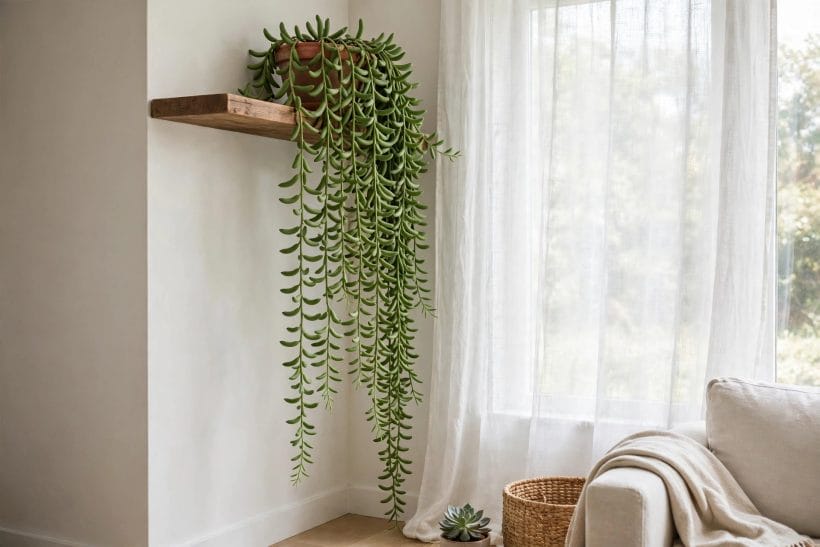
Tidying also includes the small jobs that keep a trailing plant pleasant to live with. Fallen leaves can be picked from the soil surface, dusty leaves can be wiped gently, and tangled trails can be separated with care rather than pulled apart. A plant that hangs over a walkway may need its trails lifted aside from time to time, and a plant near a curtain may need a little space so its stems are not constantly brushed. These small attentions cost little and keep the plant looking like a feature rather than a tangle.
8. Growing New Plants From Cuttings
Propagation is one of the pleasures of owning a trailing plant, because a single healthy plant can, over time, give rise to several more. A cutting is simply a length of stem, cut cleanly, that is given the chance to root. The usual approach is to lay the cutting on the surface of free-draining soil, or to rest its cut end lightly in the soil, and to keep the soil only lightly damp while roots form. Some growers prefer to root cuttings in water first, watching the roots appear before potting them up, and that approach can work too, provided the rooted cutting is moved to soil gently once its roots are established.
Success with cuttings is variable, and a batch in which some root and some do not is entirely normal. Warmth and bright indirect light help, while cold or constantly wet soil hinders, so a sheltered, bright spot is a good place for a tray of cuttings. It is wise to take cuttings from healthy stems rather than from a plant that is already struggling, since a weak cutting has less energy to root. Labelling a tray, if several plants are being propagated at once, saves confusion later, when young plants of similar appearance can be hard to tell apart.
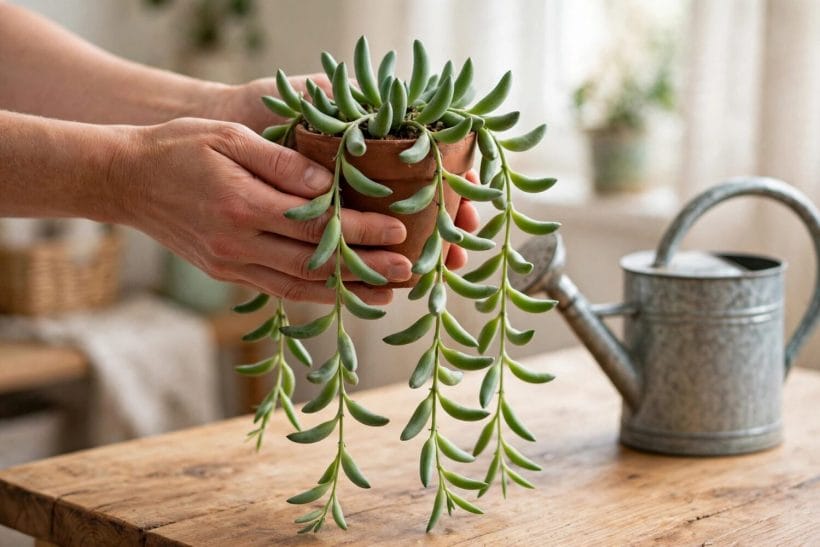
Young plants need the same gentle care as their parent, only more watchfully. Their small pots dry out faster, their roots are shallower, and they are easier to disturb by accident, so a stable spot and a light watering hand matter even more at this stage. Once a young plant has rooted well and begun to produce new growth, it can be treated much like a mature plant, though it may still be some time before its trails lengthen. For growers who enjoy raising plants indoors generally, the notes on growing purslane indoors offer a similar story of a small plant finding its place inside the home.
9. Common Worries and Gentle Checks
Most worries about this plant come back to water, light or pests, and a calm check of each in turn usually points to the likeliest cause. Leaves that drop easily, stems that feel soft, or soil that smells musty may suggest overwatering, and the remedy is usually to let the soil dry and to check the drainage. Leaves that shrivel or wrinkle may suggest the plant has gone dry, and a thorough drink followed by normal careful watering may help. Leaves that fade or scorch may suggest too much direct sun, and a small move to softer light may be the answer. In each case, one change at a time, followed by watching, beats several changes at once.
Pests are an occasional visitor rather than a constant threat. Small insects may gather on stems or under leaves, especially on a plant that is stressed or crowded. A gentle check of the undersides of leaves during watering is a good habit, and affected stems can be wiped or trimmed away. A plant with a serious infestation may be worth isolating from neighbouring plants while it recovers, so the problem does not spread across a collection. If a problem persists or the plant declines sharply despite gentle care, advice from a local nursery or experienced grower can be worth seeking, since a plant seen in person is easier to diagnose than one described at a distance.
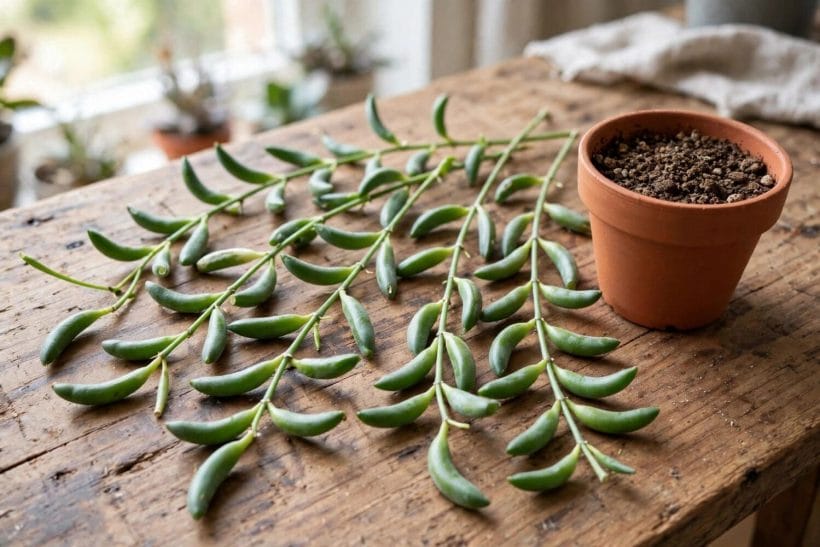
It can help to compare notes with other plant worries, since the signs often overlap. The guide to drooping leaves on a rubber plant shows how a different houseplant can droop for similar reasons, and the notes on a wilting aloe plant show how another succulent signals distress. Reading across plants in this way can sharpen a grower’s eye, though each plant still deserves to be judged on its own soil, light and recent care rather than by analogy alone.
10. Seasonal Care Through the Year
Care for this plant shifts gently with the seasons, even indoors. In the brighter, warmer months, growth is usually more active, soil dries faster, and watering may be needed a little more often, though the soil check still rules. In the darker, cooler months, growth often slows, soil stays damp for longer, and watering should ease back accordingly. A plant near a window may also feel the cold more sharply in winter, so a small step back from the glass, or a curtain drawn on cold nights, can help it through the coldest spells.
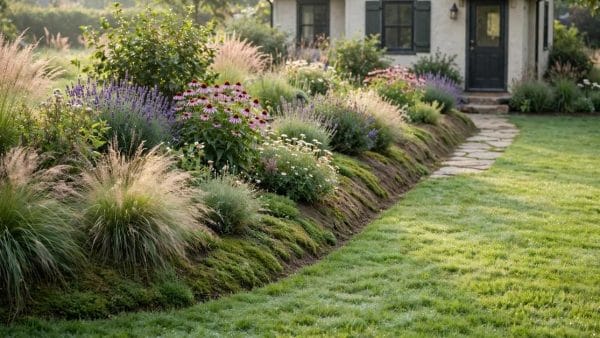
Moving a plant outdoors for the summer is sometimes tempting, and it can suit this plant in a sheltered spot with bright indirect light, provided the move is gradual and the plant is brought back inside well before cold weather. A sudden move from a sheltered room to open sun and wind may scorch leaves and stress stems, so a shaded, protected corner is a kinder first step. Any plant that spends time outside should be checked for pests before it returns indoors, and its pot should drain freely after rain. For ideas on how outdoor spaces frame a home, these exterior spaces show how greenery and structure sit together around small houses.
Heated rooms in winter bring their own challenge, since warm, dry air can dry the soil surface quickly while the deeper soil stays damp, which can mislead the watering check. Pressing a finger a little deeper into the soil, or lifting the pot to judge its weight, gives a truer picture than the dry surface alone. A plant that shares a room with other houseplants may benefit from their company, since a group of plants raises the humidity around them slightly, though crowding should still be avoided so air can move and trails can hang freely. Small seasonal adjustments, made calmly and one at a time, are the heart of good plant care.
Final Considerations
A trailing plant asks for little: bright indirect light, a pot that drains, soil that dries between waterings, and a quiet corner where its stems can hang undisturbed. Give it those things, and a string of bananas can be a calm, green presence in a small home for a long time, lengthening its trails slowly and rewarding patience rather than fuss. Where a plant struggles, the answer is rarely dramatic. Check the soil, check the light, check the drainage, and give the plant time to respond before changing anything else.
For a home that is finding its style as well as its greenery, the wider home design ideas collection shows how plants sit within rooms that are planned as a whole, rather than decorated one object at a time. A trailing plant works best when it belongs to its room: hung where its trails can fall, placed where its light suits it, and kept where it can be enjoyed without being constantly brushed past. Choose the spot with care, keep the routine simple, and let the plant do the rest at its own pace.


0 Comments