
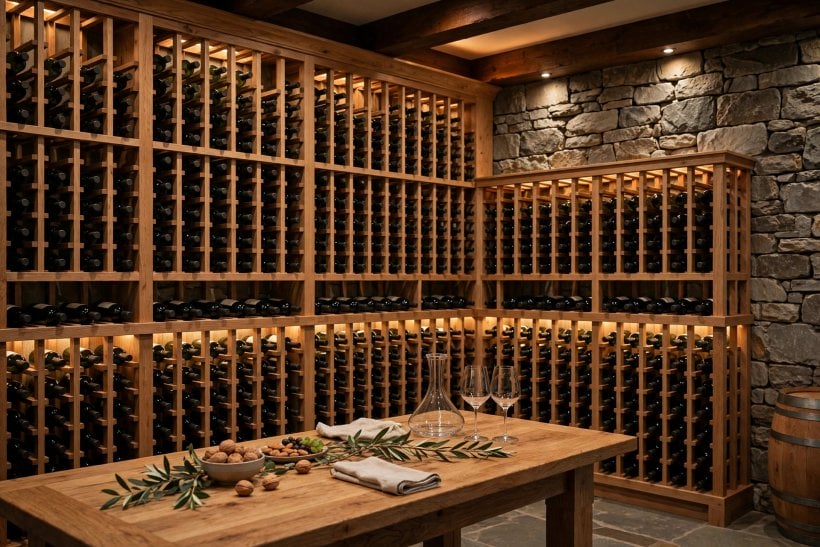
A cellar does not need to be a vault under a country house. The best home wine cellar ideas start with one cool, dark corner and a rack that keeps bottles still, then grow shelf by shelf as the collection does.
This guide covers racking, gentle cooling, kind lighting and small tasting corners, so a dedicated room, an under-stair cupboard or a single quiet wall can each hold wine well — and look good doing it.
Home Wine Cellar Ideas at a Glance
Before a single rack is ordered, four decisions shape everything that follows: where the bottles will live, how they will be stored, how the space stays cool, and how it will be lit. The table below sets out the main options for each one, from a full room down to a single converted cupboard, so you can match the plan to the home you actually have.
| Decision | Main options | Works best when |
|---|---|---|
| Space | Dedicated room; under-stair cupboard; wardrobe conversion; corner nook | The plan follows the coolest, darkest spot in the home |
| Storage form | Wooden cubbies; wall-mounted rails; display rows; freestanding racks | Bottles rest on their sides, still and easy to reach |
| Cooling | Naturally cool room; purpose-built cooling unit; standalone wine fridge | The chosen spot stays cool and steady through the seasons |
| Lighting | Soft strip lights; low accent spots; a warm lamp at the tasting table | Light flatters the room but is never left shining on resting bottles |
| Room to grow | One rack now and more later; a spare wall kept free | The collection is expected to grow slowly over time |
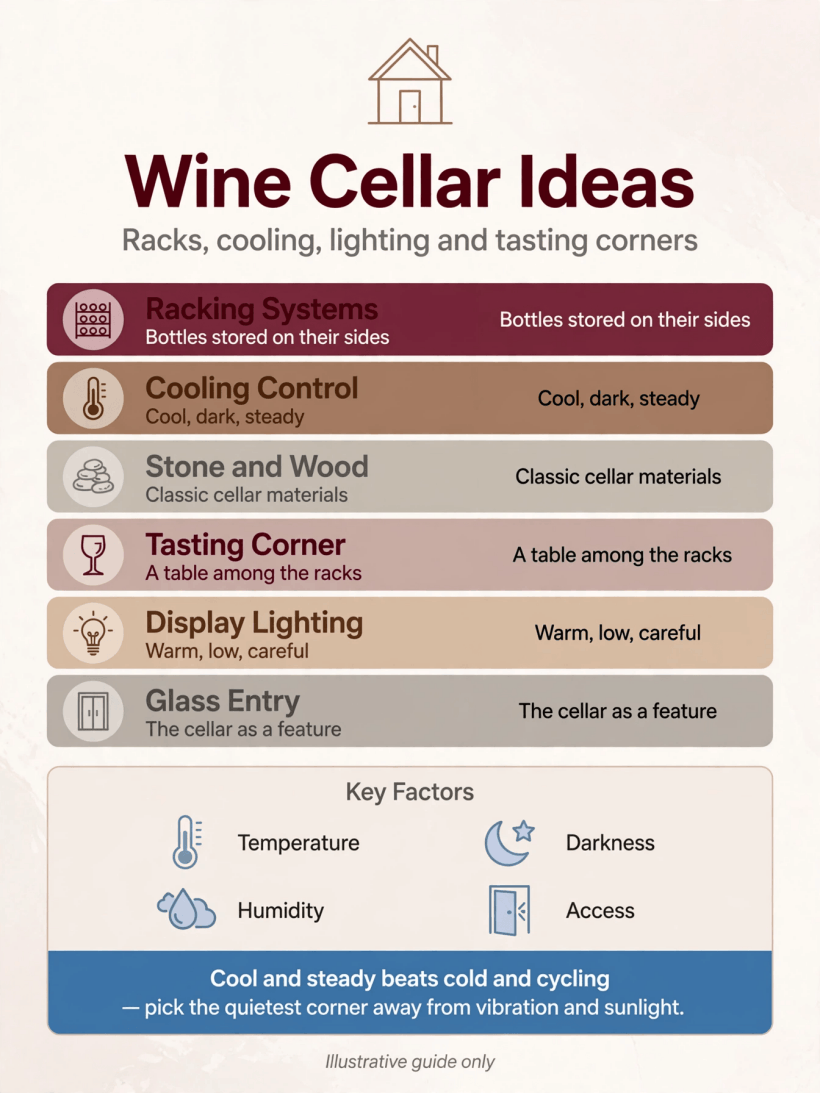
Settle the space, the storage, the cooling and the light before the first bottle is shelved, and the rest of the plan falls into place.
None of these choices needs to be grand. A shaded under-stair cupboard with one wooden rack and a soft light can keep wine happily for years, and everything in this guide scales from that small start up to a full room with a tasting table at its heart.
Racks and Storage Forms
Racking is the skeleton of any cellar. Its work is simple: hold bottles on their sides so corks stay snug and moist, keep them still, and let you lay a hand on the right bottle without shuffling the whole row. Choose the form that fits your space first, and the style second.
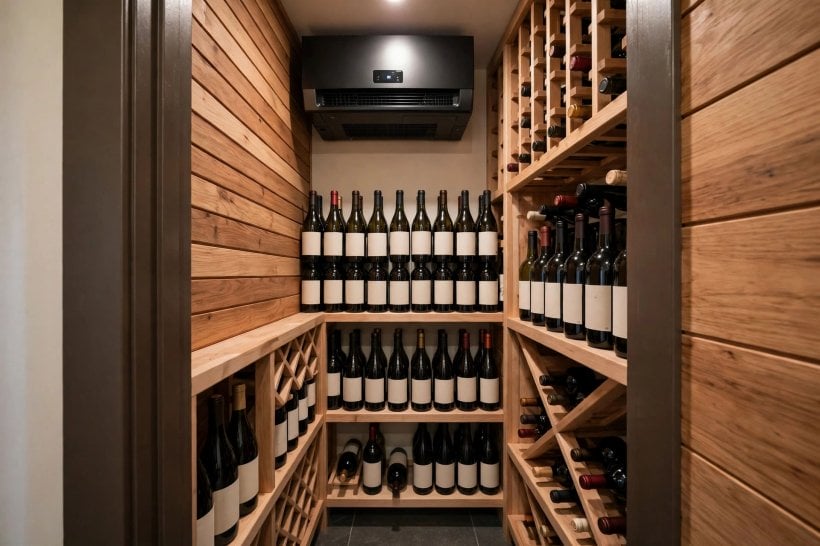
- Start with wooden cubbies. A plain grid of square compartments is the hardest-working storage there is. Each cubby takes a small stack of one wine, bottles rest flat and still, and the grid can grow a column at a time as the collection does. Leave one cubby empty at working height for bottles in transit — opened, gifted or waiting to be shelved.
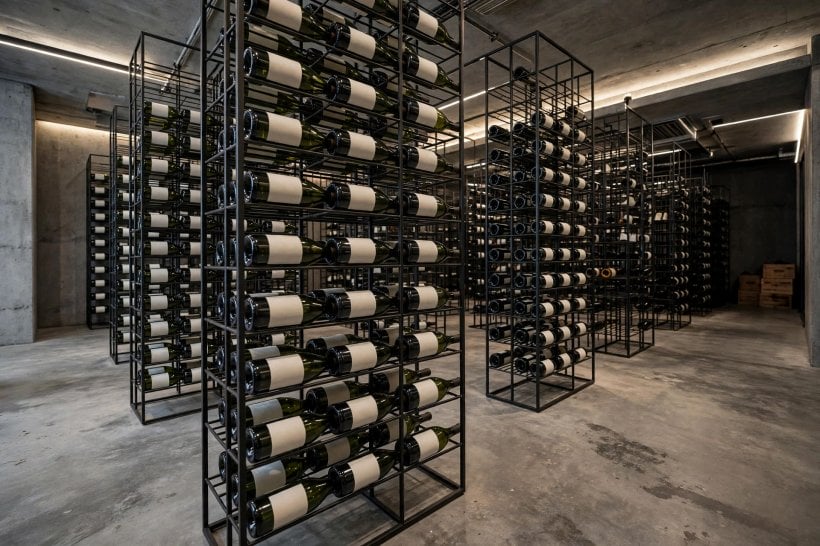
- Mount rails on a spare wall. Where floor depth runs short, wall-mounted rails hold bottles horizontally against the wall, labels out. A hallway-width cellar or a narrow converted cupboard can double its capacity this way, and the rows read as decoration as much as storage.
- Use diamond bins for everyday wines. Open X-shaped bins suit the bottles you reach for often and replace often. They hold mixed cases comfortably, forgive a little untidiness, and keep the good cubbies free for wines that will rest untouched for longer.
- Give a few bottles a display row. One shallow shelf that presents labels at a slight angle turns storage into a small gallery. Keep it for a handful of proud bottles, rotate what sits there, and let the rest of the collection rest quietly in the dark behind it.
- Choose a freestanding rack when plans may change. Renters and first cellars do well with a solid floor-standing rack that can move rooms or move house. Weighted low, bottles deep, it behaves like furniture — and it proves the habit before any joinery is commissioned.
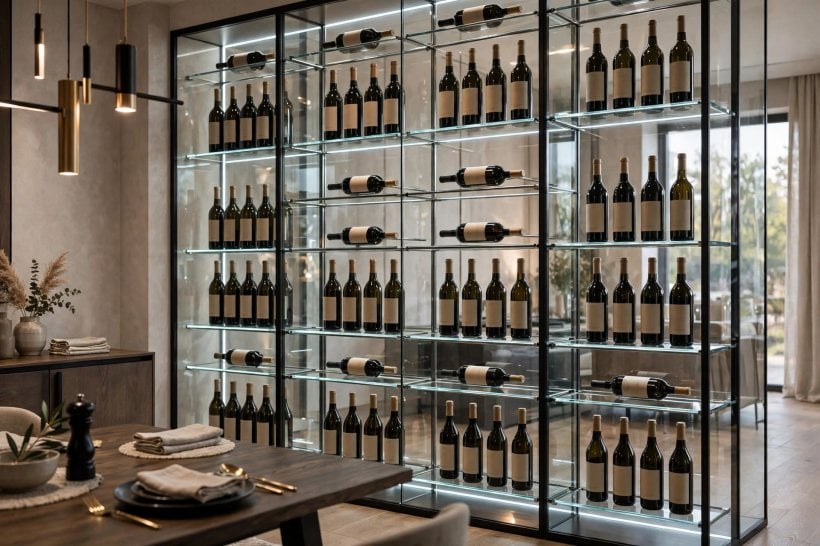
Whatever form you choose, measure as carefully as you would for fitted storage anywhere else in a small home. The same honest measuring and vertical thinking that makes tiny house closet design ideas work so hard applies here: know your bottle count, use the full height, and leave no dead corners.
Cooling and Climate Care
Wine asks for a simple climate: cool, steady, a touch humid, and free from shaking. Swings tire wine far sooner than any single warm day does, so the goal is always a place that changes slowly. Work with the room first and machinery second, and keep every solution as simple as the space allows.
- Pick the slowest-changing spot in the home. An interior wall in a ground-floor or below-ground room, away from sunny glass, radiators and the warm wall behind an oven, will hold its mood through the year far better than a loft or a garage corner.
- Let a naturally cool room do the work. Many homes already own a cellar-worthy space: a shaded store room, a cool pantry, the cupboard under the stairs. If it feels cool on the warmest afternoon you can remember, it is a fair candidate with no equipment at all.
- Add a purpose-built cooling unit only where the room needs help. In a dedicated cellar that warms up in summer, a small unit made for wine storage holds conditions steady without drying the air the way ordinary cooling can. Size it to the room with advice from whoever fits it.
- Use a standalone wine fridge for small collections. In flats and compact homes, a quiet wine fridge keeps a modest collection in good order and frees the rest of the plan from climate worries entirely. It is often the honest right answer for a few dozen bottles.
- Keep bottles clear of vibration and strong smells. Rest wine away from boilers, tumble dryers and busy doorways, and store paint, fuel and strong cleaning products somewhere else. A calm, neutral room protects flavour as surely as it protects corks.
Lighting That Does No Harm
Light is the cellar’s quiet risk and its best mood-maker. Strong light and the heat that rides with it age wine before its time, which is why cellars stay dim by design. Dim, though, never has to mean gloomy — it means soft, warm and pointed the right way.
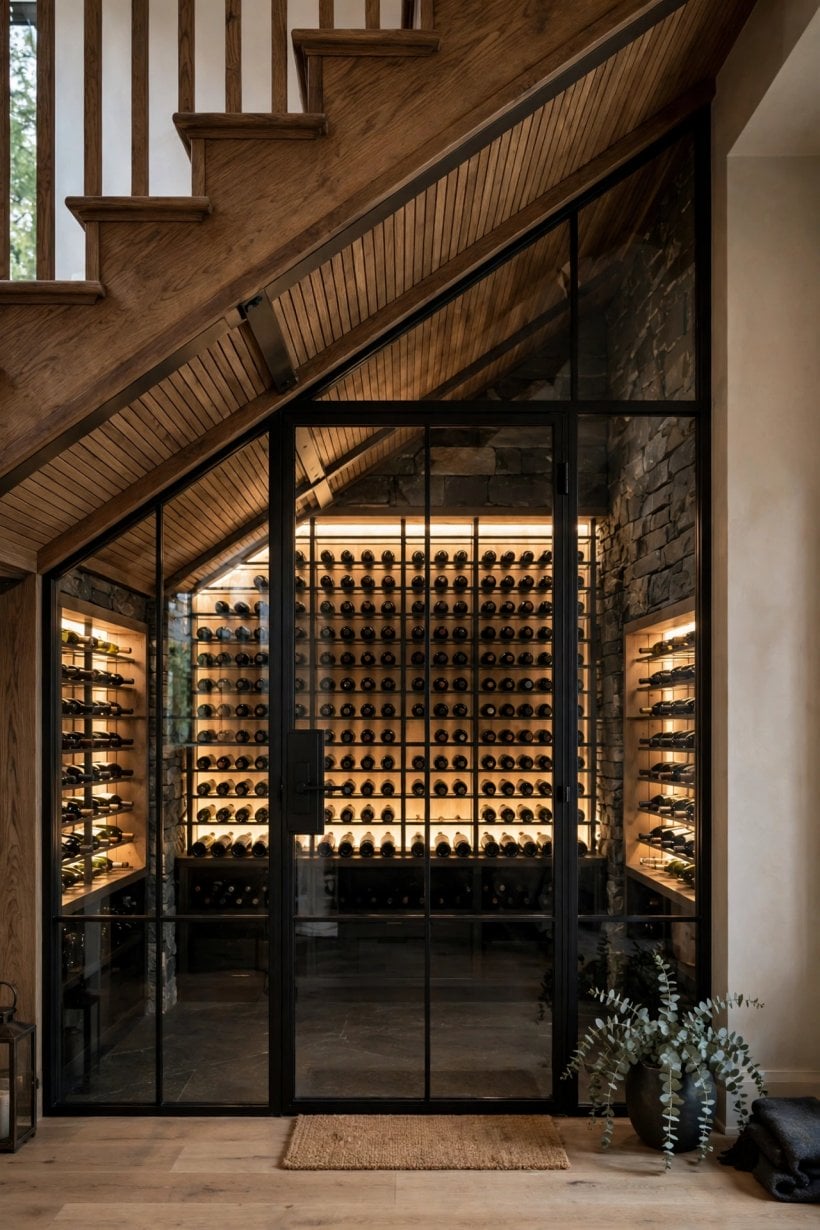
- Run soft strip lights along the shelves. Low strips tucked under rack edges wash the labels in a gentle glow and make choosing a bottle a pleasure. Because they spread light evenly at low strength, they flatter without glaring.
- Put cellar lights on a timer or a habit. The kindest light is the one that is switched off. A timer, a sensor, or simply the discipline of the door switch keeps resting bottles in the dark they prefer for all but a few minutes a day.
- Aim light at paths and labels, never at resting rows. Point spots toward the floor, the tasting table and the display row. Bottles in long storage should sit in shade even while the room is lit around them.
- Choose warm-toned bulbs. Warm light flatters wood, brick and glass and makes a small cellar feel like a room rather than a store. It also keeps colours honest when you are reading labels and judging a wine in the glass.
- Save brighter light for the tasting corner. One good lamp where glasses are poured lets you see colour and clarity properly, while the racks behind stay in their restful dimness. The contrast is what makes a cellar feel designed rather than merely dark.
Small Spaces and Clever Conversions
Most homes have no spare room to give to wine, and they do not need one. A slope of dead space under the stairs, a deep cupboard, the end of a wide hallway — each can hold a collection kindly if the racking follows the shape of the space instead of fighting it.
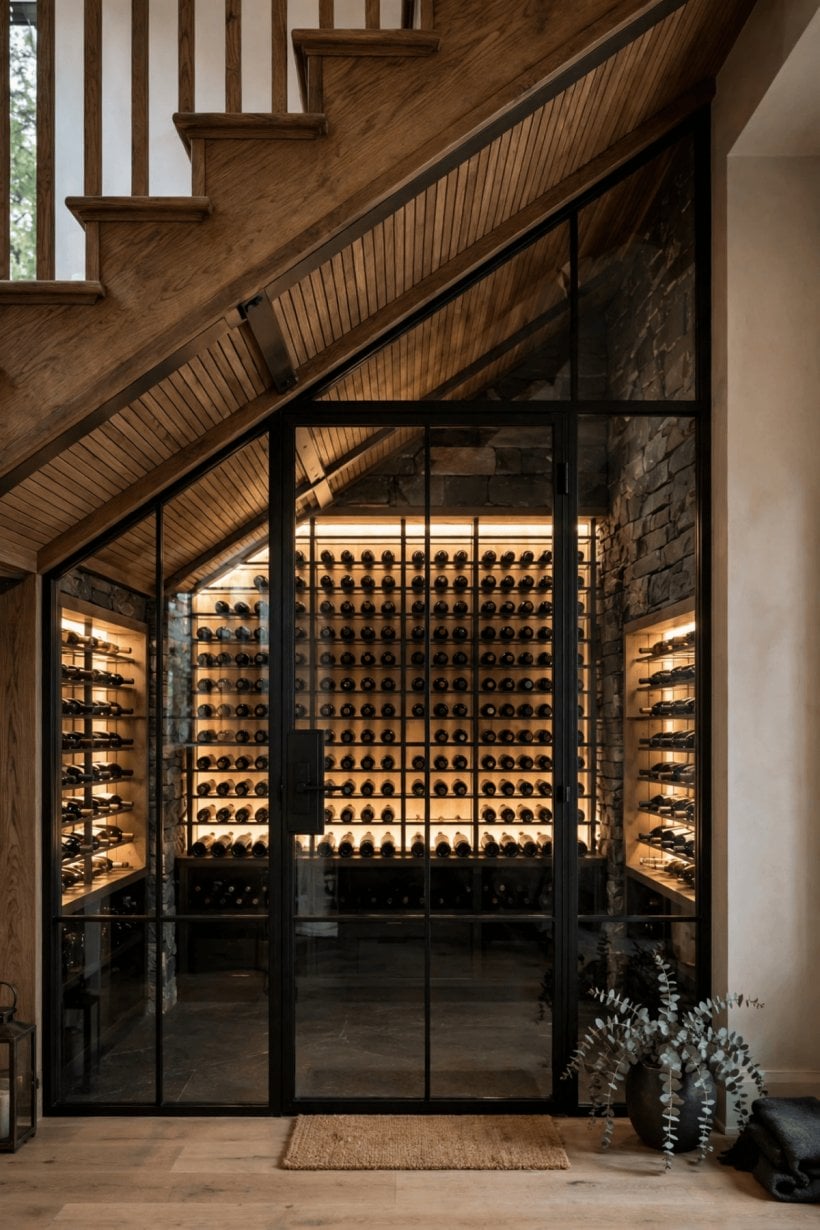
- Follow the slope under the stairs. Stepped racking that climbs with the stair slope turns the most wasted volume in the house into graduated storage: tall cubbies at the high end, short bins where the ceiling drops, and the coolest air in the home doing quiet climate work.
- Convert a spare wardrobe or deep cupboard. A cupboard with a solid door is halfway to a cellar already. Line it with slim racks, keep the door shut against light and warm air, and a modest amount of carpentry becomes a collection’s home.
- Take the end wall of a landing or hall. A shallow run of wall rails along a wide landing stores a surprising number of bottles in depth no deeper than the bottles themselves, and the rows give a plain passage real character.
- Build a tall, slim corner nook. Where one corner of a dining room stands empty, a narrow tower rack with a display row at eye level anchors the room and keeps wine where it is poured. Small footprint, daily usefulness.
- Borrow a cool pantry shelf. In a kitchen-adjacent pantry, one shaded shelf run — well away from oven heat — keeps everyday bottles close to the table. It is the simplest cellar of all, and for many homes the only one needed.
Small homes prove daily that a few well-planned square feet outperform a sprawling room planned carelessly. That lesson runs through these modern tiny house interior ideas, and it is the whole secret of the converted-cellar approach: fit the storage to the space, not the other way round.
Tasting Corners
A cellar earns its keep at the table, so give it a place to sit down. A tasting corner needs almost nothing — somewhere to set a glass, seats for two, light to see by — yet it changes the cellar from storage into the most sociable room in the house.
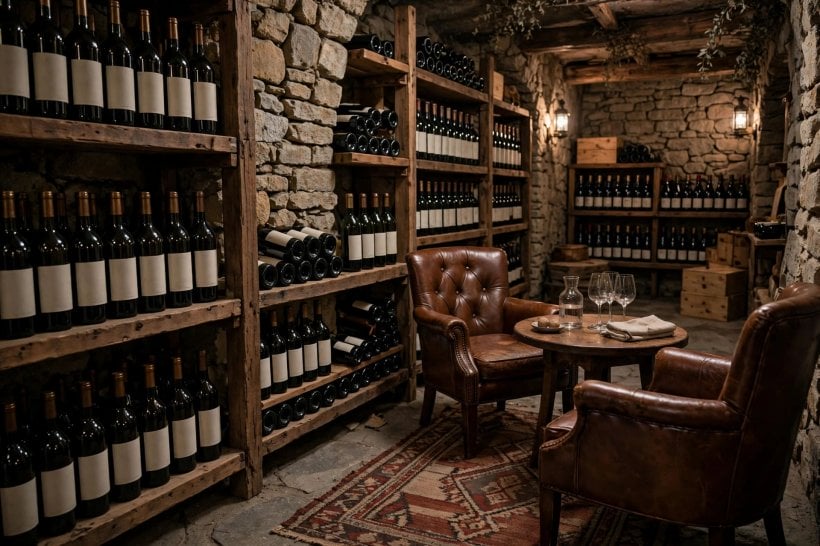
- Set a small round table among the racks. A compact table for two, close enough to reach the shelves, turns choosing a bottle into the start of the evening rather than an errand before it. Round tables soften the grid of the racking and leave walking room in tight cellars.
- Choose two chairs that invite lingering. Comfort decides how long people stay. Simple wooden chairs with a cushion each, or a narrow bench along one wall, are enough — the room itself supplies the atmosphere.
- Add a ledge for glasses and notes. A slim shelf at standing height holds glasses, a jug of water, an opener and the notebook where favourites get recorded. Keeping these small tools in one place is what turns pouring into a small ceremony.
- Keep water and plain food within reach. A carafe, a few plain crackers or bread kept in a tin — small provisions that reset the palate and slow the tasting down. The corner that feeds people a little is the one they remember.
- Soften the corner with a rug and warm light. A flat rug under the table and the lamp from the lighting plan make the seating feel settled rather than parked. Underfoot comfort matters in a cool room.
A tasting corner works on the same principle as the drink stations people build elsewhere in the house. For layout lessons in miniature — a ledge, good light and a little ceremony — see our home coffee bar design ideas for a tiny house, where a single corner carries a daily ritual with ease.
Doors, Glass and Display
The door decides how the cellar meets the rest of the home. Kept plain, it guards darkness and cool air. Made of glass, it turns the collection into a lit feature that guests drift toward. Neither is better — they are different promises, and the right one depends on where the cellar sits.
- Fit a solid door where calm matters most. A well-sealed timber door keeps light out and holds the cool in, and it asks nothing of the room beyond. For under-stair and cupboard cellars, it is the dependable default.
- Use a glass door with a dark frame to make a feature. Framed glass shows the racks as a piece of the room’s design, especially with the shelf lighting glowing softly behind it. Keep the seal snug so the display does not cost the climate.
- Choose shaded or frosted glass near daylight. Where a cellar opens off a bright room, softened glass blurs direct light before it reaches the bottles while still hinting at the rows within. It is the compromise that keeps both promises.
- Stand a few proud bottles upright on a ledge. Bottles about to be opened can stand for a short while on a display ledge by the door, labels forward, like books on a hall table. The resting collection stays on its side in the dark; only the week’s chosen few take the stage.
- Add one human touch at the door. A small chalkboard with the current favourites, a hook for the opener, a handwritten note of what arrived last — these tiny signs make the cellar feel kept by a person rather than managed by a system.
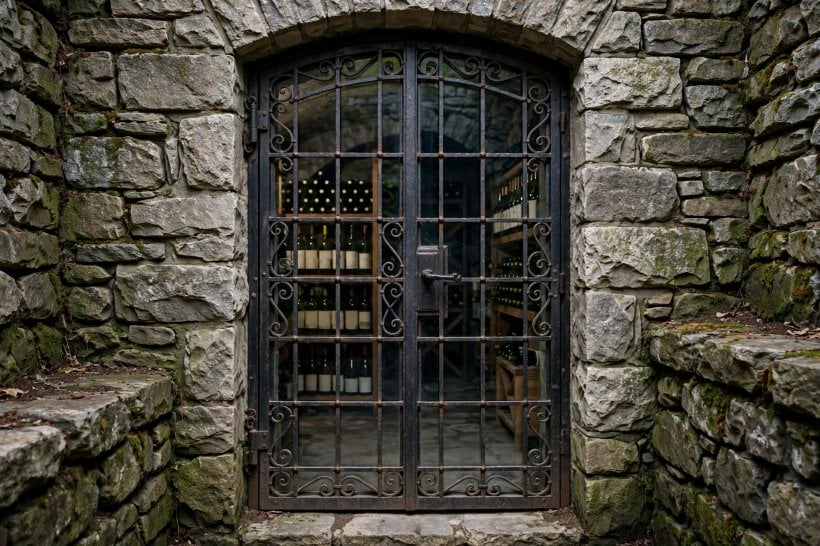
Handled with restraint, a glass-fronted cellar reads as furniture rather than storage — the same styling instinct behind the shelving and display in our tiny house living room ideas, where what is shown is always a short, edited list.
Organising the Collection
A collection stays a pleasure only while it stays findable. The organising system that works is the one simple enough to survive a busy month: broad groups, an honest list, and bottles in roughly the order they will be opened.
- Group by style and occasion, not by price. Weeknight bottles together, slow Sunday bottles together, celebrations together, and gifts in their own cubby. When you open the door already knowing the occasion, the right shelf is the one in front of you.
- Keep one simple running list. A notebook on the ledge or a note inside the door — what came in, when, and what it is waiting for. Cross things out as they are opened. The list’s only job is to stop good bottles being forgotten at the back.
- Store in drinking order. Bottles to enjoy soon at the front and at hand height; keepers deeper, higher or lower, where they will not be disturbed. Every reshuffle a bottle avoids is a small kindness to the wine.
- Leave breathing room in every rack. A cubby or two kept deliberately empty absorbs gifts, offers and holiday cases without a reorganisation. A cellar with no spare space turns every arrival into a problem.
Materials and Finishes
Cellar materials work quietly in the background: they buffer temperature, shrug off the odd drip, and set the underground mood that makes the room feel like somewhere. Honest, unfinished surfaces usually beat polished ones down here.
- Build racks from plain, sturdy wood. Untreated or lightly finished timber handles cool air and small knocks kindly, smells faintly right in a cellar, and can be repaired or extended with basic tools as the grid grows.
- Lay stone or tile underfoot. A hard, cool floor steadies the room’s temperature, sweeps clean in minutes, and forgives the occasional dripped glass completely. Add the rug only at the tasting corner, where feet stay still.
- Let brick or stone walls do climate work. Masonry absorbs the day’s warmth and releases it slowly overnight, smoothing the very swings wine dislikes. It also brings the deep, quiet character that makes even a small cellar feel established.
- Paint remaining walls deep and calm. Where walls are plaster, a dark, muted shade keeps the focus on bottles and wood, hides the odd scuff, and deepens the sense of cool shade the whole room depends on.
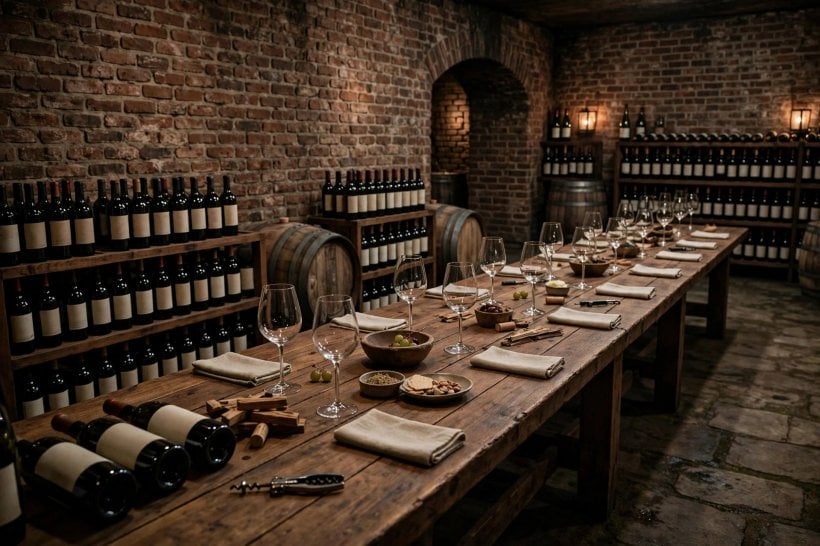
Rustic materials carry naturally from the rest of a home — the wood-and-stone mood of a tiny barn house interior is a close cousin of the classic cellar — and our guide to tiny house interior paint colors will help you pick the deep, quiet shades that suit a cellar’s remaining walls.
Care, Rhythm and Enjoyment
A cellar asks for little care, but it asks regularly. A few minutes each season keeps the racks honest, the list true and the collection turning over at the pace it was bought for — which is, in the end, drinking pace.
- Walk the racks when the seasons change. Four short visits a year: check the room still feels cool and calm, glance at the cooling if you have it, and note anything that has waited longer than planned. Make it a ritual, not a chore.
- Dust bottles and read labels as you go. A soft cloth, a quick look at corks and capsules, and a shuffle of anything dusty to the front. Handling the bottles is how a collection stays known rather than merely owned.
- Restock for the table you actually set. Buy toward the meals and evenings your household really has, and let gaps in the rack be information rather than failure. A smaller collection in constant, happy motion beats a vast one standing still.
- Open the good bottles. The finest idea in this whole guide is the last one: wine is kept to be shared. Mark ordinary Tuesdays, pour the bottle you were saving, and let the cellar do the job it was built for.
Final Considerations
A home wine cellar does not begin with a budget or a builder; it begins with a cool corner, a simple rack and a habit of keeping bottles still, dark and unhurried. Grow it one shelf at a time, keep the list honest, and let the tasting corner — however small — turn storage into hospitality. Whether your version is a single under-stair cupboard or a full room with glass doors, the measure of success is the same: bottles kept well, found easily, and opened gladly among people you like. Start with the space your home already offers, and let the collection teach you what to build next.


0 Comments