
A well-planned desert landscape turns heat, stone and sparse rain into strengths: sculptural plants, warm gravel, deep shade in the right places and almost no wasted water. It is a garden style that looks better the longer it settles in.
These seventy-five ideas cover layout, surfaces, plants, shade, water and finishing touches, so you can build a dry-climate garden in stages. Pair them with our tiny house landscaping ideas for small-plot layouts.
1. Desert Landscape at a Glance: Planning a Water-Wise Layout
Start with the bones. In dry climates the layout matters more than the plant list: group thirsty plants together, put shade where people sit, and let stone and gravel do the decorative work that lawn does elsewhere. The table summarises the building blocks used through this guide.
| Element | Popular Choices | Why It Works |
|---|---|---|
| Ground surface | Gravel, decomposed granite, stone | Permeable, low-maintenance and naturally in keeping with dry surroundings. |
| Signature plants | Cacti, agaves, aloes, yuccas | Sculptural shapes that thrive on little water once established. |
| Shade | Low-water trees, pergolas, sails | Makes patios usable and shelters younger plants from fierce sun. |
| Water | Drip irrigation, rain basins, mulch | Delivers moisture to roots instead of losing it to hot air. |
| Structure | Boulders, low walls, paths | Gives the garden year-round shape when flowers are resting. |
| Colour | Warm stone, grey-green foliage, seasonal blooms | A calm base that makes flowering moments feel dramatic. |
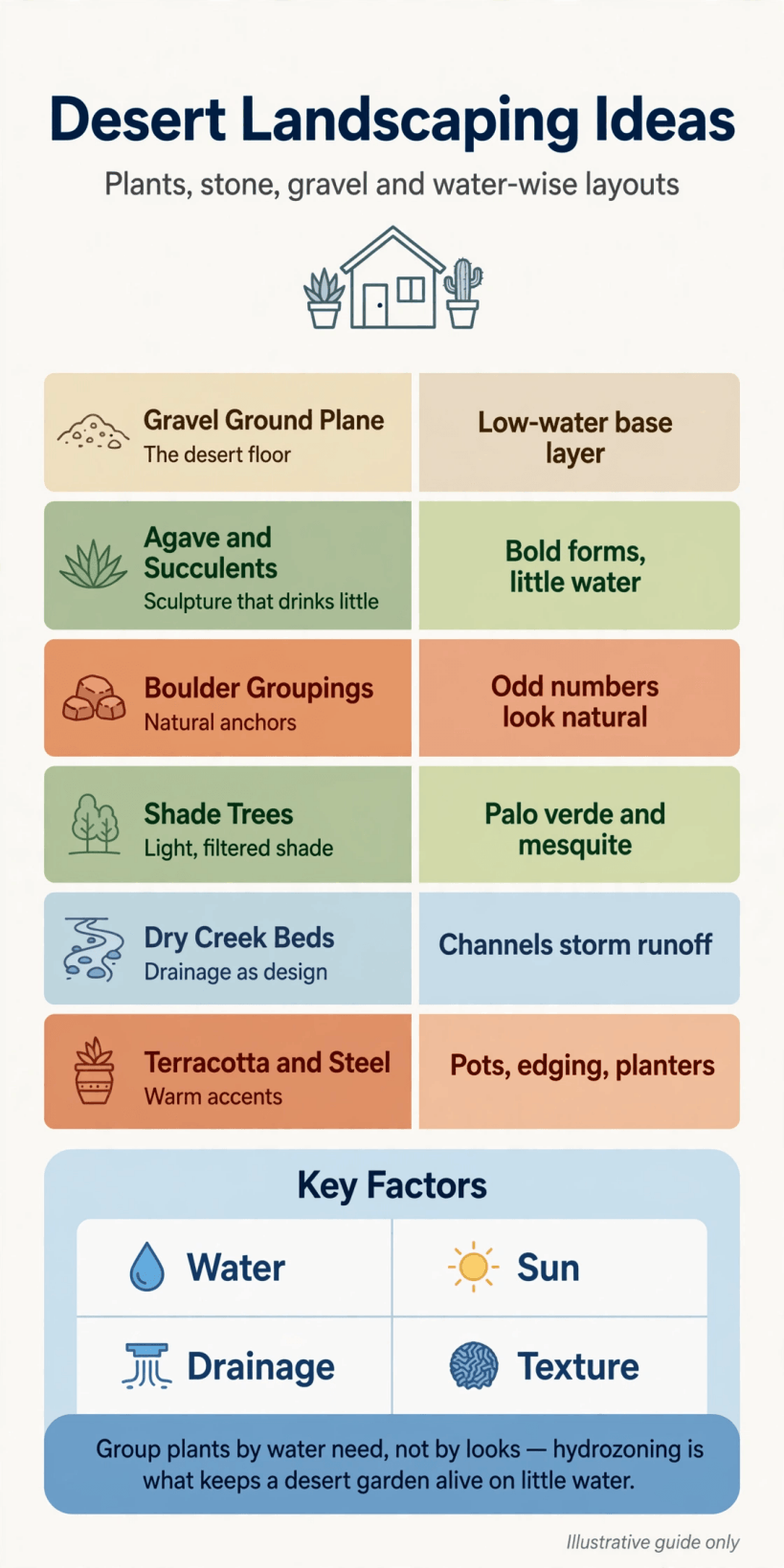
At a glance: plan zones by water need, build the stone skeleton first, then add sculptural plants and shade where you will actually sit.
Idea 1: Map Sun and Shade First
Watch where sun lands through the day before planting anything. Note fierce western exposures, reflected heat from walls and naturally shaded pockets, then place seating, tender plants and water features where conditions already suit them.
Idea 2: Zone Planting by Water Needs
Group plants with similar thirst together — a technique often called hydrozoning. Thirstier herbs and flowers live near the house and the tap; tough, established specimens further out survive on rainfall and occasional deep watering.
Idea 3: Sketch the Hardscape Before Plants
Draw paths, patio, walls and boulder positions first, because stone is hard to move later. A clear skeleton keeps the garden looking intentional even while young plants are still small and widely spaced.
Idea 4: Skip the Lawn, or Keep It Tiny
A traditional lawn is the thirstiest, neediest surface in a dry garden. Replace it with gravel, stone and planting, or keep one small patch purely where children or dogs genuinely need soft ground.
Idea 5: Plan Shelter From Hot Winds
Use walls, slatted screens and grouped shrubs to slow drying winds before they reach seating areas and young plants. Even partial shelter noticeably reduces water loss and makes outdoor evenings far more comfortable.
Idea 6: Keep and Celebrate What Is There
Existing rocks, mature shrubs and old trees are free structure and instant character. Design around them where possible: they are already adapted to your soil and microclimate, and replacing them costs money and years.
Idea 7: Limit the Palette
Choose a few gravel tones, one or two stone types and a short list of repeated plants. Restraint is what makes dry gardens look designed rather than collected, and repetition reads as calm from every angle.
Idea 8: Leave Room to Grow
Cacti, agaves and desert shrubs grow far larger than the pots they arrive in. Check mature sizes, space generously, and fill temporary gaps with gravel pattern or annual colour instead of extra permanent plants.
Compact plots benefit from the same zoning logic; our smart tiny house design ideas show how small spaces can still fit distinct zones.
2. Gravel, Stone and Ground Surfaces
Surfaces cover most of a dry garden, so they carry the design. Mix sizes and tones of stone for a natural feel, keep edges crisp, and choose permeable finishes so rare rain soaks in instead of running away.
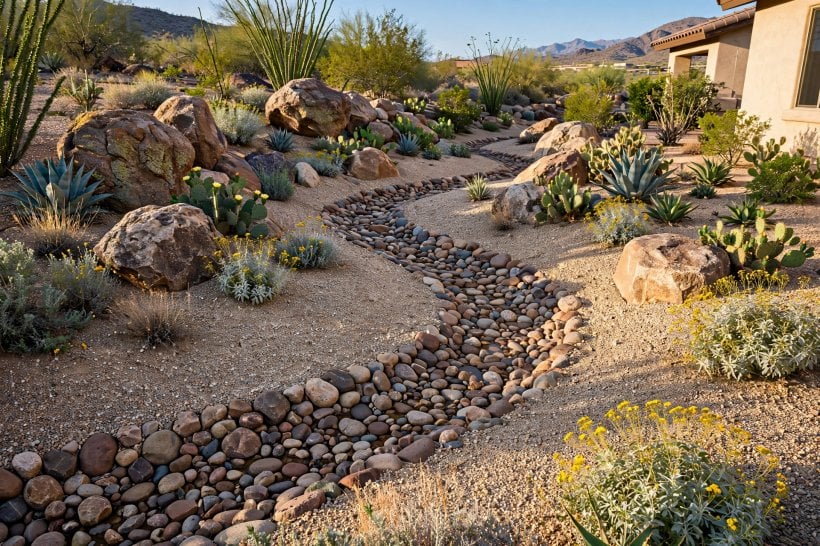
Idea 9: Decomposed Granite Paths
Crushed granite compacts into a firm, natural-looking path that suits wheelbarrows and bare feet better than loose gravel. Edge it with stone or steel so the surface stays neat and weeds stay visible and easy to pull.
Idea 10: Mixed Gravel Sizes for Texture
Blend two or three gravel sizes or tones in different zones — finer near seating, chunkier in planted areas. The subtle variation mimics natural dry ground and stops large gravel areas looking flat and monotonous.
Idea 11: A Dry Creek Bed
A winding line of river rock suggests water without using any. Run it through planting, under a small bridge or past the patio; in real rain it can double as a gentle drainage channel.
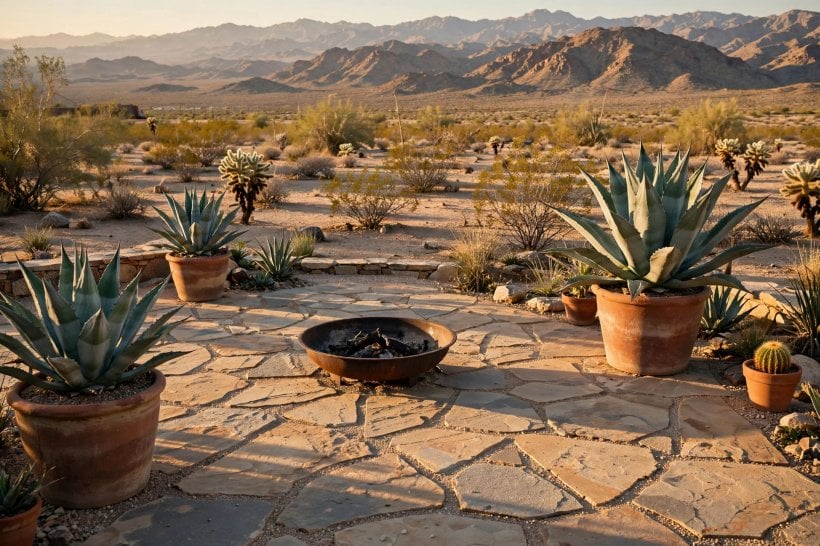
Idea 12: A Flagstone Patio
Large, irregular stone slabs with gravel joints make a patio that drains freely and feels rooted in the landscape. Choose stone with a grippy texture and lay the biggest, flattest pieces where chairs and tables will stand.
Idea 13: Boulder Groupings
Cluster boulders in uneven groups of three or five, burying a third of each stone so it looks settled, not placed. Boulders anchor planting, store a little daytime warmth and give lizards and birds perches.
Idea 14: Stone Edging Everywhere
A single row of set stones between gravel, beds and paths is the cheapest way to make the whole garden look finished. Edging stops gravel migrating, defines mowing-free zones and frames your planting shapes.
Idea 15: Crushed Rock Mulch Around Plants
A layer of small stone over soil shades roots, slows evaporation and stops mud splashing onto foliage. Keep it a little away from tender stems, and top it up where wind or birds thin it out.
Idea 16: Stepping Stones Through Gravel
Where a full path is unnecessary, wide flat stepping stones give dry footing across gravel and planted areas. Space them at a comfortable stride and set each one level so night-time trips stay safe.
For permeable surfacing comparisons beyond the garden, see our guide to eco-friendly driveway alternatives.
3. Signature Plants: Cacti and Succulents
This is the sculptural heart of the style. Use cacti and succulents as living architecture — one tall anchor, clusters of barrels or rosettes, and low mats filling the gaps — and always check local guidance on which species suit your climate and whether any need winter protection.
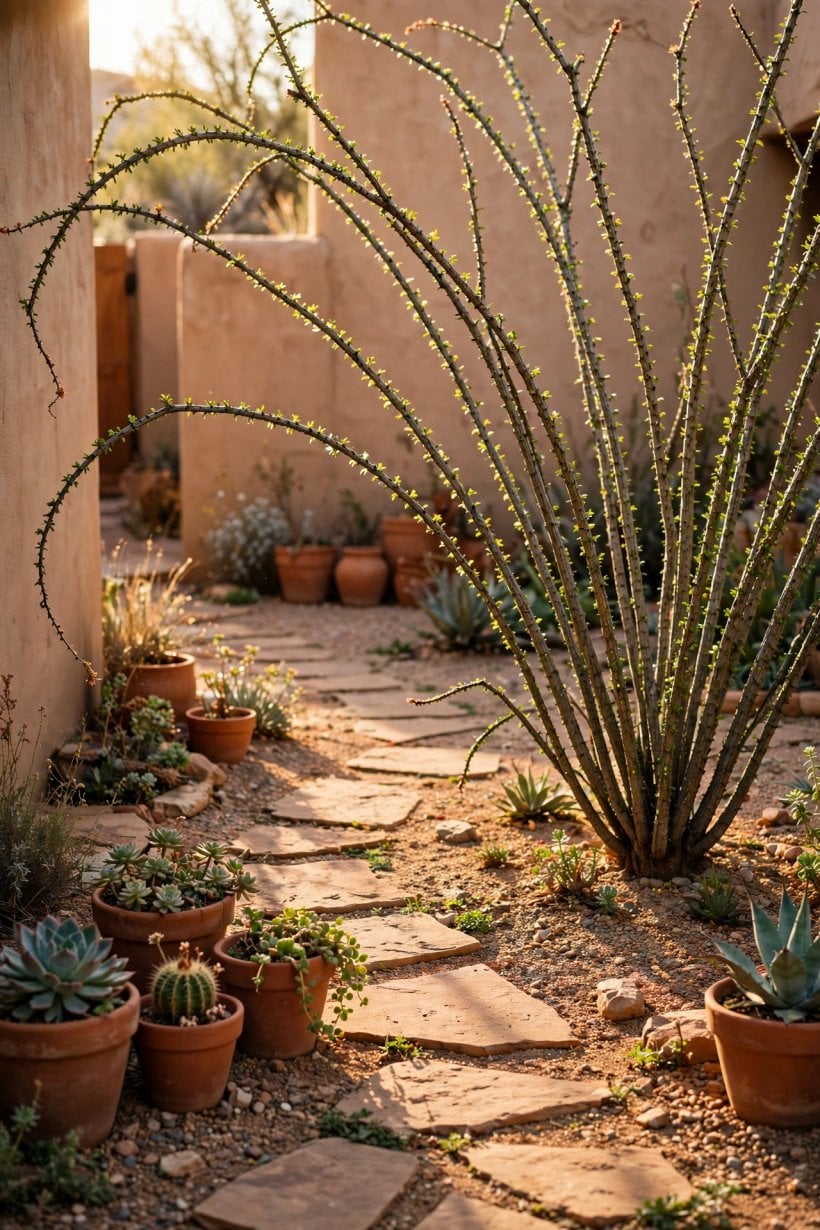
Idea 17: A Cluster of Barrel Cacti
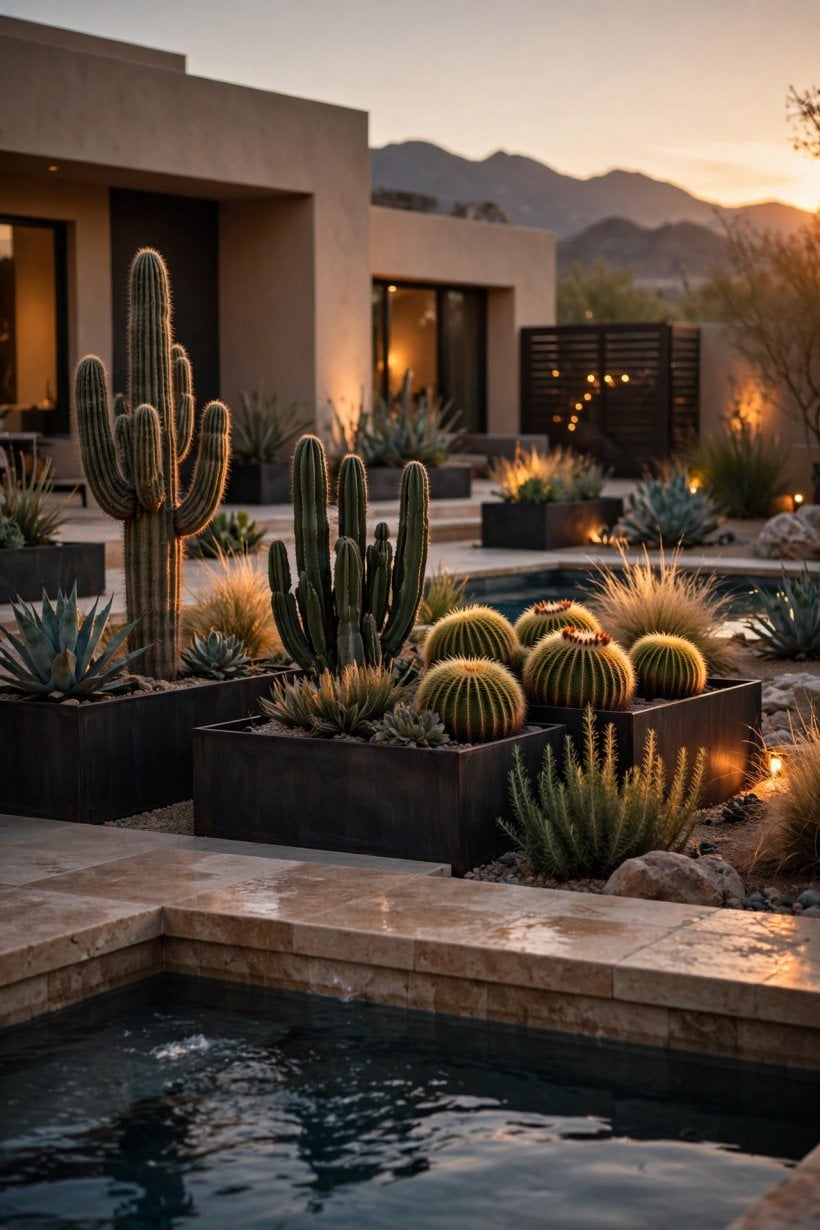
Group barrel-shaped cacti in threes at different sizes near a path corner or boulder. Their ribs and coloured spines catch low sunlight beautifully, and clustering looks natural while making watering and care simpler.
Idea 18: A Prickly Pear Hedge
A row of prickly pear forms a characterful, low-water boundary planting with spring flowers and summer fruit where conditions suit. Plant it where its spines will not brush passers-by, and give it room to spread.
Idea 19: Agave Rosettes as Sculpture
One large agave is a piece of garden architecture. Give feature rosettes their own gravel circle, pair with a boulder, and keep their sharp leaf tips well back from paths, seats and doorways.
Idea 20: A Tall Columnar Anchor
A single upright columnar cactus gives height that dry gardens often lack. Place it where its silhouette shows against sky or a plain wall — near the house corner, gate or patio edge works well.
Idea 21: Succulent Groundcover Mats
Low, spreading succulents knit bare soil between larger plants, softening gravel edges and suppressing weeds. Mix two or three leaf colours in drifts, and let them spill gently over stone edging and path margins.
Idea 22: Aloe Groupings for Winter Flowers
Aloes earn their place with tidy rosettes and, in suitable climates, long-lasting flower spikes in the cooler months. Cluster them near seating so you can enjoy visiting birds and insects at close range.
Idea 23: Yucca Accents
Yuccas bring spiky, evergreen structure and tall flower stems. Use them as punctuation at path junctions and bed corners, choosing softer-leaved types near walkways where people pass closely every day.
Idea 24: Potted Succulents by the Door
Pots let you grow tender favourites that can move under cover in cold snaps or fierce heatwaves. Group odd numbers of pots at different heights by the door for an instant, welcoming still-life.
4. Trees and Shade That Make It Livable
Shade decides whether a dry garden is a picture or a place. One well-placed tree, a simple pergola or a sail over the patio turns midday glare into dappled, usable outdoor room — and young plants establish far better with a little shelter.
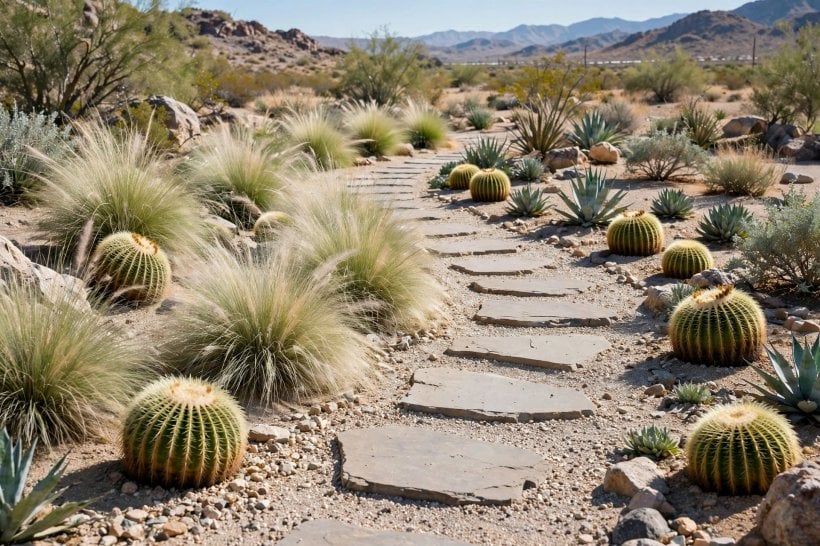
Idea 25: A Low-Water Shade Tree
Choose a tree known locally for coping with dry conditions and plant it to shade the patio or western wall. A light, airy canopy cools without plunging the garden into darkness or dropping heavy litter.
Idea 26: A Shade Sail Over the Patio
A taut fabric sail gives instant, adjustable-looking shade while a young tree grows. Angle it to block afternoon sun, fix it to strong posts or walls, and take it down ahead of severe storms.
Idea 27: A Simple Pergola
A sturdy timber or metal pergola defines an outdoor room and supports shade cloth or a suitable climbing plant. Even unplanted, its striped shadows make a plain patio feel designed and comfortably private.
Idea 28: Cluster Planting for Microclimate
Plants grouped together shade each other’s roots and trap a pocket of slightly cooler, moister air. Use this effect around newer or more delicate plants, with the toughest species on the sunny outer edge.
Idea 29: A Courtyard Tree in Gravel
A single small tree rising from a gravel courtyard is a classic dry-climate picture. Surround it with a stone ring, a bench or a few large pots, and let its canopy pattern the ground.
Idea 30: Shade the West Wall
The hottest wall of the house deserves a tree, tall shrub or trellis planting in front of it. Shading that wall cools rooms inside, protects wall finishes and creates a sheltered bed for softer planting.
Idea 31: Pots Gathered Under the Canopy
Use the dappled light beneath your tree for a collection of pots that would scorch in open sun. The grouping looks lush, stays easy to water, and can rearrange whenever you fancy a change.
Idea 32: Seasonal Shade Where Winters Are Cool
In climates with chilly winters, position trees so summer canopies shade seating while bare winter branches let low sun through. This simple placement gives you comfort in both seasons without moving a single chair.
5. Shrubs, Grasses and Flowering Colour
Structure comes from stone and succulents; joy comes from this layer. Flowering shrubs, swaying grasses and seasonal colour soften the geometry, feed pollinators and give the garden a changing calendar instead of a single static picture.
Idea 33: Ornamental Grasses for Movement
Clumping grasses add sound, motion and soft silhouettes against gravel and stone. Plant them where backlight catches their seed heads, and repeat one or two types in drifts rather than single specimens scattered about.
Idea 34: Flowering Shrubs in Waves
Choose locally suited flowering shrubs that bloom at different times, so something is always performing. Place the boldest colours where you see them from windows and seating, not hidden behind taller structure planting.
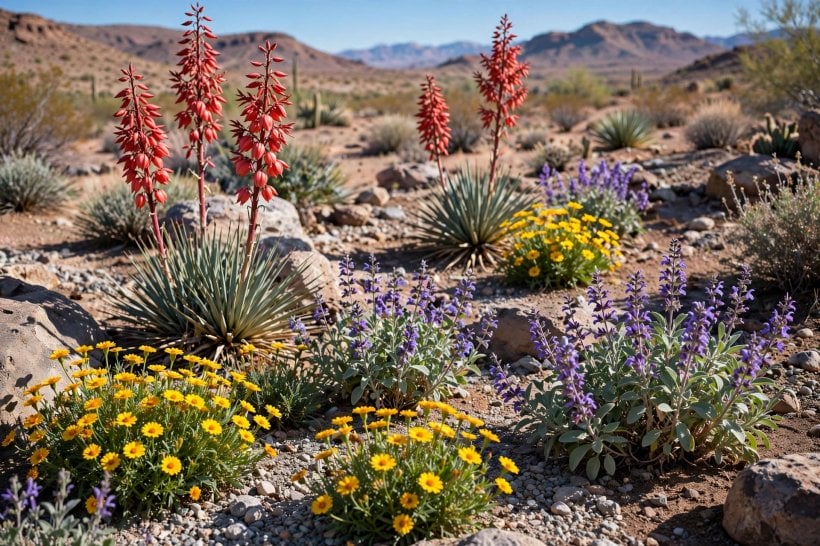
Idea 35: A Spring Wildflower Patch
Set aside one bed or slope for seasonal wildflowers suited to your region. For a few weeks it becomes the garden’s celebration; afterwards, seed heads feed birds and the patch rests under gravel mulch.
Idea 36: A Dry Herb Corner Near the Kitchen
Woody herbs such as rosemary and lavender-types enjoy lean, sunny, well-drained spots. A herb corner near the door is fragrant, useful for cooking, loved by bees and happy with far less water than vegetables.
Idea 37: Grey and Silver Foliage for Contrast
Silvery leaves reflect light, look cool at midday and make green neighbours appear richer. Thread grey-foliage plants through beds as a unifying ribbon, especially along paths and around dark boulders or pots.
Idea 38: Repeat One Plant in Drifts
Professional-looking planting usually repeats a few heroes generously. Pick one flowering shrub, one grass and one groundcover you love, and plant each in several groups so the garden feels connected from end to end.
Idea 39: Evening-Scented Planting Near Seats
Fragrance carries furthest in cool evening air. Tuck scented shrubs or herbs beside benches, the porch and bedroom windows so the garden’s perfume arrives exactly when and where you spend time outdoors.
Idea 40: Pollinator-Friendly Blooms
Simple, open flowers that bees and butterflies can work easily turn the garden into habitat. Favour locally appropriate species, avoid spraying open blooms, and leave a shallow water dish with pebbles for visitors.
6. Water-Wise Irrigation and Rain Capture
Water is the budget that matters here. The aim is simple: deliver moisture slowly, to roots, only where plants need it — and catch every free drop the sky sends. None of this needs complicated kit, just thoughtful layout and seasonal checks.
Idea 41: Drip Irrigation on Separate Zones
Drip lines deliver water to root zones with minimal evaporation. Run separate circuits for trees, shrubs and pots so each gets the right rhythm, and keep emitters visible so blockages are easy to spot.
Idea 42: Deep, Infrequent Watering
For established dry-climate plants, a long, occasional soak usually beats daily sprinkles, encouraging deeper roots. Always follow local guidance for your species and soil, and water new plants more often while they establish.
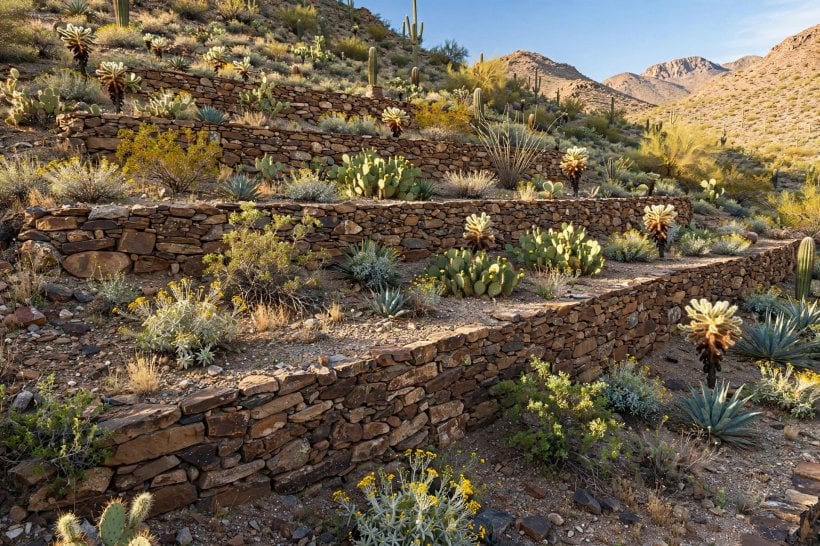
Idea 43: Swales That Slow the Rain
Shallow, level-bottomed channels on contour catch runoff and let it soak in where plants can use it. Line them with stone, plant their edges with your thirstier species, and overflow them safely in storms.
Idea 44: A Rain Basin Near Thirsty Plants
A simple mulched depression downhill of a roof outlet or path collects storm water for a favourite tree or shrub. Keep basins away from foundations and paths, and finish them with stone to prevent erosion.
Idea 45: Mulch as a Water Saver
Stone or organic mulch shades soil, slows evaporation and softens the impact of heavy rain. Renew it as it thins; it is one of the cheapest water-saving habits in any dry garden.
Idea 46: Harvest Roof Water Simply
A covered barrel under a downpipe stores water for pots and new plants. Fit a tap, a lid and an overflow route, and check local rules, which vary, before connecting anything larger.
Idea 47: A Seasonal Emitter Check
Twice a year, walk the system while it runs: unblock emitters, move them out as canopies widen, and cap lines to plants that no longer need help. Ten minutes of checking saves weeks of waste.
7. Patios, Seating and Outdoor Living
A dry garden should be lived in, not just looked at. Put your seating where shade and breeze already work, keep surfaces barefoot-friendly, and borrow the indoor-outdoor flow ideas used in our tiny house living room ideas to make the patio feel like a true extra room.

Idea 48: A Gravel Patio Under a Pergola
Gravel underfoot, shade overhead and planting on every side: the simplest successful dry-climate patio. Firm, fine gravel suits furniture best; add a stone slab landing where chairs are used most.
Idea 49: A Built-In Stone Bench
A low stone bench along a wall or bed edge gives permanent seating that shrugs off sun and storms. Cap it with smooth stone, add washable cushions for long sits, and plant scent beside it.
Idea 50: A Fire Pit Circle for Cool Nights
Desert evenings can be chilly even after hot days. A simple fire pit ringed with stone seating extends the garden’s season — check local fire rules first and keep it well clear of planting and fences.
Idea 51: Dining in Reliable Shade
Place the outdoor table where shade is guaranteed at mealtimes — under a tree, sail or pergola — rather than hoping an umbrella copes. Nearby herbs and a lantern-lit path make evening meals effortless.
Idea 52: A Hammock Between Sturdy Posts
Two strong posts, dappled shade and a view of your best planting: a hammock is the cheapest luxury in the garden. Set posts firmly, and plant soft groundcover beneath for barefoot landings.
Idea 53: A Reading Nook With Screen Planting
A single comfortable chair, a small side table and a screen of grasses or shrubs creates a private retreat in a corner. Choose the spot for morning light and afternoon shade if you can.
Idea 54: Low Walls That Double as Seating
Build retaining and boundary walls at comfortable sitting height with a smooth cap, and they become overflow seating for gatherings. Walls at this height also make raised beds easy to tend without bending.
8. Paths, Walls and Boundaries
Structure gives the garden its manners. Clear paths keep gravel out of shoes and beds undisturbed, while low walls and light screens create privacy without the fortress feeling that tall, solid barriers bring to small plots.
Idea 55: A Gently Curved Gravel Path
A slow curve makes a small garden feel larger and reveals planting gradually. Keep the curve purposeful — to a gate, bench or feature tree — and edge both sides so the shape stays crisp.
Idea 56: A Gabion-Style Stone Wall
Wire baskets filled with local stone make sturdy, permeable walls and benches with real texture. They suit dry gardens beautifully, shelter small wildlife in their gaps and need no mortar or deep foundations for low heights.
Idea 57: A Low Adobe-Look Wall
Rendered low walls in warm earth tones echo traditional dry-region building and pair perfectly with gravel and terracotta. Cap them with tile or stone to shed rain, and pierce them with a gate for welcome.
Idea 58: A Slatted Timber Screen
Horizontal slats filter wind and views while letting air and striped light through. Use them to hide bins and utilities or to back a seating nook, and stain them to match your pergola.
Idea 59: A Gate in an Accent Colour
Paint the garden gate a confident colour — deep teal, rust red or classic black — and repeat it in pots or cushions. It is a small surface with a big signalling job: this way in.
Idea 60: Path Lighting at Ground Level
Low, downward lights mark path edges without turning the garden into a runway. Space them at corners and steps first, choose warm-toned fittings, and let the rest of the garden stay deliciously dark.
Idea 61: Raised Beds Edged in Stone or Steel
For herbs, flowers or a few vegetables, raised beds concentrate soil and water where they count. Edge them in stone or steel to match the garden’s skeleton, and keep them within hose or drip-line reach.
9. Lighting, Pots and Finishing Details
The last layer is the personal one. A few large pots, warm lights aimed at your best plants and one or two pieces of art give the garden a point of view — the same way colourful accents do indoors, as our colourful tiny house interior ideas demonstrate.
Idea 62: Uplight One Feature Plant
A single well-aimed uplight under a sculptural agave, cactus or small tree creates theatre after dark. One dramatic highlight beats a dozen competing glows, and it guides guests naturally toward the door.
Idea 63: Lanterns Along the Path
Portable lanterns — solar or candle — soften the route from gate to door and move wherever the evening needs them. Group them at steps, corners and beside seats rather than spacing them like runway markers.
Idea 64: Large Terracotta Pots
Big clay pots suit dry gardens in colour and character, and their weight resists wind. Group them in threes, raise them slightly for drainage, and plant each with one generous specimen rather than a fussy mixture.
Idea 65: A Touch of Patterned Tile
A small panel of patterned tile on a wall, step riser or tabletop adds craft and colour without watering anything. Keep the area modest so it reads as jewellery, not a second garden competing for attention.
Idea 66: One Piece of Garden Sculpture
A weathered metal shape, carved stone or piece of driftwood gives the eye a resting place among plants. Choose something that suits the scale of your biggest planting and let everything around it stay simple.
Idea 67: Tidy Numbers, Mailbox and Hardware
Clear house numbers, a sound mailbox and matching gate hardware finish the approach to the house. In a spare, stony garden these small metal details stand out pleasantly, so choose one finish and repeat it.
Idea 68: Shade Cloth for Young Plants
Temporary shade cloth over new or tender plants during the fiercest weeks helps them establish without scorching. Remove it gradually as they harden off, and store it ready for heatwaves and late frosts alike.
10. Care, Seasons and Keeping It Thriving
Dry gardens are low-maintenance, not no-maintenance. A light seasonal rhythm — tidy, top up, check water, plant in the kind months — keeps everything looking deliberate with a fraction of the effort a thirsty garden demands.
Idea 69: A Seasonal Tidy Rhythm
Little and often wins: sweep gravel back onto paths, remove spent flower stems and pull weeds while they are small. Short, regular sessions stop any single job becoming a dreaded weekend project.
Idea 70: Top Up Gravel and Mulch
Thin patches make the whole garden look tired. Keep a small stock of your gravel and stone, top up edges and plant circles each season, and rake patterns back where feet have scuffed them.
Idea 71: Prune Lightly, After Flowering
Most dry-climate shrubs need only the removal of dead wood and shaping after they bloom, following guidance for each species. Avoid hard shearing into balls; natural shapes suit this garden style far better.
Idea 72: Watch for Pests and Stress Early
Stroll the garden weekly and look closely: a thirsty plant, a chewed leaf or a blocked emitter is easy to fix early. Healthy, unstressed plants shrug off most problems without any intervention at all.
Idea 73: Refresh Pots Seasonally
Pots are your changeable colour. Swap tender specimens for the season, feed lightly according to the plant’s needs, and scrub empty pots before replanting so the collection always looks like a deliberate display.
Idea 74: Plant New Additions in Cooler Months
Where your climate allows, add permanent plants when heat eases, so roots establish before their first fierce summer. Follow local planting calendars, water new arrivals faithfully at first, then taper as they settle.
Idea 75: Keep a Simple Garden Journal
A notebook or phone note of what bloomed when, what struggled and what you changed turns seasons into knowledge. Next year’s decisions get easier, and your watering gets smarter, with every page you add.
Final Considerations
Build the skeleton first — zones, stone, shade — then plant generously but patiently, and let water wisdom guide every choice. Costs vary widely with stone sources, plant sizes and how much work you do yourself, so phase the project: surfaces and structure one season, planting the next. Choose species with local advice, respect your climate’s extremes, and remember that the most successful dry gardens look like they belong exactly where they are. For more small-space inspiration, explore our modern tiny house interior ideas and tiny barn house interior ideas next.


0 Comments