

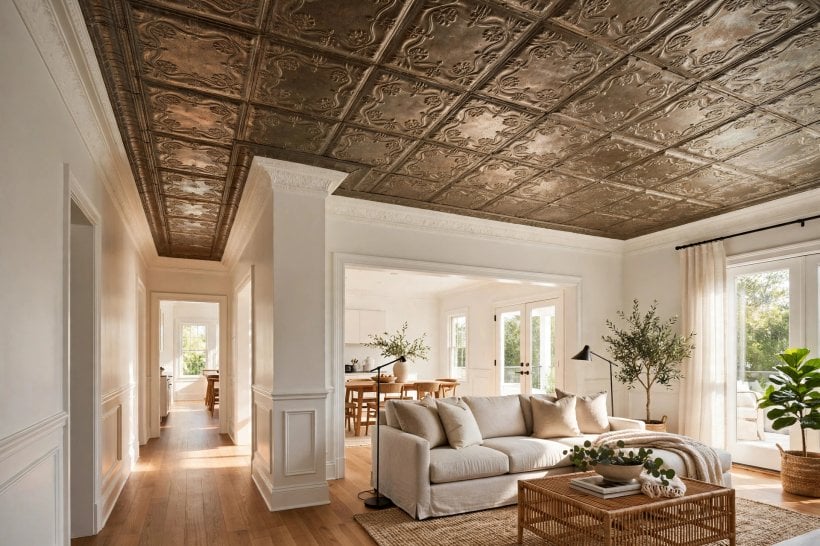
The ceiling is the largest uninterrupted surface in most rooms, and the one most often left as plain white plaster by default. Give it beams, coffers, wood or honest colour and the whole room changes register without moving a single wall.
These 40 house ceiling ideas work through the whole surface — structure, wood, paint, height, light and the small-room tricks — with the practical checks that keep the fifth wall looking deliberate.
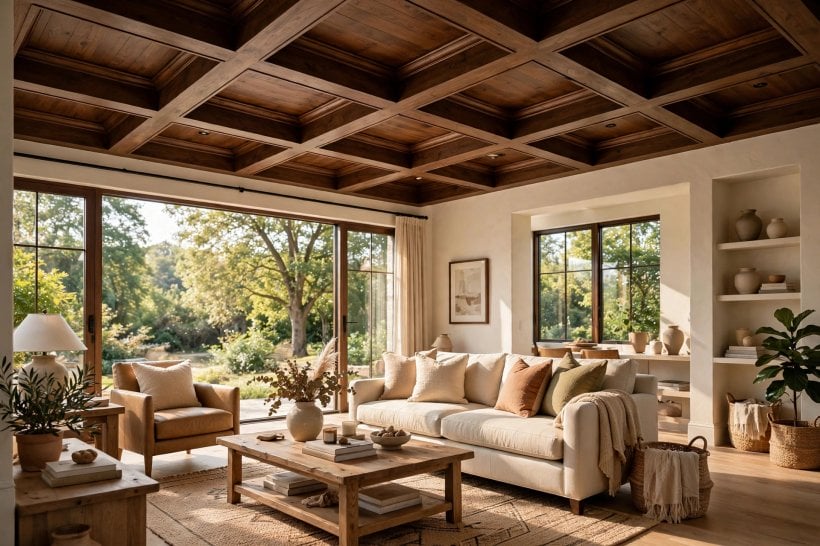
1. House Ceiling Ideas at a Glance
A ceiling is the fifth wall of a room, and it carries more attributes than its usual coat of white suggests: height, structure, material, colour, light and sound all live up there. Treated well, house ceiling ideas change how big a room feels, how warm it sounds, and where the eye rests. Treated as an afterthought, the ceiling quietly caps the ambition of everything below it. This overview keeps the ceiling general on purpose — the broad map of options — because the detailed profiles, finishes and room-specific versions each deserve their own deep dive once you know which direction suits your house.
| What makes the biggest difference? | Structure and height first — beams, coffers and vaults change the architecture; paint and paper only change the finish. |
| What is the cheapest transformation? | Colour. A painted ceiling costs little more than the standard white and changes the mood of the whole room. |
| What suits a low ceiling? | Flat, light, unbroken surfaces, recessed lighting and detail kept to the edges — anything that hangs down or breaks the plane works against you. |
| What suits a high ceiling? | Warmth and scale: beams, wood, deeper colour and statement lighting stop a tall room feeling like a hall. |
| Where do people go wrong? | Choosing a ceiling treatment room by room with no thread between them — the best houses repeat one or two ceiling ideas throughout. |
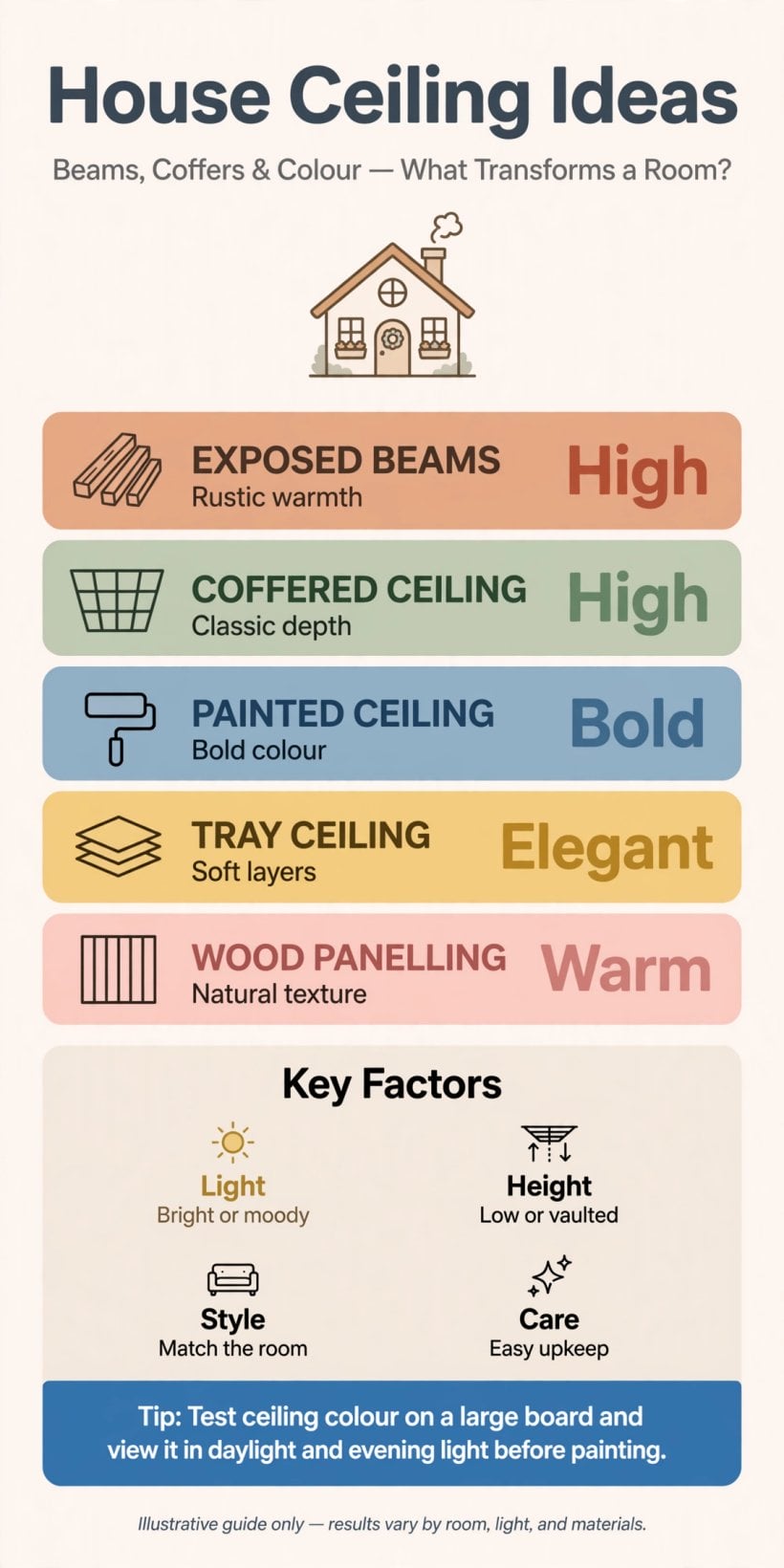
At a glance: decide the ceiling’s job in each room — height, warmth, light or calm — then pick the treatment that does that job.
2. Beams and Exposed Structure
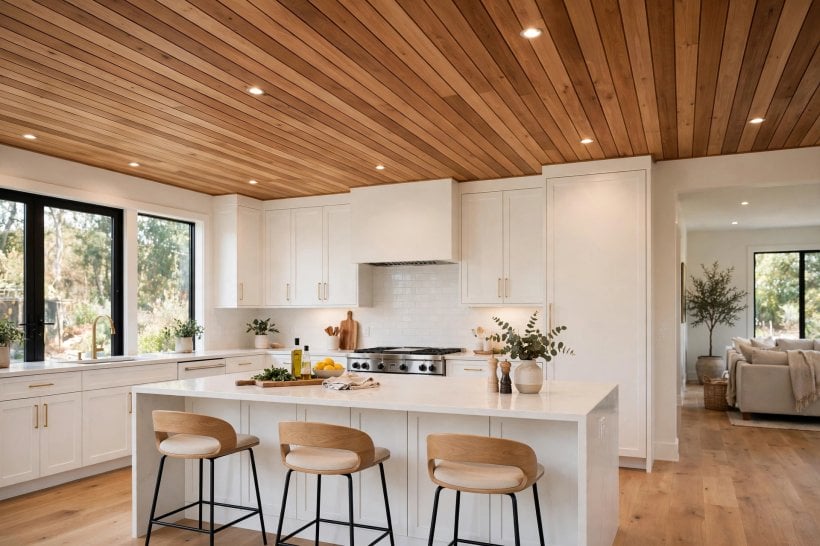
Beams are the oldest ceiling decoration there is, because for centuries they were simply the structure, left visible. Real or convincingly added, they give a ceiling rhythm, direction and scale — the same reason the tall rooms in our tiny house plans with high ceilings read as generous rather than empty.
1. Run Real or Faux Timber Beams Across the Short Span
Beams crossing the shorter dimension make a room feel wider and the ceiling lower in a good way — sheltered rather than shrunk.
2. Keep Beams Honest in Spacing and Scale
Even spacing at structural-looking intervals, sized in proportion to the room. Randomly placed thin beams read as decoration; regular, chunky ones read as architecture.
3. Stain Beams Dark Against a Pale Ceiling
The classic contrast: dark timber over white plaster. It grounds tall rooms and gives white-walled schemes their missing weight.
4. Paint Beams the Ceiling Colour for Quiet Texture
Same-colour beams give shadow lines and rhythm without contrast — the right register for calm, modern rooms that still want detail.
5. Expose Real Joists Where They Exist
In older houses and conversions, the structure may already be there under the plaster. Opening it up is dusty work with a large reward — check what is actually above before promising it.
3. Coffers, Trays and Recessed Detail
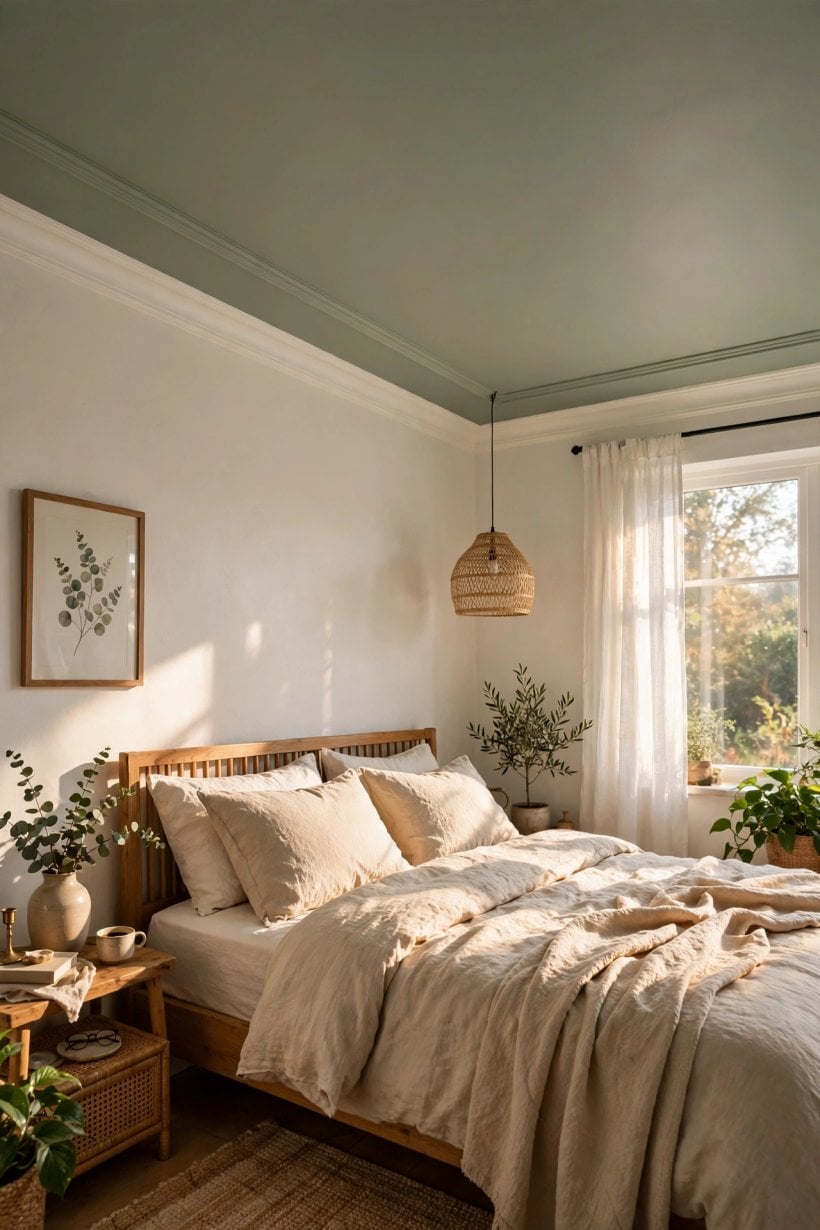
Recessed geometry — coffers, trays, shallow panels — adds formality and shadow play without lowering the ceiling’s centre. These are carpentry and plasterwork exercises: the patterns in our home interior design ideas show how often a ceiling’s detail, not its height, is what makes a room feel finished.
6. Build a Coffered Grid in a Formal Room
Sunken square panels in a regular grid suit dining rooms and studies. The depth can be modest — the shadow lines do the work, not the drop.
7. Use a Tray Ceiling to Centre a Room
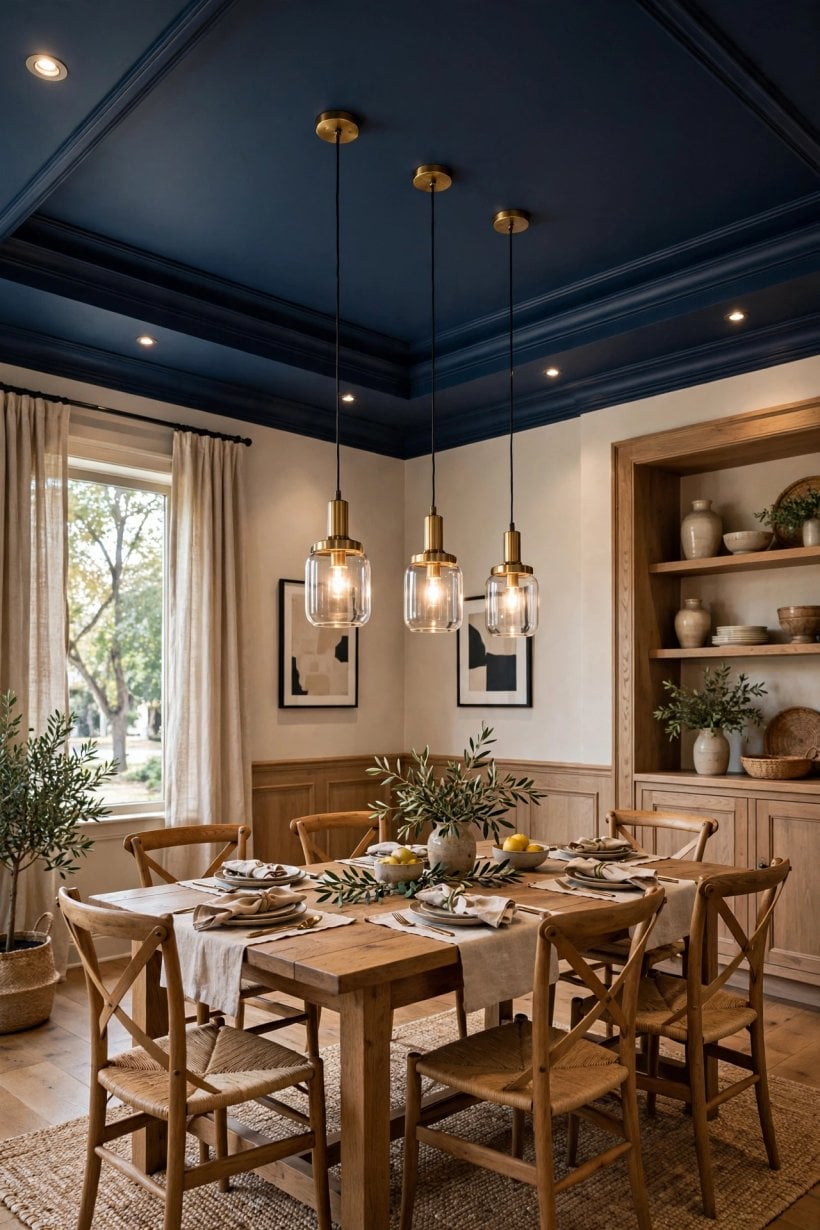
A single recessed rectangle in the middle of the ceiling centres the furniture below it and gives pendant lighting a natural home.
8. Add Shallow Panel Moulding on a Flat Ceiling
Thin applied mouldings in rectangles give a plain ceiling tailored detail at minimal cost and zero lost height — a renter-adjacent trick in spirit.
9. Step the Ceiling Edge Instead of the Middle
A stepped perimeter — a lowered border around a raised centre — defines a seating zone and hides curtain tracks and LED strips in the step.
10. Keep Recess Detail Symmetrical
Coffers and trays live or die on alignment with the room’s walls, windows and furniture. A grid that ignores the room’s geometry looks wrong forever.
4. Wood, Planks and Panelling
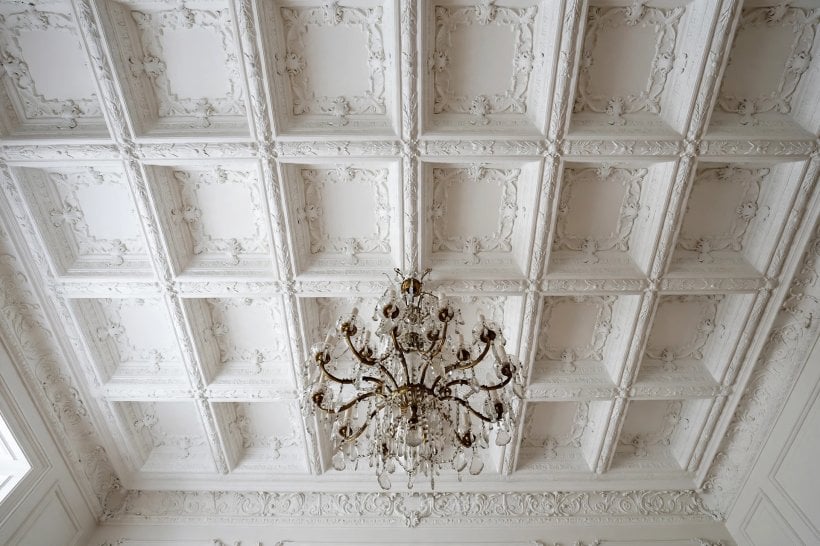
Wood overhead changes a room’s temperature — visually and acoustically. Planks, tongue-and-groove boards and veneered panels soften echoes and make large rooms feel held rather than hollow, a quality the calm schemes in our modern interior design ideas use again and again.
11. Line the Ceiling With Tongue-and-Groove Boards
Run boards along the room’s length to stretch it, or across to widen it. Painted white, they give texture without darkness; left natural, they give warmth.
12. Try a Whitewashed Wood Ceiling for Light Warmth
A pale wash keeps wood’s grain and softness while bouncing light almost like paint — the finish for rooms that want wood without the cabin register.
13. Use Wide Planks for a Calmer, Modern Grain
Fewer, wider boards mean fewer lines and a quieter surface. Narrow boards read busy and cottage-like; wide planks read architectural.
14. Take Wood Up and Over From a Wall
Continuing a wood wall finish across the ceiling wraps a seating or sleeping zone in one material — a strong move in open-plan rooms that need defining.
15. Mind the Weight and the Fixings
Solid timber overhead is heavy and moves with the seasons. Boards need proper fixing into joists and room to expand; veneered panels are the lighter alternative.
5. Paint and Colour Overhead
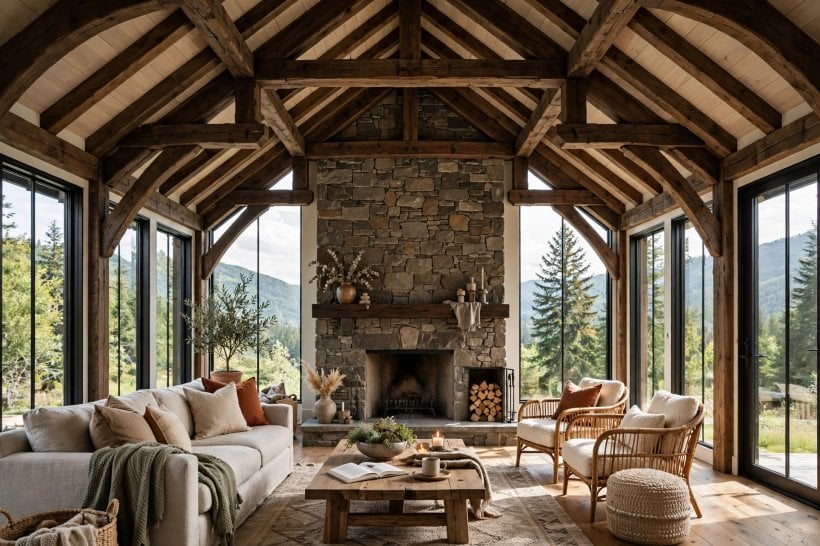
Colour is the fastest ceiling idea there is, and the one with the widest range — from a whisper of tint to a full dark canopy. The layered schemes in our interior design ideas for homes treat the ceiling as part of the palette, never as an exception to it.
16. Paint the Ceiling a Deep Colour in a Tall Room
Dark overhead lowers a lofty ceiling visually and makes evening rooms feel intimate. It is the boldest cheap change in this whole list.
17. Tint the Ceiling With the Wall Colour, Softened
A paler version of the wall colour wraps the room gently and removes the hard white line where wall meets ceiling.
18. Keep Low Ceilings Pale and Matte
Light, flat finishes push a low ceiling away. Gloss and dark colour both bring it closer — sometimes wanted, usually not in a small room.
19. Use the Ceiling as the Room’s One Bold Surface
When walls and furniture are quiet, a saturated ceiling colour carries the whole scheme — and it is a weekend’s work to change when tastes move.
20. Test Colour on a Board, in Both Lights
Overhead colour reads darker than the same paint on a wall, and daylight and lamplight judge it differently. The infographic’s tip exists because ceilings forgive guesses least.
6. Vaulted, Sloped and High Ceilings
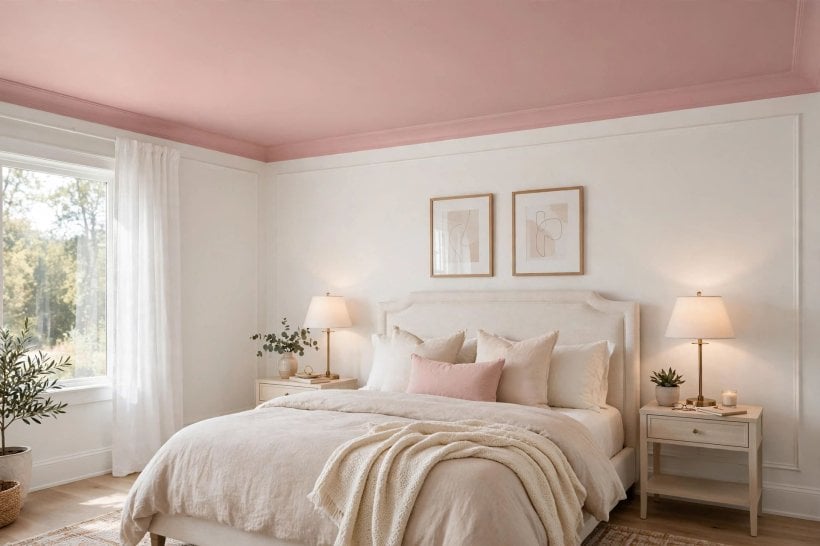
Height is the ceiling attribute people ask for by name. Vaults, slopes and cathedral profiles buy volume and light, and the contemporary houses in our contemporary home design ideas show how that volume earns its keep when it is planned, not just tall.
21. Follow the Roof With a Vaulted Ceiling
Plastering the underside of the roof slope gives the room the roof’s full geometry — dramatic, and honest about the structure above it.
22. Add a Ridge Beam or Ties as the Detail
On a vault, the structure is the decoration: an expressed ridge beam, collar ties or king posts give the eye the rhythm beams give a flat ceiling.
23. Glaze the Gable End Under a Vault
Glass following the slope up the end wall is the vault’s showpiece — budget for shading, or summer will make the argument against it.
24. Warm a Tall Room From Above
High ceilings pool warm air above head height. Fans that push air down gently, and heating planned for the volume, keep the drama comfortable.
25. Give a High Ceiling One Large Light
Scale is the rule: a small pendant in a tall room looks lost. One generous fitting, or a cluster at varied heights, matches the volume.
7. Lighting Built Into the Ceiling
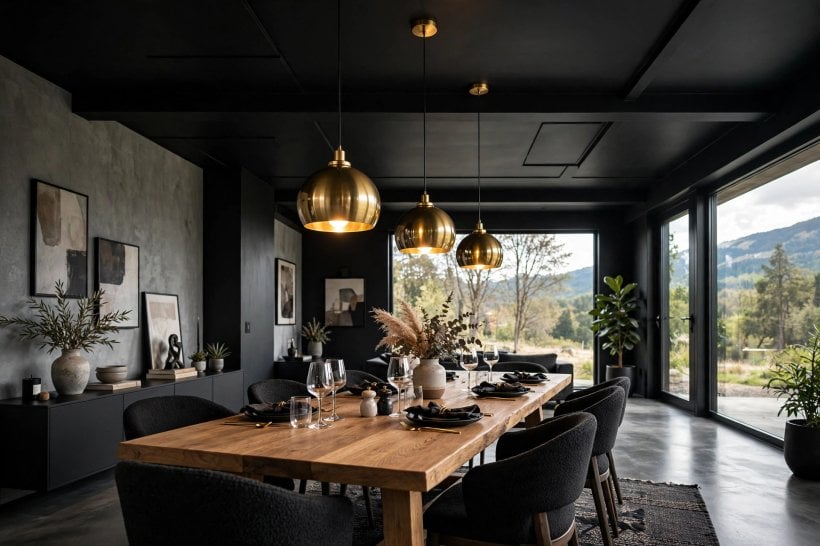
Ceiling and lighting are one decision wearing two names. The fittings either interrupt the surface or disappear into it, and the layered approach in our modern living room interior design ideas — ambient, task and accent from different heights — starts at the ceiling.
26. Recess Downlights on a Thoughtful Grid
Recessed lights keep a ceiling clean, but spacing is everything: even grids over light-washed walls, never a random constellation over the sofa.
27. Wash the Ceiling With Cove or Uplighting
Light bounced off the ceiling is the softest light a room can have. A cove, pelmet or uplighting shelf makes low ceilings feel higher, too.
28. Centre a Pendant Over the Furniture, Not the Room
Pendants belong over tables, islands and beds — the furniture’s centre, which is often not the ceiling’s. Wire for the furniture plan, not the geometry.
29. Fit a Ceiling Fan Where Air Matters
In warm climates a fan is ceiling infrastructure. Choose the drop length for the ceiling height so the blades work at the level people live at.
30. Plan Circuits Before the Ceiling Closes
Every fitting, fan and speaker is easy before the plaster and painful after it. The ceiling plan belongs in the first fix, not the decorating stage.
8. Low Ceilings: Making Them Feel Higher
Most houses have more low ceilings than tall ones, and the discipline is subtraction: keep the plane unbroken, the colour light, and the detail at the edges. The compact-room thinking in our small home interior design ideas applies overhead exactly as it does at floor level.
31. Keep the Surface Flat and Unbroken
No beams, no drops, no chunky coving. A low ceiling’s best feature is a clean plane the eye slides across without catching.
32. Run Curtains and Doors Full Height
Vertical lines that reach the ceiling pull the eye up and make the wall — and the ceiling at its top — read taller than it is.
33. Use Flush or Semi-Flush Fittings Only
Nothing should hang into the room’s limited height. Flush fittings, recessed lights and wall washers keep every centimetre for people.
34. Paint Ceiling and Walls as One Wrap
Same colour, or ceiling a shade lighter, with no contrasting cornice line: the boundary blurs and the room’s height becomes hard to judge — in your favour.
35. Keep Patterns Off a Low Ceiling
Pattern shrinks overhead surfaces. Save print for cushions and art, where it can be changed when it tires, and let the low ceiling stay quiet.
9. Ceilings in Kitchens, Bathrooms and Small Rooms
Working rooms judge ceilings by moisture, grease and cleaning rather than drama. Small rooms, meanwhile, feel a ceiling treatment at double strength — the surface is simply closer. The compact solutions in our small space interior design ideas make the same point at every scale.
36. Choose Washable Finishes Where Steam Lives
Bathrooms and kitchens need ceiling paints and materials rated for humidity. A beautiful finish that mildews at the corners is not beautiful for long.
37. Hide Kitchen Services in a Modest Bulkhead
A shallow dropped section over the worktop run conceals extraction ducting and carries downlights — lower over the counters, full height over the people.
38. Match a Small Room’s Ceiling to Its Ambition
A tiny room can take one strong ceiling gesture — deep colour, or wood — precisely because it is small. Commitment at small scale reads as confidence.
39. Keep Bathroom Ceilings Simple and Sealed
Flat, moisture-proof and easy to wipe beats detailed every time where showers steam daily. Save the coffers for the dry rooms.
40. Repeat One Ceiling Idea Through the Whole Home
The thread matters more than any single treatment: one beam style, one colour logic, one lighting family, repeated with variations, is what makes a house feel designed.
10. Materials, Costs and Checks Before You Commit
Ceiling work divides into three cost families. Paint and applied moulding are finish-level money — materials and a weekend. Plaster detail, coffering and panelling are carpentry money — skilled labour measured in days, quoted per room. Structural change — vaulting, raising, exposing joists — is building money, with engineering, building control and making-good all in the same bill. Quote the family you are actually in before comparing prices across it.
Run the checks in order. Height: what does the treatment cost in headroom, and can the room pay it? Structure: is anything overhead load-bearing, and does the plan need an engineer’s word? Services: what wiring, ducting and pipework already runs in the ceiling void, and where will your fittings land against it? Light: does the treatment help or fight the room’s daylight? Sound: hard, high ceilings echo; soft materials and lower planes calm a room. And the unglamorous one: access — can you still reach the junction box, the stopcock and the loft hatch after the beautiful ceiling goes up?
Final Considerations
The ceiling rewards the same discipline as every other surface: decide its job, choose one idea per room, and repeat a thread through the house. Beams, coffers, wood, colour, height and light are all means to that end — the rooms that feel designed are the ones where the fifth wall was given a purpose, not just a coat of white.
Start with the room you live in most, and with the cheapest honest change — usually colour or lighting. Live with what it does to the room before committing the whole house, and let the ceiling you choose there set the pattern the rest follow.


0 Comments