

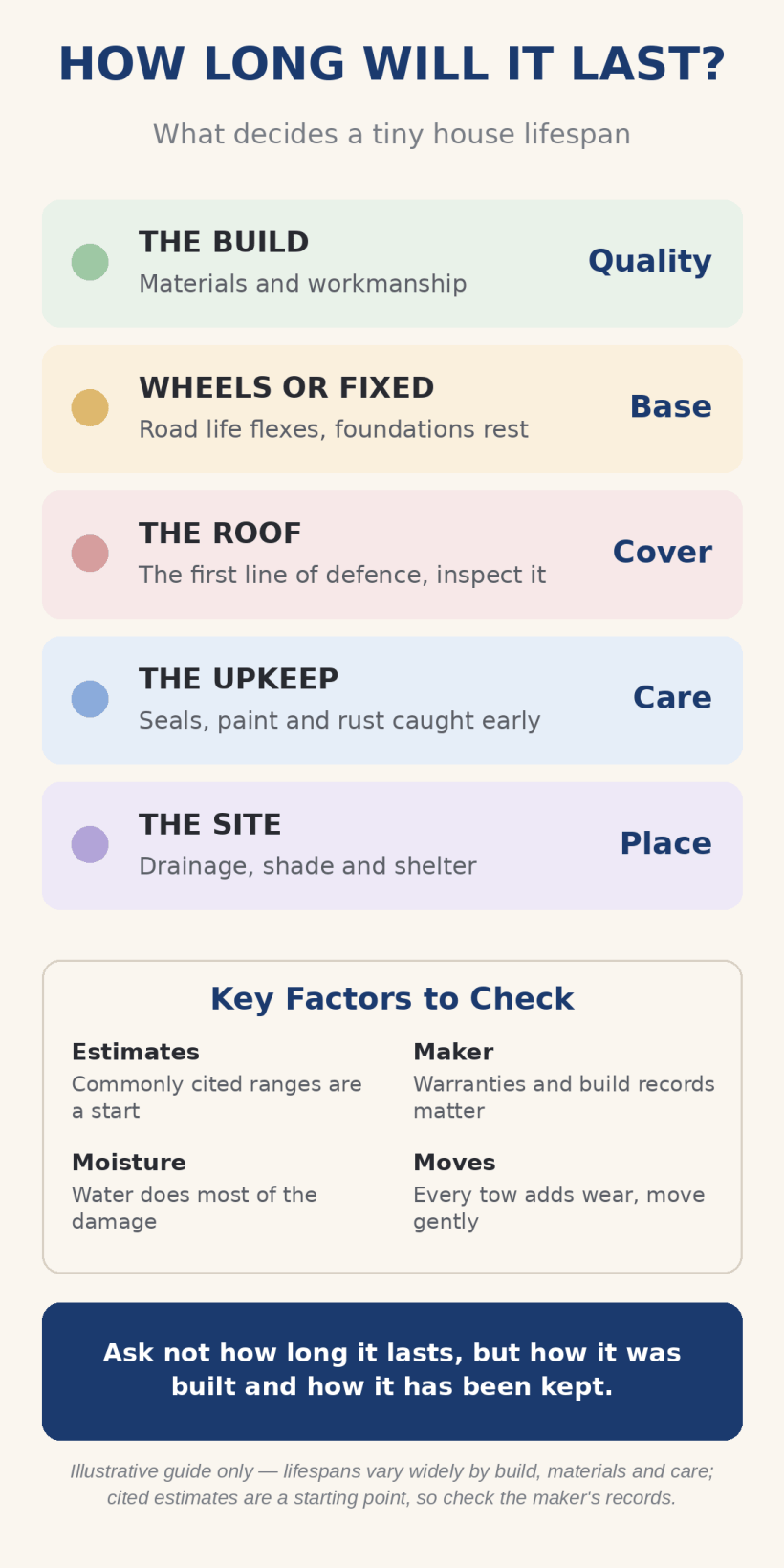
How long a tiny house lasts is decided less by its size than by three things: how well it was built, what it stands on, and how faithfully it is kept. A carefully built, well-maintained tiny house is a decades-long home; a neglected one can be tired in a few years. The honest answer is therefore a range with conditions attached — and this guide gives you both, including the estimates commonly quoted, clearly labelled as estimates.
Treat any single lifespan figure — including the ones in this post’s FAQ — the way you would treat a car’s quoted mileage: a starting point for questions, not a promise. What follows is what actually determines the number in practice, so you can judge any individual house, new or used, on its real merits rather than a headline.
1. The Short Answer, With Its Caveats
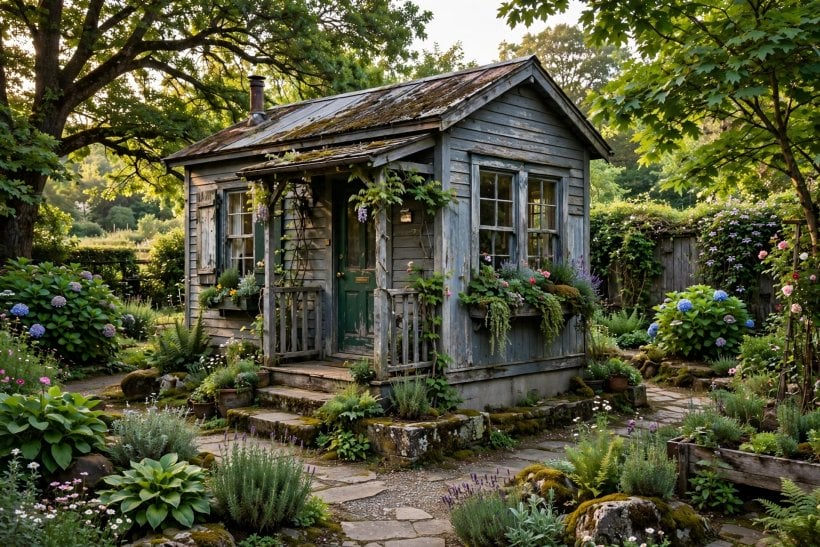
The estimates you will see quoted most often put a well-kept tiny house on wheels in the region of a few decades of service, and a foundation-built tiny house in the same territory as a conventional small home — several decades and upward — provided both are maintained. Those figures are commonly cited starting points drawn from builders and owners, not measurements from any official registry, and individual houses fall far on either side of them.
It helps to think of a tiny house’s life in layers rather than as one number. The structure and base are the long layer — the decades layer. Coverings, seals and finishes are the medium layer, renewed in cycles across the house’s life. Systems and interiors are the short layer, upgraded or replaced as they age or as better options appear. A house is “lasting” when its long layer stays sound while the other two are renewed around it — which is why two houses of the same age can honestly be described as nearly new and nearly finished at the same time.
The spread is the real information. Two houses built in the same year can age completely differently: one sited dry, inspected yearly and repaired promptly; the other parked under trees, leaking quietly for seasons. When you read any estimate in this guide, hear the silent suffix — “if built well and kept well.” The sections that follow unpack those two conditions, because they, not the calendar, are what you are actually buying or building. A maker’s build records and warranty terms tell you more about a specific house than any general range; check them first, as this post keeps repeating.
2. Build Quality Sets the Ceiling on Day One
A house’s lifespan ceiling is fixed at construction: the trailer or foundation it stands on, the framing and its fixings, the quality of the weather layer, and the care taken at every penetration where water might enter. Houses built to a recognised standard, by builders who document their work, start life with the highest ceilings — which is why certification and paperwork matter to longevity and not just to legality.
This is as true for self-builds as for bought ones, and it is an argument for humility in the build: proven plans, proper flashing, and professional work on the structural and systems stages buy more years than any premium finish. Our guide to how to build a tiny house is structured around exactly that priority, and the honest self-assessment in whether you can build your own tiny house will tell you where your own build’s ceiling is likely to be set.
3. Wheels Versus Foundation: Two Ageing Stories
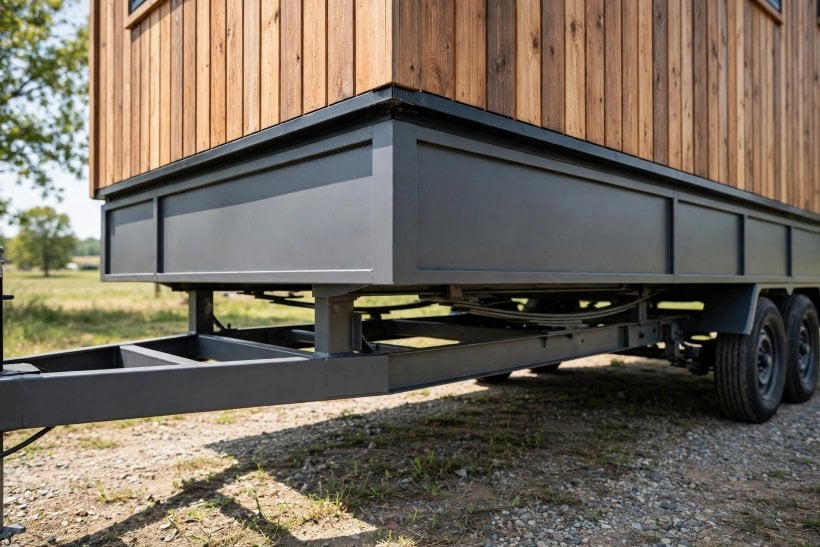
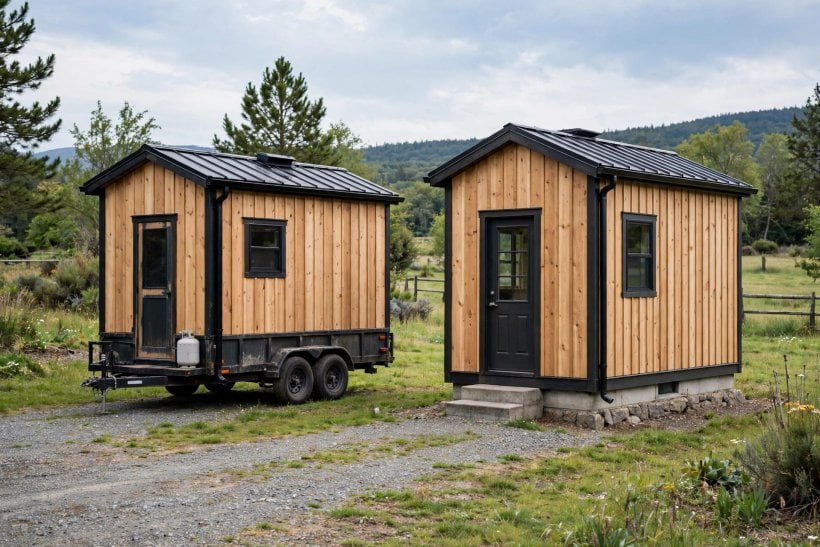
A house on wheels lives a double life: it is both a dwelling and, occasionally, a vehicle. Its ageing is driven by the trailer beneath it — steel that must stay painted and rust-free — by the flexing every move imparts to joints and seals, and by how it is sited between moves: levelled, skirted and kept dry underneath, a wheeled house rests; sitting in damp grass on its tyres, it quietly deteriorates. Our guide to what trailer to use for a tiny house covers the base itself.
A foundation house ages like any small house: slower, more predictably, and dominated by roof, moisture and the ordinary decay of materials. It trades the trailer’s risks for a foundation’s permanence — no road wear, but also no escape from a bad site. Neither type is inherently shorter-lived; they simply have different enemies, and the maintenance sections below are written for both.
4. The Roof and the Seals: Where Age Actually Enters
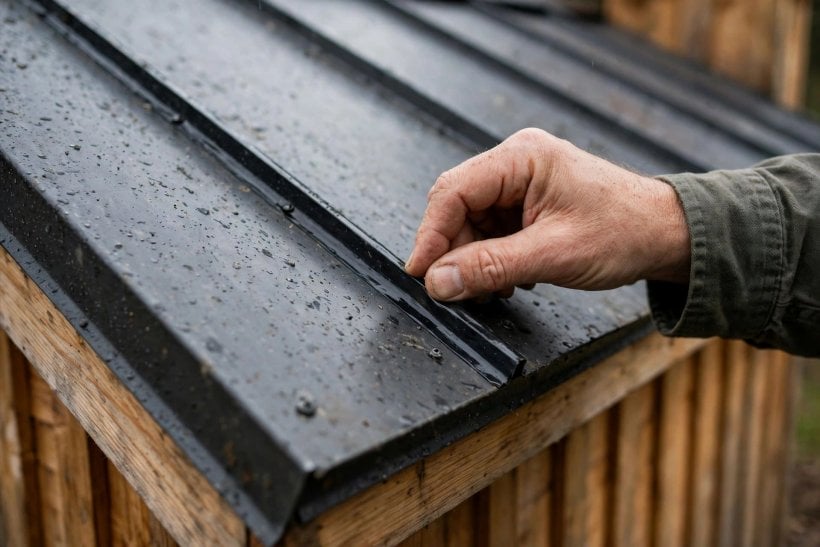
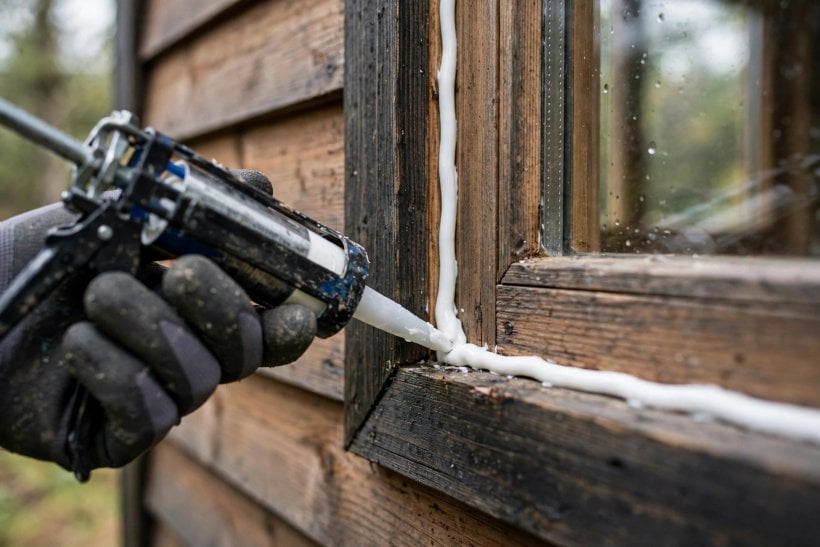
Ask anyone who maintains small houses what kills them and the answer is one word: water. The roof is the first line of defence and the first thing to inspect — coverings age, fasteners work loose, and the flashing around vents, chimneys and skylights is where leaks begin. Window and door seals run a close second: their failure is silent, letting moisture into the wall build-up where rot and mould work unseen for seasons before a stain announces them.
The good news is that both defences are cheap to keep. An annual roof and seals inspection, prompt resealing, and immediate attention to any interior sign of damp will prevent most of the damage that shortens a tiny house’s life. The choice of roof covering matters at build time — our comparison of metal roof versus shingles for a tiny house weighs the two common options — but even the best covering only postpones the day the seals around it need renewing.
5. Materials: What Ages Slowly and What Needs You
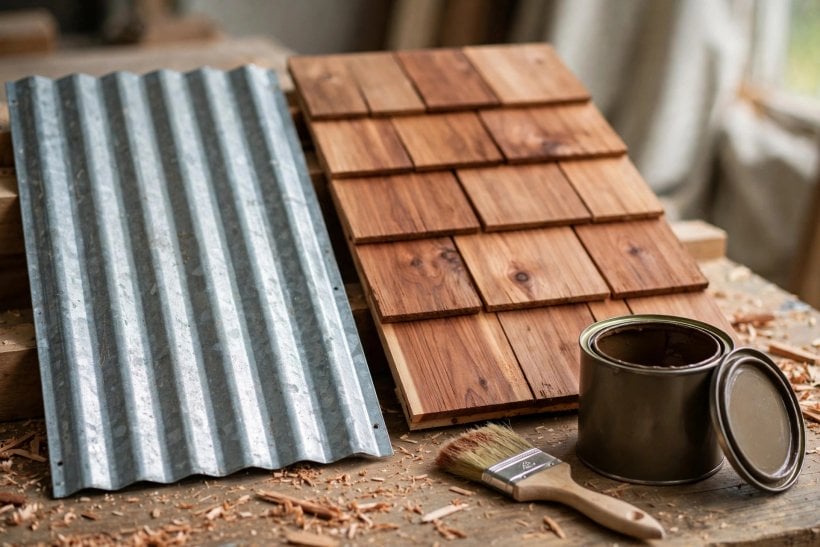
Exterior materials set the maintenance rhythm more than the fate. Metal siding and durable fibre-cement boards ask little beyond washing and the occasional inspection; timber sidings such as cedar are perfectly capable of lasting decades but charge rent for it — regular refinishing, and prompt attention where weather strikes hardest. Our survey of tiny house siding options lays out the honest trade-offs, including composites.
Structure is the material question underneath all the others. A frame kept dry will outlive every covering fixed to it; a frame that stays damp will not be saved by any siding. That is why builders obsess over the unglamorous junctions — where the wall meets the floor, where the roof meets the wall — and why a buyer with a moisture meter learns more in ten minutes than an afternoon of admiring finishes can teach. Materials are replaceable; dryness is destiny.
Inside, the same logic applies in miniature: solid materials worn gracefully beat fashionable ones replaced repeatedly, and everywhere in a tiny house is within reach of cooking steam and shower humidity, so ventilation is a material decision too. When you judge a used house, read its materials as a diary: finishes renewed on schedule mean an owner who kept the important things; peeling, swollen or patched surfaces usually mean the hidden things were kept the same way.
6. Climate and Site: The Address Ages the House
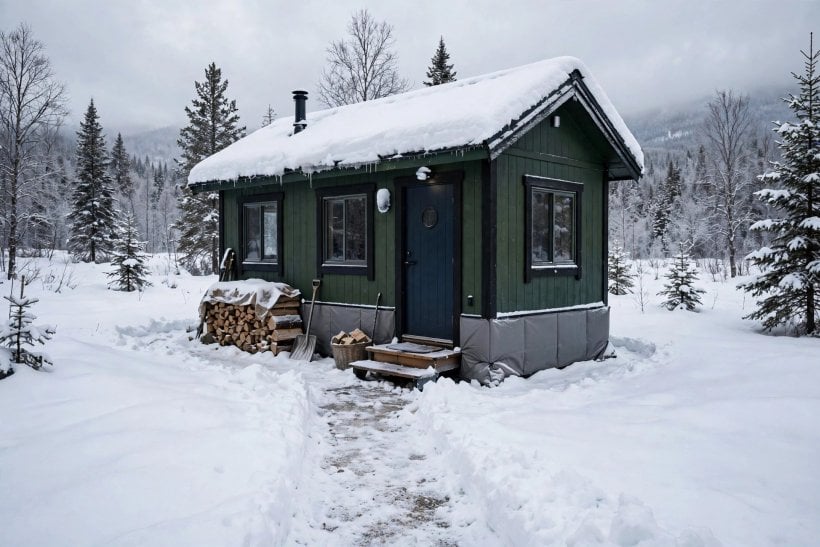
Where a tiny house sits shapes how fast it ages as surely as how it was built. Persistent damp, deep shade and leaf litter hold moisture against the shell; harsh sun bakes finishes and seals; coastal salt air tests every metal fixing; freeze-and-thaw cycles worry at pipes and joints. A house sited with drainage falling away from it, air moving around it and trees close enough for shelter but not for drip will outlast the identical house in a wet hollow.
Climate also sets your calendar: winterising before the freeze, checking after storms, shading in brutal summers. Our guide to heating a tiny home in winter covers the cold season’s discipline. If you are choosing a site for a house you already own, choose like an insurer: dry, drained, aired and out of the flood’s memory — the address is a longevity feature.
7. The Maintenance Rhythm That Buys the Decades
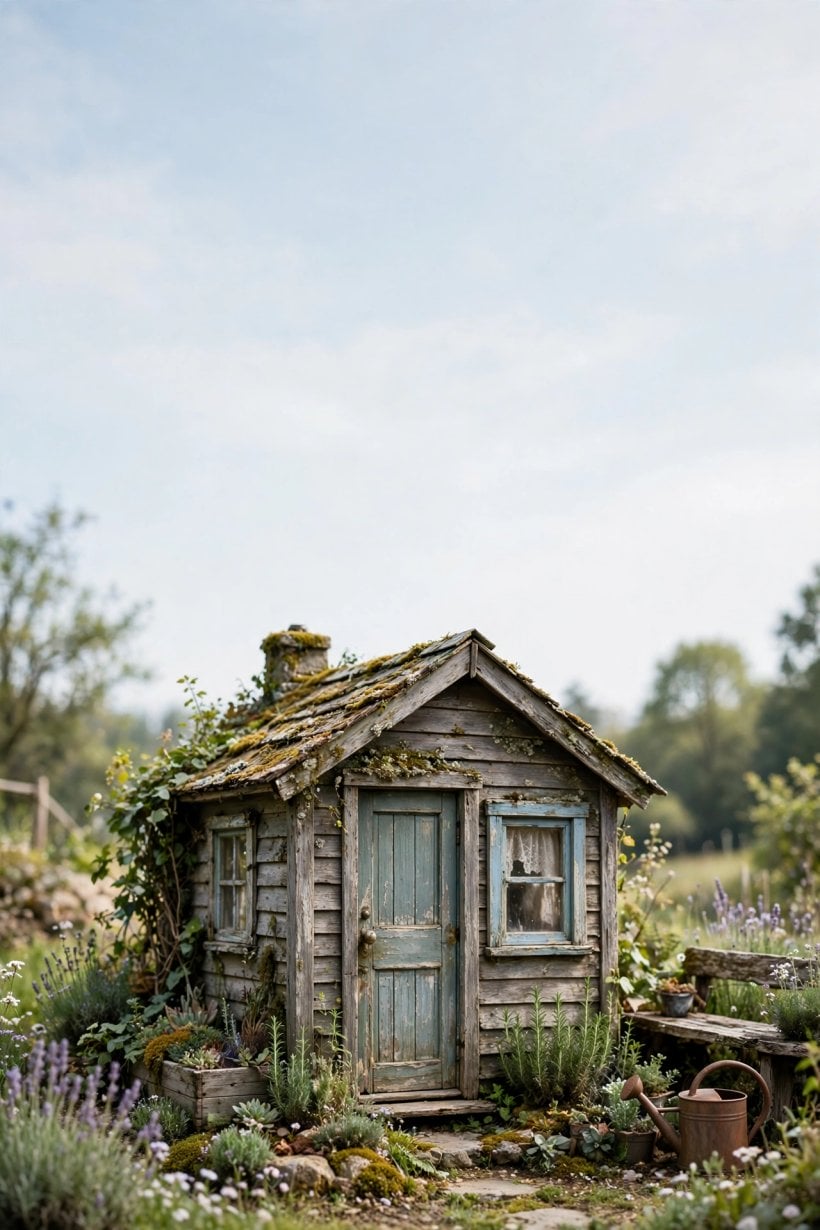
Long life is an annual habit, not an accident. Walk the house once a year with a list: roof and flashing, seals at every opening, the underside and trailer or skirting, gutters and drainage, exterior finish, and any place plumbing hides. Most items take minutes; the discipline is in the looking, because nearly every expensive tiny-house failure announces itself cheaply first — a lifted seal, a rust bloom, a soft spot, a stain.
Keep the record as you go: dates of resealing, refinishing, services and repairs, with the receipts. That log is maintenance’s memory and the house’s biography — it guides your own schedule, and one day it is the document that convinces a buyer this house was kept. Insurance belongs in the same folder: the right cover for a wheeled or foundation home differs, and our guide to tiny house insurance for wheels versus foundation explains the distinction. A kept house with papers is worth more alive and sells for more at the end.
8. Moving House: What the Road Takes
Every tow spends a little of a wheeled house’s life. Roads flex the frame, work at fixings and seals, and shake the fit-out in ways a parked house never feels; the houses that move often and far are the ones whose owners re-inspect after every journey as a matter of routine. Tyres, bearings and running gear age on their own calendar whether the house moves or not, and a house that sits for years needs its running gear recommissioned before any move, not merely a hitch and hope.
None of this makes mobility a mistake — it makes it a budgeted one. Move gently, prepare properly, inspect after, and the road’s toll stays small. Buy a frequently-moved used house with your eyes open: ask its travel history the way you would a vehicle’s, and let the answer adjust your inspection list and your price.
9. Knowing When a House Is Tired
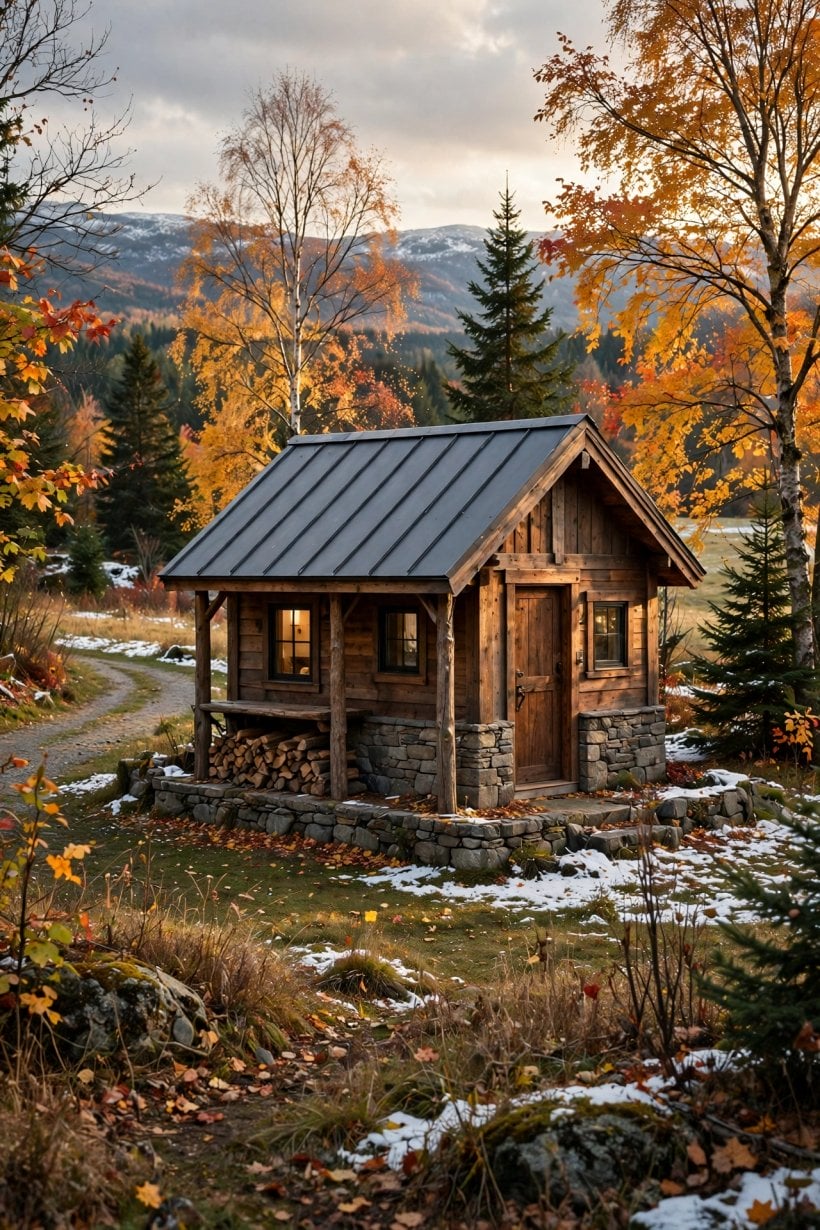
A tiny house rarely dies all at once; it becomes uneconomic by inches. The honest end-of-life signs are structural and damp-related: rot in the floor or wall framing, a trailer whose steel is deeply compromised, a roof structure that has leaked long enough to soften — repairs that cost more, together, than the house is worth. Almost everything else — coverings, seals, finishes, systems, interiors — is renewable, which is why well-kept houses so outlast the gloomy predictions.
Judge a tired-looking house by separating cosmetics from structure. Shabby paint on sound framing is a bargain wearing a disguise; fresh paint over a damp wall is the opposite. If you are buying, pay for a professional inspection focused on moisture and the base — it is the single most informative money in the purchase. And if you already own a tired house, get the same verdict before despairing: the repair list is often shorter, and cheaper, than the fear.
Resale value follows the same logic, and it is worth a buyer’s and an owner’s attention alike. What a second buyer is really purchasing is remaining life, and they price it from evidence: the build standard, the maintenance record, the state of the roof and the dryness of the bones. A house kept demonstrably well holds its value the way any documented asset does; a house with no history is priced on suspicion. Longevity, kept visible on paper, is money — which makes the humble maintenance log the highest-yield document in the whole tiny house world.
10. Frequently Asked Questions
How long will a tiny house last?
The estimates most commonly cited suggest a well-kept house on wheels serves for a few decades, and a foundation house comparably to a small conventional home — several decades and more. Treat these as commonly quoted starting points, not guarantees: build quality, materials and maintenance move any individual house far in either direction. Check the individual maker’s warranty and build records for the house in question.
Do tiny houses deteriorate faster than regular houses?
Not inherently. They share the same enemies — water, neglect and time — and houses on wheels add road wear to the list. A tiny house actually has an advantage: everything is close, visible and cheap to inspect, so the owners who look after them catch problems while they are still small.
What fails first on a tiny house?
Usually the water defences: roof coverings and flashing, and the seals around windows and doors. On wheeled houses, add trailer rust and running gear. All are renewable if caught early — which is why the annual inspection, not any component, is the true lifespan decision.
Can a tiny house last 50 years?
For a foundation house built and kept like a conventional small home, long service measured in many decades is a reasonable expectation — commonly cited estimates for well-built fixed houses reach that territory. Wheeled houses face the trailer’s own ageing, so their realistic ceiling is generally set lower. In both cases the maker, materials and care matter more than the category.
How do I make my tiny house last longer?
Inspect yearly — roof, seals, underside, drainage — and fix small water problems the week you find them. Keep the trailer painted and the skirting sound, refinish timber on schedule, ventilate against condensation, and keep a written maintenance record. Longevity is mostly this short list, repeated season after season — none of it expensive, all of it cheaper than the repairs it prevents, and none of it optional for a house you want to hand on.
Does moving a tiny house shorten its life?
Each move spends a little: roads flex joints and seals, and running gear wears. Moved gently, prepared properly and inspected afterwards, the cost is small; moved often, far and carelessly, it accumulates. Ask any used wheeled house for its travel history and price the answer in.
What siding lasts longest on a tiny house?
Metal and fibre-cement sidings are generally the lowest-maintenance long-distance performers, while quality timber such as cedar can last comparably long if it is refinished on schedule. The honest rule: the longest-lasting siding is the one whose upkeep you will actually do.
Final Considerations
A tiny house lasts as long as its build allows and its keeping earns. Buy or build for the ceiling — sound base, dry shell, documented work — then pay the small annual rent of inspections and prompt repairs, and the commonly quoted decades stop being optimism and start being a plan. Judge every house, including your own, by its records and its dry bones, not by its birthday. This guide is general information only.




0 Comments