

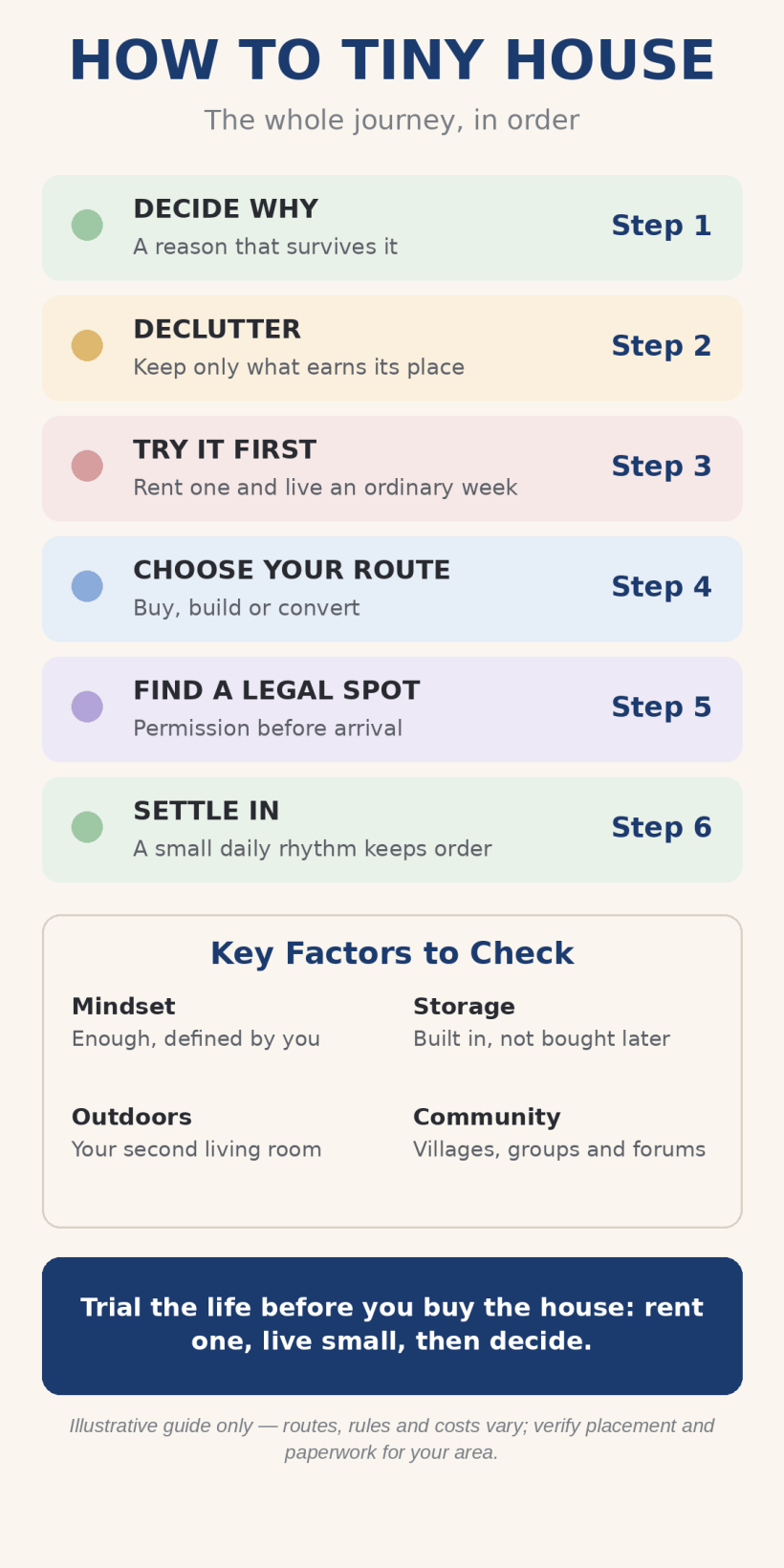
“How to tiny house” sounds like a buying question, but it is really a doing question — tiny house is a verb before it is a noun. People who thrive in small homes did not just acquire one; they changed how they own, store, clean, host and spend, and the house is simply where that change lives. This guide covers the whole arc: the decision, the declutter, the trial, the route to a house, the money, the legal place to put it, and the daily rhythm that makes it work.
Work through it in order. Each step makes the next one cheaper and easier, and skipping the early steps is how people end up with a beautiful tiny house and an unchanged, overflowing life parked inside it. By the end you will know your route — and if the route turns out not to be tiny at all, you will know that honestly, which is worth as much.
1. What It Means to Tiny House
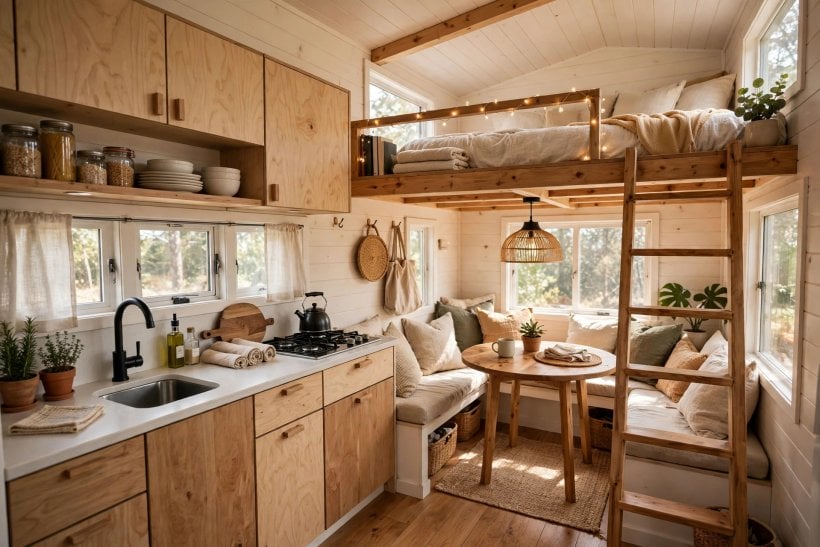
To tiny house is to live deliberately in a small, well-designed home — small enough that everything in it earns its place. There is no official size line, and no single style: houses on wheels, foundation cottages, park models and converted buildings all count, because the essence is not square footage but intention. The house is tailored tightly around one household’s actual life instead of a standardised one.
Tiny housing also has honest varieties worth naming at the start. There are the settled — a foundation cottage lived in for decades; the mobile — a house on wheels that follows work and seasons; and the transitional — a few tiny years as a bridge to something else, saving or testing on the way. All three are real tiny housing. Naming which one you mean sharpens every later decision: the settled optimise for permanence, the mobile for roadworthiness, and the transitional for resale and an exit that stays open.
What it is not: a cheaper shortcut to the same life in a smaller box. The households who fail at tiny living are almost never defeated by the space; they are defeated by keeping a big-house life — the stuff, the habits, the hosting expectations — and squeezing it. Decide now that the change is the point. Everything else in this guide is technique in service of that one decision.
2. Step One: Know Your Why
Every durable tiny life starts with a reason strong enough to survive the adjustment months. Money is the most common — owning outright, cutting housing costs, escaping rent. Freedom follows: less cleaning, less maintenance, a home that can move. So do life-stage reasons — a first home, a retirement home, a home near family — and values reasons, about footprint and enough. Write your why down in one honest paragraph; you will re-read it during the declutter and again in month two.
Test the why against the trade-offs now, while they are theoretical. Tiny living asks for real concessions: space for hobbies with gear, hosting big gatherings at home, keeping everything you own, privacy between household members at all hours. None of these is a deal-breaker for everyone, and workarounds exist for most — but a why that cannot look at them plainly is a wish, not a reason.
3. Step Two: Declutter Before You Do Anything Else
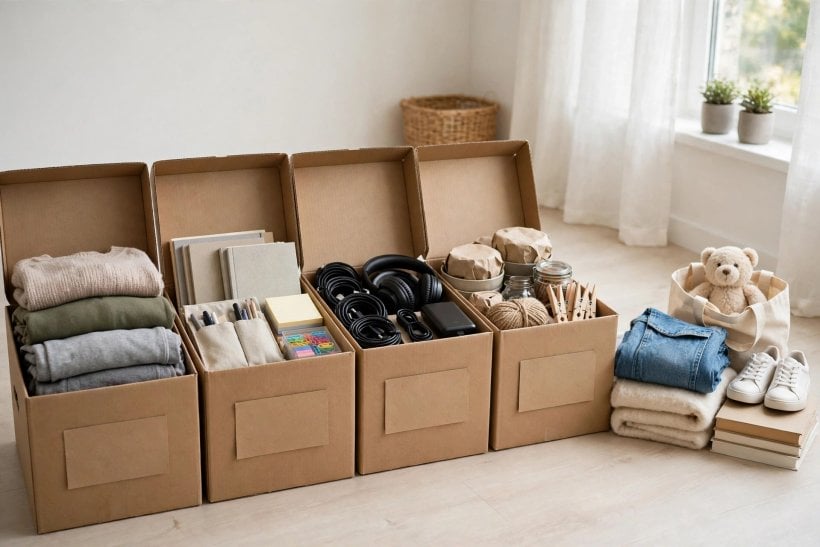
Decluttering is the one step that helps every outcome, including deciding not to go tiny. Work category by category — clothes, kitchen, papers, tools, sentimental last — and keep what you use and love, released without guilt. The test for a tiny future is not “could this be useful” but “would I give this house-room?” Duplicates and just-in-case items are the easy first victories; our decluttering ideas will keep the momentum going, and the deeper transition method is in our guide to the declutter transition to tiny living.
Do this before you shop for a house, for two reasons. First, the volume you end up with decides the size and storage your house needs — guessing it the other way round builds wardrobes for ghosts. Second, decluttering is the cheapest possible rehearsal for the mindset: if releasing the third food processor makes you miserable for a week, better to learn that now than after the deposit.
4. Step Three: Try the Life Before You Buy It
Rent a tiny house for a week — two, if you can — and live an ordinary life in it, not a holiday one. Cook real meals, do laundry the way you would at home, work a day at the little table, have a rainy day inside. Notice what the space does to your routines and your temper. Many rentals sit in exactly the settings you might later buy into, so the trial tests place as well as size.
Households with children, pets or a home business should trial those specifics on purpose, not in the abstract: the dog’s sleeping place, the schoolwork corner, the work call taken while someone else cooks. Tiny living fails on particulars far more often than on square footage, and a trial that includes the particulars is a design consultation you give yourself for the price of a rental week.
Cheaper rehearsals help too: live for a month using one room of your current home, cook in a corner of the kitchen, keep only the trial wardrobe. Households that trial honestly almost never regret the purchase; households that skip it are the ones selling barely-used tiny houses. If the trial delights you even on the wet Wednesday, proceed — that feeling, tested, is the greenest light this process has.
5. Step Four: Choose Your Route: Buy, Build or Convert
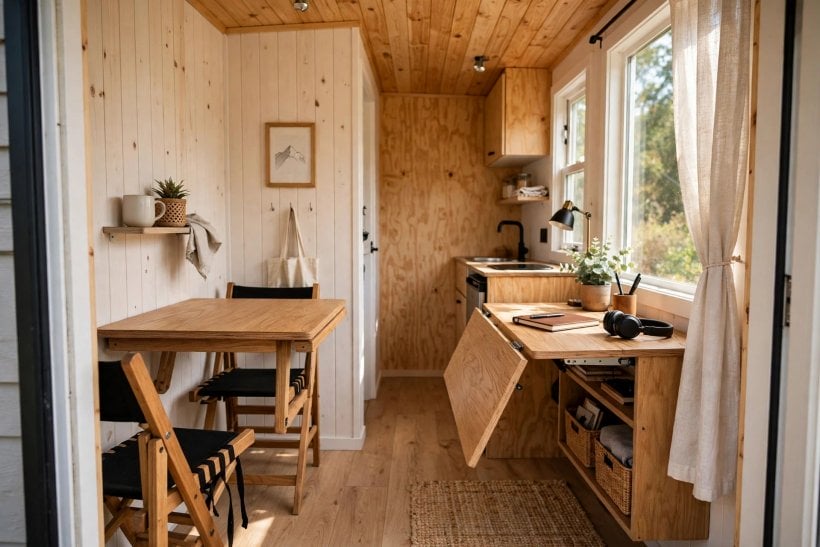
Three routes lead to a tiny house. Buying is fastest: new from a builder, used from an owner, or a shell you finish yourself. Our guide to how to buy a tiny house covers that route step by step, from choosing wheels or foundation to the paperwork at the end. Building is slowest and most personal: bought plans or your own design, your hands or a mix of yours and professionals’, as our guide to how to make a tiny house walks through stage by stage. Converting — a cabin, a studio, a structure with bones — sits between them, trading design freedom for a head start.
Choose by your real resources, not your fantasy ones: time you actually have, skills you actually hold or can learn, and appetite for a project measured in seasons. Also choose wheels versus foundation now, because it decides your legal world in step six — a house on wheels lives under travel-and-parking rules in many places, a foundation house under building and zoning rules. There is no wrong route; there is only the route that does not match the household taking it.
6. Step Five: Face the Money Honestly
Tiny houses cost less than houses; they do not cost little, and this guide will not print a typical figure because yours depends on route, size, finish and how much work is yours. The honest method is a full-cost list, not a sticker price: the house, delivery and siting, the land or parking arrangement, utility connections or off-grid systems, insurance, and the permits and inspections along the way. Our guide to how much a tiny house costs breaks down where the money goes so you can price your own version.
Budget for the transition too: storage during the gap, the tow or the movers, and the first season’s surprises. Then hold a contingency and refuse to spend it in your head. Households that arrive with the full picture funded — even a modest picture — enjoy the move; households that funded the sticker and hoped for the rest spend their first year solving money instead of learning the life.
7. Step Six: Find the Legal Place First
More tiny dreams die of placement than of any other cause, so solve the “where” before the house arrives: a spot where a home of your type may legally be lived in, with services you can actually connect. The settings — own land, communities, backyards, parks, the road — each carry different permission, and our guide to where to park a tiny house works through them with the checks for each.
Verify at the exact address and get the important answers in writing. Verbal friendliness from a seller, a host or even an official is not permission you can build a life on. If your first-choice setting refuses your house type, believe it early and pivot — the same household usually finds that a neighbouring setting fits both the rules and the life, once it stops arguing with the first one.
8. Step Seven: Design Around Your Actual Life
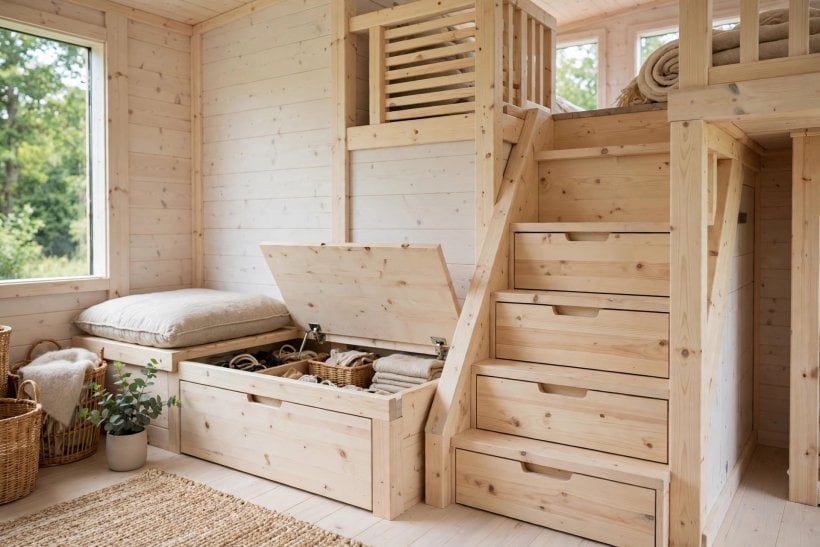
A tiny house works when it is designed around your days, not around photographs. List your non-negotiables from real life — the bath, the desk, the dog’s corner, the instrument, the second sleeping space — and let the plan serve them in that order. Storage gets designed in at this stage, built into stairs, benches and floors, because bought storage eats the room it organises. Multi-use everything: the table that seats two daily and six occasionally, the bench that is also a bed that is also a cupboard.
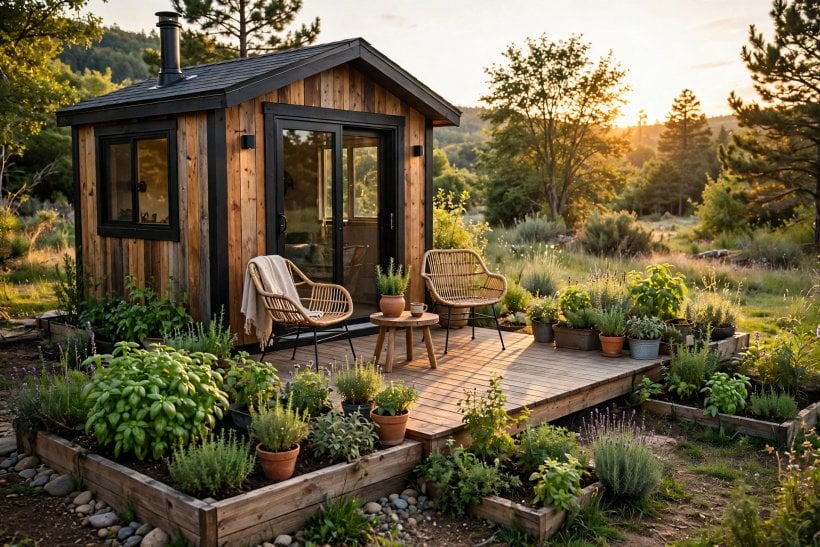
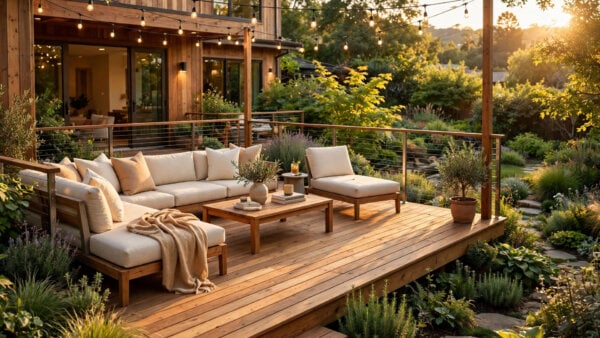
Decide your systems with the same realism. Hookups where you park, or the off-grid set — solar, water, composting waste — sized to your habits, as our guide to living off grid in a tiny house explains. And design your outdoors as a room: in a tiny house, the porch, the deck and the garden are not extras, they are where a third of your life will happen.
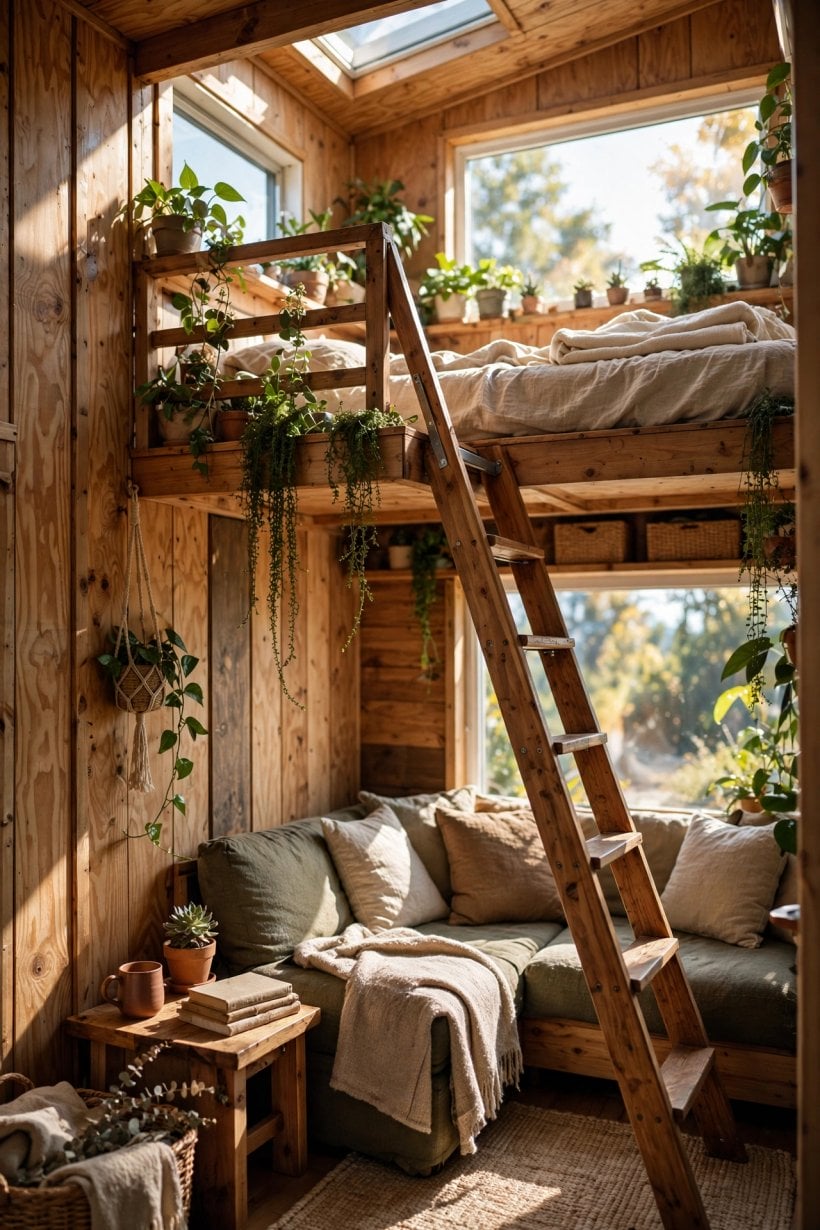
9. Step Eight: Move In, Then Build the Rhythm
Move-in is a logistics day; tiny living is what happens after. The households that settle fastest adopt the rhythm early: a short daily reset where everything returns to its one home, a weekly rhythm for laundry, water and waste if you are off grid, and a seasonal rhythm for maintenance and the great re-sort. Ten calm minutes a day is the usual price of a tiny house that always looks like the photographs.
Expect an adjustment season, and do not judge the life by its first month. Keep a short list on the fridge of what is not working — the hook that should exist, the box that needs a home — and fix one item a week; a tiny house tunes itself quickly when the list is written down instead of carried as a mood. Storage gets rearranged, one beloved thing too many gets rehomed, guests get hosted in the garden and loved for it. Somewhere in that season the house stops being small and starts being enough — and the verb is complete: you are tiny housing. Keep the why paragraph where you can see it. It was right.
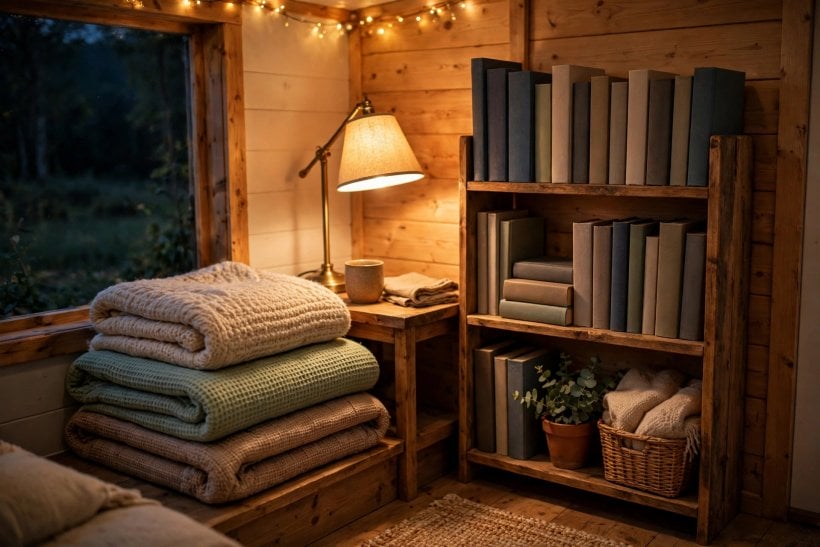
Two practical companions to the rhythm deserve a line each. Guests: solve hosting before the first invitation — a garden, a nearby rental for overflow, a fold-out you have actually slept on — and tiny hosting becomes a pleasure instead of an apology. And work: if you will earn from the house, design the work corner as seriously as the kitchen, with light, power and a door or curtain that closes the day. Most tiny regrets are not about size at all; they are about a daily activity nobody designed for.
10. Frequently Asked Questions
How do you tiny house?
By changing the life, not just the address: decide your why, declutter to what earns its place, trial the size honestly, choose a route to a house that fits your resources, fund the full cost, secure a legal place for it, and design around your real routines. The house is step four of eight, not step one.
How do I start tiny housing?
Start with the why and the declutter — both are free and both are decisive. Then rent a tiny house for an ordinary week. If those three steps still point the same way, you are ready to choose a route and a place with your eyes open.
Is tiny housing hard?
The adjustment is real but temporary: less room for stuff, more intention about everything, a short daily reset to keep order. Most households find the difficulty front-loaded into the first season and the simplicity compounding after it. The trials in step three exist so the hardness never surprises you after purchase.
Can families tiny house?
Yes — many do, by designing honestly for children: real sleeping spaces, a place for schoolwork and play, storage that grows down as they grow up, and an outdoors treated as living space. Families usually choose larger tiny houses or foundation cottages, and the ones who thrive involved the children in the plan from the start.
How long does the transition take?
Months, typically — the declutter alone is a season for a full house, and finding the house and the legal place each take their own time. Rushing compresses the thinking, not the calendar; the households who pace it arrive with the right house in the right place and keep both.
What should I get rid of first?
Duplicates and just-in-case items — the third set of towels, the spare-spare cables, the kitchen gadgets with one annual job. They are the easiest releases and they build the momentum and the evidence: you will not miss them, which teaches you what else can go.
How do I convince my partner to tiny house?
Do not pitch; trial together. Rent the week, walk the houses, and let the experience argue. Share your why honestly, hear theirs, and treat their non-negotiables as design inputs, not obstacles. A partner converted by a wet Wednesday in a rental is an ally; one talked into it is a critic waiting for month two.
Final Considerations
To tiny house is to choose a life and then acquire the small, well-fitted house that serves it — in that order. Decide why, shed what does not earn its place, test the life before you buy it, fund the whole cost, and put the house somewhere it is genuinely allowed to be a home. Do those things and the rest is a rhythm anyone can learn: a place for everything, a few minutes a day, and a home that holds your life instead of the other way round. This guide is general information only.

0 Comments