

A pale carpet can make a whole room feel lighter and calmer, and it can also make every mark far more visible than it would be on a darker floor. When a dog is unwell and leaves a yellowish mark behind, the sight can be worrying twice over: first for the animal, and then for the carpet. This guide takes the calmer path. It explains, in general terms only, how to get a bile stain out of carpet without strong mixtures, without scrubbing, and without any promise that the mark will vanish completely. Gentle handling, patience and a willingness to call in a professional are worth more here than any forceful approach.
The advice below suits ordinary household carpets and ordinary household routines. It is not a recipe, and it names no mixtures: if a cleaning product is used at all, it should be a mild product made for carpets, used exactly as its own label directs, and only after a hidden-spot check. Where the carpet is valuable, delicate, or already showing wear, the professional route in the later sections is the safer starting point. In a small home, where one carpeted room often does the work of several, keeping the approach gentle matters even more, as the tiny house designs collection shows in its compact-room planning.

1. What a Bile Stain Is, in General Terms
Bile is a digestive fluid, and when a dog brings it up, the result is usually a yellowish, watery mark with a faint colour that can settle into pale fibres. The colour is the part that worries most owners, because yellow shows plainly against cream, ivory and light grey. The mark itself is generally shallow at first, sitting in the pile rather than deep in the backing, which is why early, gentle attention tends to help more than delayed, forceful attention.
It helps to think of the mark in two parts: the colour and the dampness. The dampness is straightforward, and blotting deals with it. The colour may fade gradually with gentle treatment, or it may leave a faint shadow even after careful work. That faint shadow is not a sign that you did something wrong. Light carpets simply record colour more honestly than dark ones, and some marks lighten over repeated gentle passes rather than disappearing in a single session.
Before touching the carpet, check on the dog. A single upset stomach can have many ordinary causes, but repeated sickness, lethargy, or any other worrying sign is a matter for a vet, not for a cleaning guide. Once the animal is settled and comfortable, turn to the carpet with clean hands, clean cloths and no rush. A calm start sets the tone for everything that follows.
2. First Steps When You Find the Mark
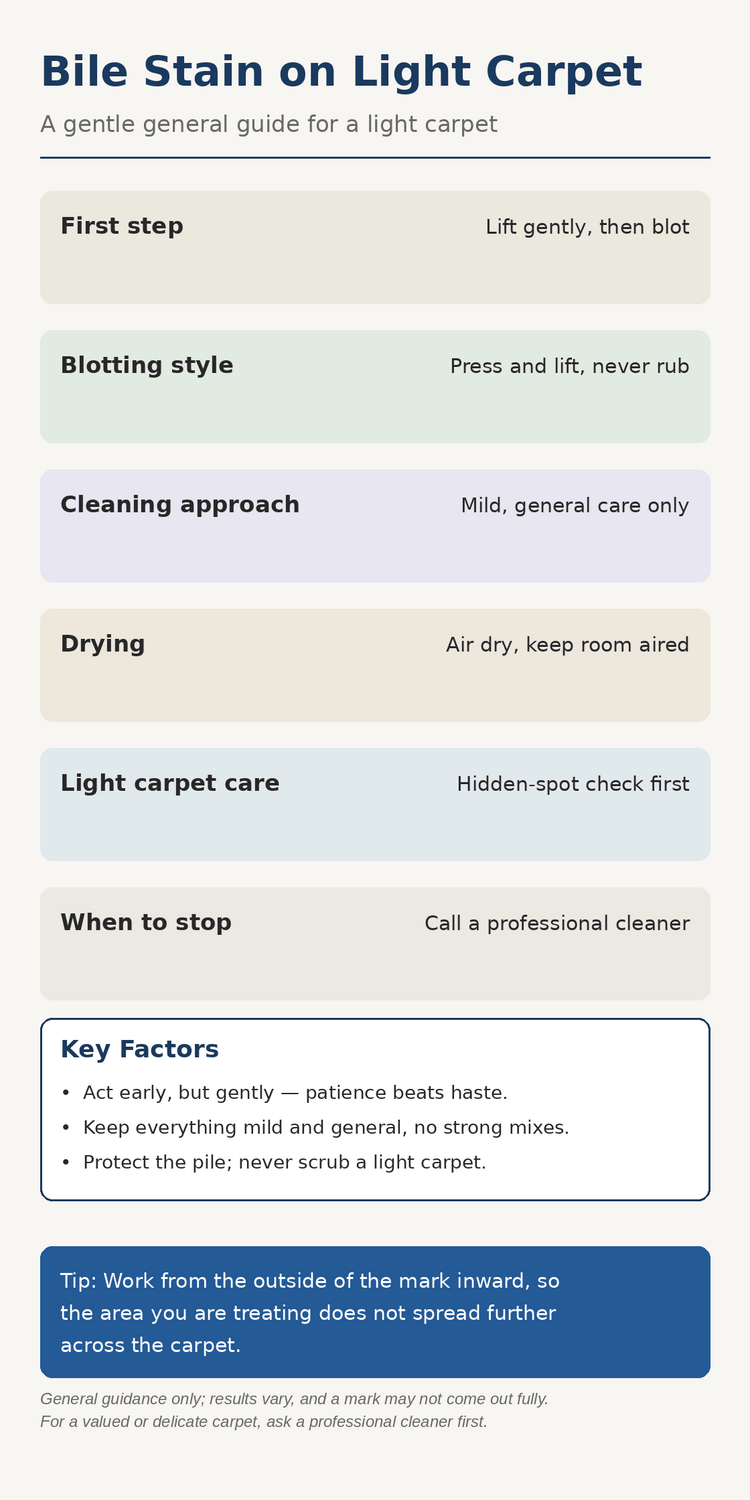
The first job is a simple one: remove anything solid from the surface, gently, with a plain piece of card or a paper towel, lifting rather than pressing down. Work from the outside of the affected area toward the middle where you can, and drop what you lift straight into a bag. There is no need for speed at the expense of care. A few careful minutes here keep the mark smaller than hurried handling would.
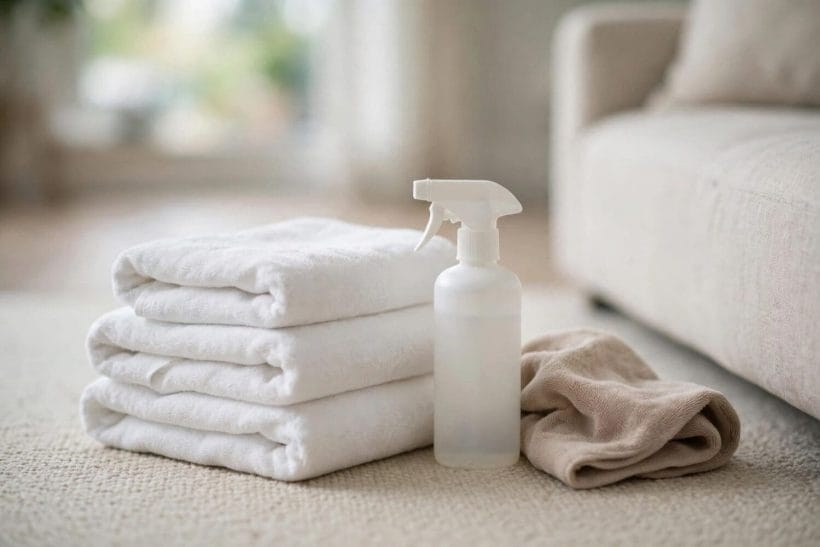
Next, gather what you need before you start on the carpet itself: several clean white cloths or towels, a bowl of plain water, and, if you plan to use one, a mild carpet cleaner whose label you have read. White cloths are worth choosing deliberately, because a coloured cloth can transfer its own dye onto a damp light carpet and add a second problem. Keep everything within reach so you are not walking across the room with damp hands and leaving fresh footprints behind.
Ventilation helps from the start. Open a window nearby or run the room’s usual air circulation, and keep pets and children away from the area while you work. A damp carpet is easy to walk across without noticing, and every fresh footprint can press remaining colour deeper into the pile. Mark the area lightly in your mind, or with a clean towel laid beside it, so the household knows to step around it until it is dry.
3. Blotting, Not Rubbing: The Gentle Difference
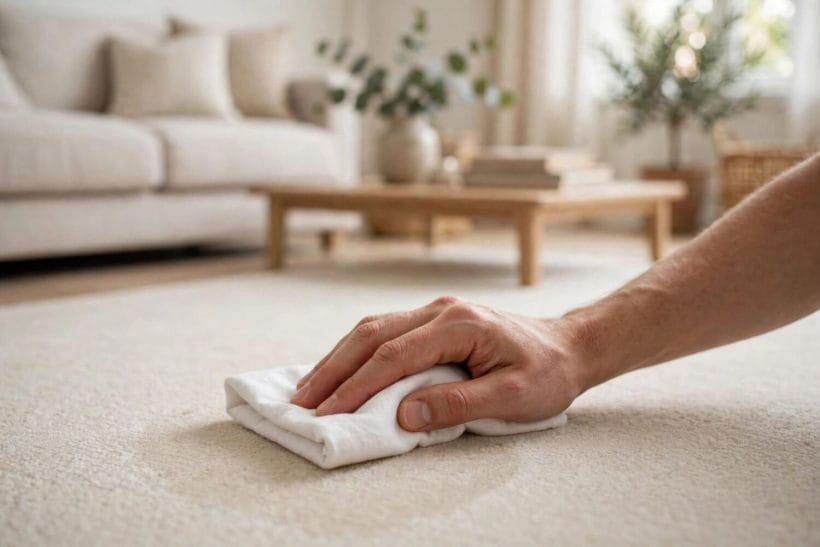
Blotting is the single most important habit in this whole guide. Lay a clean white cloth over the mark, press down firmly but gently, hold for a few moments, and lift. Turn the cloth to a clean section and repeat. Each press draws a little moisture upward into the cloth. Rubbing, by contrast, drags colour sideways across the pile, frays the fibres, and can turn a contained mark into a wider, paler smear that is harder to live with.
The temptation to rub usually arrives when progress looks slow. Resist it. A light carpet rewards repeated gentle passes, and the cloth will show you the progress: early cloths pick up more colour, later cloths pick up less. When a cloth stops showing colour, that is useful information, not a failure. It may mean the remaining tint sits deeper in the fibre, where a professional’s equipment has a better chance than further hand work.
Work in short, patient rounds rather than one long session. Blot, step back, look at the carpet in ordinary daylight, and decide whether another round is sensible. Daylight is a fairer judge than lamplight, which can flatter a pale carpet and hide a remaining tint until morning. If the area still looks damp, let it rest and dry before judging the colour, because a wet patch almost always looks darker than the same patch dry.
4. Working From the Edge Inward
Always begin at the outer edge of the mark and move inward, rather than starting in the centre. The reason is simple: moisture and colour travel outward when pressed, so starting at the edge keeps the treated area contained. Each blot should overlap the previous one slightly, like tiles, so no ring of untouched pile is left around a cleaner centre. Rings and halos are a common disappointment, and they usually come from working the middle first.
This edge-inward habit matters even more on a light carpet, where any unevenness reads as a pattern. Keep your cloths clean as you go, folding to a fresh face often, and avoid carrying colour from the centre back out to the edge on a used cloth. When the outer edge looks settled, move a little further in, and repeat. Slow, overlapping passes give a far more even result than a single determined effort on the darkest point.
If the mark sits near a wall, a piece of furniture, or a doorway, take a moment to protect those neighbours before you begin. Slide furniture back where you can, and keep damp cloths off timber legs and skirting. A little preparation here prevents a carpet problem from becoming a furniture problem, and it gives you the elbow room to work the edge of the mark properly.

5. Cleaning in General Terms, Without Strong Mixtures
Once the loose moisture has been blotted up, the next stage is gentle cleaning, and this is where restraint matters most. If you use a cleaning product at all, choose a mild one made for carpets, read its label fully, and follow it exactly. Do not combine products, do not strengthen a mixture beyond the label, and do not improvise a recipe from household supplies. Mixing cleaning products can damage fibres, leave residues, and create fumes, and none of that helps a light carpet.
Apply any product sparingly, to the cloth rather than poured directly onto the carpet where the label allows that choice, and work it in with the same blotting motion, never with a scrubbing brush. A soft touch protects the pile, and a small amount of product rinses out more completely than a generous one. Afterward, blot again with a cloth dampened with plain water to lift residue, because leftover product can attract dirt over time and leave a dull patch that looks worse than the original mark once dry.
Some guides promise a guaranteed result from a particular mixture. Treat such promises with scepticism. Carpets differ in fibre, age and previous treatment, and a method that suits one may dull another. The honest aim is a visible improvement achieved gently, with the carpet’s condition protected throughout. If gentle cleaning stops improving the mark, that is the moment to pause rather than to escalate to stronger measures.
6. Drying the Carpet Properly
Drying deserves as much attention as cleaning, because a carpet left damp can develop a musty smell and attract dirt to the still-soft pile. After the final blotting round, let air do the work. Keep the window open where the weather allows, keep the room’s usual air circulation running, and keep foot traffic off the area until it feels dry to the touch. Avoid piling towels or rugs over the damp patch, since trapped moisture dries slowly and unevenly.
Do not be tempted to force the drying with strong direct heat. Gentle room air is kinder to fibres and to any adhesive beneath the carpet than a blast of hot air in one spot. If the room tends to stay humid, a longer drying time is normal, and patience here protects the result you have already achieved. Check the area again once it is fully dry, in daylight, before deciding whether any further step is needed.
While the carpet dries, it is worth thinking about the rooms around it. Carpet near doorways and washrooms meets more moisture than carpet elsewhere, and washable surfaces in those wet-adjacent rooms take pressure off the carpet itself. The tiny house bathroom designs collection shows how compact homes plan washable surfaces beside soft ones, a pairing that keeps carpeted areas drier in daily life.
7. Why Light Carpets Show Marks More Readily
A light carpet is not weaker than a dark one, but it is more honest. The same faint tint that would vanish against a mid-brown pile stands out clearly against cream. Pile depth and fibre also play a part: a deep, soft pile can hold colour below the surface where blotting cannot easily reach, while a short, dense pile tends to release surface marks more readily. None of this is a fault in the carpet. It is simply the trade-off that comes with a pale floor.
Knowing your carpet’s fibre and pile helps you judge how far to go by hand. The survey of carpet checks covers fibre, pile, backing and fit before buying, and the same qualities decide how a carpet responds to cleaning. A carpet you already own can be understood the same way: check any care label or documentation left from fitting, and note whether the pile is looped or cut, deep or short. Looped piles in particular dislike aggressive brushing, which can catch and pull the loops.
Age matters too. An older carpet, or one that has already been cleaned several times, may hold a faint shadow more stubbornly than a new one, because fibres wear and open up over time. That is normal, and it is another reason to keep expectations gentle. A mark that fades to a faint shadow on an older light carpet is often a good outcome, and chasing a perfect result with stronger measures risks damaging the pile itself.

8. Checking a Hidden Spot First
Before any product touches the visible mark, test it somewhere hidden: inside a wardrobe recess, behind a heavy piece of furniture, or in a corner that rarely sees daylight. Apply the product exactly as you intend to use it, blot as you intend to blot, let the spot dry fully, and then look at it in daylight. If the test spot looks unchanged, apart from being clean, you have useful reassurance. If it looks duller, lighter, or otherwise altered, stop and reconsider.
The hidden-spot check costs a little time, and it repays that time on a light carpet many times over. A product that lightens a hidden corner will lighten the middle of the room just as surely, and a visible lightening in the centre is far harder to live with than the original mark. This is especially true for carpets with a subtle pattern or tone variation, where even a small change in shade can read as a patch.
Keep a note of what you used and how the test went, even if only in your head. If you later call a professional, that information helps them judge what has already been tried and what the carpet has already tolerated. A professional who knows the history of a mark can choose a gentler next step than one who is guessing, and that protects both the carpet and your budget.
9. When to Call a Professional Cleaner
There are several honest moments to hand the job over. If the mark covers a wide area, if it has soaked deeply, if gentle rounds have stopped improving it, or if the carpet is valuable, antique, or made from a delicate fibre, a professional cleaner is the sensible next step rather than a last resort. At that point, the question of how to get bile stain out of carpet is best answered by a professional’s assessment rather than by stronger home measures. Professionals work with equipment that lifts moisture and residue from deeper in the pile than hand blotting can reach, and they can judge fibre and dye behaviour from experience.
When you contact a cleaner, describe the mark plainly: what caused it, roughly how large it is, what you have already tried, and whether any product was used. Ask, in general terms, what approach they would take and what outcome they would expect, and listen for hedging. A careful professional will explain that results vary and that a faint shadow may remain, rather than promising a perfect result. That honesty is a good sign, not a warning.
Cost is a fair question to ask, and a reputable cleaner will explain their charges before starting. This guide gives no figures, because charges vary by area, carpet size and the work involved, and any number quoted here would quickly go out of date. What matters is the comparison: a professional clean that preserves a good carpet is usually better value than repeated forceful home attempts that wear the pile and still leave the mark.
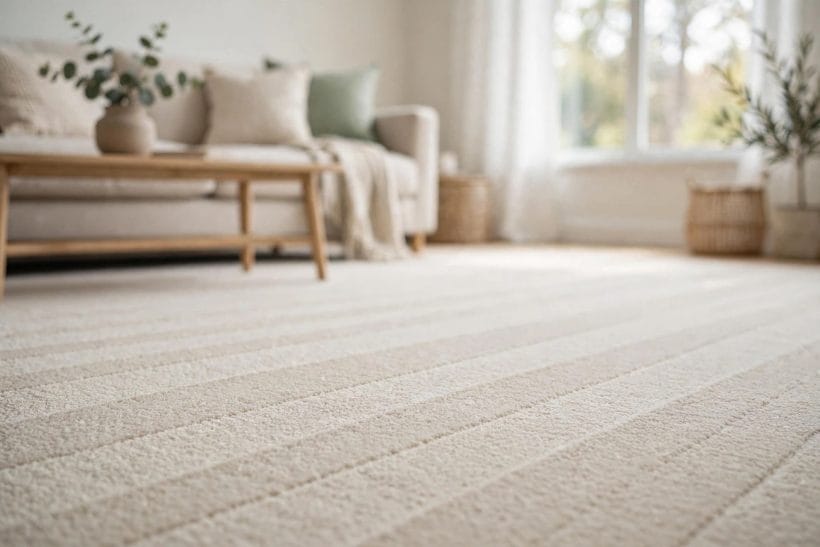
10. Protecting a Light Carpet Going Forward
Once the immediate mark is dealt with, a few quiet habits reduce the next one. Keep a washable throw or rug over the carpet where the dog usually rests, and choose that layer in a tone that forgives a mark rather than advertising it. The questions to ask before buying such a layer are covered in the buying a rug online checks guide, from size and fibre to how it will be cleaned. A sacrificial layer is far easier to wash than a fitted carpet is to restore.
Bedrooms deserve the same thinking, since dogs often settle beside the bed. A washable bedside rug, a regular vacuuming routine, and a quick response to any accident all help a bedroom carpet stay pale for longer. The tiny bedroom ideas collection shows how small sleeping rooms balance soft floors with practical layers, and the same balance works in larger rooms too.
High-traffic carpeted areas need their own care. Stairs, for example, take more wear than any flat floor, and a mark or worn patch there shows quickly. The carpeted staircase ideas survey covers carpeted stairs in full, including how their pile and edges are treated. Elsewhere, a simple routine serves well: vacuum regularly with a clean machine, deal with marks promptly and gently, keep food and drink off the carpet where you can, and give the carpet a professional clean from time to time as part of ordinary home care.

Final Considerations
A bile stain on a light carpet is an unpleasant surprise, but it is also a manageable one. The approach that works best is the gentlest one: lift, blot, work from the edge inward, use only mild carpet products exactly as labelled, dry the area with room air, and judge the result in daylight once fully dry. Nothing in this guide guarantees that a mark will disappear, and that honesty is deliberate. Some marks fade completely, some fade to a faint shadow, and a few need a professional’s equipment before they improve at all.
The wider lesson is about living with a pale floor rather than fighting it. Light carpets ask for prompt attention, clean white cloths, a hidden-spot check before any product, and a realistic sense of what gentle cleaning can achieve. With those habits, a pale carpet can stay a pleasure for years, even in a home shared with a dog. For broader room-by-room planning, the home design ideas collection is a useful next stop.
Finally, keep the dog at the centre of the story. A pet that is unwell needs comfort and, where signs persist, veterinary advice, and the carpet can wait a little while that care comes first. Once the animal is settled, the carpet work is straightforward, patient and gentle, and that is exactly how a light carpet likes to be treated.




0 Comments