

Carpet changes a room the moment it goes down. It softens sound, warms bare feet, and sets the colour story for everything that follows. It is also one of the harder home purchases to judge in a shop, where every sample looks good under bright lights and nothing shows how it will live in your home. This guide gives you the checks that matter, in the order that matters, so you can choose with confidence and without a verdict from anyone else.
The checks below cover the room first, then the carpet itself — fibre, pile, backing and underlay — then fit, colour, care and the questions worth asking before you order.
Related Guide: Stain-Resistant Carpets Compared: Fibres, Treatments and How To Choose

1. The Room First
Start with the room, not the roll. A carpet that suits a quiet bedroom can fail in a busy hallway, and a carpet that looks calm in a large showroom can overwhelm a small room. Walk the room and notice three things: how much foot traffic it takes, how much daylight it gets, and what else lives on the floor. Pets, children, muddy boots and wheeled chairs all change the brief, and each one points to a different balance of durability and softness.
Measure the room properly, including doorways, alcoves and the direction of the door swing. A room that looks simple on paper often hides a bay window, a built-in cupboard or a step that changes the amount of carpet needed. Note where the light falls through the day, because carpet colour shifts dramatically between morning sun and evening lamplight. A sample viewed only under shop lights is a guess; a sample viewed in the room, at different times of day, is evidence. Take samples home whenever you can, and live with them for a few days before deciding.
Think about what sits next to the carpet too. Hard floors in adjoining rooms, the tone of the woodwork, and the colour of the largest piece of furniture all shape how a carpet reads. A carpet does not need to match everything, but it should sit comfortably alongside it, and the easiest way to test that is to place the sample against those neighbours rather than against a white shop wall.
2. The Fibre
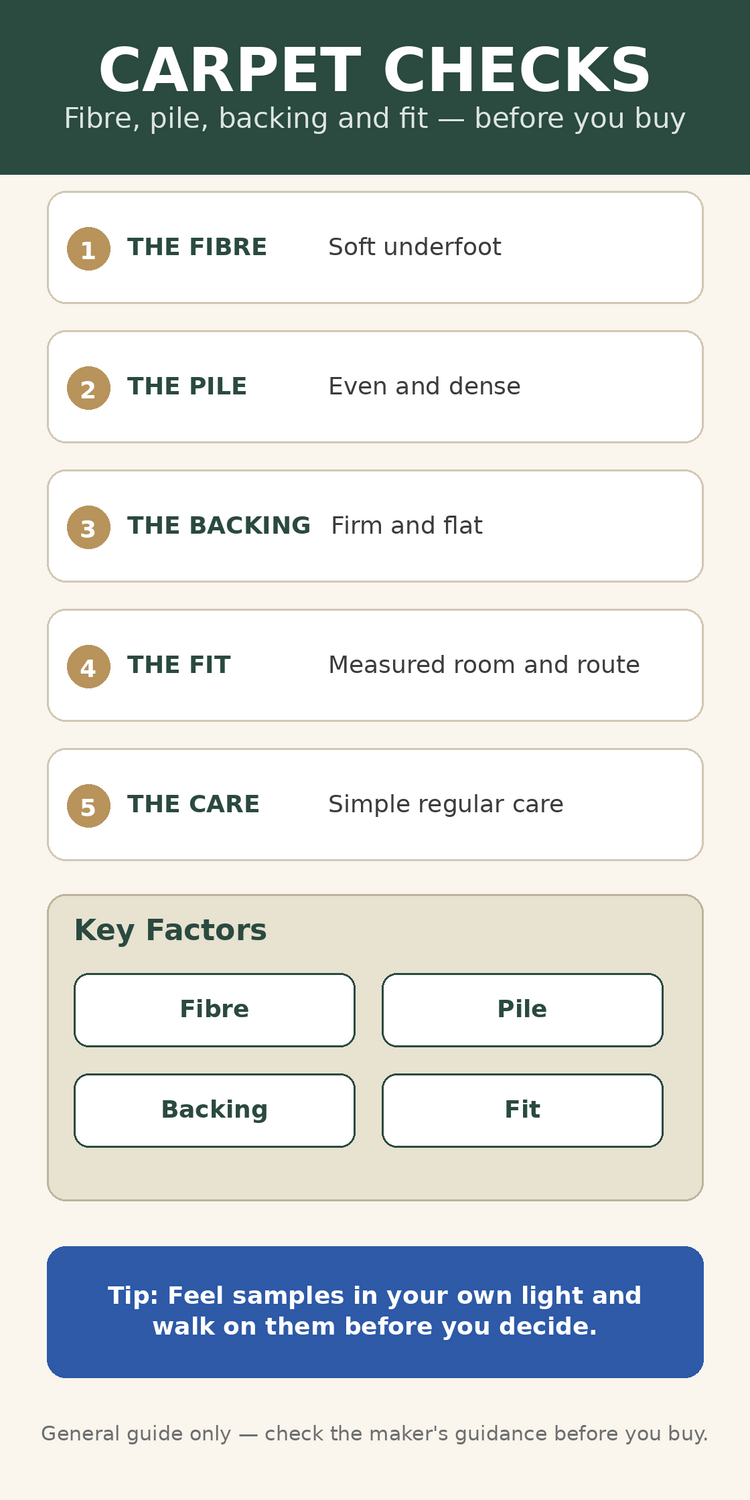
Fibre is the first material question, and it is worth understanding in general terms before you fall for a colour. Wool is the traditional choice, valued for its natural spring, warmth and ability to recover from foot traffic. It tends to cost more and asks for a little more care, but in rooms that are lived in gently it can last for many years and keep its look. Synthetic fibres, made for durability and stain resistance, suit busy family rooms and homes with pets, and they are generally easier to clean.
Neither family is simply better. The right question is which fibre suits this room, this household and this budget. Ask what the fibre is made from, how it handles spills, and whether it suits the room’s traffic. Be wary of any claim that sounds absolute — a fibre that is perfect everywhere does not exist, and a salesperson who says otherwise is selling, not advising. Blends exist too, combining the softness of one fibre with the toughness of another, and they can be a sensible middle ground when a room needs both comfort and resilience.
Fibre also affects feel underfoot in ways a sample square only hints at. Walk on the sample in bare feet if you can, and press it firmly to see how it springs back. A carpet that feels thin and flat in the hand will feel thin and flat on the floor, whatever its colour.
3. The Pile
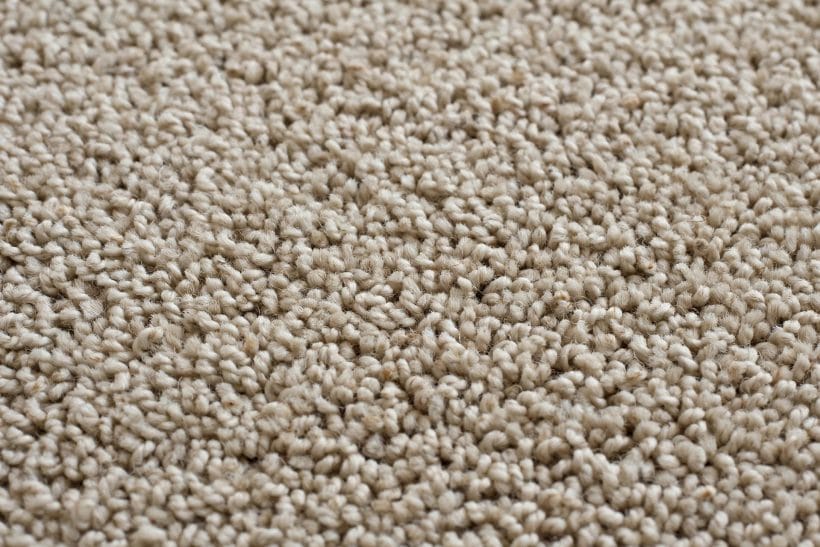
Pile is the visible surface of the carpet — the loops or cut ends you walk on — and its style shapes both look and wear. Loop pile, where the yarn stays looped, tends to be hard-wearing and suits hallways and stairs. Cut pile, where the loops are cut open, feels softer and suits bedrooms and living rooms. Within cut pile, a twist pile holds its shape well, while a plush or velvet pile looks luxurious but shows footprints and shading more readily.
Density matters more than height. A short, dense pile will usually outlast a tall, loose one, because there is simply more yarn packed into the same area to absorb wear. Press the pile sideways and look at how much backing shows through; a dense carpet hides its backing well, while a thin one gaps open. Check the pile in the direction of traffic as well as across it, since wear shows first along the paths people actually walk.
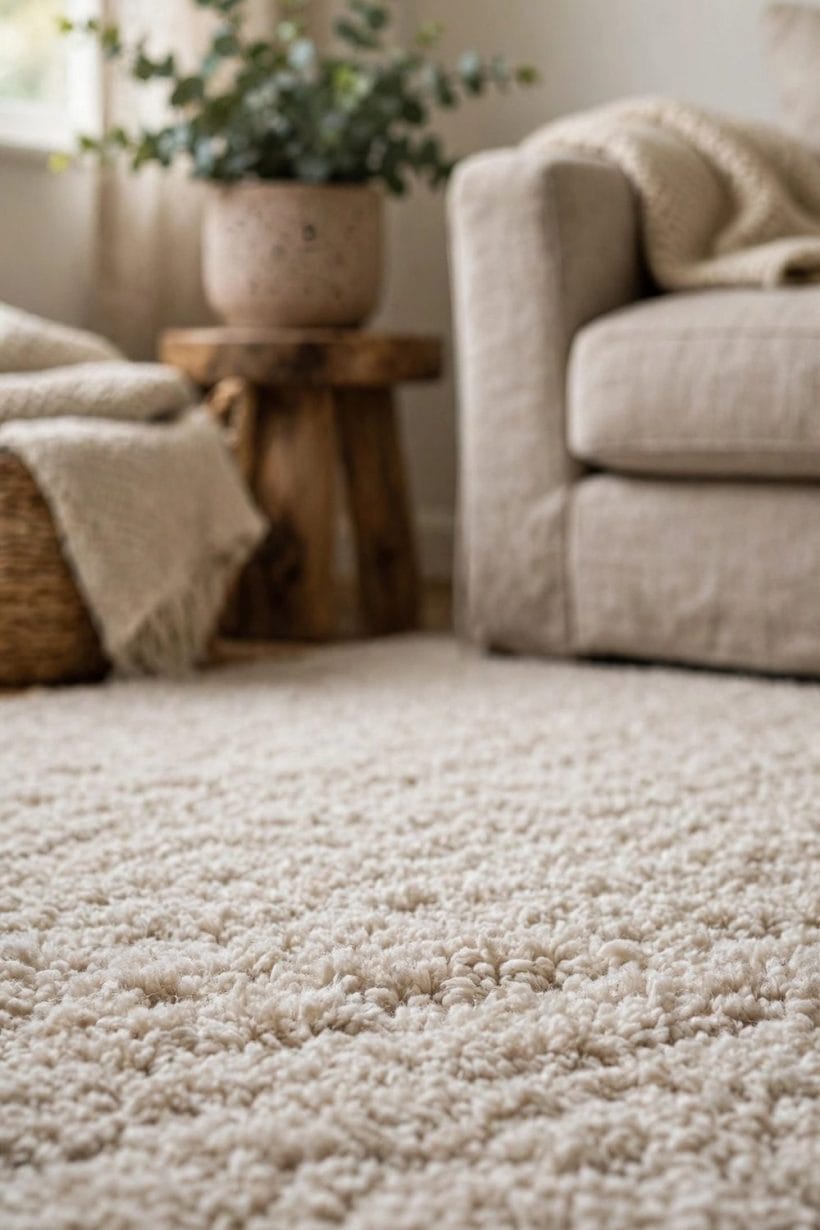
Pattern and texture in the pile can be practical as well as decorative. A subtle texture hides crumbs, marks and the everyday wear of a busy room far better than a flat, plain surface, which is one reason textured piles are popular in family homes. If the room is a showpiece that sees light use, a smoother pile is a reasonable luxury; if it is a thoroughfare, texture is your friend.
4. The Backing
Backing is the part you never see and the part that holds everything together. A good backing keeps the carpet stable, helps it lie flat, and supports the pile through years of traffic. Ask what the backing is made from and whether it suits the room, especially in rooms where moisture might reach the floor, such as near an outside door or in a room above a damp space.
Check the sample’s backing by bending it gently. It should feel firm and even, not brittle or unevenly thick. A backing that cracks or flakes when bent is a warning sign, whatever the pile looks like. Also ask whether the carpet needs a particular type of underlay or gripper, since backing and underlay work as a pair, and a mismatch can shorten the carpet’s life or make it feel uneven underfoot.
Backing also matters at the edges, where carpet meets hard floors, door bars and stair nosings. A well-made carpet finishes cleanly at its edges, and the fitter should be able to show you how those joins will be handled before any work starts.
5. The Underlay
Underlay is the hidden layer that does much of the comfort work. It adds softness, absorbs sound, insulates against a cold floor, and protects the carpet itself by cushioning every step. Skimping on underlay to save money is a false economy: a good carpet over poor underlay feels worse and wears faster than a modest carpet over good underlay.
Ask about underlay thickness and density in general terms, and whether the underlay suits the room. A thick, soft underlay suits a bedroom, while a firmer, denser underlay suits a hallway or stairs, where too much softness can make the carpet feel unstable underfoot. Underlay for rooms above a living space also helps with sound, which matters in flats and multi-storey homes.
Check whether the underlay is included in any quote you receive, and what grade it is. Quotes that bundle carpet and underlay together can hide a thin underlay behind an attractive carpet price, so ask for the two to be itemised. If you are reusing existing underlay, ask honestly whether it is still fit for the job; flattened, torn or damp underlay will drag a new carpet down with it.
6. The Fit
Fit is where good carpet goes wrong most often, and it deserves as much attention as the carpet itself. A room should be measured carefully, with allowances for pattern matching, doorways and awkward corners, and the fitter should confirm those measurements before cutting anything. Ask how joins will be placed: joins should fall where they are least walked on and least visible, never across the middle of the main walkway if it can be avoided.
Door clearances matter more than people expect. A new carpet and underlay raise the floor level, and doors that swung freely over a hard floor can start to catch. Check every door in the room, including cupboard doors, and ask how clearance will be handled. The same applies to fitted furniture and appliances that sit on the floor; anything that cannot be moved easily should be discussed before fitting day, not discovered on it.
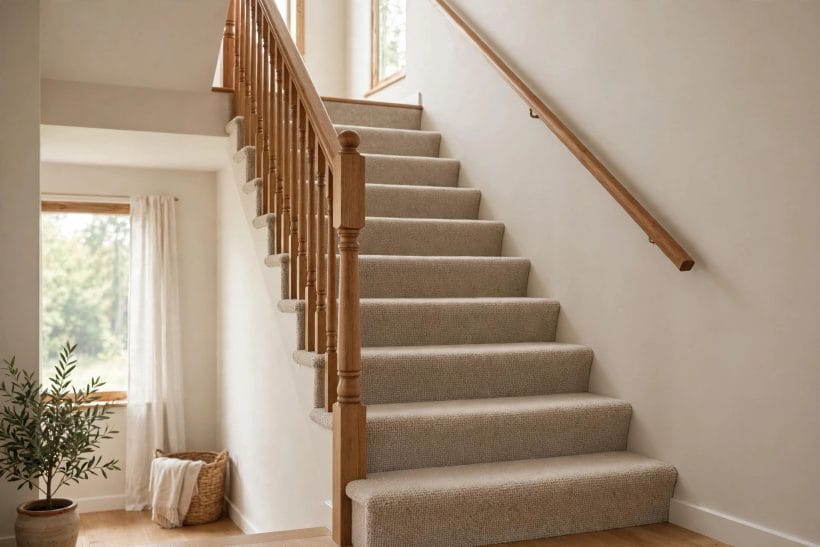
Stairs deserve their own conversation. Carpet on stairs takes concentrated wear, needs a secure fixing method, and should be fitted so the pile runs in a consistent direction. Ask how the stair carpet will be fixed and finished at the nosings, and whether the same carpet suits both the stairs and the landing, or whether a denser pile is wiser for the treads. A fitter who talks through these details unprompted is a good sign.
7. Colour and Pattern
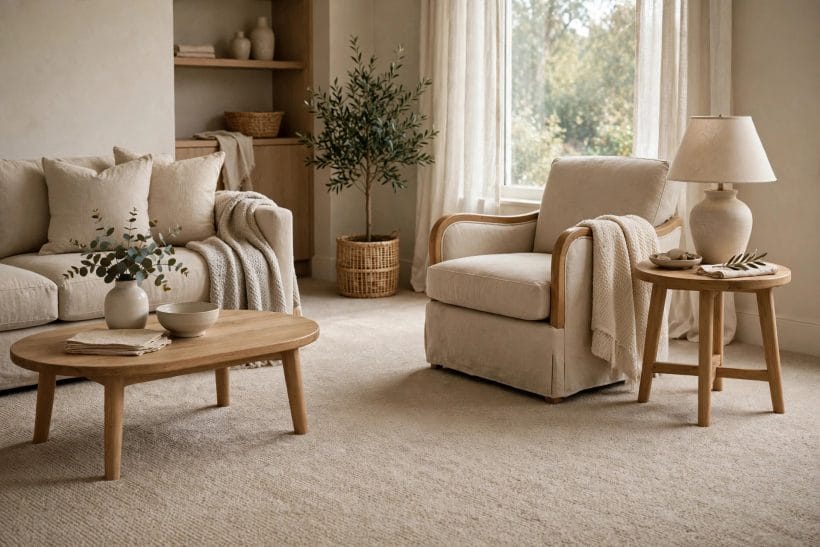
Colour is where most people start, and it is best decided late, after fibre, pile and fit are settled. A carpet’s colour should work with the room’s light, its largest furniture and its fixed features, such as woodwork and fireplaces. Mid-tones are forgiving: they hide everyday marks better than very pale or very dark shades, and they give you more freedom with wall colour and accessories later.
Pattern deserves the same careful thought. A bold pattern can anchor a plain room beautifully, but it also locks the room into that pattern for the carpet’s whole life, and it complicates pattern matching at joins, which can add waste and cost. A subtle texture or a quiet pattern is often the wiser choice in a room you plan to redecorate around, since it lets walls, curtains and furniture change without the floor fighting them.
For colour confidence, borrow the room’s existing palette. A carpet that echoes a tone already present — in the sofa, the curtains or the wood — will feel settled from day one, while a carpet chosen in isolation can feel like a stranger. Our guides to gray and yellow combinations and blush pink bedrooms show how a floor tone can sit inside a wider colour story, and Scandinavian bedroom ideas show the same calm-floor thinking in a pale, restful room.
8. Care and Cleaning
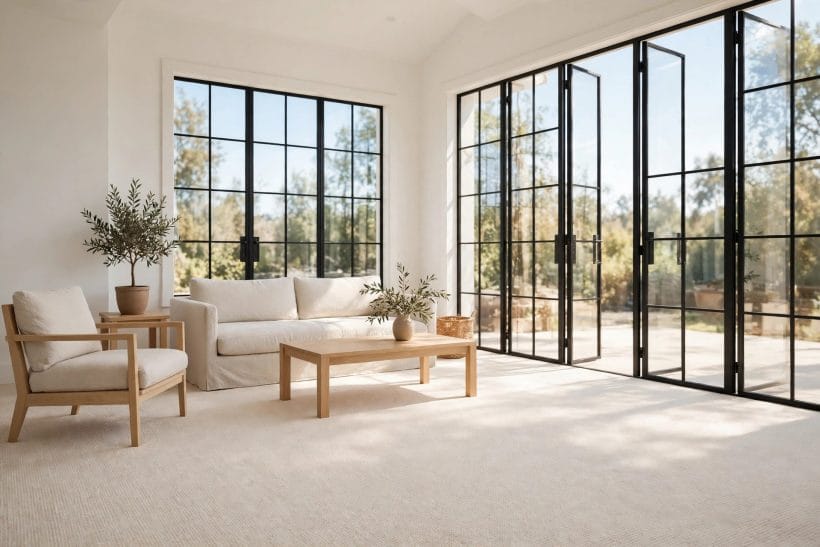
Care is the long game, and it should shape the purchase as much as the showroom does. Ask how the carpet should be cleaned day to day, how it handles spills, and whether there are cleaning methods to avoid. A carpet that needs specialist cleaning for every mark is a poor fit for a busy family room, however beautiful it looks new.
Regular vacuuming matters more than any single deep clean. A carpet that is vacuumed often keeps its pile upright and its colour fresh, while a neglected carpet grinds dirt into its fibres and ages quickly. Ask about the maker’s care guidance and follow it, especially for wool and for stain-resistant finishes, where the wrong cleaner can do more harm than the stain itself.
Spills should be dealt with promptly and gently — blotted, not scrubbed — and any cleaning product should be tested in an unseen corner first. Keep a note of the carpet’s fibre and the maker’s guidance somewhere safe, since that information is hard to recover years later when a stain appears and the shop has forgotten the details.
9. Stairs and High-Traffic Areas
Hallways, stairs and the routes between rooms punish carpet harder than any other part of the house, and they deserve a tougher brief. In these areas, favour a dense, low pile and a firm underlay, and accept that a carpet that feels luxurious in a bedroom may be the wrong choice here. Colour matters too: a mid-tone with texture hides the wear path far better than a plain pale shade.
Think about transitions. Where carpet meets a hard floor, the join should be neat, level and safe to walk across, with a proper door bar or threshold strip rather than a raw edge. Where carpet runs from a hallway into a room, the pile direction and colour should flow rather than clash, since a visible seam at a doorway draws the eye every time you pass it.
Our stair landing guide looks at the space where stairs meet rooms, and living room wood floors show the hard-floor side of the same transition question. Planning carpet and hard floors together, rather than one after the other, gives the cleanest result.
10. Questions to Ask Before You Order
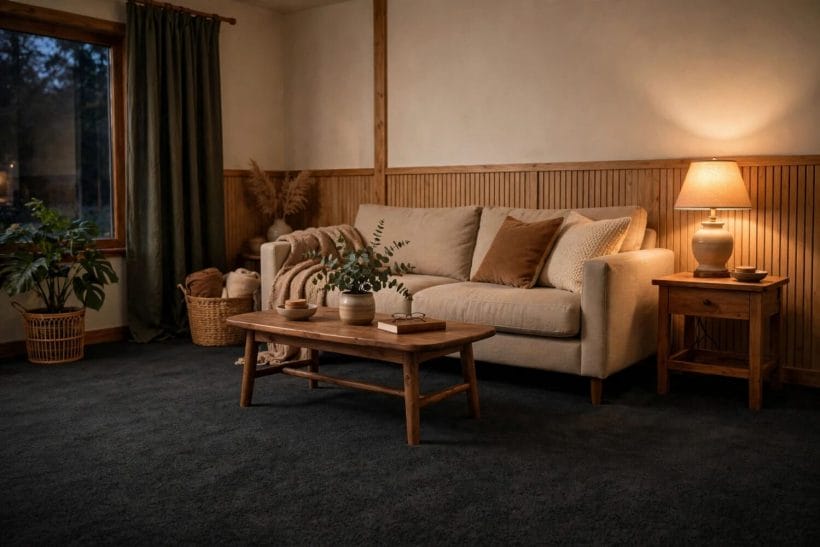
Before you commit, run through a short list of questions and be satisfied with the answers. What fibre is this, and why does it suit my room? What underlay is included, and what grade is it? How will joins be placed, and how will doors and stairs be handled? What does the maker’s care guidance say, and what happens if the carpet wears badly? A seller who answers plainly, without pressure, is worth more than a discount that rushes you past these questions.
Ask for everything in writing: the carpet specification, the underlay grade, the measured area, the fitting details and the total price including any extras such as door trimming or old-carpet removal. Verbal assurances are easily forgotten, and a written specification protects both sides if anything is disputed later. If a quote seems far cheaper than others, ask what has been left out rather than assuming a bargain; the missing item is usually underlay, fitting quality or both.
Finally, give yourself a cooling-off moment. Carpet is a purchase you will live with daily for years, and a day spent living with samples in your own light is never wasted. The right carpet feels obvious once it is in the room; the wrong one announces itself every morning. Take the time, run the checks, and let the room — not the showroom — make the decision.
Final Considerations
Carpet buying rewards patience and punishes haste. Choose the room first, then the fibre and pile that suit its traffic, then the backing and underlay that support them, and only then the colour that ties it all together. Insist on careful measuring, honest answers about fit and care, and a written specification before you order. Done that way, carpet becomes what it should be: a quiet, warm foundation that lets the rest of the room shine. For the wider home picture, tiny house designs and kitchen ideas show how floor choices sit inside whole-room planning, from compact layouts to the hardest-working room in the house.



0 Comments