

Tiny House Nation made millions of people picture their own small home on a screen: the application, the build, the big reveal. It is no surprise that “how do I get on the show?” is still one of the most-asked questions in tiny living. This guide answers it honestly and without a date stamp — because the way onto any tiny house TV show, this one included, works the same way in every production cycle: a genuine story, a proper application through official channels, and patience.
One thing this guide will not give you is a casting contact, a deadline or an insider shortcut, because none exists that anyone can truthfully print. Casting opens and closes with production schedules, and the only reliable source is the network’s or production company’s own pages at the moment you apply. What follows is everything that is actually in your control: how casting works, what producers look for, and how to be ready when a call opens.
1. The Honest Starting Point: Shows Cast Only When They Are in Production
A television show can only cast when a new season has been commissioned and is being made. Between seasons — and after a show ends its run — there is no casting to apply to, however good your story is. Tiny House Nation’s original run made it the best-known tiny house programme, and like every show it worked in cycles: calls for applicants appeared while a season was being prepared and closed once the cast was set.
So the first step is verification, not application. Check the network’s official site and the production company’s official casting pages for a current, open call — for this show or for any of the tiny house and small-home programmes that followed in its footsteps. If nothing is open, your job is to be ready: the rest of this guide is preparation that keeps. And keep your own plans moving in the meantime — a tiny house built for your life, cast or not, is never wasted. If buying is your route, our guide to how to buy a tiny house covers it end to end.
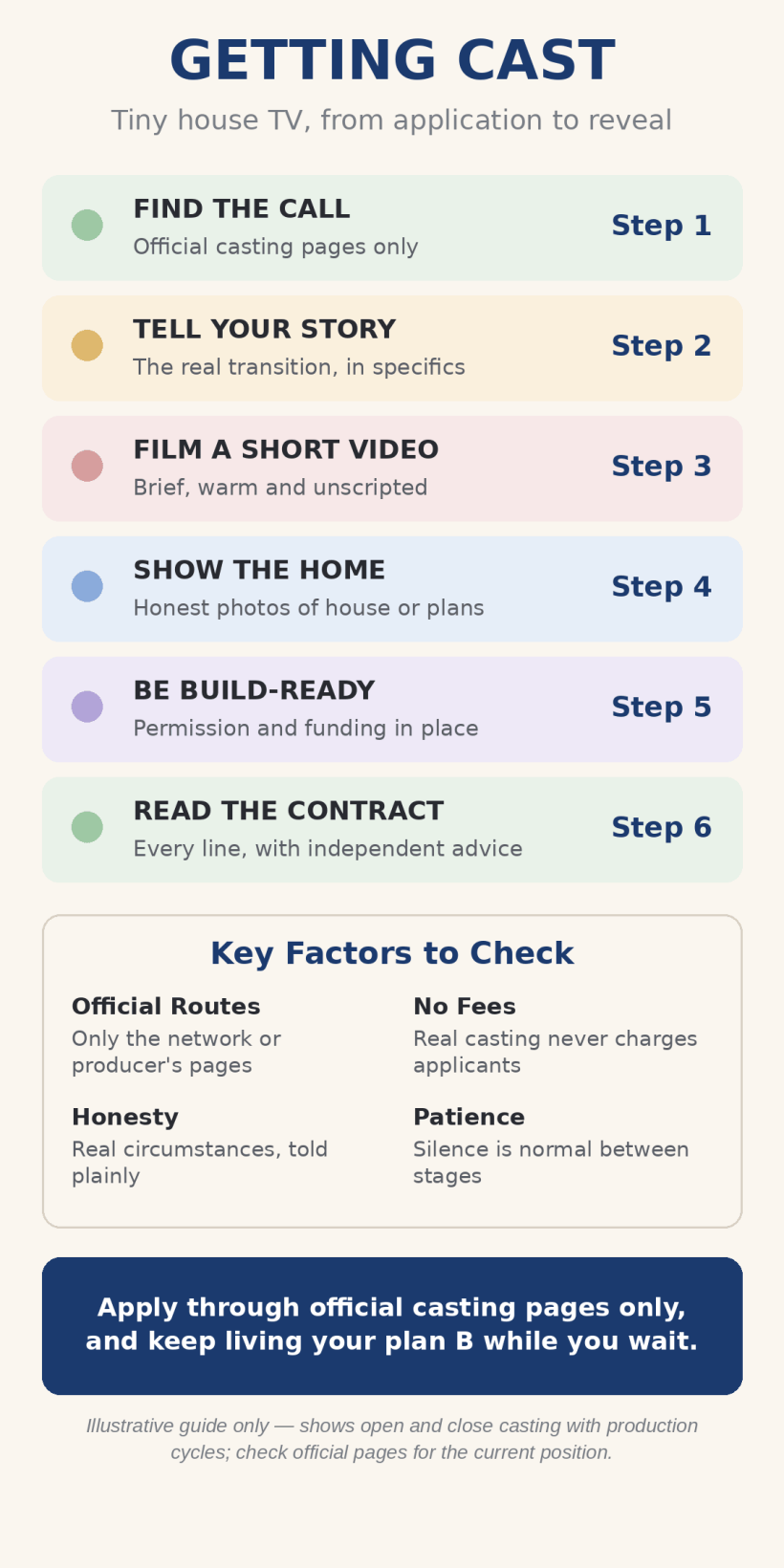
2. What Tiny House Shows Are Looking For
Casting is storytelling before it is house-hunting. Producers need people whose situation makes an episode: a real transition — a growing family downsizing, a couple building after a setback, a multigenerational move, a first home that happens to be tiny. The house matters, but the change in the people’s lives is the programme. A beautiful house with no story behind it is a magazine feature, not an episode.
Format matters as well. A series built around new builds needs applicants at the start of a project; a series built around rescues, moves or makeovers needs the opposite. Reading a show’s past episodes with that lens tells you which of your facts to lead with — the same household can be a build story, a relocation story or a second-chance story depending on which door it knocks on, and casting teams think in exactly those terms.
They also need people who will be good to film: comfortable on camera, clear about why they are doing this, and genuinely enthusiastic rather than performing. And they need a build that can actually happen on a production schedule — which is why readiness, covered in section 6, quietly separates serious applicants from dreamers. If you are still deciding whether tiny living itself is for you, our overview of how to tiny house is the honest place to start.
3. Your Story Is the Application
Every casting form or email asks some version of the same questions: who are you, where are you now, why tiny, why now, and what will be different when it is done? Answer in specifics. “We want a simpler life” is everyone’s sentence; “we are two nurses working opposite shifts, raising a toddler in a rented flat above the hospital, and this is the only route to a home of our own” is a story a producer can picture.
Be truthful to the point of plainness. Casting teams check details, and a story that survives checking is worth more than a dramatic one that does not. Include the real constraints too — budget limits, a tricky plot, a sceptical parent — because obstacles are episode material, not disqualifications. Write the application like a letter to a person, keep it tight, and let one strong reason carry it rather than listing every reason you have.
4. The Intro Video: Short, Warm and Real
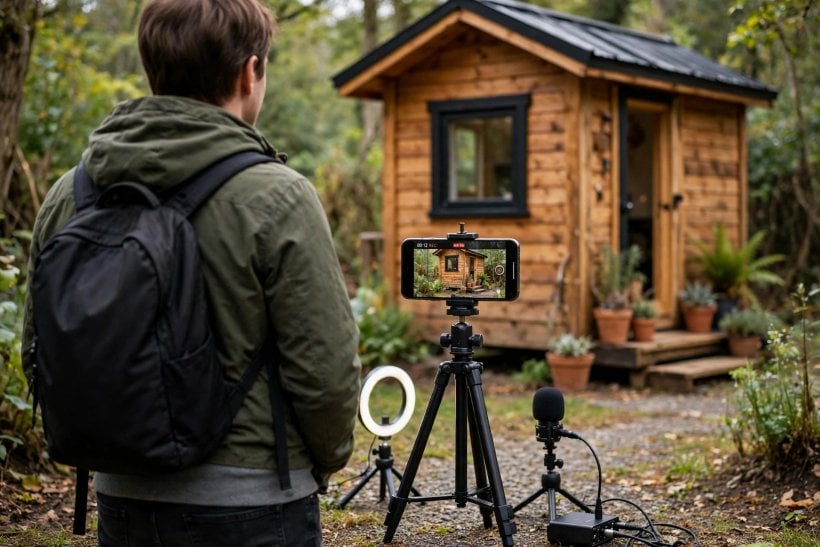
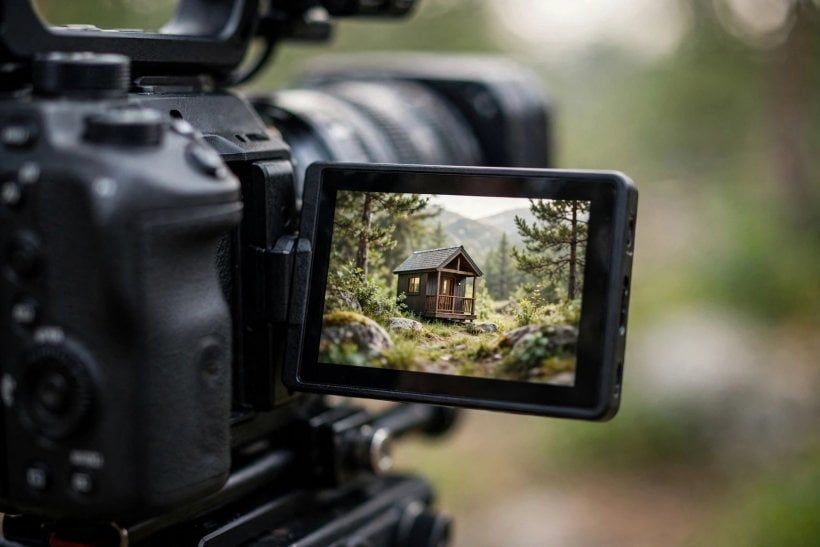
Most tiny house casting asks for a short video, and it is your true first impression. Film it at home, in daylight, with the camera steady and the sound clear — enthusiasm drowned by wind noise or a dark room never reaches the producer. Introduce everyone who would appear, say where you live now and what you hope to build or change, show the camera around, and keep the whole thing brief and natural rather than scripted and stiff.
Dress as yourselves on a good day: neat, comfortable and recognisably you. Casting is not looking for actors; it is looking for people a viewer will root for. Film a couple of takes, watch them back, and choose the one that feels most like your household on an ordinary happy morning. Phones are fine — producers say so themselves — because the point is personality and story, not production polish.
5. Photos and Facts: Show the Home Honestly
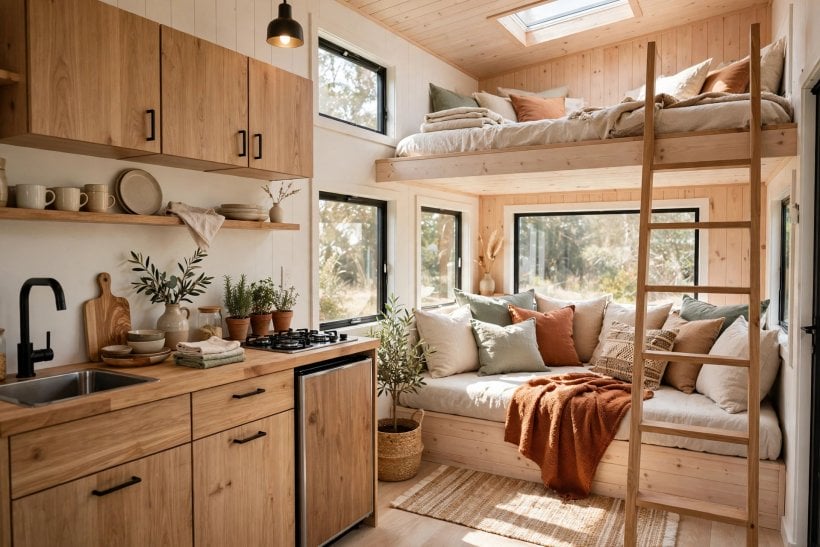
Alongside the video, expect to send photographs: of yourselves, of your current living situation, and of the house, plot or plans at the heart of the story. Send current, honest pictures in good light — the charming wide shot and the unglamorous corner both. If the house is yet to be built, plans, sketches and the plot photograph tell the story; our library of tiny house floor plans can help you talk concretely about what you have in mind.
One more habit separates polished applications from hopeful ones: know the show you are applying to. Watch recent episodes closely enough to describe, in your application, where your story would sit in the format — not as flattery, but as evidence you understand what an episode needs. Casting teams can tell within a paragraph whether an applicant has ever actually watched the programme, and genuine familiarity reads as seriousness.
Keep a simple fact sheet ready to attach: who you are, where the build would happen, what stage you are at, and how to reach you. Casting teams sift large numbers of applications; the household whose facts are complete, consistent and easy to find is the one that gets the callback. Save everything in a folder so that when a call opens, applying is an afternoon’s work rather than a scramble.
6. Being Build-Ready: The Quiet Decider
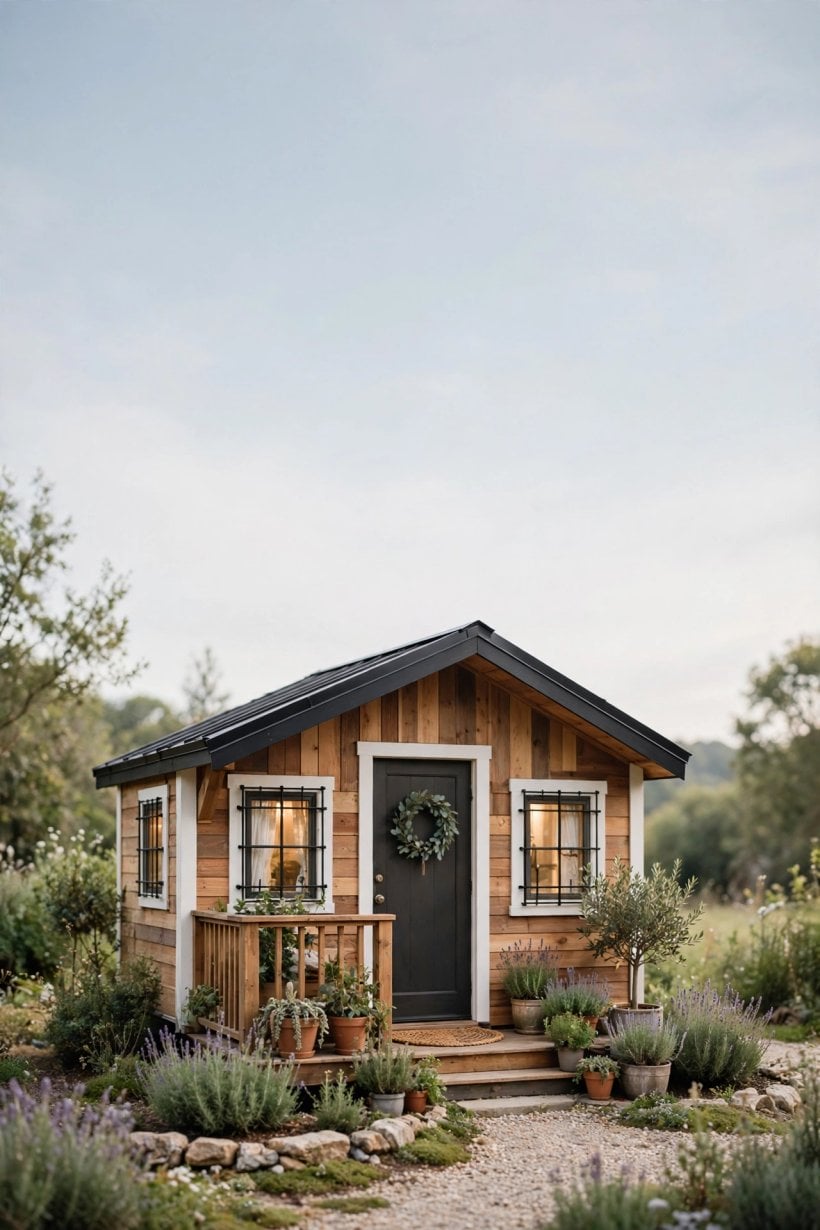
Television schedules are unforgiving, so producers strongly favour applicants whose build can genuinely start: a plot or parking place secured, permission to build or site the house understood, a builder chosen or a realistic self-build plan, and funding in place. You do not need every detail finished — the show may shape parts of the project — but “we have land, permission and a builder” beats “we have a dream” at every stage of casting.
Readiness is also about your calendar. Filming a build means being available, flexible and patient through a process you do not control, with strangers, cameras and re-takes in your home. Households who have thought honestly about that — work, children, pets, the neighbours — come across as castable. If building yourself is the plan, our guide to whether you can build your own tiny house sets out what that really takes; being able to discuss it sensibly is itself a casting asset.
7. The Casting Process, Stage by Stage
While every production differs, the path is recognisably the same. First, the written application and video are reviewed by the casting team. Promising households get a producer call — a longer conversation that tests the story, the readiness and how you come across. Treat it as a friendly interview: be yourselves, be specific, and ask your own sensible questions about what filming would involve.
Later stages can include reference and background checks, more detailed questions about the build and budget, and sometimes a visit or a test filming at your home. Shortlists shrink at every step, and long silences between steps are normal — production moves when it moves. One polite follow-up is fine; persistence beyond that works against you. If you reach the final stages, congratulations — and if your story involves a house bought with its land, the readiness of that package is exactly what producers hope to hear, as our guide to tiny houses for sale with land explains from the buyer’s side.
8. Contracts and Reality Checks
If you are cast, paperwork follows: appearance releases and a contract that sets out what is filmed, what is built, what each side pays for, and what is yours at the end. Read every line, and take independent advice before signing — a lawyer’s hour is cheap insurance on the biggest project of your life. Never rely on a summary, a verbal assurance or what happened to a household on a previous season; your contract is your deal.
Hold on to the reality behind the format, too. Television compresses time: a build that unfolds over weeks can appear to take days, scenes are shaped in the edit, and the tidy reveal is a moment, not the whole of your life in the house. Go in expecting a produced version of a real experience — enjoyable, memorable and genuinely yours, but edited for an audience. Households who understand that beforehand enjoy the process most.
9. Staying Safe, and the Plan B Worth Having
Real casting never charges applicants. Anyone asking for an application fee, a “listing payment” or money to guarantee a place is not casting for a television show — walk away. Apply only through pages you have reached from the network’s or production company’s official site, and be wary of lookalike pages and messages, which appear whenever a popular show opens a call. Your personal details belong on the official form and nowhere else.
Finally, build the plan B into the dream. Most applicants for any season are not cast, simply because episodes are few and stories must vary. If the answer is no — or silence — the application folder you built is still a gift: a clear story, fresh photos, real plans and a build-ready position are precisely what you need to make the house happen yourself, on your own schedule, with your own reveal at the end. Many of the best tiny houses were never televised. If making yours is the path, our guide to how to make a tiny house walks the whole build.
A word about timing your own life around an application: do not put a build on hold for a season on the chance of being cast, and do not sign anything — a builder’s contract, a land purchase with a deadline — that assumes you will be. Production decisions run on production time, and households who keep their own project moving are, paradoxically, the most castable kind: they have momentum, dates and a story already in motion. If the call comes, it finds you ready rather than waiting.
10. Frequently Asked Questions
How do you get on Tiny House Nation?
By applying through an official casting call when the show is in production: a written application with your story, a short intro video, and honest photos of your home or plans. Producers then shortlist by story, readiness and how naturally you come across on camera. There is no other legitimate route in.
Is Tiny House Nation still casting?
Casting opens only while a season is being made and closes when the cast is set, so the answer changes over time. The only reliable check is the network’s and production company’s official pages at the moment you look. Anyone claiming to know a permanent answer — or selling you one — should not be trusted.
Do you get paid to be on the show?
Arrangements vary by production and are set by the contract each household signs — some deals involve the show contributing to the build, others work differently. There is no standard package anyone can promise you. Read your own contract carefully and take independent advice before signing anything.
Do they really build the house on the show?
The builds are real, carried out by real builders — but television compresses the timeline in the edit, so weeks of work can look like days. Work also continues off camera. Expect a genuine house and a genuine process, presented in a shaped, entertaining form.
Can I apply if my tiny house is already built?
Sometimes. A finished house needs a different episode angle — a renovation, an addition, a relocation or an unusual story around it. Whether that fits depends on what the season is looking for. Apply with the angle made clear and let the casting team judge the fit.
What do casting directors look for in applicants?
A genuine story with a real transition at its heart, people who are natural and warm on camera, and a build that can actually happen on schedule — land, permission and funding in place. Distinctiveness helps; exaggeration does not survive the checking process.
How long does the casting process take?
It varies with the production schedule, and long gaps between stages are normal. Silence usually means the process is moving slowly, not that you have been forgotten. One polite follow-up is reasonable; after that, keep building your own plans and let the answer arrive when it arrives.
Final Considerations
Getting on a tiny house show is a story told well, an application made properly, and a household ready to build — in that order. Verify that a call is open through official pages, never pay anyone to apply, and prepare the parts you control: the honest story, the short warm video, the clear photos and the build-ready facts. Whether or not the cameras ever come, that preparation is the foundation of a tiny house that happens — and a reveal of your own is worth as much as a televised one. This guide is general information only, not legal advice.


0 Comments