

Buying a tiny house is a process with a right order to it: decide what kind of home you are buying, set the full budget, secure a legal place to put it, find and inspect the right home, line up the money, vet the seller, close on clean paperwork, and plan the delivery before the sale completes. Buyers who follow that order rarely go wrong. Buyers who start at the photograph and work backwards meet the problems this guide exists to prevent.
This is the site’s complete walk-through of how to buy a tiny house. If you are still at the earlier question — whether buying one is possible and sensible for you at all — start with can I buy a tiny house, then come back here for the process itself.
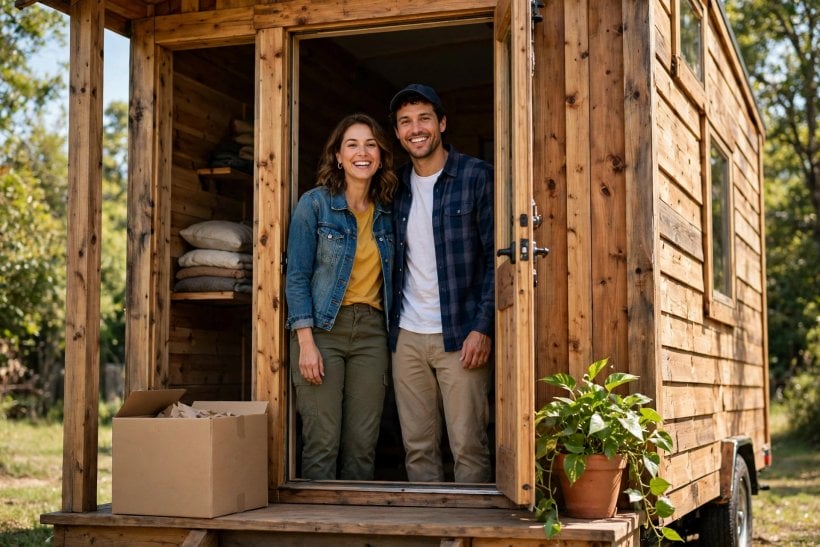
1. Step One: Decide What You Are Actually Buying
Every later step depends on this one. A tiny house on wheels is a movable home built on a trailer; a tiny house on a foundation is a small permanent dwelling; a shell is a weather-tight exterior you finish yourself; a kit or plan set is materials and instructions, not a home at all yet. Each type has different paperwork, financing, transport, and placement rules — so “I’m buying a tiny house” is not a plan until the type is chosen.
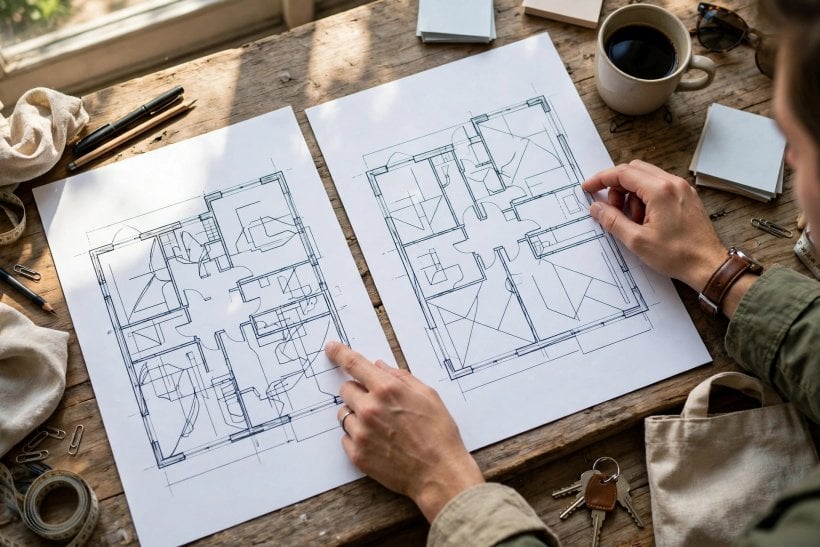
Let your life make the choice. Wheels suit people who expect to move or who need the home treated as a vehicle-style purchase. A foundation suits people who own land and are settling. A shell suits people with building skills and time who want to spread the work. Our tiny house floor plans guide helps you test layouts against how you actually live — sleeping, cooking, working, storing — before any money is committed, because the right size and layout matter more than any finish.
New versus pre-owned is the second fork. A new home from a builder costs more and comes with documentation, a specification you chose, and a builder standing behind the work. A pre-owned home costs less and is available now, but its condition and history are yours to establish, and its paperwork may need chasing. Neither is automatically the smarter buy; the vetting in steps five and seven is what makes either one safe. Decide the fork now, because it changes where you search and what you inspect.
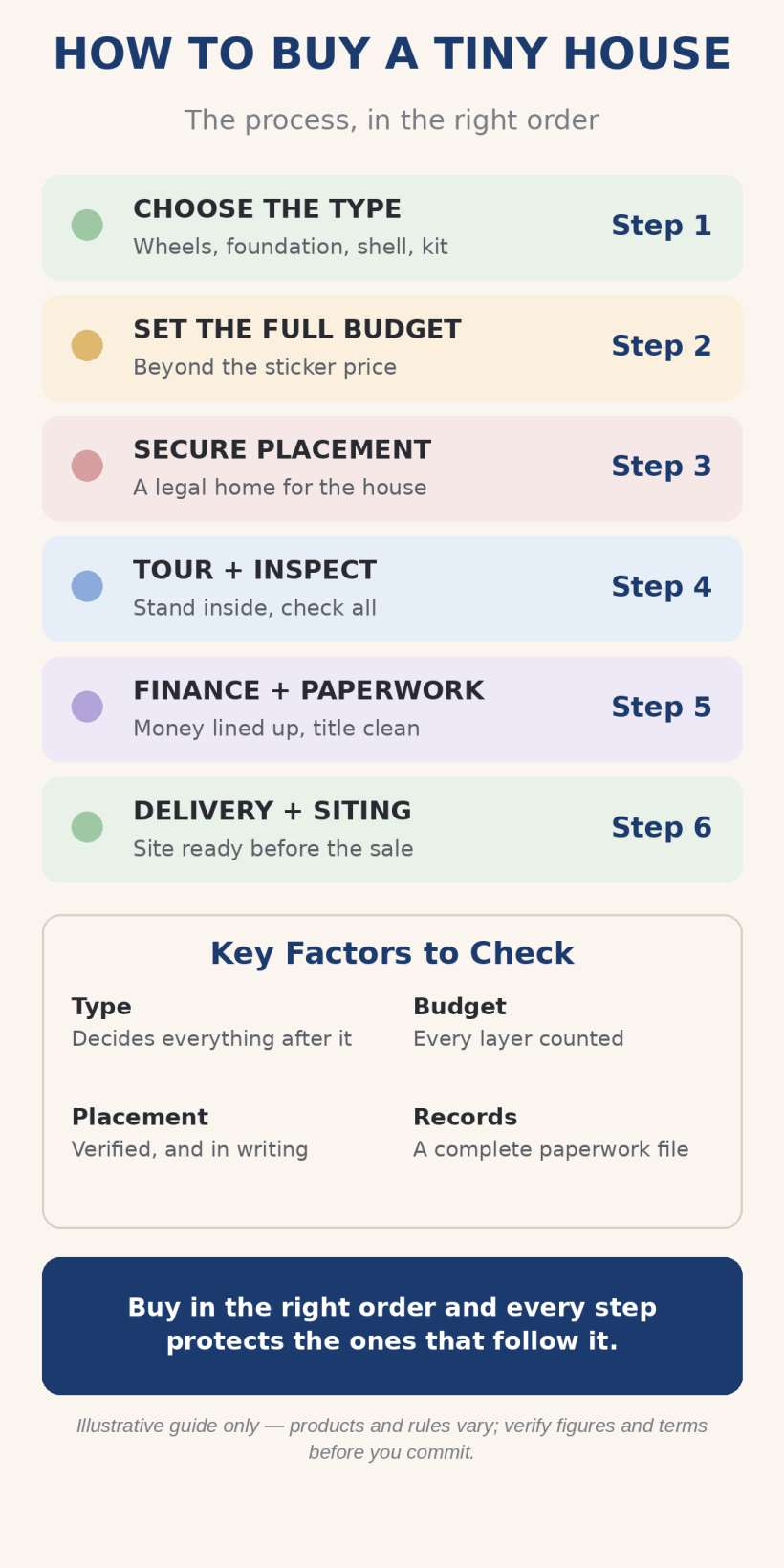
2. Step Two: Set the Full Budget, Not the Sticker Budget
The listing price is the beginning of the budget, not the budget. A complete tiny house budget also carries, in general terms, some combination of delivery or towing, site preparation, a pad or foundation where needed, utility connections, permits or fees where they apply, insurance, and finishing or repair work. How much each piece comes to depends on the home, the site, and the locality — any single “average” figure would hide exactly the variation that decides whether a purchase is affordable for you.
Build the number for the actual home and site you are considering, line by line, and keep a contingency for the surprises older homes hold. Our breakdown of how much a tiny house costs lists every layer so nothing is forgotten. If the full total strains the budget, the honest fixes are a smaller home, a pre-owned home, or a shell — not pretending the extra costs away.

3. Step Three: Secure the Placement Before the Purchase
Do not buy a home that has nowhere legal to go. Placement rules are local: zoning decides whether a tiny house may be lived in at a given address, and the answer can differ between a house on wheels and one on a foundation, between a main dwelling and an accessory one, and between one town or county and the next. Minimum sizes, permitted districts, and utility approvals are all part of the same question.
Check the position for the exact place you intend to use, and get the answer from the officials who administer it rather than from a seller or a listing. Our overview of tiny house laws by state shows the landscape; your local office gives the verdict. If you do not have land yet, line up a lawful interim — a community or a park that accepts your type of home — and cost it into the budget before you buy, not after the home is on a trailer with nowhere to go.
Ask the placement question precisely. “Can I put a tiny house here?” gets a vague answer; “May I live full-time in a certified tiny house on wheels, as an accessory dwelling at this address, and what approvals do I need for water and waste?” gets one you can act on. Write down who told you, when, and what — if anything later conflicts, that record is how the conversation resumes.
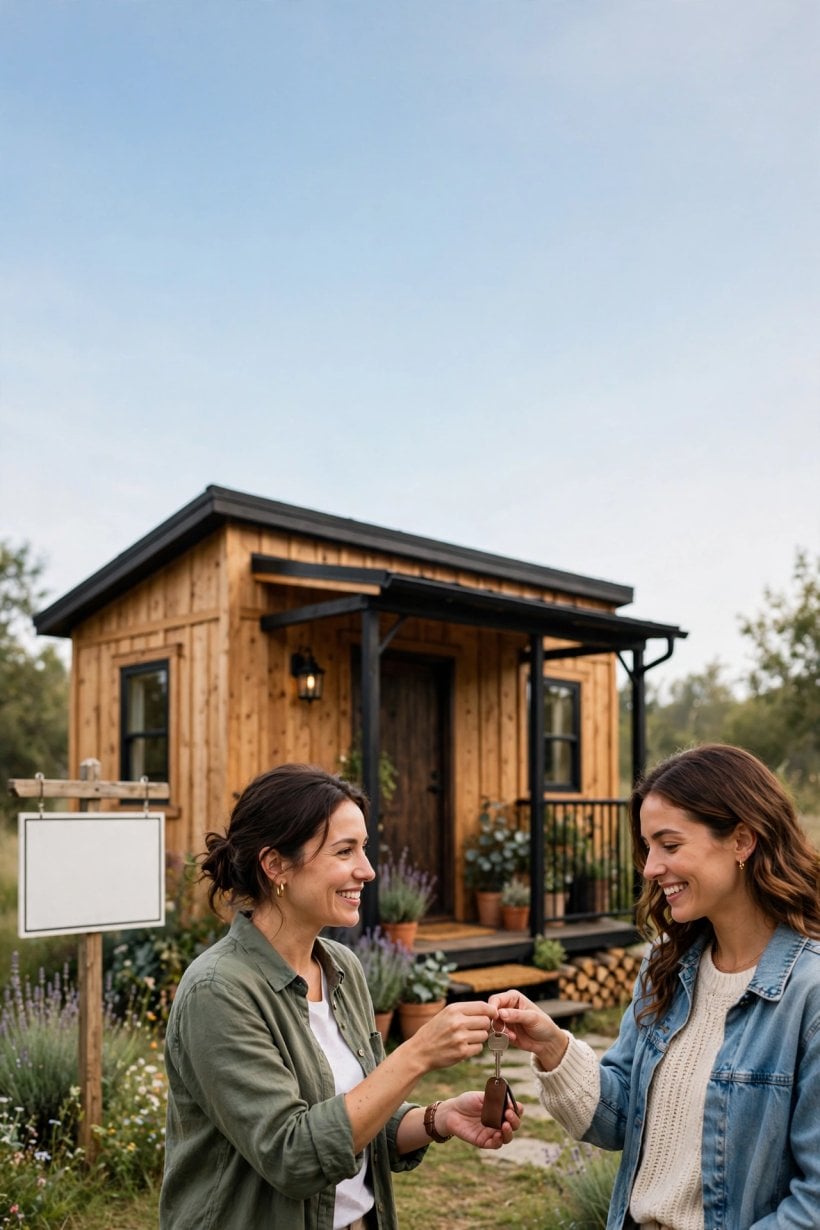
4. Step Four: Find Homes and Build a Real Shortlist
Tiny houses reach buyers through builders selling direct, dealers, online marketplaces, specialist listing sites, and private sellers. Each channel implies a different level of backup: a builder can speak for the construction and usually provides documentation; a private sale asks you to verify history and title yourself. Search widely, but shortlist strictly — every home on the list should match your chosen type, fit your full budget, and have a plausible legal placement.
Read listings for substance: size and layout, how heating and cooling are handled, what is included, whether delivery is part of the price, and the home’s age and history. Ask for anything missing before travelling to view. Keep notes per home — type, price, what’s included, paperwork offered — because after five viewings the details blur, and the comparison you make at the end is only as good as the record you kept.
Set alerts on the listing sites and marketplaces you are watching, and tell builders what you are looking for: good homes, especially fairly priced pre-owned ones, can sell before they are widely advertised. Patience is a genuine buying tool here. The market for tiny houses is small enough that waiting for the right home — right type, right layout, clean paperwork, lawful placement — beats grabbing the nearest one and spending the following year fixing the mismatch.
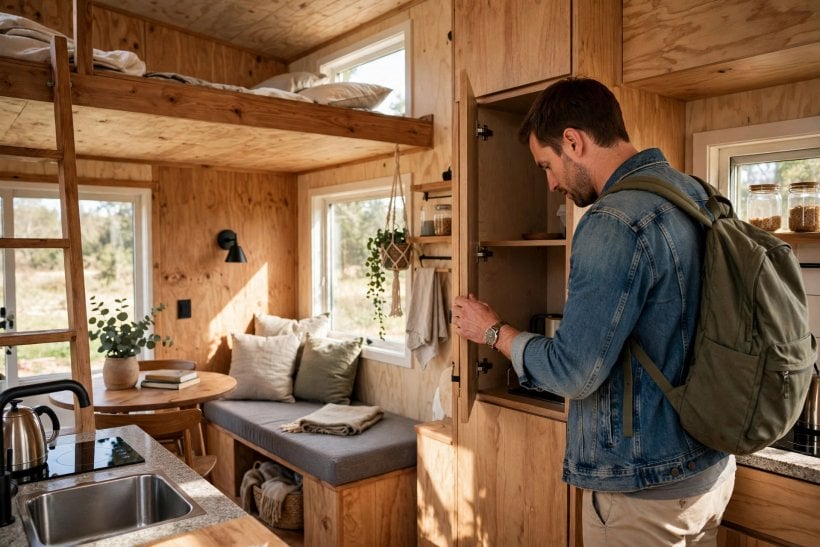
5. Step Five: Tour and Inspect Like It Matters — Because It Does
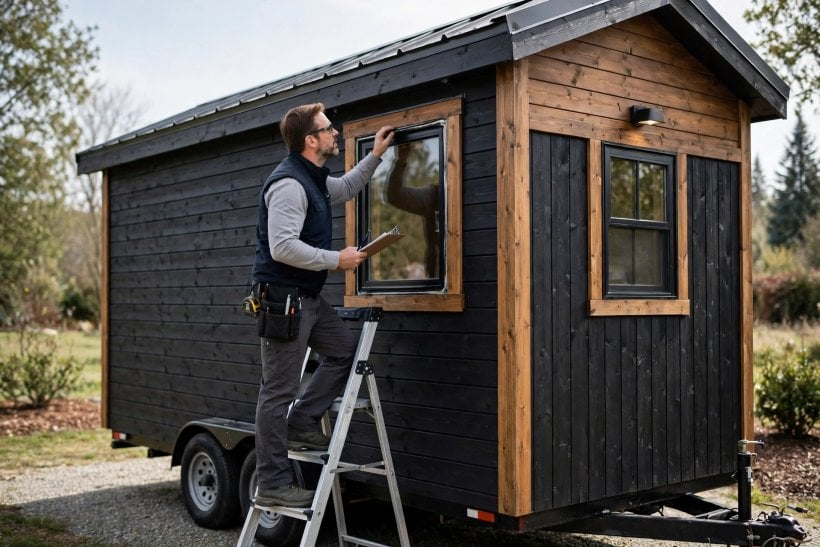
Stand inside every serious candidate. Small homes are felt, not just seen: loft headroom, bathroom usability, whether the kitchen works for real cooking, and whether storage is genuine. Open everything, run the water and the heating or cooling, look for the smells and stains that betray leaks, and check windows, doors, and roof vents for failed seals.
Outside, inspect the roof, the underside, skirting or foundation connections, and — on a wheeled home — the trailer, tires, and running gear. On a pre-owned home, an independent inspection is worth its cost: tiny houses concentrate plumbing, electrical, and structure into a small space, so one hidden failure is a large share of the home. If a seller resists inspection, treat that as the answer and move on to the next home on the list.
Bring a simple kit to viewings: a tape measure for the rooms and the loft, a phone torch for the underside and cupboards, and the notes template from step four. Photograph the data plates, the trailer identification, and any damage you find — with the seller’s knowledge — because those photographs become part of the negotiation and, later, of your own records.
6. Step Six: Line Up the Money
How you pay follows from what you chose in step one. A home on wheels is commonly financed on vehicle-style terms; a home fixed to a foundation on your land may follow a mortgage-style route; personal loans, builder-arranged finance, and savings all appear in tiny house purchases. Lenders will want to know what the home is, who built it, what documentation it carries, and where it will be placed — so start the conversation early, before your heart is set on one specific home.
Our guide to how to finance a tiny house covers the main routes, and our companion answer to how do you finance a tiny house sets out what lenders generally look for. Judge every offer on its total cost and terms, not its headline, and arrange insurance quotes in parallel — the home needs cover from the day it is yours, including while it is being delivered.
Expect the money step to ask things of you, too: identification, evidence of income and deposit, and details of the home and its placement. Having those documents assembled before you apply speeds everything up and signals a serious buyer to sellers as well. If a lender declines the home rather than you, do not take it personally — lenders differ in how they treat tiny houses, and the classification conversation in step one is often the whole issue.
7. Step Seven: Vet the Builder or the Seller
For a builder, establish the record: time in business, finished homes you can view — including one that has been lived in, not only the show model — the standards or certification the build follows, the paperwork supplied at sale, and references from past buyers. A written contract with a clear specification, payment schedule tied to stages, and completion terms is the professional norm; reluctance to provide one is information.
For a private seller, confirm ownership, ask about any loan or lien, and request build records, manuals, and maintenance history. On a wheeled home, the trailer’s identification must match its documents. Ask how the home was used and how often it has been moved. Anything that cannot be verified should be priced as a risk or treated as a reason to walk away — there is always another tiny house.

8. Step Eight: Contract, Closing, and the Title Check
Put the deal in writing: the home identified precisely, the price, everything included, deposits and when balances fall due, who handles delivery, and what happens if either side cannot complete. Keep payments traceable, and tie staged payments to verifiable progress or events rather than to dates alone.
Run the title check as its own deliberate step. The name on the ownership documents must be the seller’s; the documents must match the home — including, on a wheeled home, the trailer identification; and no outstanding loan or lien should travel with the purchase. Do not release the final balance until the promised paperwork is physically in your hands. This step feels like friction. It is the step that prevents the worst stories in tiny house buying.
9. Step Nine: Delivery, Siting, and Moving In
Plan delivery before closing day: confirm the route and site access — gates, branches, gradients, soft ground — any transport permits or escorts the move needs, and that the site itself is ready: level base prepared, utilities arranged, drainage running away from the home. Whether delivery is included in the price or arranged by you, get its scope in writing, including levelling and blocking on arrival.
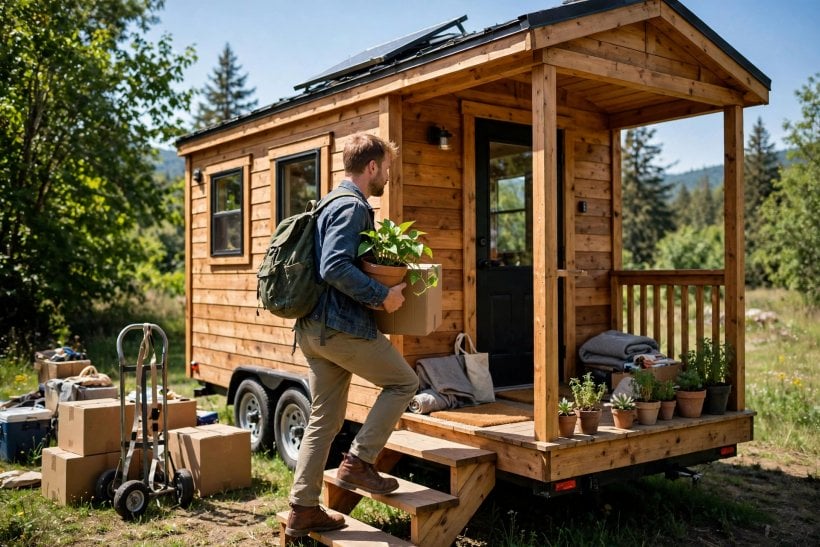
Once sited, connect services properly, test every system under real use, and keep the full paperwork file — contract, title or deed documents, manuals, approvals, delivery records — together. Our guide to how to prepare land for a tiny house covers the site side in detail if your home is going onto raw land. Then move in slowly: the first weeks reveal the small adjustments every small home needs.
Use those first weeks deliberately. Run the shower and watch the drains, cook a real meal, sleep a cold night if the season gives you one, and note anything that behaves differently from the viewing — a door that swells, a tap that drips, a corner that collects condensation. Anything covered by a builder’s warranty or agreed in the contract should be raised while the purchase is fresh and the paperwork is still on the kitchen table.
10. Frequently Asked Questions
How do I know I am getting a good deal?
Compare like with like: similar type, size, age, and condition, judged on the total cost in place — home, delivery, siting, connections — not the listing price alone. A fair deal is a verified home, with clean paperwork and a legal placement, at a price in line with comparable sales you have actually researched.
What red flags should I watch for when buying?
No title or mismatched documents, a seller who resists inspection, pressure to pay quickly in untraceable ways, a price far below comparable homes with no explanation, no clear answer on where the home may legally be placed, and listings with only styled photos and no construction details. Any one of these is a reason to slow down; two are a reason to leave.
Can I buy a tiny house sight unseen?
You can, and people do — usually new from a reputable builder with finished examples they have inspected, a detailed written specification, and staged payments. For a pre-owned home it is a poor risk: condition, smell, headroom, and build quality cannot be judged from photographs. If distance forces it, pay for an independent inspection and insist on a live video walkthrough.
How much should I budget beyond the tiny house price?
Enough to cover the layers in section 2 that apply to your purchase — delivery, site work, connections, fees, insurance, and any finishing or repairs — plus a contingency. The exact amount is specific to your home and site; build it line by line rather than borrowing a percentage from anyone else’s purchase.
Where is the best place to buy a tiny house?
Wherever gives you a verified home, clean paperwork, and a lawful placement at a fair total cost. For most buyers that means a reputable builder for a new home, or a well-documented private sale they have inspected in person — the channel matters less than the verification you do inside it.
Final Considerations
How to buy a tiny house is mostly how to buy in the right order: type first, then budget, then placement, then search, inspection, finance, vetting, paperwork, and delivery. Each step protects the ones after it. Prices, finance products, and local rules change, so verify the current position with sellers, lenders, insurers, and local officials as you go. This guide is general information, not financial or legal advice — and worked through patiently, it ends with the keys to a home you understand completely.


1 Comment