

Who makes the best impact hurricane windows? It is the question every coastal homeowner asks, and it has no honest answer in the form of a name — because the window that protects your house is not a brand, it is a certified product, in the right rating for your address, fixed into your wall the way its approval specifies. Change any one of those three and the ‘best’ window is a different product entirely.
This guide replaces the league table with a checklist: how impact windows are built, how to read their ratings and approvals, which glass and frame choices matter, what proper installation looks like, what to ask an installer, and when the alternatives — shutters and panels — are the better honest answer. Everything is stated generally; your local code, your insurer and your own paperwork make the final rulings.
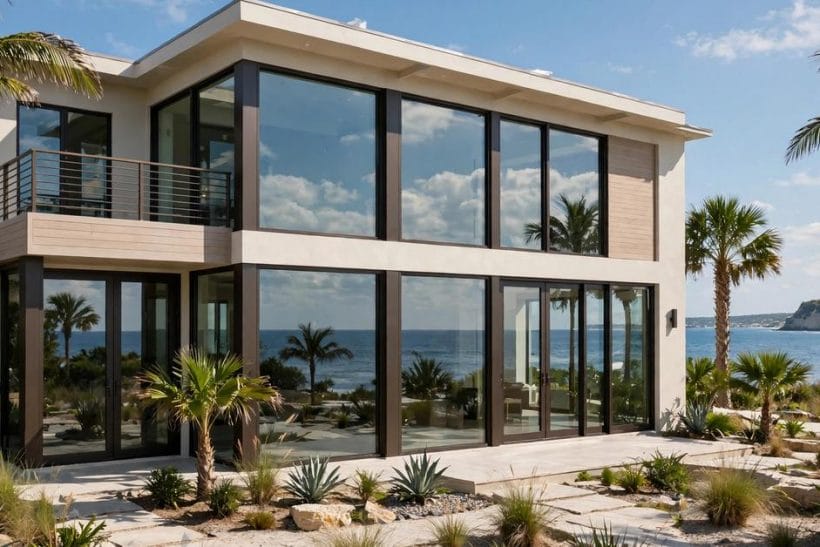
1. Hurricane Impact Windows at a Glance
Hurricane impact windows are window systems whose laminated glass, reinforced frames, locking hardware and structural anchoring have been tested together against flying debris and sustained wind pressure, and approved as an assembly for use in storm regions. Their character comes from a short list of verifiable attributes: a design-pressure rating matched to the address, debris-impact test documentation, a place on the local approved-products listing, and installation that follows the approved fixing method exactly.
| Question | Short answer |
|---|---|
| Who makes the best impact windows? | No verifiable ranking exists — the right product is the one certified for your address’s required rating, in your sizes, installed to its approval. This guide teaches the check instead of naming winners. |
| What does ‘impact rated’ actually mean? | The unit passed a debris-impact test and pressure cycling as a complete assembly, and carries documentation and an approval number to prove it. |
| Which rating does my home need? | The one your local code assigns to your location, height and exposure. The window’s label must meet or exceed it — check the paperwork, not the brochure. |
| Does installation really matter that much? | It is half the performance. The approval assumes the tested fixing method; anchors into structure, square setting and proper sealing are what deliver the rating. |
| Are shutters or panels a mistake? | No — they are the alternative honest answer: protection deployed before a storm instead of built into the glass. The right choice depends on budget, presence and the household’s habits. |
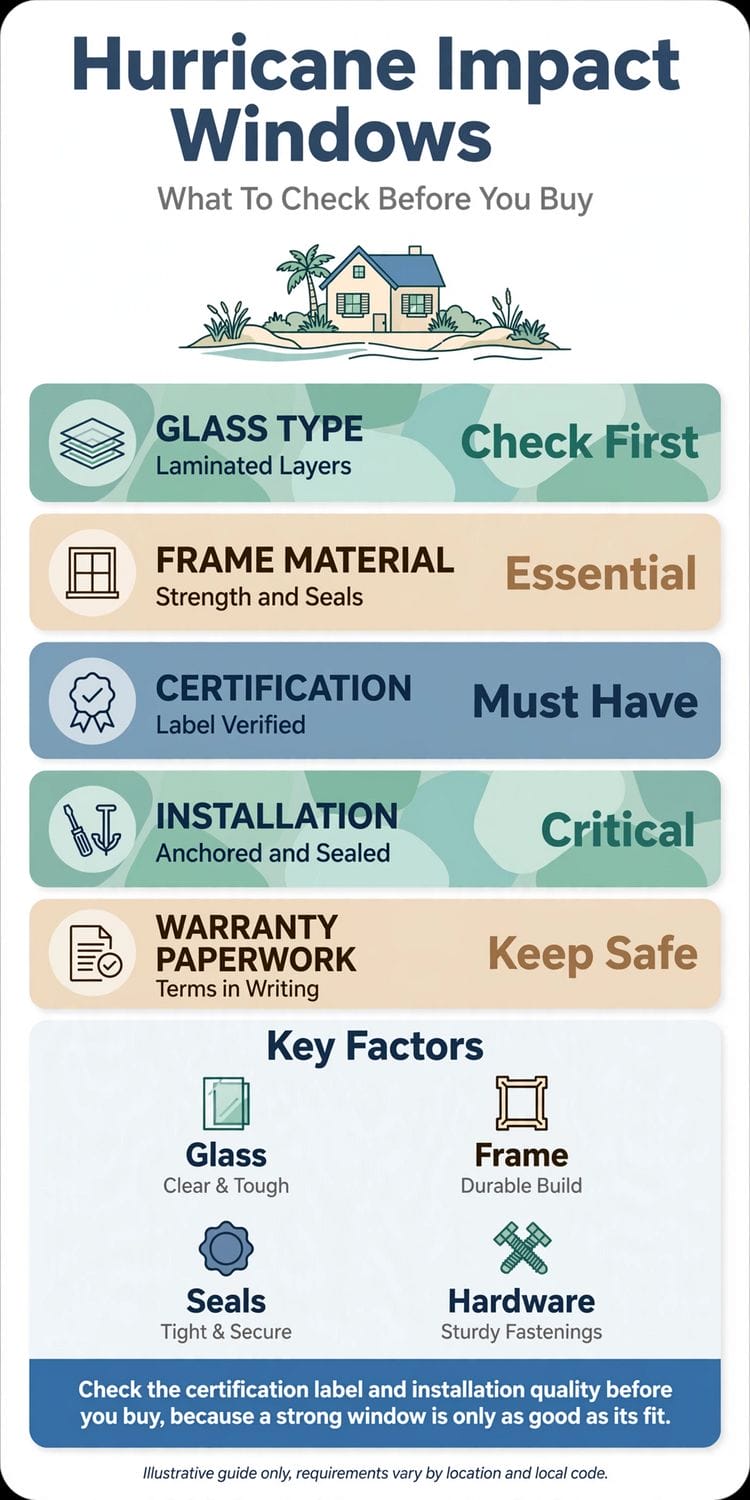
2. What Impact Windows Are and How They Are Built
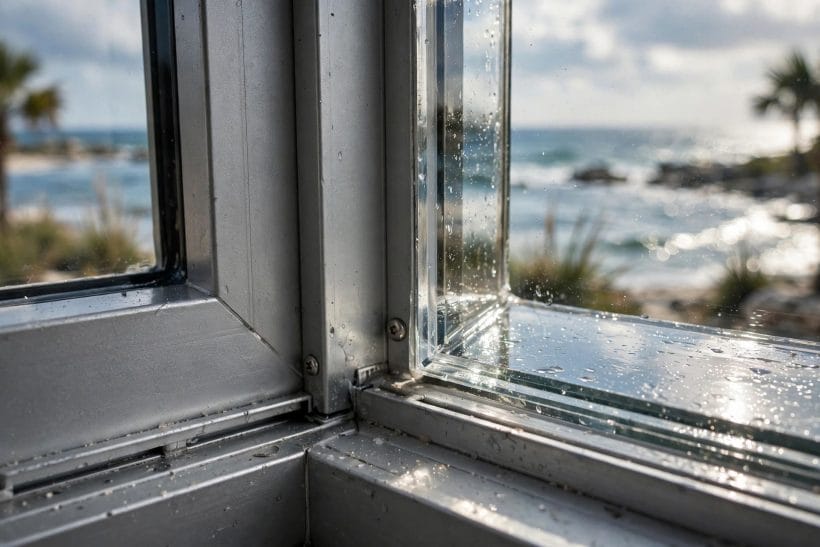
An impact window is a system, not a pane: laminated glass, a frame built to hold it under pressure, hardware that keeps the sash locked into that frame, and anchoring that ties the whole unit into the wall. Storm protection comes from all four working together, which is why this guide checks the system rather than shopping for a single miracle component.
Laminated glass: two panes and a bonded interlayer
The glass is two sheets bonded to a tough plastic interlayer. When debris strikes, the outer sheet may crack, but the fragments stay bonded to the interlayer, so the opening stays covered instead of becoming a hole the wind can pressurise. Think of a car windscreen’s behaviour, scaled to a house window.
Why the opening must stay covered
A breached window in a storm lets wind pressure build inside the house, and that internal pressure is what lifts roofs and pushes walls outward. The impact window’s real job is keeping the building envelope sealed through the storm, not keeping the glass pretty.
The frame is half the product
Laminated glass in a weak frame is a strong sail in a poor boat. Impact frames are reinforced and their corners are joined to resist the racking forces of wind pressure and debris impact together — ask how the frame is reinforced, not just how the glass is made.
3. Ratings, Testing and Certification: Reading the Labels

Impact windows are sold under a thicket of labels, and the labels are the product. This section reads them at the level a buyer can verify, with everything stated generally: your local code and your insurer set the actual requirements for your address, and those rule over anything written here. The glazed openings in bay windows and other large windows face the same checks at larger scale.
Design pressure: the window’s wind rating
Every rated window carries a design-pressure rating — how much wind pressure, positive and negative, the unit is tested to withstand. The right rating for your home is set by your location, height and exposure under local rules; the check is that the product’s rating meets or exceeds what your address requires, in writing, on the label.
Impact testing: what the debris test proves
Certified impact products are tested by firing a standard timber missile at the glass and then cycling wind pressure on the cracked unit to simulate a storm’s duration. A product that has passed carries documentation saying so; a product described only with adjectives has passed nothing you can verify.
Product approvals and local listings
Coastal and storm-zone authorities publish approved-product listings and approval numbers. The buyer’s check is simple: the exact product — maker, model, size and configuration — should appear in the approval system your local code uses. Verbal assurance is not an approval.
Approvals are specific: size and configuration count
An approval covers the product as tested — including its maximum sizes and its configuration. A model approved as a fixed pane may not be approved at your width as a sliding unit, and a rating earned at one size does not stretch to a larger one. The buyer’s habit is to match the approval document to the exact units on the quote, line by line, before signing anything.
Water, air and the everyday ratings
Storm survival is the headline, but the window must also keep out ordinary rain and wind for decades. Water-penetration and air-leakage test results belong on the same paperwork; a window that survives the hurricane but leaks every winter has failed its second job.
4. Glass Choices: Laminated, Insulated and Tinted Options
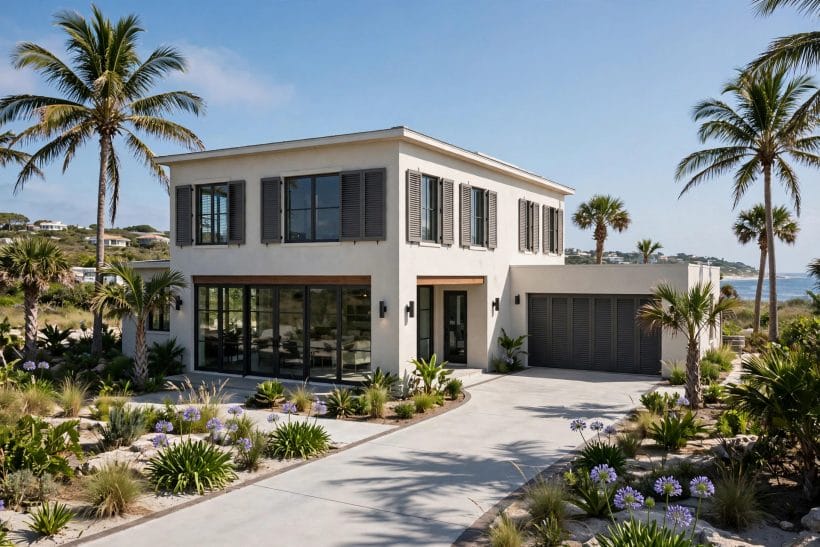
Once the impact construction is settled, the glass still has choices to make — about heat, light, noise and privacy. These are comfort decisions layered on a safety product, and they are where budgets quietly grow, so make them room by room rather than house-wide by default.
Insulated impact glass for hot and cold climates
Impact units can be built as insulated double-glazed assemblies with a laminated inner or outer pane. In air-conditioned homes the insulation earns its keep daily; the check is that the insulated configuration — not just the single-pane version — carries the impact approval you need.
Tints and coatings against sun and glare
Solar coatings and tints tame heat and glare on the storm coast’s fierce sun, and the high glass in clerestory windows shows how much light a coastal room can gather. Choose the level by room orientation: west glass needs the most help, shaded north glass the least, and every coating should be checked against the approval paperwork.
Sound: the benefit nobody markets honestly
Laminated glass genuinely softens outside noise because of its bonded construction, and many owners rate the quiet among the product’s best everyday returns. Treat it as a welcome side effect with real substance — but buy the window for its certification, and let the quiet be the bonus.
5. Frames and Hardware: Where Strength Is Won or Lost

Ask window sellers about glass and they will talk all day; ask about frames, locks and anchoring and you learn whether the product is a system or a sheet. This section is the checklist for the parts that decide whether rated glass stays in the wall when the storm loads it.
Frame materials, judged plainly
Impact frames come in aluminium, vinyl and fibreglass families, each with honest strengths: metal for slim strength, vinyl for insulation and low upkeep, fibreglass for stability. The material matters less than the reinforcement inside it and the testing behind the exact profile — ask for both, in documents.
Corners, locks and keepers
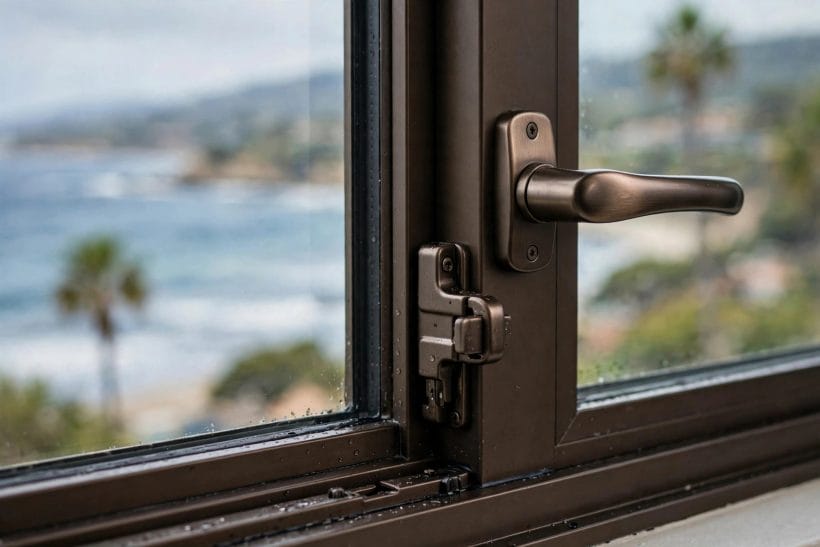
Sashes are held by their locks, and corners fail before centres do. Look for multi-point locking where the size of the window invites it, reinforced meeting rails on sliding and hung units, and corner joinery the maker can describe without hand-waving.
Hardware finishes for salt air
Coastal hardware corrodes on a schedule set by salt, not by storms. Stainless or properly coated hardware, and a maker’s honest statement about its coastal suitability, protect the window’s working parts for the decades between hurricanes.
6. Installation: The Half of Performance You Cannot See
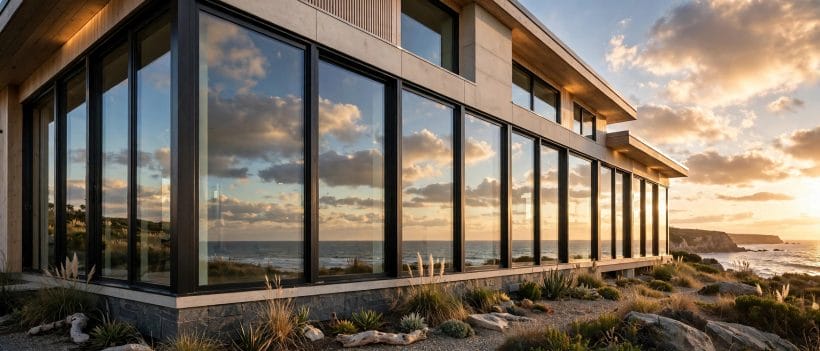
A certified window installed casually is an uncertified assembly. The product’s approval covers a tested unit fixed in a tested way; the installer who follows the maker’s fixing schedule — anchor types, spacing, shimming and sealing — is delivering the rating, and the one who improvises is not. The same discipline governs the front door ideas in a storm wall: openings are only as strong as their fixing.
Anchoring into the structure, not the decoration
Fixings must land in the wall’s structure — the framing or masonry the approval specifies — never only into trim, render or old shims. Ask, before work starts, what the anchors will bite into on your particular walls, and expect a specific answer.
Bucking, shimming and the square opening
Openings in existing walls are rarely square or true. Proper preparation — sound bucking or sub-frames where needed, even shimming, a unit set square so its locks engage as designed — is invisible in the finished room and decisive in the storm.
One window at a time, or the whole wall at once
Phased replacement is legitimate when each phase is permitted, approved and inspected on its own — but know that the envelope is only as strong as its weakest opening, and an insurer or code office may treat the house accordingly. Replacing the most exposed elevations first is the usual sensible order; the paperwork discipline is identical either way.
Sealing and flashing against driven rain
Storm rain arrives horizontally and under pressure. The perimeter seal and flashing details — layered so water is directed out, not trapped in — are the installation’s second rating, the one tested every wet season instead of once a decade.
7. Choosing an Installer and Checking the Paperwork
The forum question behind this guide — who is reputable — has no honest list for an answer, but it has a method. Reputation you can verify is paperwork: licences, insurance, manufacturer training, references you may actually call, and a contract that names products by their approval numbers. Apply the method and the names sort themselves.
The documents to ask for, without embarrassment
Ask for the licence your locality requires, current insurance certificates, the product approval documents for the exact units quoted, and the maker’s installation instructions. A good installer produces these routinely; resistance to producing them is itself the loudest reference you will get.
Quotes that can be compared are quotes that specify
A comparable quote names the product line, the glass build-up, the ratings, the fixing method and who handles permits and inspection. A quote that specifies only a price and a promise is not cheaper — it is unspecified, which is more expensive later.
Permits and inspection protect the buyer
Where local rules require a permit and inspection for window replacement, they are the buyer’s free verification service: an inspector confirms the right product went in the right way. Treat any suggestion to skip them as a reason to choose a different installer.
8. Living With Them: Care, Warranties and Storm Season
Impact windows ask little and give daily: no shutters to deploy, no panels to store, and a house that can be left storm-ready at the turn of a lock. The small print — care, warranty terms and the honest limits of the product — belongs in the buying decision, not discovered after it.
What the warranty actually covers
Warranties split into glass, frame, hardware and installation, with different terms and different owners for each. Read who stands behind what, for how long, and what coastal conditions do to the fine print; the installation warranty is the installer’s own, and worth as much as their paperwork habits.
Care: less than you fear, more than nothing
The glass cleans like ordinary glass; tracks and weep holes want a seasonal clearing so drainage works; seals and hardware deserve a yearly glance. Interior dressings pair with them as with any window — the range in window treatments applies unchanged.
Keep the file: approvals, invoices and photographs
Assemble the window file once — approval documents, the specified quote, permits, inspection sign-off, warranties and photographs of the installation before the trims went on — and keep it with the house’s papers. It serves the insurer, the next buyer and your own memory, and it is the proof, years later, that the rating was delivered and not merely sold.
The honest limits of the product
Impact windows protect openings; they do not strengthen roofs, garage doors or walls, and a storm plan still needs those addressed. They also do not make a house a shelter — official evacuation guidance always outranks any product’s rating, including these.
9. The Alternatives, and When They Make Sense
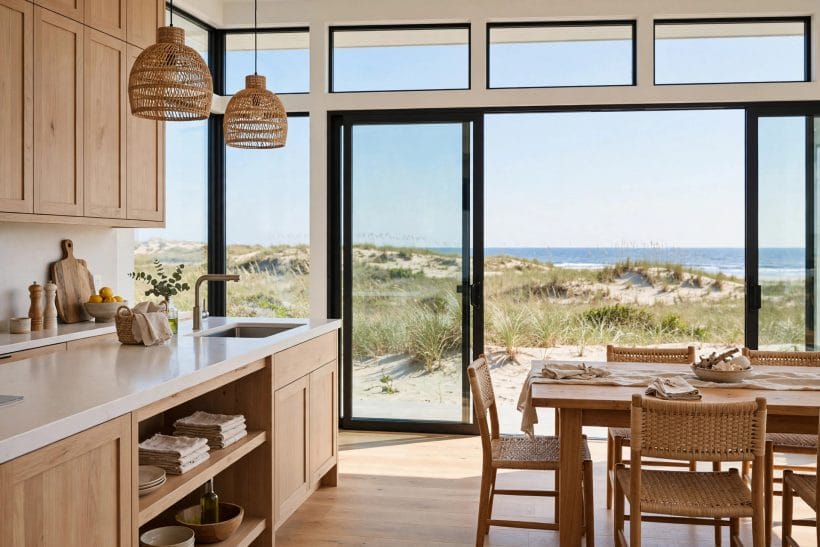
Impact windows are one answer to the opening-protection question, and not the only honest one. Shutters and panels protect the same openings at a different balance of cost, effort and everyday effect — the right choice depends on the house, the household and how the building is used through the year.
Shutters: protection you deploy
Permanent shutters — accordion, roll-down, colonial and Bahama styles among them — close over ordinary windows when a storm threatens. They suit homes where someone is reliably present to deploy them, and they leave the everyday window lighter and sometimes brighter.
Panels: protection you store
Removable panels are the budget’s friend and the garage’s burden: effective when fitted, demanding in storage and in the hours before a storm. They suit smaller homes and smaller window counts, and they punish procrastination exactly once per storm.
Choosing between them, plainly
Choose impact glass where the house stands empty for stretches, where the household cannot deploy protection, or where the everyday gains — quiet, security, no storm-week labour — will actually be used. Choose deployable protection where budgets are tight and hands are reliable. The whole-envelope view in exterior home ideas helps place the decision in the house’s wider weatherproofing.
10. Costs and Pulling It Together
Costs are driven, in rough order, by the number and size of openings, the rating the address requires, the glass build-up chosen, and the installation’s complexity in your particular walls — plus permits and inspection where they apply. Any figure quoted without those five drivers named is not a price, it is a guess wearing one; compare specified quotes, not totals called out across a showroom.
Pull it together as the paperwork exercise it is: required rating from your local rules, approved product list, specified quotes, verified installer documents, permitted and inspected installation. Five steps, all checkable, and the ‘best windows’ question answers itself for your house — which is the only house it was ever really about.
Final Considerations
Storm protection is one of the few home purchases where the evidence is public, standardised and printed on labels — the testing regimes exist precisely so that buyers do not have to trust reputations, reviews or forums. Use them, and the market’s loudest claims become irrelevant.
The house-wide context for openings, walls and weatherproofing sits in home design ideas; the storm-specific rulings for your home sit with your local code office and your insurer. Between the two, this checklist will carry you to a decision you can defend — which is what ‘best’ should mean.




0 Comments