

Of everything a house owns, only the front door is greeted by name — knocked on, rung at, photographed at Christmas, and pushed a thousand times a year by people forming their whole opinion of the home.
These 75 front door ideas stay on the door itself — colour, material, glass, style and hardware — keeping the porch as its frame and the entryway as its inner partner, not repeating either.
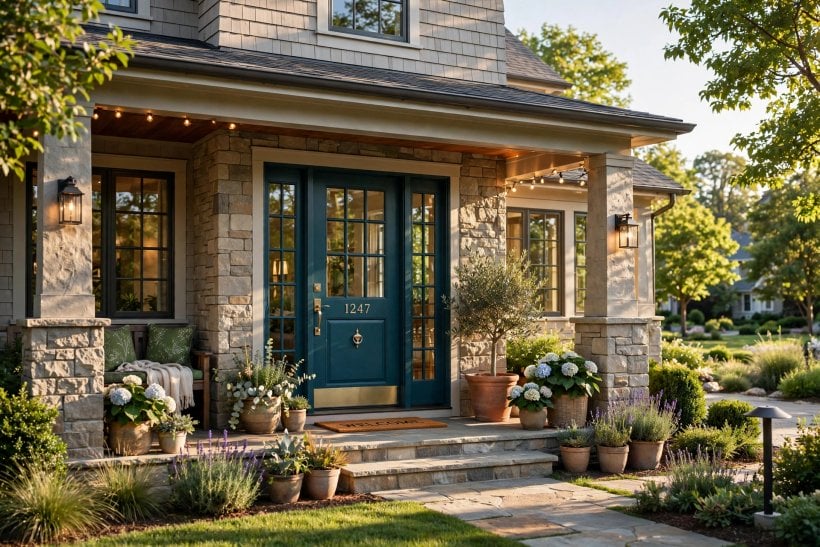
1. Front Door Ideas at a Glance
The central entity is the front door: the house’s principal entrance panel, defined by its attributes — its colour, its material and construction, its glass, its style family, and its hardware of handles, knockers, numbers and letterboxes. The porch shelters it and the entryway receives through it, but the door itself is the handshake: the one part of the facade that is touched, heard and judged at arm’s length, in weather, for decades.
| Question | Short answer |
|---|---|
| Door, porch or entryway — which post is which? | This post is the door itself. The porch post designs the shelter in front of it; the entryway post designs the system just inside it. |
| What order should the decisions go in? | Material first, then colour, then glass, then hardware — the hand’s jewellery is chosen last, on a door that already stands composed. |
| Timber, composite or aluminium? | Timber for craft and repairability, composite for low upkeep with a panelled face, aluminium for wide modern formats and fine glazed frames. |
| What dates a front door fastest? | Mismatched hardware metals and a tired finish — both curable in a weekend, without touching the door itself. |
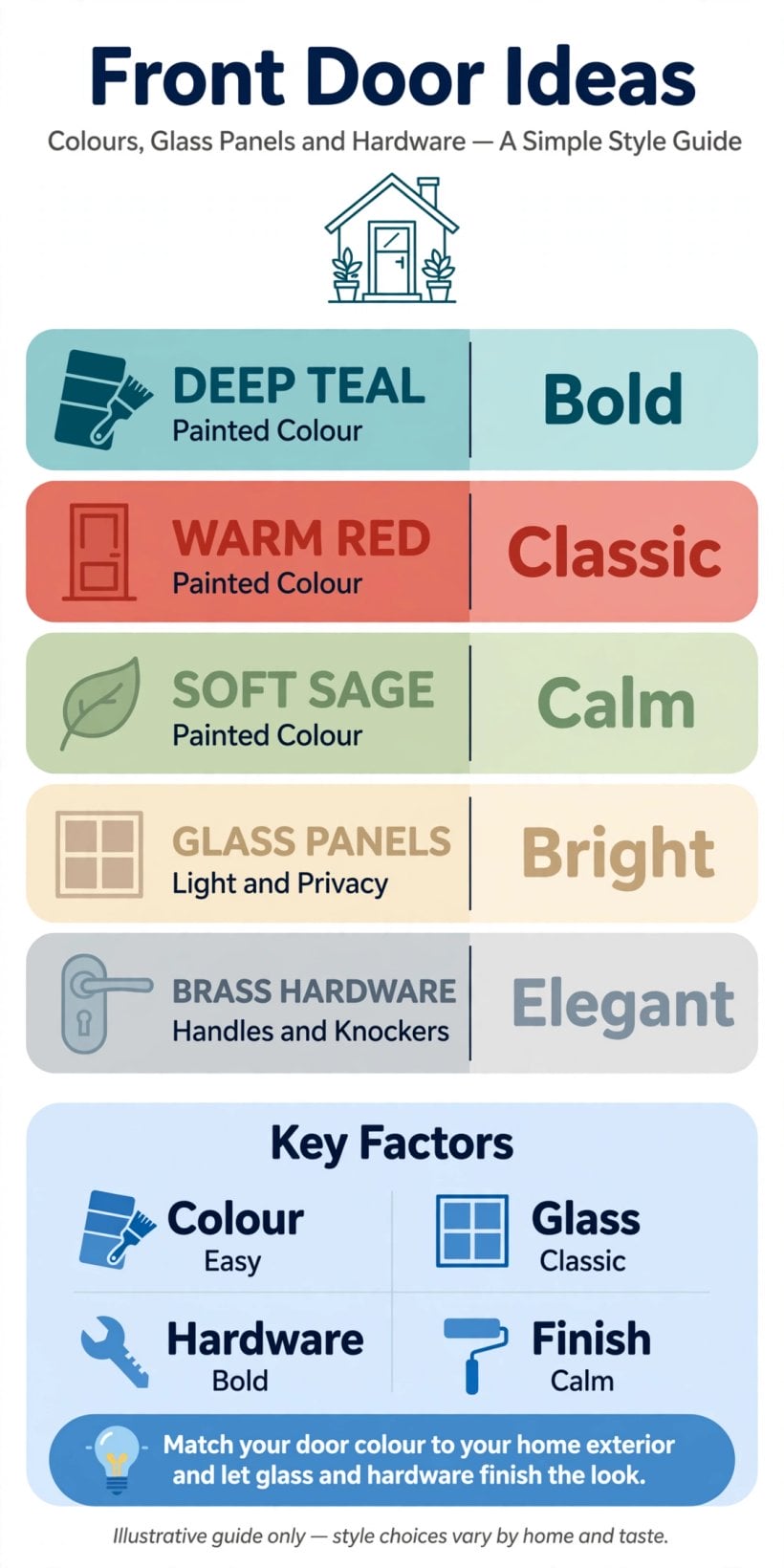
2. The Front Door Defined: Colour, Material, Hardware and Glass
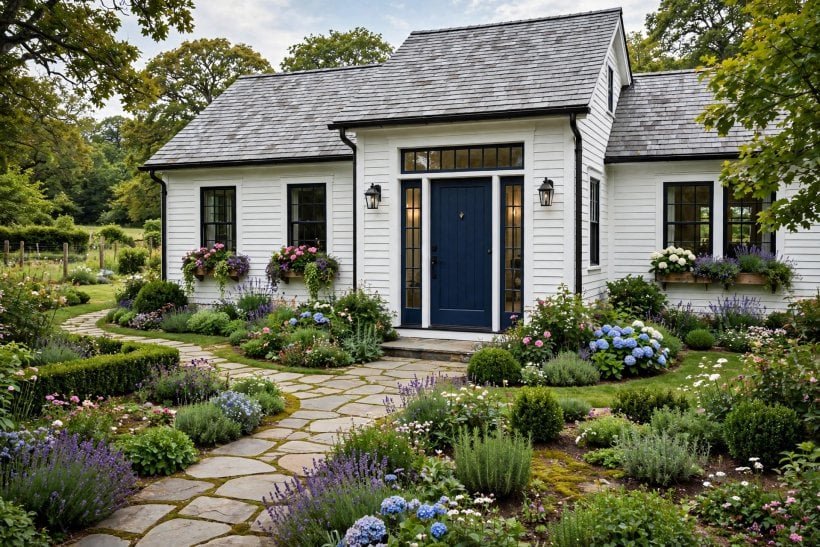
The front door is the house’s face at touching distance: where the front porch ideas post designs the shelter and stage in front of it, this post stays on the door itself — its colour, its material, its glass and the hardware the hand actually meets. Keep the porch as the frame; here is the portrait.
1. Start With the Door as the House’s Handshake
Every other element of the facade is seen; the front door is met.
2. Let Colour, Material, Hardware and Glass Be the Four Decisions
Front door ideas resolve into four choices, in this order: what it is made of, what colour carries it, how much glass it holds, and what the hand touches.
3. Match the Door’s Formality to the House’s Face
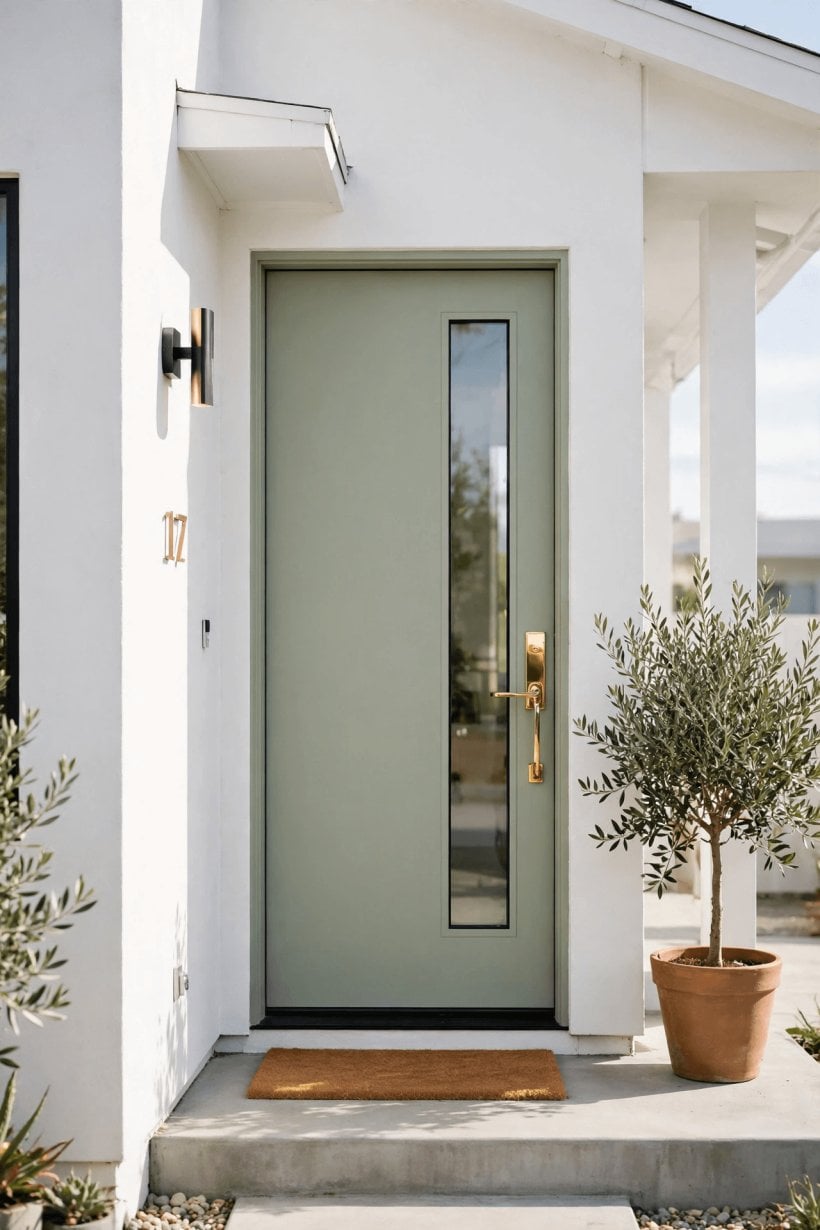
A panelled door in a deep gloss suits a formal frontage; a ledged cottage door suits a cottage.
4. Keep the Door Itself Distinct From the Porch Around It
Porch, canopy and step are the setting; the door is the subject.
5. Respect the Door as a Weather Machine
The front door is a hole in the house’s weatherproofing that must open daily: rain, wind, sun and cold all test it.
6. Let the Door’s Interior Face Belong to the Hall
The door has two faces, and the inside one is seen more often by its household.
7. Give the Door a Clear Centre of Attention
One hero: the colour, the glass, the great handle, the wreath. Doors with four competing features read as committees. Choose the hero and demote the rest to supporting roles with discipline.
8. Measure the Opening Before Falling for Any Door
Existing frames, fanlights and side panels fix the real dimensions, and period houses rarely hold standard sizes. The tape measure is the first front door accessory; romance with a catalogue size ends at the reveal.
9. Plan the Door’s Sound: A Solid Close Is Half Its Luxury
A door that closes with a deep, damped thud feels expensive in the hand every day; a hollow rattle feels rented. Weight, seals and a well-set latch compose that sound more than any finish.
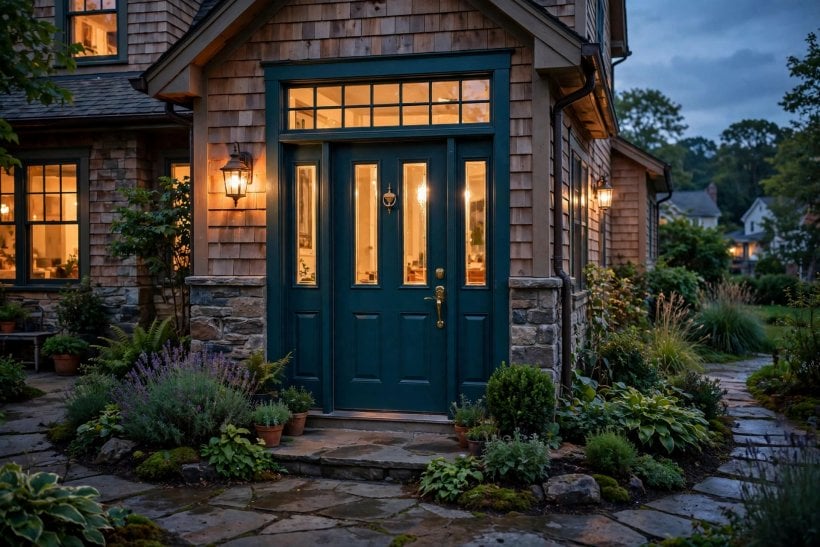
10. Think of the Door at Night, Lit and Approached
Colours deepen, glass glows, hardware glints: the door’s evening performance is the one guests actually attend. Judge samples under the porch light, not the showroom’s noon.
11. Remember the Door Outlasts Its Decade’s Taste
Front doors serve for decades while colours cycle yearly. Choose the door for its architecture and its colour for renewal — paint is a weekend, replacement is a project, and this post’s order respects that arithmetic.
3. Colour on the Door: Classic Depths, Bold Statements and Natural Finishes
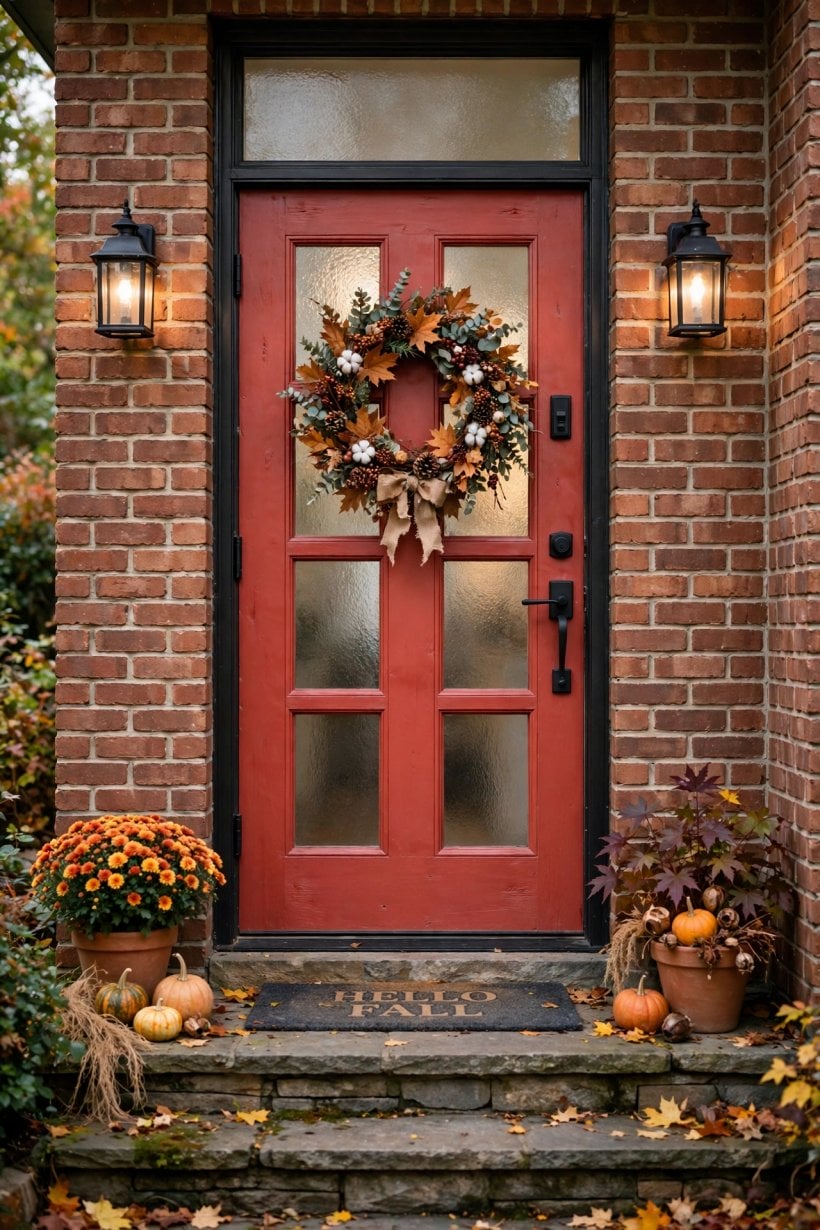
Colour is the front door’s loudest attribute and its cheapest to change, so it gets its own section — the door’s painted voice, from the classic depths to the considered bold, judged always against the facade it must live with, as the exterior home ideas survey judges the whole street face.
12. Use Deep Green Where Gardens and Brick Surround the Door
Bottle and racing greens are the front door’s longest-serving colours for a reason: they flatter brick, stone and planting simultaneously, and deepen rather than date. In gloss they read formal; in satin, cottage-calm.
13. Let Black Be the Formal Default, Chosen Deliberately
A black door is architecture’s full stop: crisp on white render, grave on brick, kind to every hardware metal. Its one demand is dust discipline — black shows the week’s pollen like a ledger.
14. Try Navy and Ink Blue for Coastal and Urban Calm
Deep blues carry sea air and city soot with equal grace, sitting between green’s rusticity and black’s formality. They partner brass and chrome equally, a rare versatility among the dark colours.
15. Paint the Celebrated Red Only Where the Facade Can Support It
A red door is a declaration, and declarations need a calm audience: pale render, grey stone, quiet planting. On a busy facade the red becomes an argument; on a plain one, it is the whole welcome.
16. Use Yellow and Ochre as Bottled Sunlight, Sparingly
Yellow doors glow on grey days and grey houses, and overwhelm warm brick and busy fronts. Sample honestly at the door itself: yellows shift more between tin and facade than any other family.
17. Borrow the Cottage Pastels for Small and Shaded Fronts
Chalk blue, sage, dusty pink and putty lift shaded porches and small facades where dark colours would swallow the door into gloom. Pastels ask for clean surrounds and tidy paintwork to stay charming rather than faded.
18. Let Natural Timber Be the Colour Where Grain Deserves It
Oak, iroko and other durable timbers oiled or varnished make the material itself the colour decision.
19. Stain Dark Where Modern Facades Want Weight Without Black
Near-black stains keep timber’s grain visible under a contemporary depth, marrying modern lines to natural material. They suit the wide, plain modern doors this post meets in its style section.
20. Coordinate the Door With the Windows, Not Against Them
Door and window colours are a facade’s two voices: same family, or a deliberate soloist-and-chorus arrangement. Accidental near-matches — almost the same green, not quite — read as errors at twenty paces.
21. Paint the Frame and Surround as Part of the Colour Decision
A bold door in a tired white frame is a picture in a broken frame. The surround, step edge and any side panels belong in the same painting weekend and the same colour conversation.
22. Test the Colour on the Door, in Its Own Light
Paint a board, prop it at the door, live with it through a day’s changing light and one wet evening. Front door colours are judged in weather, and the sample that survives weather is the colour.
4. Timber, Composite and Steel: The Door’s Material Character
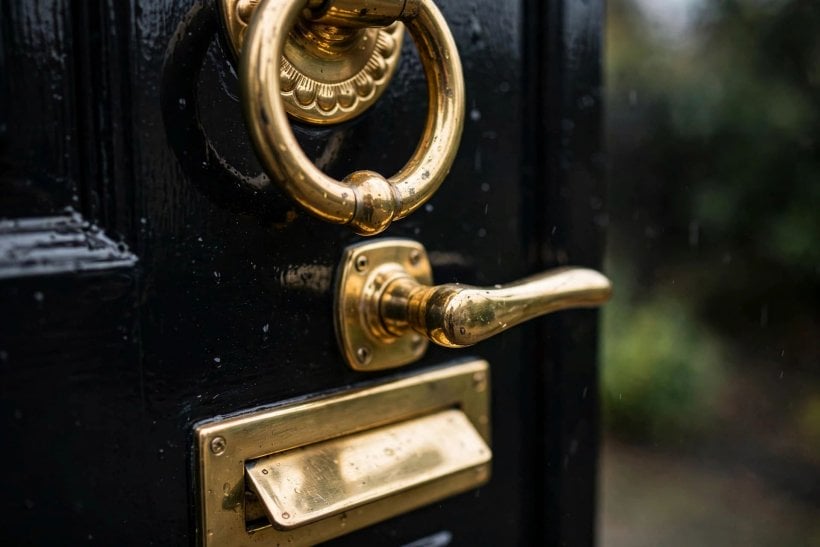
Beneath the colour stands the material, deciding the door’s weight, sound, upkeep and price of character. These ideas walk the honest options; alternative door forms for small houses, like the split stable pattern, are covered in the corpus’s own dutch doors for tiny houses guide.
23. Choose Solid Timber Where Craft and Repairability Lead
A well-made timber door can be planed, re-hung, re-sealed and re-painted for generations — the repairable door.
24. Use Engineered Timber Where Stability Matters More Than Tradition
Engineered cores wrapped in quality veneers resist the warping solid timber risks, holding modern wide formats true. For oversized and pivot doors, engineering is not a compromise but the enabling technology.
25. Let Composite Doors Serve Busy Households Kindly
Modern composite doors — insulated cores, timber-effect or smooth skins — offer low upkeep, strong security and a convincing panelled face.
26. Consider Steel-Faced Doors Where Security Is the Brief
Steel skins over insulated cores give the slimmest strength and a contemporary flat face. Their character is urban and calm; detailing and colour must supply the warmth the material does not volunteer.
27. Use Aluminium for Wide, Slim and Modern Formats
Aluminium doors hold large glazed areas in fine frames and shrug off weather. They partner the modern pivot and full-glass designs, and ask only washing where timber asks for finishing.
28. Respect the Door’s Core: Insulation Is Invisible Comfort
Whatever the face, the core decides the hall’s winter. A well-insulated, well-sealed door ends the cold stripe across the hall floor that households blame on the whole house.
29. Detail Timber Doors to Shed Water at Every Horizontal
Drips, thresholds and panel mouldings that throw water clear are a timber door’s life insurance. Doors rot and swell where water is invited to sit; the drawing should evict it at every ledge.
30. Match the Material to the Exposure, Not Just the Taste
A south-west door in driving rain lives a different life from a porch-sheltered northern one. Exposure promotes durability up the decision order — the prettiest material is the one still handsome after ten wet winters.
31. Let the Threshold and Seal Be Part of the Material Choice
Brushes, compression seals and a sound threshold decide draughts more than the door leaf itself. Specify them with the door, as one system, rather than retrofitting disappointment in January.
32. Ask How the Door Ages, and Choose the Ageing You Like
Timber silvers or is renewed, composites fade slowly and evenly, steel’s paint chips locally. Every material has an old age; pick the one whose old age the household finds dignified rather than shabby.
33. Buy the Door as a Set: Leaf, Frame, Seals and Ironmongery Together
Doors perform as assemblies. A fine leaf in a poor frame with budget hinges performs poorly and blames the leaf. Makers who supply and warrant the whole set are selling the thing the household actually uses.
5. Glass in the Door: Light Borrowed, Privacy Kept
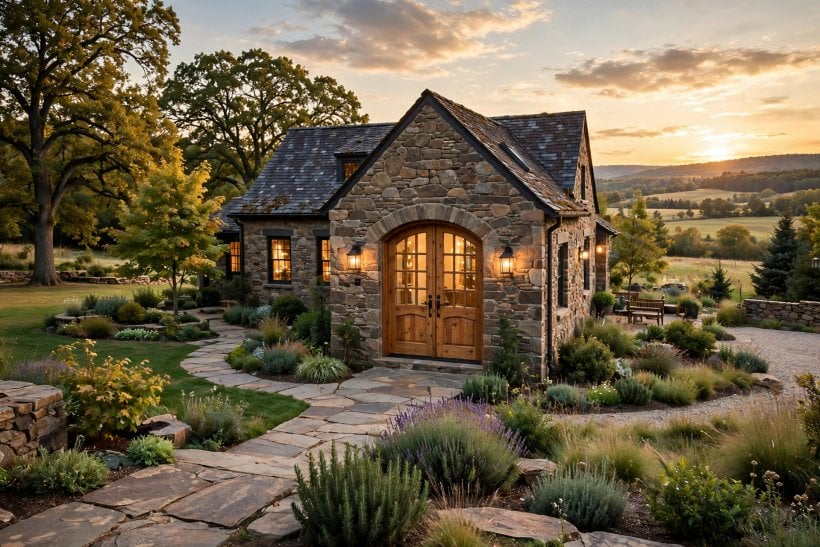
Glass is the door’s negotiation between the hall’s hunger for light and the household’s wish for privacy. What the glass admits, the hall receives — and the hall’s own arrangement, its benches, hooks and mirrors, is designed in the entryway ideas post, this door’s partner just inside the threshold.
34. Use a Fanlight Where the Door Must Stay Solid but the Hall Needs Light
A glazed panel above the door borrows daylight over the panel’s privacy — the period house’s elegant solution, still the right one where halls are deep and doors are handsome unglazed.
35. Glaze the Upper Panels for the Classic Compromise
Top panels glazed, lower panels solid: light admitted at eye height, post and callers negotiated, privacy kept where the hall lives. It is the most proven arrangement in the door’s whole repertoire.
36. Run a Tall Narrow Glazed Slot for the Modern Hall
One vertical slot of glass beside the handle gives contemporary doors their signature: a blade of light down the hall, callers silhouetted, privacy essentially intact.
37. Add Sidelights Where Width Allows a Composed Front
Glazed panels flanking the door widen the entrance’s light and ceremony together, turning a door into a frontispiece. They belong to wide fronts and deep halls; on narrow ones they steal the wall the hall needs.
38. Choose Obscure and Textured Glass in Honest Grades
Frosted, reeded, fluted or patterned glass admits light and refuses detail. Choose the obscurity by standing in the hall at night, lit, and checking what the street can actually read.
39. Let Clear Glass Serve Houses With Gardens to Frame
Where the front faces planting rather than pavement, clear door glass frames the garden like a picture and floods the hall kindly.
40. Use Leaded and Stained Details as the Period Door’s Jewellery
Small stained or leaded panels carry a period house’s colour story in miniature. Keep originals wherever they survive — they are the door’s heritage and the street’s memory in coloured glass.
41. Mind the Night-Time Mirror: Lit Halls Display Themselves
At night the glass door reverses: the lit hall is the picture and the street is the audience.
42. Specify Safety Glass Wherever Bodies and Glass Meet
Glazing in and beside doors is a regulated safety zone in most places, and toughened or laminated glass is the honest default.
43. Borrow Light Between Door and Hall With an Inner Glazed Screen
Victorian terraces solved deep halls with an inner glazed door or screen: the storm and noise stay at the front door, the light travels on.
44. Keep Glazing Bars True or Absent, Never Stuck-On and Sheepish
Applied faux bars that cast no shadow line read as costume. Real divided lights, or honest single panes with a designed frame, both look right; the imitation between them looks like an apology.
6. Styles of Door: Cottage, Period, Craftsman and Modern
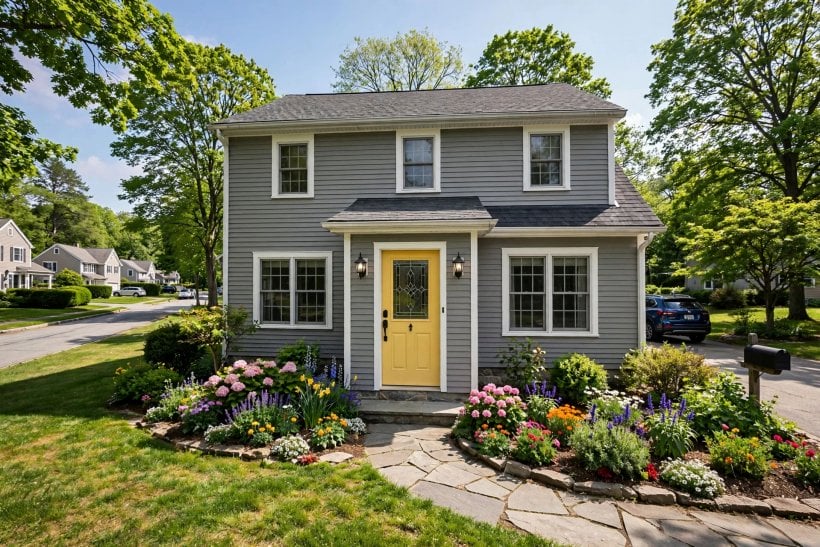
Style is where the door declares its allegiance. These ideas walk the main families, each kept in its lane; the wider facade each style must answer to is surveyed in the new home exterior design ideas post for small houses.
45. Hang a Ledged Cottage Door Where the House Is Rural at Heart
Vertical boards, iron strap hinges, a thumb latch: the cottage door’s construction is its whole decoration. It suits stone, render and roses, and looks lost only when asked to guard a townhouse.
46. Use a Stable or Dutch Pattern Where Air and Animals Negotiate
The split door — top half open to the garden, bottom half barring dogs and toddlers — is the cottage family’s cleverest member, covered in full in the dutch-door guide this post links above.
47. Panel the Georgian Door in Six Raised Fields With a Fanlight
Six panels, a semicircular fanlight, a centre knob: the Georgian formula is the townhouse door’s classical music, correct in deep gloss colours and almost impossible to improve by improvisation.
48. Give the Victorian Door Stained Glass and a Tiled Path’s Confidence
Four panels, the upper pair glazed in colour, furniture in brass: the Victorian door is the decorated one, and it pairs with the era’s tiled porch floors and bold house colours without blinking.
49. Build the Craftsman Door in Stout Timber With a Small High Window
Thick stiles, a dentil shelf, one small glazed panel high up: the craftsman door values mass and honesty, its hardware heavy, its proportions calm. It suits bungalows and woodsy suburbs particularly.
50. Flush the Modern Door: One Plane, One Handle, No Apology
The contemporary door is a single unbroken plane — timber, metal or lacquer — with a long pull handle and the number cut or applied cleanly. Its luxury is proportion and finish, not ornament.
51. Pivot the Oversized Modern Door for Ceremony at Scale
Pivot doors swing on offset pins, allowing widths no side hinge could carry, and close with a slow, expensive grace. They are the modern entrance’s set piece, needing engineering and exposure both respected.
52. Let a Mid-Century Door Carry Colour and One Geometric Glaze
Flat panel, a row of small square lights or one offset circle, a brave colour: the mid-century door is the playful one, reviving happily on post-war houses whose architecture remembers it.
53. Keep Period Doors on Period Houses, Restored Before Replaced
Original doors carry joinery, glass and wear that new doors imitate at great cost. Draught-proofing, repair and a fine paint finish usually give the old door a better second life than any replica’s first.
54. Dress the Shaker and Farmhouse Door in Simplicity With Weight
Flat panels, honest timber, black ironmongery: the farmhouse family’s modern member suits new country builds and renovated barns, where simplicity must still feel built rather than printed.
55. Refuse the Door That Fights the House’s Decade
Every style above has a home it flatters and a home it embarrasses. The discipline of this section is allegiance: the door joins the house’s story, it does not start a rival one at the threshold.
7. Hardware and the Handshake: Handles, Knockers, Numbers and Post
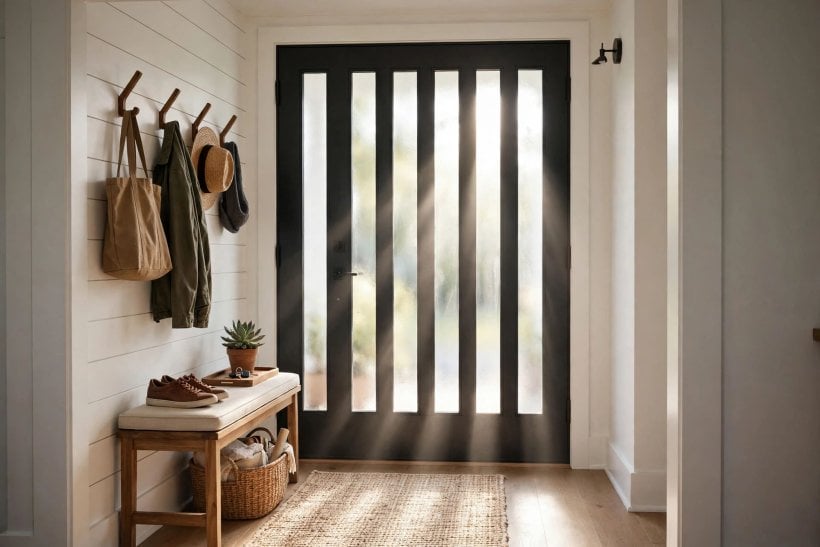
Hardware is the door’s jewellery and its tools in one — the part visitors actually touch. These are small objects with outsized influence, judged by hand and eye at the closest range the facade ever receives, in the spirit of the entry’s own furnishing in the Japanese genkan tiny house entryways guide, where the threshold’s rituals are designed object by object.
56. Choose the Centre Knob for Panelled Doors, the Lever for Modern Ones
The centre knob is the classical door’s handshake — ornamental, central, ceremonial. Lever and pull handles serve modern doors and all households practically. Either way, the handle is chosen by grip, not photograph.
57. Let a Long Pull Handle Declare the Modern Door
A vertical pull, sometimes nearly the door’s height, is the contemporary door’s single ornament and its daily pleasure. Its fixing, weight and finish are the whole budget’s visible return — buy the best the door can carry.
58. Knock With a Knocker That Suits the Door’s Character
Rings for cottages, urns for Georgians, a simple bar for modern doors: the knocker is the door’s voice before the bell. Solid, well-fixed and audible through the house are its qualifications.
59. Number the House Legibly, at the Door, in the Door’s Metal
The house number is wayfinding, not decoration first: sized for the street’s distance, lit by the porch light, fixed on or beside the door in the hardware’s own finish. Deliveries at midnight grade this decision.
60. Letterbox Low, Centre or Beside — But Draught-Sealed and Kind
Where post comes through the door, its slot wants a brush or flap that seals weather out and accepts parcels of print without chewing them.
61. Match Every Visible Metal on the Door to One Finish Family
Handle, knocker, number, letter plate, hinges’ ends: one metal, one finish. Mixed metals read as replacements; a single family reads as intention, and intention is most of what elegance is.
62. Fit a Spy Hole, Chain or Modern Equivalent Without Apology
The household should always be able to vet a caller. Discreet viewers, chains on period doors, and camera bells on modern ones all serve the same ancient courtesy: the door opens when the house decides.
63. Weather-Bar the Bottom and Threshold the Step Honestly
The door’s lowest inches take the weather’s whole force. A sound threshold, a drip that throws water clear of the step, and seals renewed before they perish are the hardware nobody photographs and everybody benefits from.
64. Keep Hinges and Closers Invisible or Beautiful, Nothing Between
Concealed hinges serve modern doors; handsome straps serve cottage ones. The visible-but-ordinary hinge is the only failure — hardware, like the door itself, should commit to its register.
65. Renew Hardware Before Replacing Doors
A tired door with new, fine hardware in a fresh colour is most of a new entrance at a fraction of the cost.
8. Living With the Front Door: Weather, Security and the Years
The last ideas are the door’s long service: keeping weather out, keeping the house secure, and ageing with grace. The porch that shelters this service has its own post in the cluster — the porch ideas pillar — and this section keeps to the door itself.
66. Draught-Proof the Whole Perimeter, Not Just the Keyhole
Seals on all four sides, renewed when they flatten, end the hall’s cold draught more completely than any door upgrade. Test with a hand on a windy night; the door will confess exactly where it leaks.
67. Secure the Door as a System: Leaf, Frame, Locks and Glass
A strong door in a weak frame is a strong rumour. Locks that engage at several points, a frame fixed like it means it, and laminated glass where glazing is large compose the honest security system.
68. Choose Locks the Household Will Actually Use
The finest lock left unengaged by a fiddly key protects nothing. Keyless, thumb-turn and well-cut traditional locks all serve — the test is the tired householder at midnight, not the specification sheet.
69. Maintain Timber Doors on Their Finish’s Own Calendar
Paint and oil are not decoration but the door’s raincoat, renewed before they fail, especially on the bottom rail and the top edge everyone forgets.
70. Wash Composite and Metal Doors Like the Cars They Resemble
A bucket, mild soap and a soft cloth keep modern doors’ finishes young; abrasives and pressure washers at close range are their enemies. Low maintenance still means some maintenance, done gently.
71. Ease Sticking Doors Early, While the Fix Is a Plane, Not a Project
Seasonal sticking is timber breathing; persistent sticking is the door asking for adjustment. Attend early and the cure is minutes; ignore it and the frame, hinges and household tempers all learn the strain.
72. Keep the Step, Threshold and Path Ice-Aware in Winter
The door’s welcome includes not falling at it. A grippy step, a clear threshold drainage line and a kept path are part of the front door’s design in any climate that freezes.
73. Dress the Door Seasonally, With Fixings That Spare the Leaf
Wreaths on over-door hooks or ribbon ties, never screws into a good door’s face. The door that changes slightly with the seasons advertises a household that loves its entrance — without the holes to prove it expensively.
74. Watch How Callers Use the Door, and Believe Them
Guests ring, knock, push the fixed panel and cannot find the number at dusk: their behaviour is the door’s user research. Adjust light, numbers and hardware to the door people think they see.
75. Let the Door Age Into the House, Not Away From It
A door maintained in its own style grows more itself yearly — timber glows, paint deepens, hardware mellows.
9. Checks and Mistakes: Before the First Pour or Purchase
Check the opening, the frame and the exposure before any door is ordered, because doors fail as assemblies: the true measured size including fanlights and sidelights, the frame’s soundness, and the weather the site actually delivers. Period openings are rarely standard, and the catalogue’s promise ends at the reveal.
Check security and glazing as a system against local rules — leaf, frame, locking points and safety glass together — and the hardware by hand, in a shop, with the household’s real grip. The finest door in this post is the one whose lock is used every night without thinking.
The common mistakes are all sequence errors: hardware chosen before the door, colour judged in a showroom, glass picked without the night-time test, a style fighting the house’s decade. Each is avoided by this post’s own order — material, colour, glass, style, hardware, then the long service planned.
10. Costs and Pulling It Together
Costs stay qualitative, as door-keeping honestly must: paint and hardware renewed on a sound existing door are the economical end — most of an entrance’s renewal for a fraction of replacement — while bespoke timber, pivot engineering and full glazed fronts are the expensive end, where making and fitting are the price. Spend first on the set as a system: leaf, frame, seals and ironmongery together, because that assembly is what the household actually uses.
Pull it together in the order this post kept: the door defined, its colour, its material, its glass, its style, its hardware and its long service. Followed in that sequence, these seventy-five ideas become one panel that welcomes like a face and works like a machine.
Final Considerations
A front door is judged in the second a hand meets it — its weight, its sound, its colour against the morning. Choose it as the house’s handshake, in the right order and the house’s own style, and it will introduce the home generously for decades, one arrival at a time.

0 Comments