

An outdoor pool is a season; an indoor pool is a room — the largest, warmest, most demanding room in the house, where the water never leaves and the building must be designed around its weather. Get the room right and it is a private spring that runs all year; get it wrong and the moisture will patiently explain the error to the whole house.
This page is the pool cluster’s enclosure specialist: structure, air, surfaces, light and the daily life of swimming indoors. The general survey is the pool ideas pillar, the open-air setting belongs to backyard pool ideas, and the changing-and-guest building is the pool house page. Everything about moisture and ventilation here is stated generally — the engineering of a specific room belongs to its specialists, and this page says so wherever it matters.
1. Indoor Pool Ideas at a Glance
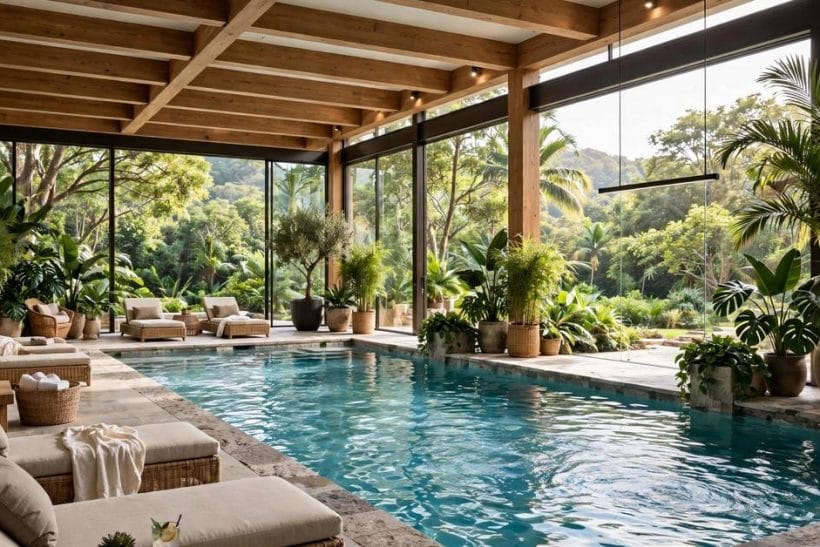
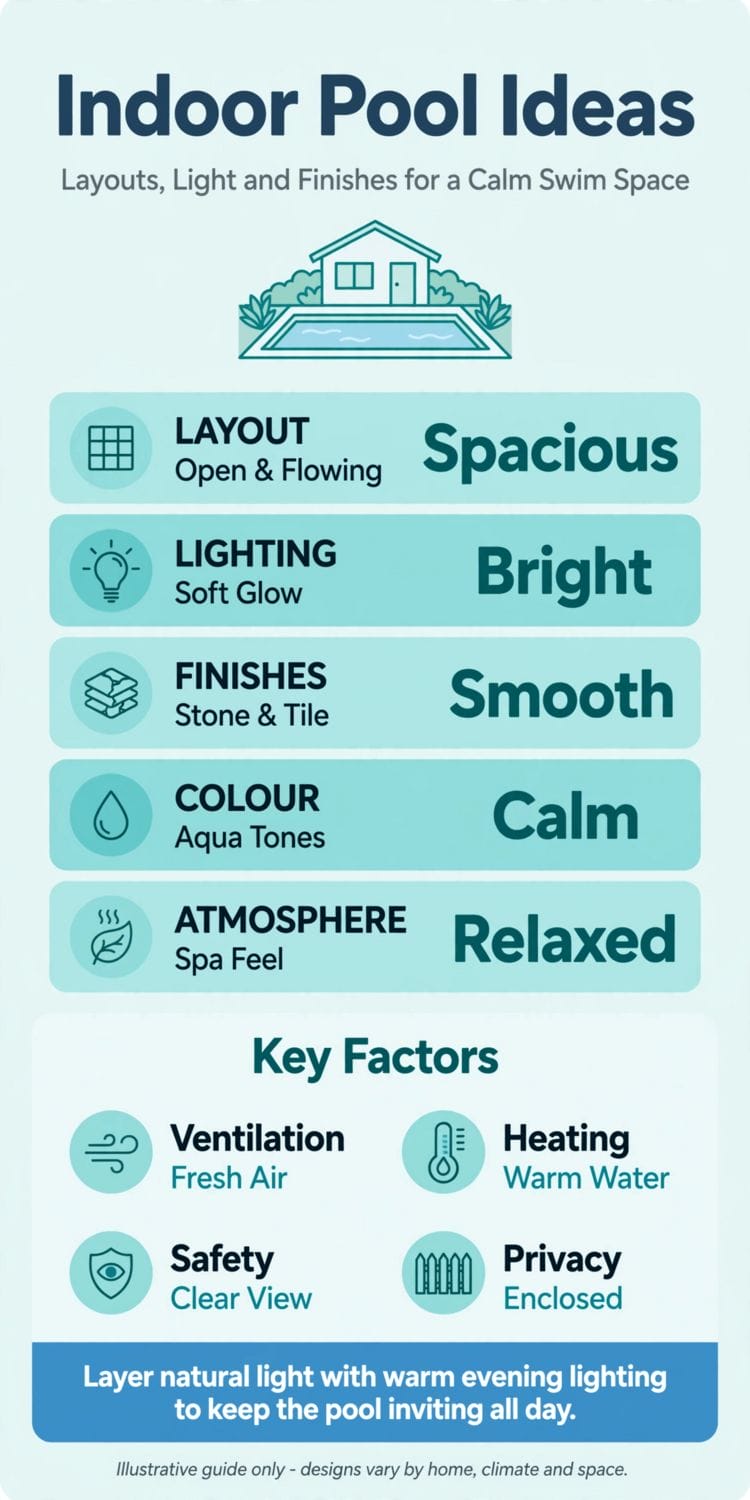
An indoor pool is a swimming pool permanently enclosed within a building — a dedicated pool hall, a glazed extension, or a converted structure — where water, warm air and humidity are managed as one system. Its working parts are the enclosure (structure, glazing, insulation), the pool itself (shape, depth, finish), the air handling that keeps moisture from harming the building, the surfaces walked on barefoot, and the light that serves swimmers by day and night. It is the enclosure member of the pool ideas cluster, sister to the sunroom in its love of glass and opposite in its demands.
| Question | Short answer |
|---|---|
| What is the hardest part of an indoor pool? | Not the water — the air. Warm pool water breathes moisture into the room constantly, and the enclosure and its ventilation must be designed to carry that moisture away before it finds the building’s fabric. |
| Can any building hold an indoor pool? | In principle many can; in practice the structure, the vapour control and the air handling decide. A specialist survey before design is not caution theatre — it is the project’s foundation document. |
| Is an indoor pool expensive to run? | It is a heated room of water kept warm all year, so respect its running costs from the first sketch: covers, insulation and efficient plant are what keep them civilised. This page treats costs qualitatively, as household judgement rather than tariff. |
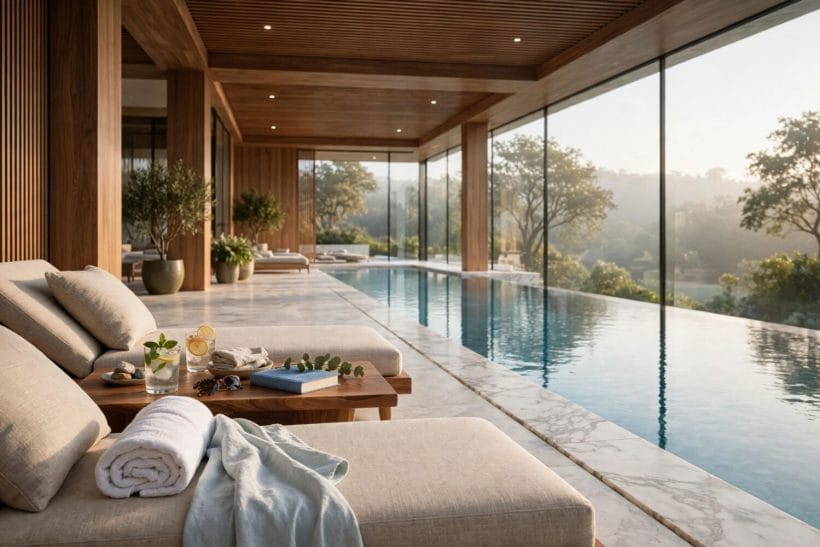
| What makes an indoor pool feel luxurious rather than municipal? | Light, quiet and proportion: daylight without glare, surfaces that feel kind barefoot, air that smells of nothing, and a poolside made for lingering — the engineering invisible, the calm evident. |
2. The Room Around the Water: Enclosure, Structure and Setting
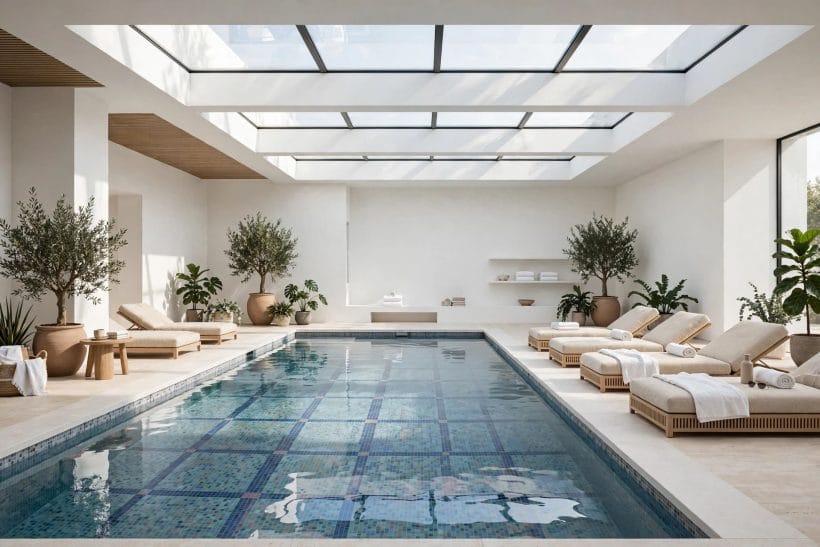
An indoor pool begins as architecture, not plumbing. The enclosure must carry a permanent warm fog without rotting, dripping or rusting; it must hold heat like a thermos and open like a pavilion. Every decision in this section is a specialist’s to finalise — the ideas here are the owner’s brief, the questions to bring to the people who will warrant the building.
1. Treat the pool hall as its own climate, sealed from the house
The pool room’s air is warm and wet by design; the house’s is neither.
2. Choose the structure for a wet life, not a dry one
Timber, steel and masonry all serve indoor pools when detailed for constant moisture; all fail when detailed like a dry room and hoped over.
3. Insulate and vapour-seal as if the fog were weather
Because it is. Warm moist air hunting for a cold surface will find every gap in the vapour control and condense inside the construction.
4. Glaze generously, but detail the glass for condensation
Glass is the indoor pool’s glory and its coldest surface.
5. Give the room a ceiling that expects moisture
The ceiling collects the room’s rising warmth and wet.
6. Plan the plant room as part of the architecture
Pumps, filters, heaters and the air-handling unit need a home with access, drainage and acoustic manners. A plant room planned beside the pool from the start beats machinery colonising the poolside’s best corner by default.
7. Separate the wet route from the house’s dry life
Swimmers travel between changing, showering and the water on wet feet.
8. Site changing and showers within the warm envelope
Changing at the pool’s own warmth, showering before and after within the same climate, keeps the experience continuous and the house’s bathrooms out of the traffic.
9. Think about who maintains it, and their route
Water testing, cover handling, plant access, chemical storage kept properly apart: maintenance is a weekly performance, and the building should stage it. A design that ignores its own upkeep is finished only in photographs.
10. Design the enclosure to open in summer
Sliding glass, folding walls, a roof that vents: the indoor pool that can open to the garden on a hot day doubles its own season.
11. Commission the building’s specialists before its finishes
Pool builder, structural engineer, and the air-handling designer agree the enclosure before a single tile is chosen.
3. Pool Shapes and Sizes for Indoor Life
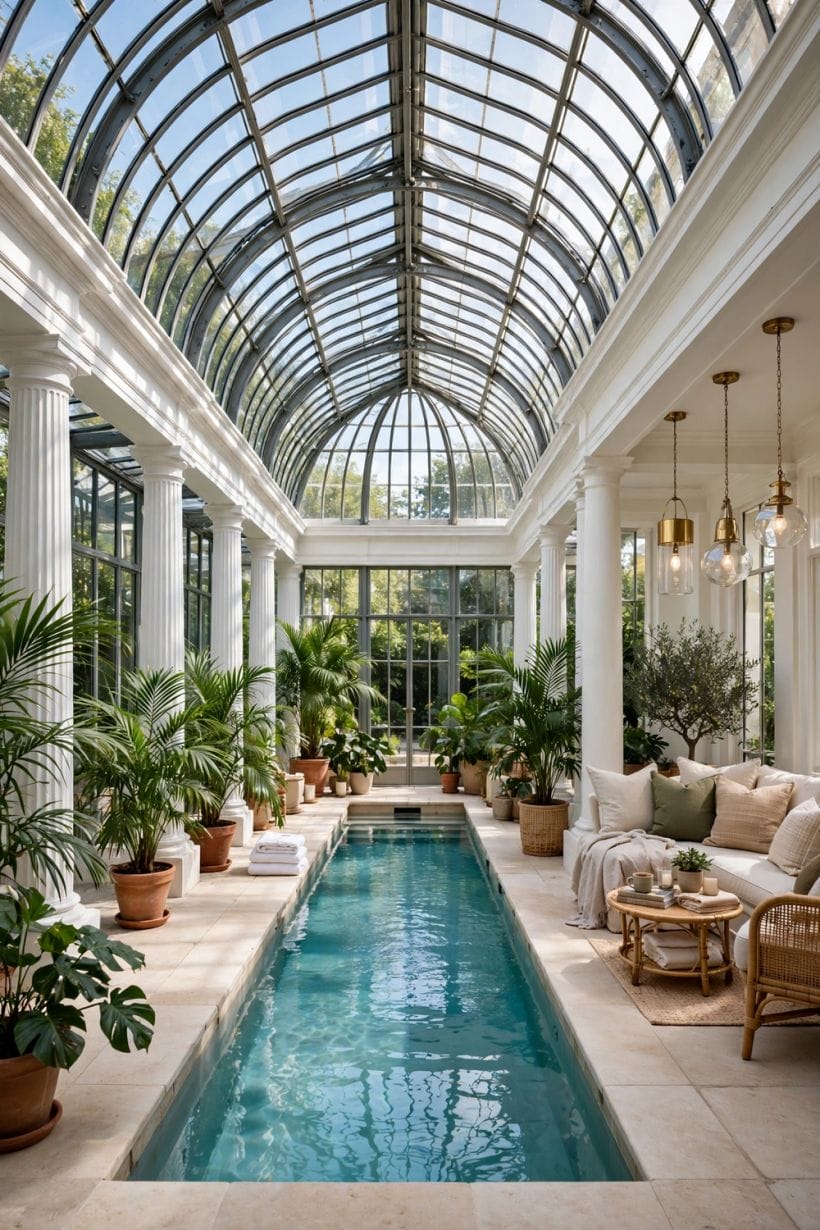
Indoors, the pool’s shape answers to the room, the swimming the household actually does, and the cover that must roll over it nightly. The lap swimmer, the exercising elder, the children’s Saturday and the evening floater want different water — the honest brief names the real programme and lets the shape follow.
12. Let the household’s real swimming choose the shape
Lengths for the serious swimmer, a generous rectangle for family games, a compact plunge for heat and cool-downs after exercise: the pool that matches its household’s true habits is used daily; the trophy shape is used for photographs.
13. Keep the classic rectangle for covers, lanes and calm
Rectangles take automatic covers gracefully, swim in honest lanes and read architecturally quiet against the room’s lines. Most indoor pools that serve for decades are rectangles wearing beautiful rooms.
14. Soften with a Roman end or a curved stair
A semicircular Roman end or a wide curved entry stair gives the rectangle its grace note and its social shallow — the place swimmers sit, children perch and nobody has to tread water to talk.
15. Build the entry as a beach or broad steps for all ages
A gently shelving beach entry or broad, shallow steps serve toddlers, elders and anyone whose knees vote on architecture. Indoors, where the pool is the household’s all-year water, the generous entry is kindness engineered.
16. Give lengths their turning room
The lap swimmer’s pool lives or dies at its ends: a clean wall to turn on, water deep enough for the push, a lane’s width honestly measured.
17. Keep a constant-depth exercise pool for water workouts
A level floor at standing depth is the exerciser’s and aqua-aerobics pool — and the safest family water, where every swimmer can stand. Many households choose usefulness over depth drama and never regret it.
18. Add a connected spa or hot bench for the warm end
A raised spa spilling into the pool, or a heated bench in the shallows, gives the room its warm social seat.
19. Consider a compact swim-current pool for small buildings
A short pool with a swim current serves serious swimming in a fraction of the footprint, where the building simply cannot hold lengths. It is the honest answer for converted spaces and modest extensions.
20. Shape the pool to the room, not the catalogue
An L, a keyhole, a pool that turns a corner of its building: awkward rooms breed interesting water.
21. Leave deck width where life happens, not just access
The poolside is where the room’s dry life occurs — loungers, towels, conversation, supervision.
22. Choose depth by swimmer, never by bravado
Depth serves diving (a specialist’s calculation, not a guess), standing, or floating — and most household pools need less than pride suggests.
4. Air, Moisture and Warmth: The Invisible Design
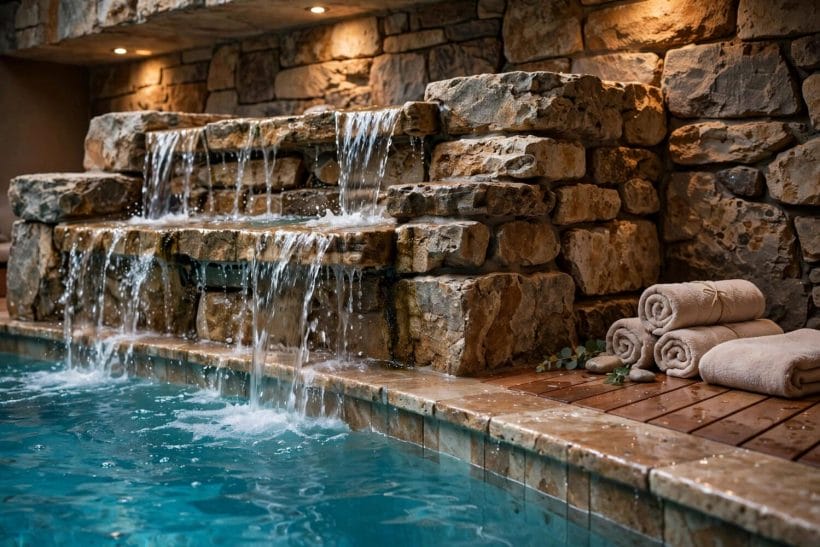
Every indoor pool is a machine for making weather, and the air handling is the machine’s heart. This section stays deliberately general — the sizing and specification belong to the pool’s environmental specialists — but an owner who understands what the system must achieve can brief it, judge it and maintain the habits that let it work.
23. Understand the bargain: the cover is the first dehumidifier
A well-fitted cover on the water whenever the pool rests stops most evaporation at its source, cutting the air system’s load, the heating bill and the room’s humidity in one nightly gesture.
24. Ventilation exists to carry moisture out, constantly
The room’s air must be exchanged and dried at a rate matched to the water’s evaporation — a calculation the specialists own.
25. Keep the room’s air moving gently over cold surfaces
Air washed kindly across glazing and other cool faces discourages the condensation that streaks glass and feeds trouble. Stagnant corners are where moisture wins its small daily victories; the designed airflow exists to deny them.
26. Hold water and air temperatures in their proper relation
Comfort and condensation both live in the gap between water temperature and air temperature — a relationship the pool’s specialists set and the household then respects.
27. Heat the building fabric, not just the air
Surfaces kept kindly warm do not collect condensation. The enclosure’s heating and insulation strategy treats walls, glass and ceiling as part of the moisture system, which is why its design is integrated rather than assembled.
28. Watch the rest of the house for the pool’s escapees
Doors left open, ducts shared carelessly, a stairwell breathing pool air upward — moisture travels. The separation between the pool’s climate and the house’s is maintained by habits as much as by construction.
29. Choose finishes everywhere as if they were poolside
Within the envelope, every finish — paint, timber treatment, metalwork, light fittings — is specified for warm wet air.
30. Give the air system its maintenance like any machine
Filters, fans, sensors and the dehumidifying plant earn scheduled care, and the system’s quiet competence depends on it. A maintenance rhythm agreed at handover protects the building for the pool’s whole life.
31. Notice the early warnings and act on them
Persistent misted glass, a musty note at the door, paint softening far from the water: the building’s polite first warnings. Raised early with the pool’s specialists, they are adjustments; ignored, they become repairs.
32. Keep chemicals stored as the separate question they are
Pool chemicals are stored apart, ventilated and handled to their makers’ instructions — never as a casual shelf in the warm wet room itself.
33. Accept the specialists’ numbers over the internet’s
Evaporation rates, air changes, dew points: indoor pools are calculated, not vibes. This page deliberately offers no figures, because the only safe figures for a real room are the ones its own designers produce for it.
5. Surfaces: Decking, Tile and the Walk Around the Water
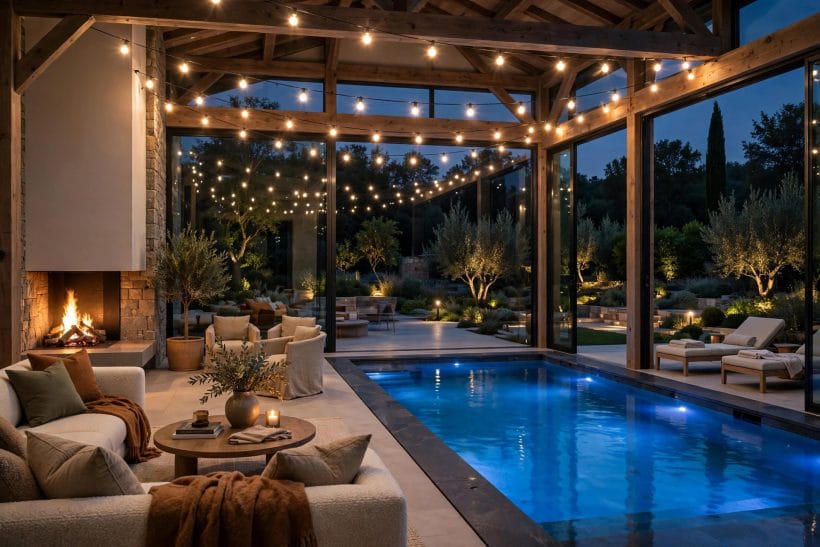
Bare feet are the indoor pool’s flooring critics, and they are severe: surfaces must be kind, grippy when wet, warm enough, and beautiful under artificial light for half the year. The walk from changing room to water — the drip line — is travelled a thousand times a year and should be designed like it matters, because it does.
34. Choose pool-surround stone or tile with a barefoot grip
Polished anything is the enemy. Matt, textured stone and pool-rated tiles keep their footing wet, feel kind underfoot, and still read luxurious — the specification is the pool supplier’s standard, never the showroom’s guess.
35. Run the same surface from changing room to coping
One continuous floor across the wet route — changing, shower, poolside — unifies the room and removes the thresholds where water, grit and stubbed toes collect. The eye reads calm; the feet read safety.
36. Detail the coping as the pool’s handshake
The coping stones at the water’s edge are touched by every hand and sat on by every dangling leg.
37. Grade the floor to its drains invisibly
Poolside water must walk itself to the drains: falls so gentle they are felt by water, not by feet. Standing puddles on a pool surround are a detailing failure that announces itself daily and stains eventually.
38. Use timber decking only where it is specified for the life
Timber at an indoor pool is beautiful and demanding: the right species, the right treatment, the right ventilation beneath.
39. Warm the floor where the system allows
A gently heated poolside floor dries faster, feels kind in January and keeps the room’s barefoot luxury honest. It is a comfort decision the environmental design can absorb when it is made early, not late.
40. Tile the pool’s interior for light in the water
The water’s colour is largely the finish beneath it: pale tiles give the bright lagoon, deep blues the moody plunge, mosaics a shimmer that moves with the surface.
41. Give steps and edges a visible contrast
Step nosings and the pool’s edge marked in a gentle contrast help every swimmer read the water’s geometry, especially in evening light.
42. Keep grout and joints specified for permanent wet
The joints are the surround’s weakest parish: pool-rated grouts and sealants, honestly specified and maintained, keep the floor’s beauty from unzipping at its seams. The maintenance rhythm includes looking at them.
43. Furnish the dry shore for lingering
Loungers that tolerate wet towels, a bench for the spectator, hooks and a towel rail within the warm room: the dry shore’s small furniture is what turns a swim into a stay.
44. Light the floor’s wet shine honestly at night
Wet surfaces mirror the room’s lights; planned well, the evening poolside glows; planned carelessly, it glares. The lighting section’s discipline — low, warm, indirect — applies with double force to everything the water touches.
6. Light: Windows, Skylights and Evening Swimming
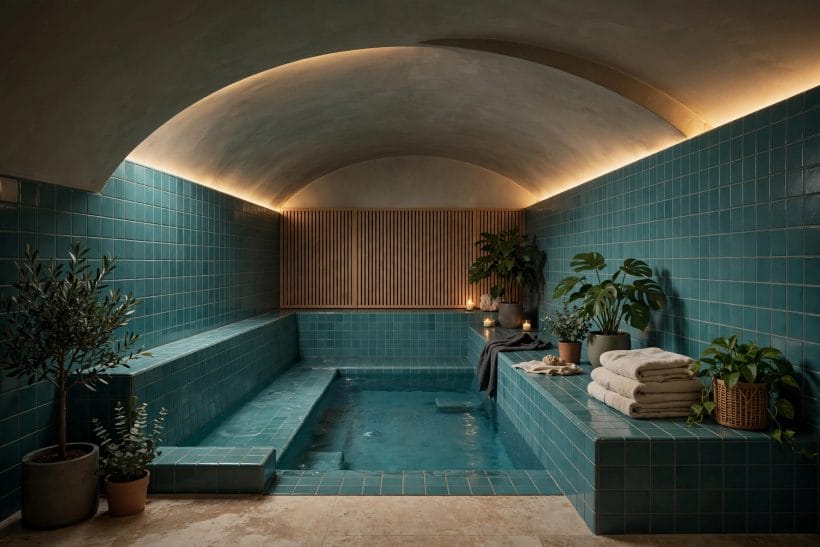
An indoor pool lives two lives daily: the bright pavilion of the morning swim and the lamplit grotto of the evening one. Daylight gives it health and garden views; designed artificial light gives it atmosphere and safety after dark. The two are planned together, with glare — the swimmer’s enemy, backstroke especially — designed out of both.
45. Orient glazing for daylight without glare on the water
Swimmers look up: at the ceiling mid-backstroke, at the windows mid-length. Glazing placed and shaded so the sun never strikes the water’s surface into blindness is the daylighting brief — bright room, calm water, no dazzle.
46. Use high glazing and skylights for the pavilion feel
Light from above frees the walls for privacy and gives the pool hall its spa calm.
47. Plant the view out, fence the view in
The pool room’s glass invites the garden in and the neighbours’ windows likewise. Planting, screens and the glazing’s own treatments compose the outward view while keeping the swimmers’ privacy a designed fact, not a hope — the same planting thinking that orders the best patio ideas, turned to face inward.
48. Black out nothing — the night pool wants darkness outside
In the evening, glass that shows black garden beyond and warm room within doubles the room by reflection.
49. Put the water’s own lighting in for the evening transformation
Underwater lights turn the pool into the room’s largest lamp: a glowing floor of moving colour that makes evening swimming feel ceremonial. Their specification is the pool builder’s; their effect is the room’s nightly reward.
50. Keep ceiling lights indirect and fittings pool-rated
Direct downlights over water glare off the surface and cheapen the room. Indirect coves, wall washes and fittings specified for the environment give the hall its calm — and belong, again, to the specialists’ schedule.
51. Light the dry shore like a sitting room
The loungers’ end earns reading light, a warm pool of it, at seated height — the poolside’s evening is half spectating.
52. Serve the early swimmer with dawn-friendly light
The 6 a.m. length-swimmer wants light that wakes gently: dimmable scenes, the underwater glow first, full brightness a choice rather than an ambush. Scenes set once serve every hour the pool keeps.
53. Shade the glass for high summer
A glazed pool hall in a heatwave can out-sauna the sauna. External shading, opening sections and the ventilation’s summer mode keep the pavilion pleasant — all designed in, because retrofitting shade onto glass is misery.
54. Let planting soften the light inside
Humidity-loving plants at the glass take the edge off the brightness, filter the view and make the room smell faintly of conservatory.
55. Plan the last light: the room at rest
At night, covered and quiet, the pool room should still compose: one low light, the cover’s calm surface, the garden dark beyond the glass.
7. The Poolside Life: Eating, Resting and the Social Shore
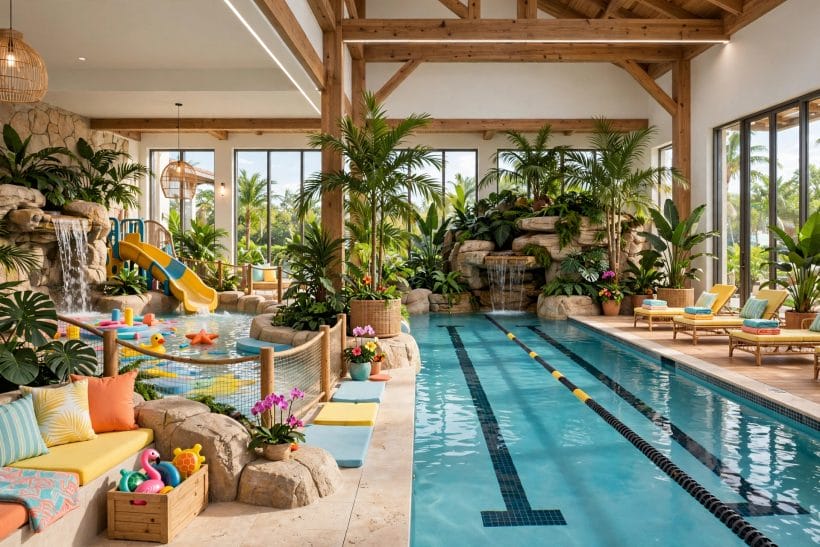
The indoor pool’s final measure is not its swimming but its staying: the birthday tea at the poolside table, the grandparent supervising from the lounger, the two friends floating and talking for an hour. Designing the room’s social shore — within the warm envelope, with the moisture rules respected — is what makes it the house’s most-loved room rather than its most expensive corridor.
56. Build a proper sitting end, not a leftover strip
A sitting area with real chairs or loungers, a table for drinks and books, and room to gather without perching on the coping: the social shore deserves the poolside’s best dry ground and its own rug-free, splash-proof furnishing.
57. Keep food and drink in their poolside parish
Drinks belong at the shore’s table, never at the water’s edge in glass.
58. Give supervision its designed seat
Children’s swimming is watched swimming.
59. Store towels, robes and toys within the warm room
A heated towel rail, hooks at every height, and a toy store that swallows the inflatables: the wet room’s storage keeps its clutter inside the envelope and its comfort instant.
60. Hang a clock where lengths can read it
The swimmer’s clock — large, plain, readable through wet eyes at the far end — is the pool hall’s traditional furniture.
61. Give exercise its poolside corner
The household’s other water-adjacent rituals — stretching, yoga by the warmth, the exercise bike facing the water — earn a dry corner of the shore.
62. Plan the pool party the room can actually hold
Know the room’s honest capacity: swimmers in the water, watchers at the shore, coats and cake somewhere dry.
63. Keep the house rules visible and few
Shower first, no glass, no diving unless the pool was built for it, children watched: the household’s short list, agreed and kept, is the social design’s foundation.
64. Let the room host the quiet hours best of all
For all the parties, the indoor pool’s finest hour is solitary: one swimmer, warm water, rain on the glass.
65. Dress the shore seasonally, lightly
Cushions that change with the year, a plant that flowers in winter, the Christmas swim’s own small ceremony: the poolside that notices the seasons stays loved.
8. Keeping It Lovely: Covers, Care and Safety Habits
An indoor pool is a promise the household keeps weekly: water tested, cover drawn, plant checked, air system breathing. The care is not onerous — it is rhythmic — and the design decisions that make it easy were taken sections ago. This final section gathers the habits that keep the room lovely and the water honest for decades.
66. Draw the cover every night the pool rests
The cover is the pool’s nightclothes and its hardest-working component: evaporation stopped, heat kept, humidity halved at the source, safety improved. The household that covers religiously spends less on everything else in this section.
67. Test the water on a rhythm, not on a suspicion
Regular testing and dosing to the pool specialist’s regime keeps the water clear, kind to eyes and safe.
68. Shower before swimming, every swimmer, every time
The pre-swim shower is the water’s best friend: what washes off in the shower never loads the pool. Make the shower warm, near and pleasant so the habit keeps itself — design doing discipline’s work again.
69. Keep the air system’s filters and vents on the calendar
The invisible design stays invisible only while it is maintained: filters changed, vents clear, the plant serviced on its maker’s rhythm. The building’s fabric is the beneficiary of this unglamorous fidelity.
70. Walk the enclosure monthly with a critical eye
Seals, grout, paint, a hinge’s first rust, a vent’s new rattle: a monthly owner’s walk catches the pool room’s small decays while they are still small. Note, photograph, and ask the specialists before touching anything structural.
71. Respect the safety rules as design, not decoration
Supervision, the door’s discipline, no unauthorised solo swimming for children, the cover’s correct use: these are the room’s constitution.
72. Store nothing in the plant room but the plant
The plant room that becomes a general store buries access, invites accidents and hides faults. Its discipline — machinery, the pool’s own stores, nothing else — is a design decision renewed weekly by the household.
73. Keep the specialists’ numbers by the door
Pool builder, air-handling service, electrician, the water-care supplier: the room’s small directory, posted in the plant room, turns every future fault into a phone call instead of a research project.
74. Close the pool properly for holidays
A resting pool has its own procedure — cover, plant settings, water care for the absence — agreed with the specialists and written down.
75. Love the routine, and the room repays it
The indoor pool’s owners divide into those who keep the rhythm and those who fight the building.
9. Checks and Mistakes: Before the First Purchase or the First Stone
Before the first sketch is paid for, the checks in order: a specialist survey of the building or site (structure, drainage, services); the environmental design briefed as the project’s heart, not its appendix — enclosure, vapour control and air handling designed together; the water’s programme honestly named (lengths, exercise, family, plunge); and the running-cost conversation held in daylight, qualitatively but without flinching.
The faithful mistakes: falling for finishes before the enclosure is designed; a pool that fills its room and leaves life no shore; glazing that glares, mists or bakes; surfaces polished beautiful and barefoot-hostile; the cover treated as an optional accessory; plant squeezed into leftovers; and the house’s dry rooms left breathing the pool’s air through doors nobody thought about.
The safety line deserves its own paragraph and its general terms: indoor pools join water, electricity, chemicals and children in one warm room, and every one of those pairings has a professional discipline behind it. This page offers none of the figures — depths, doses, distances, ratings — because those belong to the pool’s own designers, installers and governing guidance, followed exactly. An owner who insists on qualified design at every one of those points has done the safety work that matters most.
10. Costs and Pulling It Together
Costs for an indoor pool are the committed end of the pool family: a building, a climate system and a body of heated water, with running costs to match — which is why this page prices nothing and urges the daylight conversation instead. The honest order of spending is structure and environmental design first, the pool and its plant second, finishes third, furniture last; projects that reverse that order buy beautiful tiles for a building that cannot keep them dry.
Pulling it together: seal the climate; design the air before the water’s colour; give the swimming its honest shape and the staying its generous shore; surface everything for bare feet; light for dawn laps and lamplit evenings alike; cover the water nightly; and keep the weekly rhythm like a promise. The result joins the greenhouse and the sunroom in the family of rooms that give a house a second season — except this one’s season is swimming, and it never ends.
Final Considerations
An indoor pool is the boldest room a house can hold, and the most grateful: no other space returns its care so directly, in warmth, health and the daily small ceremony of a swim taken while the weather does whatever it likes outside the glass.
Brief the specialists well, respect the invisible design, and keep the cover drawn at night. The water will do the rest — it has been waiting, patiently and at exactly the right temperature, since the first sketch.

0 Comments