

An inground pool changes a backyard from a place you pass through into the place everyone gathers. Studying pictures of inground pools is the easiest way to compare shapes, colours and layouts before committing to a design, and this guide pairs those visual ideas with the practical details, cost drivers and safety thinking that photographs cannot show you.
1. At a Glance: Choosing Your Inground Pool
Start with the quick comparison, then explore each design family in turn. Costs for inground pools vary widely with size, shell type, ground conditions, finishes and added features, so this guide describes what drives cost instead of quoting figures that could never fit every garden and region.
| Key point | What to know |
|---|---|
| Best for laps and exercise | Long, straight rectangular layouts with a clear swimming lane. |
| Best for small gardens | Compact plunge and courtyard shapes that keep paving and planting in balance. |
| Main cost drivers | Excavation, shell material, interior finish, coping and paving, fencing, and extras like heating or covers. |
| Colour control | Interior finish colour largely decides water colour, from pale aqua to deep blue. |
| Plan from day one | Safety fencing, supervision sightlines, shade, and storage for equipment and chemicals. |
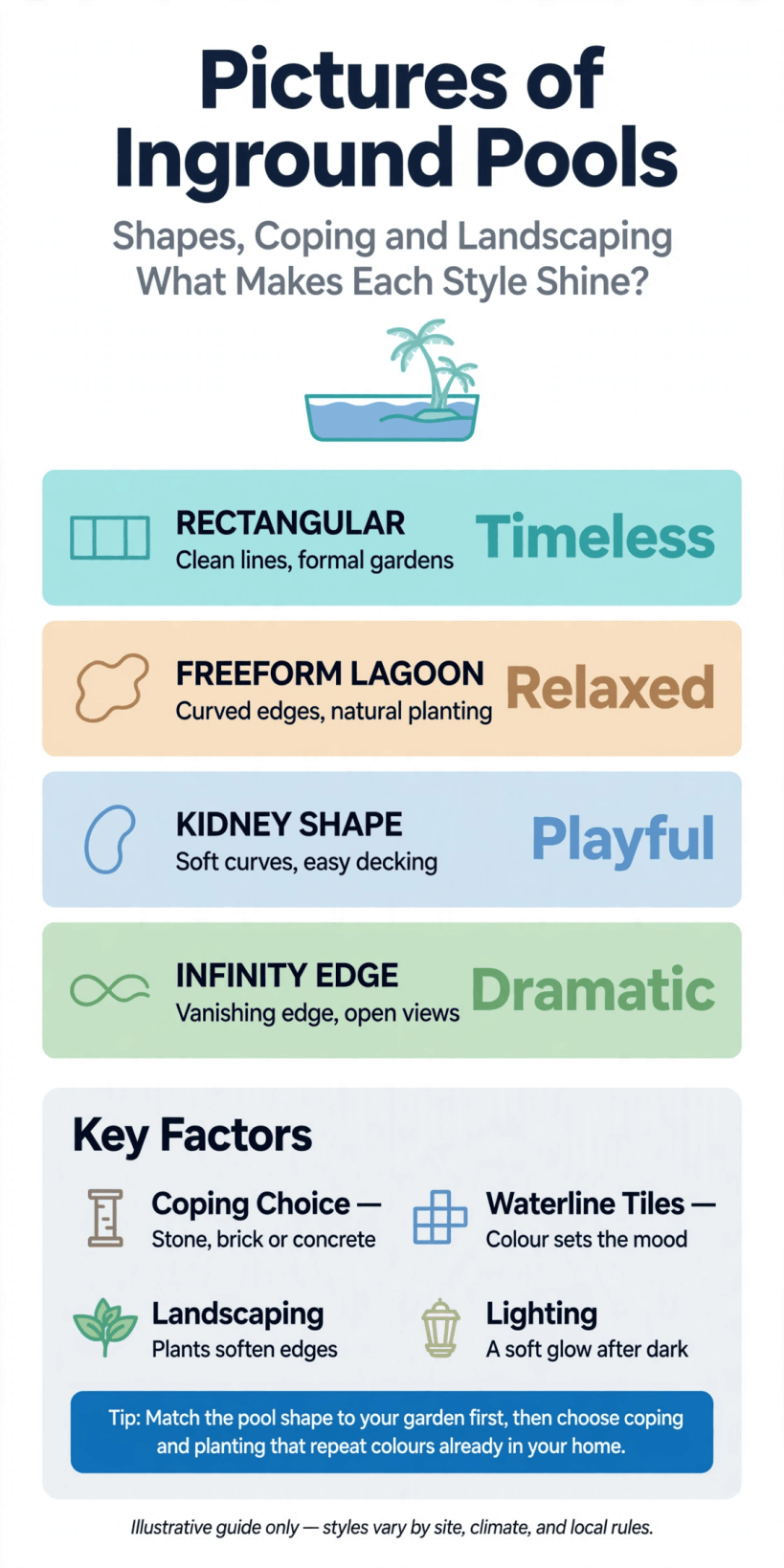
A visual summary of pool shapes, colour choices and the practical details behind them.
The sections that follow move through the most loved layouts, from classic rectangles to freeform lagoon styles, then cover colour, coping, fencing, lighting and upkeep. Read them as a menu: most real pools borrow the shape from one section, the colour thinking from another, and the safety habits from all of them.
2. The Classic Rectangle
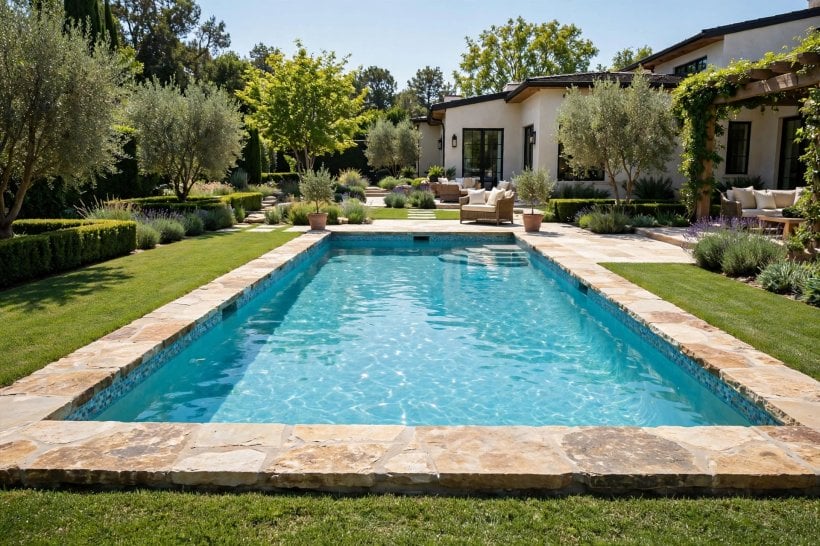
The rectangle is the enduring favourite, and for good reason. Straight lines suit formal gardens and modern houses alike, the shape is efficient to build and to cover, and swimmers get a proper lane for lengths. Layouts usually place steps along one short end or in a corner, keeping the long centre clear. Surround the rectangle with a consistent band of paving and the design reads calm and architectural, especially when the pool’s long edge lines up with the house or a garden axis.
Rectangles also make practical life easier. Automatic covers are simplest on straight shapes, lane ropes and cleaning equipment behave predictably, and the geometry wastes no garden on awkward corners. Colour does the decorating here: a pale interior finish gives resort-style aqua water, while a deeper finish turns the same rectangle moody and mirror-like. Homeowners weighing a pool against a smaller home footprint, like those browsing tiny houses for sale in Charlotte, NC, often find the classic rectangle the easiest design to scale down gracefully without losing its character.
3. The Freeform Lagoon
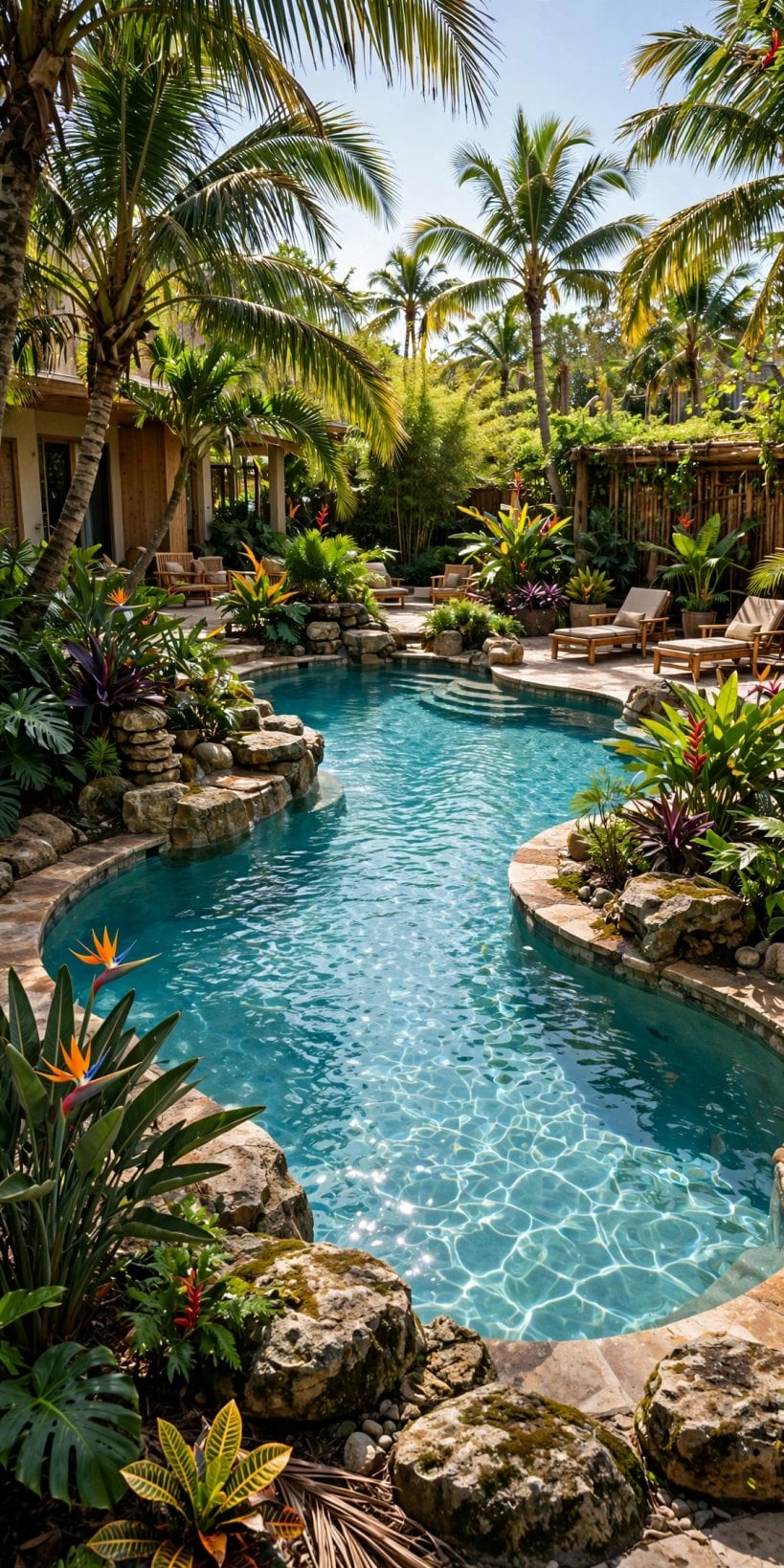
Freeform pools trade geometry for curves, echoing natural lagoons and garden ponds. The flowing outline softens large gardens, wraps around existing trees or rock features, and creates natural bays for steps, spa seats and shallow play shelves. Many pictures of inground pools that stop people mid-scroll are freeform designs at golden hour, with planting spilling toward the water and the curve hiding the pool’s far end like a secret.
The practical side deserves equal attention. Curved shapes can cost more to build and finish because formwork, tiling and covers all follow the bend, and a cover may need to be a floating or segmented solution rather than a neat rectangle. Cleaning patterns are less predictable, so plan the layout of inlets and the cleaning system with the builder. Keep planting close for the jungle effect but choose species that do not shed heavily into the water, or skimming becomes a daily hobby. A freeform pool rewards households that want the garden to feel like a landscape first and a sports facility second.
4. The Lap Pool for Serious Swimmers
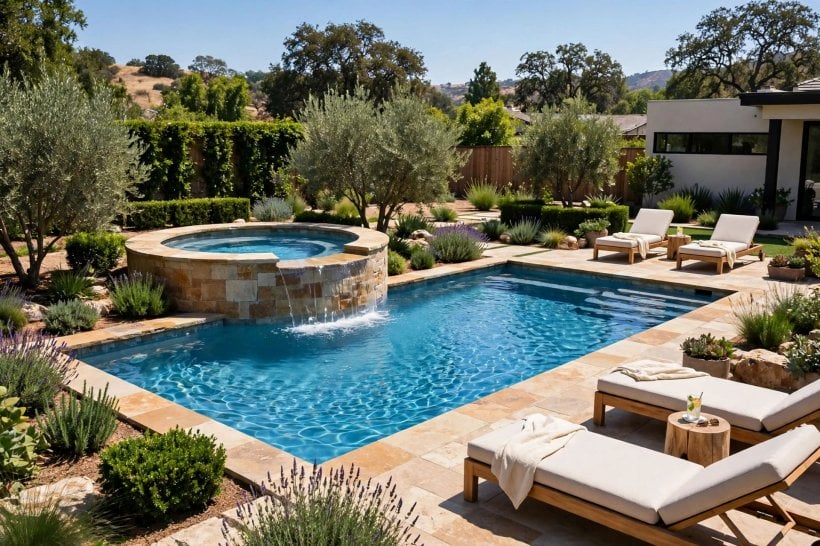
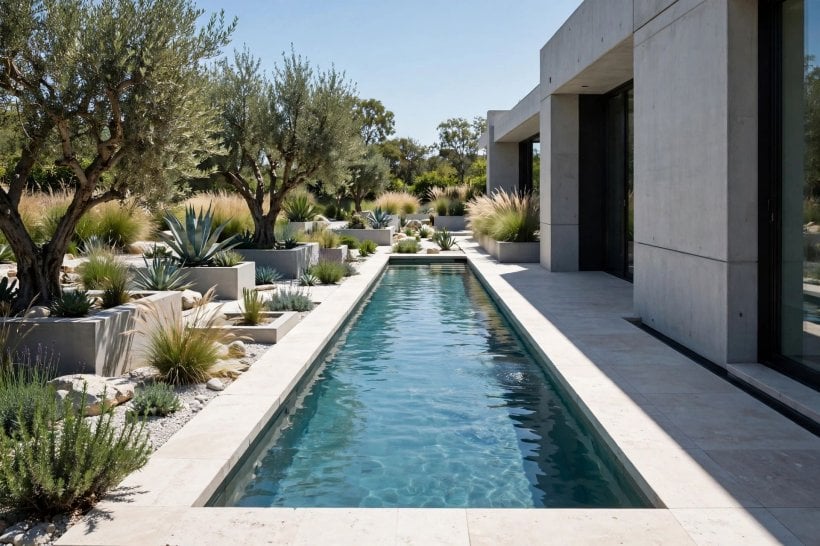
A lap pool is a rectangle with intent: long, relatively narrow, and honest about its purpose. Placed along a boundary or beside the house, it turns an awkward side strip of garden into a daily exercise ritual. The layout usually keeps both ends simple, with steps tucked to one side so the lane stays unobstructed, and a consistent depth that suits rhythmic swimming rather than diving games. Slim proportions also warm efficiently and suit covers that roll away in seconds.
Because the footprint is slender, lap pools fit gardens that could never host a wide family pool, a point familiar to readers of small home interior design ideas, where every design begins with honest measurements. Dress the corridor with a hedge, a slatted screen or a run of grasses so the swim feels private, and add a small bench and hooks at the entry end for towels and gear. Evening lighting along the lane turns a fitness feature into the garden’s most elegant line after dark, and heating choices can be modest because the water volume stays comparatively contained.
5. The Plunge Pool for Compact Gardens
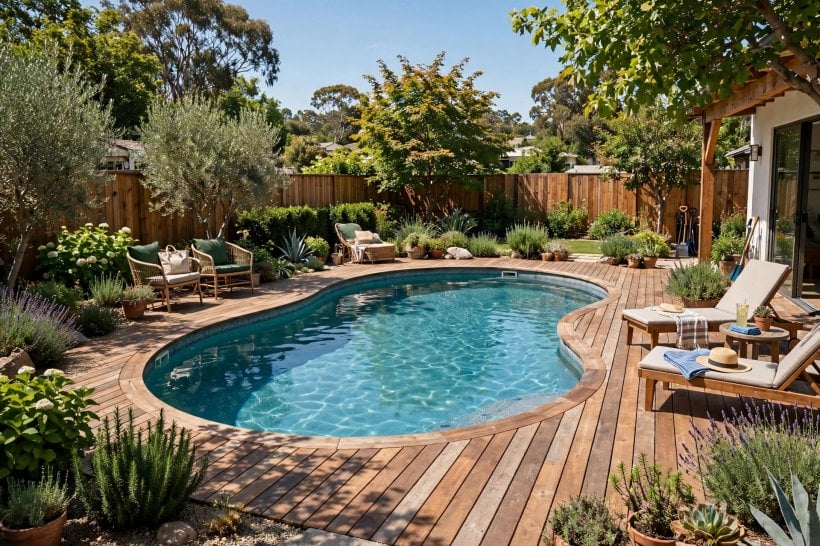
Not every garden can host lengths, and the plunge pool answers with depth instead of distance. Small in footprint but properly deep, it is made for cooling off, bobbing with a drink in hand, and long conversations with shoulders under water. Courtyard layouts shine here: the pool becomes a water courtyard feature, ringed by seating, pots and a shade structure, working socially in exactly the way a larger pool’s shallow shelf does, only at a fraction of the excavation.
Plunge pools are also where heating earns its keep fastest, because a modest volume warms quickly and holds temperature under a cover, extending use well beyond high summer. Add bench seating inside the pool along one or two edges so bathers can sit submerged, and consider a small water feature or spout for sound and movement. Gardeners comparing compact living options, such as tiny house listings in Dallas, Texas, will recognise the philosophy: accept the site’s limits cheerfully, then design so thoughtfully within them that guests never notice a compromise was made.
6. The Family Pool with a Shallow Shelf
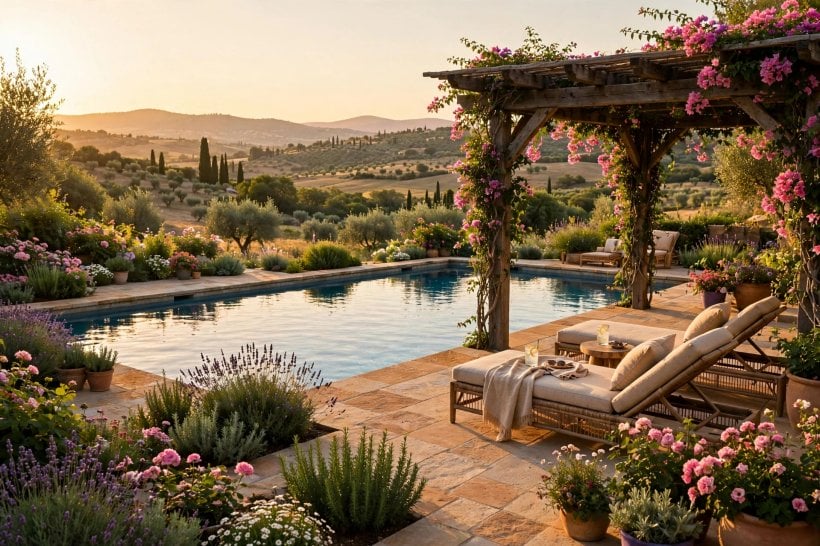
Family pools earn their name through zoning. A wide, shallow entry shelf gives toddlers a paddling world of their own and gives adults a place to sit half-submerged while supervising. Beyond the shelf, the floor slopes to a swimmable middle, and the far end keeps enough depth for confident swimmers and games. Steps with a handrail help grandparents and anyone less steady, and a layout that keeps the shelf visible from the house and the main seating keeps supervision natural rather than anxious.
Safety shapes every decision in this design, and it should. Fencing with a self-closing, self-latching gate, clear sightlines, and rules about running on wet paving matter more than any finish. Many regions have specific pool fencing requirements, so confirm yours locally and build them into the design from the start rather than treating them as paperwork at the end. Storage for toys, inflatables and rescue equipment belongs at the pool edge in a ventilated box. Families researching homes among tiny houses for sale in Augusta, GA often rank outdoor safety this highly too, because a garden that children can use freely is worth more than any single luxury feature.
7. The Pool and Spa Combination
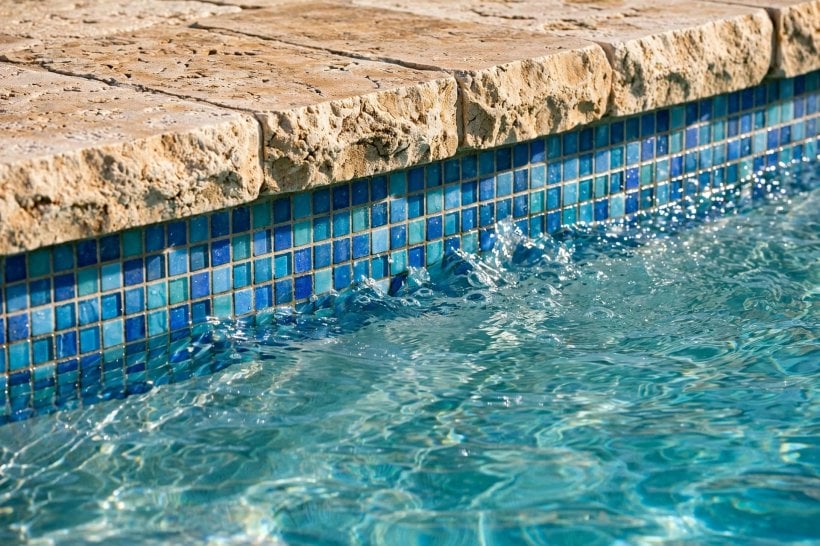
Pairing a spa with the main pool adds a warm, sociable circle to the design and stretches the season at both ends. Spas sit raised with a spillway into the pool, attached at one end, or tucked into a curve of a freeform outline. The layout question is social geometry: place the spa where its bathers can talk to people on the paving and in the pool at once, ideally within sight of the house’s main windows so the whole scene composes like a picture on winter evenings when only the spa is in use.
Practically, a combined system shares plant equipment where the builder advises it, while the spa’s heating and jets add to both build and running costs. A separate cover routine for the spa keeps heat in and debris out. Seating depth and jet positions are worth testing in a showroom if you can, because comfort here is personal and hard to judge from drawings. The combination suits households that entertain in smaller groups more often than they host crowd swims, trading some open water for an intimate, year-round gathering spot.
8. Water Colour and Interior Finishes
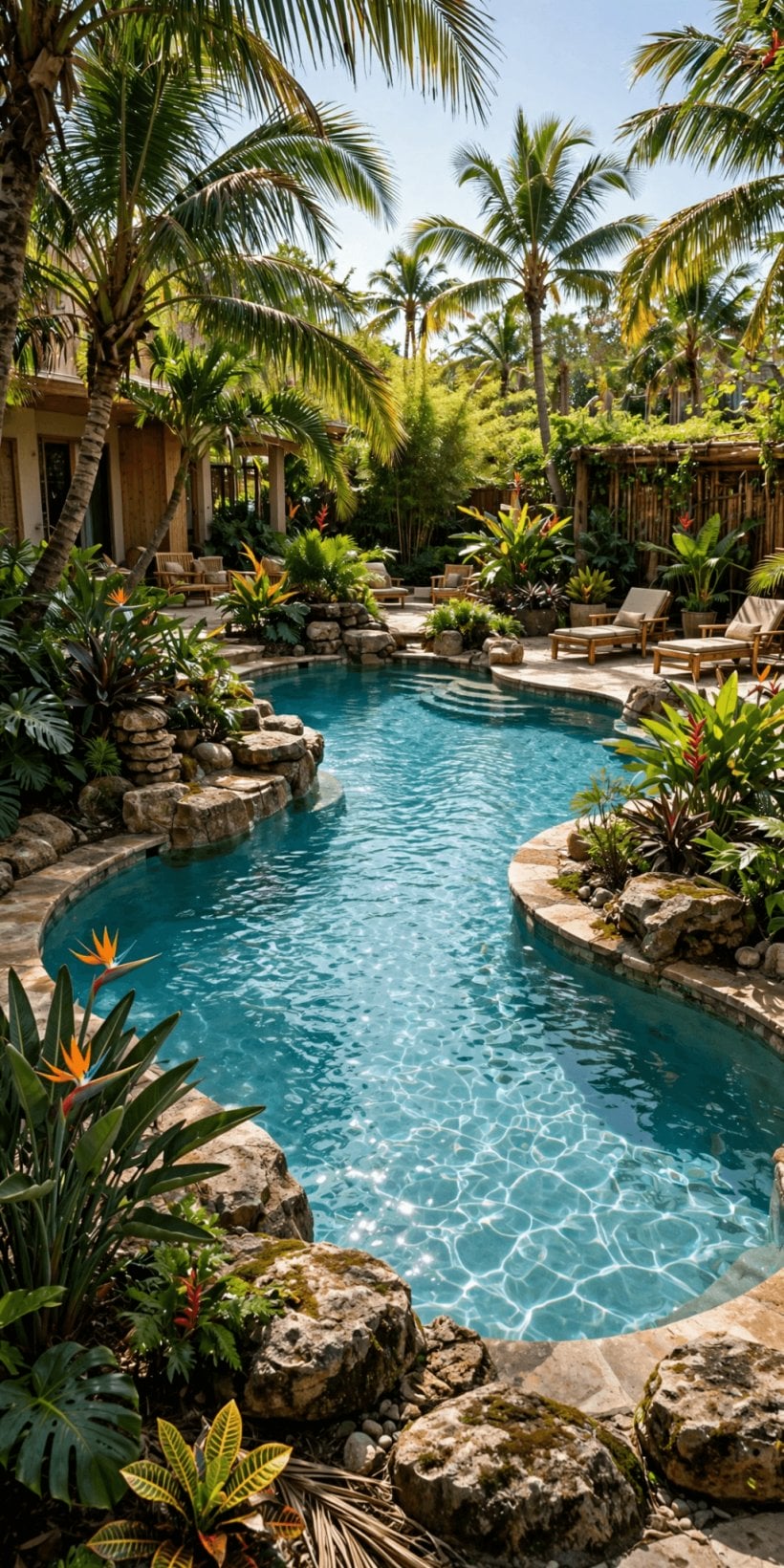
New pool owners are often surprised to learn that water colour is chosen at the finish chart, not from a paint tin of blue. Pale grey, white and sand finishes reflect the sky and read as light aqua. Mid-blue finishes deepen the colour toward classic swimming-pool blue. Dark finishes create reflective, lagoon-like water that shows the sky and warms slightly more in sun, while making depth harder to judge at a glance, a point to weigh honestly where children swim. Pebble, plaster, tile and vinyl finishes each shift the palette and the texture underfoot.
Finish choice drives cost and longevity as well as looks, with fully tiled interiors typically at the premium end and vinyl at the more economical end, and each material has its own care routine and renewal horizon. Ask builders to show you real pools in your shortlisted colours, in morning and afternoon light, because photographs flatter and shift. The curated-photo habit that helps with gift shop interior design ideas applies here too: gather examples, then verify them in real light before deciding. Whatever you choose, keep coping and paving tones in the same conversation, since the border frames the water colour.
9. Coping, Paving and the Space Around the Water
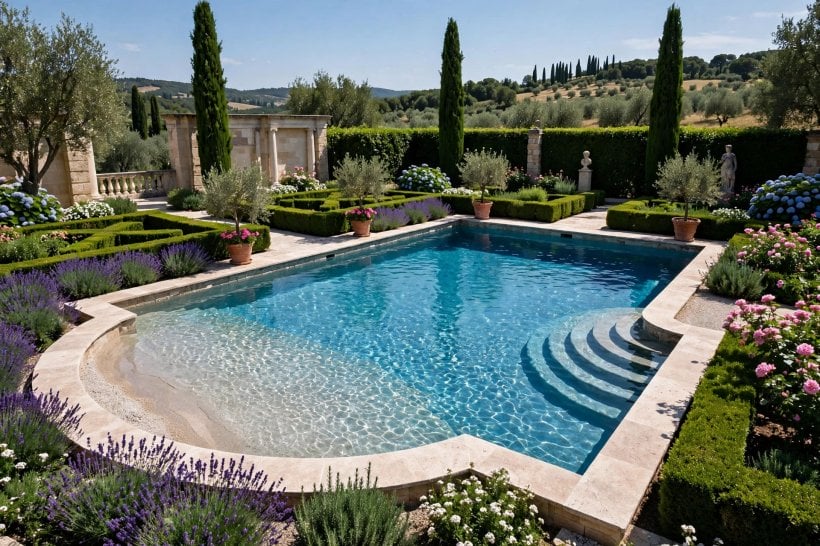
The surround is where a pool succeeds daily. Coping, the finished edge of the pool, should be comfortable to sit on, grippy under wet feet, and kind to bare legs when people dangle them in the water. Beyond it, paving needs honest drainage away from the pool, room for loungers without blocking the walking route, and a surface that does not turn treacherous when splashed. Shade deserves a planned home too: a pavilion, pergola or sail at one end gives relief at midday and a natural base for towels, books and drinks.
Think in zones as you lay this out: swimming edge, lounging strip, dining or seating area, and a discreet corner for the cover, cleaning gear and chemical storage, locked and ventilated as safety requires. Lighting low around the surround prevents glare on the water while keeping steps visible. Readers who enjoy the zone-based thinking in home interior design ideas for compact spaces will find the same discipline outdoors. A beautiful pool with nowhere sensible to put a towel becomes annoying within a week, so plan the surround with the same care as the water it frames.
10. Running Costs, Upkeep and Honest Expectations
A pool is a commitment that repays rhythm. Routine care means skimming, brushing, checking the water balance, and keeping filters and pumps in good order, with professional servicing available for households that would rather outsource. Running costs are driven by pump time, heating choices, cover use and local water and energy prices, which is why this guide avoids figures: your climate and habits will write the real numbers. A good cover is the single habit that helps almost everything, conserving heat, water and chemicals while keeping debris and unsupervised access at bay.
Set expectations about seasons, too. Build projects involve excavation, weather delays and curing times, so a pool promised for a particular summer deserves generous schedule margins. Winterising or year-round routines depend on your climate, and your builder’s handover should cover both plainly. Households exploring where to rent a tiny house before buying into small living sometimes rent a home with a pool first, and it is a wise trial: a season of real upkeep tells you whether pool ownership fits your life before you dig your own garden.
Final Considerations
The best inground pool is the one fitted honestly to its garden, its household and its budget. Rectangles serve swimmers and formal gardens, freeform shapes serve landscapes, lap and plunge pools serve small plots, family shelves serve young children, and spa combinations serve sociable evenings. Colour comes from the finish, comfort comes from the surround, and safety comes from fencing, sightlines and habits planned from the very first sketch.
Before committing, confirm your local rules for pool fencing and construction, gather quotes against the same written specification, and visit finished pools in your shortlisted colours. Do that groundwork and the pool you build will look as good in your garden as any photograph that inspired it, while working properly for the people who actually use it.


0 Comments