
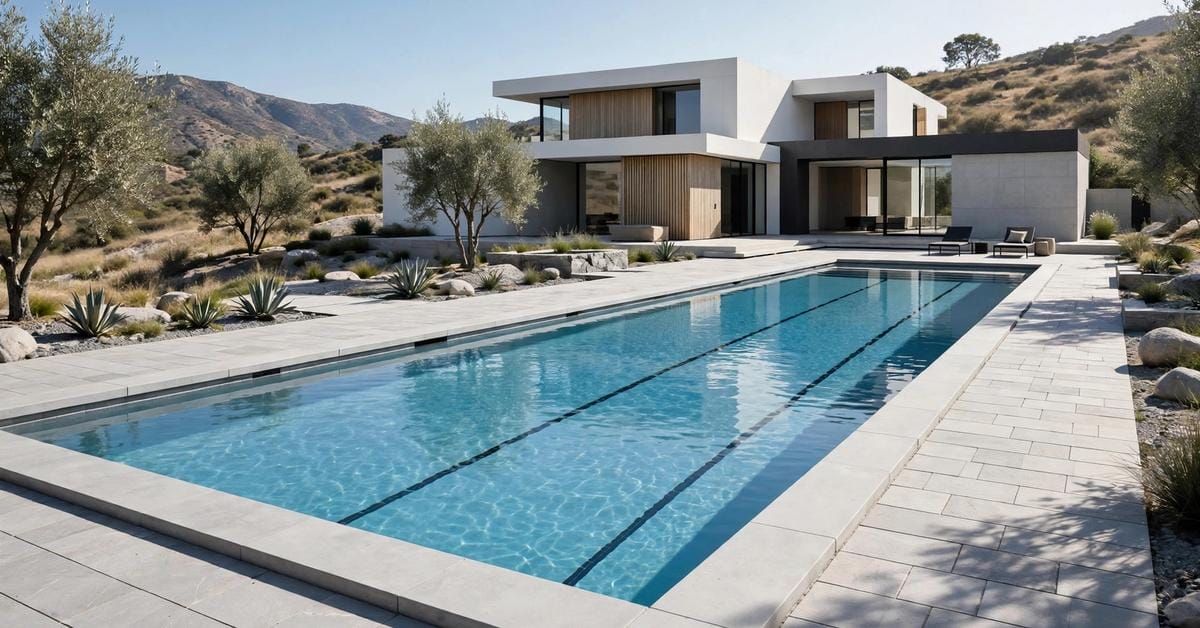
Every other pool shape asks the garden to accommodate it. The rectangle does the opposite: it takes the straight lines a yard already has — the fence, the terrace, the house wall — and turns them into water. That is why the oldest pool shape is still the one that looks newest in a modern garden and most at home in a traditional one.
This collection stays strictly on the shape: seventy-five ideas for rectangular pools — long lap lanes and compact plunge rectangles, classic symmetrical layouts and narrow side-yard swimmers — plus the edges, decks, planting and practical checks that make a straight-sided pool work as a room outdoors.
1. Rectangular Pools at a Glance
Scope first. This post owns the rectangle within the pool cluster: shape, proportion and everything chosen to serve straight lines. The wider cluster lives elsewhere on the site: the pillar in pool ideas, the buildings that partner a pool in pool house ideas and pool cabana ideas, the family-garden angle in backyard pool ideas, and the neighbouring outdoor-living pieces in deck with a fire pit ideas and ground level deck ideas. Here, everything serves the rectangle.
One rule governs the whole collection: proportion is the design. A rectangle succeeds or fails on the relationship between its length, its width and the space around it, so each section below is one proportion or pairing decision, made in order.
| Decision | Range covered | Ideas |
|---|---|---|
| Form | Classic, lap and compact rectangles | 1–24 |
| Inside the water | Shelves, steps, benches and entries | 25–32 |
| Edges and surfaces | Coping, tile, finishes, decking | 33–48 |
| Setting | Planting, light, warmth and covers | 49–65 |
| Practicalities | Cost drivers and living-with-it checks | 66–75 |
2. Classic Rectangles: The Timeless Layout
1. The centred classic
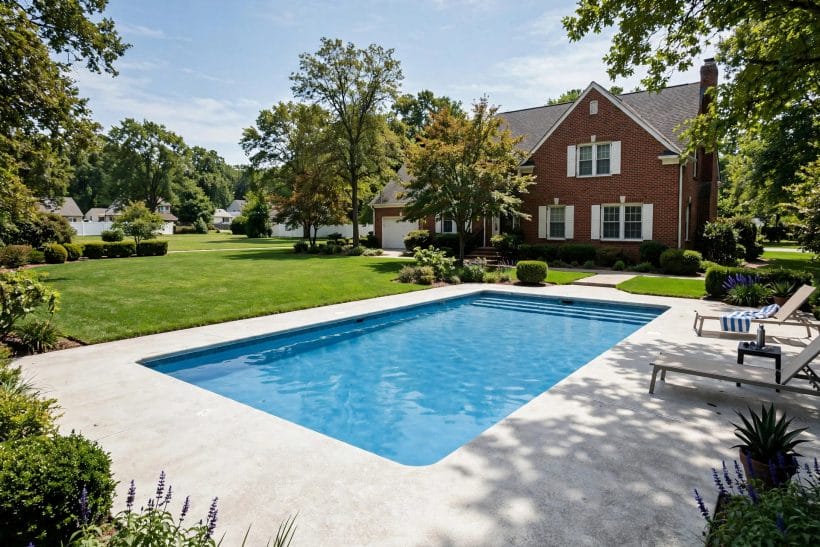
Place the rectangle on the garden’s main axis, aligned with the house, and let symmetry do the styling. A centred classic rectangle reads as calm from every window and needs almost no decoration: the proportion, the lawn panels either side and the water itself carry the whole design.
2. The formal courtyard rectangle
In an enclosed courtyard, run the pool wall to wall and treat it as a water room: pale coping, a clipped hedge or green wall behind, and seating at the short ends. The rectangle echoes the courtyard’s own geometry, so even a small version feels deliberate rather than squeezed in.
3. The estate-style long rectangle
A generous rectangle with wide surrounding paving is the traditional country-house layout, and its secret is restraint: one material for the surround, one row of planting, steps centred on the short axis. Space around the water is what makes it feel grand, not ornament on it.
4. The raised rectangle
Lift the pool so its coping sits at seat height and the walls become part of the garden’s furniture. A raised rectangle suits sloping ground, gives casual seating along both long edges, and keeps the waterline crisp and architectural against planting or a terrace.
5. The sunken rectangle
Set the water low in a terraced garden so the pool reads as a still canal between levels. Steps down at one end, a retaining edge planted above, and the rectangle becomes the calm middle storey of the garden rather than an object placed on it.
6. The rectangle against the house
Run one long side parallel and close to the house wall so the pool behaves like a moat of light along the facade. It reflects brightness into the rooms behind the glass, keeps the far garden free, and makes the swim from the terrace door feel like part of the house.
7. The end-of-garden rectangle
Push the pool to the far boundary and give it its own destination setting: a small terrace, a cabana wall or a pergola at the end. The walk to the water becomes part of the ritual, and the rectangle’s straight run suits the journey down the garden’s length.
8. The mirror-calm rectangle
Design for stillness: a dark interior finish, minimal fittings, no beach entries, and planting kept off the water’s edge. A plain rectangle with a dark floor turns into a reflecting plane that doubles the sky and the house — the quietest version of the shape.
3. Lap Pools and Long, Narrow Rectangles
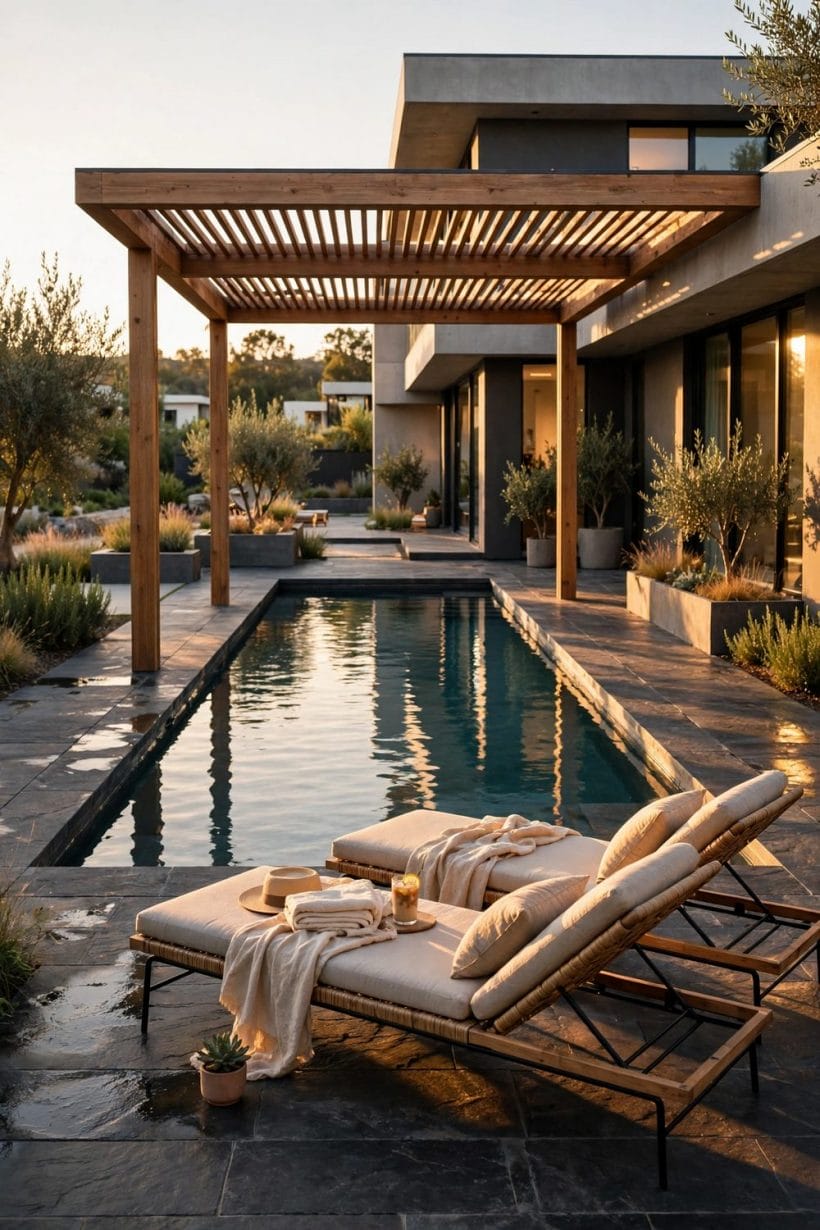
9. The single-lane lap pool
One straight lane, long enough for an uninterrupted stroke rhythm, is the swimmer’s rectangle. Keep the width modest, the floor markings minimal or absent, and the ends square: tumble turns and push-offs are what the shape is for, and every fitting should serve the swim.
10. The side-yard lap pool
The unused strip beside a house — too narrow for a lawn to mean anything — is exactly lap-pool shaped. A long narrow rectangle turns dead side space into the most-used part of the plot, with the house wall on one side and a planted boundary on the other.
11. The two-lane family swimmer
Widen the lap format so two can swim side by side, or one can swim while children play at the shallow end. The rectangle keeps the lanes honest and the play zone legible, which is why training pools and family pools so often share the same outline.
12. The lap pool with a lounging end
Give one short end a wide, shallow shelf and keep the rest of the length clear for swimming. The rectangle divides neatly into exercise and rest without any shape change: lengths in the lane, then a sit-and-soak finish at the sunny end.
13. The canal-style rectangle
Borrow the language of canals and rills: stone or brick-edged, very long, quite narrow, and planted formally along both sides. A canal-style rectangle suits traditional gardens where a conventional pool would jar, and its still surface carries reflections the whole length of the plot.
14. The indoor-outdoor lap line
Align a long rectangle so one end sits under a covered terrace or pool house and the rest runs into the open garden. Swimmers get a sheltered entry and a sunny length, and the straight line makes the building-to-garden transition look designed rather than accidental.
15. The narrow courtyard swimmer
In a walled town garden, a slim rectangle along one boundary leaves room for a terrace and planting while still offering a genuine swim. Proportion is everything here: keep the surround narrow but consistent, and let the water take the width the site can spare.
16. The lap pool as garden divider
Run a long rectangle across the plot to zone it: lawn and house on one side, orchard, studio or vegetable garden on the other. The water becomes a boundary you cross by bridge-step or at the ends — a working division that happens to be swimmable.
4. Small-Yard Rectangles
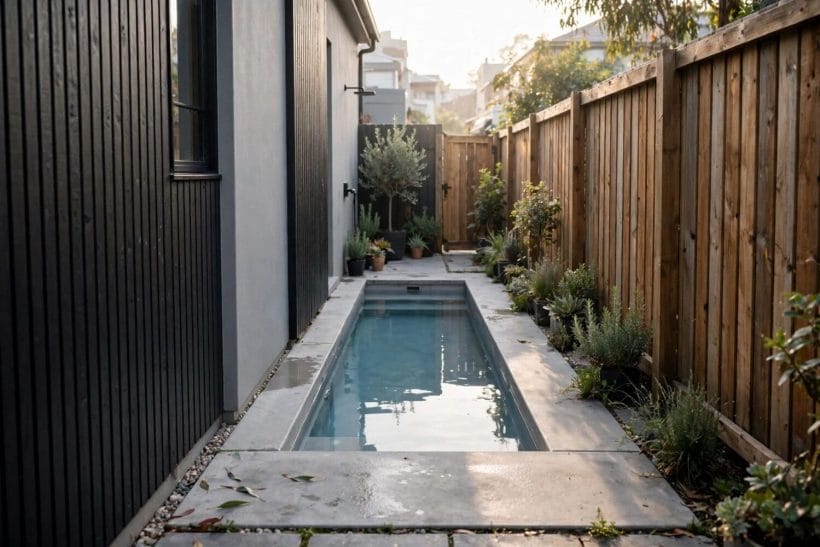
17. The plunge rectangle
A short, deep rectangle designed for cooling off rather than swimming: bench seating around the inside edges, an easy step in, and water deep enough to submerge to the shoulders. It delivers most of a pool’s pleasure on a fraction of a big pool’s footprint.
18. The cocktail-pool rectangle
Between plunge pool and swimmer sits the cocktail format: long enough for a few strokes, shallow enough to stand in with a drink. Add a perimeter bench and it becomes a social room of water — the rectangle that hosts rather than exercises.
19. The corner rectangle
Tuck the rectangle into the corner of the plot where two boundaries meet, and curve nothing: the straight edges sit flush against both fences, wasting no slivers of land. Planting in front of the fences softens the geometry and the corner becomes the garden’s cool focal point.
20. The terrace-edge rectangle
Build the pool tight against the terrace so the water begins where the paving ends. In a small yard this saves the duplicate circulation space two separate structures would need, and a raised edge doubles as seating for the terrace itself.
21. The rectangle with a deck cap
Cover part of a small rectangle with a deck platform — a sun deck over one end, storage beneath, or a section of decking that extends the terrace over the water. The rectangle accepts a straight deck edge cleanly, which curved shapes never quite manage.
22. The spool rectangle
Combine spa and pool in one small rectangle: jets and bench seating at one end, open water at the other. The straight plan zones the two uses without partitions, and the whole thing heats, covers and maintains more simply than two separate vessels.
23. The shaded-garden rectangle
Where a small garden is shaded by buildings or trees, a pale-finished rectangle borrows what light there is and reads as a bright court of water. Choose finishes for reflectivity, keep planting low at the edges, and the pool lifts the whole shaded space.
24. The rectangle that replaces the lawn
On a very small plot, give the entire rear garden to water and deck: a rectangle, a surround just wide enough to walk and sit, and planting in pots and raised edges. It is a decisive layout, and the straight shape is what makes it feel like a courtyard rather than a compromise.
5. Shelves, Steps and Benches Inside the Rectangle
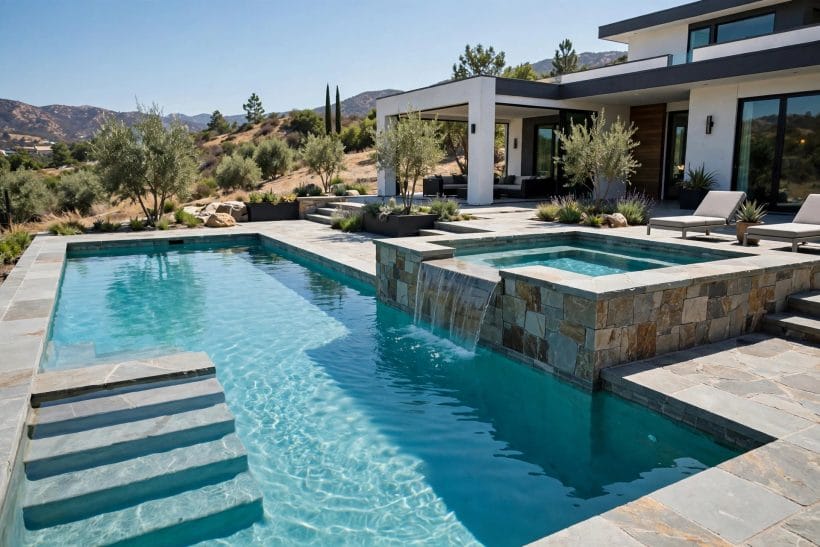
25. The full-width step entry
Steps spanning the whole short end give the rectangle a grand, gradual entry that suits children, older swimmers and anyone who prefers to wade in. The straight geometry keeps each tread even, and the top step doubles as a seat in the shallows.
26. The corner-step entry
Quarter-turn steps tucked into one corner keep the swim length clear while still offering an easy way in. It is the classic compromise for lap rectangles: the corner gives up a little water, the lane keeps its line, and entry stays graceful.
27. The baja shelf
A broad, very shallow shelf at one end — for loungers standing in the water, toddlers paddling under watch, or simply sitting cool — is the rectangle’s most popular interior feature. Its straight inner edge makes the depth change easy to read at a glance.
28. The perimeter bench
A submerged bench running along one or both long walls turns the pool into a conversation pit of water. On a rectangle the bench is one clean line, deep enough to sit with shoulders out, and it keeps socialising swimmers clear of the swimming lane.
29. The swim-out bench
At the deep end, a swim-out bench gives tired swimmers a resting ledge without leaving the water. Placed against the short wall it interrupts nothing, and on a rectangle its position is predictable for anyone swimming lengths with their eyes on the wall.
30. The beach-style graduated entry
A gentle ramped entry can be built into a rectangle’s end without breaking its outline, giving step-free access into the water. The slope takes more length than steps, so it suits longer pools, and the straight sides keep the ramp’s edges clean and visible.
31. The split-level interior
Two depths in one outline: a shallow family half and a deeper swimming half, divided by the feel of the floor rather than any barrier. Rectangles zone naturally along their length, and the change can be marked with a line of contrasting tile.
32. The tanning ledge with shade
Pair the shallow shelf with provision for shade — an umbrella sleeve set into the ledge or a pergola over the end — and the rectangle’s most social spot is also its most comfortable. Sun on the water, shade on the loungers: the straight end makes the arrangement simple.
6. Edges, Coping and Interior Finishes
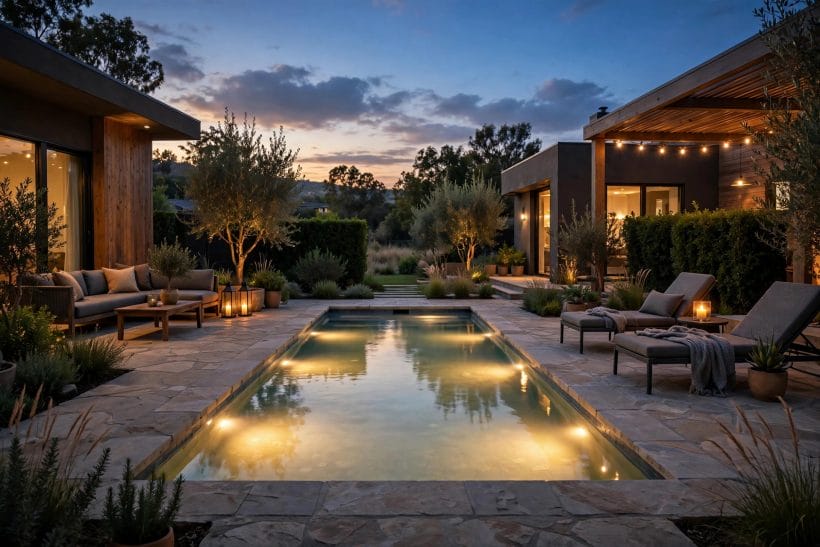
33. Pale stone coping
A wide, pale stone edge is the classic frame for a rectangle: cool to sit on, bright against the water, and forgiving of splashes. Keep the stones large and the joints few, so the frame reads as one calm line around the whole pool.
34. Dark coping for contrast
Dark slate or basalt-look coping sharpens a rectangle into a graphic statement, especially against pale paving and a light interior. It shows the water’s colour at its bluest and suits contemporary houses whose own lines the pool is echoing.
35. The flush deck-level edge
Where decking or paving runs level with the water’s edge, the rectangle becomes a sheet of water set into the floor of the garden. It is the most architectural treatment, and the straight perimeter keeps the junction between deck and water neat and honest.
36. The overflow edge
On one or more sides, let the water spill over a level edge into a hidden channel: the surface stays mirror-flat and the rectangle reads as a full brim of water. It is a serene, high-finish treatment that rewards the shape’s precision with perfect reflections.
37. Waterline tile bands
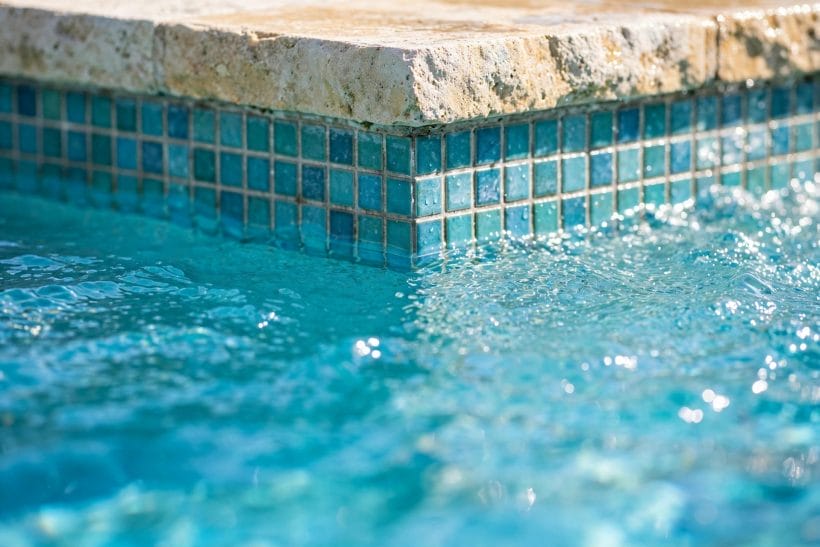
A band of tile at the waterline protects the finish where water meets air and gives the designer one precise stripe of colour. On a rectangle the band runs unbroken around all four sides — glass mosaic for shimmer, or large-format tile for calm.
38. Interiors in deep blue
A deep blue interior makes a rectangle look like natural deep water and flatters traditional settings. The colour intensifies along the length, so a long rectangle gains a gradient of tone from the shallow steps to the far wall.
39. Interiors in pale aqua
Pale aqua and white-based finishes give the bright, lagoon-clear water of resort pools and bounce light into the surrounding space. On a small rectangle this is the finish that makes the water — and the yard — feel largest.
40. Dark interiors for reflection
Charcoal and deep-green interiors turn a rectangle into a reflecting pool that happens to be swimmable. The surface mirrors sky and planting, the shape’s lines stay crisp, and the effect is at its best where the garden itself is worth reflecting.
7. Decking and Surrounds for a Rectangle
41. The full-perimeter surround
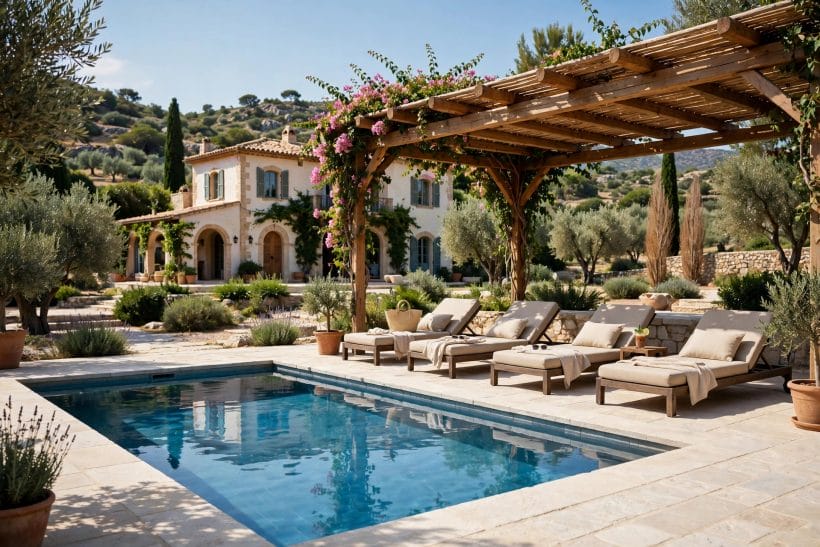
A consistent paving border on all four sides is the traditional frame and the most practical: room to walk, sit and maintain everywhere. Keep its width even — the rectangle’s discipline is that the surround should share the pool’s calm geometry.
42. The one-sided sun deck
Concentrate the terrace on the sunny long side and keep the other three sides slim. Loungers get the sun, the pool keeps a green edge opposite, and the asymmetry suits rectangles because the long side is where people actually gather.
43. Timber decking warmth
Boards laid parallel to the long edge lengthen a rectangle visually and bring a warm, barefoot-friendly surface to the water. Run the deck boards across the short dimension at the ends to close the composition, and the surround reads as one crafted platform.
44. The grass-edged rectangle
Let lawn meet a narrow stone mowing strip at the pool’s edge for the country-garden version: green right up to the water, with just enough hard edge to keep the line clean. It softens the geometry without giving up the rectangle’s order.
45. The gravel court surround
Gravel or bound-stone surrounds in a pale tone give a rectangle a Mediterranean court character and shrug off splashes. Contained by the same straight edging as the pool, the whole composition — water, stone, gravel — stays in one calm register.
46. Stepping-stone crossings
Where a path must cross the surround, carry it across the water itself on broad stepping stones at one end of the rectangle. It is a playful, photogenic device, and on a straight pool the crossing stones can be perfectly regular.
47. The raised deck at one end
A deck platform a step or two above the water at the short end creates a diving-off social terrace and a natural place for seating that overlooks the length. The rectangle’s end is a ready-made stage; the deck simply raises it.
48. Pergola shade along the length
A pergola over one long side gives the rectangle a shaded colonnade: part of the water in gentle shade, loungers out of the midday sun, and climbers adding green overhead. The long straight run is exactly the span a pergola wants.
8. Planting and Garden Borders
49. Clipped green structure
Formal rectangles ask for formal planting: clipped domes, hedges and cones that repeat the pool’s order in green. A few large, well-kept shapes beat a busy border, and their reflections complete the composition on the water.
50. Grasses for movement
Ornamental grasses along one long edge give a modern rectangle its softness: movement, sound and seasonal change against the still geometry. Keep them on one side only so the design tension — wild against straight — stays deliberate.
51. The Mediterranean border
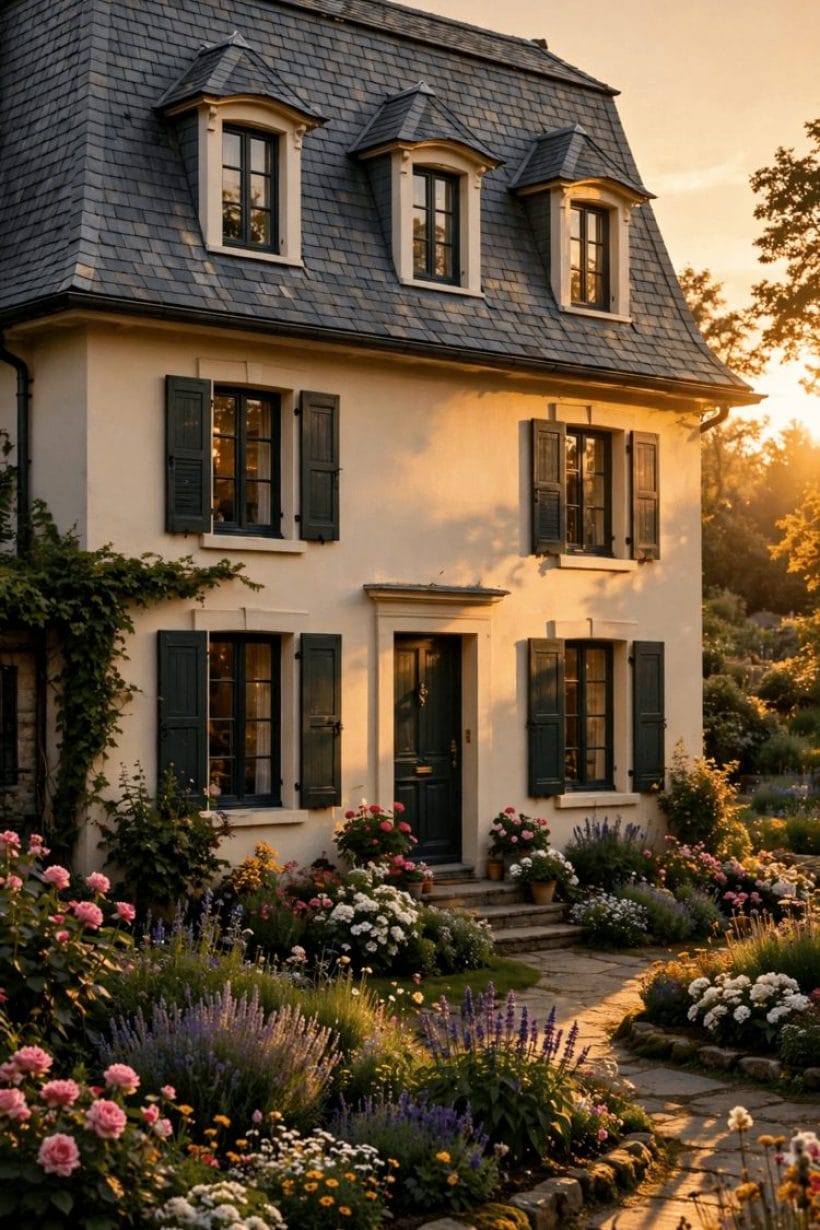
Lavender, rosemary and olive-toned planting suit a pale rectangle’s court character and tolerate the reflected heat of paving and water. Their grey-green foliage is the classic partner for aqua water and pale stone.
52. Tropical planting for enclosure
Big leaves — banana, canna, palms in pots or in the ground where climate allows — turn a rectangle into a hidden resort room. The lush disorder works because the pool’s shape supplies all the order the composition needs.
53. The hedge-backed rectangle
A tall hedge behind the far end gives privacy, wind shelter and a dark green backdrop that makes the water glow. On a rectangle the hedge line continues the pool’s own straightness, so the whole end of the garden reads as one green wall.
54. Pots and planters on the surround
Where beds are impossible, large pots at the corners and along the edges bring the planting to the water. Corner pots mark the rectangle’s geometry like full stops, and seasonal changes are as easy as swapping a container.
55. The lawn-panel composition
In a formal garden, mirror the pool’s rectangle in the lawn: equal green panels either side, a gravel or stone path on axis. The pool becomes one panel in a pattern of rectangles — water, lawn, water’s reflection — that has pleased designers for centuries.
56. Low planting at the water’s edge
Keep the planting nearest the pool low and loose — ground covers and soft perennials that will not drop debris into the water or crowd the coping. A clean edge and a green fringe is the balance every rectangle wants.
9. Light, Warmth, Covers and Safety
57. Underwater lighting lines
Lights set along one long wall wash the rectangle’s length in an even glow after dark, without glare in swimmers’ eyes. The straight wall takes a regular rhythm of fittings, and the pool becomes the garden’s evening centrepiece.
58. Lighting the surround, not the water
Low lights in the planting and along the surround leave the water dark and mirror-like while keeping paths and edges legible. For rectangles near the house this is often the more elegant night picture: a black glass panel in a lit garden.
59. Solar gain by orientation
A rectangle lets you aim the design at the sun precisely: long axis toward the afternoon light warms the water and the deck together, while a long axis across the sun suits hot climates where shade is the prize. Orientation is a decision only a straight pool makes this exactly.
60. Heating choices in general
Rectangles are the easiest pools to heat efficiently because covers fit them perfectly and their surface is simple to insulate. Whichever system is chosen — heat pump, solar or otherwise — the shape’s regular surface is what keeps heat in and running effort down; take installer advice for your climate.
61. The fitted safety cover
A cover made to the rectangle’s measure is the shape’s great practical gift: it spans without awkward gaps, carries safety ratings when specified for it, keeps debris out and heat in. Whatever cover is chosen, it must be used consistently and to its maker’s instructions.
62. Fencing that respects the lines
Where local rules require a barrier — and pool owners should check their own local rules carefully — a fence or wall aligned with the rectangle’s geometry keeps the design intact. Glass panels preserve the view of the water; a hedge-topped wall preserves the garden’s formality. Safety arrangements are never optional decoration.
63. Alarms and supervision
Covers and barriers support, but never replace, supervision: pool alarms that signal when the water is disturbed are a common extra layer, and households set their own clear rules for children and guests. State the rule simply — nobody swims unobserved — and design the seating so watching the water is comfortable.
64. Night checks and clear decks
Keep the surround’s walking lines clear: the rectangle’s straight edges make trip hazards easy to spot and remove. Toys, hoses and furniture drift are managed in minutes when the deck’s geometry is simple, and a clear deck is a safety feature in itself.
65. Winterising a rectangle
In cold climates the rectangle’s regular shape simplifies winter care: covers fit, water levels are easy to manage, and straight walls are simple to inspect. Follow your installer or pool professional’s winter routine for your system rather than improvising one.
10. Costs and Practical Checks
66. Why rectangles cost less to build
Straight walls are simpler to form, reinforce, tile and cover than curves, which is why the rectangle is usually the most economical route to a given area of water. The saving is structural honesty: the shape asks nothing of the builder that a curve would not ask twice.
67. Where the money actually goes
Excavation, structure, finishes, plant equipment, the surround and the cover divide the budget between them — and of these, the surround and finishes are where taste moves the total most. Decide the coping and deck standard early; they are the costs owners most often underestimate.
68. Size the rectangle to its use
Lengths for swimmers, shelves for loungers, depth for the household’s real habits: a rectangle sized to use rather than to the plot’s maximum is cheaper to build, heat and maintain, and usually looks better. Water nobody uses is the most expensive water in the garden.
69. Access for construction
Before falling for a layout, walk the route machinery and materials must take to reach the site. Rectangles often suit narrow access because their construction is conventional, but the check belongs at the start of the project, not the day the digger arrives.
70. Permissions and local rules
Pools commonly engage local planning, building and safety rules — setbacks from boundaries, barrier requirements, drainage and electrical standards among them. These vary by place and change over time, so verify the current position with your local authority and use qualified installers for regulated work.
71. Choosing an installer
Look for an installer who builds in-ground pools regularly, shows finished rectangles you can visit, and puts the structure, equipment and aftercare in writing. The rectangle is a standard product in the trade, which makes comparing like-for-like quotes easier than for any bespoke shape.
72. Filtration and plant placement
The plant — pump, filter, heater — needs a home: close enough to the pool for efficiency, housed against weather and noise. A rectangle’s straight plumbing runs are simple to plan, and a small plant enclosure at the pool’s end is the usual tidy answer.
73. Running costs in general
Energy for pumping and heating, water treatment and cover discipline decide the running total more than the pool’s shape — but the rectangle helps everywhere: covers fit, surfaces are simple to clean, and standard equipment does the work. Budget for maintenance as a routine, not a surprise.
74. Resurfacing and long life
Interior finishes have a service life and will one day need renewal; straight walls make that work simpler and quicker than on curved shells. Keep records of the finish and equipment from day one, and the pool’s long-term care stays a planned event rather than an investigation.
75. The rectangle as the forever pool
End where the shape began: a rectangle never dates, adapts to every garden style in this collection, and can be re-finished, re-edged and re-planted around for decades without its design expiring. Of all the decisions in this post, choosing the straight line is the one owners are least likely to revisit.
Final Considerations
The rectangle is the pool shape that trusts proportion instead of novelty, and it rewards that trust in every currency a pool can pay: cheaper to build true, easier to cover and heat, simpler to keep safe, and at home in a cottage garden or against a glass facade. Choose the proportion for the swimming you will actually do, frame it with one calm material, plant it with restraint, and settle the safety arrangements before the first swim — the straight lines will do the rest, for a very long time.

0 Comments