

Zen design and the tiny house were made for each other: the calm, the empty, the intentional. A philosophy built on simplicity, natural materials, soft light and order meets the home that already has no room for anything else. This guide walks the whole practice — principles, palette, rooms, garden, declutter, rituals — and the serenity small spaces do best.
Zen Interior Design: At a Glance
Zen interior design is less a decorating style than a way of deciding what earns its place. Four principles run through everything in this guide: simplicity, nature, light and order. From them flow the warm neutral palette, the honest materials — wood, stone, bamboo, linen — and a room-by-room method that suits a tiny house because the tiny house is already halfway there: edited by necessity. The sections follow the practice in order — principles, the rooms, the tiny garden, decluttering and the ten commandments, the office and the invisible elements, art and rituals, mistakes, cost and wabi-sabi, the tea space, the seasons — closing with the breath of the space and the payoff: calm, clarity and deep rest.
| Topic | What It Covers | Key Fact or Figure |
|---|---|---|
| 1. The Principles | Simplicity, nature, light and order — plus the palette and the honest materials | Warm neutrals; wood, stone, bamboo and linen |
| 2. The Living Room and the Bedroom | Low grounded seating, the platform bed, clear surfaces | The bedroom is the temple of rest |
| 3. The Bathroom, the Kitchen and the Entryway | The spa ritual, the clear counter, the threshold pause | The entryway sets the Zen |
| 4. The Tiny Zen Garden | Raked sand, placed stones and moss at tray scale | The garden is the mind, raked |
| 5. Decluttering and the 10 Commandments | The essential-only edit and the ten rules that hold it | Keep the loved and the used |
| 6. The Office, Light, Sound and Scent | The clear desk, shoji-filtered light, protected quiet | Light is designed, not accidental |
| 7. Art, Objects and the Daily Rituals | One contemplative piece; the morning and evening resets | The fewer, the deeper |
| 8. Mistakes, Cost and Wabi-Sabi | The cold, the barren and the fake — and the honest budget | The $500 refresh; the visible change in a weekend |
| 9. The Tea Space, the Reading Corner and the Seasons | The chabudai, the one chair, the rotated seasonal object | One object, rotated with the season |
| 10. The Breath of the Space and the Payoff | The daily inhale and exhale; calm, clarity and rest | Zen is the health, designed |
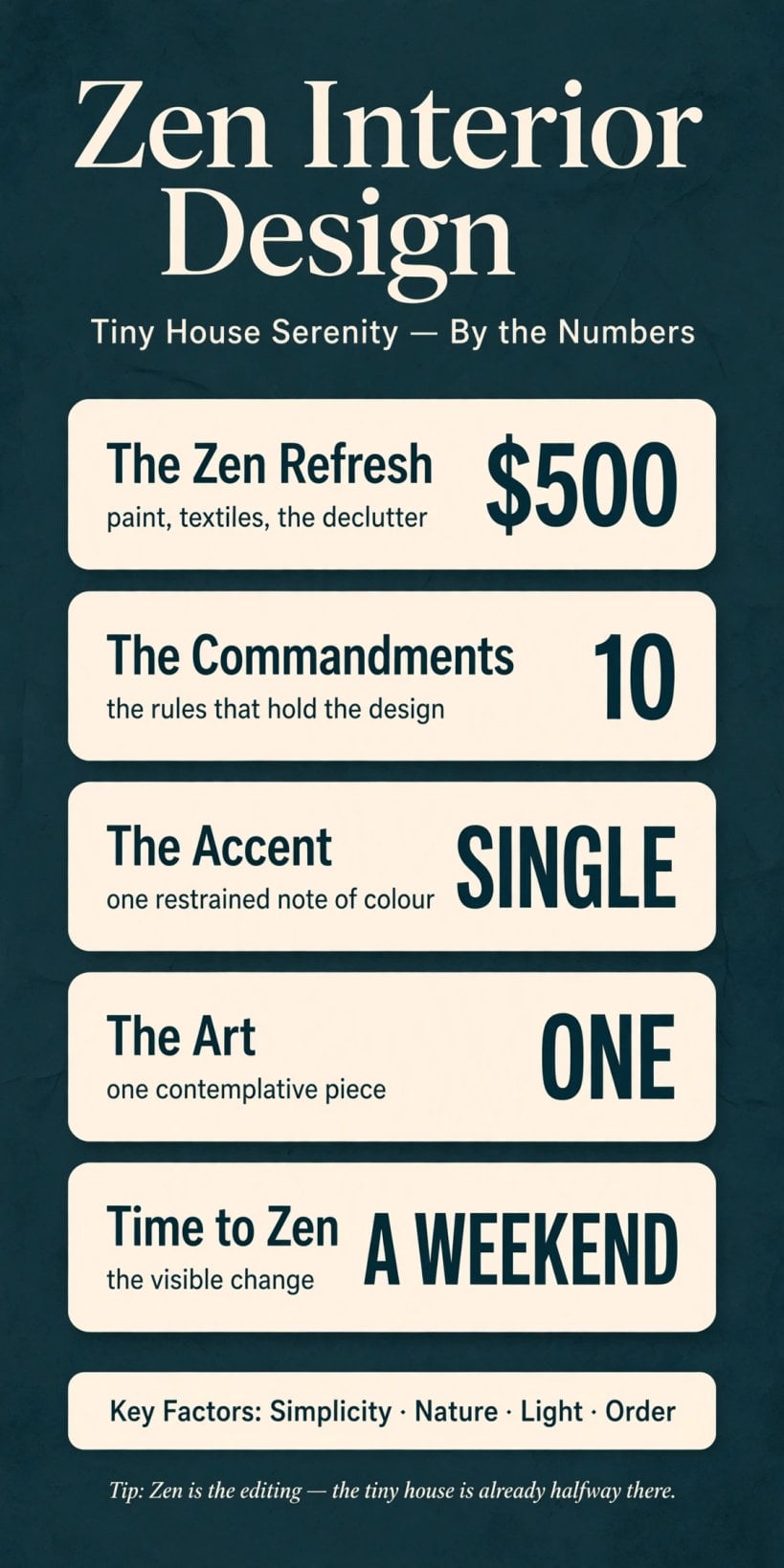
The calm by the numbers: a $500 refresh of paint, textiles and decluttering, 10 commandments that hold the design, a single restrained accent, one contemplative piece of art — and the visible change inside a single weekend.
1. The Principles: Simplicity, Nature, Light and Order
Four principles carry the whole design. Simplicity: the essential — and only the essential. Nature: the materials, honest ones. Light: soft and diffused, never harsh. Order: a place for everything, and everything in it. That is why the original calls Zen the tiny philosophy itself — the tiny house does not adopt these rules as a theme; it already lives by them, and the design simply makes them deliberate.
The palette is the principles made visible. Build on the warm neutrals — whites, beiges, soft grays and earth tones, the colours of nature — grounded by the tones of stone and sand. Against that calm ground, allow a single accent, restrained: one note of colour, not a chorus. The rule is that the palette breathes; a serene room is one where the eye is never asked to hurry. The materials follow the same honesty: wood for the natural and the warm, stone for the grounded and the solid, bamboo for the light and the flexible, linen for the soft and the natural. Honest materials are the rule — nothing pretending to be something else.
Two questions belong here, because both are about foundations. What colours are Zen? The warm neutrals above, with the single restrained accent — the palette is the calm, the colours of nature. And what is the difference between Zen and minimalism? Minimalism is the aesthetic of less; Zen is the philosophy of presence. A Zen home may hold the meaningful many, arranged with intention — the minimal counts, the Zen feels. Our guide to minimal interior design ideas for tiny houses explores the neighbouring aesthetic; the Zen path adds warmth, nature and ritual to the same edited bones.
2. The Living Room and the Bedroom
The Zen living room sits low. Seating stays grounded — low pieces that keep the body close to the floor and the room’s sightlines open. Around them, empty space is not a gap to fill but a value in itself: the room keeps its breathing room on purpose. Art is singular — one piece, contemplative, given the wall and the attention. And the light is soft and diffused, so the room glows rather than glares. The result is a living room that asks nothing of you, which is exactly what a living room in a tiny house must do. More small-room composition ideas live in our guide to living room interior design ideas for tiny houses.

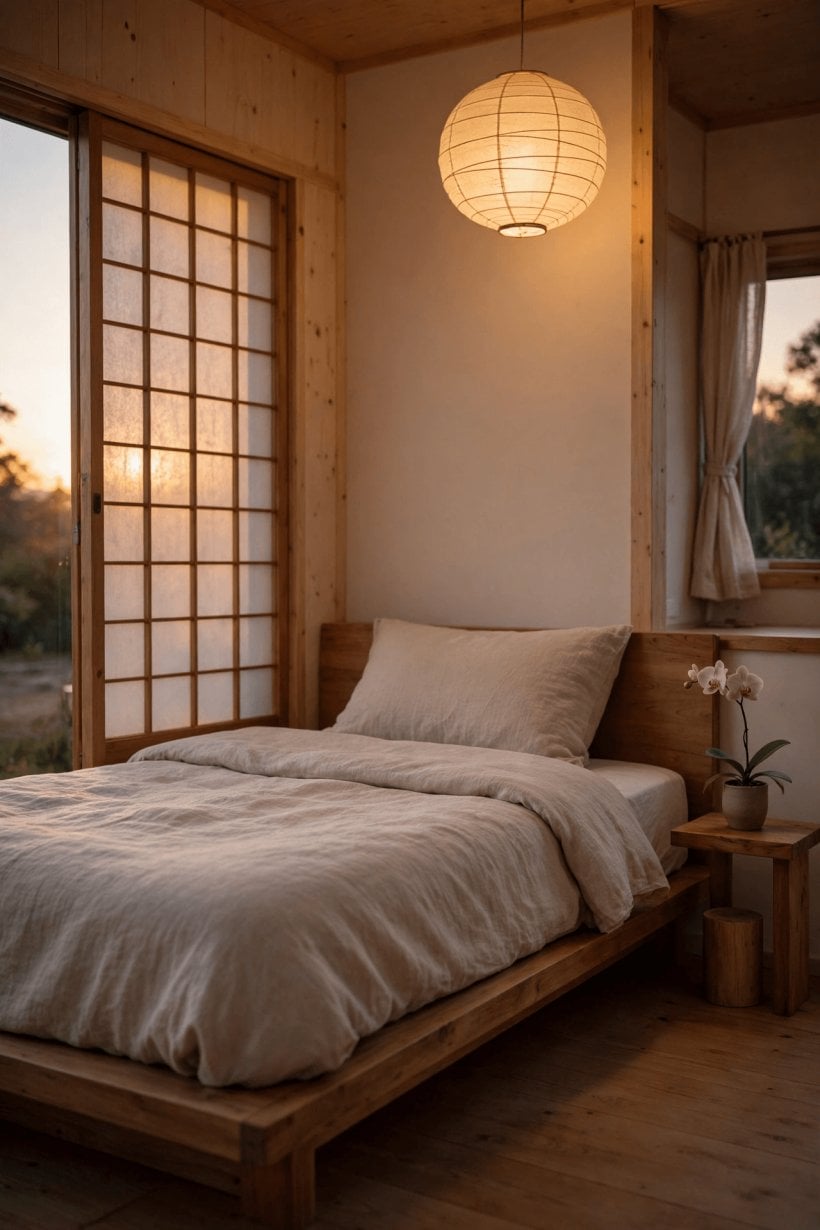
The bedroom takes the same rules deeper, because the bedroom is the temple — the room of rest. The bed is a platform: low and grounded, close to the floor. The linens are natural, chosen for calm rather than pattern. The surfaces stay empty and clear, so the last thing the eye meets at night is nothing at all. In a tiny house the bedroom is often a loft or a corner rather than a room, which makes the discipline more valuable, not less: a low bed, natural bedding and cleared surfaces turn even a sleeping nook into that temple.
3. The Bathroom, the Kitchen and the Entryway
The Zen bathroom is a spa — not as luxury, but as ritual, daily. Its materials are the natural elements, stone and wood; its light is soft and serene. The truth the original gives it: the Zen bath restores, because the ritual restores — the daily wash done slowly, in natural materials, in gentle light. The wet-room planning behind a bathroom this small is covered in our guide to tiny house bathroom designs that actually fit.
The Zen kitchen serves calm. The counters are clear — empty, like the living room’s surfaces. The appliances are hidden, stored away rather than displayed. The materials stay natural: wood and stone, the elements again. And the kitchen holds a ritual of its own: tea, made mindfully. The rule sums it up: the kitchen serves calm, the prepared — a room ready for cooking because nothing in it is shouting. Our tiny house kitchen design guide works through the layout and storage that make clear counters possible. The entryway, finally, is the transition: the threshold, the pause. It needs only the simple — a bench, a hook, the enough — and the natural welcome of a plant and a stone. Small as it is, the entryway sets the Zen for the whole home: the first breath inside is taken there.
4. The Tiny Zen Garden
Every Zen home keeps a garden, and the tiny house keeps it tiny: a tray garden. The sand is raked — the meditative act itself — into quiet patterns. The stones are placed, contemplative, few and deliberate. The moss is the green, the alive note against the pale sand. The scale is the tray, made for a windowsill or a shelf, and the truth of it is the section’s heart: the garden is the mind, raked. Tending it is not decoration; it is the meditation — a small rake, a small home, a few slow minutes.
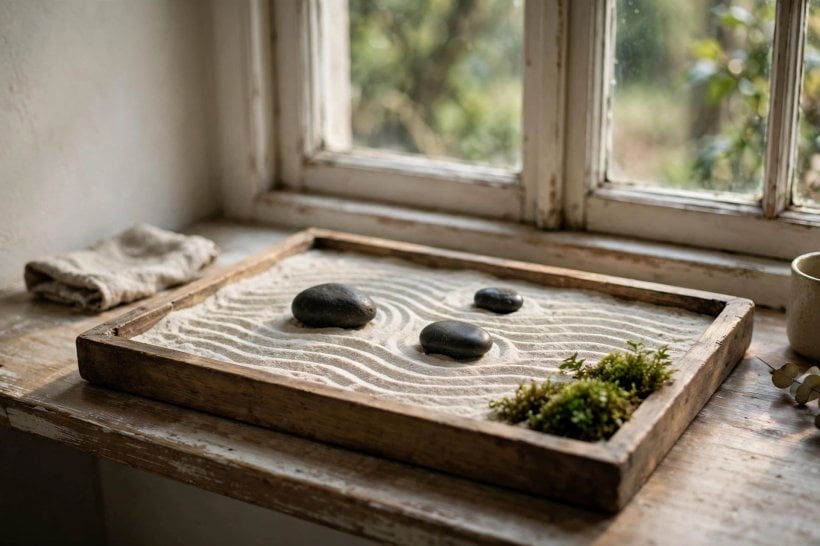
The plants question belongs with the garden: what plants are best for a Zen home? The simple greens — bamboo, moss, the single orchid. Choose the easy-care and the architectural: a plant that holds a clean shape and asks little. The Zen plant is the quiet companion — one, beautiful, well-placed, rather than a crowd competing for the light. The same raked-sand discipline at full garden scale is the subject of our guide to creating a Japanese zen rock garden; the tray is its tiny-house form, the whole landscape held in two hands.
5. Decluttering the Zen Way and the 10 Commandments
Decluttering is the Zen practice — the ongoing one, the engine under everything else in this guide. It begins with a question: the essential — the only test an object must pass. The method is by category, and complete: gather the whole category, judge it whole, rather than nibbling room by room. What is kept is the loved and the used — the intentional remainder. What goes is released the grateful way: thanked, and let go. And the practice is maintained daily, in the reset that returns the home to itself. How do you create a Zen tiny house at all? The FAQ’s answer is this section in one breath: simplify to the essential, choose natural materials, keep the neutral palette, maximize the soft light, and give everything its place — Zen is the editing, and the tiny house is already halfway there.
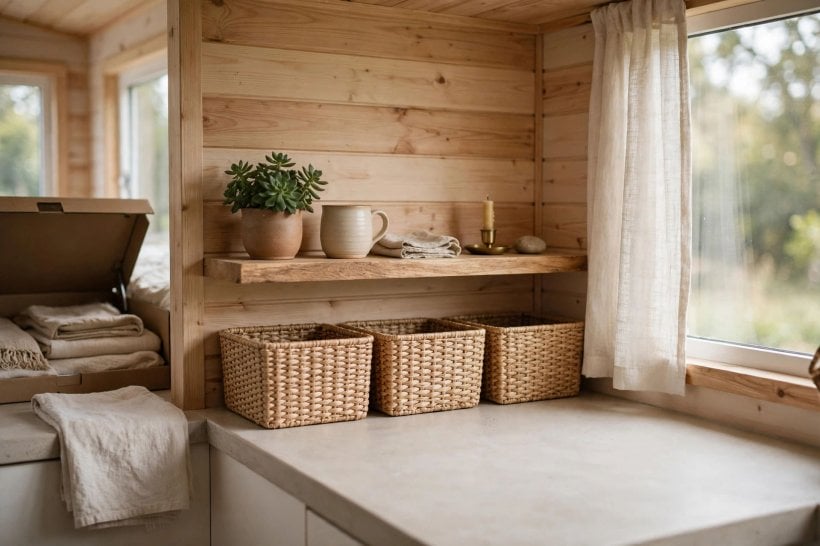
The ten commandments hold the practice together, and they are worth stating whole: simplify to the essential; choose the natural; keep the neutral; soften the light; clear the surfaces; value the empty; place everything; honor the materials; slow the eye; breathe in the space. The remaining questions gather here too. To make a small space feel Zen: clear the surfaces, lower the visual noise, add the natural textures, soften the light, and leave the empty space — the feeling is the calm of less. Zen furniture is the low, the simple, the natural: platform beds, low tables, floor cushions — honest forms, nothing extra. Can a family home be Zen? Yes — Zen is the system, not the emptiness: hidden storage, the daily reset, edited belongings. With kids, the same systems carry it — edited toys, calm zones — and kids thrive in the calm order. Storage and order systems for the whole home are collected in our tiny house and small-space interior design hub.
6. The Zen Office, Light, Sound and Scent
The Zen office is a desk, cleared. The desk is empty — the clear surface again — so the work begins from calm rather than clutter. Attention follows the same rule as objects: the one, the single task, the focused. The material is natural wood, the calm surface. And the view, where the office can claim one, is the garden — the contemplative outlook that rests the eye. The truth: the Zen office focuses, because it is clear.
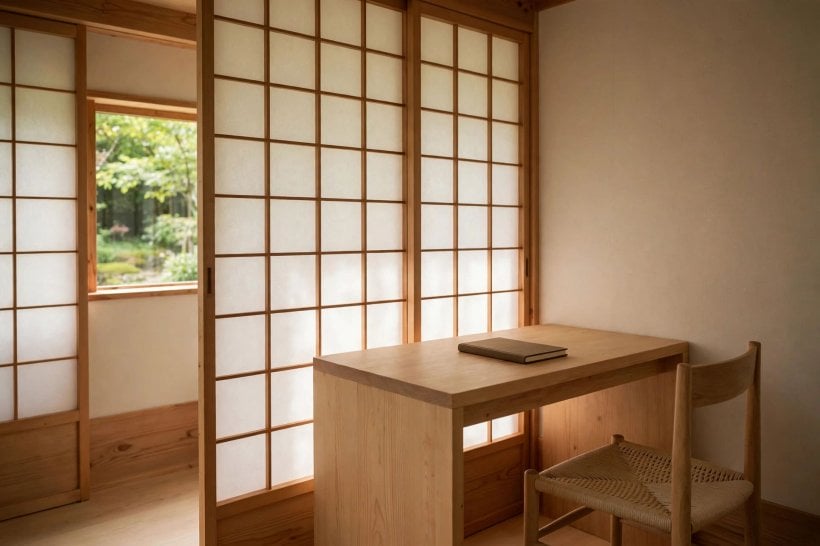
Light is the Zen element — designed, never accidental. Natural light is maximized, but kept soft; diffused through the shoji, the filtered glow that flattens no one and hurries nothing. Evening light turns warm, the glow that lowers the day. And shadow is valued, not banished: shadow is the depth that makes the light legible. Beyond light sit the invisible elements. Sound: the quiet, valued and protected, with the natural sounds — water, wind — the ones allowed in. Scent: the subtle, the hinoki note, present without announcing itself. The truth of the invisible Zen is that it designs what is felt rather than seen — and a tiny house, where nothing is far away, feels it most.
7. Art, Objects and the Daily Rituals
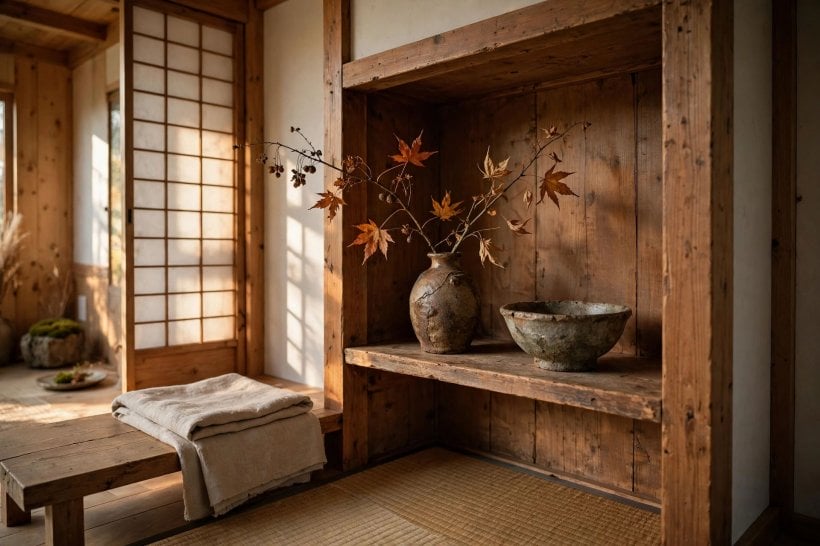
Zen art obeys the rule of one: the single piece, the contemplative — one work given a whole wall’s silence. Its formal home is the tokonoma, the alcove, the displayed place set apart for the one object. What stands there is seasonal, rotated as the year turns, and handmade — the wabi-sabi object, honored for its unevenness. The rule governs all of it: the fewer, the deeper. Our guide to tiny house decorating ideas covers the finishing layer across the whole home; the Zen version of decorating is this restraint — one object, fully seen.
The rituals are where the design becomes a life. Morning: the surfaces cleared, the day begun from order. Tea: the mindful pause at the day’s middle. Evening: the reset, the calm restored before sleep. The garden: raked, the meditation in miniature. None of these takes long; all of them compound. The truth the original gives them is the guide’s refrain: the rituals are the Zen — the lived. A room can be arranged in a weekend; the daily reset, the mindful tea and the raked sand are what keep it Zen afterwards.
8. Mistakes, Cost and Wabi-Sabi
The mistakes are four, and each is a way of missing the warmth. The cold: stark and unwelcoming, all restraint and no welcome. The empty: barren and soulless, where editing removed the life along with the clutter. The rigid: the museum, unlived — a room too precious to use. The fake: the themed, the inauthentic — Zen as costume rather than practice. The rule that corrects all four: Zen is the warmth, the lived. A Zen tiny house should look inhabited by a calm person, not staged by a careful one.
The cost question surprises people: how much does Zen design cost? Less than most — the editing is free, the natural materials are affordable, and the simplicity saves. The $500 Zen refresh — paint, textiles, the declutter — transforms a room; the original calls Zen the cheapest luxury, and the figure backs it. How long does it take? The weekend for the visible — declutter, paint, textiles — and the season for the deep: the habits, the rituals. The practice deepens with the living. And wabi-sabi completes the philosophy: the crack joined in gold, honored rather than hidden; the worn patina, the story; the handmade, uneven and human; the aged and weathered, beautiful. The imperfect is the perfect — the Zen of things as they are.
9. The Tea Space, the Reading Corner and the Seasons
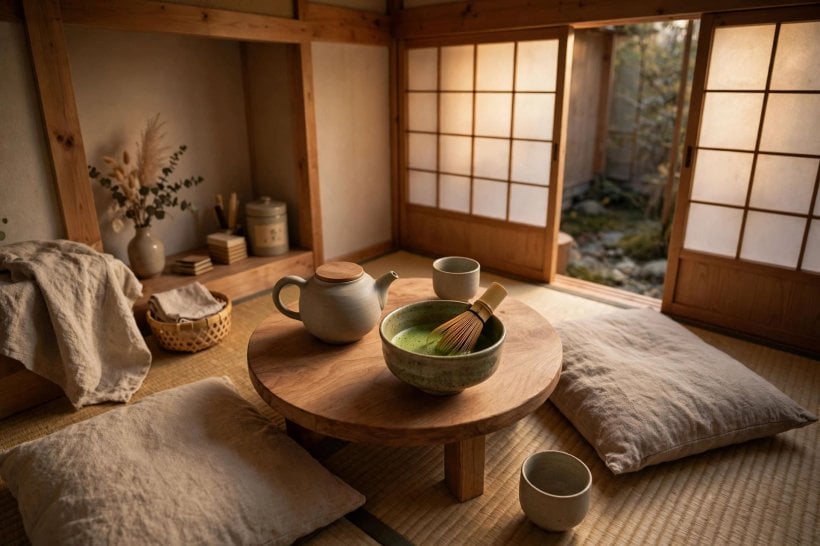
The tea space is the Zen heart, the daily one. Its furniture is the low table — the chabudai, the centered — and the cushions, the zabuton, the seated place around it. The ritual is the whisked tea, the mindful preparation that slows the hands and the mind together. In a tiny house the tea space need not be a room: a corner, a low table, two cushions, and the daily ceremony has its home.
The reading corner is its quiet sibling: the chair — the one, the comfortable — the soft warm light beside it, the books few and loved rather than many and unread, and the quiet protected, treated as sacred. The corner restores; that is its whole job. And over both spaces, the seasons turn: spring’s blossom, the renewal; summer’s green, the full; fall’s maple, the fire; winter’s bare, the essential. The home marks them with the object — the one piece from §7, rotated with the season, the mindful change that keeps the same room new four times a year. The Zen home seasons, mindfully, rather than decorating all at once and forgetting.
10. The Breath of the Space and the Payoff
A lived-in Zen home breathes on a daily rhythm. The inhale is the morning, the opened — windows, light, the home waking. The exhale is the evening, the settled — the reset done, the day released. Between them sits the pause, the noon, the noticed moment when the home is simply seen. The truth: the space breathes, the lived. The threshold is where the breath is taken consciously — the pause at the door, the breath itself; the shoes left, the outside shed; the calm entered, the inside received. The threshold is the Zen, the daily — the smallest ritual and the one performed most often. The evening descent closes the rhythm: the lights dimmed and lowered, the last tea, the unwinding, the surfaces cleared in the reset. The evening descends, and the home goes quiet in order.
The payoff is why any of this matters. The calm: the nervous system, settled. The clarity: the mind, focused. The rest: the deep, the restored. The joy: the simple, the enough. The truth the original ends on: Zen is the health — the designed. The invitation is equally plain: simplify, soften, breathe — the Zen awaits.
Final Considerations
Zen interior design is the tiny house’s natural philosophy — simplicity, nature, light and order, carried through every room, ritual and season in this guide. The calm is designed: the edited, the natural, the serene. Keep the surfaces clear, the materials honest, the light soft and the rituals daily, and the tiny Zen home becomes what the original promises — the most peaceful of all.


2 Comments