

The bedroom is the smallest room in the tiny house and the one that matters most: it is where every day ends and begins. Loft or main-floor, its whole design serves a single purpose — deep, nightly rest. This guide gathers the layouts, the storage, the light and the rituals that make a tiny bedroom sleep big.
Small Bedroom Interior Design Ideas: At a Glance
Start where the original starts: small bedroom interior design ideas for tiny houses are the rest made designed. The rested sleeper is the nightly constant — restored every morning; the cozy room is the enveloped one — loved, not merely small. One rule governs everything that follows: the bedroom restores the tiny. The ten sections below walk the original’s own order — the layout choice, the hidden storage, the light and the bedding, the rituals of morning and night, the ten commandments, the textures, the dark and the quiet, the mistakes, the air — and end with the payoff of a thousand rested nights.
| Topic | What It Covers | Key Fact or Figure |
|---|---|---|
| 1. The Layout Choice | Loft vs main-floor, fitted to body and life | The loft saves space; the main-floor saves knees |
| 2. Hidden Storage | Under-bed drawers, built-ins, the capsule wardrobe | The storage hides — the bedroom rests |
| 3. Light and Bedding | Dimmed sconces, the skylight, layered bedding | The queen is the standard fit |
| 4. Morning and Night | The two rituals that frame the sleep | The skylight wakes; the sconce dims |
| 5. The 10 Commandments | The ten rules of the tiny bedroom | 10 commandments |
| 6. Nook, White and Wood | The reading corner, white bedding, warm walls | White bedding washed weekly |
| 7. Rug, Blackout and Sound | Soft landings, true dark, quiet walls | The blackout is the sleep |
| 8. Mistakes to Avoid | The dark, the cluttered, the hot | The bedroom forgives the planned |
| 9. Air and Moisture | Ventilation, cooling, condensation control | The operable skylight, the fan, the cross-breeze |
| 10. The Payoff | From the first sleep to the thousand nights | A thousand nights of proof |
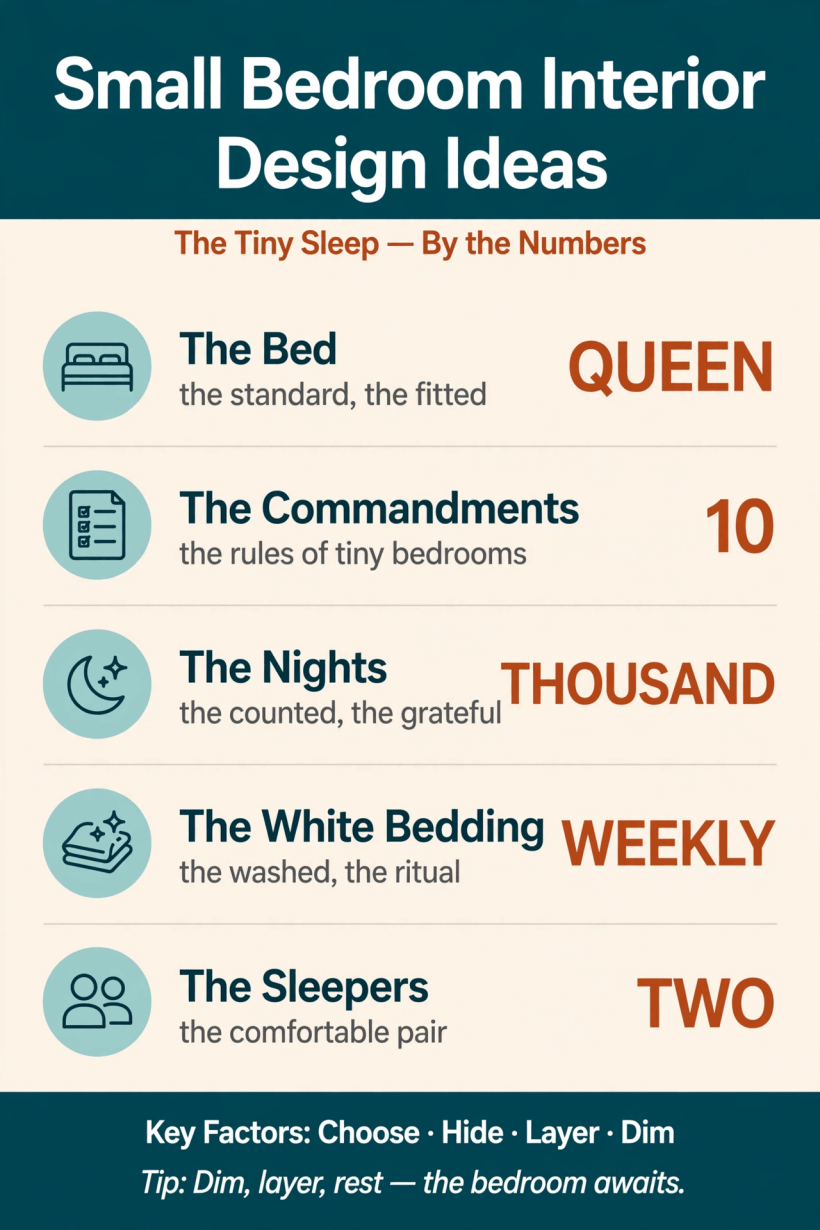
The tiny sleep by the numbers: the queen bed as the standard fit, ten commandments, a thousand counted nights, white bedding washed weekly — and two sleepers, comfortable.
1. The Tiny Bedroom Concept: Loft or Main-Floor?
The tiny bedroom begins as a concept before it becomes a room. The rested is the nightly — the restored: sleep is not what is left over after the day, it is the point of the room. The cozy is the enveloped — the loved: smallness, designed well, wraps rather than squeezes. The rule: the bedroom restores — the tiny. The wider bedroom picture is gathered in our general guide to bedroom interior design ideas for tiny houses; this guide is the small bedroom’s own manual.
How do you design a small bedroom in a tiny house? The original’s answer is the whole guide in one line: the loft or main-floor, the storage hidden, the light dimmed. The designed is the rested: the small space, the big sleep. The loft is the climbed — the ladder, the nightly; the low — the ceiling, the cozy. It spends no floor area at all: the bed floats above the living space, the ceiling low enough to feel like a nest. The rule: the loft sleeps — the tiny. The main-floor bedroom trades the opposite way: the private — the doored, the quiet; the accessible — the no-climb, the easy. It spends precious floor and buys back level access, a door that closes, and a room that serves the many. The rule: the main-floor serves — the many.
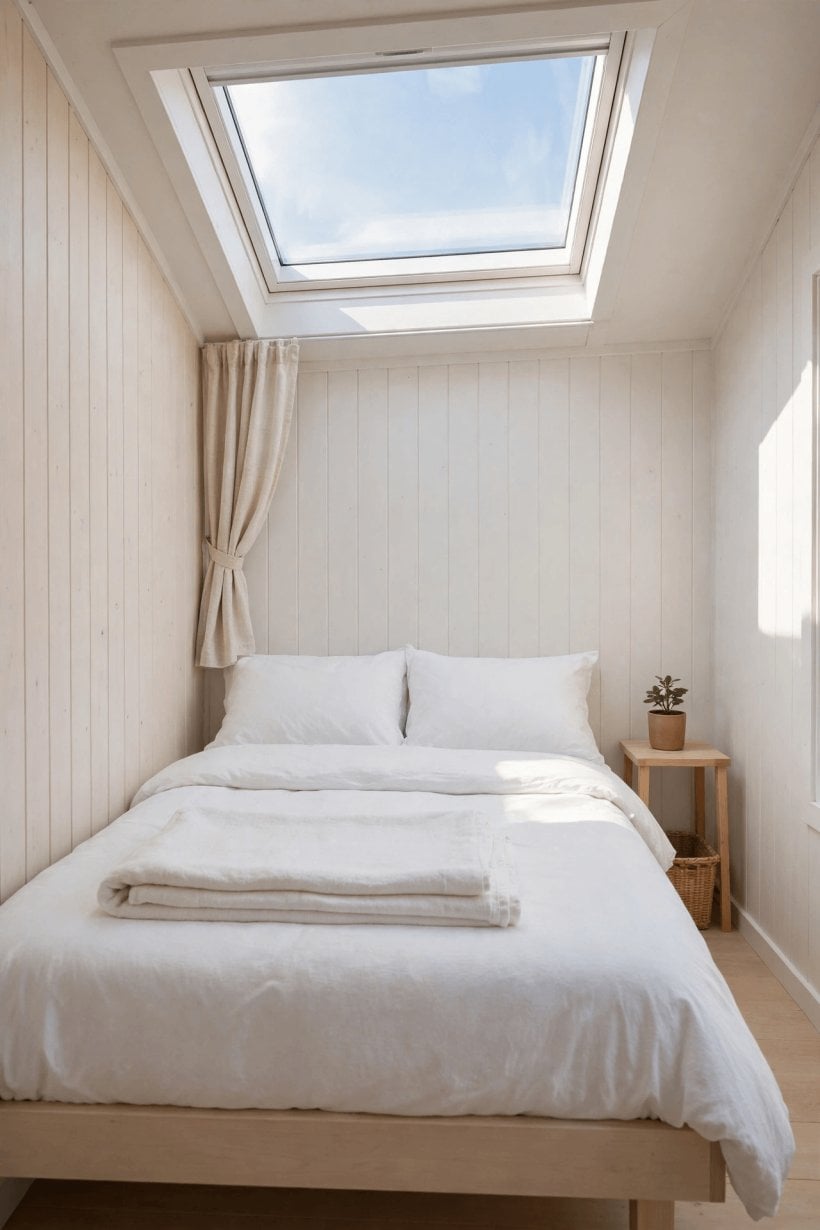
Loft or main-floor — which is better? The original refuses to crown one: the loft saves space; the main-floor saves knees. The better is the fitted: the body, the life. Can two people sleep comfortably in a tiny bedroom? Yes — the queen, the arranged, the loved. The comfortable is the designed: the space, the sleep. And the loft’s one real complaint has its own answer: how do you make a loft feel less claustrophobic? The skylight, the light colors, the minimal. The less is the opened: the air, the light — a loft with sky above it and pale walls around it feels like a perch, not a shelf.
2. Hidden Storage and the Edited Wardrobe
A tiny bedroom has no spare volume, so its storage disappears. The under-bed is the drawers — the hidden: the largest block of storage in the house sits beneath the mattress, working invisibly. The wardrobe is the built-in — the slim: a shallow, fitted cabinet that takes the wall’s measure instead of fighting it. The rule: the storage hides — the bedroom. Rest is hard to find in a room that looks like a warehouse. Built-ins planned with this discipline are the same craft our guide to apartment interior design ideas for tiny houses draws from city studios.

How do you add storage to a tiny bedroom? The under-bed, the built-in, the vertical. The added is the hidden: the walls, the bed. Drawers under the bed for the bulky and seasonal; built-ins for the daily; the vertical for everything the floor cannot hold. The wardrobe is then edited to fit its slim home: the slim is the built-in — the curated; the capsule is the few — the loved. A capsule wardrobe is curation, not deprivation — the clothes that remain are the ones actually worn. The truth: the wardrobe is the edited — the tiny. Rooms that must store, sleep and host in turns are designed the same way in our home office and guest room guide.
3. Lighting and Bedding: The Layers of Rest
The bedroom’s light is designed for two moments: the last hour and the first. The sconces are the read-by — the dimmed: wall lights at the pillow, warm and low, close enough to read by and gentle enough to fall asleep under. The skylight is the stars — the woken: by night it frames the sky, by morning it delivers the sun. The rule: the light soothes — the sleep. Nothing here glares from overhead; every source can be dimmed or slept under.
The bedding is the room’s soft architecture. The layered is the textured — the inviting: sheet, blanket, throw — layers that adjust the night’s temperature one fold at a time. The simple is the made — the daily: a bed made every morning in under a minute, because the making is part of the ritual. The rule: the bedding beckons — the rest. What size bed fits a tiny house? The queen — the standard, the fitted. The fitted is the measured: the loft, the room. Measure the platform and the ceiling above it — then the queen earns its place. Bedroom deeper, as the original puts it: our DIY-friendly tiny house plans and super-affordable tiny homes are its own recommendations.
4. The Morning and the Night
The tiny bedroom keeps two ceremonies a day, and they bookend everything. The morning: the woken is the skylight — the sun, daylight arriving directly over the bed. The stretched is the small — the grateful: the first stretch in a room sized exactly to its purpose. The truth: the morning is the gift — the tiny. A bedroom this close to the sky makes waking a pleasure.
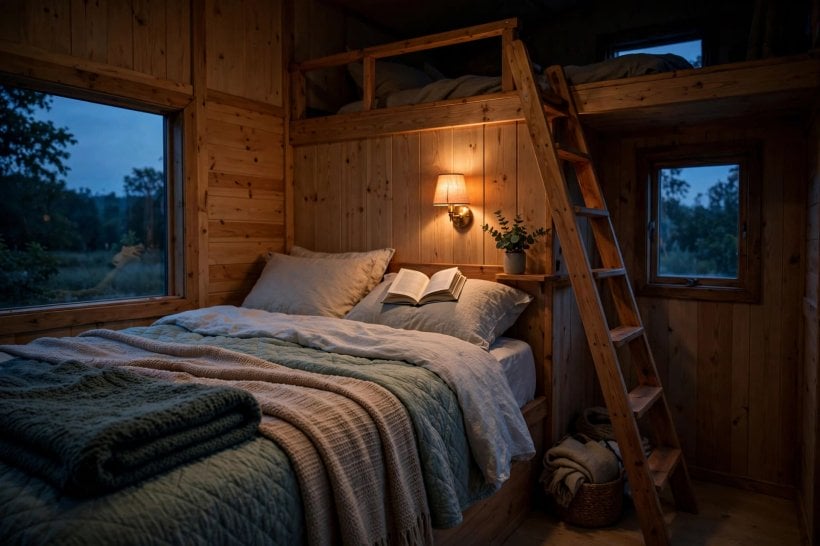
The night is the mirror ceremony. The climbed is the ladder — the ritual: the same climb every evening, a small ascent that tells the body the day is over. The dimmed is the sconce — the book: one chapter at low light, the house quiet below. The truth: the night is the reward — the tiny. Design the climb safe, the light warm and the book close, and the bedroom’s smallest hours become its best.
5. The 10 Commandments of Tiny Bedrooms
The original compresses the whole bedroom into ten imperatives — reproduced here verbatim, because each one is a section of this guide in miniature:
- Choose the loft or main.
- Hide the storage.
- Layer the bedding.
- Dim the sconces.
- Open the skylight.
- Warm the wood.
- Soften the rug.
- Quiet the walls.
- Rest the nightly.
- Dream the deep.
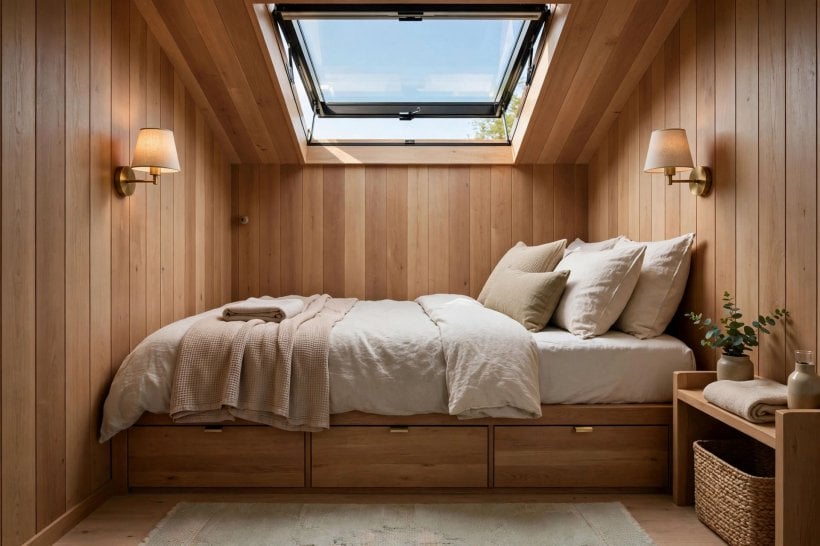
Read them as a system, not a shopping list. The first chooses the architecture; the second and third hide the machinery of living; the fourth and fifth govern light, by lamp and by sky; the sixth and seventh warm the surfaces the body touches; the eighth protects the quiet; and the last two are the outcome the other eight exist to produce. A tiny bedroom that keeps all ten rarely feels tiny — it feels finished.
6. The Reading Nook, the White Bedding and the Wood Walls
Three textures give the tiny bedroom its character. The reading nook is the smallest: the corner is the cushioned — the lit, one seat’s worth of padding under one good light; the book is the nightly — the chapter. The truth: the nook is the ritual — the bedroom. It needs no floor of its own — a bed corner, a window seat, a cushion on the loft edge — only the agreement that this is where the chapter happens.
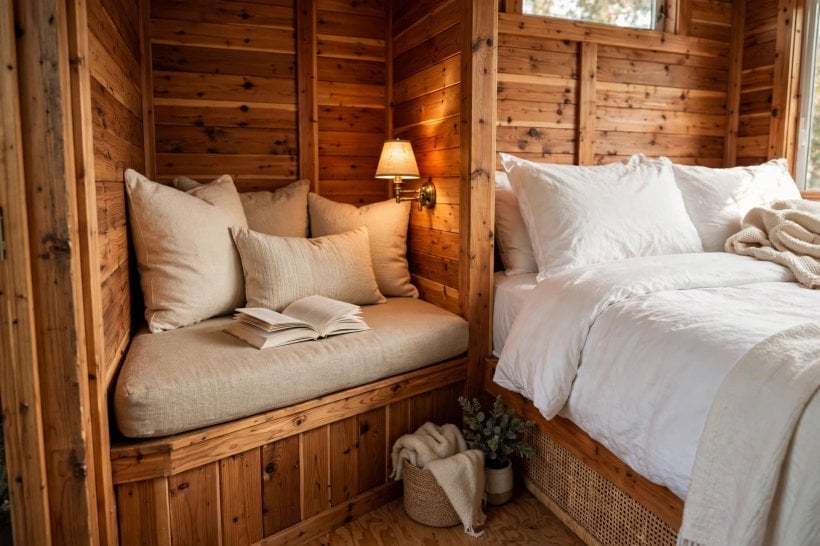
The white bedding is the room’s calm made visible: the crisp is the hotel — the calm; the washed is the weekly — the ritual. White shows everything, which is precisely its discipline: washed weekly, it turns a small bed into the serene center of the room. The truth: the white is the serene — the bedroom. Around it, the wood walls do the warming: the warm is the pine — the cedar; the cocoon is the enveloped — the sleep. The wood is the hug — the tiny. How do you make a tiny bedroom feel cozy? The bedding, the sconces, the wood. The cozy is the layered: the small room, the warm. What color scheme works best? The light and warm — the calm, the restful. The best is the soothed: the neutrals, the wood. The same instinct runs through our zen interior design for tiny houses.
7. The Rug, the Blackout and the Sound
Three quiet systems finish the room. The rug is the morning’s first kindness: the soft is the stepped — the morning, a warm landing for bare feet where cold floor would be a small daily insult; the layered is the texture — the warmth. The truth: the rug is the comfort — the bedroom. It is also the zone marker — the soft territory where the sleeping house begins.
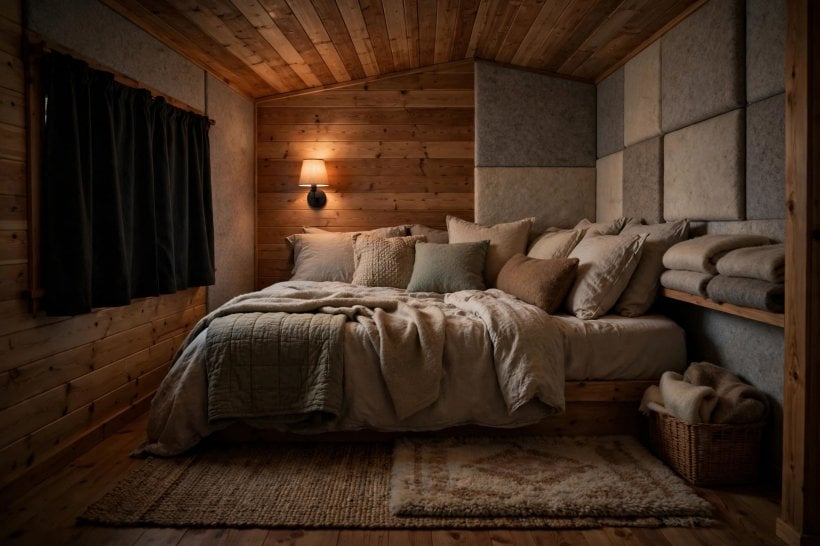
The blackout defends the dark: the curtained is the dark — the deep; the shaded is the skylight — the covered. The skylight that wakes you with sunrise must be coverable when sleep matters more than dawn. The truth: the blackout is the sleep — the tiny. And the sound is managed last: the quiet is the insulated — the calm, walls that keep the house’s noises out; the rain is the roof — the lullaby, the one sound let through on purpose. The truth: the sound is the soothed — the bedroom. Dark, quiet, soft underfoot — the room is now a sleeping instrument.
8. Bedroom Mistakes to Avoid
The original names three mistakes, and every miserable tiny bedroom commits at least one. The dark is the cave — the skylit: a bedroom with no sky and no pale surface becomes a cave by day and a cupboard by night. The cluttered is the restless — the cleared: visible storage and colonized surfaces, a room that files your life at eye level while you try to sleep. The hot is the stuffy — the vented: still air and trapped heat, the loft’s classic failure. The rule allows no appeals: the bedroom forgives — the planned.
Notice what the three mistakes share: none of them is smallness. A tiny bedroom fails by darkness, clutter or stale air — all design failures, all fixable — never by being tiny. The scale discipline is the same lesson our small living room interior design ideas for tiny houses teaches on the day side of the house: small rooms fail for lack of decisions, not space. Make the decisions — light first, storage hidden, air moving — and the bedroom forgives everything else.
9. Fresh Air, Dry Walls and the Sanctuary Door
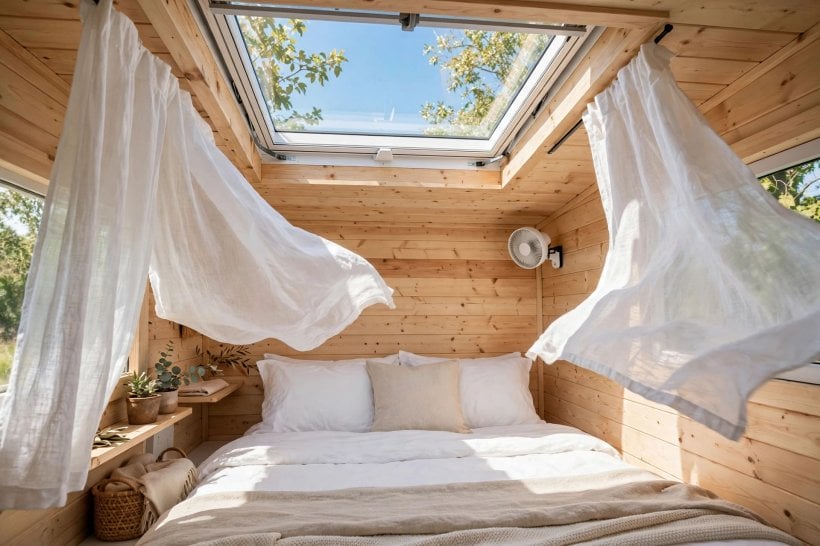
A sleeping body breathes all night in a small sealed volume, so the bedroom’s air is engineering, not ambience. How do you ventilate a loft bedroom? The operable skylight, the fan, the cross-breeze. The ventilated is the designed: the air, the flow. The skylight must open, not merely glow; a small fan moves what the breeze misses. How do you keep a loft bedroom cool? The vented, the fan, the low. The kept is the airflow: the heat rises, the managed — give it an exit at the highest point and keep the sleeping layer low.
Moisture is the same system in winter dress. How do you stop condensation in a tiny bedroom? The vented, the dehumidified, the aired. The stopped is the managed: the moisture, the routine. Two sleepers exhale surprising moisture into a small room; the routine — vent cracked, air moved, bedding aired — keeps it off the walls. Which leaves the door. Should the bedroom have a door in a tiny house? The privacy — the wanted, the doored. The doored is the chosen: the sleep, the sound. A door makes the room a sanctuary in the original’s sense: the kept is the sacred — the sleep; the tiny is the door — the closed. The truth: the sanctuary is the bedroom — the tiny.
10. The Bedroom Payoff and the Thousand Nights
The payoff is stated plainly: the rested is the nightly — the tiny; the dreamed is the deep — the restored; the woken is the grateful — the morning. The truth: the payoff is the sleep — the designed. The invitation that opens the closing suite deserves its place: dim, layer, rest — the bedroom awaits. The first sleep proves it: the climbed is the first — the grinned; the sunk is the deep — the home. The truth: the first sleep is the magic — the tiny.
Then the nights accumulate into evidence. The thousand nights: the counted is the many — the grateful; the tiny is the rested — the years. The truth: the thousand is the proof — the bedroom. The dreams belong to those nights: the dreamed is the nightly — the vivid; the tiny is the cocooned — the safe. The cocoon: the wrapped is the bedding — the wood; the safe is the small — the held; the truth: the cocoon is the sleep — the tiny. And the rested: the woke is the restored — the grateful; the truth: the rested is the life — the bedroom. Kept nightly, it becomes the always rested: the kept is the ritual — the years; the truth: the always is the rested — the tiny.
The suite closes on gratitude’s small furniture. The pillow: the chosen is the loft — the side; the fluffed is the nightly — the sunk; the truth: the pillow is the personal — the sleep. The blessing: the grateful is the rest — the nightly; the truth: the blessing is the bedroom — the always. The last word: the said is the dim — the rest; the done is the slept — the dreamed; the truth: the last word is the bedroom — the always — and the story is the same shape — the told is the nights, the years. The final dream: the dreamed is the last — the vivid; the truth: the dream ends — the bedroom remains. The grace: the moved is the nightly — the rested. The last yawn: the yawned is the final — the night; the truth: the yawn ends — the bedroom dreams. Last of all, the tiny bedroom itself: the small is the loved — the always; the rested is the forever — the sleep; the truth: the bedroom is the tiny — the eternal. Every room, designed with this same care, is the subject of our hub guide to room interior design ideas for tiny houses; the room you wake into is designed in our living room interior design ideas for tiny houses.
Final Considerations
Small bedroom interior design ideas for the tiny house are the rest made cozy — the loft, the light, the layered. Design it well, sleep deeply nightly. Choose the layout your body blesses, hide everything the room stores, dim the light and open the sky — then let the room do its one job, a thousand nights in a row.



0 Comments