
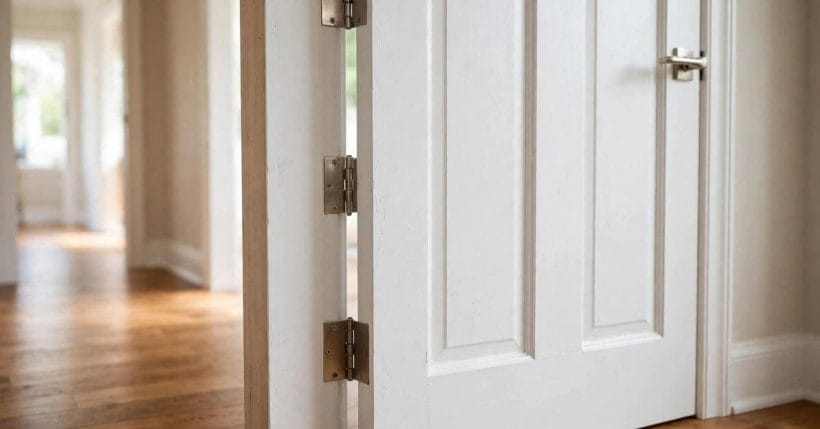
Two interior doors can look almost identical from the hallway and still feel completely different when you close them. One swings lightly and settles with a soft click. The other moves with a reassuring weight and shuts out far more of the sounds of the house. The difference is often the thickness of the slab itself, and that is exactly the question behind this guide: how does a thinner interior door compare with a thicker one, and which one suits your home?
This guide explains interior door thickness in general terms only. It does not set out rules or requirements, because what suits a home depends on the house, the opening, the door maker and the local rules that apply where you live. Wherever a choice touches safety, structure or a regulated opening, check local rules and the maker’s guidance before you order or change anything.
1. What Door Thickness Actually Means
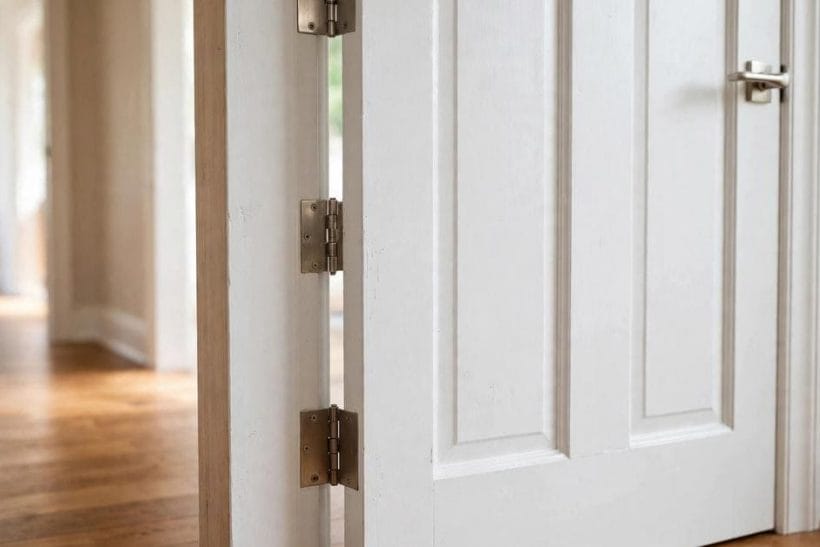
When people talk about the thickness of an interior door, they mean the depth of the slab itself, measured straight through from one face to the other. It is not the width of the doorway, not the height of the door and not the depth of the frame. It is simply how thick the panel you push open happens to be, and it shapes how the door feels, sounds and hangs.
The question that prompted this guide names two thicknesses: the thinner of the pair and the thicker of the pair. Both are ordinary interior door sizes, and both are found in homes of every age and style. Neither one is right for every room, and neither one is wrong in itself. The useful question is never which thickness wins in the abstract. It is which one fits the opening you have, the hardware you plan to use and the way the room is lived in.
Thickness also works together with everything around the door. The core inside the slab, the finish on its faces, the frame it closes into, the hinges that carry it and the latch that holds it shut all influence the finished result. A well-fitted thinner door can feel better in daily use than a thicker door hung badly, and a thicker door only earns its keep when its frame and hardware are matched to it. That is why this guide treats thickness as one choice among several, not as a single answer.
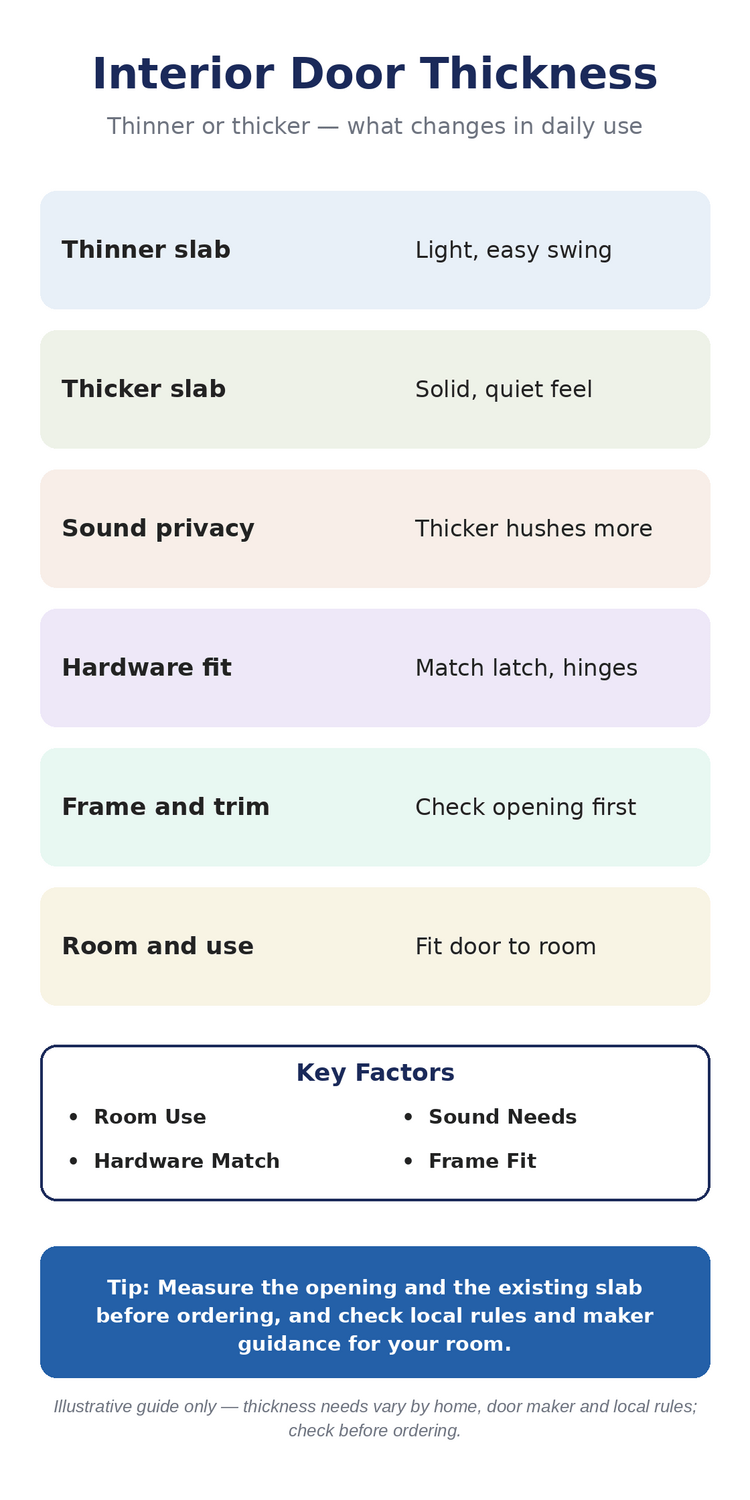
| Aspect | What changes |
|---|---|
| Thinner slab | Light, easy swing |
| Thicker slab | Solid, quiet feel |
| Sound privacy | Thicker hushes more |
| Hardware fit | Match latch, hinges |
| Frame and trim | Check opening first |
| Room and use | Fit door to room |
The table above mirrors the infographic for this guide. It is a summary in plain words, not a specification. The rest of this guide unpacks each row so you can judge what matters most in your own home.
2. The Thinner Slab in Everyday Use
A thinner interior door is the lighter, easier member of the pair. It swings freely, it is simple for children and older family members to open, and it suits openings where the door is used dozens of times a day without anyone ever thinking about it. In a busy family home, that easy swing is a genuine everyday comfort rather than a small detail.
Thinner doors also tend to be the simpler choice when an existing opening is being kept as it is. The frame, the hinges and the latch positions are already set, and a slab of matching character slips into that established arrangement with the least fuss. When the frame is sound and the opening is true, keeping to the thinner form usually means the least disruption to the trim and the wall around it.
The trade-off is one of feel and hush rather than of fitness. A thinner slab generally lets more sound through than its thicker counterpart, and it closes with a lighter note. In rooms where quiet matters little, such as a passage between two living spaces that are often open to each other anyway, that trade-off may never be noticed at all. Where the door is expected to hush a room, however, the difference becomes part of daily life, and that is where the thicker option earns attention.
3. The Thicker Slab in Everyday Use
A thicker interior door announces itself the moment you take hold of it. It has a planted, solid feel, it moves with a steady weight and it closes with a deeper, more settled sound. For many people, that feeling alone is the reason they choose it: the door feels like a proper division between rooms rather than a light screen.
The extra depth also gives the door more presence in the opening. Its edge reads as a substantial piece of joinery, the panels sit with more shadow and depth, and the whole doorway looks considered rather than incidental. In a hallway where the doors are a visible part of the design, that presence can lift the entire space, especially when the architrave and skirting share the same generous character.
What a thicker slab asks in return is attention to everything that carries it. Hinges must suit the weight, the frame must be firm, and the latch must meet its keep cleanly. None of that is difficult, but it does mean the door should be judged as a set — slab, frame and hardware together — rather than as a panel bought on its own. When the set is matched, a thicker door is a quiet pleasure for years. When it is not, even a fine slab can swing stiffly or settle out of true.
4. Sound, Privacy and the Feel of a Closed Door
Sound is where thickness shows its clearest everyday effect. A thicker, more solid slab generally hushes a room more than a thinner one, softening voices, television sound and the clatter of a kitchen so that the next room feels properly separate. The difference is one of degree rather than of silence: no ordinary interior door makes a room soundproof, and gaps around the edges let sound through whatever the slab.
That is why the seal around the door matters as much as the slab itself. A door that closes evenly against its stops, with its latch holding it snugly shut, will hush a room better than a thicker door left with a rattling gap. Draught seals and well-fitted stops help here, but they should be chosen to suit the door and the frame, and any change to a door that forms part of a safety arrangement should be checked against local rules and maker guidance first.
Privacy is also about more than sound. A door that stays shut, latches cleanly and gives no view through gaps or glazing gives a room a sense of being its own place. Bedrooms, bathrooms and studies benefit most from that feeling, and it is in those rooms that the thicker slab’s extra hush is most often appreciated. In rooms that are usually left open, the same quality may simply go unnoticed.
5. Weight, Swing and How the Door Hangs
Weight follows thickness closely. A thicker slab is heavier to lift, heavier to hang and heavier to swing, and that weight is felt every time the door moves. For most adults the difference is small and even welcome, giving the swing a smooth, deliberate character. For small children, for anyone with limited strength and for doors that are used constantly, the lighter swing of a thinner door may be the kinder choice.
Swing also depends on the hinges and on how truly the frame stands. A door that is well hung swings to its latch without effort and stays where it is put, neither drifting open nor dragging on the floor. A door that is out of square, or whose hinges are not matched to its weight, will fight its user however thick or thin the slab may be. If a door drags, binds or refuses to latch, the hanging deserves attention before the thickness is blamed.
Changing thickness in an existing opening therefore deserves a pause. A heavier slab on hinges and a frame arranged for a lighter door may need its hardware reconsidered, and the frame itself should be checked for firmness before anything is swapped. Fitting work that touches the frame or the surrounding wall is best placed with a professional, who can judge whether the opening is ready for the change.
6. Hardware, Latches and Hinges
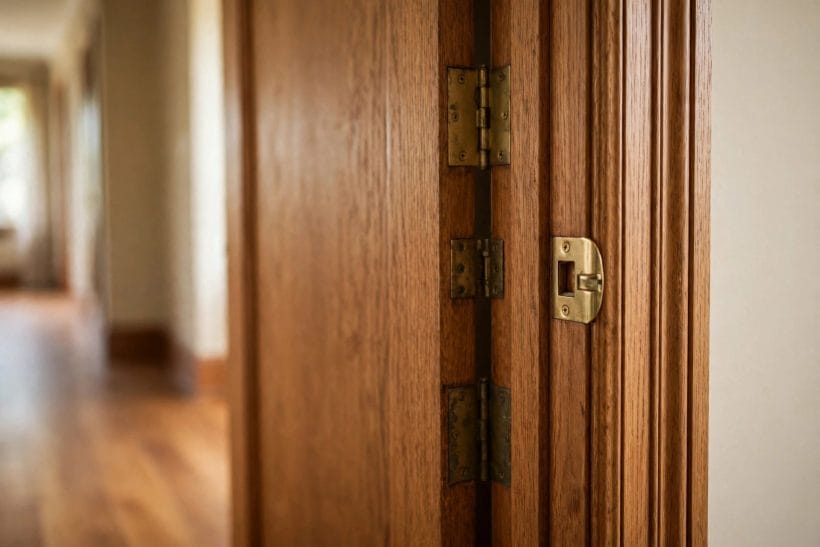
Hardware is where a thickness choice becomes practical. Latches, locks and hinges are made to suit a range of slab depths, and the set chosen for a door must match the slab it serves. A latch that sits too shallow or too deep will not meet its keep cleanly, and a hinge that is not suited to the weight will let the door sag over time. The maker’s guidance for both the door and the hardware is the right place to confirm a match.
Handles and knobs deserve the same thought. A lever or knob should feel comfortable in the hand and operate the latch smoothly through its full travel, without stiffness or slack. On a thicker door, the spindle and fixings need to suit the extra depth; on a thinner door, the same parts should sit flush and firm without rocking. Small mismatches here show up daily, in every single use, so they are worth getting right at the start.
It is also worth thinking about the life of the hardware. Doors in hallways and family bathrooms are worked hard, and hinges and latches that are chosen for that workload will outlast lighter fittings by years. Keeping a spare sense of the finish matters too: hardware that matches the rest of the home’s ironmongery keeps the hallway looking coherent, even where individual doors differ in thickness from room to room.
7. Frames, Openings and Trim
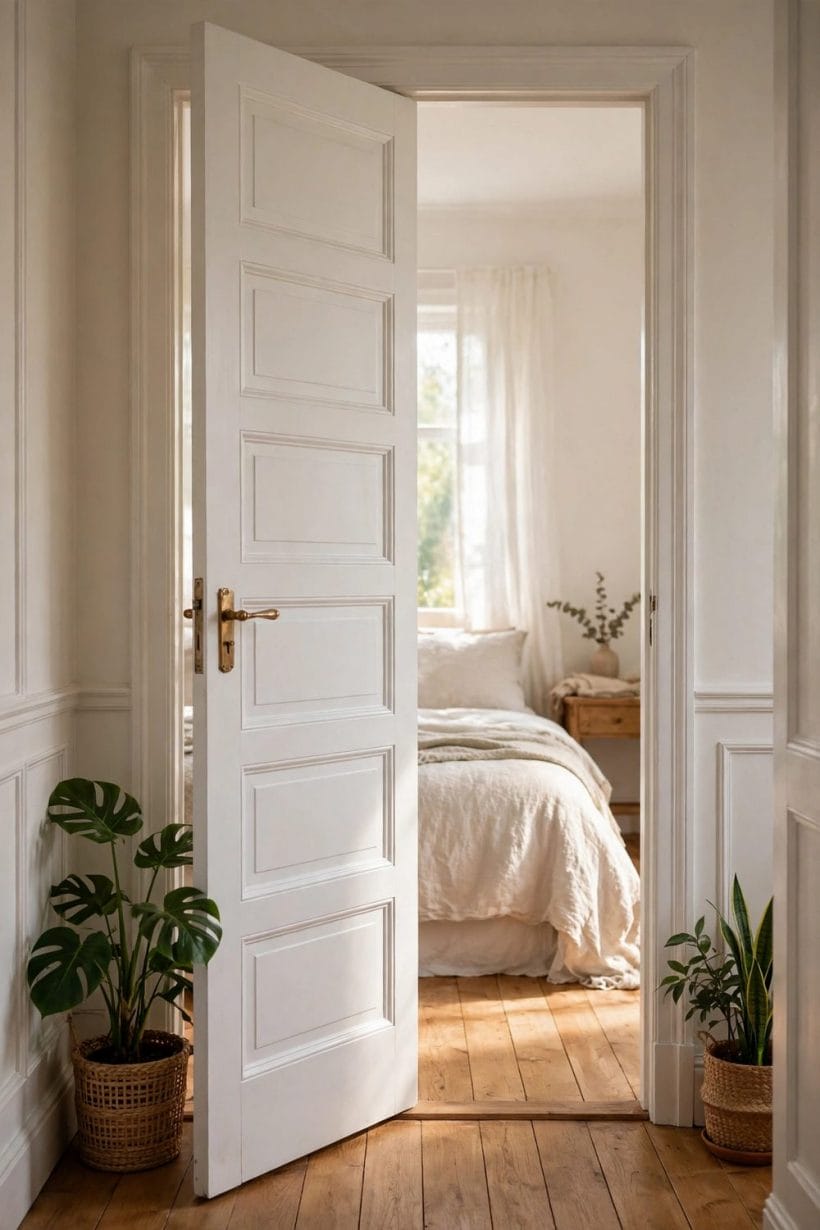
No door stands alone. It closes into a frame, and that frame is dressed with architrave that ties the doorway into the room. When thickness changes, the relationship between slab, frame and trim changes with it, and the finished look depends on all three sitting comfortably together. A thick slab in a shallow frame can look awkward, while a thin slab in a deep, generous frame can look lost.
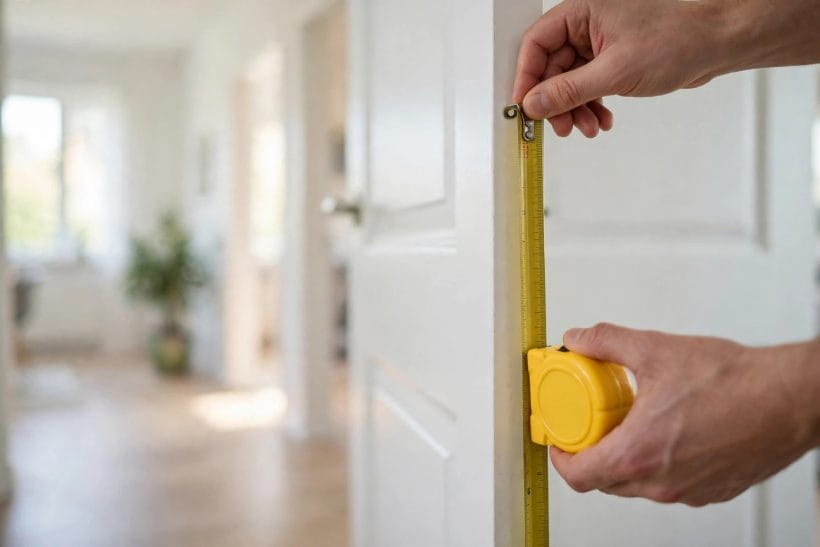
Measuring the opening is therefore the first practical step, before any door is ordered. The width and height of the opening, the depth of the frame and the position of the existing hinge and latch points all shape what will fit and what will need adjustment. Taking those measurements from the opening itself, rather than from an old door that may have been trimmed or altered over the years, avoids the most common fitting disappointment.
Trim choices follow from the same survey. Architrave profiles, skirting depths and the finish of the frame should be considered as part of the doorway as a whole, so that a new door reads as belonging to the house rather than arriving as a stranger. For a fuller picture of how doorways sit within a home’s design, the interior design ideas collection shows openings treated as part of the room, not as afterthoughts.
8. Choosing by Room: Bedrooms, Bathrooms and Living Spaces
Different rooms ask different things of a door, and thickness is best judged room by room. A bedroom door is usually asked to hush the hallway, to stay shut through the night and to give the sleeper a sense of privacy. Those are exactly the qualities where a thicker slab tends to be appreciated, and many homeowners choose it for bedrooms first when they upgrade a home door by door.
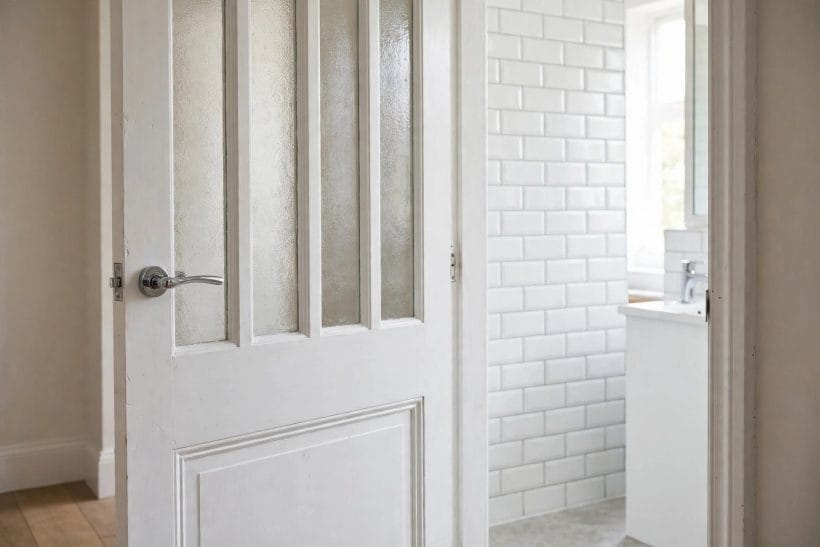
A bathroom door has its own character. It needs privacy, it needs to cope with steam and damp air, and it needs a latch that gives confidence without fuss. The size and form of a bathroom door is a subject of its own, and our bathroom door size guide explores that opening in general terms. Thickness plays a supporting part here: a solid-feeling door suits the privacy of the room, while the finish and the ventilation of the space matter just as much as the slab.
Living spaces are more forgiving. Doors between a kitchen and a dining room, or between a hall and a sitting room, are often left open for much of the day, and their thickness matters mainly in the moments they are closed. Here the look of the door, the way it matches its neighbours in the hallway and the ease of its swing often matter more than its hush. A consistent look down a hallway, with matching panels and hardware, can matter more than giving every room the thickest slab available.
9. Replacing a Door: Measuring and Matching
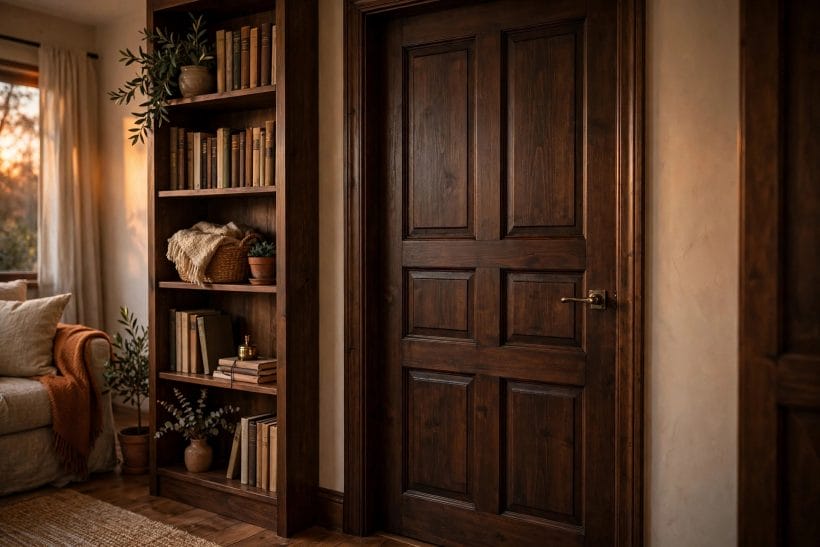
Replacing an interior door starts with the opening, not with a catalogue. Measure the opening itself, note the frame depth, check where the hinges sit and where the latch meets its keep, and carry those notes with you when you look at doors. A door that matches the opening on every point will fit with the least alteration, while a door chosen on looks alone may need its edges, hinges or latch points reworked before it ever swings well.
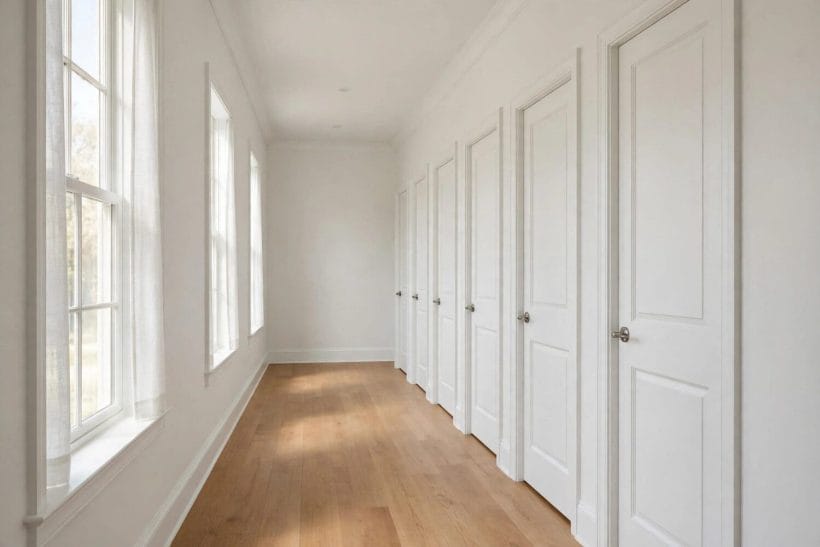
Matching the new door to its neighbours is the next step. A hallway reads best when its doors share a panel style, a finish family and a hardware finish, even where their thicknesses differ for good reason. A single thicker door among thinner neighbours can still look right if the panels and handles agree; a door that matches in thickness but clashes in style will stand out far more. The whole hallway, rather than the single opening, is the picture to judge.
The cost and effort of the change also belong in the decision. Fitting, finishing and any frame work all form part of the finished job, and our door installation cost guide explains those parts in general terms. As with any fitting work, the frame, the wall and the surrounding trim should be left to a professional wherever the job goes beyond hanging a slab in a sound, ready opening.
10. Common Questions Answered
Can a thicker door go into any opening? In general terms, only where the frame, hinges and latch can suit it. The opening should be measured, the frame checked for firmness and the hardware confirmed against the maker’s guidance. Where any of those points is uncertain, a professional’s judgement is worth having before the door is ordered.
Does a thicker door always hush a room better? It generally hushes more than a thinner slab, but the seal around the door matters just as much. A well-fitted door that closes evenly and latches snugly will outperform a thicker door with gaps around its edges. Hush comes from the whole doorway working together, not from the slab alone.
Is the thinner door the budget choice? Cost is shaped by the door’s construction, finish and hardware at least as much as by its thickness, so no thickness can be called the cheaper option in itself. Judge the whole door — slab, core, finish and fittings — and the fitting work together, rather than reading value from one measurement.
Should every door in a home match in thickness? There is no general rule that says so. Many homes mix thicknesses sensibly, with a thicker slab where hush and presence matter and a lighter door where ease of use matters more. Consistency of style and hardware usually matters more to the look of a hallway than identical thickness in every room.
What about doors that carry a safety rating or serve a regulated opening? Those doors must be treated on their own terms. Check local rules and the maker’s guidance for that opening, and do not swap, trim or alter such a door without professional advice. A thickness choice never overrides a safety requirement.
Small homes bring the same questions into sharper focus, because every doorway is seen, used and heard more often. The tiny house designs collection and the tiny house floor plans collection both show how doorways shape compact layouts, and the tiny kitchen ideas and kitchen ideas collections show doors working hard between cooking, dining and living spaces. In a compact home, a door that swings easily, latches cleanly and hushes just enough is worth more than any single measurement.
Final Considerations
The choice between a thinner and a thicker interior door is ultimately a choice about daily life in a particular home. The thinner slab offers an easy swing, a simple fit into an existing opening and a light touch that suits busy passages. The thicker slab offers a solid feel, a deeper hush and a presence that lifts a hallway. Neither one is the answer for every room, and the happiest homes often mix the two with judgement.
Whatever you choose, let the opening lead. Measure it carefully, match the hardware to the slab, consider the frame and trim as part of the same picture, and check local rules and maker guidance wherever the opening carries any safety role. Fitting work that touches the frame or the wall belongs with a professional. With those checks made, the thickness question becomes what it should be: a small, satisfying choice that makes the rooms of your home feel just a little more like themselves.
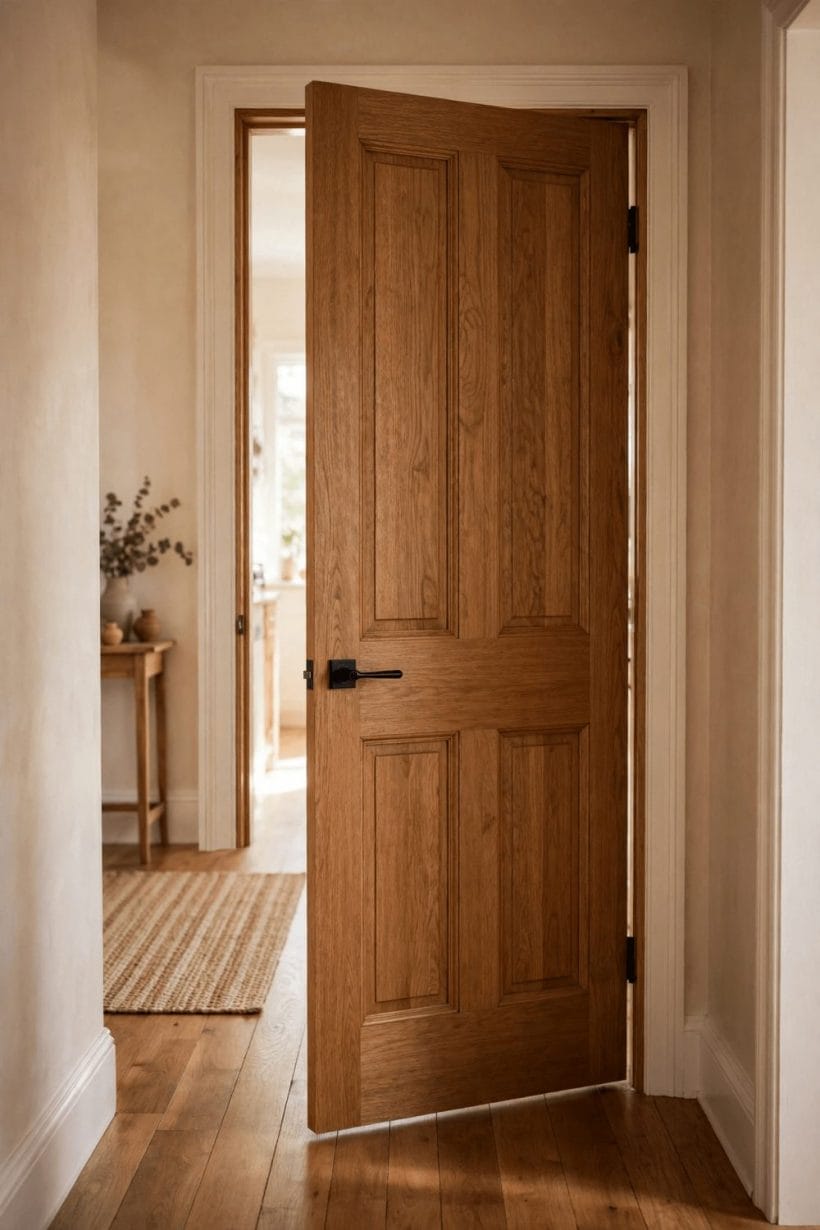
Before you order, walk the hallway once more and notice which doors you close for quiet, which ones you leave open all day and which ones your hand reaches for without thinking. Those habits are the best guide you have, and they will tell you — room by room — where a lighter swing serves you best and where a solid, quiet close is worth choosing.




0 Comments