
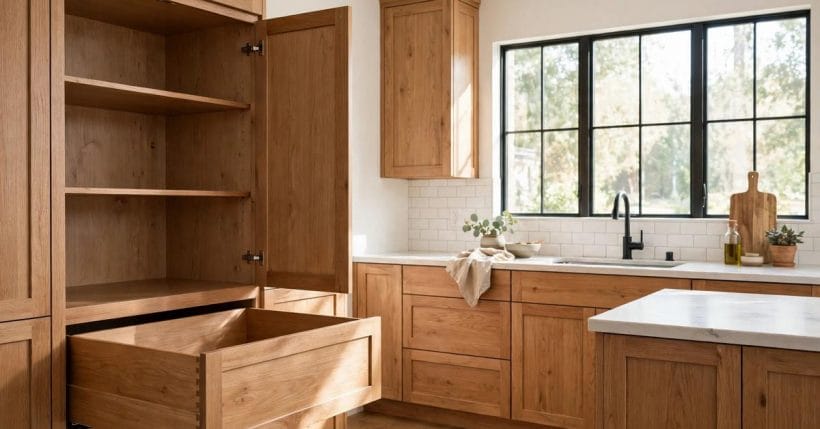
Two kitchen cabinet runs can fill the same wall, wear the same door style and carry very different prices — and almost the whole difference is in the construction: the box, the drawers, the finish and the hardware, most of which a showroom photograph never shows.
This guide is the checklist for those hidden parts. No brand verdicts and no ‘worth it’ answers — just what drives cabinet cost, what to check in a showroom, and how to tell whether a higher price is buying construction or only a name.
1. Cabinet Quality at a Glance
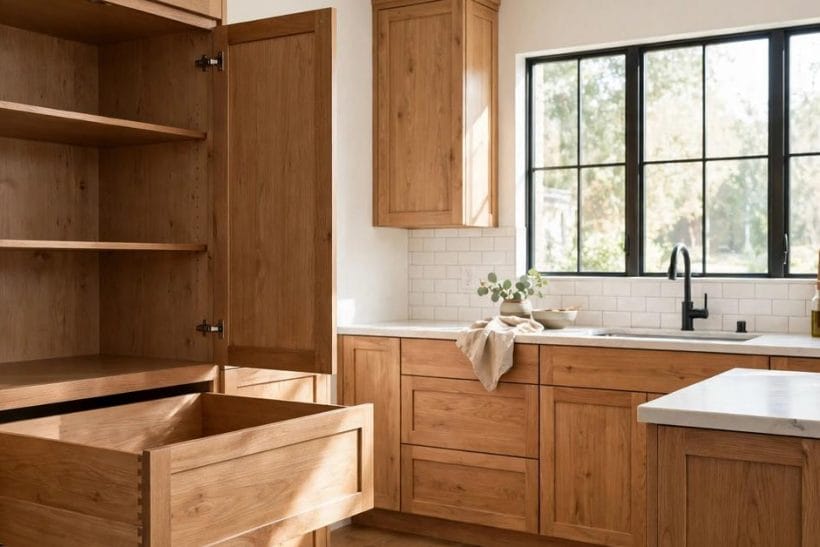
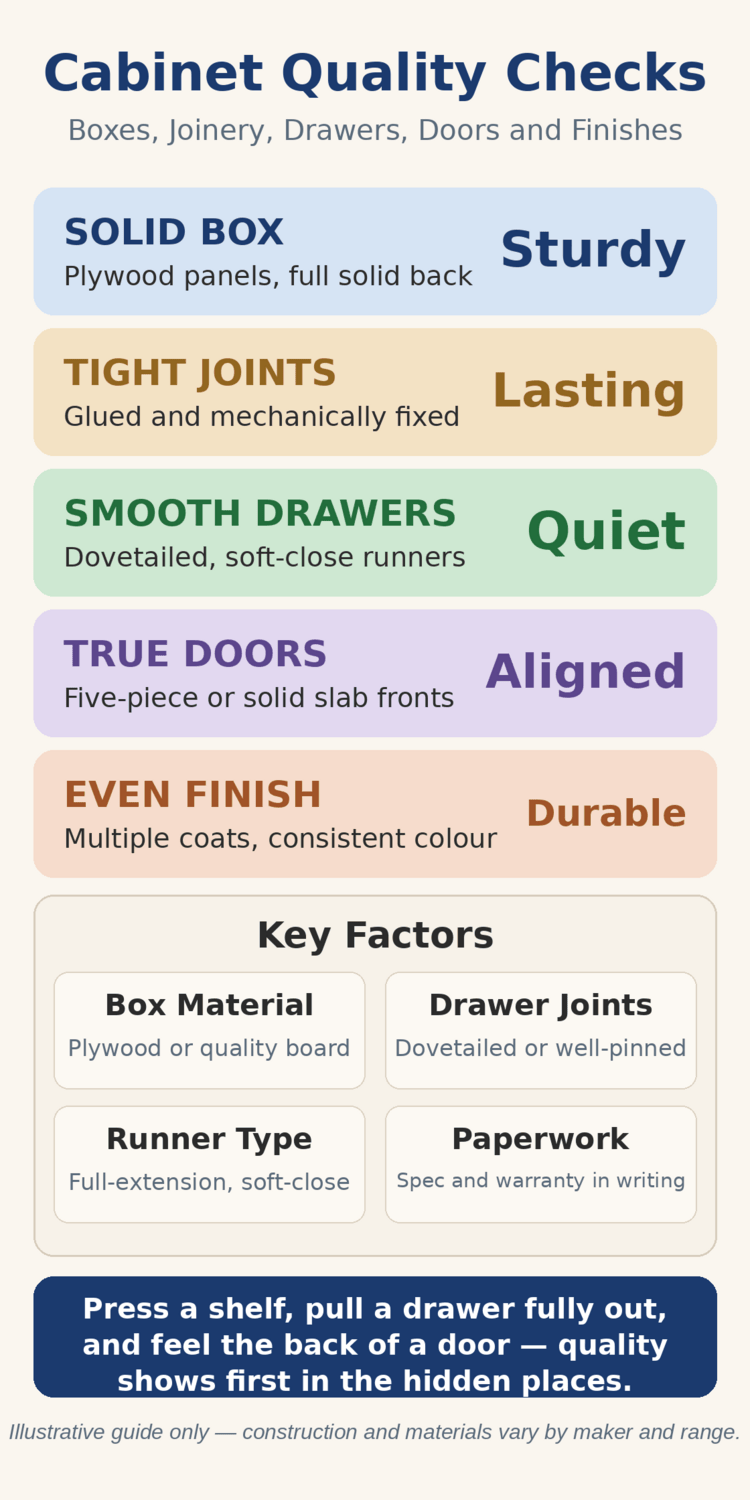
A kitchen cabinet is a box with a door, and its quality is a short list of physical facts: what the box is made from, how its corners are joined, what the drawers run on, how the doors are built and what the finish actually is. Every one of those facts can be checked — by hand in a showroom, or by asking for the specification in writing. A maker who builds well can always describe the build; vagueness about materials is itself information. The same philosophy drives the upholstered side of the house in the furniture quality check guide; this page is its cabinetry counterpart, written for the room planned in kitchen ideas.
Price, meanwhile, is not one thing. It is the sum of the box material, the door material, the finish process, the hardware grade, the amount of modification beyond standard sizes, and the service wrapped around the order — measuring, design, delivery, fitting. Two quotes can differ honestly at every one of those points, which is why comparing cabinets by door style and total alone misleads. Compare them by construction, line by line, and the price difference usually explains itself — or fails to, which is also an answer.
| Check | What good looks like |
|---|---|
| The box | Plywood or quality board panels, solid back, shelves that do not flex under a hand’s weight |
| The joinery | Corners glued and mechanically fixed — dowels, screws, cam-and-pin in flat-pack — never staples alone |
| The drawers | Solid or plywood drawer boxes, dovetailed or well-pinned, on full-extension soft-close runners |
| The doors | True five-piece or solid slab construction, warp-free, with a finish that wraps edges evenly |
| The finish | Multiple coats, smooth to the back of a hand, colour consistent across doors from different boxes |
| The paperwork | Specification, warranty terms and a spares route in writing before the deposit |
2. The Cabinet Box
1. Plywood versus engineered board
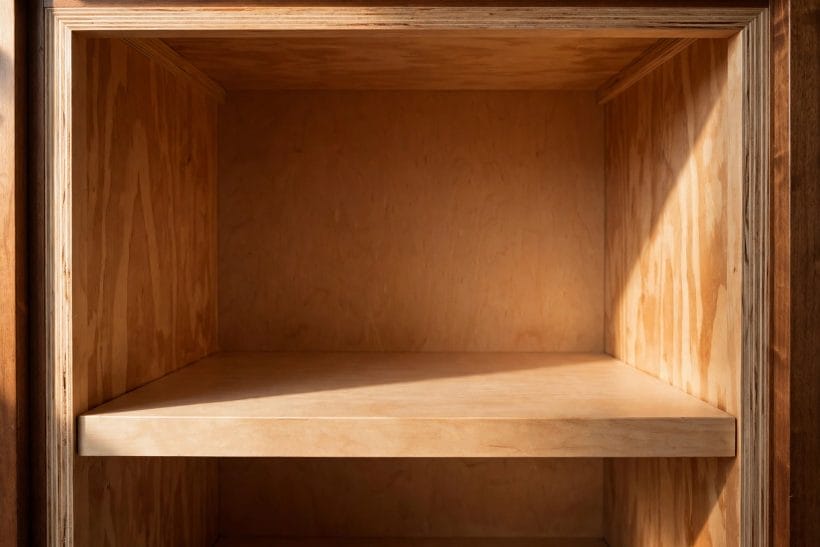
Boxes are built from plywood or from engineered board — particleboard or MDF with a laminated surface. Good plywood is stronger, lighter and more forgiving of screws being driven twice; good board is flatter, cheaper and perfectly serviceable when its edges are sealed. Bad versions of both exist, so the check is not the label but the sample: weight, edge finish, and how cleanly a cut edge is sealed against steam.
2. Panel thickness and the shelf test
Press down in the middle of a shelf and lean on a cabinet side. Quality boxes feel inert — no drum, no flex, no creak. Thin panels and lightly built boxes announce themselves immediately in the hand, whatever the door in front of them costs. Shelf thickness and adjustable-shelf pin quality are the small print of the same test.
3. The back panel and hanging strength
Wall cabinets hang from their backs. A solid, well-fixed back panel spreads the load; a thin hardboard skin stapled into a rebate is the budget answer and the first thing to check on any wall unit that will carry stoneware. Ask how the cabinet hangs — rail systems that spread weight across fixings are the reassuring answer.
3. Joinery and Assembly
4. How the corners are held
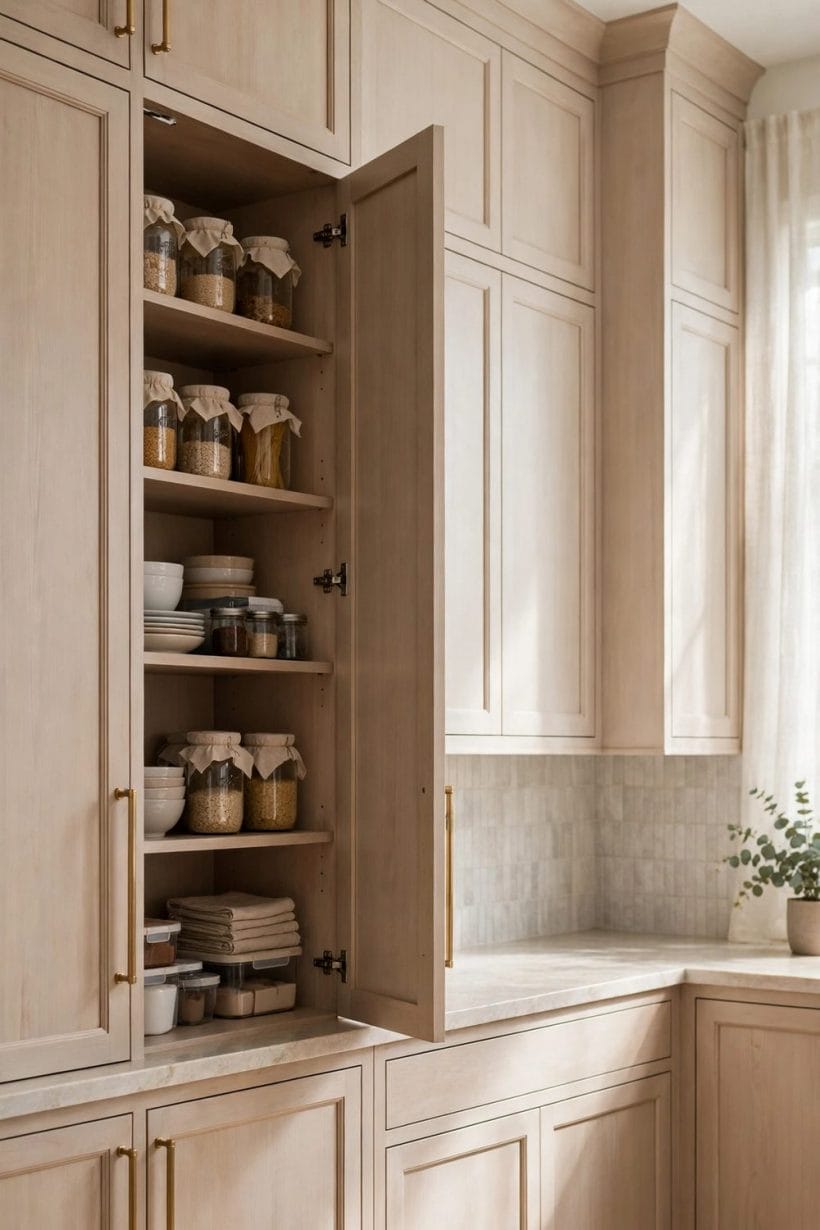
Factory-built cabinets are typically glued and dowelled or screwed; flat-pack cabinets use cam-and-pin or similar mechanical locks. Both can be excellent. What to avoid is a corner held by staples and optimism. In the showroom, look inside the box: tidy, square, fully closed joints are the sign of a line that is built, not just assembled.
5. Squareness and door gaps
Run an eye along a run of showroom doors: gaps should be even, doors level with each other, drawers closing flush. A display run is the maker’s best work, installed by their best fitter — if the showroom run is uneven, the reasoning about a home installation writes itself. Uneven gaps also betray boxes that rack out of square under load.
6. Framed versus frameless construction
Framed cabinets carry a face frame the doors hang from; frameless — European-style — cabinets hang doors on the box itself. Framed construction can add rigidity and suits traditional doors; frameless gives wider access and the modern look. Neither is a quality verdict: judge the box and hardware in front of you, not the family it belongs to.
4. Drawers and Internal Hardware
7. The drawer box itself
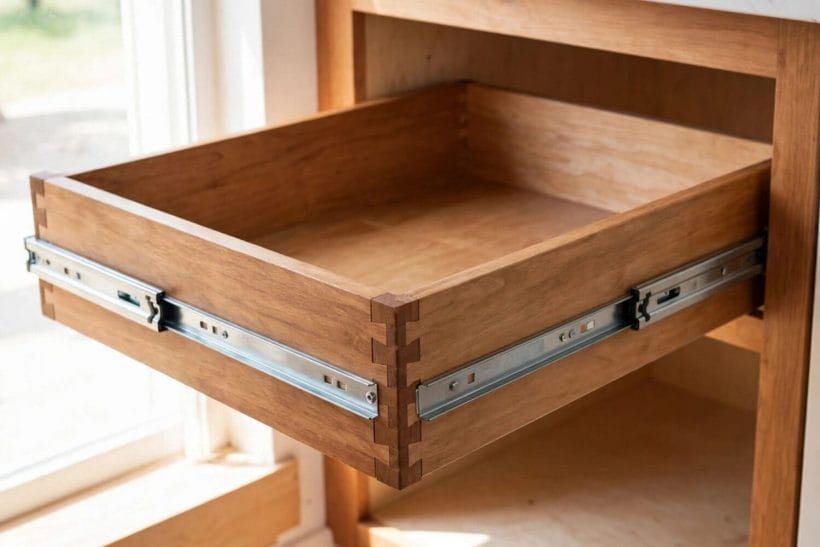
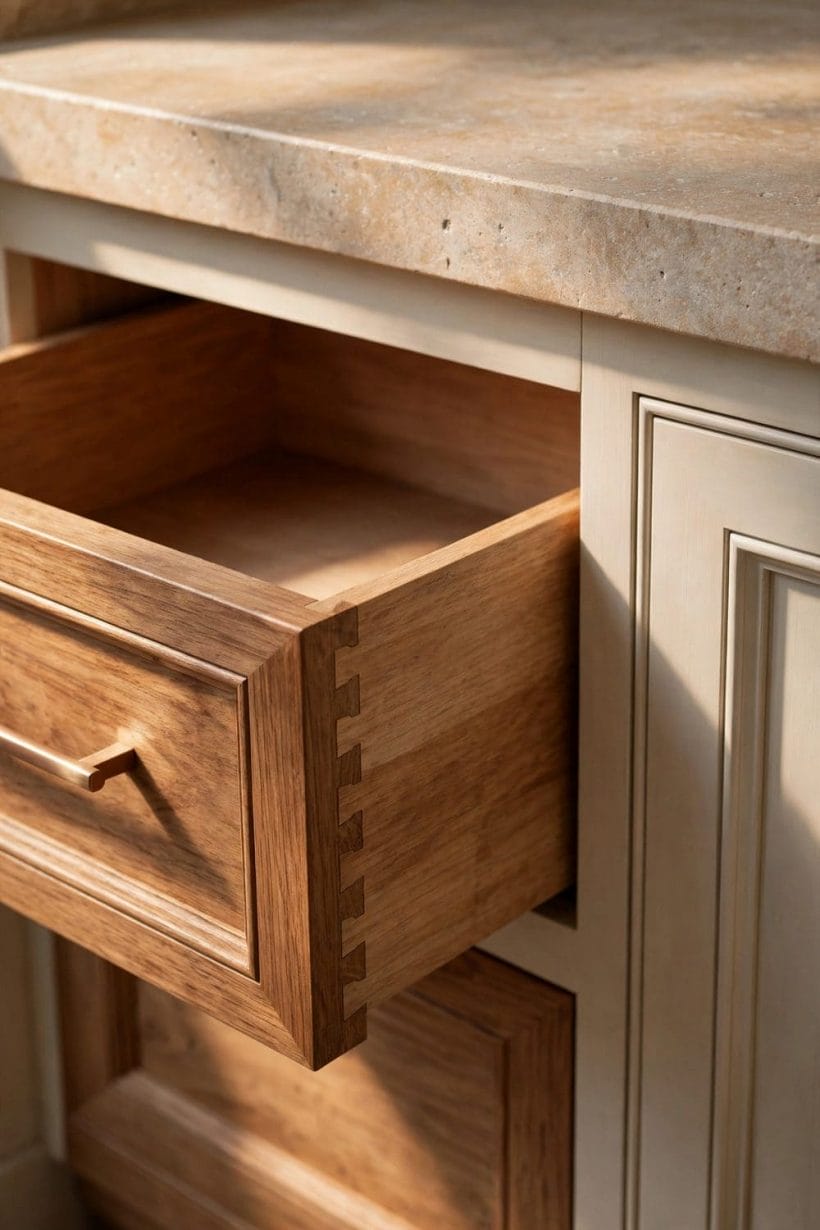
Drawers fail before doors do, so open every drawer in the showroom. A quality drawer box is solid timber or plywood, jointed at the corners — dovetails are the traditional badge, well-made pinned or dowelled joints serve as honestly — with a base that does not drum or sag when pressed. Thin board drawer sides with a stapled base are where a cheap run confesses.
8. Runners: the daily difference
Full-extension runners let the whole drawer come to you; soft-close mechanisms stop the slam a thousand times a year. Push a loaded showroom drawer from an angle: good runners track straight without wobble, carry weight silently, and close the last stretch by themselves. Runner grade is one of the clearest places a higher price buys something a hand can verify.
9. Hinges and adjustment
Soft-close hinges with adjustment in several directions keep doors aligned as a house moves through seasons. Check that the hinge is metal, branded or at least specified, and that the door it carries closes flat without spring-back. Hinges are cheap to make badly and tiresome to live with — a legitimate place for money to go.
5. Doors and Fronts
10. Five-piece door construction
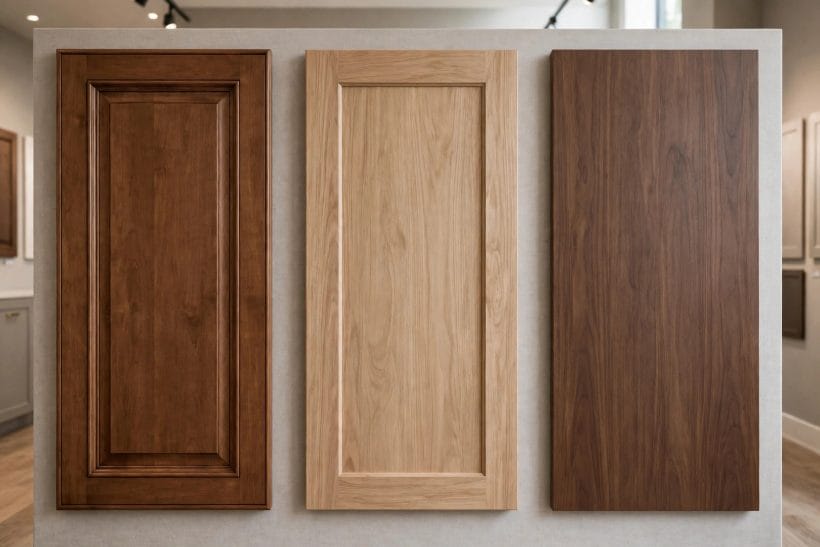
The classic framed door is five pieces — two stiles, two rails, a centre panel — and the joinery between them is where cost and quality live. A solid-timber five-piece door, or one with a quality veneered panel, resists warping because the frame holds the panel’s movement. Doors that imitate the look in one moulded piece are a finish, not a construction, and should be priced as one.
11. Slab doors and warp
Flat slab doors are only as good as their core and their balance: a quality slab is thick, evenly finished on both faces so moisture moves symmetrically, and straight when sighted along its edge. When a whole run is later replaced rather than the cabinets themselves, the logic in replacement cabinet fronts applies — the boxes stay, the fronts carry the look.
12. Handles, knobs and the drilling
Handle quality is felt instantly: weight, smooth edges, a finish that matches across a full set. Check the showroom’s handle drilling too — clean, centred, splinter-free holes are a factory’s signature in miniature. And if a beloved old run is being refreshed rather than replaced, replacing kitchen cabinet doors shows how far new fronts alone can take it.
6. Finishes: Paint, Stain and Foil
13. Painted finishes
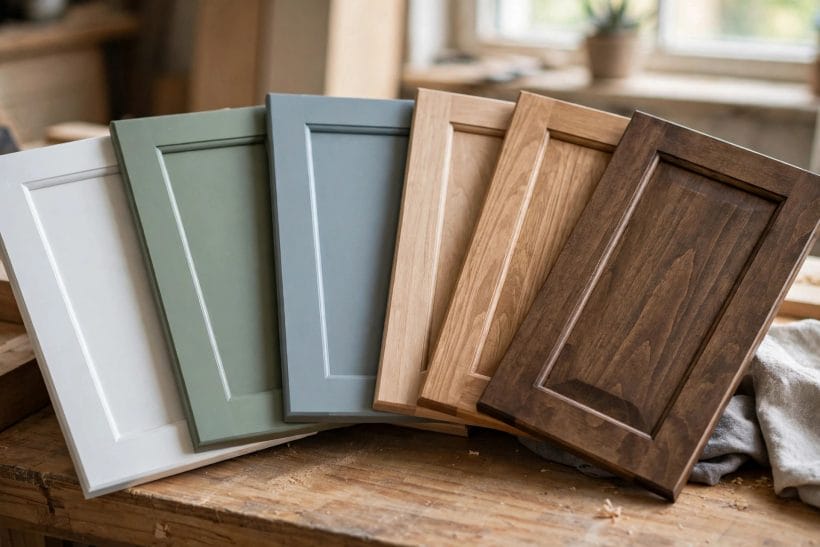
A quality painted finish is several coats with sanding between, smooth to the back of a hand, and — the telling test — carried evenly around edges and into moulding corners where spray thins. Paint shows joinery honestly, which is why painted doors cost what they cost: the construction underneath has nowhere to hide.
14. Stains, lacquers and real veneer
Stained and lacquered timber shows the grain the buyer paid for, so the check is consistency: doors across a run should read as one tree family, not a patchwork. With veneered doors, ask what the veneer is laid on and check an edge — the core’s quality decides whether the door’s corners survive a decade of kettle steam.
15. Foil and laminate wraps
Wrapped doors — a foil or laminate skin moulded over a shaped core — give the five-piece look at the construction price of a slab. Good wraps are seamless and durable; their weakness is heat and steam at edges over years, which can lift the skin. In a hard-working kitchen that trade should be made knowingly, and priced accordingly, rather than discovered.
7. Stock, Semi-Custom and Custom: What the Steps Buy
16. Stock cabinets
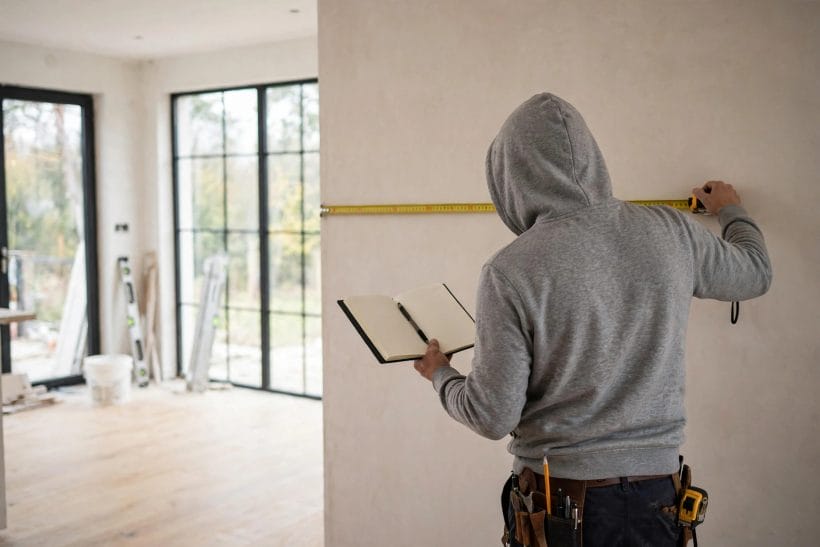
Stock ranges are made in fixed sizes and finishes, warehoused, and sold as they come. The money saved is real, and the compromises are specific: filler pieces where sizes do not land, a limited finish palette, and construction at whatever grade the range specifies. For a straight run in a standard room, stock can be the rational buy — after the box and drawer checks above have been run on it.
17. Semi-custom cabinets
Semi-custom starts from a catalogue and modifies it: more sizes, altered depths, added internal fittings, a wider finish choice. The step up buys fit — fewer fillers, cabinets shaped around the room’s awkward corners — and usually a construction upgrade alongside. It is the tier where most of the price conversation happens, and where the specification sheet matters most.
18. Fully custom cabinets
Custom cabinetry is built to the room: any size, any finish, furniture-grade construction, and a maker accountable for all of it. The premium buys exactness and longevity rather than magic — a custom box is still plywood, joinery and finish, simply made without catalogue limits. Kitchens with unusual architecture are where that freedom stops being a luxury.
8. What Actually Drives the Price
19. Materials and finish steps
Solid timber costs more than veneer, veneer more than foil; a multi-coat painted finish costs more than a single-pass one; plywood boxes cost more than board. These are arithmetic, not branding — ask any quote to show its materials, and the honest ones can. A price that cannot be decomposed into materials and process is a price being asked to be taken on faith.
20. Hardware grades and internals
Soft-close everything, full-extension runners, pull-outs, corner mechanisms, integrated bins: internal hardware is where quotes quietly diverge. A run with quality internals can honestly out-price a plainer run in fancier doors. Decide which internals the household will use daily and let the rest go — unused mechanisms are the purest waste in a cabinet budget.
21. Sizing, modification and service
Non-standard sizes, reduced depths, angled units and tall housings all cost more than catalogue boxes, and services — design time, site measuring, delivery logistics, fitting — are real work inside a real price. The check is not whether these lines exist but whether they are itemised: a quote that shows its working can be negotiated; a single round figure can only be accepted or refused.
9. Showroom Checks and Questions to Ask
22. The ten-minute showroom routine
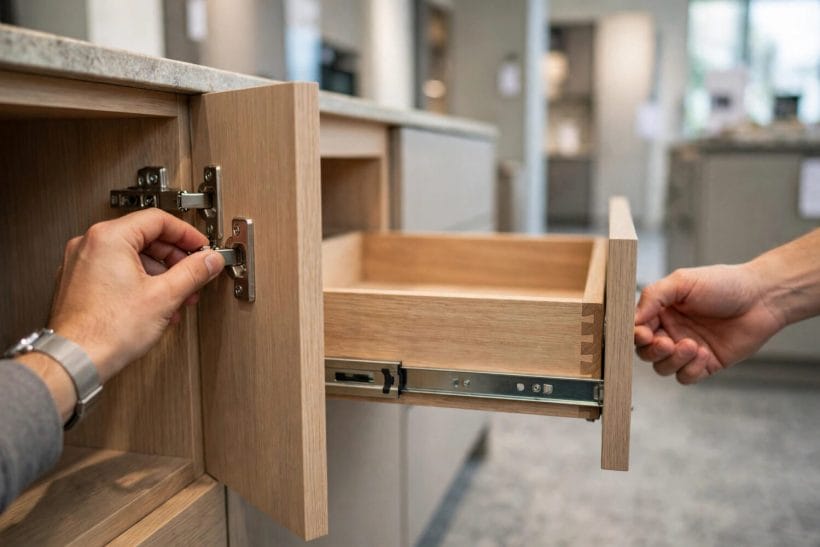
Lean on a shelf, press a drawer base, slam nothing but close everything, sight along a door for warp, run a hand over a finish’s edge, and open the wall cabinet to inspect its back. Ten minutes of hands will grade a cabinet run more honestly than an hour of brochure. Take a tape: check a stated dimension or two while you are there.
23. Questions that separate builders from sellers
What is the box made from, and how thick? How are the corners joined? What runners and hinges, and whose? How many coats is the finish? What does the warranty cover — and what does it call misuse? The answers, and the ease with which they come, are the review that matters. Evasiveness about construction is construction information.
24. Samples at home, in your light
Take door and finish samples home before committing: kitchen light flatters nothing and showroom light flatters everything. Live with the sample against the floor and the worktop for a few days, in daylight and in the evening, and check the colour’s behaviour — the same discipline whether the cabinets are ordered in a showroom or at a distance, as the checks in ordering home furnishings online insist for furniture generally.
10. Warranty, Paperwork and Delivery Checks
25. Read the warranty’s shape
A warranty’s value is in its scope and its exclusions: what is covered — hinges, runners, finish, box — for how long, and what counts as damage rather than defect. A long warranty on hinges alone is not a long warranty. Get the terms in writing with the specification, and keep both with the order confirmation.
26. Spares and continuity
Kitchens outlive ranges. Ask how spare doors, hinges and finish touch-ups are obtained if a door is damaged in five years, and how long the range itself is expected to run — the questions that discontinued kitchen cabinets exists to answer after the fact. A maker with a spares route is selling a kitchen; one without is selling a moment.
27. Delivery and fitting day
Check every door and box as it arrives, before the fitter’s van leaves: finish damage hides under packaging, and a door swapped on the day costs nothing while one discovered later costs a dispute. Agree in advance who owns damage found at unboxing, and photograph the run as installed — the paperwork habit that ends most arguments before they start.
Final Considerations
Cabinet price is construction, materials, finish, hardware, fit and service, added up — and every element of that sum can be checked by hand, by eye or by a question asked in writing. Run the shelf test, open the drawers, sight the doors, decompose the quote, and read the warranty’s shape. Do that, and the question of whether a higher price is worth it answers itself: it is worth exactly the construction it can show you, and not a penny more.


0 Comments