

A generous hallway is the first room every guest sees and the route every household member uses all day, yet it is often decorated last. This guide treats a long hallway as a real room: planned layouts, colours that stretch or soften its length, layered lighting, durable flooring, and honest cost checks before you commit to finishes you will walk past a thousand times.
1. At a Glance: Length, Width, Light and Budget Checks
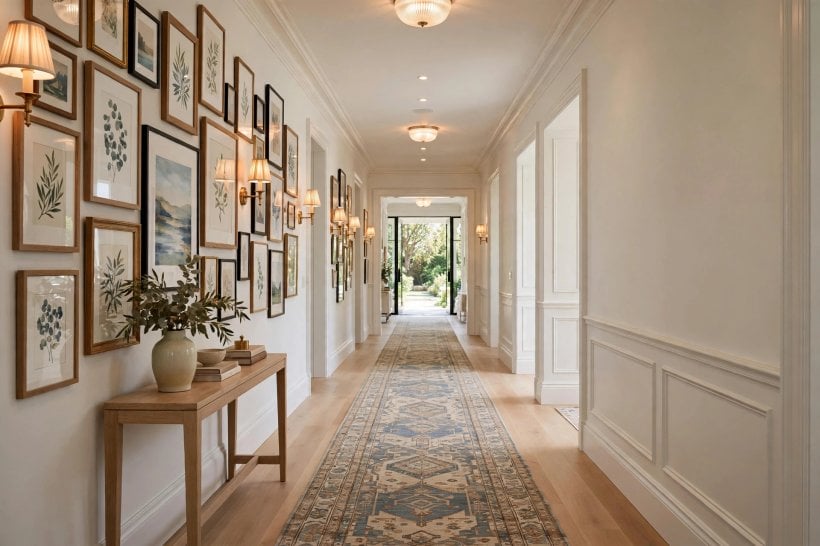
Measure first. Note the full length and width of the hall, the ceiling height, and where doors, stairs and radiators interrupt the walls, because those fixed points decide what furniture and storage will actually fit. In a long hallway, proportion is the main challenge: a narrow, extended space can feel like a tunnel, while the same space with clear zones, good light and a confident end point feels like a gallery. Check where natural light enters, if at all, and stand at both ends to see what the eye lands on.
Then decide the jobs this space must do. Most halls need somewhere for coats and shoes, a surface for keys and post, lighting that works at midnight as well as midday, and flooring that shrugs off wet boots. List those jobs before choosing colours or artwork, and price the essentials first: floor finish, lighting, storage and any electrical work, with written like-for-like quotes. Decorative extras can wait; a hall that works well every day is the foundation everything else hangs on, literally in the case of coats and bags.
| Check | What to look for | Why it matters |
|---|---|---|
| Width | Clear walking route past any furniture | Stops the hall feeling like an obstacle course |
| Light | Daylight source or a layered lighting plan | Prevents the tunnel effect at the far end |
| Flooring | Hard-wearing, easy to clean, not slippery | The hall takes the heaviest foot traffic in the home |
| Colour | Light walls with a deliberate accent | Brightens length without feeling stark |
| Storage | Closed space for coats, shoes and bags | Keeps the entrance calm and welcoming |
| Costs | Essentials priced before decorative extras | Avoids budget drift on a high-traffic room |
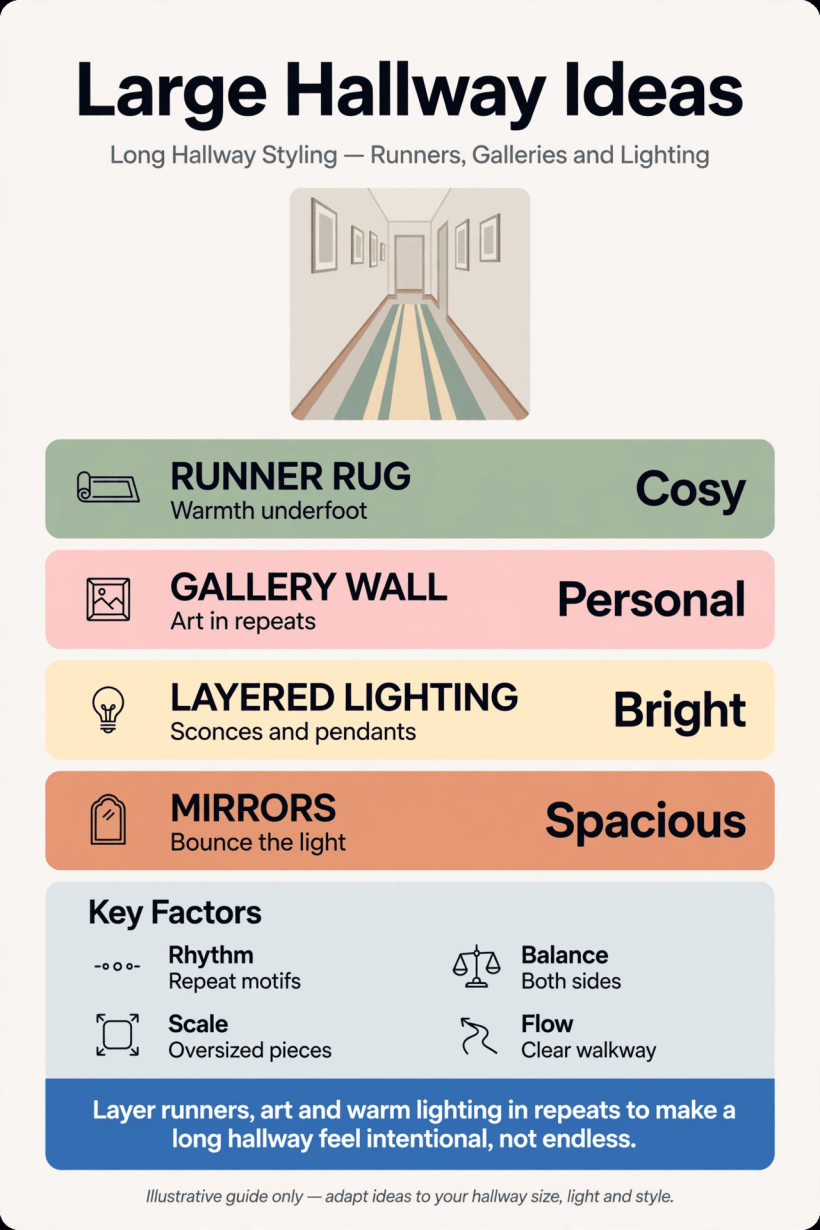
A quick visual summary of the layout, colour, lighting and cost checks covered in this guide.
2. Layouts and Proportions That Tame a Long, Narrow Space
Break the length into zones instead of treating the hall as one corridor. A console and mirror near the door create an arrival zone, a runner defines the walking zone, and a bench, bookcase or artwork at the far end gives the eye a destination. Keep the walking route genuinely clear: furniture should sit against one wall only, and nothing should force people to sidestep. If the hall is wide enough, a shallow bookcase run can turn dead wall into a mini library without narrowing the route.
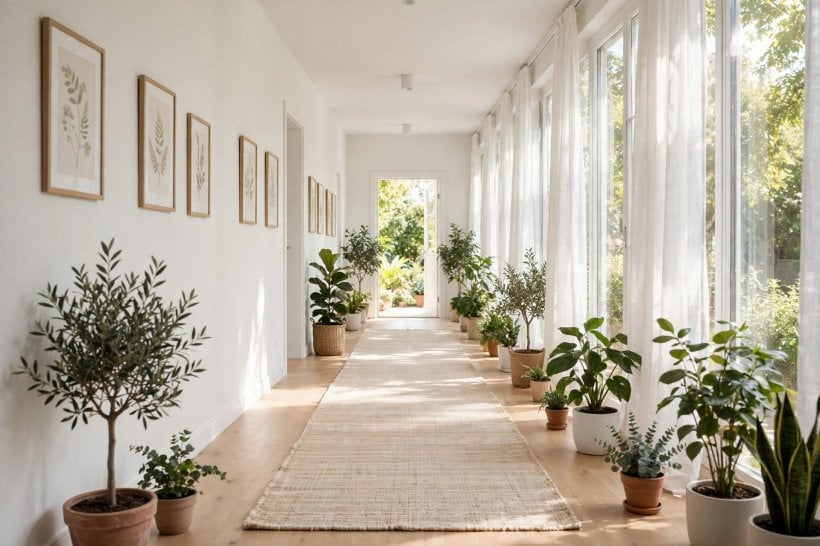
Rhythm helps too. Repeating elements at intervals, such as a series of framed prints, wall lights or doorways trimmed in the same colour, make length feel intentional rather than accidental. At the far end, place one strong focal point: a tall plant, a colourful painting, a window treatment or a striking door colour. The approach to the front door matters as well; these tiny house landscaping ideas show how paths and planting set up the entrance before guests even step inside. Finally, tape furniture footprints on the floor and walk them at busy times of day before ordering anything.
3. Colour Schemes That Brighten or Cosy Up the Space
Colour decides whether a hall feels airy or intimate, and both can be right. Pale walls in warm off-white, soft sage or a gentle greige bounce limited daylight and suit halls with no windows. If you prefer moodier spaces, a deep green, navy or plum on all walls, including the end wall, can make the length feel cocooning rather than endless, provided the lighting is warm and plentiful. The end wall is your secret weapon: painting it a deeper shade than the side walls visually brings it closer and shortens the tunnel effect.
Use the woodwork to structure the scheme. Doors and skirting in a slightly deeper tone than the walls add definition without visual clutter, while a contrasting front door colour gives the whole space a personality. Test large samples at both ends and in the middle, because light changes along the run. Characterful compact homes handle colour confidently; the schemes in this tiny barn house interior tour show how strong colour can still feel calm when it is repeated in small doses. Keep the ceiling pale unless you are deliberately chasing a cocooned feel, and repeat your accent colour in the runner, cushions on a bench or artwork frames.
4. Layered Lighting for Halls With Little Daylight
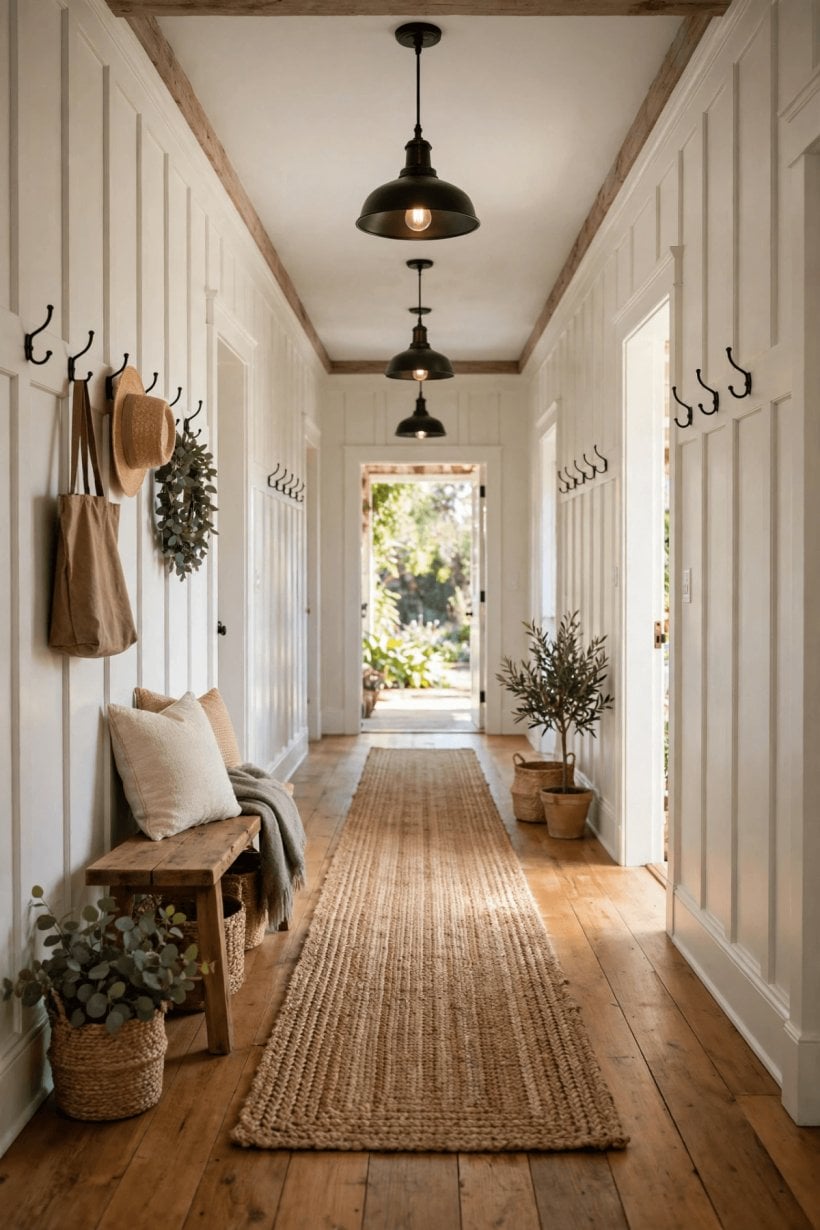
One central pendant rarely serves a long space well. Layer the lighting instead: ceiling lights spaced along the run for general brightness, wall lights or picture lights for warmth and interest, and a lamp on the console for a welcoming glow in the evening. Each layer on its own switch or dimmer lets the hall shift from bright and practical for cleaning to soft and calm for guests arriving after dark. Pay attention to the far end, which is usually the darkest and the most in need of its own light source.
Think about light temperature and glare. Warm bulbs flatter wood and painted colours and feel kinder in a windowless space, while exposed bulbs at eye level can dazzle people walking the length of the hall. A mirror placed opposite or beside a light source doubles its effect for free. The zoning and lighting tricks in these tiny house living room ideas translate well to halls, because both spaces need several jobs done in one footprint. If you are rewiring anyway, add sockets at useful points for a lamp, a vacuum cleaner and seasonal lights rather than trailing extension leads across the floor.
5. Flooring and Runners That Survive Daily Traffic
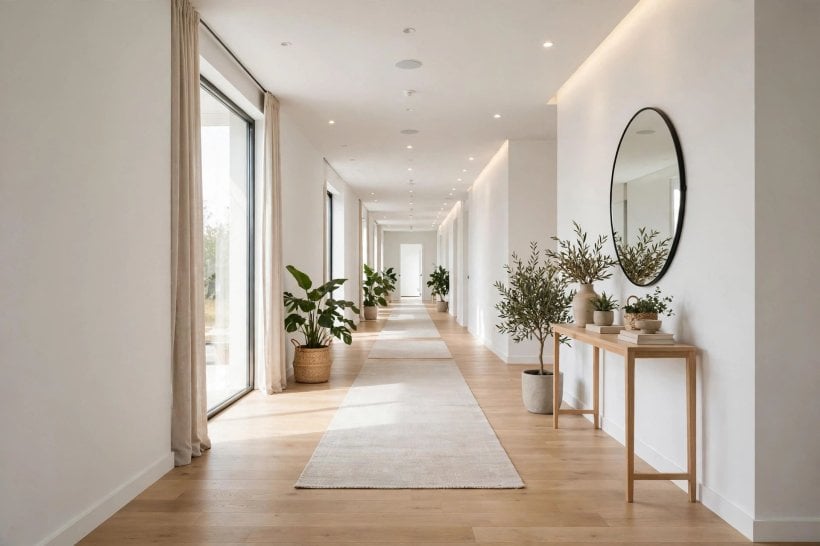
The hall floor works harder than any other in the house: grit, rain, muddy paws and heavy bags all land here first. Choose a surface that cleans easily and hides a little everyday dust between cleans, such as mid-tone wood, stone-effect tiles, or quality vinyl in a plank or tile format. Very pale floors show every mark; very dark floors show every crumb and hair. A subtle pattern or natural variation is the forgiving middle ground, and underfoot comfort matters on cold mornings, so test samples barefoot.
A runner softens sound, adds colour and protects the centre of the floor where traffic is heaviest. Measure so the runner sits clear of door swings and leaves a border of hard floor visible on each side. Choose a low pile that doors can clear and a backing or underlay that stops it creeping, because a rucked runner is a trip hazard. Near the front door, a proper coir mat or a mat well catches the worst of the dirt before it travels. Whatever you choose, agree the cleaning routine before buying: a floor that needs specialist products will quietly fall out of favour.
6. Furniture: Consoles, Benches and Slim Storage Pieces
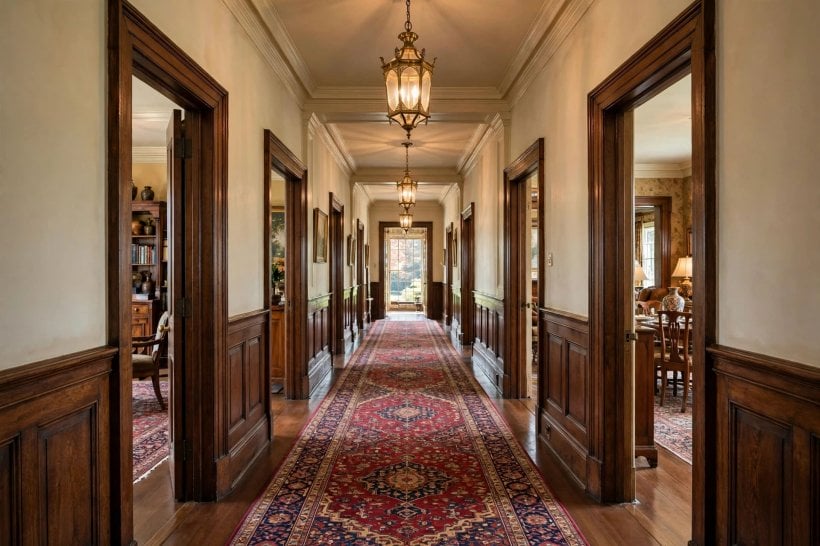
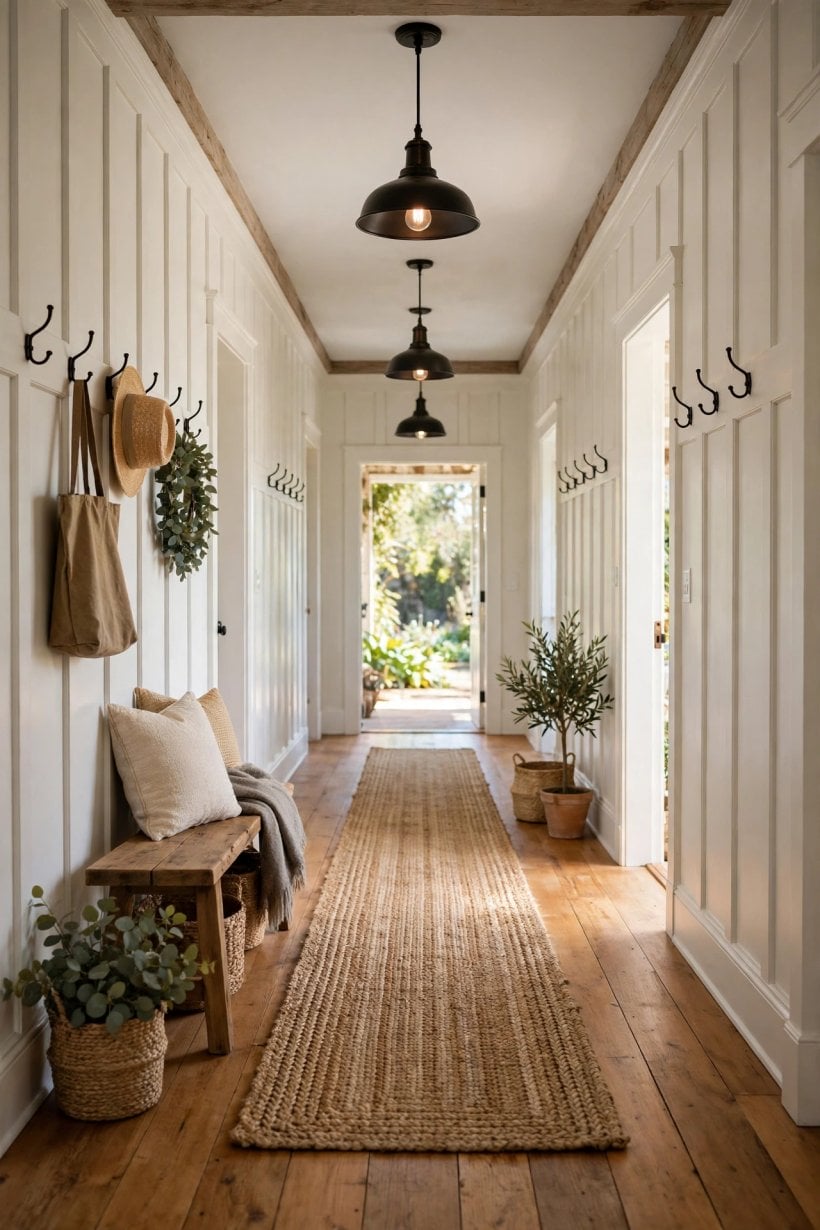
Hall furniture earns its place by doing at least two jobs. A console table with drawers holds keys, post and dog leads while its top carries a lamp and a bowl for loose change. A bench gives people somewhere to sit while putting on shoes and can hide baskets of hats and gloves beneath it. Wall-mounted pieces are the slim hall’s best friend: a floating shelf, a row of hooks or a shallow shoe cabinet keeps the floor clear and makes cleaning faster.
Measure depth before anything else, and be strict; a piece that is a few centimetres too deep will catch every passing shoulder and shopping bag. Keep one wall completely free if the hall is narrow, and hang the largest items, such as mirrors and art, flat rather than leaning. Multi-purpose thinking from other compact rooms applies here too: the flexible arrangements in these tiny house living room ideas show how one well-chosen piece can serve seating, storage and display at once. Leave breathing room around the front door swing, and check that drawers and cupboard doors can open fully without blocking the walking route when someone is passing.
7. Walls That Work: Panelling, Art, Mirrors and Colour Blocks
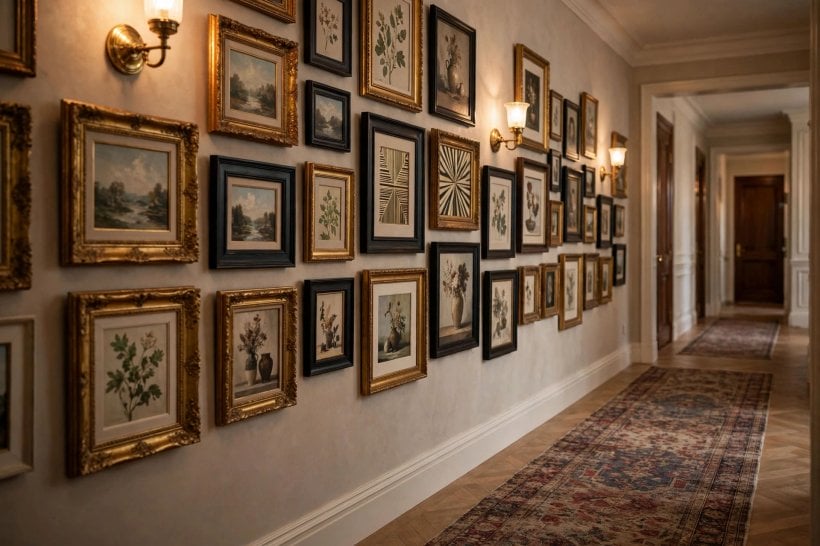
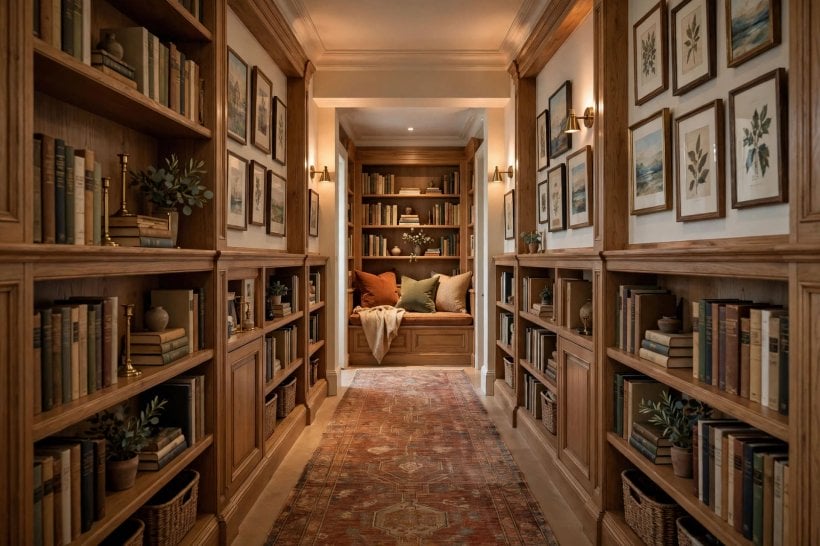
Bare long walls invite scuffs and boredom in equal measure. Panelling or a simple dado rail protects the lower wall where bags and boots knock, and it adds the rhythm that long spaces need. Above it, a gallery of framed prints or family photographs gives walkers something to enjoy; hang pieces at a consistent eye level and spacing so the run feels curated rather than random. A large mirror midway can break up the length and borrow light from the nearest source.
Colour blocking is a cheaper alternative to panelling: paint the lower third of the wall in a tougher, deeper finish and the upper part pale, with the dividing line running the full length. It is practical, forgiving of marks and easy to repaint when you fancy a change. For bolder inspiration, the joyful schemes in this colourful tiny house interior demonstrate how saturated colour on joinery can lift otherwise plain walls. Whatever you hang, fix it securely; hall art gets knocked by passing coats, hoovers and enthusiastic children more than art anywhere else in the house.
8. Coat, Shoe and Bag Storage That Stays Tidy
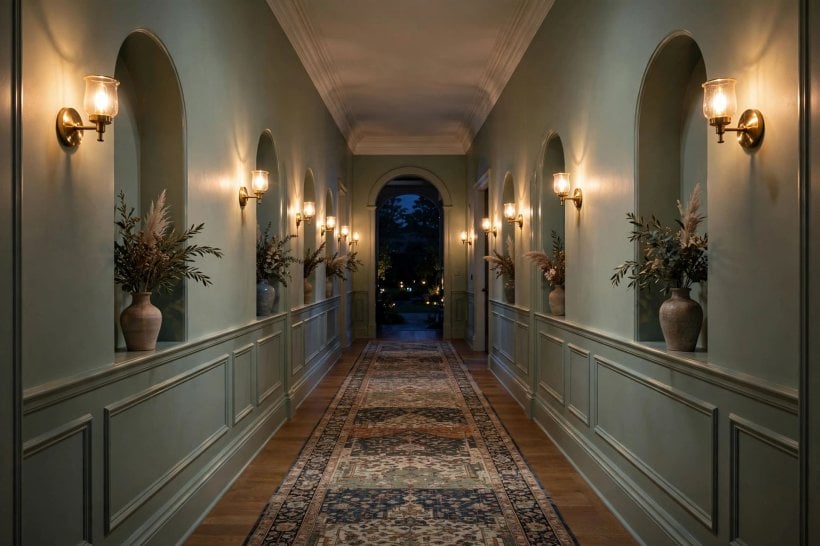
Entrance clutter is a storage problem, not a tidiness problem. Count the coats, shoes, bags, hats and sports kit that genuinely live in the hall, then provide closed or clearly zoned space for all of it, plus a small allowance for guests. Hooks at two heights serve adults and children, and a closed cupboard or curtained alcove hides the visual noise of a full family coat collection. Open storage looks good only when it is half empty, so be honest about your household’s habits.
Shoes need their own plan: a shallow cabinet, a bench with baskets, or a rack inside the coat cupboard. Wet boots belong on a tray or mat that protects the floor, ideally near a radiator or vent so they dry. Add a small landing strip by the door for post, keys and sunglasses so those items stop migrating onto the console in piles. Review the system each season, moving summer gear out and winter gear in, and the hall will stay calm instead of slowly filling with everything the household cannot place elsewhere.
9. Doors, Stairs and the Landing Connection
Doors along a hall are part of its design, whether you plan them or not. Painting internal doors in one considered colour, and matching the handles and hinges, gives a long run of doors a calm, deliberate feel. Glazed doors or a glazed panel beside the front door borrow light from the rooms beyond, which can transform a dark middle section. Check that every door can open fully without striking furniture, radiators or the stair newel, and that latch noise will not disturb bedrooms at night.
Where stairs rise from the hall, treat the staircase as part of the same scheme: the same flooring or runner continuing up, a handrail that is comfortable to grip, and lighting that makes every tread clear after dark. The space under the stairs is prime storage for the vacuum, board games or a desk nook. For restful rooms beyond the hall, these tiny house bedroom ideas and this guide to bedroom interior design for tiny houses show how calm colour at the end of the route rewards the walk. Keep the top and bottom of the stairs free of clutter; it is the one storage rule with no exceptions.
10. Costs, Trades and Practical Checks Before You Start
Sequence the spending. Essentials come first: any electrical work for layered lighting, the floor finish, storage joinery and decorating. After that come the pleasures: artwork, the perfect runner, a statement pendant. Get written quotes that specify the same scope, including making good after electrical or joinery work, because hall projects touch many small areas and the finishing details are where budgets leak. Keep a simple list of every decision and its cost in one place you actually update.
Practical checks save regret. Confirm the flooring choice suits the subfloor and any underfloor heating, ask about guarantees for high-traffic finishes, and check building rules with professionals where you plan structural changes, new electrics or plumbing for a hall cloakroom; a small washroom off the hall is a popular upgrade and these tiny house bathroom ideas help you judge what fits. If your hall project is part of a bigger compact-home plan, this overview of how to build your own tiny house explains the order in which decisions usually fall. Finally, live with samples for a week: prop the flooring board by the door, hang the paint swatches, and walk past them in boots, in socks and in the dark.
Final Considerations
A successful hall is not the one with the most ideas in it; it is the one where the route is clear, the light is kind at every hour, coats and shoes have a real home, and the far end gives you something pleasant to walk towards. Work through the checks in order: measure honestly, zone the length, choose colour for the light you actually have, layer the lighting, and spend on the floor and storage before the decorations. Do that, and the longest space in your home becomes the one that quietly makes every other room easier to live in.

0 Comments