
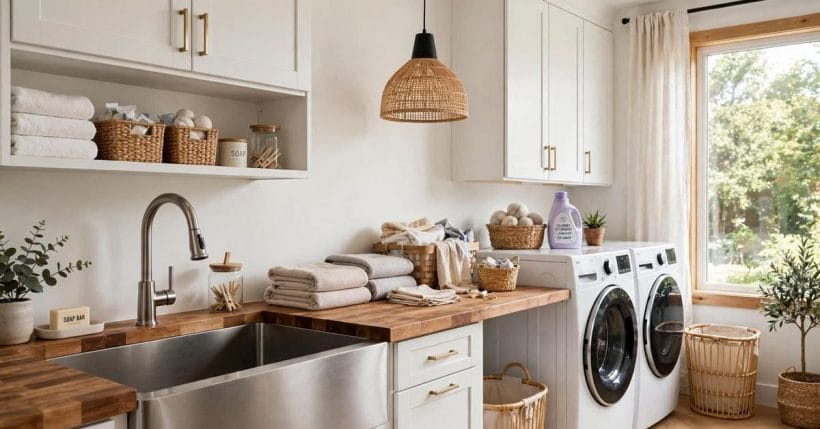
Every laundry room has one worker that never clocks off: the sink. It soaks the football kit, rinses the mop, bathes the dog, receives the paintbrushes and the muddy boots — and asks for nothing but a deep bowl and a tap with room to swing.
This post gives the utility sink its own seventy-five: the forms it takes, where it should stand, the taps and splashbacks that serve it, and how it earns its place in laundry rooms from a grand oak-panelled suite to a single stacked corner.
1. Laundry Room Sinks at a Glance
A utility sink is a deep-bowled sink built for work rather than for show: deeper than a kitchen sink, plainer than a bathroom basin, and sized for buckets, soaking loads and awkward objects. In a laundry room it is the wet workstation around which sorting, treating, soaking and hand-washing organise themselves — the machine washes, but the sink thinks. The search phrase laundry room sink ideas covers the whole station: bowl, tap, counter, splashback and the storage that keeps detergents within reach and out of sight.
This post owns the sink angle of the laundry family. The wider room is surveyed in the laundry room ideas pillar; the laundry split across a bathroom lives in bathroom laundry room ideas; and the closet and stacked configurations have their own posts, linked where the sink meets them below. Here, everything is read from the sink outward.
| Question | Short answer |
|---|---|
| Why does a laundry room need a real sink? | For the work machines cannot do: soaking, stain-treating, hand-washing delicates, filling buckets, rinsing cleaning gear and washing hands, pets and boots |
| What makes a sink a utility sink? | Depth first — a bowl deep enough to submerge a load or a bucket — plus a tap tall enough to serve it and a surround that forgives splashes |
| Where should it stand? | Between the sorting counter and the machines, on the room’s wet wall where plumbing already runs, with counter space on at least one side |
| What is the commonest mistake? | A shallow, pretty basin: it photographs well and soaks nothing. Depth and tap clearance are the whole point of the type |

2. The Forms a Utility Sink Takes
1. The deep single bowl
The workhorse: one generous, deep bowl that swallows a soaking load, a bucket, or a pair of boots without negotiation. For most laundry rooms this is the correct default, and the infographic’s first row — the deep soaking basin — is its portrait.
2. The double bowl
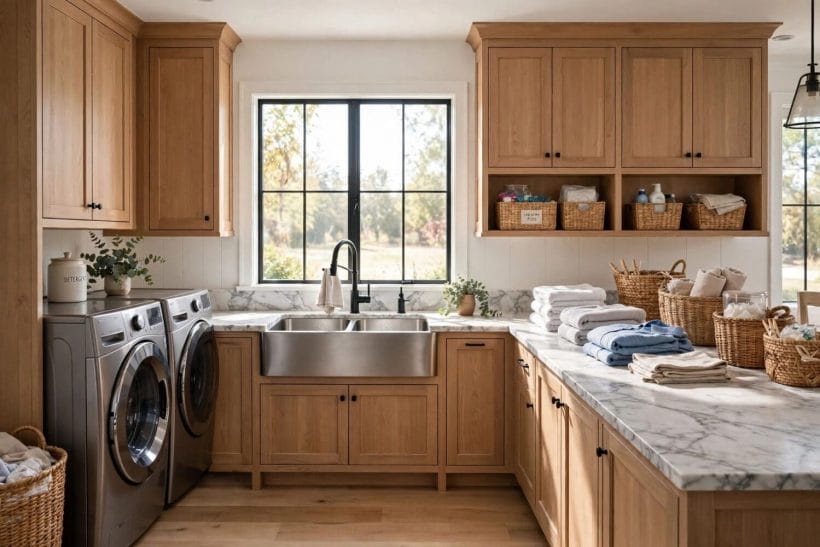
The oak room above runs two bowls under its window: one soaking, one rinsing, or one for laundry and one for the garden’s muddy harvest. Double bowls earn their width in busy households and in rooms that double as a scullery or flower room.
3. The apron-front sink
The farmhouse form — a deep bowl with its face proud of the cabinets — suits laundry rooms beautifully: you stand closer to the water, the bowl is deep by design, and the look forgives a working room’s honesty. The feature room’s stainless apron is the modern accent of the type.
4. The freestanding tub sink
The classic utility tub on legs: cheap, deep, replaceable, and unpretentious. In garages, basements and first laundries it is often the right answer, and its honesty has its own charm — add a counter beside it and it stops apologising.
5. The wall-mounted sink
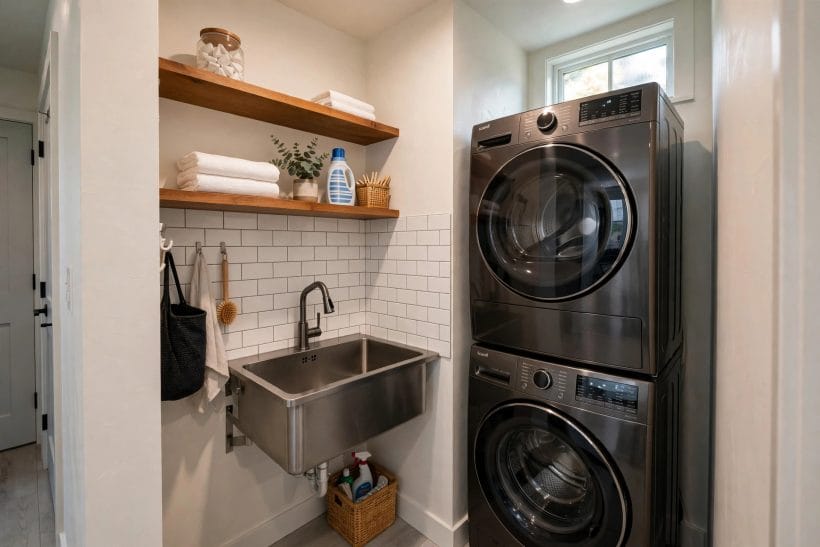
A bowl fixed to the wall with open floor beneath — gallery three shows the type in stainless steel — saves visual and actual space, lets a stool or basket slide underneath, and keeps the floor washable end to end.
6. The inset sink in a counter
A bowl dropped into a full counter run gives the sink a working apron of surface on both sides: sorting before, folding after, bottles corralled. It is the most kitchen-like arrangement and the one that makes a laundry feel like a designed room.
7. The trough sink
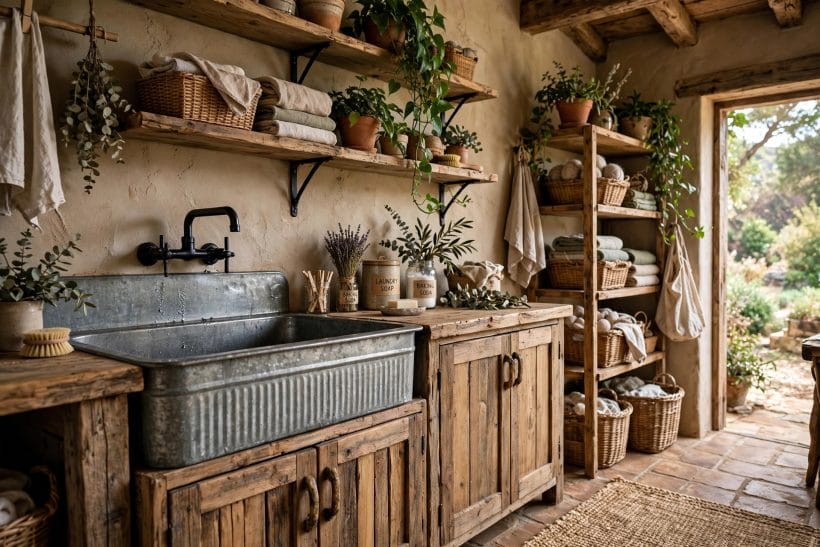
Long, shallow-ish troughs — gallery four’s galvanised example is the rustic original — serve several small jobs at once and suit rooms that wash dogs, boots and garden produce alongside laundry. Their length is their luxury.
8. The corner sink
Where the room’s one wet corner must hold both sink and machine plumbing, a corner-fitted bowl turns dead geometry into the workstation. It asks for a tap that swings, and rewards with floor space saved everywhere else.
3. Placement: Where the Sink Earns Its Keep
9. On the wet wall
Sinks belong where the water already is: the wall that carries the machines’ supply and waste. Plumbing runs stated generally — the shorter and straighter the run, the simpler the installation and the kinder the quote; a plumber confirms what your walls allow.
10. Between sorting and machines
The laundry’s workflow runs sort, treat, wash, dry, fold. The sink serves the treat stage, so it stands naturally between the sorting counter and the washer — close enough to transfer a soaked load in two steps, far enough to keep its splashes its own.
11. Under the window
The classic position, as in gallery one: daylight for stain-spotting, a view for the stander, and ventilation for steam and smells. If the room has one window, the sink has the strongest claim on it after the folding counter.
12. Counter on at least one side
A sink without landing space becomes a juggling act. Even a narrow counter wing on one side — for the soaking bowl’s overflow, the detergent, the garment being treated — transforms the station’s usefulness.
13. Height that suits the users
Utility work is standing work at depth: the rim should meet the users’ comfort, and a deep bowl lowers the working floor inside it. Households that soak often sometimes raise the whole station slightly; discuss heights with your installer before cabinets are fixed.
14. Clear of the door swing
The sink’s user stands still for minutes at a time. Keep that standing patch out of door swings and the machine doors’ arcs, or the room’s most-used spot becomes its most-bumped.
15. Near the garden door, if there is one
In laundry rooms that open outside, a sink near that door catches the outdoor dirt at the threshold — boots, tools, the dog — before it crosses the house. This is the mudroom logic that section nine develops.
16. In the closet laundry, a smaller claim
Not every laundry is a room. In the closet configuration surveyed in laundry closet ideas, the sink shrinks to a compact bowl or disappears into the kitchen’s — and this post’s compact section below takes up that case directly.
4. The Work: Soaking, Treating and Hand-Washing
17. Soaking, the sink’s first profession
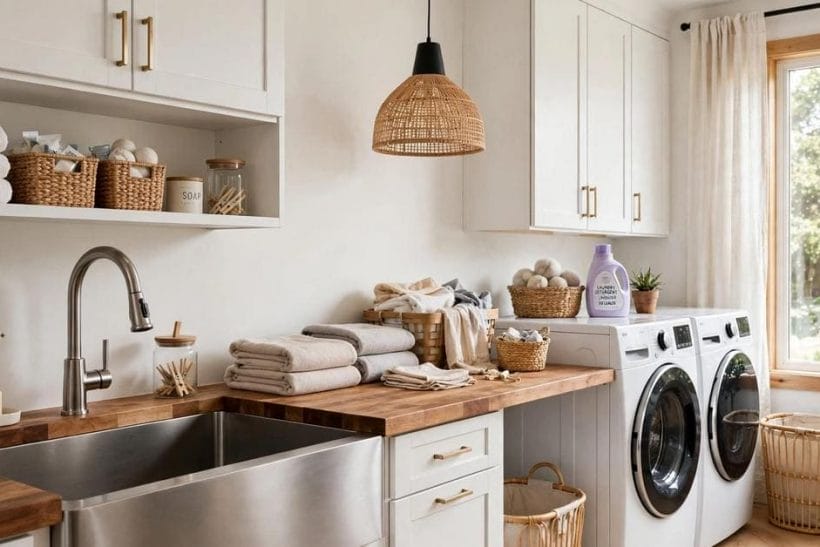
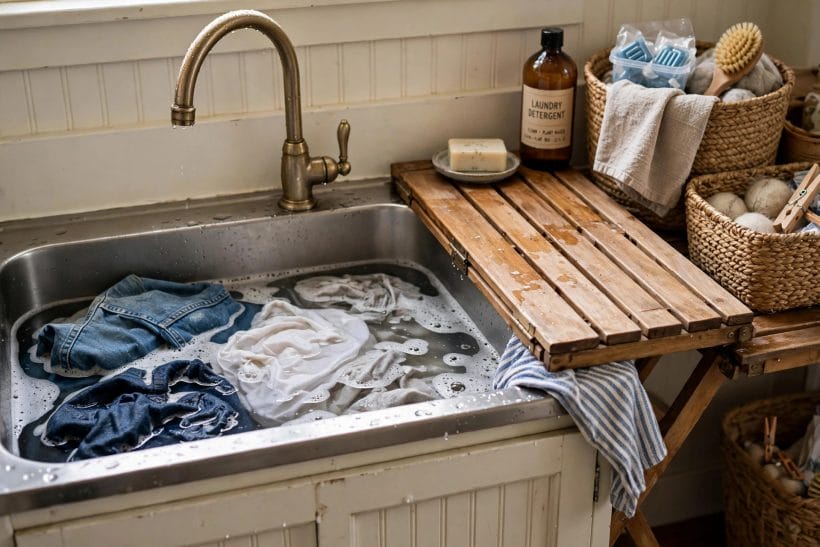
Gallery two is the sink at work: a full bowl, garments submerged, time doing the chemistry. Depth is what makes soaking possible — a load under water, not folded into a puddle — and it is the first specification to protect when choosing.
18. A board across the bowl
The wooden board in the same view is the sink’s oldest accessory: a working bridge for scrubbing, a draining rest for washed items, a lid that turns the bowl into counter. Ribbed or slatted, it earns its hooks on the wall beside.
19. Stain treatment at the bowl
Treat stains where water, light and elbow room meet: a small kit — brush, bar soap, treatment bottles — lives at the sink permanently, not fetched from a distant cupboard while the stain sets.
20. Hand-washing delicates
For the garments machines would ruin, the deep bowl is a gentle sea: room to swish without twisting, water changed in a moment. A bowl insert or a soft mat under silk and lace keeps the ritual kind.
21. Rinsing the cleaning army
Mops, cloths, brushes, vacuum parts, paint rollers: the sink is where the house’s cleaning tools come to be cleaned. A tall tap and a spray serve this work best, and a bowl that forgives grit is essential.
22. Filling and emptying buckets
The bucket test decides taps more than any other: the tap must clear a bucket’s rim, or filling becomes a tilt-and-splash performance. Swing or gooseneck taps pass; short fixed taps fail — measure with your own bucket in the showroom if you can.
23. Pets, boots and the muddy economy
Small dogs, football boots, wellingtons after the allotment: the utility sink absorbs the household’s mud before it reaches floors and baths. A hand spray makes these jobs quick enough to be done willingly.
24. Flowers, produce and the second life
Cut flowers conditioned, vegetables washed, seed trays soaked: laundry sinks near gardens lead double lives, and a clean, deep bowl serves both. Keep a dedicated scrub brush for the garden side of the sink’s personality.
5. Small Laundries and Compact Sinks
25. The wall-hung bowl in a tight corner
Gallery three’s arrangement is the small laundry’s manifesto: a wall-mounted stainless bowl, a tiled splashback, shelves above, and the stacked machines beside. Nothing touches the floor that need not, and the room works at full capacity.
26. Sink beside the tower
Where machines stack, as in the stacked washer dryer laundry room ideas post, the freed floor beside the tower is the sink’s natural plot — the two share a wet wall and divide the room between them, tower for washing, bowl for everything else.
27. Compact does not mean shallow
A small-footprint sink can still be deep: narrow and deep beats wide and shallow at every laundry task. When floor space is rationed, spend it on depth before width.
28. The fold-down and covered counters
In compact rooms the sink’s missing counter can be borrowed: a hinged flap, a board that covers the bowl, a pull-out shelf. The sink that becomes counter when dry doubles its own usefulness in the rooms that need it most.
29. Shelves instead of cabinets
Open shelves above a compact sink — gallery three again — keep the small room airy and the supplies visible at a glance. Baskets on the shelves restore order; the room stays light because nothing looms.
30. One tap, chosen well
Compact sinks forgive nothing in the tap: it must swing clear, reach the bowl’s corners, and clear a jug if not a bucket. A compact pull-out spray tap is the small laundry’s hardest-working fitting.
31. Borrowed sinks, honestly assessed
Some small laundries genuinely have no sink, borrowing the kitchen’s or bathroom’s. If yours is one, the honest upgrades are a soaking bowl that lives in the laundry and a hook for it — and this post’s other sections still serve the day a sink becomes possible.
32. The bathroom-shared case
Where laundry shares a bathroom, the basin must not be asked to be a utility sink — too shallow, too finished. A compact utility bowl fitted in the laundry zone, as the bathroom-laundry survey linked in the first section discusses, keeps both rooms sane.
6. Materials and Styles
33. Stainless steel, the professional
Steel is the utility standard: light, deep-drawn, unshockable, and honest about every splash. It suits contemporary rooms and working laundries alike, and its one vice — drumming noise — is cured by the better makers’ padding and by a mat in the bowl.
34. Fireclay and ceramic
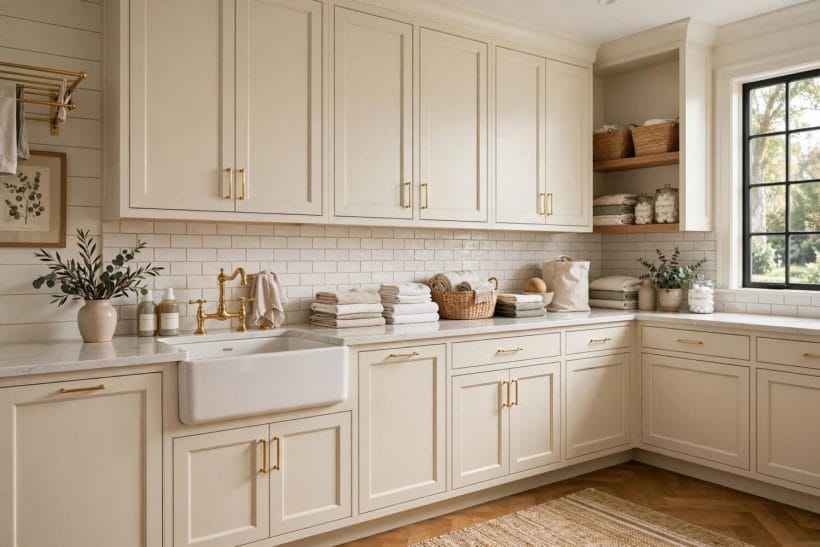
The white apron sinks of gallery five are ceramic’s case: a smooth, kind surface, a farmhouse face, and real weight that needs proper support. Ceramic forgives laundry chemicals and keeps its looks for decades of Mondays.
35. Galvanised and metal troughs
Gallery four’s zinc trough is the rustic branch: weathered, characterful, at home with timber and stone. Such sinks suit garden laundries and utility porches, and their patina is part of the purchase, not a defect to polish away.
36. Composite and acrylic bowls
Moulded composite tubs — the freestanding classics — are light, deep and inexpensive to replace, with a softness that forgives dropped bottles. They scratch and stain more readily than steel or ceramic; know the trade and choose it knowingly.
37. Stone and concrete
A carved stone or cast concrete sink is the laundry’s luxury statement: massive, cool, permanent. Its weight, cost and support requirements are correspondingly serious, and it belongs in rooms designed around it from the floor up.
38. Matching the room’s register
Steel for the sleek room, ceramic for the shaker room, zinc for the rustic room, composite for the starter room: the sink should speak the laundry’s language. A mismatched sink looks borrowed; a matched one looks inevitable.
39. Colour beyond white and steel
Coloured bowls — soft greens, stone greys, even black — exist and can anchor a laundry’s scheme, since the sink is often its largest single object. Choose colour in the bowl and keep the surroundings quiet; the reverse is harder to live with.
40. Scratches, honestly
Utility sinks accumulate honourable scars: steel brightens at rub points, ceramic keeps its glaze, composites mark. A laundry sink that must stay pristine is a laundry sink in the wrong job — choose the material whose ageing you like.
41. The cabinet beneath
Whether the bowl sits in a cabinet, on legs or on the wall decides the room’s storage as much as its look. Cabinet bases hide the plumbing and the bottles; legs and wall-hung bowls show the floor and lighten the room. Section eight prices the storage side of the choice.
7. Taps, Splashbacks and the Wet Wall
42. The tall tap rule
Height is the tap’s first virtue at a utility sink: clearance for buckets, watering cans and tall vases. Gooseneck and bridge taps, like gallery five’s brass pair, are the traditional answers, and the infographic’s faucet-reach factor is the same truth in miniature.
43. Swing and spray
A swinging spout serves double bowls and corner sinks; a pull-out or side spray serves everything else — rinsing the bowl’s corners, washing the dog, chasing grit to the waste. If you choose one upgrade at the sink, this is the household favourite.
44. Two taps or a mixer
Separate hot and cold taps are the period-correct choice and the slower fill; a single mixer is the practical modern answer. In rooms styled classically, bridge mixers marry the two — vintage silhouette, modern manners.
45. The splashback’s job
Behind a working sink, the wall takes weather: tile it, panel it or sheet it in something wipeable, to a height that respects real splashes rather than showroom ones. Gallery five’s subway tile and gallery three’s tiled corner state the standard.
46. Sealed joints
Where counter meets wall and sink meets counter, seals keep water out of the cabinet’s bones. Renew them when they crack or blacken; the cheapest maintenance in the room guards its most expensive furniture.
47. A rail, hooks and the tools of the station
A short rail or row of hooks on the wet wall holds brushes, the soaking board, a hand towel and the spray bottle of the day. The station is complete when everything its work needs hangs within one step of the bowl.
48. Light over the sink
Stain-spotting is visual work: a pendant, a cabinet light or the window’s daylight must reach into the bowl without the worker’s shadow. Test the light standing at the sink, not from the doorway.
49. Ordering the fittings well
Taps, wastes and fittings chosen for a sink should be checked for compatibility before the plumber arrives — sizes, threads and finishes confirmed against the sink’s own specification. The ordering plumbing fixtures online guide in this series sets out those checks in general terms, and they apply to every fitting named in this section.
8. Counters, Sorting and Storage Around the Sink
50. The folding counter
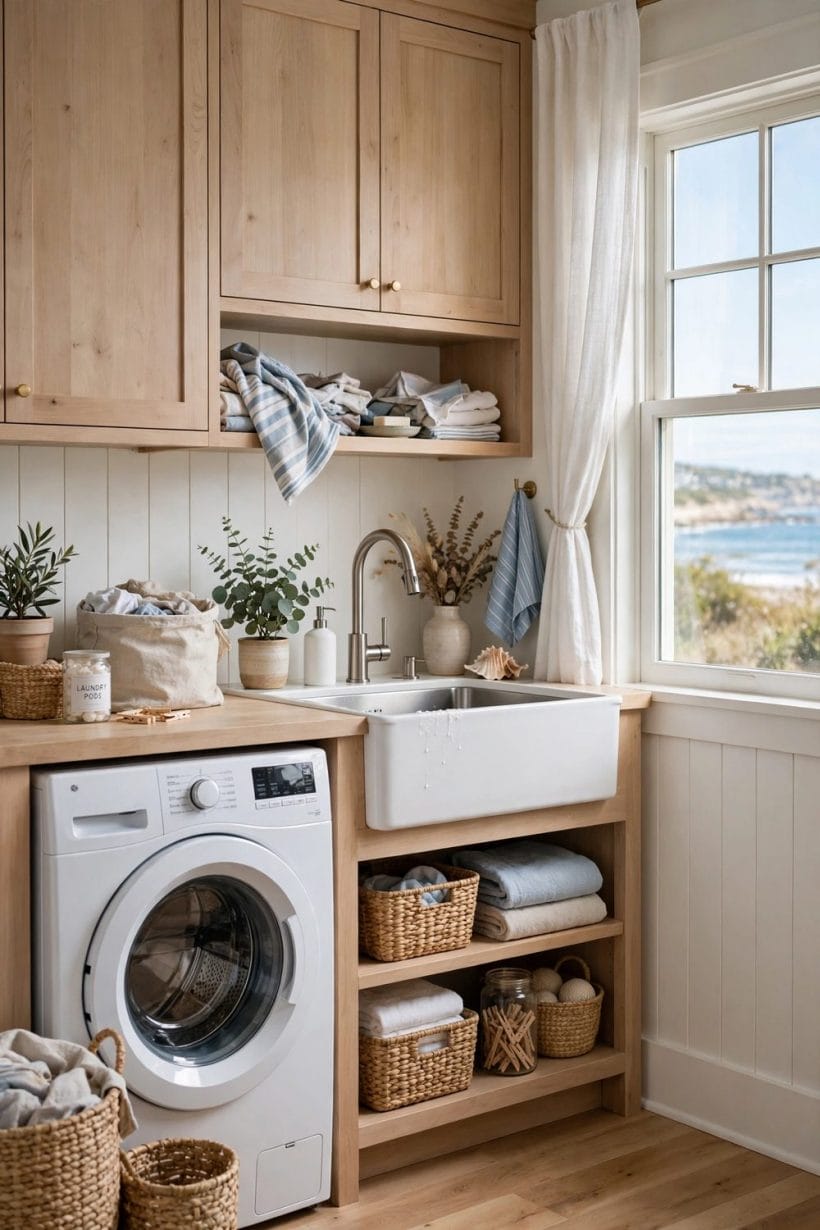
The counter that begins at the sink’s rim and runs over the machines — the feature room’s timber run — is the laundry’s true workbench: sorting at one end, soaking in the middle, folding at the other. If one surface in the room deserves investment, it is this one.
51. Sorting within arm’s reach
Baskets or bins for whites, colours and delicates should stand where the sorter stands — at the counter by the sink. Sorting that requires a walk becomes sorting that does not happen, and the sink’s treatments get skipped with it.
52. Bottles corralled
Detergents, treatments and sprays live in one tray, basket or cabinet — visible enough to use, contained enough to be safe, and never balanced on the sink’s rim. A tray that lifts out makes the wet wall cleanable in a moment.
53. Under-sink storage
The cabinet under the bowl holds the plumbing and should hold little else precious: cleaning stock, gloves, spare cloths — things water will not ruin on the day a joint weeps. Check under-sink spaces when you clean; small leaks announce themselves there first.
54. A rail for airing
Hand-washed items need somewhere to drip before they dry: a rail over or beside the sink, a small rack that folds to the wall. Airing over the bowl lets the drips fall where water belongs.
55. The ironing and mending outpost
Many laundries park the iron, the mending basket and the button jar near the sink’s counter, because the counter is where garments are examined. Good light — section seven’s point — serves the mending as much as the soaking.
56. Cabinets above, kept light
Wall cabinets over the sink store the tall and the seldom-used; keep the daily bottles lower, at the counter. Gallery five’s cream cabinets show the balance: storage that serves the station without looming over the worker’s head.
57. Labels and the household system
In shared households the sink station survives on small clarity: which basket is soaking, which bottle treats what, where the board hangs. Labels on baskets and a note inside a cabinet door are the whole management system a laundry needs.
9. Second Duties: Mudroom, Garden and Pet Duty
58. The mudroom laundry
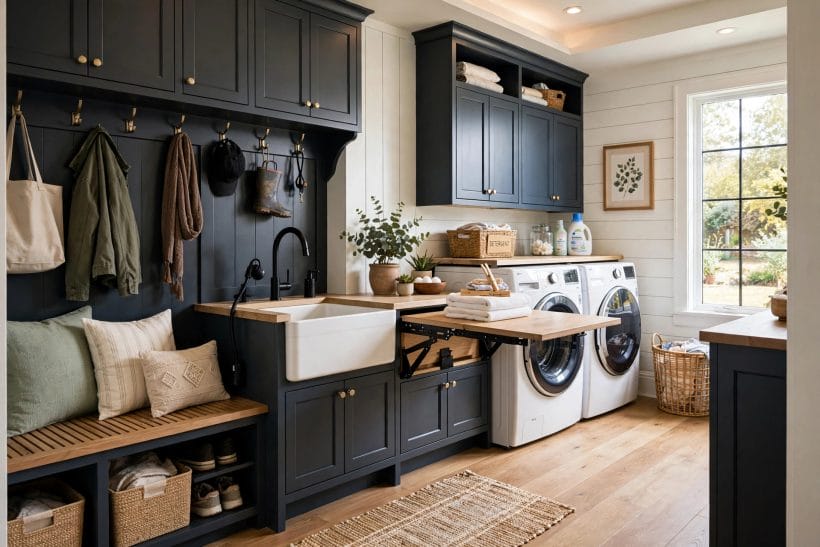
Gallery six shows the combined room: farmhouse sink, bench, hooks and machines in one navy composition. Here the sink is the border control between outdoors and in — everything muddy is processed at the bowl before it reaches the house.
59. Boot and shoe duty
A deep bowl, a stiff brush and a boot tray beneath: the sink washes what the doorstep shakes off. In mudroom laundries, a floor that drains or forgives is the sink’s necessary partner.
60. The dog-washing station
Small and medium dogs fit utility bowls and troughs; a hand spray, a non-slip mat and a towel rail complete the salon. Households that wash dogs weekly should choose the sink’s height and bowl for the dog as honestly as for the laundry.
61. Garden produce and tools
Vegetables washed, tools rinsed, seed trays soaked: the garden-facing sink is a potting bench’s wet half. Keep a separate brush and bowl-liner for soil work if the same sink serves delicates — households differ, hygiene is simple.
62. Flower arranging
Stems cut under water, vases filled without a jug’s gymnastics, buckets of blooms conditioning overnight: florists’ work is sink work, and a tall tap is the arranger’s best friend. The laundry sink near the garden door inherits all of it.
63. Cleaning the house from the sink
Buckets filled for floors, cloths rinsed between rooms, the mop wrung out: the utility sink is the cleaning cupboard’s tap. Its depth and clearance decide how graceful the house’s least glamorous work feels.
64. Painting and project clean-up
Brushes and rollers rinsed, trays washed, hands de-grimed — with the household rule that paint and solvents are handled and disposed of responsibly, never washed thoughtlessly to drains. Local guidance governs what may go down any sink; check it before the decorating starts.
65. The wet-room partnership
Where the laundry sits within or beside a bathroom, the utility sink takes the rough work and spares the bathroom’s basin entirely. The bathroom ideas pillar covers the finished side of that partnership; this post’s sink is content to be the household’s mudroom in a bowl.
66. Guests and the utility test
A house’s laundry sink quietly serves its guests too — a costume rinsed, a travel wash at midnight. A sink station that a stranger can understand at a glance, hooks and board and bottles in their obvious places, is hospitality of the practical kind.
10. Plumbing in General, Costs and Care
67. Plumbing, stated generally
A laundry sink needs a water supply, a waste with a trap, and venting arranged to your local code — all of it a licensed plumber’s province where rules require, and all far simpler when the sink stands on the room’s existing wet wall. This post states the shape of the work generally; your plumber states it for your house.
68. Waste height and the standing trap
Deep bowls drain from low down, and the waste arrangement must suit the bowl you choose — a detail to settle with the sink’s specification in hand before cabinets are built around assumptions. It is the classic utility-sink trap, in every sense.
69. Water pressure and mixed supplies
A spray tap wants decent pressure; an old house’s gravity supply may argue for a simple, generous tap instead. Let the plumber who knows your system advise — the fitting should suit the water, not the catalogue photograph.
70. What the money divides into
Without figures: budgets divide into the bowl, the tap, the cabinetry or supports, and the plumbing labour — with labour commonly the line that surprises, especially where the sink moves away from existing services. Quotes that itemise the four are the quotes you can compare.
71. Floors that forgive
Around a working sink, choose flooring that shrugs at water and can be mopped in earnest. A slight fall or a drain is a basement laundry’s luxury; everywhere, a washable mat at the standing patch is the knees’ best friend.
72. Keeping the bowl kind
Rinse grit before it scratches, lift metal tins rather than sliding them, and let the bowl be cleaned with the gentlest thing that works. A utility sink is a tool: maintained plainly, it outlasts the machines beside it several times over.
73. Smells and the trap
A little-used sink’s trap can dry and let drains announce themselves; a weekly jug of water down the bowl is the whole cure. In daily use the problem never arises — one more argument for giving the sink real work.
74. Winter and empty houses
In unheated laundries and holiday absences, traps and exposed pipes are the freeze risk; your plumber’s local advice — lagging, draining down, heating kept low — is the protection. Sinks in garages and outbuildings earn this paragraph most.
75. The sink as the room’s signature
Choose depth before beauty, a tall tap before a fashionable one, and counter beside the bowl before cabinets above it — and the plainest laundry becomes the house’s most competent room. The sink will not ask for thanks. It will simply be there, full of somebody’s football kit, doing the work it was shaped for.
Final Considerations
The utility sink is the laundry room’s conscience: deep enough for real work, placed where the water already runs, served by a tall tap and a forgiving splashback. The seventy-five ideas above are that conscience furnished — forms, placement, materials, storage and second duties, each in its section.
The laundry family this post belongs to — the pillar, the closet, the stack and the bathroom-shared rooms — is linked through the sections above; begin where your own room begins, at the bowl you have or the bowl you need. Measure your bucket, mind the depth, and let the sink do the rest.



0 Comments