

Wall-to-wall carpet in a small home has a reputation problem, mostly earned by deep, shaggy piles that trap dust and fight every door in the house. Choose a short, dense weave instead, and the story changes completely.
Here are the layouts, colours, honest cost factors and practical details that help compact rooms feel warm, calm and easy to live with.
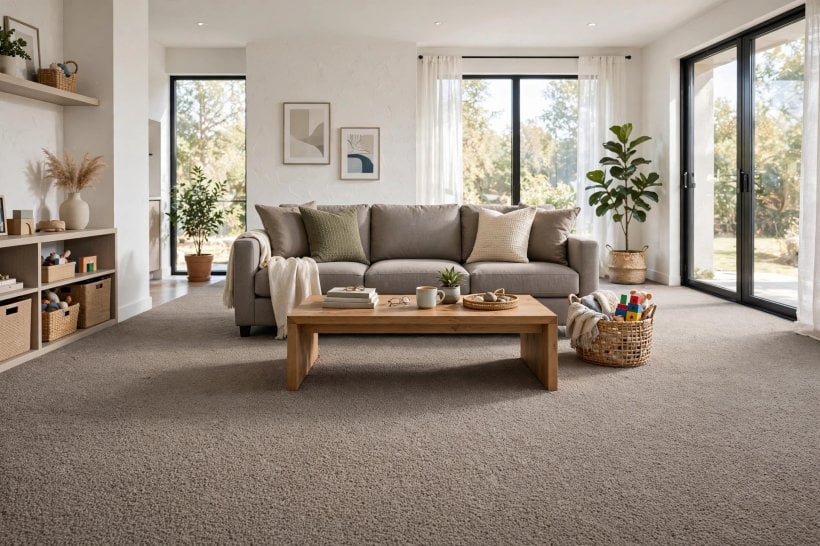
1. At a Glance: The Short Version
| Aspect | What to know |
|---|---|
| Where it shines | Busy small rooms, hallways and homes where doors, chairs and feet are in constant motion |
| Best layouts | Wall-to-wall in compact rooms; one large rug-style cut where you want boards showing at the edges |
| Colour behaviour | Mid-tones and flecked finishes forgive daily dust far better than very pale or very dark solids |
| Feel underfoot | Firm and supportive rather than plush; most of the softness comes from the underlay you choose |
| Cost picture | Usually at the friendlier end of carpet pricing, with underlay and fitting forming a real share of the total |
| Care routine | Regular vacuuming, prompt spot cleaning and an occasional deep clean; nothing exotic required |
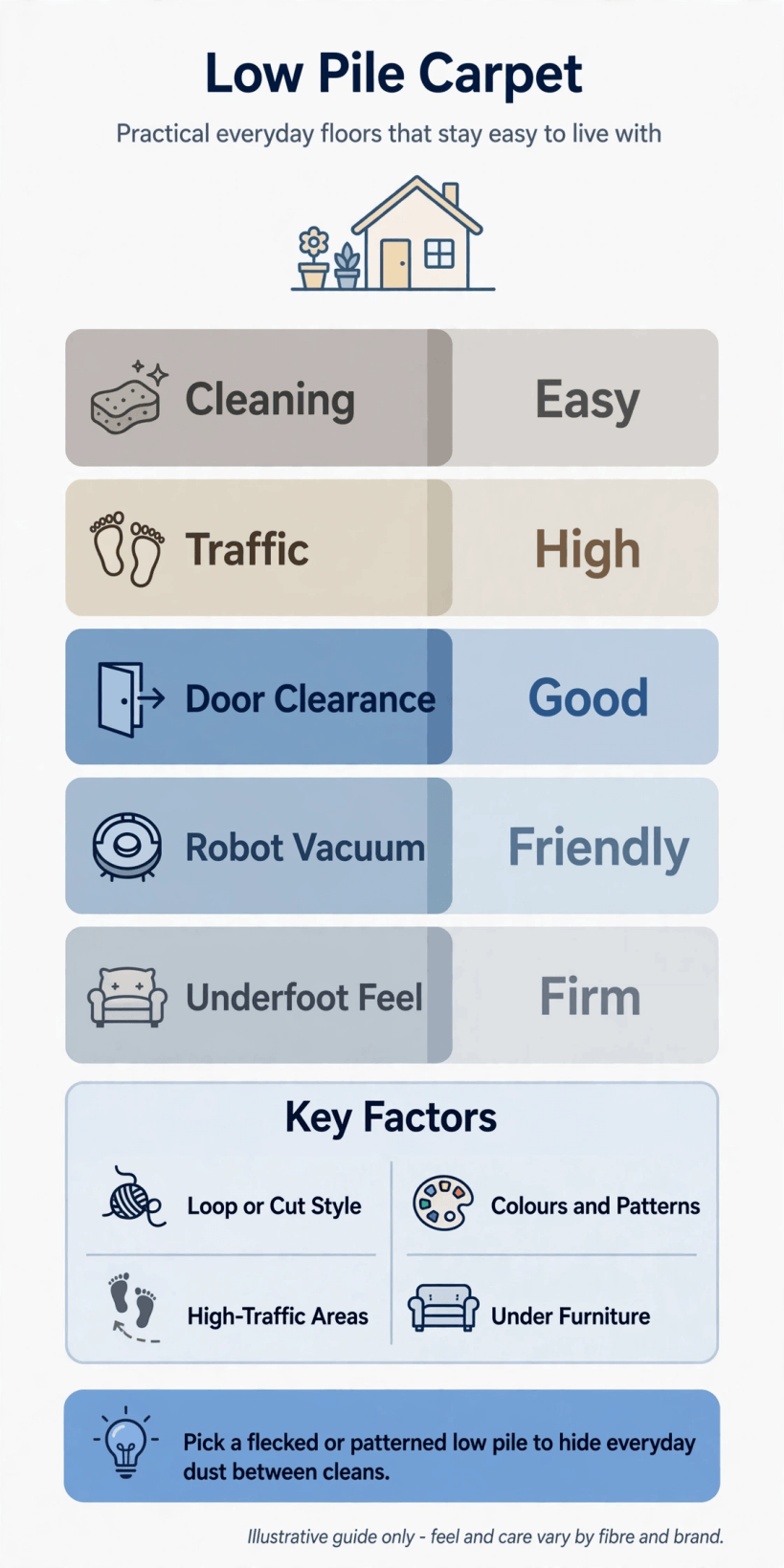
A visual summary of the layouts, colours and practical checks in this guide, so you can plan a whole room before ordering a single sample.
Short-pile carpet is the quiet achiever of small-home flooring. It does not demand attention, it does not swallow furniture legs, and it lets a compact room keep the warm, softened feel that hard floors sometimes struggle to give, especially in winter and especially in bedrooms and living spaces. This guide works through the decisions in the order you will actually meet them: how to lay it out, which colours behave, what the money really goes on, and the small fitting details that decide whether the result looks sharp or slightly sorry. If you are planning a whole compact interior rather than one room, the thinking here pairs naturally with modern interior design ideas for tiny houses, where flooring is treated as part of one calm, connected scheme.
2. Layouts That Keep Small Rooms Breathing
In a genuinely small room, wall-to-wall is usually the kindest layout. One continuous surface makes the floor plane read as a single calm field, which tricks the eye into seeing more space, and it removes the trip edges and curling corners that loose rugs bring. When you choose a low pile carpet for a compact room, that unbroken finish also means furniture can be rearranged freely, because there is no rug border dictating where the sofa is allowed to live this year.
The alternative worth considering is the single large cut: carpet laid like an oversized rug, stopping short of the walls so a border of board or tile shows around it. This suits rooms that are nearly square and homes where the floor beneath is worth showing. It also makes future changes cheaper, since a smaller piece is easier to lift, clean or replace. Whichever layout you pick, run the weave direction consistently through doorways into the next carpeted space; a change of direction at a threshold is a small thing that somehow makes both rooms feel cheaper. Light, relaxed schemes like those in beachy interior design ideas for tiny houses rely on exactly this kind of uninterrupted, sandy-toned floor to keep small rooms feeling open.
3. Runners, Hallways and Doors That Swing Freely
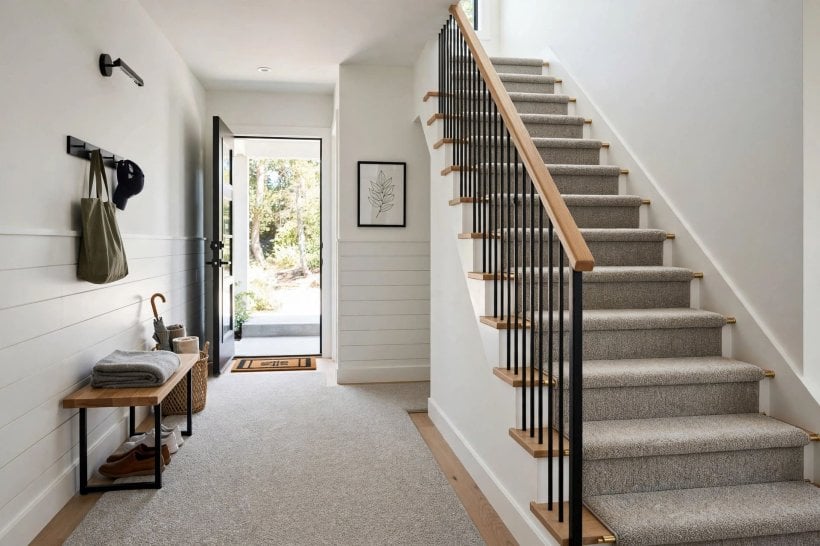
Hallways are where short, dense weaves earn their keep. A hallway takes more foot traffic per square metre than any other part of the home, often with grit carried in from outside, and a low, tight surface shrugs that off: dirt sits on top where a vacuum can reach it, instead of working down into a deep pile and grinding away at the fibres. A runner in the same spirit protects the heaviest traffic line while still letting the space feel finished.
Doors are the other winners. A slim carpet and a sensible underlay keep the overall floor build-up low, so doors usually swing without planing, draught strips still seal, and thresholds between rooms stay gentle rather than becoming little ramps. In a compact home where every door opens onto something, that clearance is a daily, unglamorous pleasure. If your hallway also serves as a gallery, mudroom or dog corridor, treat it as the hardest-working room in the house and specify accordingly: the tightest weave, the most forgiving colour, and a mat outside that does the first shift of dirt removal before shoes ever reach the carpet.
4. Living Rooms: Wall-to-Wall or the Big-Rug Look
The living room is where the layout decision matters most, because this floor has to host everything: seating, a coffee table, children on the floor, the occasional nap. Wall-to-wall gives the softest, most unified result and is the better choice where the subfloor is unattractive or the room is an awkward shape. The big-rug look, one generous cut centred on the seating, works beautifully where boards are good and you want definition without commitment.
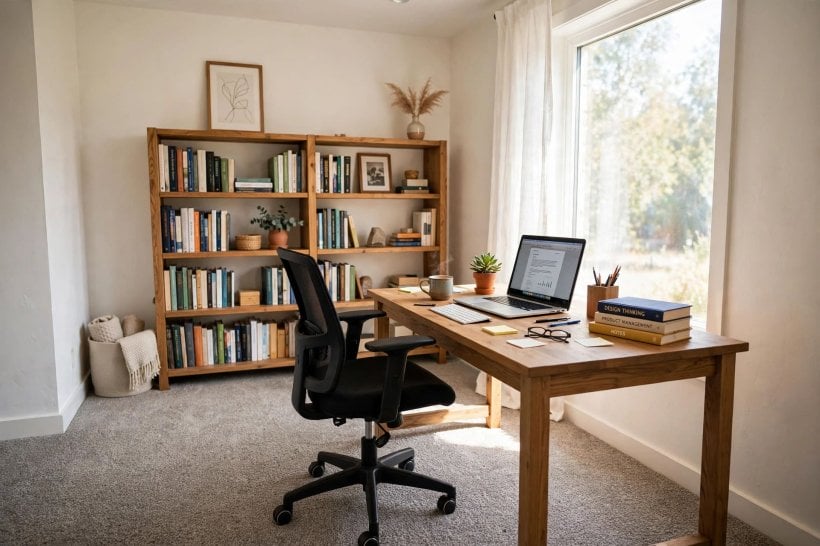
Practical points decide between them. Chairs and sofas on castors or slim legs move far more easily on a short, firm surface, and a coffee table will not slowly sink and tilt the way it can on deep pile. If the room doubles as a workspace, a desk chair on wheels is the real test, and it is one these carpets pass without needing a plastic mat. For more ways to zone a compact sitting space, modern living room interior design ideas for tiny houses show how one well-judged floor treatment can hold a whole multi-purpose room together.
5. Colours That Forgive Everyday Life
Colour choice on a floor is a long marriage, so pick for the life you actually live. Very pale carpets are beautiful for one photographed afternoon and then begin their long career of showing every crumb, paw print and dripped coffee. Very dark solids are nearly as demanding, displaying pale dust and lint like a blackboard. The forgiving middle is where happiness lives: warm mid-greys, stone, oatmeal, soft taupe and gentle heathered browns that hold a week’s dust without announcing it.
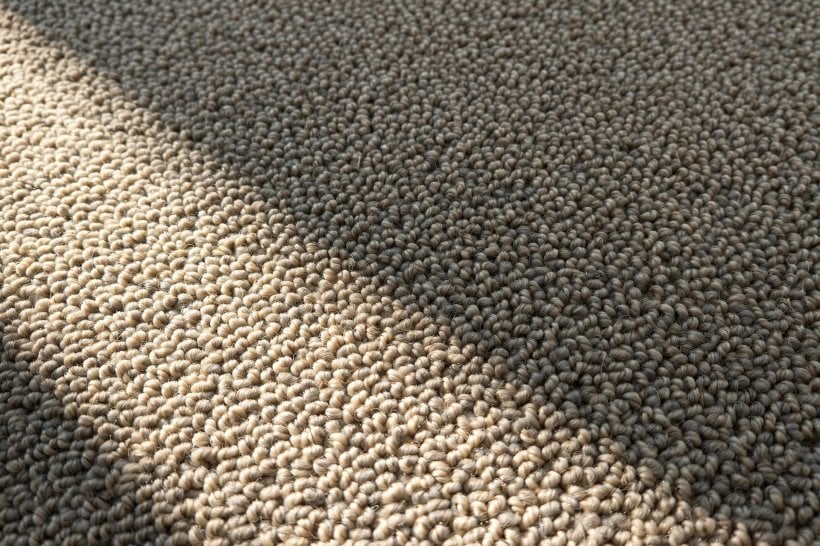
Fleck is your friend. A carpet woven with two or three closely related tones hides the evidence of real life far better than any flat colour, because the eye cannot settle on a single speck against a varied ground. In open-plan spaces that run into a kitchen or dining area, that same flecked mid-tone also bridges zones gracefully, which is why it appears so often in kitchen tiny house small space design, where floors must look calm next to busy cabinetry. Always judge samples at home, in your own light, at night as well as morning, and against your largest piece of furniture rather than against the shop wall.
6. Pattern, Fleck and Quiet Texture
Short weaves cannot rely on plushness for interest, so they borrow it from pattern and texture instead, and they do it very well. Fine stripes can stretch a narrow room visually when laid along its length. Small-scale geometrics and trellis effects add formality to a plain box of a room without shouting. A simple ribbed or looped texture gives plain colour depth, catching light differently across the day so the floor never looks flat.
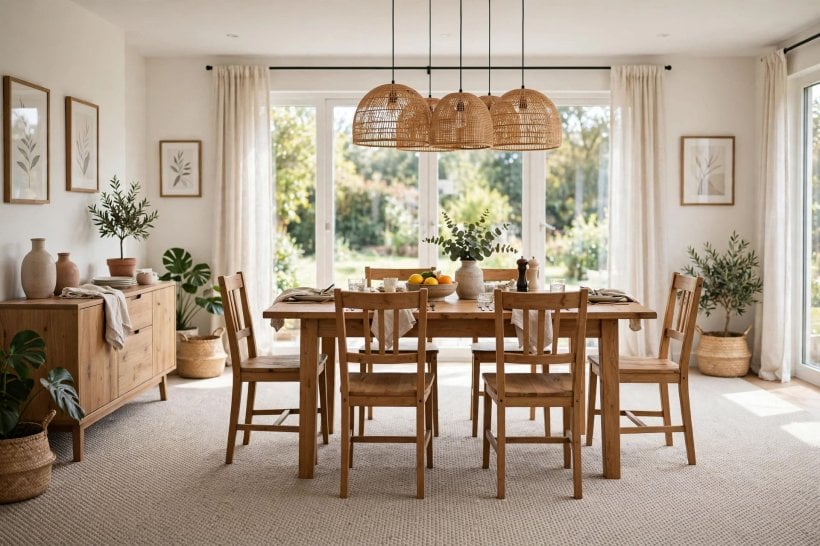
Keep the scale honest. In a small room, a large, bold pattern will repeat too few times and start to argue with the furniture, while a small, regular one settles into the background and quietly hides wear, seams and the faint tracking that develops along favourite walking lines. Dining areas benefit most of all: chairs slide instead of gripping, crumbs are easy to lift, and a patterned surface disguises the odd splash between cleans, a combination that tiny house kitchen design also leans on when eating spaces are planned a step away from the cooking zone. Order the biggest sample you can, live with it under the table for a few days, and let real life vote.
7. Bedrooms: Warmth Without the Fluff
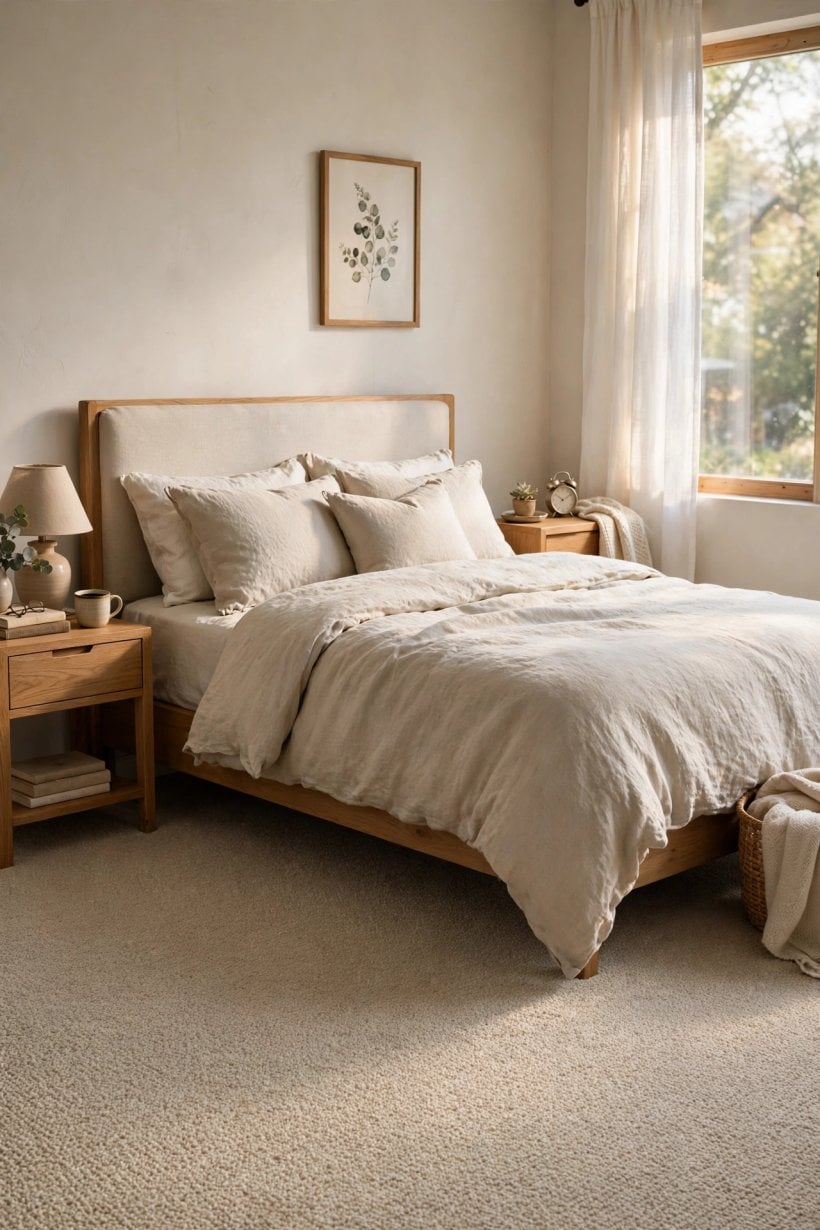
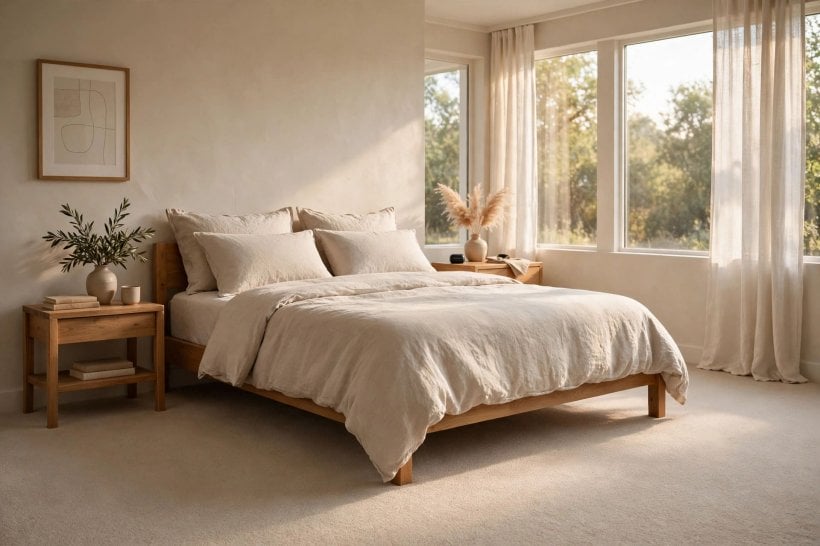
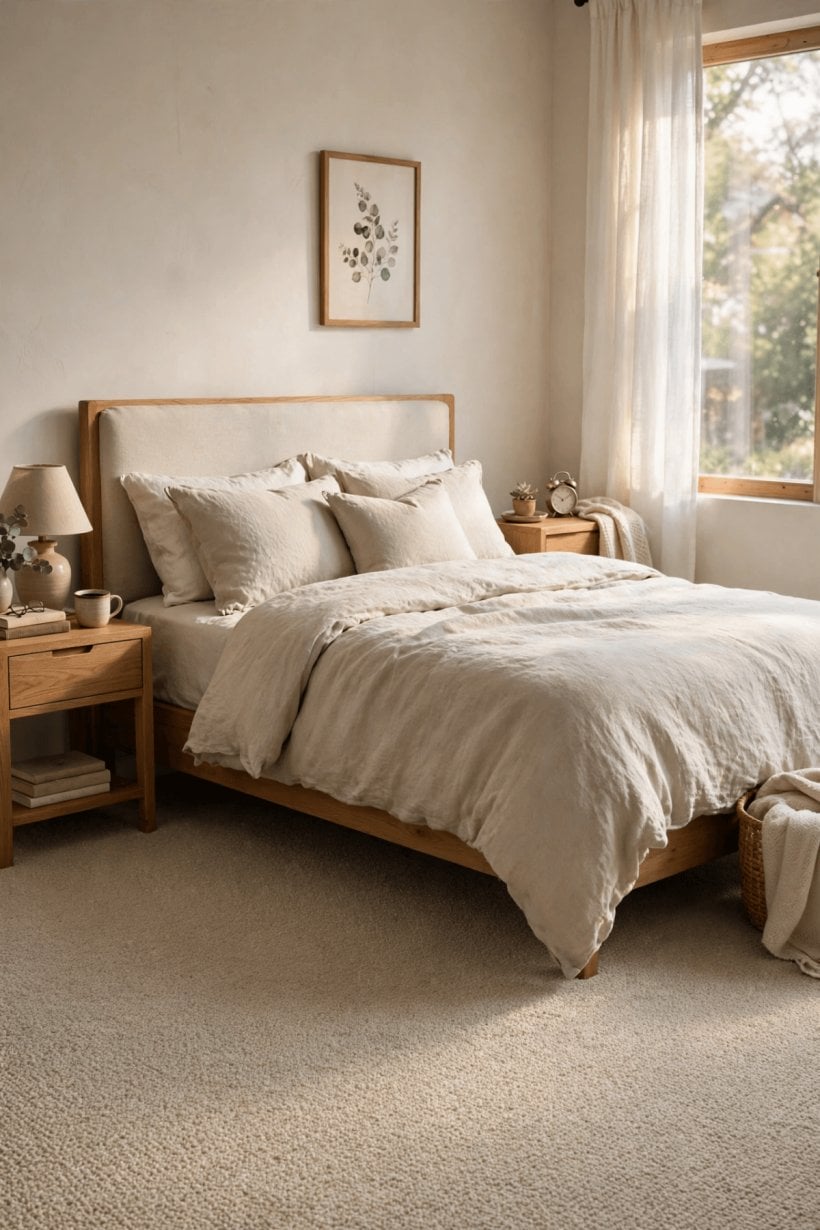
Bedrooms are the emotional heart of the carpet argument. Nobody loves stepping onto a cold hard floor on a winter morning, and a short dense carpet with a decent underlay delivers that first-step warmth without the dust-holding depth of a shaggy pile. It also softens sound: footsteps, a dropped phone, a partner leaving early. In a small home where bedrooms sit close to living spaces, that hush is a genuine quality-of-life upgrade.
Choose the calmest colour in the house for this room, usually a shade softer or warmer than the living areas, and let bedding and curtains provide the pattern instead. Keep the weave tight near an ensuite doorway, where damp feet come and go, and take the same practical line as bathroom interior design ideas for tiny houses: hard, waterproof flooring inside the wet room itself, and carpet beginning only where feet are properly dry. A washable bedside rug over the carpet adds the plush moment your feet want, and can be shaken outside in a way fitted carpet never can.
8. Costs in Plain Terms: Where the Money Actually Goes
Short, dense carpets generally sit at the friendlier end of the carpet market, because they use less fibre than deep luxury piles and are produced in large, popular ranges. That is the good news, and it is real, but the roll itself is only part of the bill. Underlay, fitting, edging strips, door bars and the uplift and disposal of the old floor all belong in an honest budget, and together they can form a surprisingly large share of the total, sometimes rivalling the carpet itself on smaller jobs.
Where money is saved is mostly in waste and time. Small, rectangular rooms cut efficiently from standard roll widths, while L-shaped spaces and stairs generate offcuts you pay for but never walk on, so measure honestly and ask how the fitter plans the cuts. Doing your own uplift and moving furniture out beforehand can trim fitting time. Where money should not be saved is underlay: a good underlay under a modest carpet feels better, lasts longer and insulates better than a premium carpet stretched over tired, thin padding. Think of the budget in layers, literally, and fund each layer fairly rather than spending everything on the surface everyone sees.
9. Practical Details: Underlay, Seams, Edges and Thresholds
The details nobody photographs are the ones that decide whether a carpet looks fitted or merely placed. Underlay should be firm enough to support a short weave without a spongy bounce; too soft, and the carpet flexes at every step and wears at the fold points. Seams in low, flat weaves are harder to hide than in deep pile, so plan them away from main sight lines and main walking routes, ideally under where furniture will stand, and insist they run in the same weave direction as the main piece.
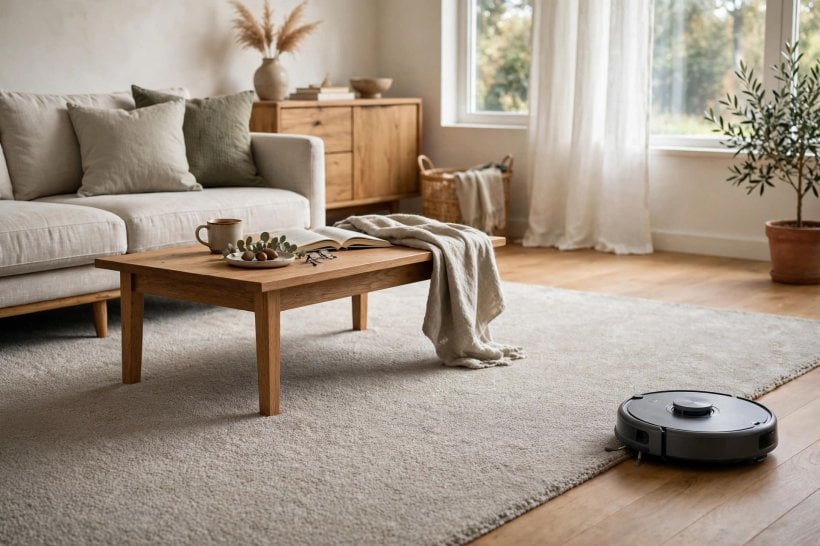
Edges and thresholds deserve the same care. Gripper and neat tucking give that crisp perimeter line, and a low-profile door bar keeps the junction with hard floors trip-free and vacuum-friendly, especially important where a wheelchair, pram or robot vacuum crosses many times a day. Anyone building or renovating their own compact home, as described in how to build your own tiny house, will recognise the principle: the junction details are the build. Measure door clearances after the sample and underlay are stacked together, not from the carpet alone, and keep offcuts stored flat; a saved square repairs a future burn or stain almost invisibly.
10. Care and Cleaning: Keeping It Fresh for Years
Care is where short weaves quietly outscore every deep pile. Dirt and grit stay near the surface, so a regular vacuum genuinely removes them instead of performing over a hidden layer of debris, and that single fact slows the abrasive wear that dulls carpet fibres. Vacuum traffic lanes little and often rather than heroically once a month, slow down on the return stroke, and empty the machine before it is full so suction stays honest.
Spills reward speed over chemistry. Blot, never scrub, work from the edge of the mark inward, and use mild solutions sparingly, because soap residue left in a short weave attracts fresh dirt to exactly the spot you just cleaned. A seasonal deep clean, hired machine or professional, lifts the general greyness that daily vacuuming cannot, and rotating a washable rug in the highest-traffic patch spreads wear across years instead of months. Doormats at both doors, shoes off where your household can bear it, and felt pads under furniture feet complete a routine that is measured in minutes a week, which is precisely the point of choosing an easy floor in the first place.
Final Considerations
A small home asks its floor to do everything: warm the bedrooms, calm the living space, survive the hallway and still look composed when guests arrive. A well-chosen low pile carpet, laid out thoughtfully, coloured forgivingly and fitted with care in the details, does all of that without drama and without devouring a budget. Pick the tight weave, fund the underlay, mind the thresholds, and enjoy a floor that simply gets on with its job for years.

0 Comments