

You spend more time looking at your bedroom ceiling than any other surface in the house — first thing in the morning, last thing at night. It deserves better than plain, forgotten white.
These 75 master bedroom ceiling ideas cover beams, trays, colour and light, from a weekend paint refresh to full architectural detail.
1. Plan the Fifth Wall: Proportion, Height and Budget
Start by looking up with fresh eyes: how high is the ceiling, where does light fall, and what does the room lack — height, warmth, drama or calm? For whole-room context, browse our tiny house bedroom ideas and note how the best rooms treat the ceiling as part of the design, not an afterthought.
| At a Glance | Best Move | Why It Works |
|---|---|---|
| Best quick win | Paint in a considered colour | Transforms the room in a single weekend |
| Best for character | Beams or faux beams | Adds architecture without rebuilding |
| Best for luxury | Tray or coffered detail | Instant hotel-suite polish |
| Best for low ceilings | Flush lighting and pale tones | Keeps every centimetre of height |
| Best for sleep | Soft, dimmable, warm light | Calms the room down at night |
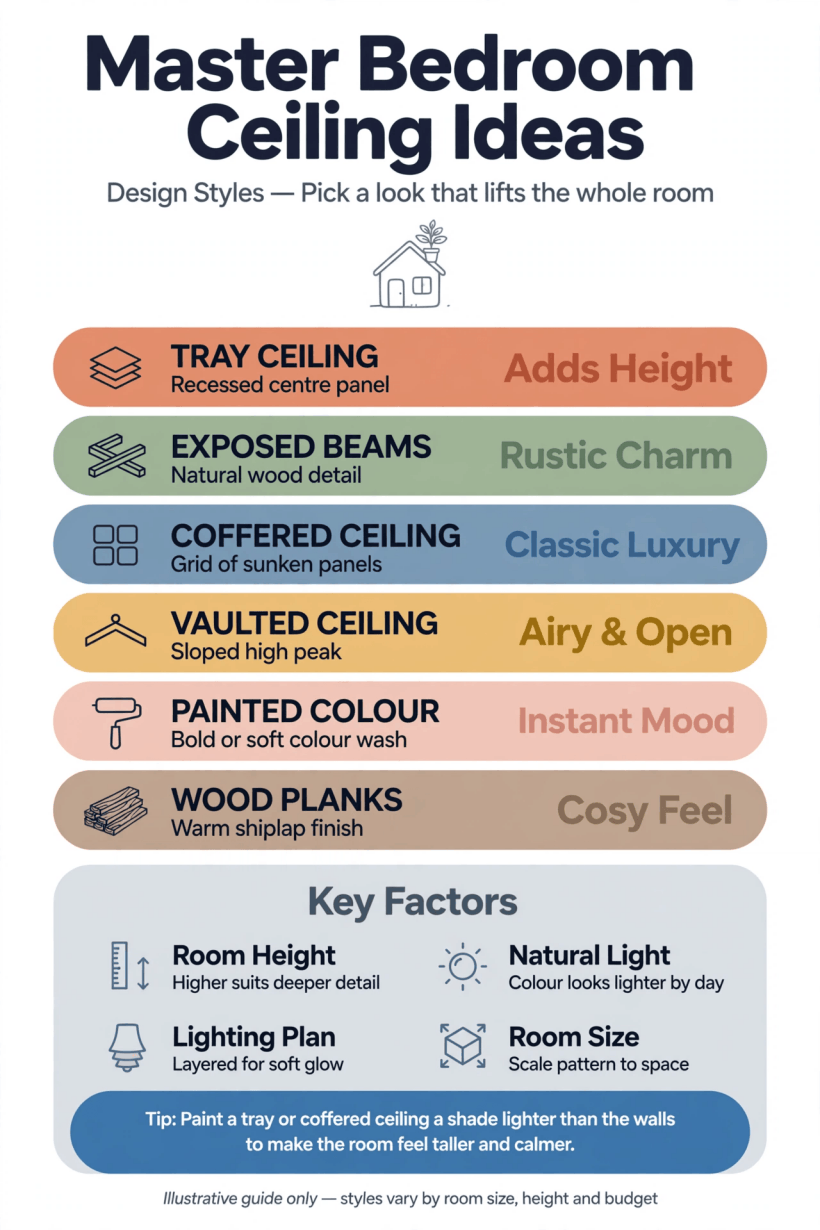
The plan in one picture: read the room’s height and light first, then choose detail, colour and lighting in that order.
1. Photograph the Ceiling From the Bed
Lie where you sleep and take a photo looking up. This is the view you actually live with, and it instantly shows cracks, stains, a dated light fitting or a blank expanse that a standing glance never reveals.
2. Measure Height Before Choosing Detail
Deep beams and dropped trays eat headroom, so measure first and match the detail to the height you have. A shallow detail on a low ceiling gives the same tailored feeling without the looming effect.
3. Decide the Mood in One Word
Pick one word — calm, cosy, grand, airy — and judge every idea against it. A single mood word keeps beams, colours and lighting pulling together instead of each competing for attention overhead.
4. Check What Is Above Before You Drill
Joists, pipes and cables may run above the plaster, so investigate before fixing anything heavy. If you are unsure what is up there, ask a qualified tradesperson to confirm rather than discovering it with a drill.
5. Set a Layered Budget: Structure, Surface, Shine
Divide spending into structure (beams, trays), surface (paint, panels) and shine (lighting, fans). Even rough thirds stop the budget vanishing into one feature while the boring basics stay unfinished.
6. Test Colours on the Ceiling Itself
Paint test patches overhead, not on the wall: light falls differently and colours read darker above you. Live with the patches through a full day and evening before committing to the whole ceiling.
7. Match Detail to the House’s Age
Picture rails, coving and beams suit period bones; crisp shadow gaps and flush lines suit new builds. Echoing the home’s own character overhead makes the bedroom feel designed rather than decorated.
8. Plan Lighting Positions With the Furniture
Mark where the bed, wardrobes and reading chairs sit, then position ceiling lights to serve them. A pendant centred on the room but not the bed can look oddly adrift once furniture lands.
2. Beams, Battens and Beautiful Woodwork
Nothing adds instant architecture like timber overhead. Real, faux or merely suggested with battens, wood warms the biggest blank surface in the room.
9. Add Faux Beams for Instant Character
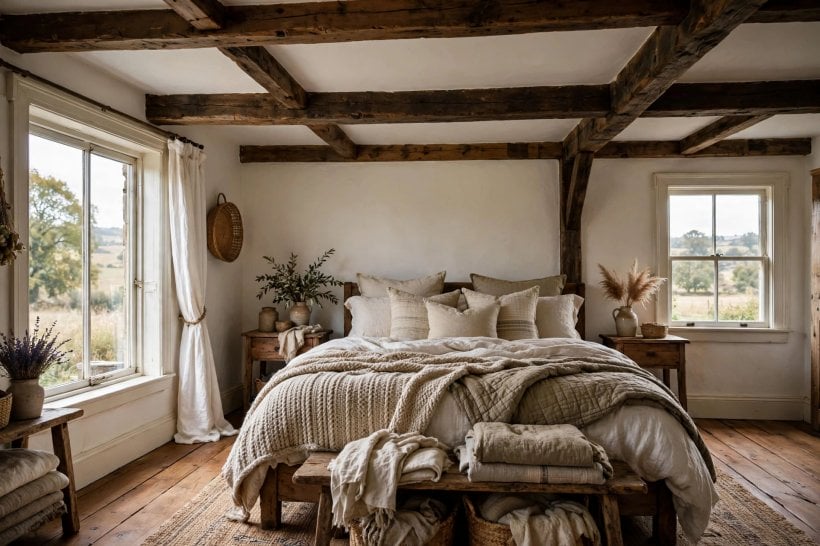
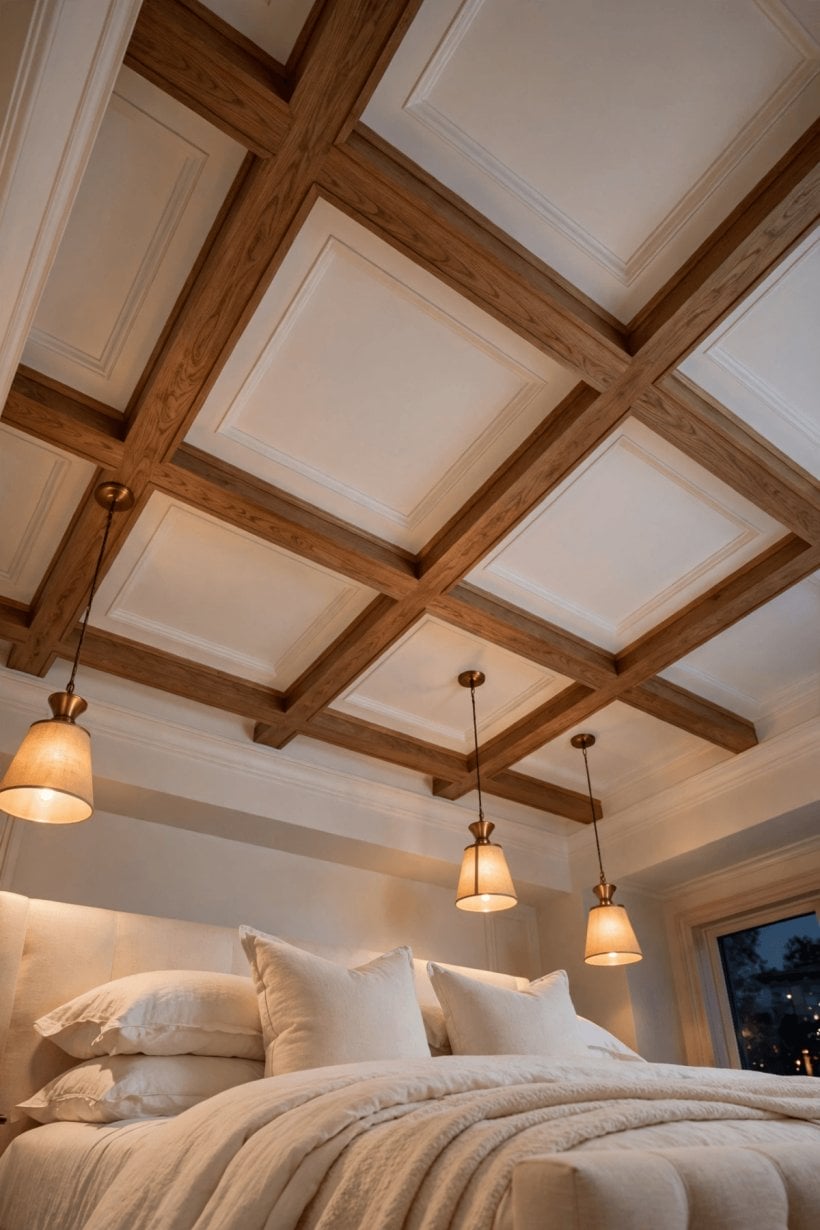
Lightweight faux beams give the look of old timber without the weight or structural work. Run them across the room’s short dimension to widen it visually, and stain them to echo your floor or furniture.
10. Expose and Celebrate Real Joists
If your home hides honest joists above plaster, revealing them can be the most characterful move of all. Have their condition checked first, then clean, treat and let the real structure be the decoration.
11. Run Slim Battens for a Modern Slatted Look
Evenly spaced timber battens across part or all of the ceiling create a calm, contemporary rhythm. They also soften echo in hard-surfaced rooms and hide a multitude of plaster imperfections beneath.
12. Paint Beams White for Cottage Lightness
White-painted beams keep the architecture but lose the heaviness — perfect for small or north-facing bedrooms. The texture still catches shadows while the room stays bright enough for lazy weekend mornings.
13. Frame the Bed With a Beam Pair
Two beams positioned to frame the bed zone act like an architectural canopy. It is a subtle way to define the sleeping area in a large room without building a four-poster.
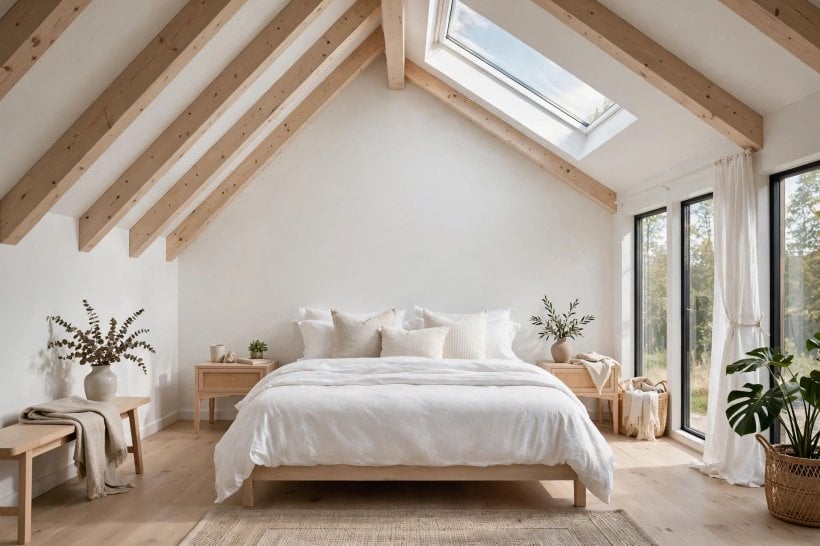
14. Add a Central Ridge Beam in Vaulted Rooms
In a vaulted bedroom, one strong ridge beam emphasises the peak and gives pendants a natural anchor. Keep the rest of the slope clean so the single line does all the talking.
15. Contrast Dark Beams Against Pale Plaster
Deep-stained beams on a pale ceiling create the classic farmhouse contrast that never dates. Balance the drama by keeping bedding and walls soft, so the room still rests easy at night.
3. Tray, Coffered and Recessed Designs
Built-in geometry is the luxury layer. The tailored results in our modern tiny house bedroom collection show how even shallow recesses make a sleeping space feel bespoke.
16. Build a Classic Single Tray
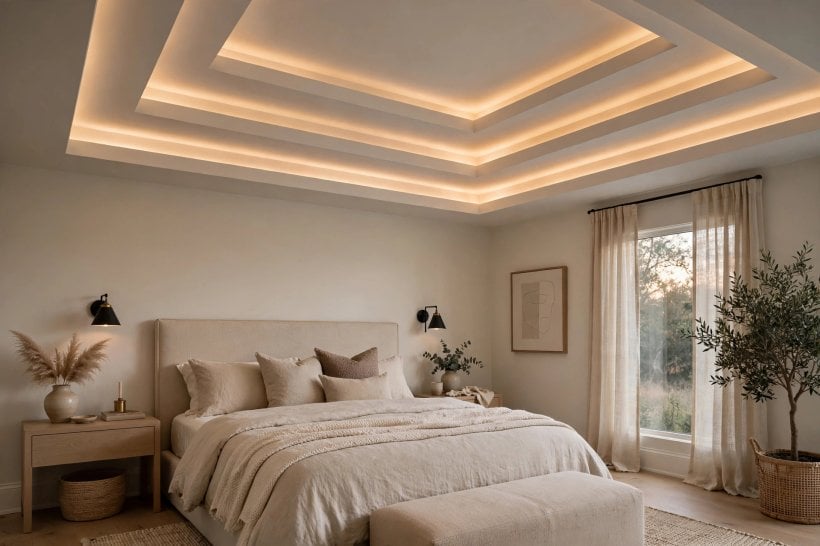
A single stepped recess above the bed adds hotel polish and a natural home for hidden lighting. Keep the step shallow in standard-height rooms and paint the recess a whisper deeper than the walls.
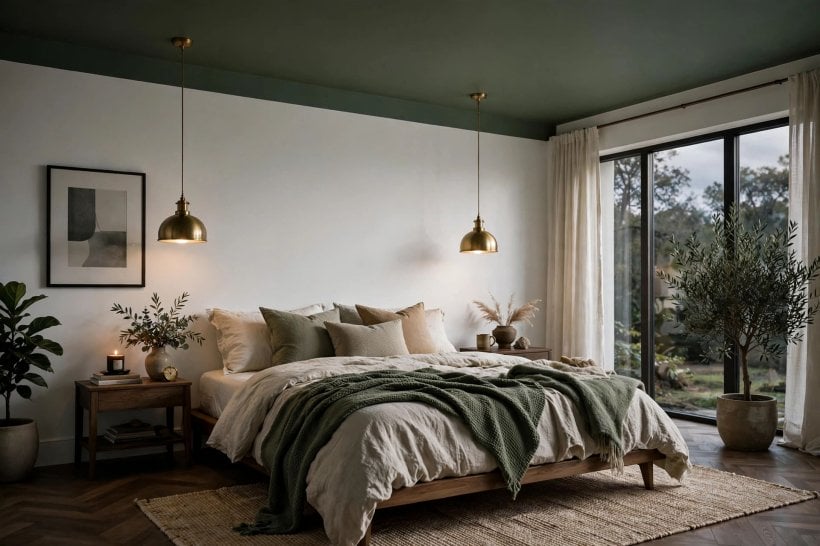
17. Try a Double Tray for Grand Rooms
Two receding steps suit tall ceilings and large footprints, echoing the architecture of grand hotel suites. Each step is a chance for a subtle tone change or a line of soft light.
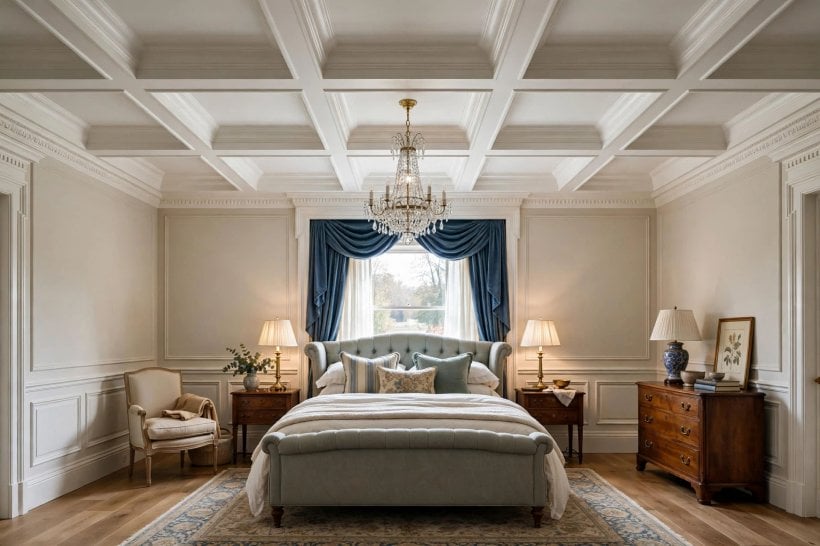
18. Add Coffers for Formal Geometry
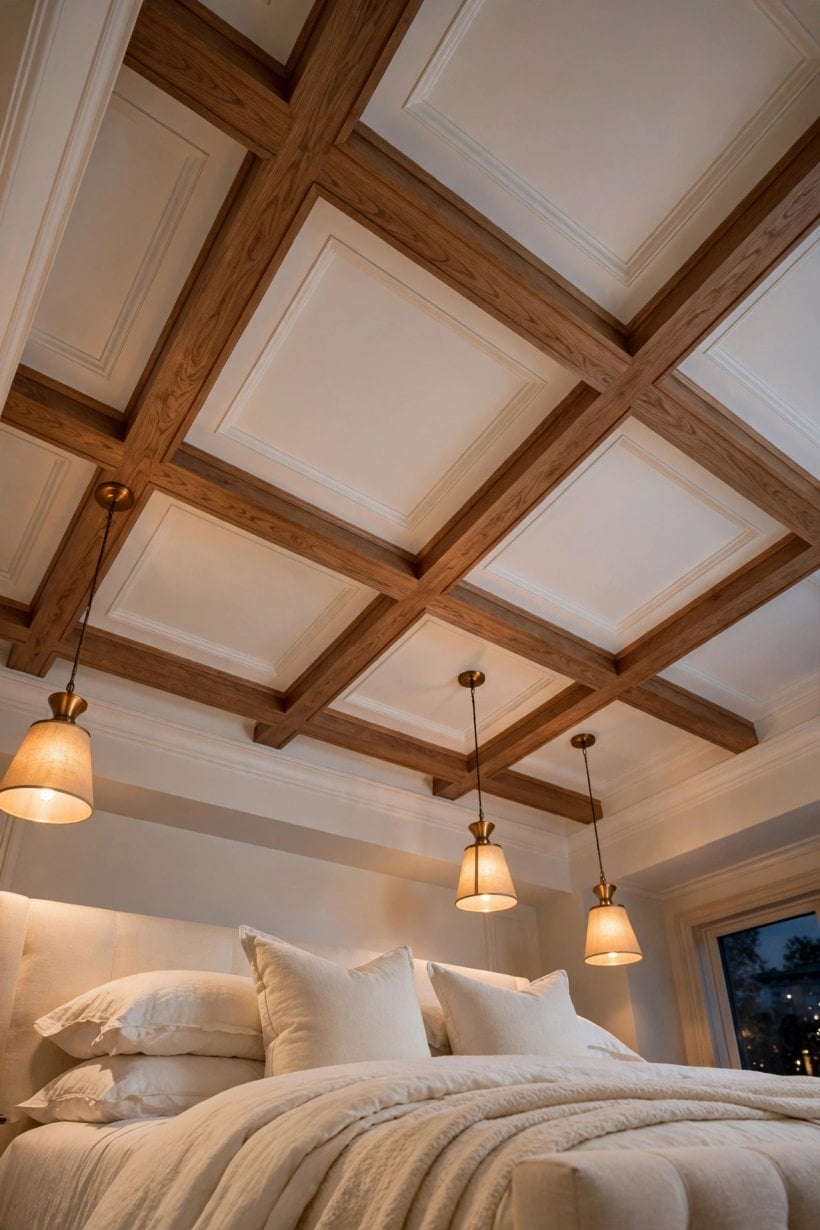
A grid of recessed coffers brings rhythm and shadow to big, plain ceilings. In bedrooms, keep coffers shallow and paint them tonally so the geometry whispers rather than shouts over the bed.
19. Recess a Panel Directly Over the Bed
A single recessed panel aligned with the bed — upholstered, panelled or lit — works like a ceiling headboard. It zones the sleep area beautifully in open or oversized rooms.
20. Curve the Tray for a Softer Feel
Rounded or oval tray edges soften the architecture and suit romantic, relaxed schemes. Curves cost more to build, so save them for the one recess that matters most: above the bed.
21. Line the Tray With Hidden LED Strip
Concealed strip inside a tray step washes the ceiling in soft, indirect light with no visible source. On a dimmer, it becomes the calmest evening light in the whole house.
22. Paint the Recess a Shade Deeper
One shade deeper inside a tray or coffer exaggerates depth without new building work. It is the painter’s trick for architecture: shadow colour where real shadow would fall.
23. Add Coving to Soften the Wall Junction
Simple coving where wall meets ceiling removes the hard modern corner and gives even plain rooms a finished, traditional edge. It is inexpensive, widely available and surprisingly transformative.
4. Colour, Paint and Pattern Overhead
Paint is the fastest ceiling makeover there is. The right tone overhead can lift, wrap or calm a bedroom in a single weekend.
24. Colour-Drench Ceiling and Walls Together
Carrying one colour across walls and ceiling wraps the room in a cocoon — deeply restful in a bedroom. Choose mid or soft tones so the effect feels like dusk, not a cave.
25. Go One Shade Lighter Than the Walls
The classic decorator’s rule: ceiling a touch lighter than walls keeps height and harmony. It flatters every other choice on this list and never fights with bedding changes.
26. Try a Deep, Moody Ceiling for Drama
Charcoal, ink or forest overhead makes tall bedrooms feel intimate and evening-ready. Balance it with pale bedding and good bedside light so mornings still feel fresh.
27. Paint a Soft Sky Tone
A pale blue-grey ceiling borrows the feeling of open sky and suits white or coastal schemes. It is a gentle nod to old porch ceilings and reads as restful rather than themed.
28. Use Warm White, Never Stark White
Warm whites flatter skin, timber and lamplight; blue-toned whites can feel chilly over a bed. Test your white against your bedding at night before the whole ceiling commits.
29. Stencil a Subtle Border Pattern
A stencilled border inside the ceiling edge adds craft and pattern without wallpaper drama. Keep the motif tonal and the scale small — a whisper of detail rewards the upward glance.
30. Wallpaper the Ceiling as the Fifth Wall
A quiet pattern overhead turns the ceiling into the room’s feature while walls stay calm. Choose lightweight papers, prepare the surface well, and consider a professional for a flawless finish at height.
31. Limewash for a Cloudy, Soft Finish
Limewash or cloud-effect paint gives ceilings a soft, movement-filled finish that flatters older plaster. It hides minor imperfections gracefully and pairs beautifully with natural linen bedding.
5. Panelling, Plaster and Texture
Texture rewards the slow upward look. Take cues from the layered finishes in our tiny house bedroom decor ideas, where small surfaces carry rich detail.
32. Fit Tongue-and-Groove Boards
Painted tongue-and-groove overhead gives instant cottage or coastal character and hides tired plaster. Run boards across the shorter span for width, and keep the finish matte for softness.
33. Add Applied Moulding Panels
Slim moulding rectangles applied to a flat ceiling mimic grand panelled rooms at modest cost. Paint everything one colour and let shadow, not contrast, draw the pattern.
34. Try Beadboard for Vintage Charm
Beadboard’s fine rhythm suits smaller bedrooms and period homes alike. It is forgiving to install in sections and takes paint beautifully, especially in warm whites and pale colours.
35. Install Faux Tin Tiles for Drama
Lightweight faux-metal tiles bring vintage glamour and pattern in one move. Use them over the bed zone only if a full ceiling feels bold, and keep the finish soft rather than shiny.
36. Plaster a Gentle Venetian Finish
Polished plaster overhead catches light with a stone-like depth that paint cannot copy. It is a specialist finish, so use it where it will be seen daily: the main bedroom earns it.
37. Add a Ceiling Rose That Earns Its Place
A well-proportioned ceiling rose dignifies a central light and suits period rooms. Size it to the fitting, not the room’s ambition — oversized roses overpower modest bedrooms.
38. Lay Acoustic Panels in a Restless Room
If your bedroom echoes or sits under a noisy floor, discreet acoustic panels calm the sound as well as the look. Fabric-wrapped styles double as soft, tailored decoration.
39. Keep One Strip of Original Plaster Detail
When renovating, preserve a section of original cornice or ceiling detail as a feature. A little honest history overhead gives new work something graceful to answer to.
6. Lighting From Above: Calm, Layered, Dimmable
Bedroom light should flatter and wind down, not interrogate. Build it in layers you can lower as the evening goes on.
40. Put Every Ceiling Light on a Dimmer
Dimmers are the single best lighting upgrade in any bedroom. Bright for dressing and cleaning, low and warm for the last hour of the day — one fitting, two rooms’ worth of moods.
41. Choose Flush Mounts for Low Ceilings
A handsome flush or semi-flush fitting keeps headroom and still looks designed. Frosted or fabric shades soften the light so lying in bed never means staring into a bare bulb.
42. Add Cove Lighting Around the Edge
A hidden cove at the ceiling edge bounces light softly into the room with no glare at all. It is the closest electric light gets to the calm of early morning.
43. Use Recessed Spots Sparingly and Warmly
A few warm, well-placed recessed lights serve wardrobes and dressing corners. Avoid a grid of spots over the bed itself — nobody relaxes under a runway.
44. Centre a Pendant Over the Bed
A pendant aligned with the bed, hung safely high, becomes the room’s jewellery. Choose a shade that looks good from below, because that is the view you will have most.
45. Layer Ceiling Light With Bedside Light
Ceiling fittings set the scene; bedside lamps do the reading. Planning both together — and switching bedside lamps from the bed — is what makes a bedroom feel finished.
46. Add Two-Way Switching by the Door and Bed
Never make anyone cross a dark room after switching off, or get out of a warm bed to kill the main light. Two-way switching is cheap, unglamorous and life-improving.
47. Pick Warm Bulbs and Check Them From the Bed
Warm-toned lamps protect the evening mood and flatter every colour on this list. Always test a new bulb lying down: fittings that seem fine standing can glare cruelly from the pillow.
7. Fans, Chandeliers and Statement Pieces
One hero piece overhead can carry the whole room. The statement-making spirit of our tiny house interior design ideas applies at ceiling height too.
48. Hang a Soft, Fabric-Shaded Chandelier
A chandelier with fabric or frosted shades gives glamour without glitter-glare. Sized to the bed rather than the room, it feels like a canopy of light over the place you sleep.
49. Choose a Quiet, Remote-Control Ceiling Fan
In warm climates a fan is the difference between sleep and swelter. Pick the quietest model you can, sized for the room, with a remote so midnight adjustments happen from the pillow.
50. Combine Fan and Light in One Fitting
Where ceiling points are limited, a tasteful fan-light does both jobs from one mount. Modern designs hide the compromise well, especially in matte finishes and warm light tones.
51. Suspend a Paper or Rattan Pendant for Softness
Oversized paper or woven pendants diffuse light into a gentle moon-glow and add texture overhead. They are light enough for most ceilings and wonderfully forgiving on the budget.
52. Fit a Small Crystal Piece for Morning Sparkle
A modest crystal fitting throws rainbows across morning walls — a small daily delight. Keep the scale bedroom-appropriate and the drops dusted; sparkle fades quickly under neglect.
53. Mount a Wooden Beam Chandelier on Rustic Schemes
A simple timber-and-lamp chandelier hung from a beam ties the whole rustic story together. Confirm the fixing can take the weight with professional help before anything is hung.
54. Try Twin Pendants Instead of One Centre Light
Two smaller pendants — one each side over the bedside tables, wired to ceiling points — free the tables and frame the bed symmetrically. The ceiling becomes part of the bed’s architecture.
55. Keep One Fitting Swappable for the Seasons
A simple pendant you can re-shade seasonally — linen for summer, something richer for winter — refreshes the ceiling’s mood for the price of a shade. Small ritual, big difference.
8. Small, Low and Sloped Ceilings: Special Cases
Not every main bedroom has a tall, flat, easy ceiling. Awkward shapes reward restraint, pale tones and flush fittings.
56. Keep Low Ceilings Pale and Gloss-Free
Matte pale paint is the low ceiling’s best friend: it maximises light bounce without mirror-shine. Save deep colours for bedding and art, where they cannot press down on sleepers.
57. Run Detail Lengthways to Stretch the Room
Battens, boards or a painted stripe run along the room’s length draw the eye forward and borrow visual distance. On a low ceiling, direction matters more than decoration.
58. Embrace the Slope in Attic Bedrooms
Paint slopes and ceiling as one continuous surface so the architecture feels intentional. Add a skylight blind for lie-ins and let the cosiness of the eaves become the room’s charm.
59. Use Wall-Wash Light to Fake Height
Light aimed up the walls and across the ceiling edge lifts the eye and blurs the ceiling line. In low rooms, this borrowed glow feels like extra centimetres you did not have to build.
60. Avoid Anything That Hangs in Attic Rooms
On sloped or low ceilings, pendants become head hazards. Choose flush fittings and wall lights instead, and enjoy the unbroken sweep of the roof shape.
61. Panel Only the Flat Centre Strip
Where slopes meet a flat central strip, panel or colour just that strip for a tent-like, tailored effect. It defines the bed zone below without overwhelming a quirky room.
62. Match Ceiling and Slope Colours Exactly
Different colours on every plane chop an awkward room into pieces. One continuous tone calms the geometry and makes even a complicated ceiling feel like a cocoon.
9. Cosy, Quiet and Sleep-Friendly Finishes
The main bedroom’s job is rest. These finishes borrow the serenity of our minimal interior design ideas for tiny houses and aim everything overhead at better sleep.
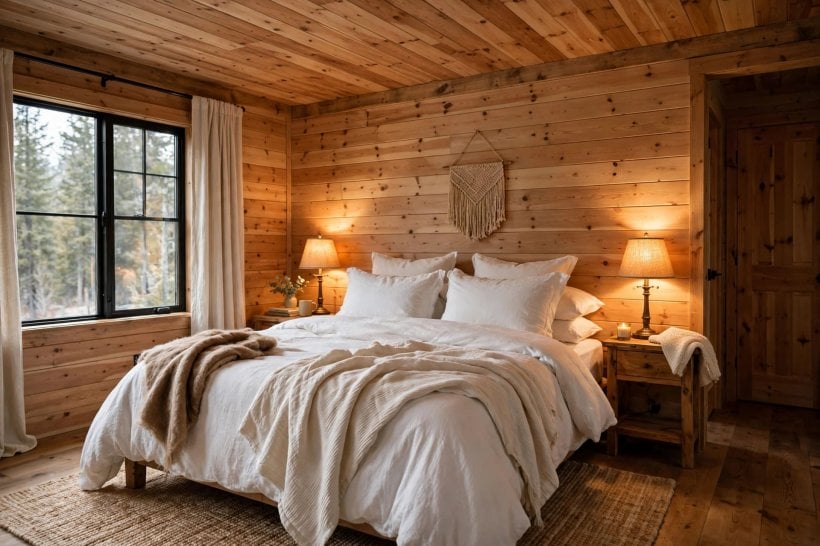
63. Choose Matte Finishes That Drink the Light
Matte and eggshell finishes soften reflections and feel restful from the pillow. High gloss overhead belongs in bathrooms and brave hallways, not above a bed.
64. Add a Fabric Canopy Panel Overhead
A softly draped fabric panel above the bed adds cocooning texture and gentle sound absorption. Use breathable, washable fabric on a removable frame so freshness is easy to keep.
65. Soften Sound With a Rug’s Ceiling Cousin
If footsteps from above disturb sleep, acoustic underlay or discreet panels overhead can take the edge off. Check options with a specialist — quiet is a finish too.
66. Paint the Ceiling the Colour of Dusk
A soft blue-grey or muted mauve overhead echoes the evening sky and signals rest to a tired brain. Keep it desaturated; the goal is twilight, not a theme.
67. Keep Patterns Above the Bed Subtle
If you pattern the ceiling, let the area over the bed be the calmest part. Busy motifs are better admired from a chair than studied during a restless night.
68. Hide Blackout Blind Boxes in a Recess
A slim ceiling recess at the window wall hides blind mechanisms for a clean line and darker mornings. Planned early, it costs little and the room looks instantly more tailored.
69. Warm the Ceiling With Wood Tones Near the Bed
A panel of warm timber above the bed — boards, slats or a framed section — makes the sleep zone feel held. Echo the tone in one other piece so it belongs to the room.
10. Finishing Touches, Budgets and Mistakes to Avoid
The last layer is judgment: what to skip, where to save, and how to keep the scheme working for years. Our tiny house decorating ideas make the same point at floor level — finishing well beats spending big.
70. Scale the Centrepiece to the Bed, Not the Room
A fitting sized to the bed looks intentional; one sized to impress often overwhelms a sleeping space. When in doubt, hold a cardboard template up and live with it for a day.
71. Never Hang Anything Heavy Without Checking Fixings
Chandeliers and fans must fix to structure, not plaster hopes. If you cannot confirm a solid fixing, have a qualified tradesperson fit a proper support before the pretty part goes up.
72. Avoid Cold, Bright Light Over a Bed
Blue-toned, high-brightness light overhead is the fastest route to a bedroom that feels like an office. Keep ceiling light warm and low in the evening, and let mornings come from windows.
73. Clean and Repaint on a Simple Cycle
Ceilings gather dust and cobwebs quietly. A yearly soft-brush clean and a refresh coat every few years keep every idea on this list looking intentional rather than tired.
74. Spend on the Dimmer, Save on the Fitting
If the budget pinches, a modest fitting on a good dimmer outperforms a showpiece on a plain switch every evening of the year. Control is the real luxury overhead.
75. Leave One Area Plain on Purpose
Restraint is a design decision: let one part of the ceiling stay quiet so the feature — beam, tray or pendant — can shine. A calm surround is what makes detail read as detail.
Final Considerations
Of all the master bedroom ceiling ideas here, the best one is the one matched to your room’s height, light and the way you actually sleep. Measure honestly, choose a single mood, layer the light warmly and dimly, and let one feature do the talking.
Start with paint if the budget is small, with structure if you are renovating anyway, and always test colours and bulbs from the pillow before deciding. Do that, and the surface you look at most will finally start giving something back — calm, character and a room that feels finished from floor to ceiling, much like the joyful schemes in our colorful tiny house interior ideas.



0 Comments