

A metal roof announces itself from the street: clean seams running unbroken from ridge to eaves, colour that stays true for decades, and a surface that sheds weather instead of absorbing it. It is the roof you choose once, carefully, and then mostly forget.
This survey works the roofing lane only — profiles, colours, pitches, details and upkeep — within the wider exterior home ideas collection. Shape belongs to the gable roof ideas survey; this post stays on the metal skin itself, stated generally and checkably throughout.
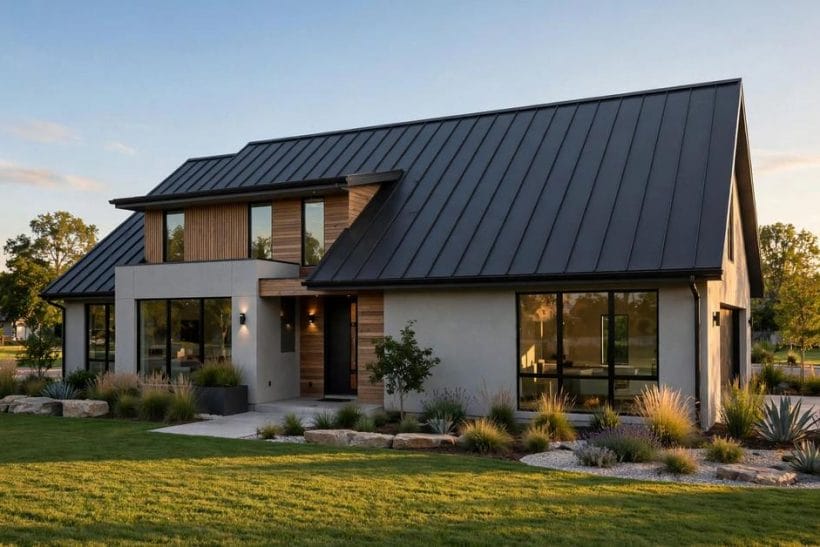
1. Metal Roof Ideas at a Glance
A metal roof is a roof covering formed from coated steel, aluminium or similar sheet metal, fixed as interlocking panels, standing-seam trays, corrugated sheets or pressed tile-effect profiles over a prepared deck and underlay. Its defining attributes are longevity of the factory finish, lightness compared with tile or slate, long unbroken runs that suit low pitches, and detailing that lives or dies at its junctions — ridges, valleys, eaves, penetrations and abutments — where flashings, closures and fixings do the real weatherproofing work. Properly specified and installed, a metal roof is generally regarded as a long-service covering whose maintenance is mostly inspection and washing rather than repair; poorly detailed, the same panels leak at the same few places every metal roof can. This survey reads the pictures the way a roofer would: profile first, then colour, pitch, junction, and the small print of care.
| Question | Short answer |
|---|---|
| Which metal roof profile suits a house best? | Standing seam is the calm, architectural default — concealed fixings, clean vertical lines, suits modern and traditional houses alike. Corrugated sheet reads agricultural and honest, wonderful on rural and coastal homes. Pressed tile-effect profiles imitate tile or slate at a fraction of the weight, useful where the structure or the street’s character asks for a tiled look. Choose by the house’s character and the pitch, not by the brochure photograph. |
| Are metal roofs noisy in rain? | Not when they are built as a house roof should be: panels over a solid deck, underlay and insulation behave much like any other roof in rain. The drumming people imagine belongs to thin sheet over open purlins on barns and sheds. A roofer who proposes metal straight over battens with nothing beneath is describing the noisy version — the assembly, not the material, decides. |
| How long does a metal roof last? | Longer than most coverings it replaces — factory-coated steel and aluminium roofs are generally sold and warranted as multi-decade coverings, with the finish, the fixings and the junction details usually ageing before the sheet itself. Treat any precise figure as belonging to a specific product and warranty, checked with the manufacturer, rather than as a promise about metal in general. |
| What does a metal roof cost compared with tile or shingle? | Material and installation usually sit above basic shingle and around or above concrete tile, varying widely with profile, metal and complexity — valleys, hips and penetrations cost more than long plain slopes. The honest comparison is over the roof’s whole service life, including the replacements and repairs the alternatives will need. Section ten works that comparison qualitatively; only local quotations can price a specific roof. |
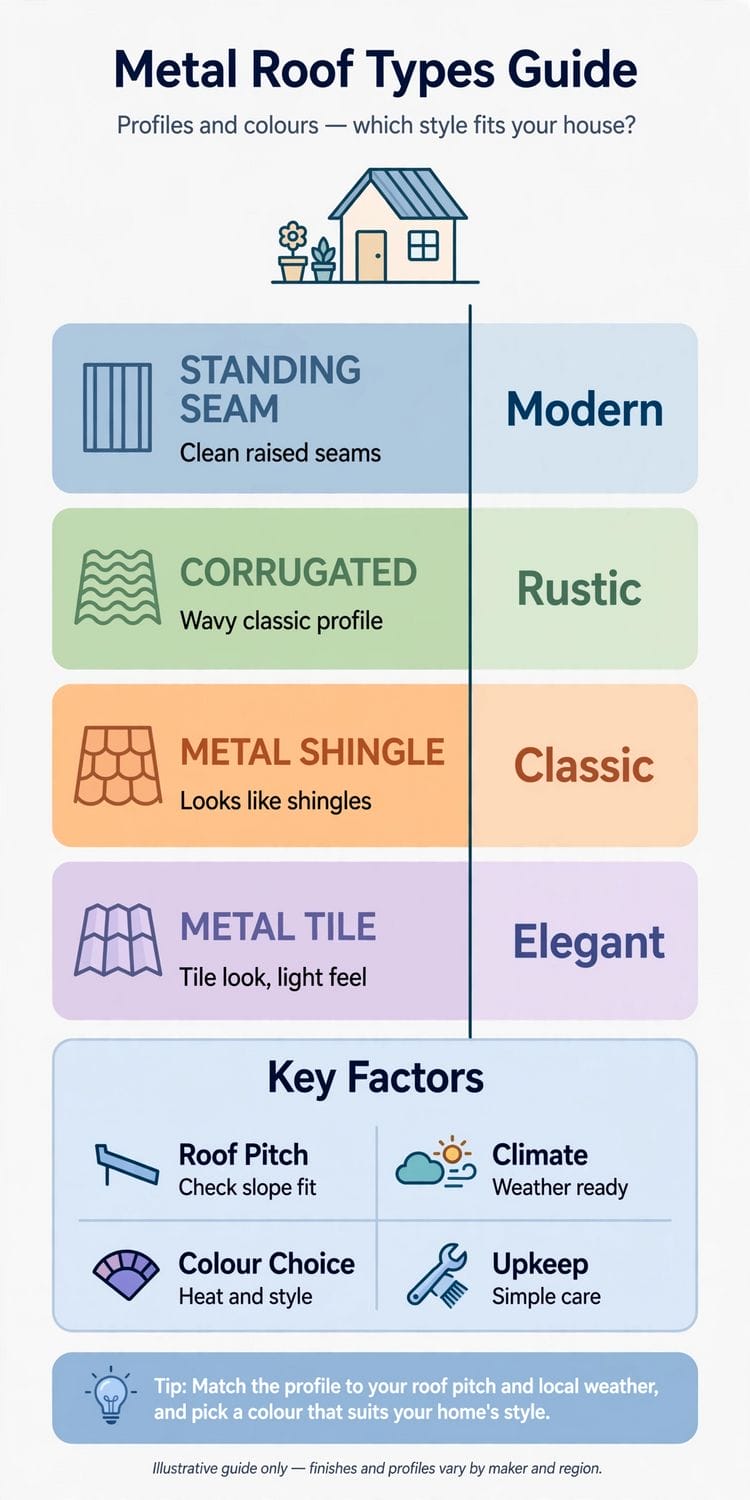
2. Profiles and Seams: Reading the Roof’s Lines
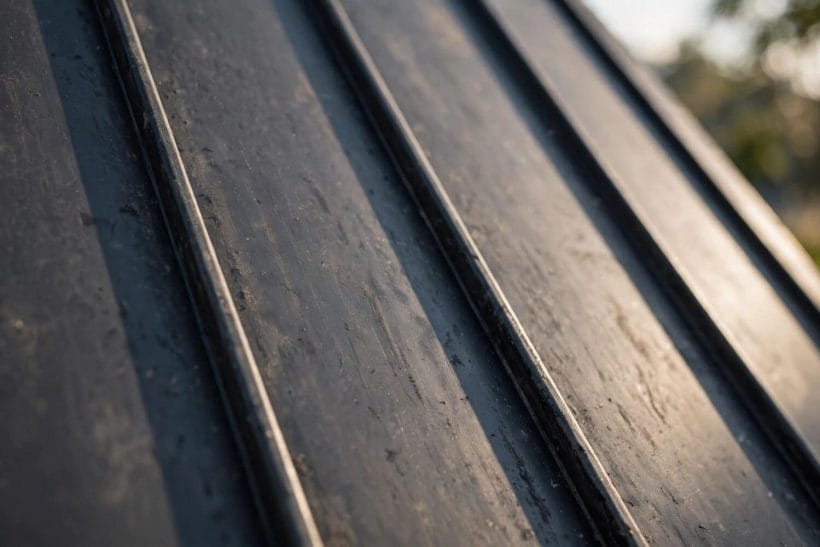
Profile is the first decision and the one the street reads. Each family below trades looks, fixing method and cost differently — the modern exterior home ideas survey shows several of them at their most architectural.
1. Run standing seam from ridge to eaves
Long trays with raised seams and concealed fixings give the quietest, most tailored metal roof. The vertical lines lengthen a facade and suit both crisp modern houses and restrained traditional ones.
2. Choose corrugated sheet for rural honesty
The wavy profile of farm buildings, brought home. On cottages, coastal houses and garden buildings it reads unpretentious and right; keep the colour muted and the detailing neat.
3. Press tile-effect panels where weight matters
Pressed steel formed as tiles or slates delivers the familiar shadow lines at far less weight — kind to older rafters and to structures never designed for a heavy covering.
4. Lay metal shingles for a broken, textured field
Small interlocking shingles give a granular, slate-like texture that sits comfortably among tiled neighbours while keeping metal’s long runs of weatherproofing beneath.
5. Use flat-lock panels on feature bays
Small flat tiles with folded edges make a shingled metal skin for bays, dormers and porches — a jeweller’s detail that rewards close viewing and skilled hands.
6. Keep seams vertical on walls that continue the roof
Where roof planes fold down into cladding, continuing the seam rhythm onto the wall makes one folded surface of the building — striking on extensions and garden studios.
7. Match seam spacing to the facade’s rhythm
Tray widths that echo window and door spacing make a roof look designed rather than delivered. Ask the roofer to set out seams against the elevation, not just the sheet width.
8. Prefer concealed fixings on visible slopes
Hidden clips let panels expand and contract with temperature without working their fixings loose, and leave the slope visually clean. Exposed-fix systems belong to simpler, outbuilding-scale work.
9. Reserve bold profiles for simple roof shapes
Strong corrugation on a roof full of hips and valleys fights itself at every junction. Simple gables carry bold profiles; complicated roofs want the calm of standing seam.
10. Read the eaves line before the colour
A metal roof’s character is set where it meets the wall — fascia depth, gutter line, the shadow under the eaves. Pictures that crop this junction out are hiding the decision that matters.
11. Let one profile rule the whole building
House, garage and porch in the same profile and finish read as one composed property. Mixed metal profiles on one plot look like three separate deliveries.
3. Colour and Coating: The Finish That Has to Last
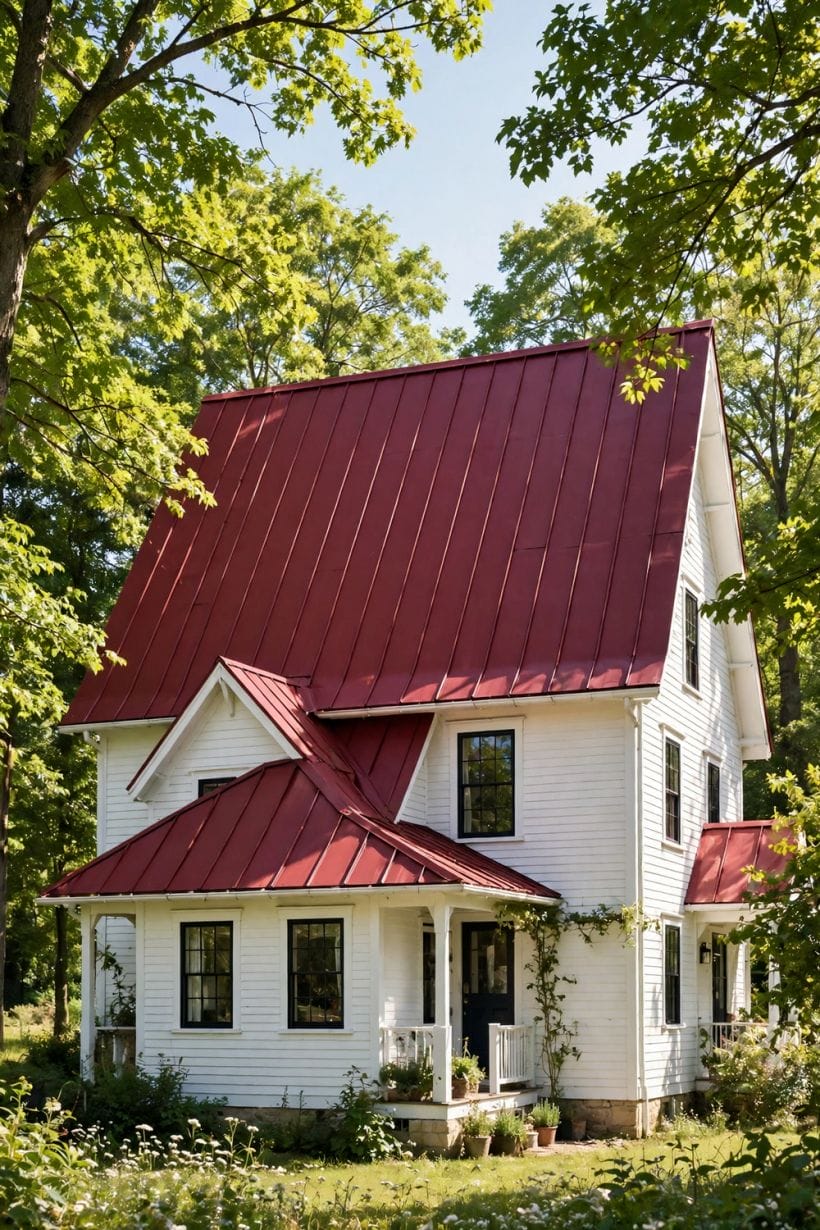
The factory coating is the roof’s face for decades, so colour is a long commitment. Judge every shade in daylight against the walls, as the craftsman exterior home ideas survey does for its own palette.
12. Choose charcoal for the modern default
Dark grey standing seam is the contemporary standard for a reason: it sharpens white and timber walls, hides weathering evenly and suits almost any brick. It is the safe pair of hands.
13. Take green into the landscape
Deep and mid greens sit a roof down into trees and fields, the classic choice for rural houses that should belong to their setting rather than announce themselves to it.
14. Use terracotta tones where tile is the street’s language
Tile-effect profiles in weathered reds and browns let a light metal roof join a tiled street without pretending to be clay. Judge the colour weathered, not showroom-new.
15. Let galvanised and zinc finishes patina honestly
Bright metal dulls to a soft grey patina that many owners love and some streets require. Choose it knowing the shine is temporary and the matte grey is the real, lasting colour.
16. Pick black for small, sharp roofs
On porches, bays and compact modern houses, black metal reads tailored and graphic. On large plain slopes it can flatten; break big black fields with seam rhythm and pale walls.
17. Match the roof to the window frames
Coordinating roof, frames and door in one tonal family is the quiet trick behind most composed exteriors. The roof stops being a hat and becomes part of the outfit.
18. Contrast gently with brick
Brick already carries pattern and warmth; a calm mid-tone roof — grey, soft black, muted green — lets it breathe. Loud roof colours over busy brick exhaust the eye.
19. Keep coastal houses pale or galvanised
Salt air and bright light favour pale finishes and the metals specified for marine exposure. Ask for the coating grade suited to the coast, in writing, before falling for a shade.
20. Test colour on the actual slope
A swatch lies; a panel on the roof tells the truth. Light on a pitch differs from light on a wall, and metal’s sheen shifts with the hour. View samples morning and evening.
21. Ask what the coating warranty actually covers
Factory finishes carry warranties about fading, chalking and peeling, each with conditions. Read what is promised, for how long, and what maintenance keeps it valid — before the roof goes on.
22. Plan repainting as a possibility, not a plan
A coated metal roof can be repainted in later decades by specialists, which is a genuine long-life advantage. It is not a reason to choose a colour you dislike today.
4. Pitch, Shape and Junctions: Where Metal Earns Its Keep
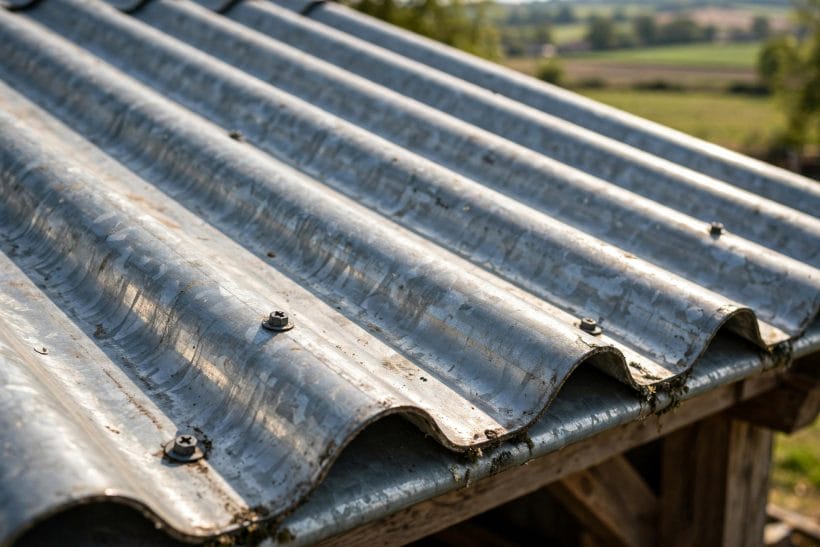
Metal’s great structural gift is the long, jointless run, which is why it owns the low pitches other coverings refuse. Junctions decide success, and the gable roof survey covers the shapes beneath.
23. Exploit metal’s tolerance for low pitches
Long sealed trays shed water on shallow slopes where tile would leak, opening up single-storey extensions and lean-tos. Confirm the minimum pitch for the chosen system with its manufacturer.
24. Detail valleys as the roof’s rivers
Valleys carry the most water and show the most craft. Wide, clean valley trays with room for debris to wash out outlast narrow, fussy ones on every roof.
25. Close the ridge neatly and ventilate honestly
Ridge closures must shed weather while letting the roof assembly breathe as designed. Blocked or improvised ridge details cause the condensation blamed, unfairly, on metal itself.
26. Flash chimneys and abutments in proper metal
Where roof meets chimney, wall or dormer, stepped and cover flashings in durable metal do the work for decades. Sealant alone is a maintenance promise, not a detail.
27. Treat every penetration as a small roof
Flues, vents and rooflights each need purpose-made boots, collars and flashings from the system. A catalogue of generic sealant around a pipe is a leak with a date on it.
28. Set gutters to suit a fast-shedding surface
Metal sheds water quickly and, in cold weather, can release sliding snow suddenly. Gutter size, brackets and, where winters demand, snow guards belong in the design conversation early.
29. Give dormers the roof’s own detailing
Dormer cheeks clad in the roof’s metal and its roof flashed into the main slope keep the whole composition one material language. Mixed improvisations date fastest.
30. Mind the eaves on low-pitch extensions
Shallow roofs forgive nothing at the eaves, where wind drives rain uphill. Deep, well-sealed eaves details are cheap insurance bought once, at installation.
31. Keep hips crisp or avoid them
Hipped metal roofs look superb when the hip caps are straight and true, and shoddy when they wander. On complex hips, the installer’s portfolio matters more than the product brochure.
32. Photograph junctions before you sign
When gathering pictures for your own project, collect ridges, valleys and abutments, not just whole roofs. The junctions in a roofer’s past work predict your roof’s future.
33. Ask who supplies the system’s details
Complete systems arrive with their own closures, clips and flashings designed to work together. Mixed parts from different shelves are where warranties and weatherproofing both go to argue.
5. Metal at Domestic Scale: Porches, Extensions and Garden Buildings
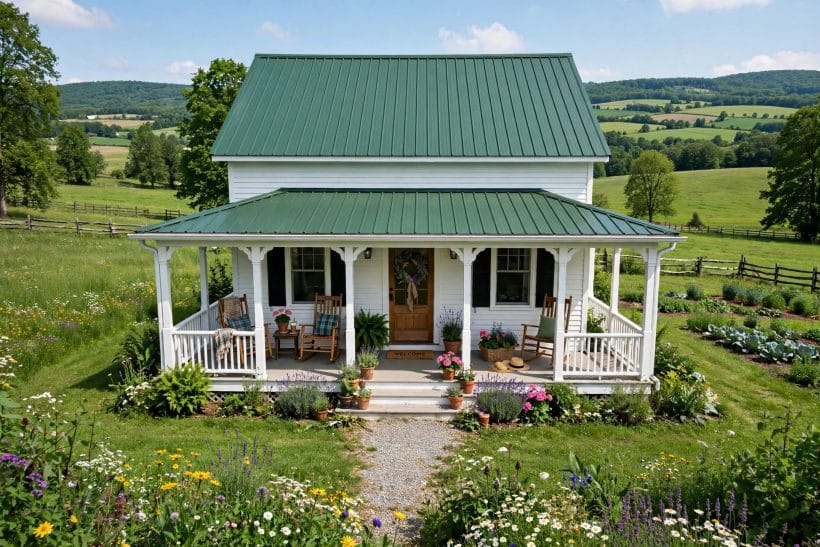
Most households meet metal first on something small. These are the proving grounds — and often the most charming roofs on the property, as the wider home design ideas collection shows.
34. Cap a porch in standing seam
A small seamed canopy over the door is metal’s calling card: crisp, permanent, and a promise of the care inside. It is also the cheapest way to live with the material before committing a whole roof.
35. Roof a single-storey extension in metal
The classic commission: a shallow rear extension that tiles cannot cover. Seamed metal, a rooflight or two, and the new room gets light, headroom and a tailored cap.
36. Clad a garden studio roof and walls as one fold
Studios and workshops wear folded metal beautifully — roof planes continuing down walls, one colour, minimal upkeep, and a building that reads as a designed object in the garden.
37. Put corrugated sheet on the potting shed, properly
Even the humblest building gains from fixings with proper washers, closed eaves and a colour chosen rather than inherited. Small roofs are where good habits are cheapest to learn.
38. Cover a carport in translucent-companion metal
Pairing opaque metal bays with a translucent section over the work area gives shelter and daylight together. Keep the structure’s fall and fixings as careful as the house’s own.
39. Use metal on a bay window’s little roof
Bays often carry tired felt or tile; a flat-lock or seamed metal cap, flashed properly into the wall, turns a maintenance chore into a piece of jewellery on the facade.
40. Roof the wood store and bin bay to match
Matching the small utilitarian roofs to the house roof’s colour tidies a plot astonishingly. Consistency at the small scale is what makes properties look considered.
41. Take metal over an outdoor kitchen shelter
A fixed metal canopy sheds weather, tolerates heat nearby better than fabric, and defines the cooking court. Detail its posts and gutters as architecture, not scaffolding.
42. Try a metal awning over a sunny window
A small fixed metal awning shades glass, sheds rain from the wall and adds a horizontal line a plain facade often needs. Angle it with the sun in mind, not just the elevation drawing.
43. Let the garage set the standard
Re-roofing the garage first, in the intended system and colour, is a full-scale trial of roofer and material at outbuilding stakes. Many households wisely audition there.
44. Keep small roofs’ colours braver than big ones
A deep green studio, a black porch, a weathered-zinc bay — small areas carry stronger colour playfully. The main roof can stay calm while the accents have the fun.
6. Living With Metal: Noise, Heat, Weather and Care
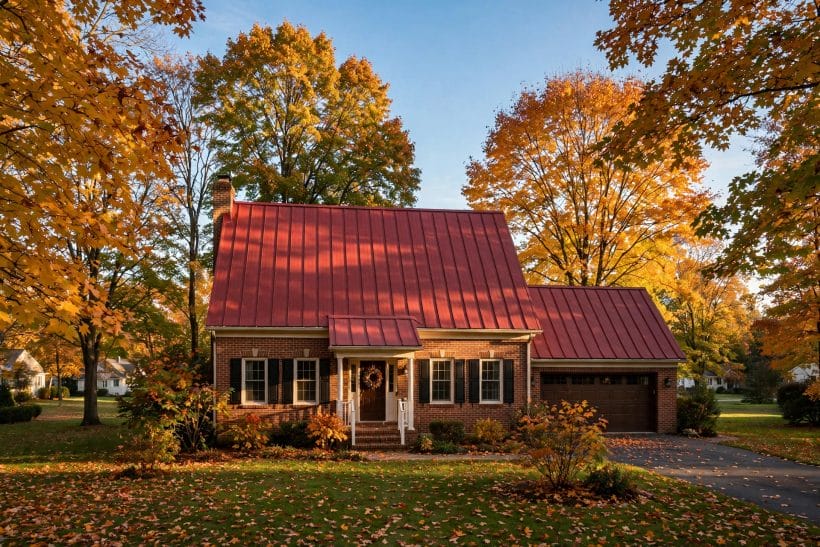
Ownership questions, answered plainly. Nothing here replaces a good roofer’s advice for a specific house — it equips the conversation, the way the coastal home design ideas survey equips its own.
45. Expect a quiet roof from a proper assembly
Deck, underlay and insulation beneath the panels absorb rain sound to ordinary levels. If a quote omits the assembly and prices sheet alone, the quote is describing a different, noisier roof.
46. Ventilate against condensation, not against the metal
Warm moist air reaching cold metal condenses — as it does under any cold surface. The cure is the designed ventilation and vapour control of the whole roof build-up, fitted as specified.
47. Choose light colours where summer heat bites
Pale and reflective finishes reduce heat gain through the roof in hot climates, one reason metal suits sunny regions. Insulation still does most of the work; colour assists it.
48. Plan for snow where snow actually falls
Smooth metal sheds snow in slides. Over doors and paths, snow guards or a changed route belong in the plan — a known, solvable characteristic, not a surprise to discover in January.
49. Wash the roof as the maker advises
Occasional gentle washing keeps finishes bright and satisfies many coating warranties. Harsh chemicals and abrasive pads are the enemies; the maker’s care sheet is the authority.
50. Inspect junctions annually from the ground
Binoculars and a walk-around catch lifted closures, debris in valleys and tired sealant early, when fixes are small. The panels themselves will rarely be the story.
51. Keep gutters clear of the roof’s fast runoff
Metal’s quick shedding delivers leaves to the gutters efficiently. Clear them on the household’s normal rhythm and the roof’s whole drainage story stays boring, as it should.
52. Touch in scratches before they matter
Small coating damage from installation or falling branches should be touched in with the maker’s system promptly, protecting the metal beneath and the warranty above.
53. Respect lightning and earthing questions to the electrician
Metal roofs do not attract lightning more than other roofs, but earthing and bonding are regulated work. Any question there belongs to a qualified electrician under local rules, full stop.
54. Keep the paperwork: system, coating, installer
File the product names, coating type, colour reference and installer’s details. Every future repair, repaint or extension matches faster and argues less with that folder in hand.
55. Expect the roof to move, quietly
Metal expands and contracts with temperature, and good systems are designed to allow it — sliding clips, slotted holes, room at closures. Occasional faint ticks on hot days are the material breathing, not failing.
7. Choosing, Quoting and the Installer: Buying the Roof Well
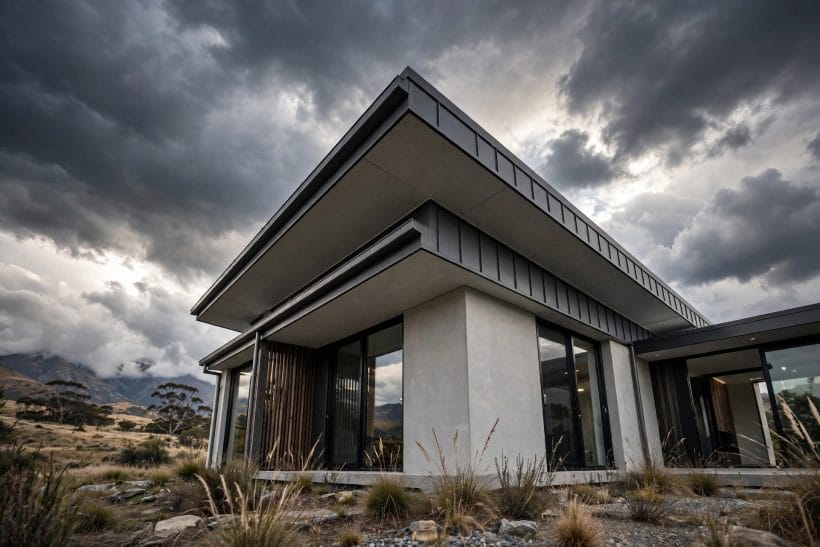
A metal roof is bought twice — once as a system, once as an installation. These ideas keep both purchases honest.
56. Get quotations for the whole assembly, itemised
Ask each roofer to price covering, deck work, underlay, ventilation, flashings, gutters and access separately. Itemised quotes can be compared; lump sums can only be believed.
57. Compare profiles on installed cost, not sheet cost
Tile-effect and corrugated systems differ in labour, trims and waste as much as in material. The honest comparison is the finished roof on your house, warranted and complete.
58. Ask which parts are the system’s own
Closures, clips, flashings and trims from the same manufacturer as the panels are designed to move and seal together. Mixed sourcing is where responsibility blurs when something weeps.
59. See the installer’s oldest metal roof, not the newest
Fresh work always looks crisp. A roof five winters old shows the truth about laps, sealant and colour. Ask for the address and go and stand under its eaves.
60. Confirm the coating grade for your exposure in writing
Coastal, wooded and industrial air all age coatings differently. The manufacturer’s exposure guidance, quoted in the contract, protects both the finish and the warranty.
61. Agree the deck’s condition before stripping day
Rotten boards and tired felt discovered mid-job cost panic prices. A pre-strip inspection, with agreed rates for repairs, turns surprises into line items.
62. Schedule with the weather, not against it
Long dry spells are a metal roof’s friend. A roofer who plans the strip and cover sequence around the forecast is showing the care the finished roof will also receive.
63. Keep one contact for warranty questions
Installer warranty and manufacturer warranty are different promises from different parties. File both, with names and dates, and know which door to knock on for which problem.
64. Photograph the build-up as it happens
Pictures of deck, underlay and flashings before the panels close them are the roof’s medical records. Future you, selling or repairing, will be grateful for the file.
65. Refuse pressure for the premium metal without a reason
Aluminium and premium metals earn their price in coastal air, complex forming and very long design lives. Inland, a quality coated steel usually serves as well. Reasons, not upgrades.
8. Metal by House and Setting: Matching Roof to Place
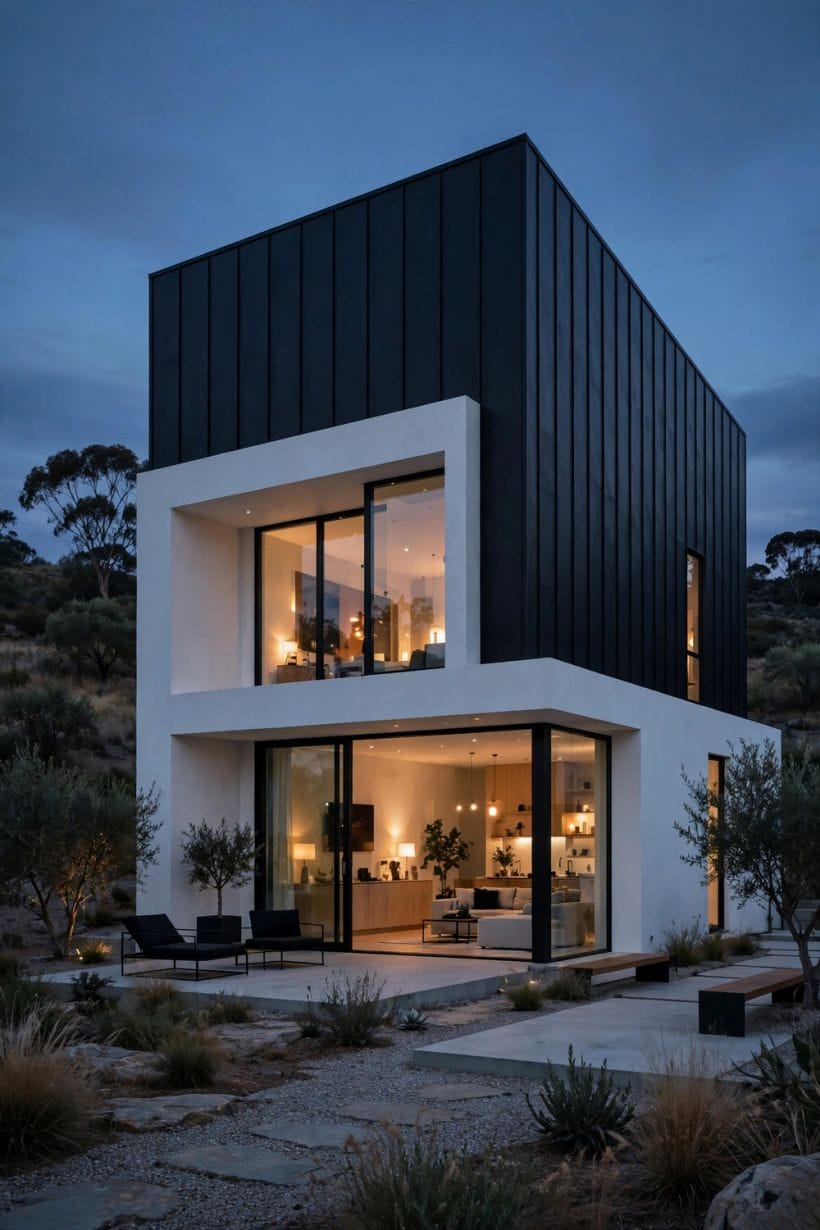
The last survey matches the material to the buildings it serves best — from farmhouse to the sharpest modern box in the modern exterior manner.
66. Give farmhouses corrugated or tile-effect metal
Agricultural profiles and tiled looks sit naturally on rural houses, echoing the outbuildings around them. Muted greens, greys and weathered reds complete the belonging.
67. Dress coastal houses in the marine-specified metals
Salt air is the one critic no coating can charm. In exposed coastal settings choose the metal and finish the manufacturer specifies for marine exposure, and rinse as advised.
68. Sharpen modern houses with standing seam and one colour
Crisp modern architecture and seamed metal are natural partners, especially where roof planes fold into walls. One colour, exact setting-out, no decorative trims.
69. Soothe traditional houses with tile-effect or calm seam
Where the street is tiled and the house is period, tile-effect profiles or quiet standing seam in a soft tone modernise the maintenance without arguing with the architecture.
70. Let garden buildings carry the experiments
Studios, sheds and stores are where bold colours and mixed profiles can play at low stakes. The house keeps the discipline; the garden keeps the fun.
71. Use metal to unite a house that grew in pieces
Extensions in brick, render and timber often read as three buildings. One metal roof across them all, in one profile and colour, composes the family portrait.
72. Respect listed and conservation settings early
Some houses and areas regulate roof materials and colours formally. Check the local position before falling in love with a finish the rules will refuse.
73. Match rainwater goods to the roof’s finish
Gutters and downpipes in the roof’s colour or a deliberate black disappear into the composition. Mismatched white plastic across a charcoal roof undoes the tailoring for pennies.
74. Plan solar and rooflights with the roof, not after it
Penetrations are cheapest and soundest when designed into the system from the start. Retrofitting into finished metal is possible but deserves the system’s own details and installer.
75. Leave the roof a way to be maintained
Safe access points, walkable routes to chimneys and gutters, and a household ladder plan belong in the design. A roof nobody can reach safely is a roof nobody inspects.
9. Checks and Mistakes: Before the First Purchase or the First Stone
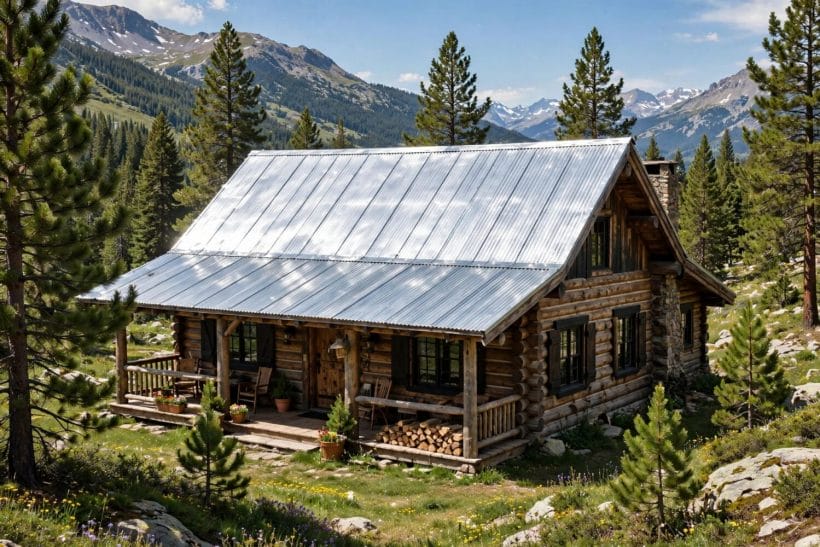
Walk the roof’s story backwards before buying forwards. Confirm the structure and deck are sound and suited to the system’s weight and fixing pattern; confirm the minimum pitch for the exact profile on your exact slopes; and confirm, in the quotation, the whole assembly — deck, underlay, ventilation, closures and flashings — not a price for sheet alone. Most metal-roof disappointments are assembly disappointments wearing a metal coat.
Vet the installer as the product. Ask to see finished roofs at least a few winters old, photograph their ridges and valleys, and ask those owners the only question that matters: would you have this firm back? Confirm the system’s own details are being used throughout, that fixings and clips are the manufacturer’s, and that coating and workmanship warranties arrive in writing. A metal roof is a system installed by people; buy both halves of that sentence.
Resist the two classic mistakes: choosing colour from a screen or swatch rather than from a panel in daylight on the slope, and letting any junction be solved with sealant and optimism. Add a third for coastal and rural homes: never let a standard inland coating be sold into salt air or heavy shade without the maker’s exposure guidance in writing. The pictures in this survey were chosen at junctions as much as at whole roofs — gather yours the same way.
10. Costs and Pulling It Together
Costs gather around five honest lines: the covering system itself (profile, metal and coating grade), the assembly beneath it (deck repairs, underlay, insulation or ventilation work the survey finds), the junctions (valleys, hips, ridges, flashings and penetrations — complexity lives here), access and labour (scaffolding and the installer’s time on your roof’s particular geometry), and the small print of gutters, snow guards and finishing. Long plain slopes in a standard profile are the economical end; short, cut-up roofs in premium metals are the other. Only quotations measured on your roof can price it — this survey deliberately offers none.
Pull the choice together in order: pick the profile family by the house’s character and the slopes’ pitches; settle the colour on real panels in real light; choose the coating grade for your exposure; gather junction photographs from each installer’s past work; and compare whole-life value — the decades of service and low upkeep a metal roof offers — against the alternatives’ own replacement cycles, as the green exterior home ideas survey also weighs its choices. Done in that order, the roof you choose is the roof in the pictures: quiet, crisp and largely forgettable, in the best way a roof can be.
Final Considerations
A metal roof rewards the households who choose it slowly. Its pleasures are not dramatic — a line of seams catching morning light, rain arriving and departing without ceremony, a colour that looks next decade much as it does this one — but they compound, quietly, for as long as the house is lived in.
So gather pictures the roofer’s way: whole slopes for character, junctions for truth. Choose the profile for the house, the coating for the climate and the installer for their oldest work, and the roof over your head becomes the least of your worries — which is the highest praise a roof can earn.

0 Comments