

Choosing a microwave looks simple until you stand in front of the wall of near-identical boxes and realise the differences that matter are not printed large on any of them. This guide is the checklist to run before the box comes home.
It works through the checks in the order they should be made — type first, then size and fit, power, features, ventilation and the everyday details — stating each one generally, the way it applies to any make, and pointing you to the manufacturer’s own specifications for the figures that belong to a specific model.
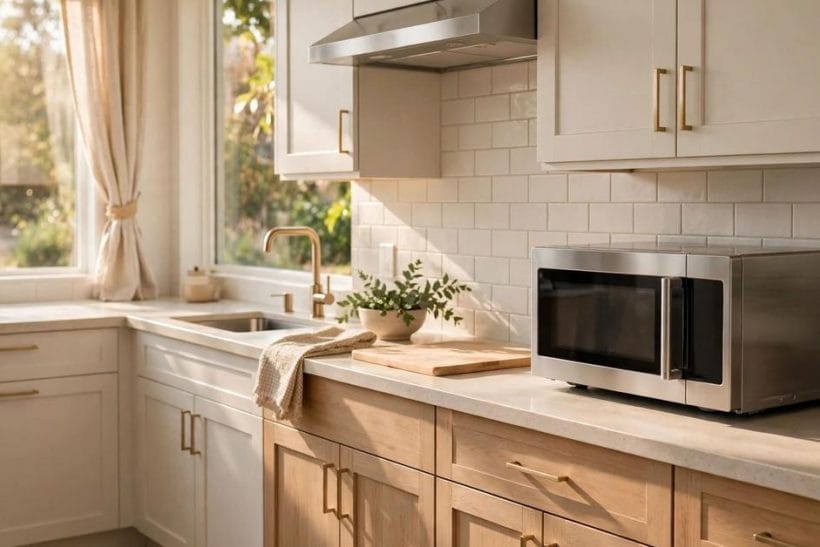
1. Microwave Buying at a Glance
The central entity is the microwave buying decision: matching a type of microwave — countertop, built-in, drawer, over-the-range or combination — to your space, your dishes and your habits, using fit and specification checks rather than badges. This post is the general guide, written countertop-first because the countertop model is most households’ default. Its specialist sibling takes the fitted-over-the-hob family in depth: the over-the-range microwave guide covers low-profile models above the range, their clearances and venting — read it instead if your microwave must live over the hob. The wider kitchen survey sits in the kitchen ideas pillar. Nothing here ranks models or names a winner; the best microwave is the one whose type, size and specification fit your kitchen, and this guide’s job is to make that fit checkable.
| Question | Short answer |
|---|---|
| Which type should most people buy? | A countertop model, unless the kitchen dictates otherwise — the type section below works through when each alternative earns its place |
| What is the most common buying mistake? | Buying by capacity badges instead of measuring the space, the door swing and the dishes you actually use — the size section is the fix |
| How much power do I need? | Enough for even, unhurried cooking — power is covered generally below; the rating to compare is in each model’s own specification |
| Do over-the-range models need special checks? | Yes — clearance and venting checks of their own, covered in depth by the linked sibling guide; this post flags them and moves on |

2. Start with the Type: The Countertop Default
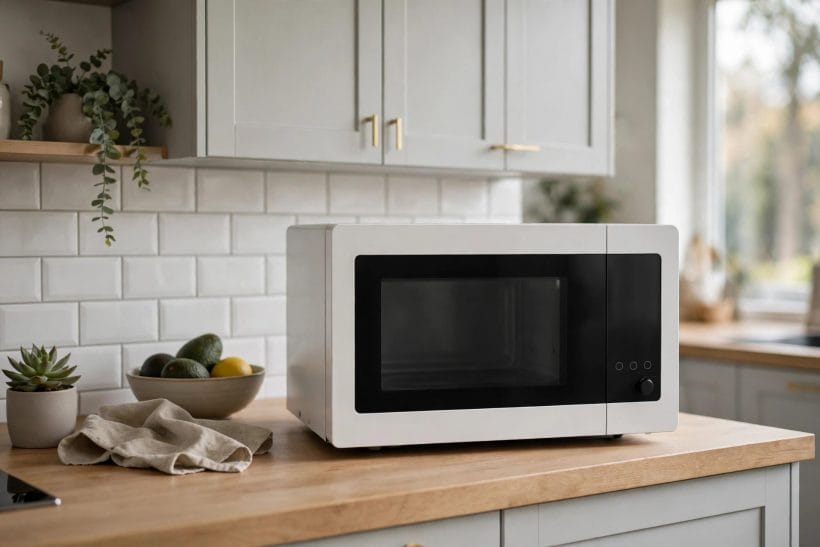
Type is the first check because it decides everything downstream — where the microwave lives, what it costs to install, and which of the later checks apply. Four points settle the default.
1. Why countertop is the default
A countertop microwave asks for a surface and a socket and nothing else — no cabinet work, no fitting, no trades. It can be replaced in an afternoon and taken with you when you move, which is why it is the starting point every other type must argue against.
2. Where the countertop model lives
Give it a permanent home, not a rotation of corners: within reach of the hob and the fridge, on a run of counter you can spare — the siting thinking in the trending kitchen countertops survey is a reminder that counter space is a budget, and the microwave spends it daily.
3. The shelf and cart alternatives
Where counter space is precious, a sturdy shelf or microwave cart takes the weight off the worktop — checking the shelf’s load rating and the model’s feet against its manual. Wobbly furniture and heavy doors are a poor marriage; stability is a specification too.
4. When countertop is the wrong answer
Tiny counters, a planned fitted kitchen, or a household that hates appliances on show — these are the honest cases for the fitted types in the next section. Choose them for the kitchen you have, not the photograph you saw.
3. The Other Types at a Glance
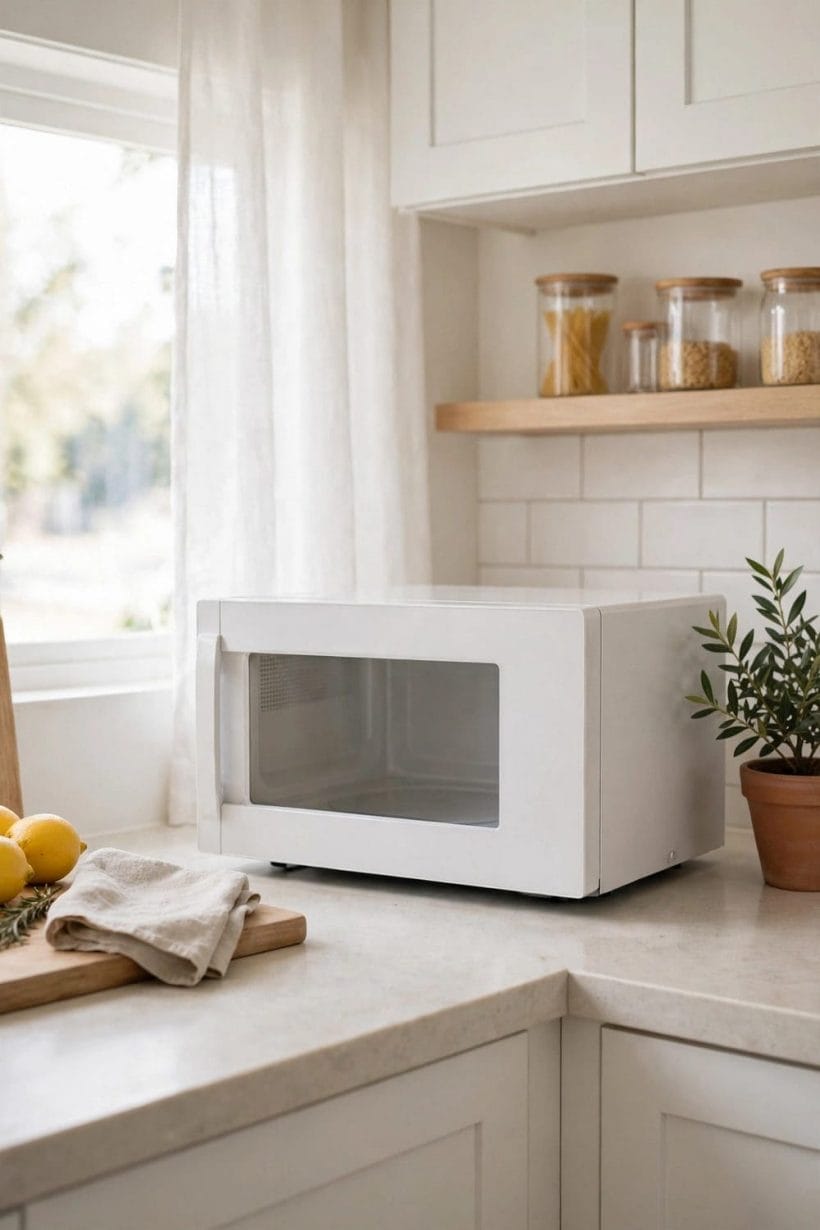
Five alternatives divide the non-countertop field. Each trades the countertop’s simplicity for integration, space or extra cooking ability — know what each trades before it tempts you.
5. Built-in models and trim kits
Built-in microwaves sit inside cabinetry, usually behind a trim kit that frames them flush. They demand exact cabinet dimensions from the manufacturer’s fitting guide — a renovation-stage decision, often made alongside work like replacing kitchen cabinet doors, not an impulse buy.
6. Microwave drawers
The drawer type slides open from under the counter, loaded from above — kind to short cooks, wheelchair users and anyone tired of lifting hot dishes overhead. Drawers are a fitted purchase with fitted prices and their own clearance checks in the maker’s guide.
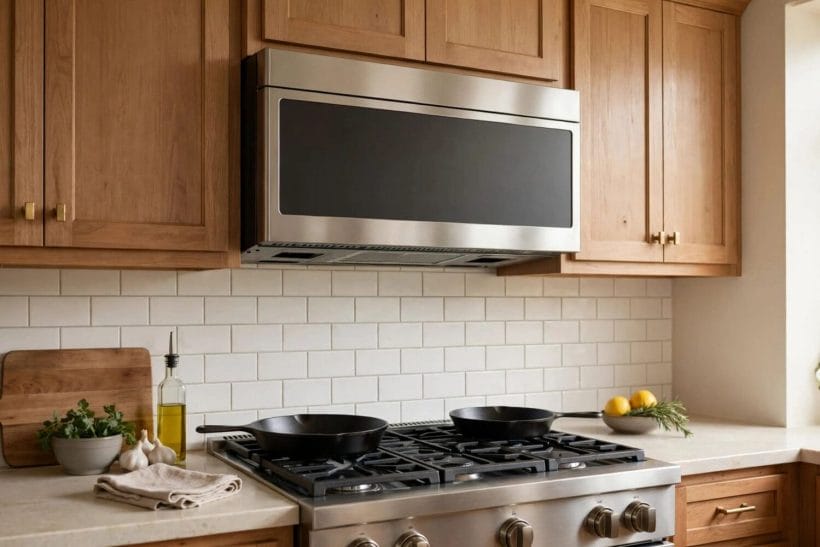
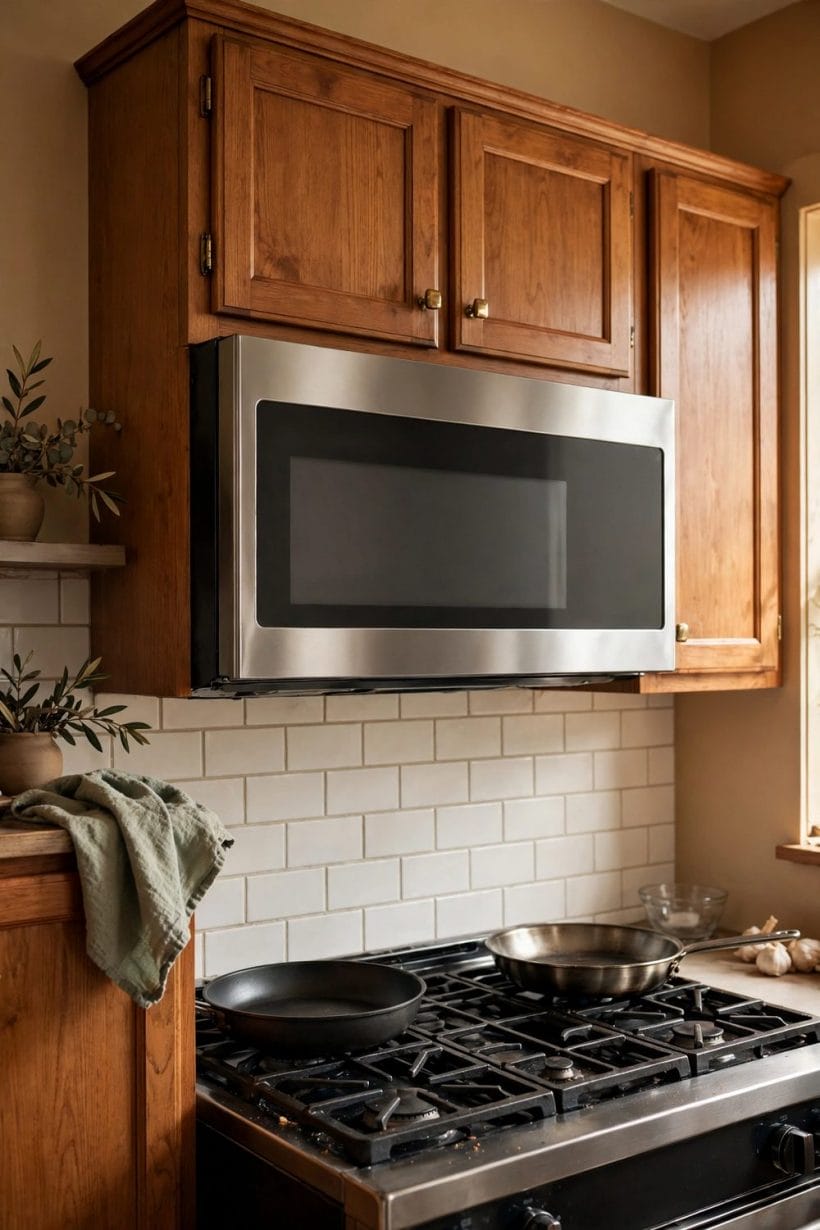
7. Over-the-range models
Fitted above the hob, doubling as the extractor — a whole specialty of clearances, venting routes and low-profile designs. It has its own guide on this site, the over-the-range microwave checks, and this post deliberately leaves its detail there.
8. Convection and combination models
Combination models add a heating element and fan so the microwave can roast and bake as well as reheat. They suit small kitchens replacing a second oven — at the cost of complexity, price and a longer manual worth actually reading.
9. Solo, grill and the naming maze
Makers label tiers with names like solo and grill for the basic and browning-equipped versions of the same idea. Ignore the badge; read the feature list. The name is marketing — the specification sheet is the document that matters.
4. Size and Capacity: Fit the Space, Fit the Dish
More microwaves are returned for fit than for failure. These five checks — space, swing, dish, turntable, route — are the ones the infographic’s tape measure is pointing at.
10. Measure the space, then check the swing
Measure the footprint and height of the intended spot, then check the door: most doors hinge at the side and need clear space to open fully, with room for you to stand in front holding something hot. The manufacturer’s stated clearances around the cabinet are part of the measurement, not fine print.
11. The dinner-plate test
Capacity badges are measured in ways that flatter. The honest test is physical: your largest dinner plate, your tallest jug and the casserole the family actually uses should fit through the door and sit inside — take their measurements to the shop, or check the maker’s stated interior dimensions against them.
12. Turntable diameter decides the dish
Where a turntable is fitted, its diameter is the real capacity — a dish wider than the plate it rides on cannot rotate, and rotating is how even cooking happens. Rectangular dishes need the diagonal checked, not just the width.
13. Interior height for real containers
Tall mugs, storage boxes and the measuring jug are the everyday tall loads. Interior height is the dimension brochures bury; it is also the one that decides whether reheating soup is a task or a decanting operation.
14. Measure the route in
The forgotten check: doorways, hallway corners and the lift. A microwave that fits its alcove perfectly and cannot be carried to it is a story told in many households — measure the journey as well as the destination, a habit the tiny kitchen ideas crowd learn first.
5. Power and What It Actually Changes
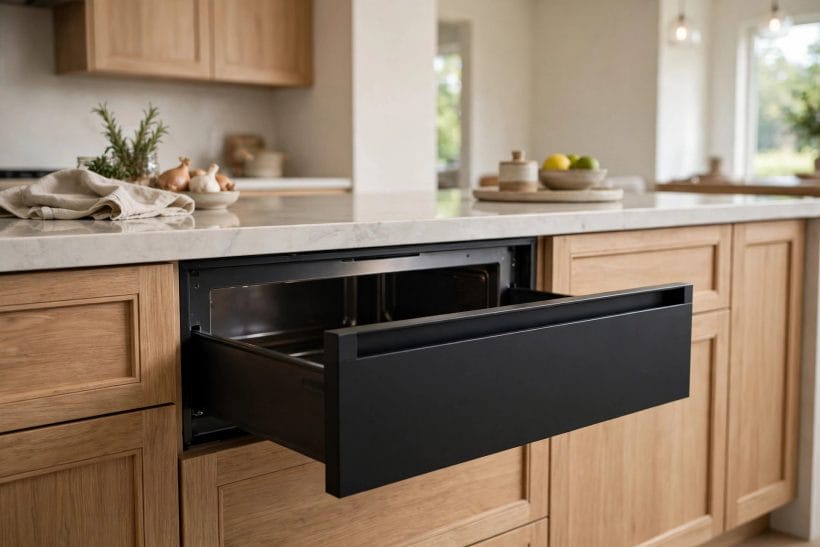
Power is the specification buyers fixate on and understand least. Four general truths cover what the numbers on the rating label mean for your dinners — compare the figures themselves in each model’s own specification.
15. Higher power cooks faster and more evenly
Generally stated: a more powerful microwave brings food to temperature faster and with less of the cold-centre, burnt-edge unevenness that plagues weaker models. For households reheating family portions daily, power is the upgrade that is felt at every meal.
16. Power levels matter more than peak
Delicate work — defrosting, softening, proving — is done at reduced power, so the spread and honesty of a model’s power levels matter more than its headline figure. Models that pulse crudely between full and off treat gentle tasks roughly.
17. Even-power technology, in plain terms
Some models deliver reduced power as a steady lower output rather than pulses of full power — the difference shows in defrosted mince without cooked edges and chocolate that melts instead of seizing. Whether a model does this is stated in its specification; it is worth one line of your comparison.
18. Read the rating label, not the brochure
Every model carries its rated output in its official specification and manual. Compare those figures model to model — they are measured to a standard — and treat lifestyle photography and badge words as decoration. This guide states power generally on purpose; the numbers belong to the makers.
6. Turntable, Sensors and Everyday Features
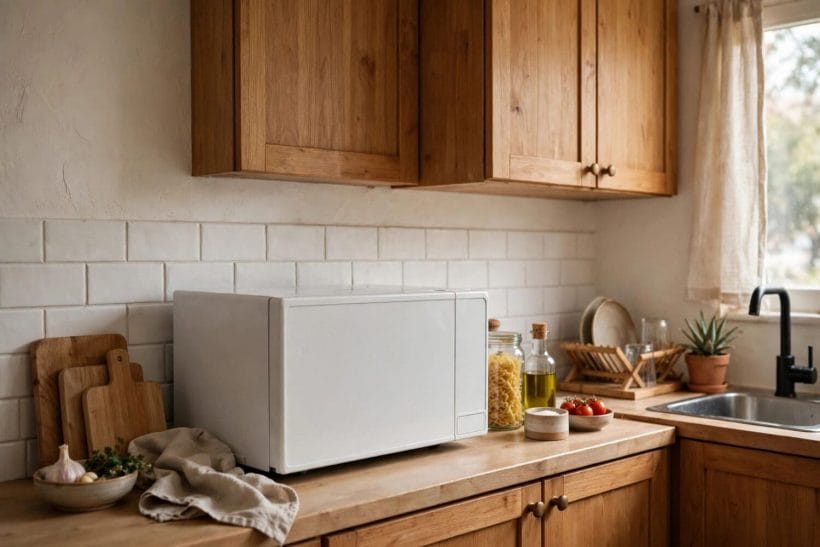
Features divide into the ones used daily and the ones used in the shop demonstration. Five checks sort them before the brochure does it for you.
19. Turntable or flatbed
A turntable rotates food through the energy field for even results and limits dish size to its diameter. Flatbed models drop the plate, freeing the whole floor for rectangular dishes, and wipe clean in seconds. Neither is better — they suit different dishes and different cleaners.
20. Sensor cooking, honestly assessed
Sensors that judge steam and humidity to time reheating and defrosting are the one automation that earns its place — they forgive forgotten timings. Everything a sensor does can be done manually; what it sells is attention, and busy kitchens are right to buy it.
21. Preset programmes: count your real ones
Long preset lists photograph well. Count the programmes your household will touch weekly — reheating, defrosting, vegetables, perhaps popcorn — and let the rest be free entertainment. A model whose few presets you love beats a library you scroll past.
22. The small mercies: mute and child lock
A mute for the beeps rescues sleeping babies and open-plan evenings; a control lock rescues toddlers’ experiments and cats’ choreography. Both cost nothing, appear on many models, and are missed bitterly when absent.
23. Quick-start and memory buttons
One-touch instant start — the button that begins cooking immediately at full power — is the feature veterans of any model name first. Favourite-setting memories help households with one sacred reheating ritual. Small software, daily gratitude.
7. Ventilation and Clearance: What Each Type Needs
Microwaves move heat and steam as surely as they cook, and each type handles it differently. Four checks keep the air moving — the details for any model live in its installation guide, and they outrank anything written here.
24. Countertop models breathe through their vents
A countertop microwave vents warm air through slots that must stay clear — the manufacturer’s stated gaps at the sides, back and top are functional, not decorative. Pushing the unit flush into a cubby and stacking post on its roof is how good models die young.
25. Fitted types vent by design
Built-in and drawer models are engineered to vent through their fronts or through ducting paths the fitting guide specifies, often with a required trim or vent kit. The kit is part of the appliance, not an accessory — budget and fit it as such.
26. Over-the-range venting is its own subject
Above a hob, the microwave is also the extractor, and whether it vents outside or recirculates through filters changes its checks entirely. That is the sibling guide’s ground — the over-the-range microwave checks cover ducted and recirculating routes in the depth they need.
27. Steam, walls and the kettle rule
Every microwave exhales steam at the door. Site it where that breath will not soak a wall, swell a cabinet or fog the cook’s glasses at the critical moment — the same courtesy you extend a kettle, at larger scale.
8. Controls, Noise and Cleaning
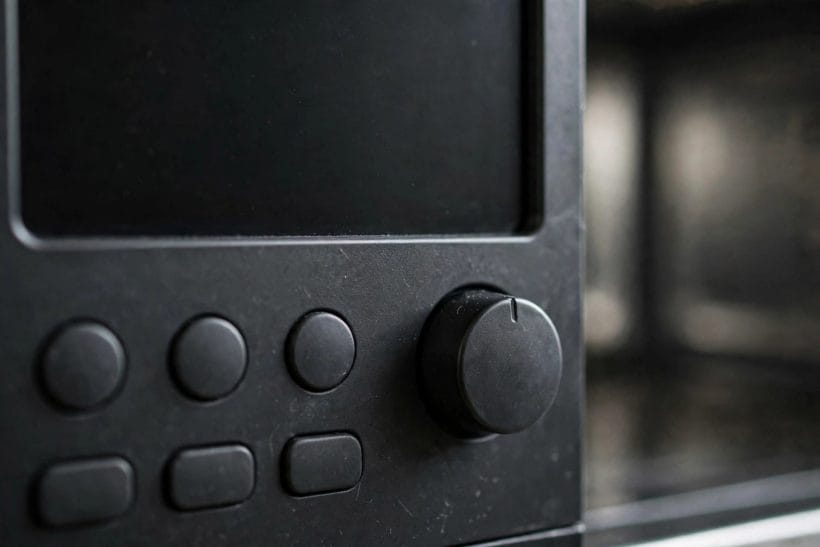
The daily experience of a microwave is its panel, its voice and its interior after a soup incident. Four checks predict all three.
28. Dial, membrane or touch panel
A simple dial is fastest and survives floury hands; membrane pads wipe clean and offer the presets; full touch panels look sleek and demand dry fingers. Choose by your cooking hands, not the showroom’s lighting.
29. A display you can read at midnight
Check the clock and timer display in real light — brightness, size and whether it can be dimmed at night. The display is the part of the microwave you look at most; a dim blue squint is a daily tax.
30. Fan noise and the beep audit
Cooling fans vary from whisper to commentary, and beeps vary likewise. In open-plan homes the noise check is a lifestyle check — where a model can be heard running or demoed, listen before the card comes out.
31. Interiors that forgive
Smooth interior surfaces — enamel or stainless finishes over textured ones — and a removable turntable that fits the sink decide whether cleaning is a wipe or an excavation. The cavity you can clean easily is the cavity that stays clean.
9. Safety, Siting and Power Supply
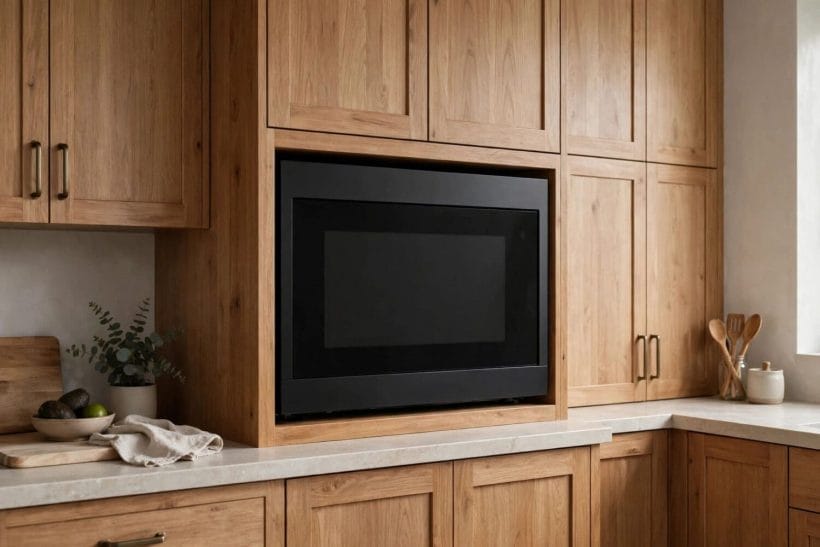
The final checks are the unglamorous ones, and they are the section to read twice. A microwave is a heavy box of high-voltage patience: it belongs on a surface that is level, stable and dry, within comfortable reach of its socket so the lead is never stretched across a walkway or a hob. Water and steam sources — the sink’s splash zone, the kettle’s plume — are neighbours to avoid when siting it, and the surface beneath should shrug off heat and spills; the heat-and-stain resistance discussed in the quartz countertop explainer is the standard to hold any worktop to.
On power supply, the general rule is simple: a microwave deserves its own properly rated socket, not a multi-way adaptor shared with the kettle, and any fixed wiring, new circuit or fitted installation belongs to a qualified electrician working to your local code. Door seals are the safety component owners control — keep them clean, check them for damage, and retire or repair a door that no longer closes true, following the manufacturer’s guidance. Children, hot containers and the steam burst on opening are the everyday triangle: the lock, the oven glove and the pause before opening are habits this guide recommends more strongly than any feature above.
10. Costs as Drivers and Choosing Well
Microwave prices are driven by type before anything else — countertop models sit at the accessible end, drawers and fitted built-ins at the top, with combination cooking adding its own premium — then by size, then by the sensor and finish tiers. The honest budget includes the unglamorous lines: delivery, the trim kit or vent kit a fitted type requires, installation where the type demands it, and removal of the old unit. Warranty length and the maker’s service network are specification items like any other; check them in the manufacturer’s own documents before the purchase, not after the first fault.
Choosing well is then a matter of running this guide in order: type by kitchen, size by tape measure and dinner plate, power by the rating labels of your shortlist, features by your real week, venting by the manual, controls by your hands. A microwave chosen that way has nothing to prove against any ranking — it fits your space, your dishes and your habits, which is the only verdict a buying guide should ever reach.
Final Considerations
If you take one habit from this guide, take the tape measure. Type arguments end in opinion; measurements end in a microwave that fits its space, swings its door, swallows your casserole and breathes through clear vents — and those four fits decide more happiness than any badge on any box.
The best microwave, in the only sense this guide will defend, is the one chosen by checks rather than claims: countertop by default, fitted by design, over-the-range by its own specialist rules, and specified from the manufacturer’s documents rather than the brochure’s adjectives. Run the checks, and the right model is simply the one still standing at the end of them.




0 Comments