
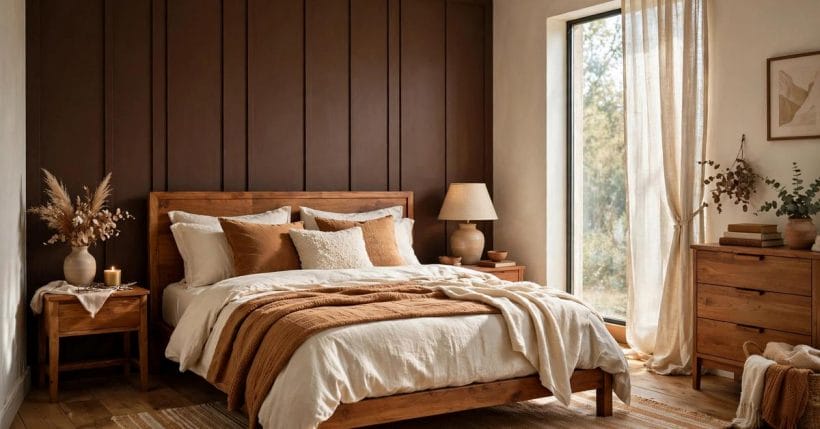
Brown is the colour bedrooms were before they were anything else — timber, leather, wool, earth. A brown bedroom asks nothing of you except warmth, and gives back the deepest sleep of any room in the house.
These seventy-five ideas take brown seriously as a colour in its own right: the full run of tones from cream-brown to chocolate, the beds and bedding that layer them, the partners that lift them, and the light that keeps them glowing rather than gloom.
1. Brown Bedroom at a Glance
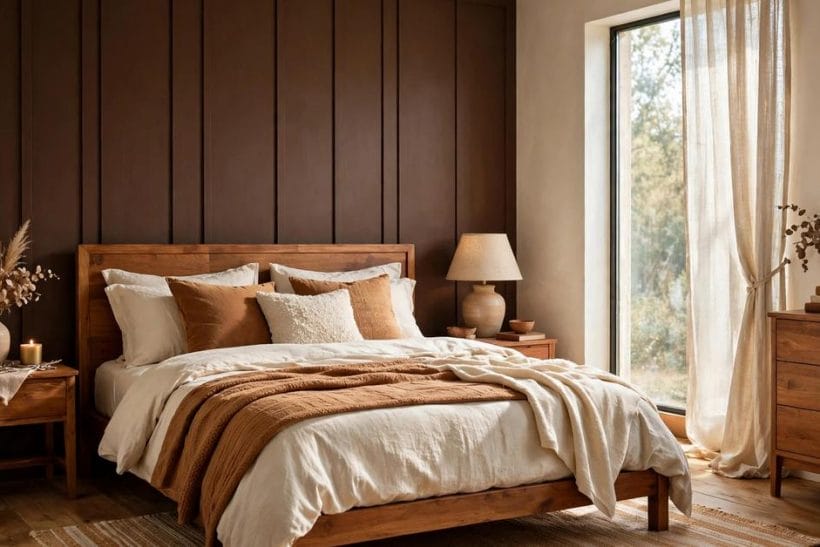
The central entity is the brown bedroom: a sleeping room built on the brown family — wood tones, tanned leathers, and earth pigments from pale latte to near-black chocolate — layered so the room reads warm and grounded rather than dark. The room-wide survey belongs to the bedroom ideas pillar; this post is the brown lane of the colour set, and its siblings split by angle — the bedroom with black walls takes darkness to its limit, the yellow bedroom takes the palette’s sunshine, and the bedroom with blue walls works the cool counterpoint. Brown sits between them all: warmer than black, calmer than yellow, friendlier than blue.
| Question | Short answer |
|---|---|
| Will a brown bedroom feel dark? | Only if it is all one tone — layered browns with cream bedding and warm light read cosy, not cave; the layering sections below do the lifting |
| Which browns work together? | Almost any, if you keep them in one temperature family and vary the depth — pale, mid and deep in every view of the room |
| What colour lifts brown? | Cream first, then sage, blush and black in small doses — the partner section works through each |
| Is brown a safe resale colour? | It is the safest of the colour lanes — timber and earth tones are what buyers picture as a main bedroom anyway |
2. The Browns Themselves: Cream-Brown to Chocolate
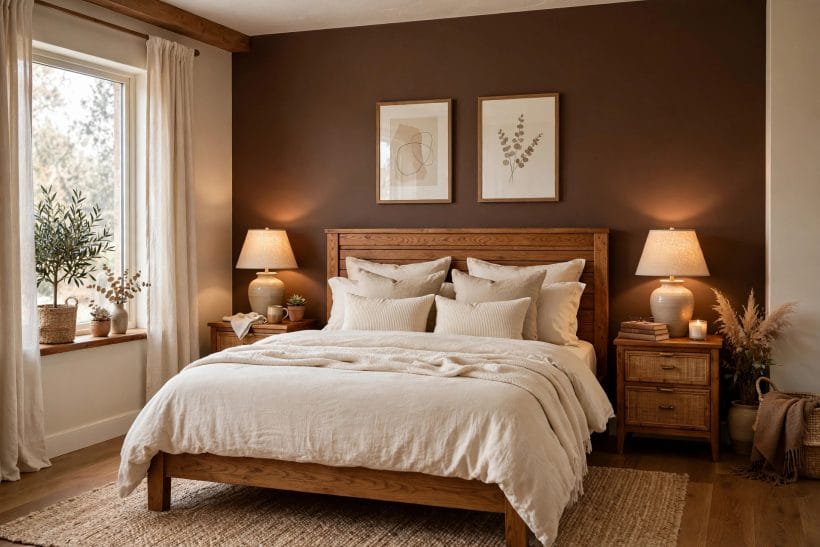
Brown is not one colour but a staircase of them, and the room works when several steps appear in every view. These nine ideas name the tones so the rest of the post can use them precisely.
1. Cream-brown: latte and oatmeal
The palest step — browns with so much white in them they nearly read as neutrals. Latte walls and oatmeal bedding are where the cautious start, and where small rooms should live entirely.
2. Sand and stone tones
Grey-leaning browns, the colour of dry earth and beach pebbles. Sand tones cool the family down and pair brown with grey upholstery without a fight.
3. Caramel and honey
The golden middle — caramel throws, honey-oak furniture, amber glass. Caramel is brown’s most flattering step by lamplight and the one guests always compliment without knowing why.
4. Tan and saddle leather
The colour of worn saddles and good gloves: mid-brown with orange in its heart. Tan is the bridge tone — it shakes hands with cream above it and chocolate below it.
5. Coffee and walnut
Deep, red-leaning browns — fresh coffee, oiled walnut. This is where the room gains its gravity: a walnut bed or coffee-coloured wall is the anchor the pale tones float against.
6. Chocolate, the near-black
The darkest step, a breath away from black but warmer at every hour. Chocolate on one wall or in one great piece of furniture gives the room its evening depth.
7. Red browns: mahogany and chestnut
The ruddy branch of the family — chestnut wood, mahogany stain. Red browns glow in firelight and lamplight and carry traditional rooms beautifully; use them as wood, not wall paint, unless the room is large.
8. Yellow browns: oak and pine
The sunny branch — honey pine, natural oak. Yellow browns are the timber defaults of most homes, which is why the brown bedroom so often starts with the furniture you already own.
9. Keep one temperature per room
The family’s only rule: red-leaning and yellow-leaning browns argue in the same view. Pick the branch your floor and furniture already belong to, and let every added tone join that side.
Notice what the staircase gives you that a single brown never can: movement. The eye travels from the pale bedding to the caramel throw to the walnut frame the way it travels across a landscape at evening, and the room feels larger and calmer for the journey. Rooms painted and dressed in one flat brown feel smaller than they are, because the eye has nowhere to go. Depth of tone is the brown room’s substitute for size — spend it before you spend anything else.
3. Brown Walls: Paint, Panels and Limewash
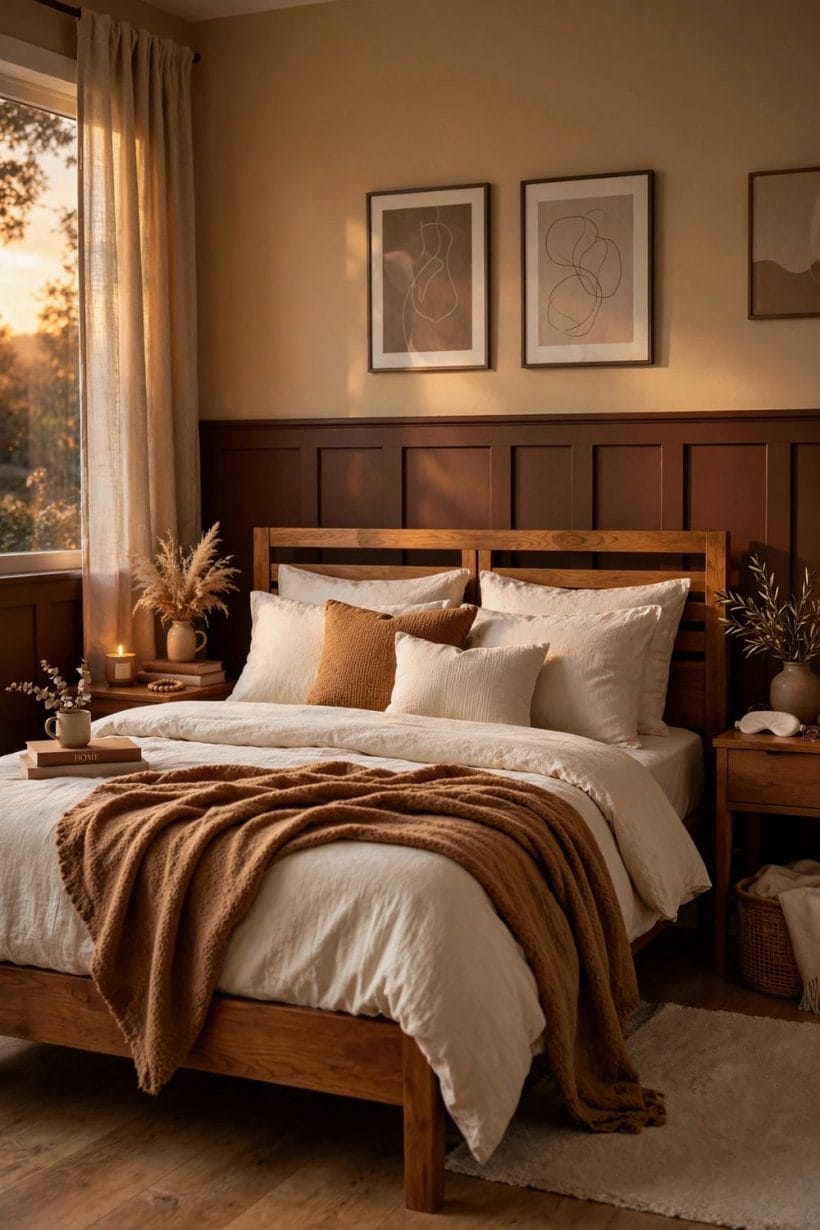
Walls are where brown commits. These nine ideas take the tones onto plaster, timber and paper — from the palest wash to the full chocolate statement.
10. Latte walls, the gentle start
Pale brown walls warm a room without closing it — the colour of milky coffee is the beginner’s brown and the landlord’s friend. It takes white trim and any bedding you own.
11. The caramel feature wall
One wall in mid-caramel behind the bed gives the room its sunset wall while the rest stay cream. Feature walls work here because brown deepens rather than shouts.
12. Chocolate behind the bed
The boldest wall in the post: deep chocolate behind the headboard, cream bedding piled against it. Pale pillows on dark brown is the brown bedroom’s portrait shot.
13. All four walls in mid-brown
The full wrap in a warm mid-tone turns the room into a burrow — in the good sense. Keep the ceiling pale, the bedding creamy and the lamps warm, and the room cocoons rather than closes.
14. Timber cladding and panelling
Wood on the wall — battens, boards or panels — makes the colour literal. A timber-clad headboard wall carries texture no paint can copy, and pairs with plain bedding best.
15. Limewash in earth tones
Limewash over plaster gives brown its cloudy, mineral depth — the tone pools and thins like watercolour. Earth-pigment browns are limewash’s home turf; the finish was invented for them.
16. Brown below the rail, cream above
The two-tone wall grounds the room: deeper brown to dado height, warm cream above. Beds and furniture stand against the dark band while the upper room keeps its light.
17. Grasscloth and woven wallcoverings
Woven natural fibres in tan and sand add brown you can feel — texture standing in for depth of colour. Grasscloth suits the pale end of the family and quiet, tailored rooms.
18. The brown ceiling question
A pale caramel ceiling over cream walls lowers tall rooms into intimacy — the lid of the burrow. Keep it two steps paler than the walls, or the room’s crown turns heavy.
4. The Bed in Brown: Timber, Leather and Upholstery
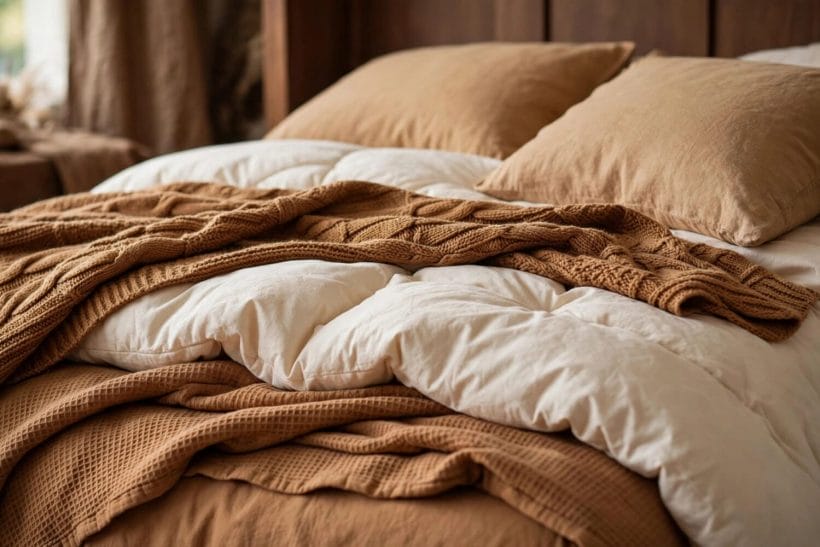
In a brown bedroom the bed usually brings the colour with it — timber, leather or deep upholstery. Nine frames and headboards that carry the family into the room’s centre.
19. The walnut bed
Walnut is the brown bedroom’s aristocrat: deep, grain-rich, red-leaning timber that makes cream bedding look expensive. A walnut frame needs nothing else in the room to match it exactly — near-tones are enough.
20. The honey-oak bed
Oak’s yellow-brown cheer suits the family’s bright end. An oak frame with latte walls and caramel textiles is the brown bedroom at its most welcoming, and the easiest to assemble from ordinary shops.
21. The leather headboard
Tan or saddle leather, padded or panelled, brings the saddlery warmth of the family’s middle step to the bed’s crown. Leather ages into the room — scuffs become character within a year.
22. The chocolate upholstered bed
A full upholstered frame in deep chocolate fabric — velvet for glamour, woven wool for calm — turns the bed into the room’s dark anchor. Keep the bedding pale against it, always.
23. The rattan and cane bed
Woven cane panels in a timber frame give brown its lightest texture — air and pattern in the family’s natural fibre. Cane suits the sand and caramel steps and sunnier rooms.
24. The dark-stained farmhouse bed
A simple slatted bed stained deep — the working farm’s frame in the family’s dark register. It costs little, lasts decades, and takes every textile in this post without complaint.
25. The mid-century walnut frame
Tapered legs, a low profile and a panelled headboard — the mid-century bed brings walnut’s orderliness to the brown room. Its clean lines stop layered browns from turning fusty.
26. The four-poster in dark timber
Height and shadow: a dark four-poster in a pale brown room is pure theatre at bedtime. Leave it undraped unless the room is cold; the posts are the decoration.
27. The iron bed, painted brown
Iron bedsteads take paint beautifully — bronze-brown and oil-rubbed finishes give the classic frame a warm register. The route to a brown bed for rooms where timber would overweigh the floor.
Whichever frame you choose, judge it from the doorway at night, not from the shop floor at noon. The bed is the room’s largest brown object, and its tone sets the register everything else must harmonise with — bedding, walls and lamps all take their cue from it. If the frame’s brown fights the floor’s brown, no cushion will broker peace; that single undertone decision is the whole room in miniature.
5. Bedding Layers: Cream over Caramel
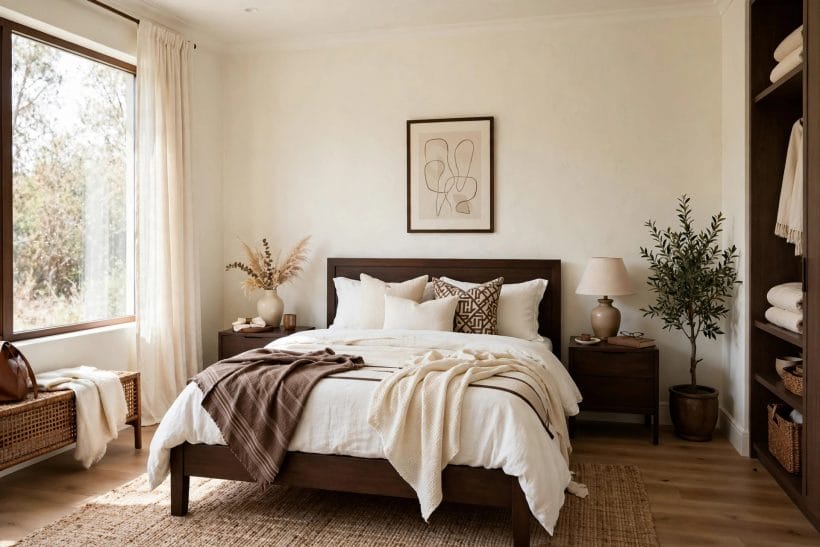
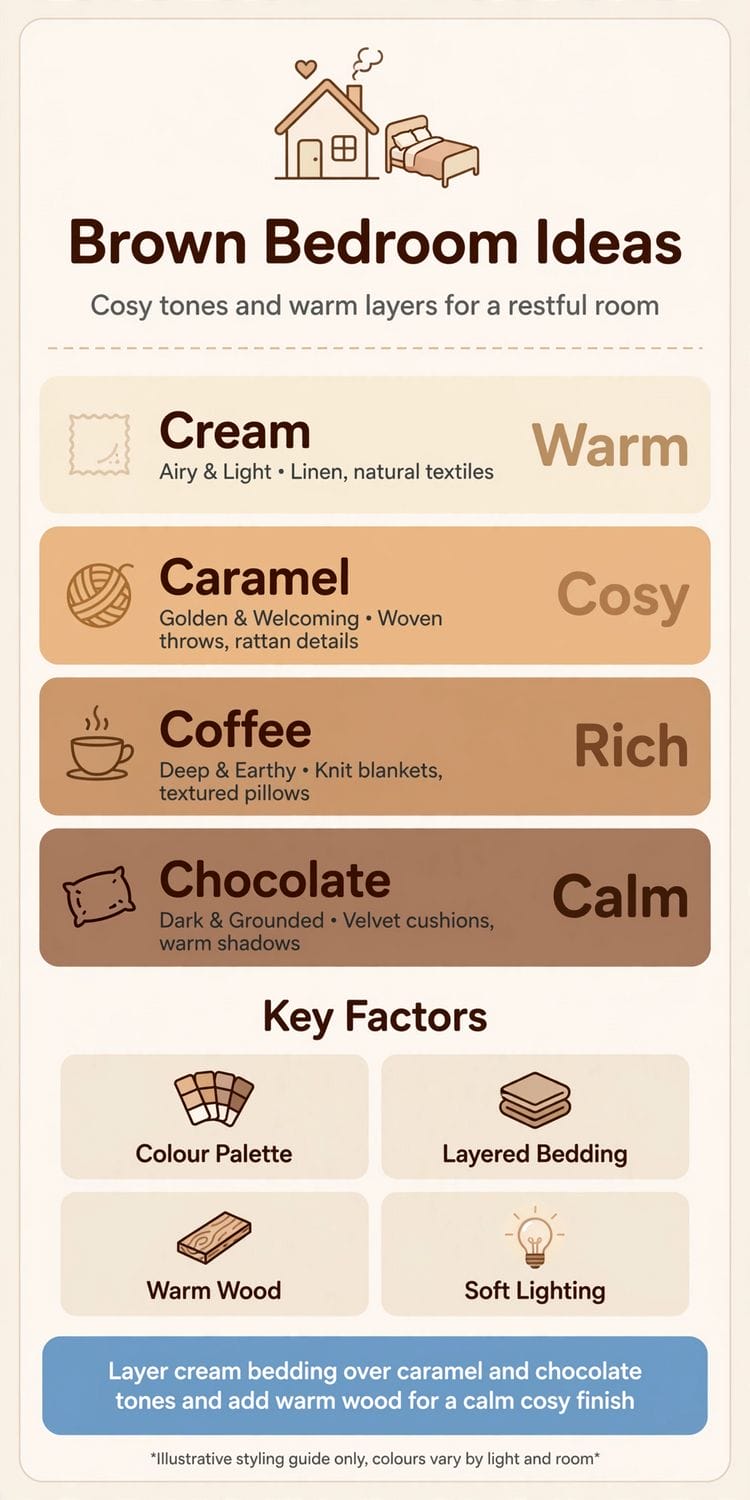
Brown bedding fails when it is all one tone and sings when it is a staircase. These nine ideas layer the bed from white-cream down to chocolate, in the order the infographic’s tones suggest.
28. The cream base layer
Start every brown bed with cream — sheets and the main duvet in warm white. Cream is the light source inside the bed, the tone skin and lamplight flatter most.
29. The caramel throw
One caramel throw across the foot lays the family’s golden step over the cream. Folded long or draped corner-wise, it is the single cheapest brown-bed purchase there is.
30. Coffee cushions against cream
Two deep coffee cushions at the head give the pale bed its dark punctuation. Velvet for winter, linen for summer — the tone stays, the texture rotates.
31. Tonal stripes and checks
Bedding patterned in browns alone — a latte stripe, a tan check — adds interest without importing new colours. Pattern in one family reads tailored, never busy.
32. The chunky knit layer
A heavy knit blanket in oatmeal or camel is the brown bed’s texture summit. Knits catch lamplight in every loop and make the whole arrangement look touchable.
33. Leather and suede cushions
One suede or leather cushion among the cloth ones brings the saddlery note to the bed itself. A single hide tone among textiles is the style’s quiet luxury.
34. The chocolate bed skirt or base wrap
Ground the pale bed on a dark base — a chocolate valance or upholstered divan wrap settles the composition like a shadow under a tree. The bed stops floating and starts belonging.
35. Seasonal brown rotations
Summer: sand, cream and cane-light textures. Winter: coffee, chocolate and the knits. Rotating the deep layers with the seasons keeps one palette feeling like two rooms a year.
36. White sheets, always white sheets
Whatever the layers above them, keep the sheets themselves warm white. Brown-toned sheets read dingy by morning light; white keeps the bed’s promise of cleanliness that every sleeper checks unconsciously.
6. Brown and Its Partners: Cream, Sage, Blush and Black
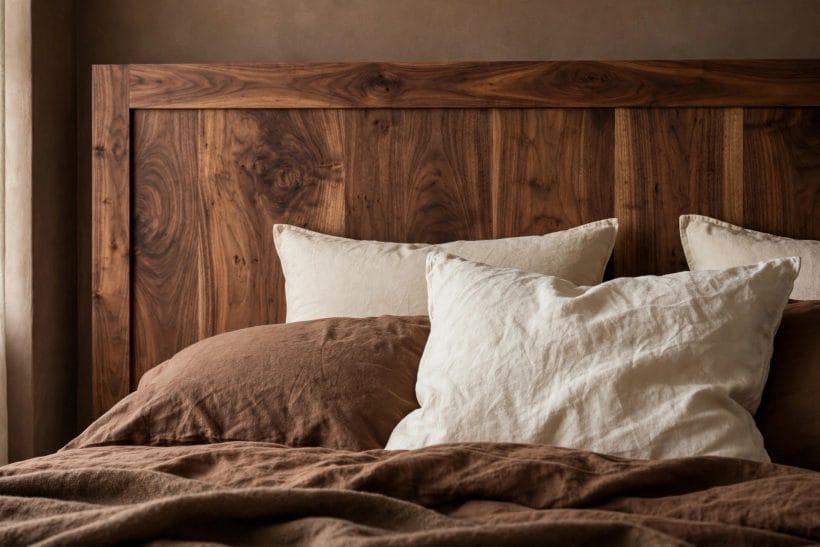
Brown is the most sociable of colours — it hosts almost any partner. These nine pairings are the proven ones, including a nod to the bedroom with grey walls, whose cool neutrals brown warms better than any other lane.
37. Brown and cream, the foundation pair
The marriage the whole post rests on: brown’s depth, cream’s light. Any ratio works — cream-dominant for bright rooms, brown-dominant for burrows — as long as both appear in every view.
38. Brown and sage
Earth and leaf. Sage green is brown’s garden partner — cushions, a painted stool, eucalyptus in a brown jug. The pairing smells of the countryside even in a city flat.
39. Brown and blush
A little blush — a cushion, a faded rose print — sweetens coffee and walnut without a hint of the nursery. Blush is brown’s most modern partner and its most forgiving.
40. Brown and black, the deep alliance
Black lamps, a black frame or two — black sharpens brown the way a belt finishes an outfit. Keep black to accents; two dark families at full strength make midnight at noon.
41. Brown and brass
Brass is brown’s metal — lampholders, handles, the trim on a mirror. Its warmth is the family’s own, polished. Chrome and bright silver, by contrast, cool the room off a cliff.
42. Brown and white, the crisp version
Pure white instead of cream gives brown a Scandinavian crispness — pale oak, white bedding, tan accents. The pairing suits small rooms and anyone who finds cream too sleepy.
43. Brown and rust
Rust is brown’s fiery cousin — a throw or cushion in burnt orange deepens the autumn register. The pair belongs to fireplaces, wool and early nights.
44. Brown and dusty blue
The unexpected one: a little desaturated blue — a cushion, a print — makes browns look richer by contrast, the way blue sky flatters a ploughed field. Use it as an accent, not a theme.
45. Brown on brown, the tonal room
For the confident: no partner at all — every surface a step of the staircase, interest carried by texture alone. Tonal rooms are the hardest to start and the calmest to live in.
The partners share one discipline: they enter as accents and earn promotion slowly. A sage cushion becomes a sage stool next season; blush stays a cushion for a year before it is trusted with a curtain. Brown’s steadiness makes it the perfect host for this gradualism — the room absorbs each guest without a redecoration, which is precisely why brown bedrooms so rarely get redecorated. They evolve instead, and a room that evolves never dates all at once.
7. Light for Brown Rooms: Warm Bulbs and Daylight
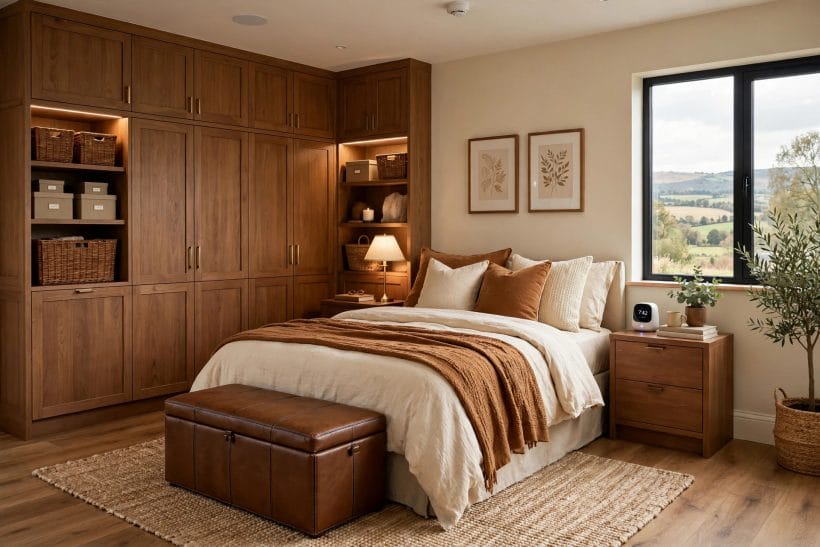
Brown drinks light. Handled well, that appetite makes lamplight look like firelight; handled badly, the room eats every lumen and stays gloomy. Nine ideas feed it properly.
46. Warm bulbs, non-negotiable
Every bulb in a brown room should be warm — cool light turns caramel grey and chocolate muddy. The colour of the bulb matters more in this room than in any other lane of the colour set.
47. Two bedside pools of light
Lamps at both sides of the bed cast the warm pools the whole palette was mixed for. Ceramic, timber or brass bases under cream shades keep the hardware inside the family.
48. A ceiling light that flatters
Choose a shaded or diffused ceiling fitting — bare bulbs rake brown walls into streaks. A woven or fabric shade throws the soft, directionless light earth tones love.
49. Daylight: sheer it, don’t block it
Brown rooms need their daylight unimpeded — sheer linen at the window, furniture kept out of the light path. The pale layers of the palette exist to bounce what light there is.
50. Mirrors in warm frames
A mirror in a gilt or timber frame doubles the window’s gift and hangs the room’s warmth back at itself. Place it to catch light, not the unmade bed.
51. Candles and the brown hour
Candlelight is brown’s native illumination — the family evolved around hearths. A candle or two on the dresser, safely housed, completes the room’s evening register.
52. Picture lights and shelf glow
A small picture light over art, a lamp on the bookshelf — these low, warm sources give brown walls their museum depth. The room reads lit in layers, not lit from above.
53. North-facing brown rooms
Cold daylight pushes brown toward grey — answer with the family’s warm branch: caramel, tan, brass and the warmest bulbs. North rooms are where red-leaning browns earn their keep.
54. South-facing brown rooms
Strong sun lets you spend the deep tones freely — chocolate and coffee hold their nerve in bright rooms. Sheers keep the sun from bleaching the textiles unevenly.
The deeper pattern in all nine ideas is that brown rooms are lit, not illuminated. A bright, even wash of light flattens the staircase of tones into one mud-coloured field; pools and gradients are what separate cream from caramel from chocolate. If you change nothing else in a disappointing brown room, change the lighting before the paint — the colour was probably right, and simply never given its evening.
8. Storage in Timber Tones
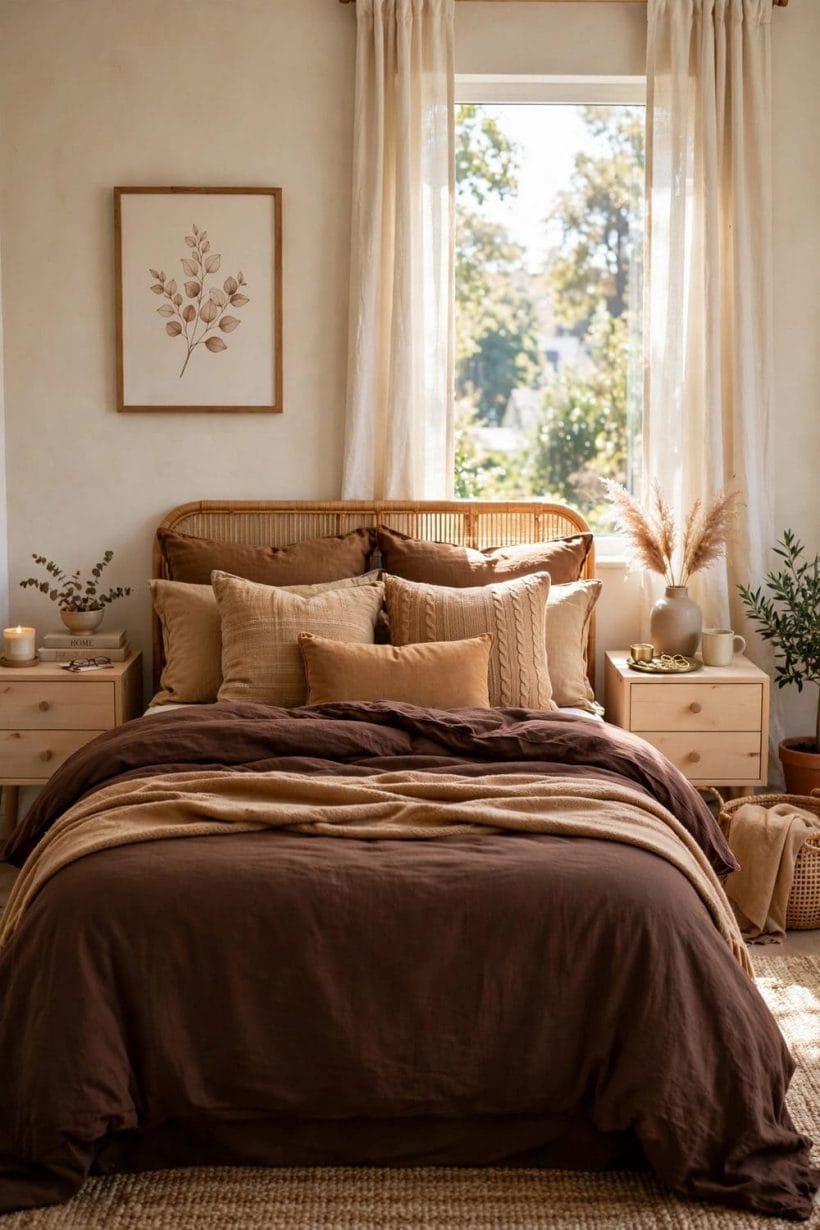
Brown storage has an unfair advantage: the furniture was probably brown before the room was. Eight ideas put clothes and clutter away inside the palette.
55. The walnut wardrobe
A full-height wardrobe in walnut or stained timber is the room’s second mountain after the bed — and like the bed, it anchors the palette. Dark storage against pale walls is the brown room’s classic composition.
56. The oak dresser
A honey-oak chest brings the family’s bright step to storage and gives folded knits a home. Its top is the room’s display shelf — keep it to three objects and a lamp.
57. Woven baskets and seagrass boxes
Storage in the family’s natural fibres — baskets for blankets, lidded boxes for the miscellaneous. Woven browns store things and texture the room simultaneously.
58. The leather-topped trunk
A trunk at the foot of the bed, leather-clad or plain timber, swallows the spare bedding and seats the morning’s clothes. Trunks are this palette’s blanket box in its most handsome form.
59. Bedside drawers, mismatched timber
Two different small chests — one oak, one walnut — flank the bed in the family’s easy way. Matching exactly is a showroom habit; the brown room prefers relatives to twins.
60. Open shelving in stained wood
A run of stained shelves for books and folded linen shows the palette working as background. Keep shelves two-thirds full; brown shelving packed tight reads as a woodpile.
61. Hooks, rails and hanging storage
A timber peg rail takes robes and tomorrow’s outfit against the wall — storage that reads as panelling when empty. The farmhouse solution, in the farmhouse colour.
62. Under-bed in natural fibre
Flat seagrass or canvas boxes slide the season’s clothes under the bed invisibly. In a room built on natural materials, even the hidden storage can stay in the family.
Timber storage has one quiet advantage over the fitted kind: it can be rearranged as life changes. The dresser that holds baby clothes this year holds books in five and blankets in ten, and its brown deepens in service the whole time. Fitted storage dates with the décor it matches; brown furniture simply continues, which is the palette’s temperament in object form.
9. Small Brown Bedrooms and Rental Routes
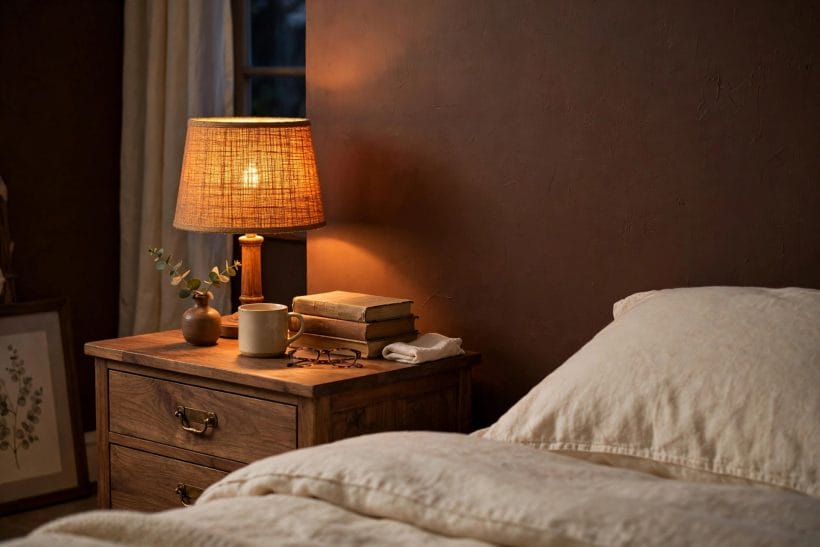
Brown has a reputation for needing big rooms, and it is mostly wrong — the pale half of the family makes small rooms feel held rather than shrunk. Eight ideas for the small and the rented, echoing the small-space thinking in the attic bedroom.
63. Pale browns for small rooms
Latte walls, oatmeal bedding, caramel accents — the staircase’s top three steps contain a whole small room. Reserve the deep tones for one cushion and the picture frames.
64. One dark piece only
In a small room, let exactly one piece go deep — the walnut headboard or the chocolate throw — and keep everything else two steps paler. The single dark anchor gives depth without weight.
65. The renter’s brown: textiles only
No paint required: brown arrives on the bed, the rug and the curtains, and leaves when you do. A full textile set in the family turns a white rental box unmistakably brown.
66. Brown above the bed
A large woven hanging, a caramel-toned print or a timber panel fixed where a headboard would go — brown massed at the bed’s head gives the room its focal depth rent-free.
67. Mirrors to double the warmth
Small rooms need their light recycled: a timber-framed mirror opposite the window bounces daylight through the pale browns twice. Position beats size — one well-placed mirror outperforms two random ones.
68. Slim timber furniture
Choose storage with legs and air beneath it — raised dressers and open-based beds let the floor run on, and the room reads larger. Heavy plinth-based pieces eat small brown rooms.
69. The door and trim trick
Where painting is allowed just a little, paint only the door and trim a mid-brown against cream walls. The room gains the family’s frame without committing a single wall.
70. Keep the floor pale
A light rug over dark boards — or pale boards themselves — lifts the whole arrangement. In small brown rooms the floor is the largest pale surface you own; spend it on light.
Small and rented rooms are where the brown bedroom proves its manners. Nothing here needs a builder: the palette arrives on textiles, stands in timber legs, and hangs on one wall. A landlord’s white box is not a limitation but the cream layer supplied free — add the staircase beneath it in objects, and the deposit and the design both survive.
10. Paint, Prep and Choosing Well
The last five ideas are the craft and judgement behind the previous seventy — how brown paint behaves, and how to choose tones that survive your light.
71. Test browns bigger, and at night
Brown shifts more between daylight and lamplight than any other family — a caramel that glows at noon can sulk at nine. Paint the largest tester you can and judge it at both hours before committing.
72. Watch the undertone against your floor
The floor is the room’s biggest fixed brown. Hold paint cards against it, not against the shop’s white wall — red-leaning paint over yellow-leaning boards is the family’s one true feud.
73. Sheen changes the colour
The same brown in matt reads a step deeper than in eggshell. On walls, matt and limewash keep earth tones honest; satin belongs on the furniture, where its sheen reads as polish.
74. Buy textiles before wall paint
Bedding and curtains are harder to match than paint is to mix. Fix the textiles first — the bed is bought once — then mix the wall to sit quietly behind them.
75. When in doubt, go one step paler
Brown deepens on the wall, in quantity, at night — every force pushes it darker than the card. Choosing one step paler than your instinct is the family’s oldest and truest rule.
Costs here are the costs of any colour-led room: paint, bedding and the odd piece of timber furniture, with the deep tones costing no more than the pale. Spend on the bed’s textiles and the bulbs; brown does the rest for free, being mostly the colour furniture already is.
Final Considerations
Sit in the room at dusk with one lamp on. If the browns sort themselves into a staircase — cream glowing, caramel warming, chocolate resting at the back — the room is right, and it will still be right in ten years, which is more than most colour lanes can promise.
A brown bedroom is seventy-five agreements with the earth’s own palette: tones kept in one temperature, layers kept pale at the skin and deep at the edges, partners chosen warm, light kept warmer. Make those agreements and the room becomes the house’s steady heart — the one nobody photographs first, and everybody sleeps best in.



0 Comments