
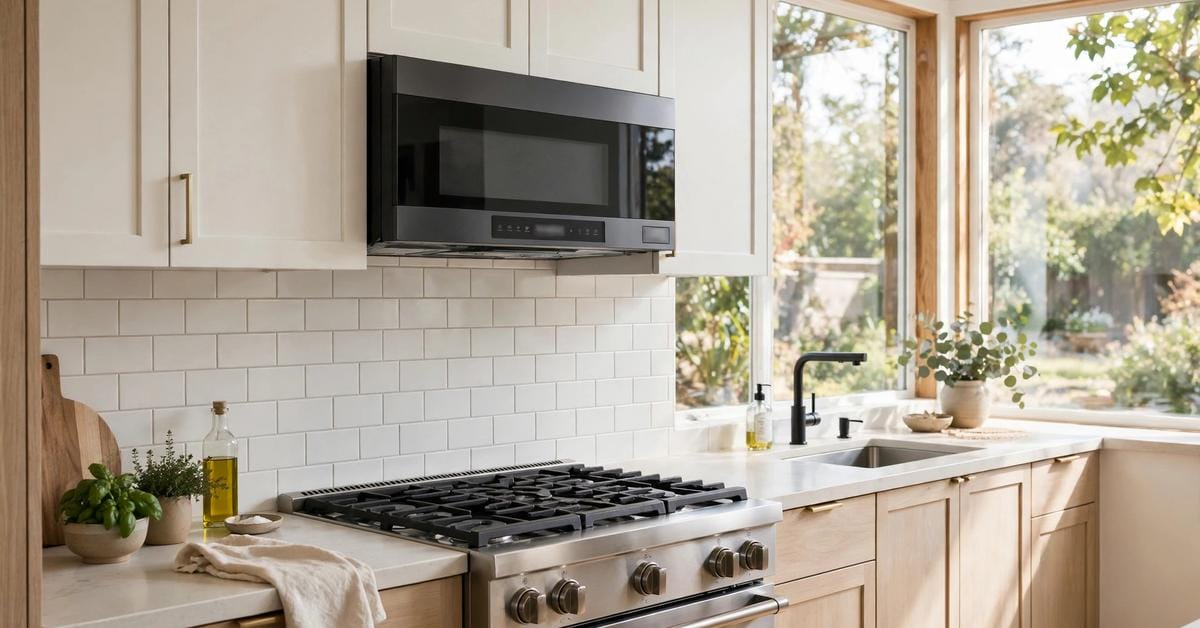
It promises a microwave and a vent in the space of a slim shelf — and for the right kitchen, that promise is kept.
This guide weighs the pros and cons of low profile over the range microwaves honestly: what the slim format genuinely gives you, what it quietly takes away, and the checks to make before one is fitted over your hob.
1. Low-Profile Over-the-Range Microwaves at a Glance
An over-the-range microwave combines two appliances in the space above the hob: a microwave oven and an extraction vent with lighting for the cooking surface below. The low-profile format makes that combined unit slimmer in height than a standard one, so it can fit beneath higher or shallower wall cabinets and leave more visible space between the hob and the unit’s underside. Everything in this guide is stated in general terms for the appliance type: no brands, models or prices are compared, and every specific figure — dimensions, venting capacity, power, clearance — must be checked against the manufacturer’s own specification for the unit you are considering and the rules where you live. A companion guide later in this series covers general microwave buying checks for countertop models; this post stays strictly with the low-profile over-the-range format.
| Question | Short answer |
|---|---|
| What is a low-profile over-the-range microwave? | A slimmer-height combined microwave and vent unit fitted in the cabinet run above the hob |
| What is its main advantage? | It frees the worktop and fits tighter cabinet layouts while keeping the hob’s extraction in place |
| What is its main trade-off? | A shallower cavity and a lower-hanging underside — tall dishes and tall pots both need checking |
| Who should be cautious? | Tall cooks, keen fryers, households with tall stockpots, and anyone whose hob sees heavy steam and grease daily |
| What decides success? | Measured fit, honest venting arrangements and clearances confirmed against the manufacturer’s instructions |
2. What “Low Profile” Actually Means
The term describes proportions, not performance promises. Understanding exactly what has been made slimmer — and what has not — prevents the two classic disappointments with this format.
Shorter in height, similar in width and depth
The slimming is vertical: the unit is shorter top to bottom than a standard over-the-range model, while its width still matches the hob-and-cabinet module it sits in. That is why it solves cabinet problems rather than footprint problems — the counter below gains nothing directly, but the cabinet run above gains flexibility.
The cavity inside is shallower too
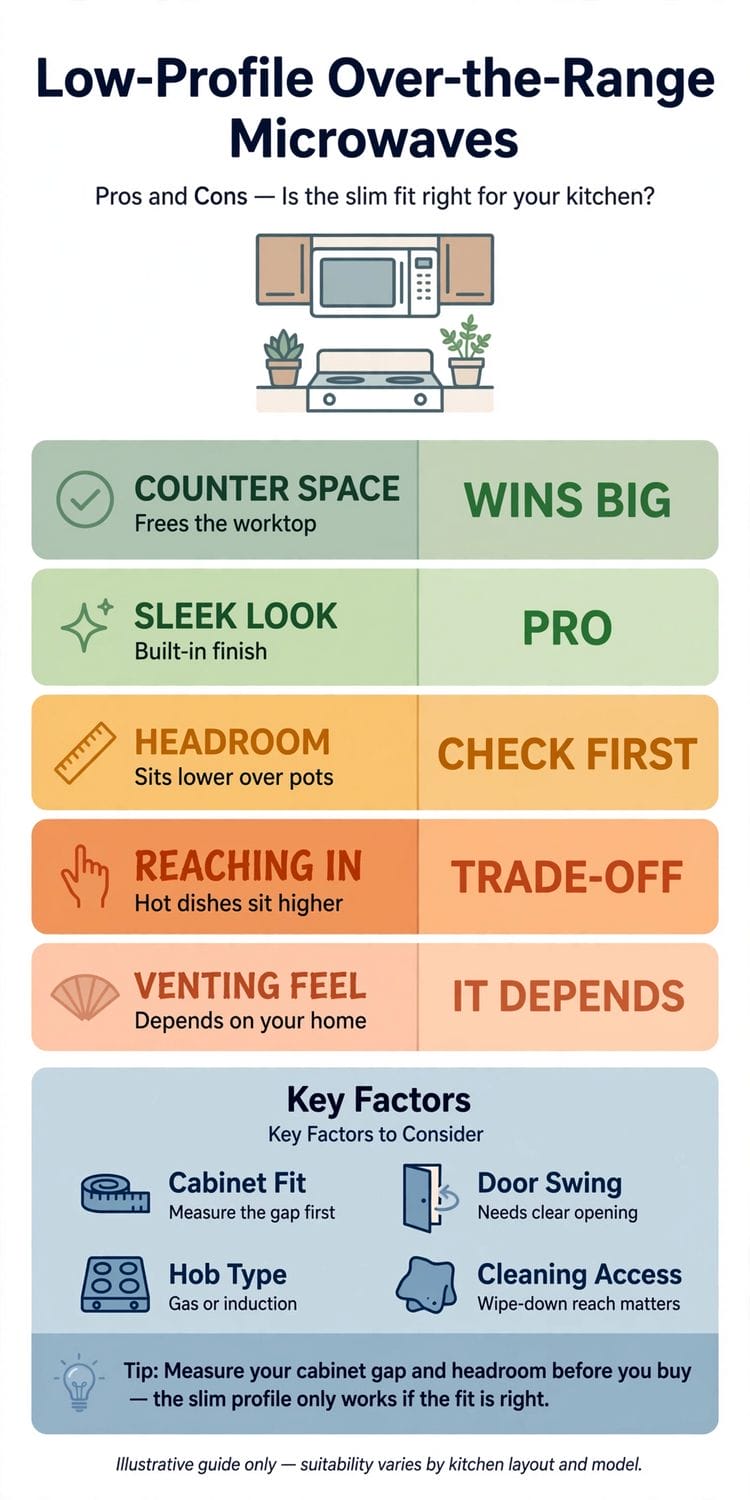
Height saved outside is height surrendered inside. The cooking cavity of a low-profile unit is generally shallower than a standard model’s, which matters for tall dishes, large mixing bowls and stacked containers. The infographic’s reaching-in row above makes the practical point: check your tallest regular dish against the manufacturer’s stated interior dimensions before buying.
The vent and lights live in the same slim body
Extraction, hob lighting and the microwave share one shallow housing. Each function is engineered to fit that housing, which is precisely why the manufacturer’s specifications — not assumptions carried from other models — are the only safe guide to what a given unit actually does.
3. The Pros, One by One
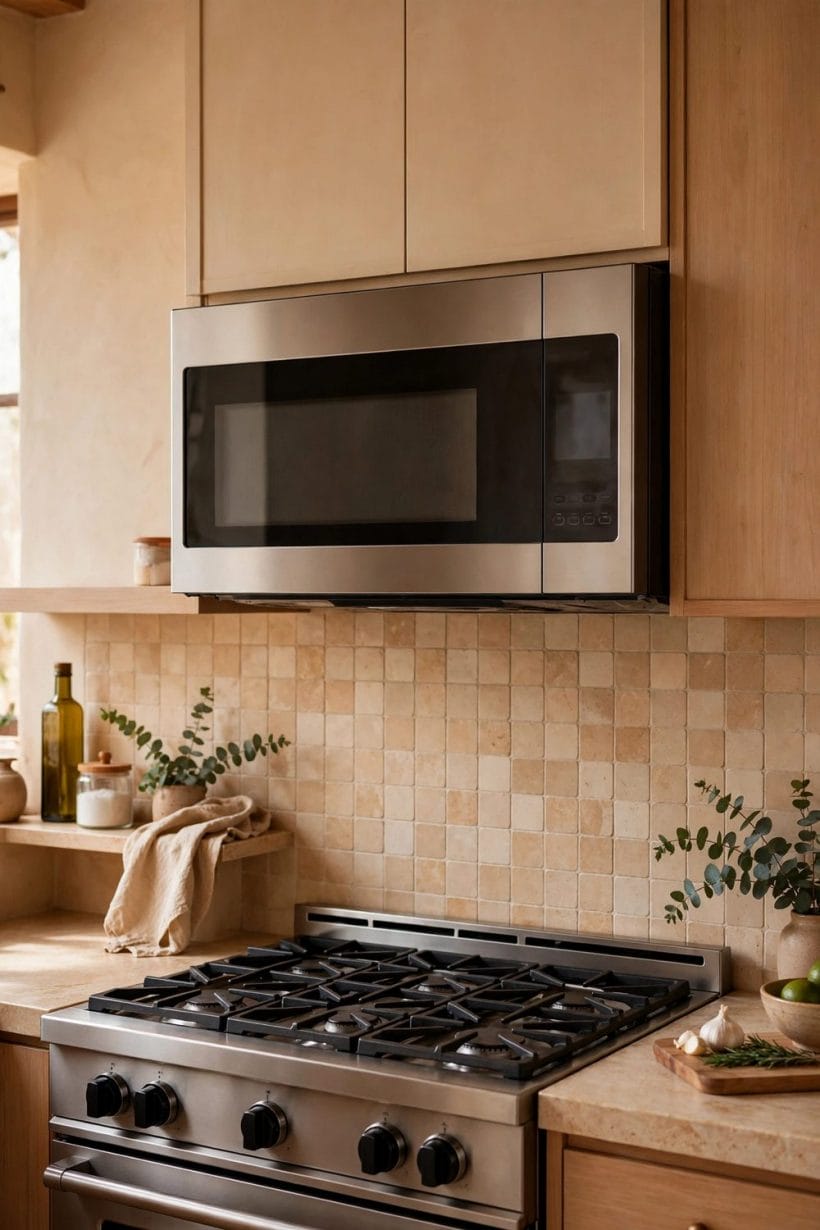
The format’s advantages are real and, for many kitchens, decisive. They are stated here as tendencies of the type, to be confirmed model by model against published specifications.
It frees the worktop completely
The largest daily win: no microwave footprint on the counter at all. In a small kitchen that reclaimed stretch of worktop is prep space, landing space and visual calm in one — the reason compact kitchens, including the layouts in tiny kitchen ideas, so often plan around an over-the-range unit.
It fits where a standard unit cannot
Shallower height lets the unit sit under taller cabinets, preserve a cabinet’s storage, or keep the cabinet line unbroken in kitchens designed before these appliances were common. Where a standard unit would force a cabinet rebuild, the low-profile format can sometimes be the difference between a swap and a renovation.
Microwave and vent in one installation
One appliance, one fitting, two jobs: the hob keeps its extraction and lighting, and no separate hood competes for the space. For kitchens being refreshed rather than rebuilt — including the budget-conscious approach in tiny kitchen makeover budget planning — that consolidation is the format’s economic heart.
A cleaner, built-in line
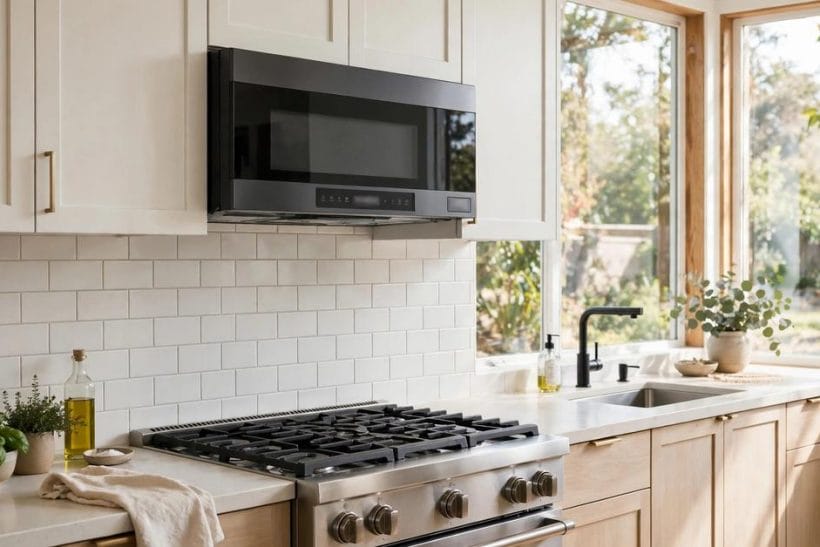
Fitted flush in the cabinet run, the unit reads as part of the kitchen’s architecture rather than an appliance parked on it. The feature photograph shows the effect: a slim dark band within pale cabinetry, the hob below, and nothing on the counters competing for the eye.
Controls and cooking at standing height
No bending to a low counter unit or reaching into a high cupboard: the cavity sits at a natural standing working height for most adults. Whether that height suits your household is a check, not an assumption — section four gives the other side of this coin honestly.
4. The Cons, Honestly Stated
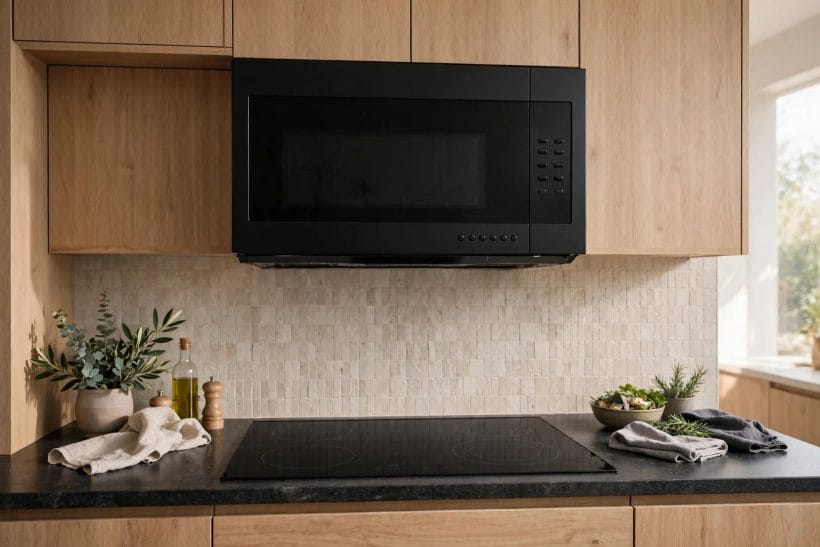
A fair guide owes the drawbacks the same space as the benefits. None of these are fatal for every kitchen — but each one is decisive for some.
Less room above the hob for tall pots
A unit that hangs lower leaves less vertical room over the burners. Tall stockpots, pasta pots with lids ajar and stacked steamers may not fit or may crowd the unit’s underside. Measure your tallest pot, with its lid, against the manufacturer’s stated clearance — this is the single most-skipped check with this format.
Hot dishes handled at a height that suits some, not all
Lifting a hot, heavy dish down from around face or shoulder height is a different task from lifting it off a counter. Shorter cooks, anyone with limited shoulder strength, and households where children reheat food should think hard about this — and a step stool is not an acceptable answer where hot liquids are concerned.
A shallower cavity limits some dishes
Tall items may simply not fit, and some low-profile designs manage capacity in ways that suit plates better than bowls. If your microwave life involves big batch dishes, reheating tall jugs or proving dough, compare the stated interior dimensions with your actual cookware, not with a showroom mug.
Steam, grease and heat reach the unit constantly
Living directly over the hob is hard service: cooking steam, airborne grease and heat cycles are the unit’s daily weather. Filters and surfaces need regular cleaning to work as intended, and the manufacturer’s cleaning guidance — followed, not skimmed — is part of the ownership cost of any over-the-range format.
Replacement is a fitted job, not a swap on the counter
When the unit eventually fails, its successor must fit the same cabinet geometry and venting arrangement, and fitting involves the cabinet, the wall and the electrics. It is a planned installation by a competent person, not an unbox-and-plug errand — a lifecycle cost worth accepting knowingly.
5. Venting: The Question That Decides Most Kitchens
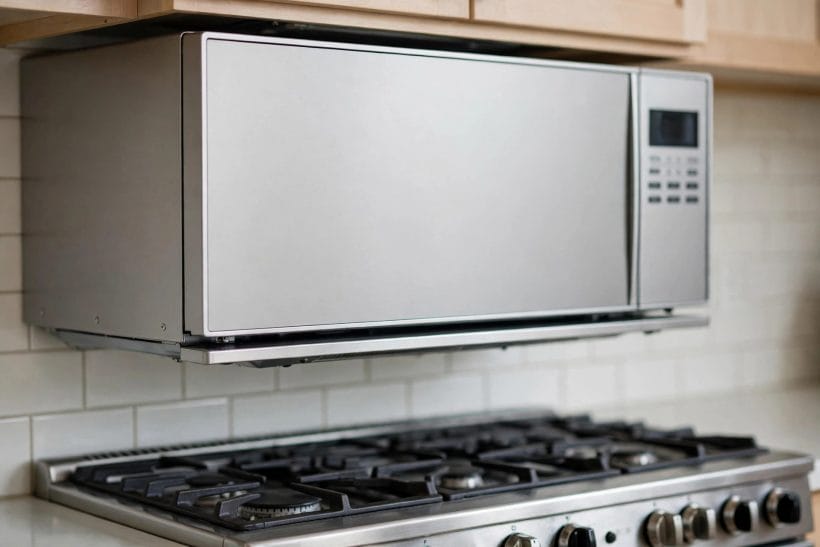
More kitchens succeed or fail with this format on venting than on any other question. The points below are general principles; your installer and the manufacturer’s instructions govern your actual arrangement.
Ducted outside, or recirculating — know which yours will be
Over-the-range units generally offer two venting paths: ducting the extracted air outside, or filtering and recirculating it into the room. Ducted extraction removes steam and cooking smells from the house; recirculating mainly filters grease and odour and returns the moisture to the room. Which your kitchen can support depends on the duct route available — establish it before choosing, not after.
Extraction demands are set by your cooking, not the brochure
A household that fries, sears and boils daily asks far more of a vent than one that mostly reheats. Be honest about your cooking when reading specifications, and treat extraction figures as model-specific claims to compare under the same stated method — never as numbers to carry from one model to another.
Filters are maintenance, not decoration
Grease filters that are washed or replaced on the manufacturer’s schedule keep extraction working and the unit hygienic; charcoal filters in recirculating setups have their own replacement rhythm. A vent whose filters are forgotten slowly becomes a light fitting with a fan noise — the most common quiet failure of the format.
Cooking over gas adds its own considerations
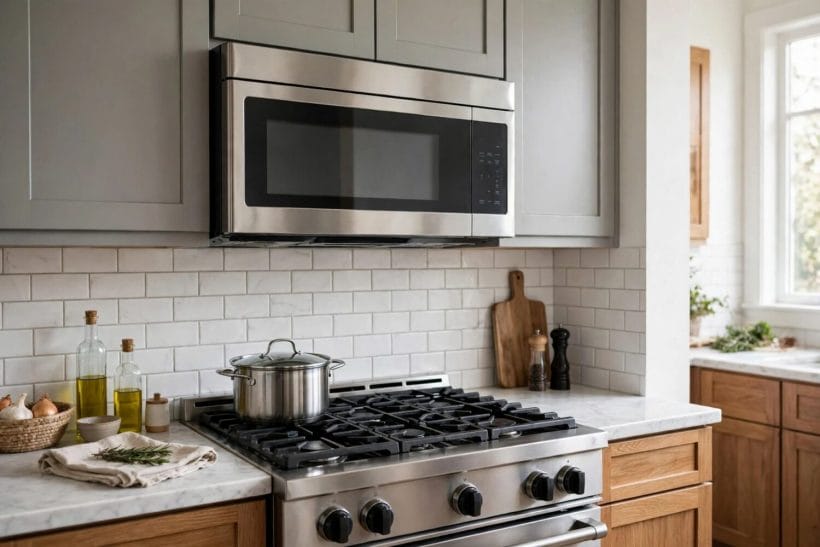
Where the hob is gas, ventilation also deals with combustion moisture, and clearances between burners and the unit above are safety matters set by the manufacturer and local rules. The pairing visible in this post’s photographs — a slim unit over a gas hob, as in the storage-conscious layouts of tiny kitchen storage hacks — is common, but common is not the same as automatic: the stated clearances for your specific hob and unit must both be satisfied.
6. Size, Fit and Headroom Checks
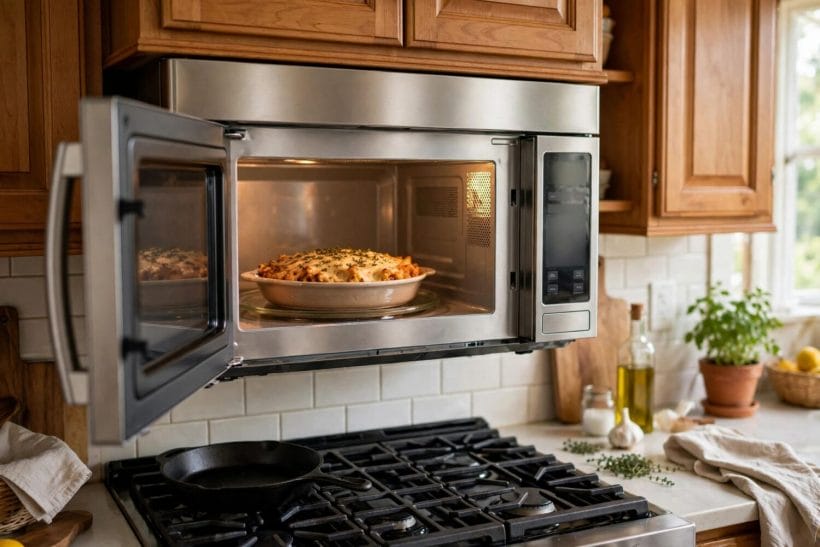
Fit is where this format is won or lost, and it is entirely measurable before money moves. The infographic’s cabinet-fit factor in section one is the summary; this section is the working version.
Measure the cabinet gap in all three directions
Width between cabinets, depth of the cabinet run, and the vertical space available determine which units can even be considered. Record all three, plus the position of any existing duct and power supply, and compare them only against manufacturers’ published dimensions for specific units.
Confirm the headroom over your tallest cookware
From the hob surface to the proposed unit’s underside is the dimension your cooking lives in. Recreate it with a taped line or a held board and stand your tallest lidded pot beneath it. If the pot fails the test in the workshop of your kitchen, no specification sheet can argue it back.
Check door swing and handle clearance
The microwave’s door needs clear opening against neighbouring cabinets, walls and its own handle’s arc, and the cook needs standing room in front of an open door holding a hot dish. Rehearse the movement with the space empty; it is much harder to rehearse after fitting day.
Think about who uses it, at their heights
Controls readable and reachable, the cavity visible without tiptoe, dishes liftable safely — test the proposed height against the shortest regular user, not the tallest. A kitchen fitted for its keenest cook but unusable by its most frequent one is fitted wrongly, whatever the tape measure said.
7. Power, Controls and Everyday Cooking
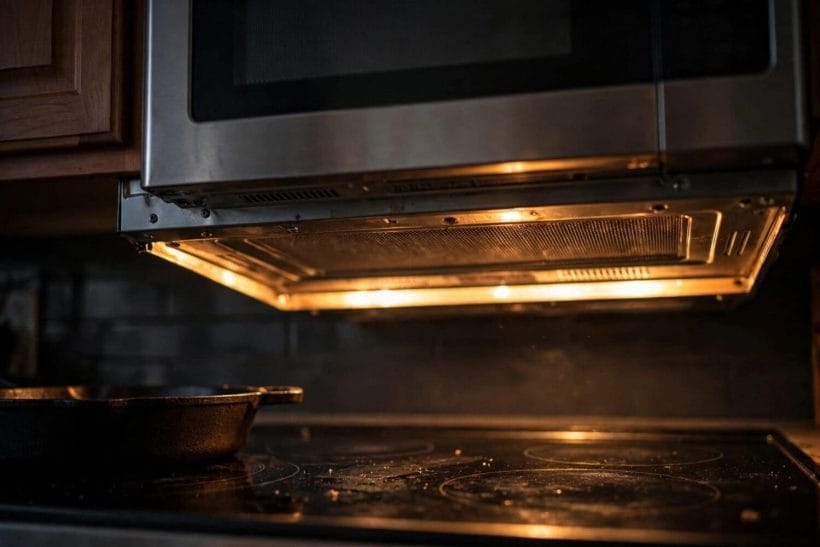
Beyond fit, daily satisfaction is decided by how the unit cooks and how it feels to operate at arm’s length, several times a day.
Judge power by the manufacturer’s rating, in context
Cooking power is stated by each maker for each model, and higher stated power generally means faster cooking — but ratings are only comparable as published figures, never as impressions borrowed from another household’s machine. Decide what your cooking actually needs — reheating, defrosting, full meals — and match the stated specification to that honest list.
Controls you can read from below
On a low-profile unit the control panel often sits along the unit’s lower edge or face, read at an angle from standing height. Legible markings, positive touch response and controls that can be operated without stooping or guessing are worth more than a long list of automatic programmes nobody uses.
Turntable, interior light and visibility
Seeing food clearly while it cooks — a decent interior light and a door window you can actually see through at your height — affects everything from boiled-over milk to judging when cheese has melted. These small things are difficult to assess from photographs; in a showroom, stand in front of the unit as you would at home.
Noise, from both the microwave and the vent
The unit contains a fan that will run during much of your cooking, in the room where cooks also talk, listen and supervise homework. Published noise figures exist for specific models; where possible, hear a comparable unit running before deciding that the sound is acceptable in your kitchen.
8. Installation and Safety Checks
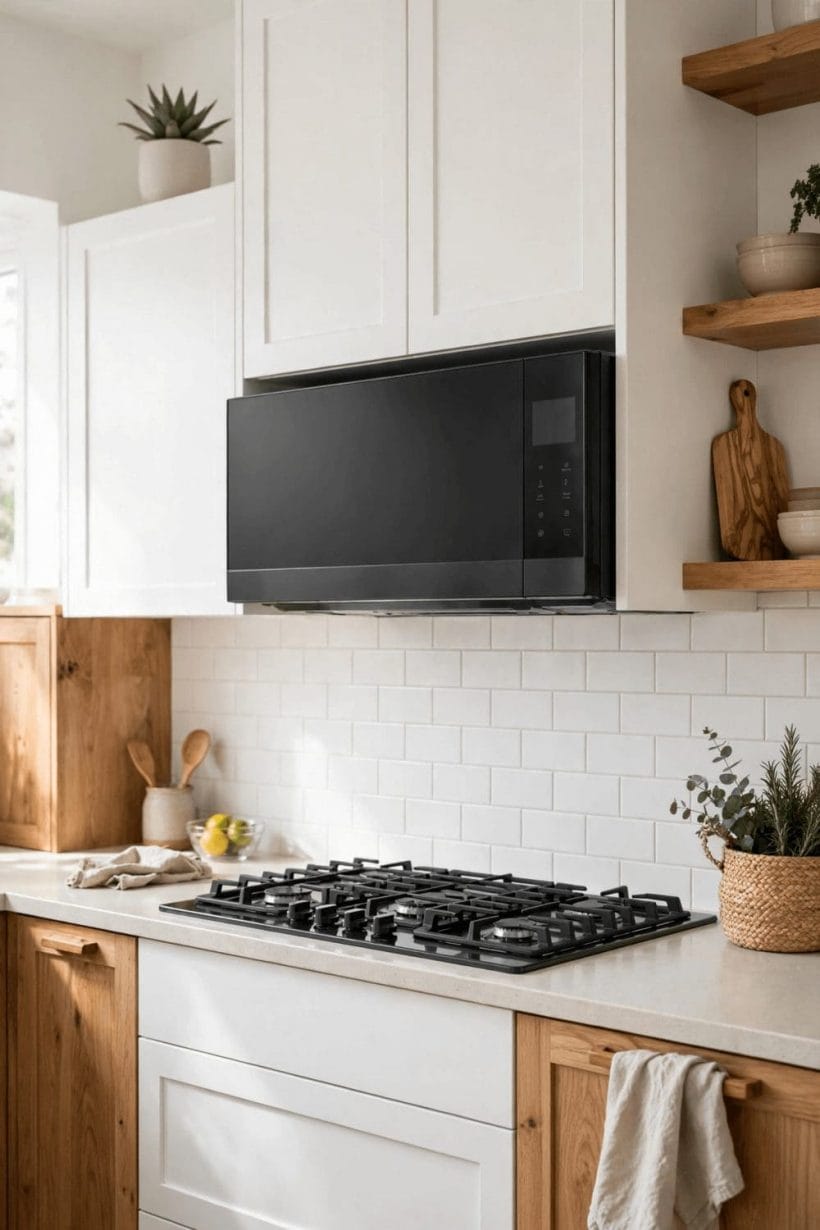
An over-the-range unit is a heavy appliance mounted above a heat source, connected to power and sometimes to a duct. The general safety framing below has no shortcuts.
Fitting is a two-person, follow-the-manual installation
The unit must be fixed to wall structure and cabinet as its manufacturer directs, level and secure, by people equipped for its weight. Improvised fixings above a hob are unacceptable; if the wall or cabinet cannot carry the unit as specified, that is a job for a professional to solve first.
Electrical work belongs to qualified hands
Any new circuit, moved outlet or hard-wired connection is work for a qualified electrician under your local rules. The appliance’s own stated electrical requirements govern — if your kitchen’s supply does not meet them, the supply is upgraded by a professional or the unit is not fitted.
Clearances above the hob are safety requirements
The minimum distance between hob and unit is set by the manufacturers of both appliances and by local codes, and it is a requirement, not a styling suggestion. Where the two documents differ, the stricter instruction wins, and the installer should be able to show you both figures.
Filters, lights and the cleaning rhythm
Before the unit is used, learn its cleaning routine from the manual: grease filters, interior surfaces, the underside that faces the hob’s steam. Setting the rhythm from the first week — as the appliance-care thinking in compact kitchen appliances tiny houses argues for small kitchens generally — keeps both extraction and hygiene where they should be.
9. Low Profile vs Standard vs Countertop: Choosing the Format
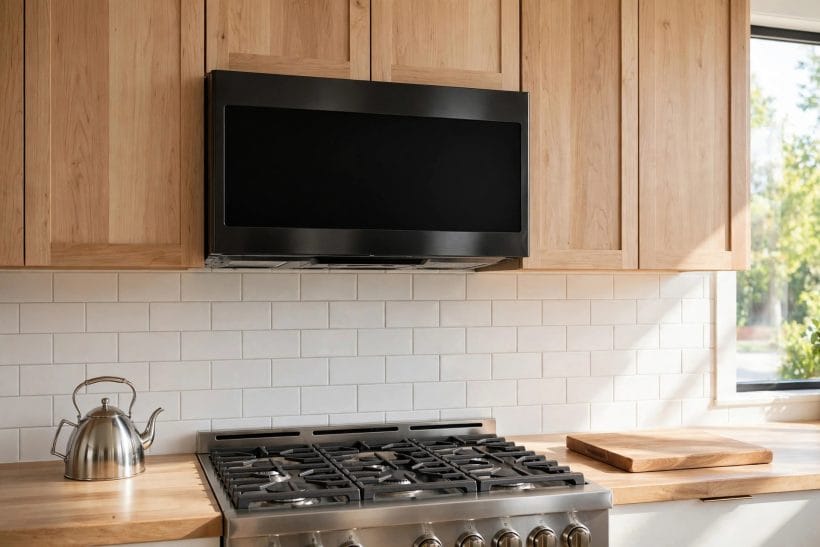
The slim format is one answer among three. This comparison stays with the formats themselves, so the choice can be made on your kitchen’s facts rather than on any model’s marketing.
Choose low profile when cabinets are the constraint
If the worktop must stay clear, a standard unit does not fit the cabinet geometry, and your cookware is mostly modest in height, the low-profile format earns its compromises. It is the format of tight, well-measured kitchens — the kind planned in tiny house kitchen floor plans, where every vertical inch is argued for.
Choose a standard over-the-range unit when cavity and headroom matter more
Where cabinet space allows the taller unit, it generally returns a deeper cavity and more headroom over the pots. Households with tall cookware, tall cooks or tall dishes will usually feel that difference daily and the cabinet sacrifice rarely.
Choose a countertop model when flexibility matters most
A countertop microwave can be replaced in minutes, moved for cleaning, taken to the next house and chosen from the widest range. Its cost is permanent worktop occupation. For renters and anyone whose kitchen may change, that flexibility is not a compromise at all — it is the point.
Let your cooking cast the deciding vote
List what the microwave actually does in your house across a normal fortnight. The format that serves that list — not the format that photographs best — is the right one. Every pro and con in this guide resolves, in the end, into that single honest inventory.
10. Costs as Drivers and the Pre-Purchase Checklist
No prices are printed here, deliberately: appliance prices move, vary by market and model, and any figure in a general guide would be invented precision. What can be stated honestly is what the total cost of this format is made of, and the checks to complete before committing.
What drives the total, stated plainly
The unit itself is only the first element. Add fitting — cabinet or wall work, ducting where the vented route is chosen, and electrical work by qualified trades where needed — plus filters and their replacements over the unit’s life, and the eventual fitted replacement. Compare formats on that whole-life basis, as the broader kitchen thinking in kitchen ideas encourages, rather than on the appliance ticket alone.
The checklist, in order
Measure the cabinet gap and the headroom over your tallest lidded pot. Establish whether the vent will duct outside or recirculate, and what that route requires. Confirm clearances against both manufacturers’ instructions and local rules. Check the stated interior dimensions against your tallest dish, the stated capacity against your cooking list, and the control layout at your own standing height. Agree who fits it, who handles the electrics, and what the filters’ maintenance rhythm will be. A unit that passes every one of those checks, on paper, before purchase, rarely disappoints in the kitchen.
When the honest answer is “not this format”
If tall pots fail the headroom test, if the vent can only recirculate into a small steamy room, or if the main users cannot lift hot dishes safely at the unit’s height, the correct conclusion is to choose a different format — said plainly, without regret. A guide that cannot talk you out of the wrong purchase is not a guide; it is a brochure.
Final Considerations
The low-profile over-the-range microwave is a genuinely useful format with genuinely sharp edges. It gives small and tightly-cabineted kitchens a clear counter and a built-in line; it asks, in exchange, for headroom, cavity depth and a venting arrangement that must be faced honestly rather than hoped for.
Measure first, read the manufacturer’s own figures for any unit you shortlist, and let your actual cookware and your actual cooking cast the vote. Fitted where it truly fits, this format serves quietly for years — and that, not the slim photograph, is the outcome worth buying.




0 Comments