
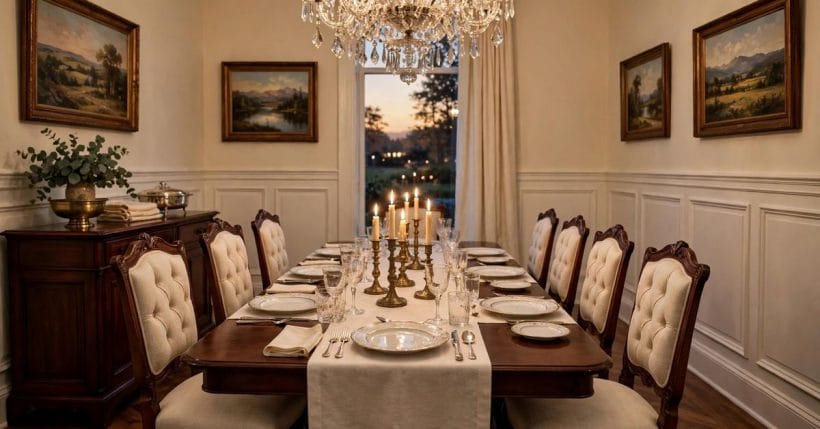
A traditional dining room is a room built around ceremony without stiffness: a good table, chairs that invite a long evening, light that flatters faces, and storage that puts the best china within reach. Nothing in it shouts, and nothing in it is accidental. The proportions are generous, the materials are honest, and the whole room is arranged so that serving, sitting and talking all happen without friction.
These seventy-five ideas work through the room in the order a thoughtful host would build it: layout first, then the table, seating, colour, light, storage, floors and windows, dressing, and finally the everyday and occasional use that keeps the room alive between feasts. This post is the traditional chapter of the wider dining survey, which belongs to the dining room ideas pillar; its style siblings keep their own lanes, from the pale ease of the coastal dining room to the raw timber of the rustic dining room, while the small-room discipline stays with the small dining room ideas.
1. How a Traditional Dining Room Is Put Together
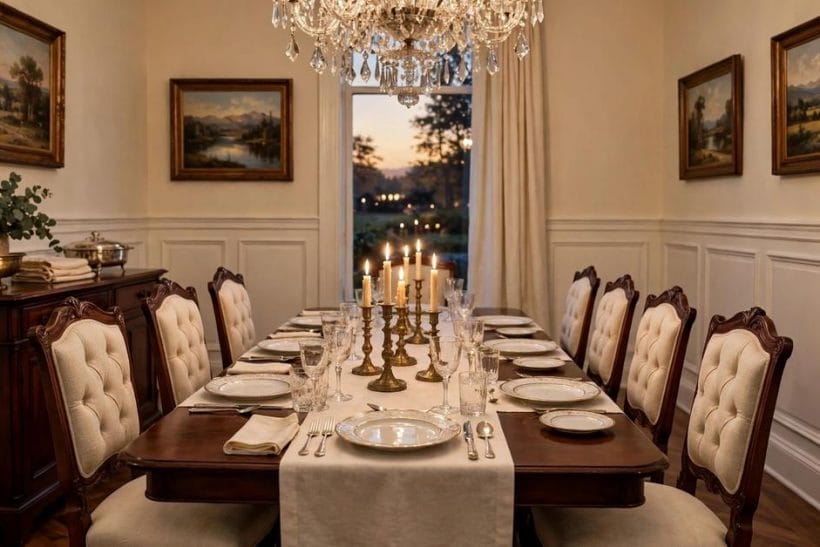
Tradition in a dining room is not a period costume. It is a set of decisions that have survived because they work: the table at the centre, the light above it, the serving pieces close to hand, and the chairs arranged for conversation rather than display. Start with how the room will be used on an ordinary Tuesday, then dress it for the occasions that matter. A room planned for Tuesday supper will handle a feast; a room planned only for feasts will sit empty most of the year.
2. Layouts That Let Everyone Sit Comfortably
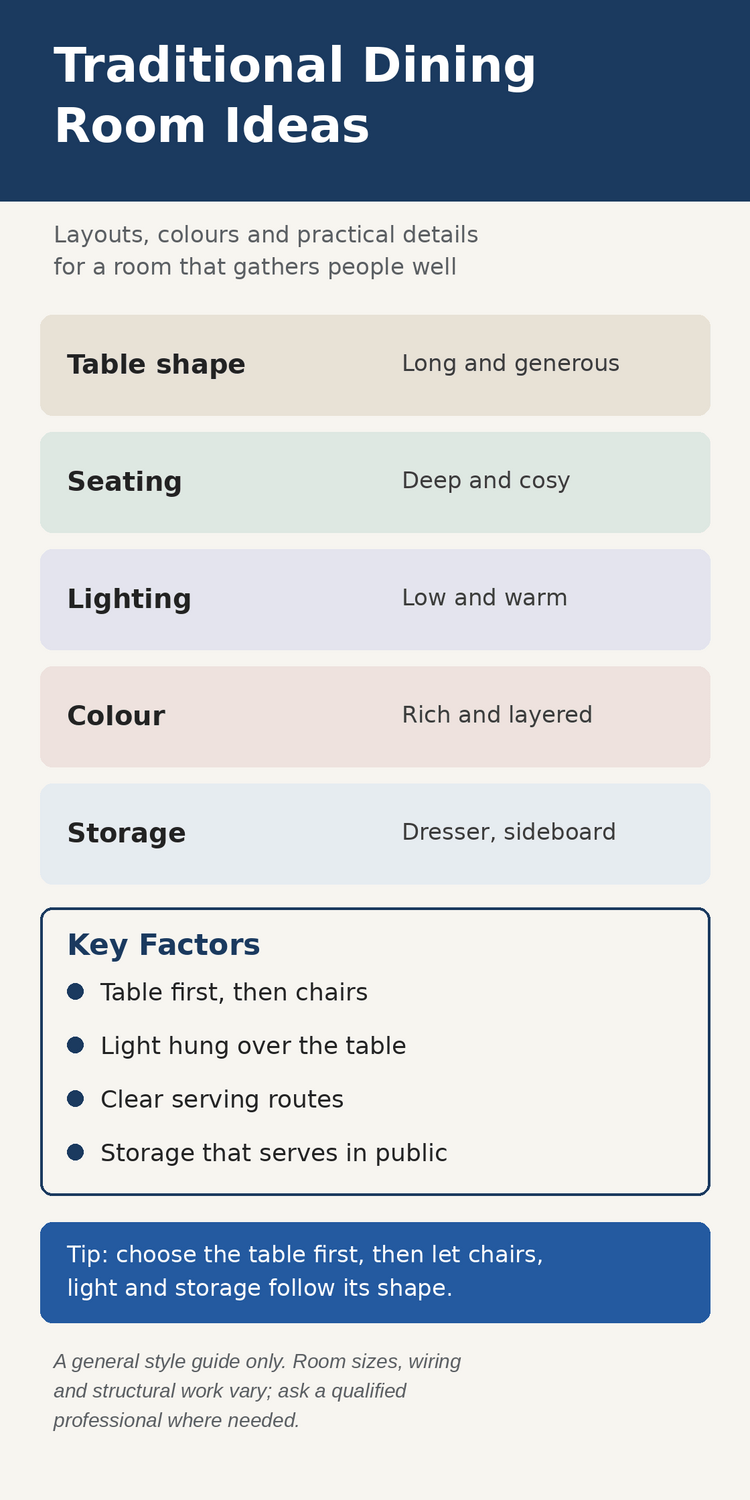
A dining layout succeeds when nobody has to negotiate. Every chair should slide back without hitting a wall, every guest should reach the table without squeezing past a neighbour, and the person serving should have a clear route from the kitchen door to every place. Sketch the layout with chairs pulled out, not pushed in, and the room will tell you what fits.
| Item | What it is |
|---|---|
| Centre the table on the long axis | A table set along the room's length gives every place an equal view and keeps the serving route straight. |
| Leave a serving route behind every chair | The space behind a pulled-out chair is working space, not leftover space. |
| Put the sideboard on the wall nearest the kitchen | Serving dishes travel shortest when the sideboard stands between the kitchen door and the table. |
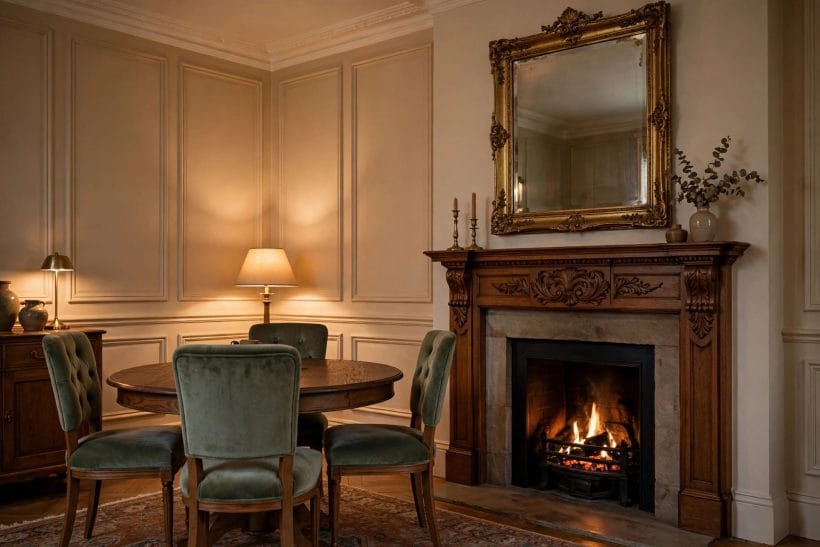
| Angle the table toward the fireplace | Where a fireplace survives, let the table acknowledge it. |
| Keep doorways clear of chair backs | A chair that blocks a doorway announces the layout's failure every time someone enters. |
| Let the window wall carry the long side | Daylight flatters food and faces alike, so the long side of the table belongs near the windows when the room allows. |
| Build the layout around the rug, not the walls | Choose the rug first and let the table and chairs sit inside its borders with room to spare. |
| Plan a second layout for large gatherings | The everyday layout and the feast layout are different rooms. |
| Choose a long rectangular table for regular hosting | A rectangular table seats a crowd down both sides and extends most gracefully with leaves. |
| Try a round table for conversation | Nobody sits at the head of a round table, and everybody sees everybody else. |
| Pick an oval table for a narrow room | An oval table keeps the generosity of a rectangle while forgiving tight corners. |
| Extend with leaves only when guests arrive | A table kept at its everyday size leaves the room breathable all week. |
| Match the table timber to the room's woodwork | When table timber echoes the doors, skirting and dresser, the room reads as one composition rather than a collection of furniture. |
| Keep the tabletop clear between meals | A traditional dining room earns its keep when the table is usable at any hour. |
| Dress the table in layers, not clutter | Cloth, runner, mats and centrepiece should build in quiet layers, each one earning its place. |
| Protect the top with linen, not plastic | A good cloth protects the surface and softens the sound of plates at the same time. |
| Choose upholstered chairs for long evenings | Padding and a supportive back turn a quick meal into a lingering evening. |
| Mix a bench on one side for children and extra guests | A bench seats more people than the same length of chairs and slides away under the table when not needed. |
| Add carver chairs at the heads of the table | Chairs with arms at the table's ends mark the hosts' places and give the arrangement its traditional silhouette. |
| Keep chair backs below the picture line | When chair backs rise above the pictures, the room's walls disappear behind furniture. |
| Re-cover tired chairs before replacing them | Sound frames deserve new fabric long before they deserve the skip. |
| Keep two spare chairs close at hand | Unexpected guests should never mean a kitchen chair at a dressed table. |
| Test chairs for comfort before matching them | Sit in a chair for a full meal's length before buying a set of them. |
| Let chair fabric echo the curtains | Repeating the curtain fabric, or a tone from it, on the chairs ties the room together without a single new colour. |
| Paint walls in a warm, deep tone | A deep wall colour makes a dining room feel enclosed and intimate in the evening, when the room is most used. |
| Use cream woodwork to lift dark walls | Pale skirting, architraves and door frames frame deep walls like a mount frames a picture. |
| Panel the lower wall for depth | Panelling adds shadow and structure to a plain wall and protects it from chair backs at the same time. |
| Hang one large painting over the sideboard | A single generous picture above the sideboard anchors the wall and gives the room a focal point that survives any table setting. |
| Build a gallery of small family prints | Where one large picture feels too grand, a disciplined row of small prints earns the same wall. |
| Paper one wall in a quiet damask | A subtle damask on the wall behind the sideboard adds pattern that only reveals itself in lamplight. |
| Repeat one accent colour in three places | An accent earns its keep by appearing in the curtains, a chair fabric and a vase, or in art, napkins and a rug border. |
| Keep ceilings pale whatever the walls do | A pale ceiling lifts the room and bounces light back onto faces. |
| Hang the main light over the centre of the table | A pendant or chandelier centred on the table gathers the whole party under one glow. |
| Choose a chandelier that suits the table's length | A long table asks for a long fixture or a row of pendants, while a round table suits a single central piece. |
| Add dimmers for evening meals | Dimming lets one room serve breakfast brightness and candlelit supper from the same fittings. |
| Layer wall lights beside the sideboard | Wall lights flanking the sideboard wash the wall with warmth and spare the table from carrying all the light alone. |
| Light the dresser glass from within | A soft light inside a glass dresser turns stored china into decoration and saves the table from extra clutter. |
| Use candles for atmosphere, kept clear of curtains | Candlelight remains the most flattering dining light ever devised, and the cheapest. |
| Let daylight lead in the daytime | Sheer curtains and a clean window do more for a lunch than any fitting. |
| Keep bulbs warm in tone | Warm-toned bulbs make food look appetising and skin look healthy, while stark white light flatters neither. |
| Display everyday china in a glass dresser | China kept behind glass stays clean, visible and ready, and it decorates the wall without any further effort. |
| Keep serving dishes on the sideboard, not the table | A table crowded with serving dishes leaves no room for elbows, glasses or conversation. |
| Store table linen in the sideboard drawer | Cloths, runners and napkins belong where the table is laid, not in a distant cupboard. |
| Use a trolley for desserts and coffee | A small trolley carries dessert, coffee and glasses to the table without repeated trips to the kitchen. |
| Keep a carving set ready for roasts | Roasts deserve their own board and knives, kept sharp and stored together. |
| Store tall vases where they cannot topple | Tall vases belong on a low shelf or inside a cupboard, not balanced on a high dresser edge. |
| Group by use instead of by type | Store the coffee cups with the coffee pot, the soup bowls with the ladle, and the dessert plates with the dessert spoons. |
| Clear the dresser top before guests arrive | A dresser top cluttered with letters, keys and chargers undermines the whole room. |
| Lay a rug that holds every chair leg | A rug should extend beyond the pulled-out chairs on every side, so no chair leg catches its edge. |
| Choose a low pile that chairs glide over | Deep pile looks luxurious and fights every chair movement. |
| Dress windows in full-length curtains | Curtains that reach the floor give a dining room its traditional gravity and frame the view like a picture. |
| Layer sheers for daytime privacy | A sheer layer behind the curtains keeps the room private by day without losing daylight. |
| Keep curtain fabric clear of radiators and candles | Heavy fabric near heat or flame is a risk no room needs. |
| Polish wooden floors to a soft sheen | A floor polished to a soft glow, not a mirror shine, suits a traditional room and survives daily life. |
| Add a runner in the passage to the kitchen | A runner on the route between kitchen and table protects the floor where traffic is heaviest and marks the serving route visually. |
| Match curtain tiebacks to chair fabric | Tiebacks in a fabric borrowed from the chairs tie windows and seating together in one quiet gesture. |
| Build centrepieces low so faces stay visible | A centrepiece should sit below eye level when guests are seated, so conversation crosses the table uninterrupted. |
| Use fresh greenery through the winter | Cut greenery from the garden or the market keeps a winter table alive without flowers out of season. |
| Set the table the evening before a feast | Laying the table the night before turns the morning of a feast from a scramble into a calm. |
| Mix silver with everyday stoneware | Formal silver beside plain stoneware is the traditional table's honest compromise: the best pieces appear, but the meal stays relaxed. |
| Fold napkins simply and well | A plain, well-pressed fold beats an elaborate sculpture that collapses at the first touch. |
| Dress the table for harvest with fruit and leaves | A bowl of orchard fruit and a scatter of autumn leaves makes a harvest table without buying a single decoration. |
| Keep spring settings pale and light | Pale linen, clear glass and the first flowers of the year suit a spring table. |
| Save the best glass for the main course | Fine glasses kept for the main course make that course feel like an occasion even on an ordinary evening. |
1. Centre the table on the long axis
A table set along the room’s length gives every place an equal view and keeps the serving route straight. Walk the length of the room and check that both ends breathe; a table jammed against one wall turns half the guests into an audience and the other half into a corridor.
2. Leave a serving route behind every chair
The space behind a pulled-out chair is working space, not leftover space. When a guest can stand, turn and step away without asking anyone to move, the meal relaxes. Keep that route clear of side tables, plant pots and trailing curtain hems.
3. Put the sideboard on the wall nearest the kitchen
Serving dishes travel shortest when the sideboard stands between the kitchen door and the table. Plates, sauces and spare cutlery live one step from where they are needed, and the host stops crossing the room mid-course.
4. Angle the table toward the fireplace
Where a fireplace survives, let the table acknowledge it. Guests facing the firelight look better and feel warmer, and the room gains a natural focal point that needs no further decoration. Keep chairs clear of the hearth itself.
5. Keep doorways clear of chair backs
A chair that blocks a doorway announces the layout’s failure every time someone enters. Shift the table a hand’s breadth if needed; a room that welcomes people at its threshold will welcome them at its table too.
6. Let the window wall carry the long side
Daylight flatters food and faces alike, so the long side of the table belongs near the windows when the room allows. Guests seated along the light see each other clearly, and the view becomes part of the meal without any effort.
7. Build the layout around the rug, not the walls
Choose the rug first and let the table and chairs sit inside its borders with room to spare. A rug that stops under chair legs will bunch and trip; one that holds the whole arrangement anchors the room visually.
8. Plan a second layout for large gatherings
The everyday layout and the feast layout are different rooms. Know in advance which pieces move, where spare chairs wait, and how the table extends, so a celebration feels prepared rather than improvised.
3. Tables: Shape, Size and Setting
The table is the room’s anchor and its largest decision. Shape decides conversation, size decides comfort, and setting decides whether the room feels dressed or merely furnished. Buy the table for the number of people who actually eat together most weeks, and let occasional guests be the exception the room flexes for, not the rule it is built around.
9. Choose a long rectangular table for regular hosting
A rectangular table seats a crowd down both sides and extends most gracefully with leaves. It suits rooms with a clear long axis and hosts who gather often. Dress its length with a runner and a low centrepiece that repeats along the middle.
10. Try a round table for conversation
Nobody sits at the head of a round table, and everybody sees everybody else. Conversation flows without shouting down the length, and a round table softens a square room. It asks for a single central light and a single central arrangement.
11. Pick an oval table for a narrow room
An oval table keeps the generosity of a rectangle while forgiving tight corners. Chairs slide in easily at the curves, and the room feels less crowded because no sharp corner juts into the walking route.
12. Extend with leaves only when guests arrive
A table kept at its everyday size leaves the room breathable all week. Leaves stored flat and close at hand turn an ordinary table into a feast table in minutes, and the room should have somewhere sensible for them to live.
13. Match the table timber to the room’s woodwork
When table timber echoes the doors, skirting and dresser, the room reads as one composition rather than a collection of furniture. The match need not be exact; a shared warmth of tone is enough to tie the pieces together.
14. Keep the tabletop clear between meals
A traditional dining room earns its keep when the table is usable at any hour. Clear it after breakfast, leave only a simple centrepiece, and the room stays ready for homework, letters or an unexpected guest.
15. Dress the table in layers, not clutter
Cloth, runner, mats and centrepiece should build in quiet layers, each one earning its place. If removing any single layer improves the table, that layer was clutter. Restraint is what makes a dressed table look rich rather than busy.
16. Protect the top with linen, not plastic
A good cloth protects the surface and softens the sound of plates at the same time. Keep a washable everyday cloth for family meals and a finer one for occasions, and the table will age gracefully under both.
4. Chairs, Benches and Seating That Lingers
Chairs decide how long guests stay. A beautiful chair that punishes the back empties a room after the main course, while a comfortable chair with a plain face keeps people talking long past coffee. Judge chairs by sitting in them for the length of a real meal, and let beauty follow comfort rather than lead it.
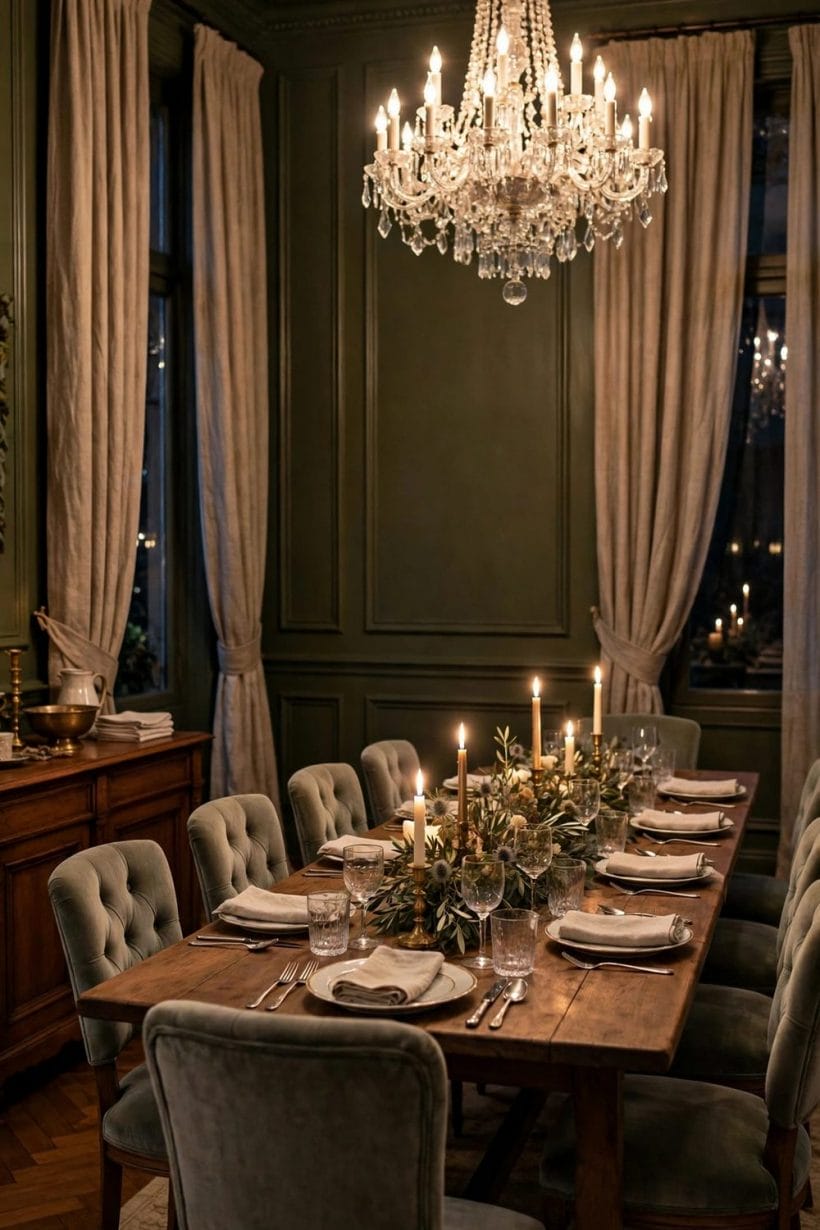
17. Choose upholstered chairs for long evenings
Padding and a supportive back turn a quick meal into a lingering evening. Upholstery also softens the room’s acoustics, so conversation stays easy even when the table is full. Pick a fabric that cleans well and forgives spills.
18. Mix a bench on one side for children and extra guests
A bench seats more people than the same length of chairs and slides away under the table when not needed. It suits families and informal gatherings, and it keeps the room flexible without a cupboard full of spare chairs.
19. Add carver chairs at the heads of the table
Chairs with arms at the table’s ends mark the hosts’ places and give the arrangement its traditional silhouette. They also offer real comfort to whoever carves or serves, which is reason enough on their own.
20. Keep chair backs below the picture line
When chair backs rise above the pictures, the room’s walls disappear behind furniture. Lower backs keep the wall decoration visible and the room feeling taller, and they let the table setting itself take the eye.
21. Re-cover tired chairs before replacing them
Sound frames deserve new fabric long before they deserve the skip. Re-covering keeps the room’s matched set intact, costs less in waste and worry than replacement, and lets the colour scheme evolve without new furniture.
22. Keep two spare chairs close at hand
Unexpected guests should never mean a kitchen chair at a dressed table. Two matching spares waiting in a hall or spare room turn a surprise visit into a pleasure and keep the table looking intentional.
23. Test chairs for comfort before matching them
Sit in a chair for a full meal’s length before buying a set of them. Seat height, back angle and the firmness of the pad matter more than the silhouette, and a set chosen for comfort will be forgiven any plainness of face.
24. Let chair fabric echo the curtains
Repeating the curtain fabric, or a tone from it, on the chairs ties the room together without a single new colour. The echo can be subtle: a stripe picked up in a plain, or a plain picked up from a pattern.
5. Colour and Walls
Traditional colour is layered rather than loud. Walls carry depth, woodwork carries light, and one or two accent tones repeat quietly through fabric and art. The palette should make food look appetising and faces look warm, which is why traditional rooms lean toward warm whites, deep greens, soft reds and the browns of good timber.
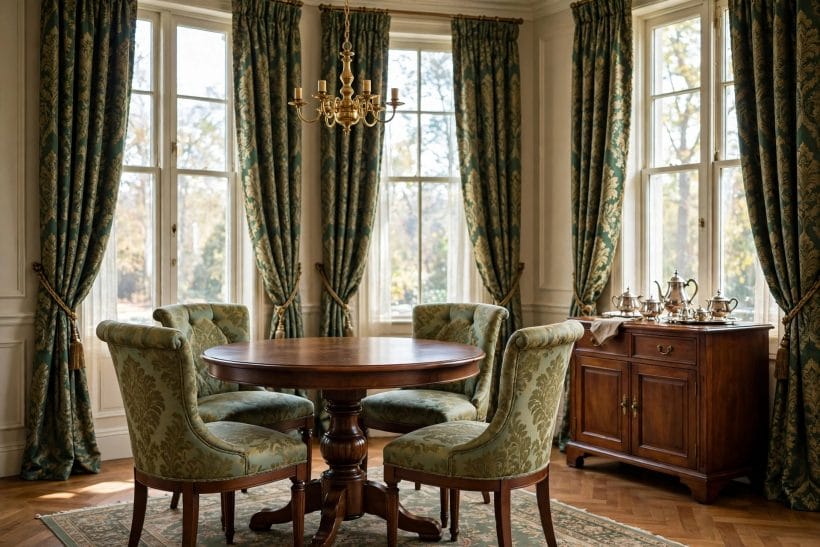
25. Paint walls in a warm, deep tone
A deep wall colour makes a dining room feel enclosed and intimate in the evening, when the room is most used. Warm undertones flatter candlelight and lamplight alike, while cool greys can leave a dining room feeling formal in the wrong way.
26. Use cream woodwork to lift dark walls
Pale skirting, architraves and door frames frame deep walls like a mount frames a picture. The contrast keeps a dark room from feeling heavy and gives the eye a clean line to follow around the room.
27. Panel the lower wall for depth
Panelling adds shadow and structure to a plain wall and protects it from chair backs at the same time. Painted the same tone as the woodwork, it reads as architecture rather than decoration and suits rooms of every size.
28. Hang one large painting over the sideboard
A single generous picture above the sideboard anchors the wall and gives the room a focal point that survives any table setting. Choose something calm and landscape-like; a dining wall is no place for restless art.
29. Build a gallery of small family prints
Where one large picture feels too grand, a disciplined row of small prints earns the same wall. Keep frames matched and spacing even, and the gallery will read as one considered piece rather than a collection of accidents.
30. Paper one wall in a quiet damask
A subtle damask on the wall behind the sideboard adds pattern that only reveals itself in lamplight. Keep the pattern tone-on-tone so it textures the wall instead of shouting from it.
31. Repeat one accent colour in three places
An accent earns its keep by appearing in the curtains, a chair fabric and a vase, or in art, napkins and a rug border. Three appearances make a colour feel deliberate; one appearance makes it feel like a mistake.
32. Keep ceilings pale whatever the walls do
A pale ceiling lifts the room and bounces light back onto faces. Even the deepest wall colour benefits from a ceiling that stays light, and the room will feel taller for it at every hour.
6. Light Over the Table
Dining light has one job: to make people and food look good. That means light aimed at the table from above, low enough to gather the party and warm enough to flatter, with the rest of the room lit softly around it. Any wiring or fitting changes belong to a qualified professional; the ideas here are about placement and atmosphere, not installation.
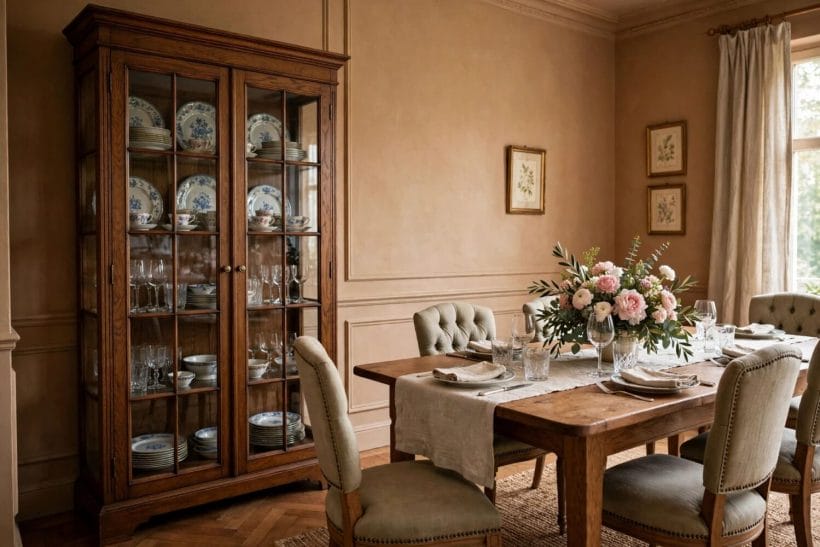
33. Hang the main light over the centre of the table
A pendant or chandelier centred on the table gathers the whole party under one glow. Centre it on the table, not on the room, because tables move and ceilings do not; the light should follow the meal.
34. Choose a chandelier that suits the table’s length
A long table asks for a long fixture or a row of pendants, while a round table suits a single central piece. The fixture should feel proportionate to the table beneath it, neither lost above a feast nor looming over a supper for two. The dining room chandeliers survey explores fixture styles in depth.
35. Add dimmers for evening meals
Dimming lets one room serve breakfast brightness and candlelit supper from the same fittings. Ask a qualified electrician to fit controls where the existing wiring allows, and the room will gain an evening mood at the touch of a switch.
36. Layer wall lights beside the sideboard
Wall lights flanking the sideboard wash the wall with warmth and spare the table from carrying all the light alone. They also make the serving area inviting, which is where guests naturally gather before sitting.
37. Light the dresser glass from within
A soft light inside a glass dresser turns stored china into decoration and saves the table from extra clutter. Keep the light gentle and warm, and have any fitting work done by a professional.
38. Use candles for atmosphere, kept clear of curtains
Candlelight remains the most flattering dining light ever devised, and the cheapest. Keep flames clear of curtains, paper and reaching sleeves, never leave them unattended, and let them supplement rather than replace proper lighting.
39. Let daylight lead in the daytime
Sheer curtains and a clean window do more for a lunch than any fitting. Open the room to daylight when the sun allows, and save the layered evening light for the hours that need it.
40. Keep bulbs warm in tone
Warm-toned bulbs make food look appetising and skin look healthy, while stark white light flatters neither. Choose warmth for every bulb in the room, from the chandelier to the dresser, and the palette will hold together.
7. Storage and Serving: Dressers, Sideboards and Trolleys
A traditional dining room stores its beauty in public. The dresser displays the china, the sideboard holds the serving dishes, and the trolley waits for dessert and coffee. Storage that serves the meal, rather than merely hiding things, is what separates a dining room from a room with a table in it.
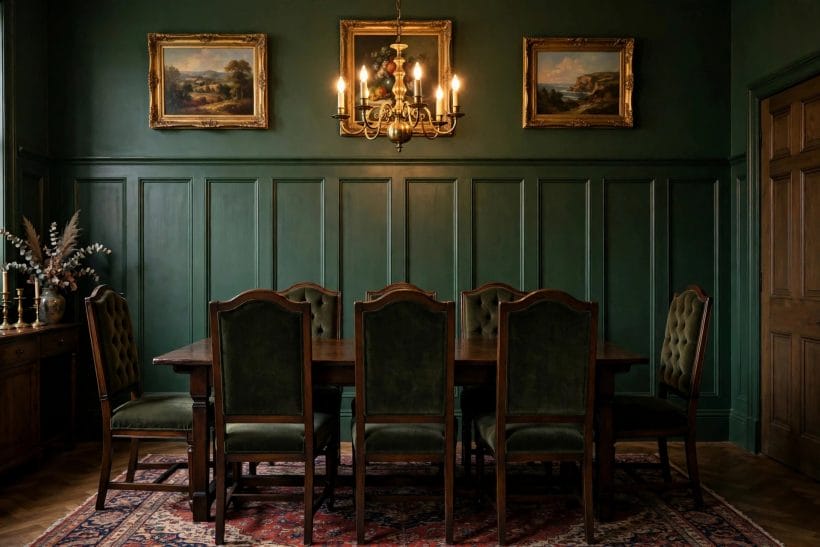
41. Display everyday china in a glass dresser
China kept behind glass stays clean, visible and ready, and it decorates the wall without any further effort. Arrange by use rather than by prettiness, so the pieces you reach for most sit nearest the doors.
42. Keep serving dishes on the sideboard, not the table
A table crowded with serving dishes leaves no room for elbows, glasses or conversation. Stage dishes on the sideboard and bring each course forward in turn; the table stays generous and the meal gains a rhythm.
43. Store table linen in the sideboard drawer
Cloths, runners and napkins belong where the table is laid, not in a distant cupboard. A sideboard drawer lined with paper keeps linen fresh and puts the whole table setting within one person’s reach.
44. Use a trolley for desserts and coffee
A small trolley carries dessert, coffee and glasses to the table without repeated trips to the kitchen. It also gives the end of the meal its own ceremony, which guests remember long after the plates are cleared.
45. Keep a carving set ready for roasts
Roasts deserve their own board and knives, kept sharp and stored together. A carving station set up before guests sit down turns the main course into a moment rather than a scramble.
46. Store tall vases where they cannot topple
Tall vases belong on a low shelf or inside a cupboard, not balanced on a high dresser edge. A fallen vase ruins more than flowers, and a room that stores its tall pieces low is a room that has learned from experience.
47. Group by use instead of by type
Store the coffee cups with the coffee pot, the soup bowls with the ladle, and the dessert plates with the dessert spoons. Grouping by occasion means setting the table becomes one trip instead of several.
48. Clear the dresser top before guests arrive
A dresser top cluttered with letters, keys and chargers undermines the whole room. Clear it as part of laying the table, and leave only a vase or a pair of candlesticks to frame the display below.
8. Floors, Rugs and Windows
Floors and windows frame the dining room from below and from the side. Timber underfoot, a rug that holds the whole arrangement, and curtains that dress the glass without blocking the light: these three decisions set the room’s temperature, acoustics and manners more than any single piece of furniture.
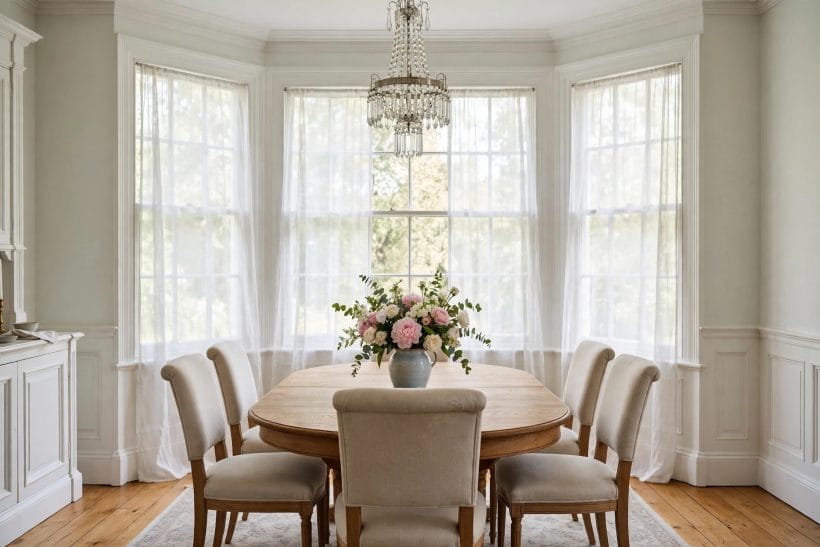
49. Lay a rug that holds every chair leg
A rug should extend beyond the pulled-out chairs on every side, so no chair leg catches its edge. Measure with chairs drawn out, not pushed in, and the rug will serve the room instead of tripping it.
50. Choose a low pile that chairs glide over
Deep pile looks luxurious and fights every chair movement. A low, tight pile lets chairs slide, survives crumbs and spills, and still softens sound and warms the floor underfoot.
51. Dress windows in full-length curtains
Curtains that reach the floor give a dining room its traditional gravity and frame the view like a picture. They also soften draughts and sound, and they close the room into intimacy when evening falls.
52. Layer sheers for daytime privacy
A sheer layer behind the curtains keeps the room private by day without losing daylight. Guests lunch in soft light, neighbours see nothing, and the heavy curtains wait for evening.
53. Keep curtain fabric clear of radiators and candles
Heavy fabric near heat or flame is a risk no room needs. Check the fall of every curtain against radiators and candlesticks before settling the arrangement, and tie curtains back where they threaten to wander.
54. Polish wooden floors to a soft sheen
A floor polished to a soft glow, not a mirror shine, suits a traditional room and survives daily life. The sheen should catch lamplight gently, not glare, and it should forgive the occasional dropped fork.
55. Add a runner in the passage to the kitchen
A runner on the route between kitchen and table protects the floor where traffic is heaviest and marks the serving route visually. It also muffles the footsteps of a busy host.
56. Match curtain tiebacks to chair fabric
Tiebacks in a fabric borrowed from the chairs tie windows and seating together in one quiet gesture. The match can be a colour rather than a pattern, and it needs no other decoration to work.
9. Centrepieces, Tableware and Seasonal Dressing
Table dressing is where tradition becomes personal. The same room serves a winter feast, a spring lunch and a weekday supper, and only the centrepiece, the linen and the tableware change. Keep centrepieces low, tableware honest, and seasonal dressing simple, and the room will never look like it is trying too hard.
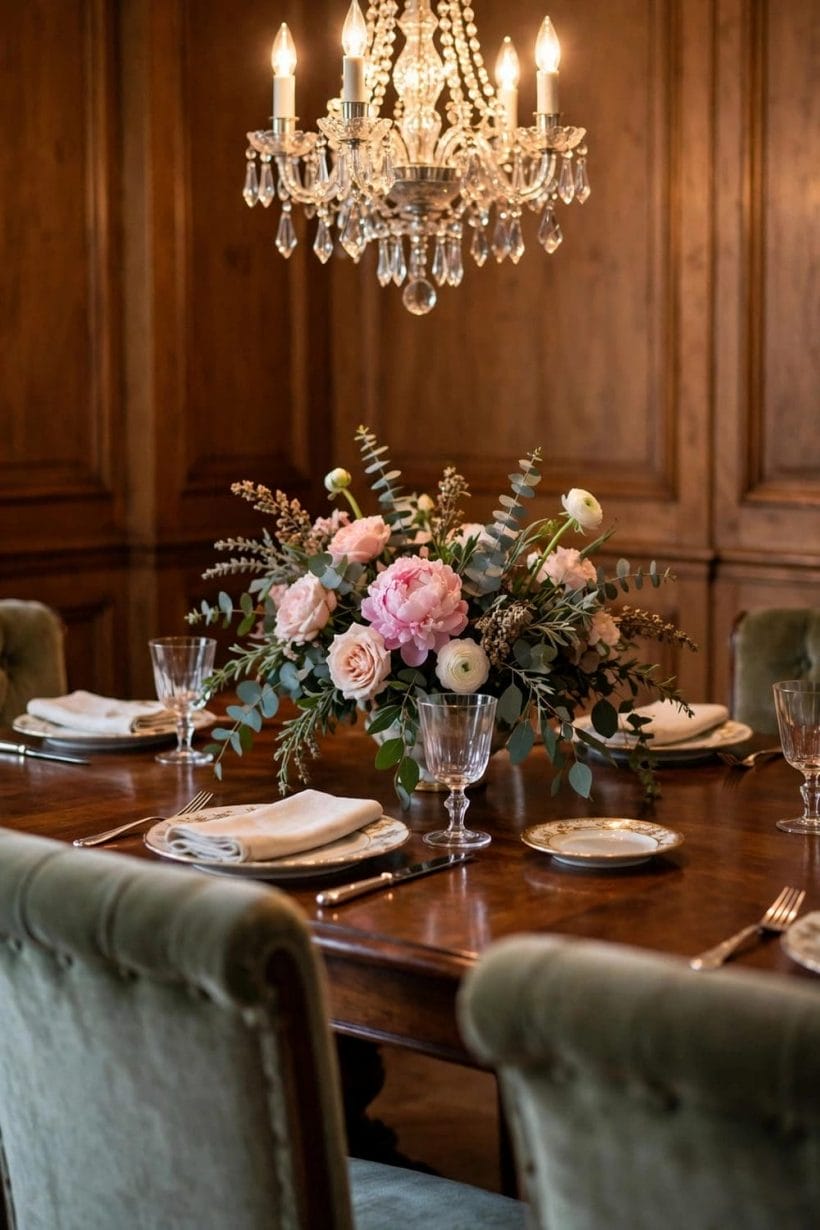
57. Build centrepieces low so faces stay visible
A centrepiece should sit below eye level when guests are seated, so conversation crosses the table uninterrupted. Low bowls, short candles and trailing greenery dress the table without building a wall down its middle.
58. Use fresh greenery through the winter
Cut greenery from the garden or the market keeps a winter table alive without flowers out of season. A simple trail of leaves along the runner, refreshed weekly, outperforms any elaborate arrangement.
59. Set the table the evening before a feast
Laying the table the night before turns the morning of a feast from a scramble into a calm. Plates, glasses and cutlery placed early can be checked in daylight and adjusted without hurry.
60. Mix silver with everyday stoneware
Formal silver beside plain stoneware is the traditional table’s honest compromise: the best pieces appear, but the meal stays relaxed. Guests eat more happily from plates they are not afraid to chip.
61. Fold napkins simply and well
A plain, well-pressed fold beats an elaborate sculpture that collapses at the first touch. Cloth napkins, simply folded and placed on the plate or to the left, signal care without ceremony.
62. Dress the table for harvest with fruit and leaves
A bowl of orchard fruit and a scatter of autumn leaves makes a harvest table without buying a single decoration. The dressing is edible, seasonal and gone by nightfall, which is exactly as it should be.
63. Keep spring settings pale and light
Pale linen, clear glass and the first flowers of the year suit a spring table. The room itself does not change; only its dressing lightens, and the season enters through the table.
64. Save the best glass for the main course
Fine glasses kept for the main course make that course feel like an occasion even on an ordinary evening. Everyday glasses serve the rest of the meal, and the best glassware stays special because it is not used daily.
10. Small Rooms, Large Gatherings and Everyday Use
The traditional dining room earns its place by working every day, not only on feast days. A small room can host generously with the right flexibility, a large gathering can be fed without a second kitchen, and the room that serves breakfast, homework and supper will be loved far more than the room kept pristine for guests who rarely come. The farmhouse dining room offers a more relaxed cousin to this formality, while the tiny dining room ideas survey covers the smallest rooms of all.
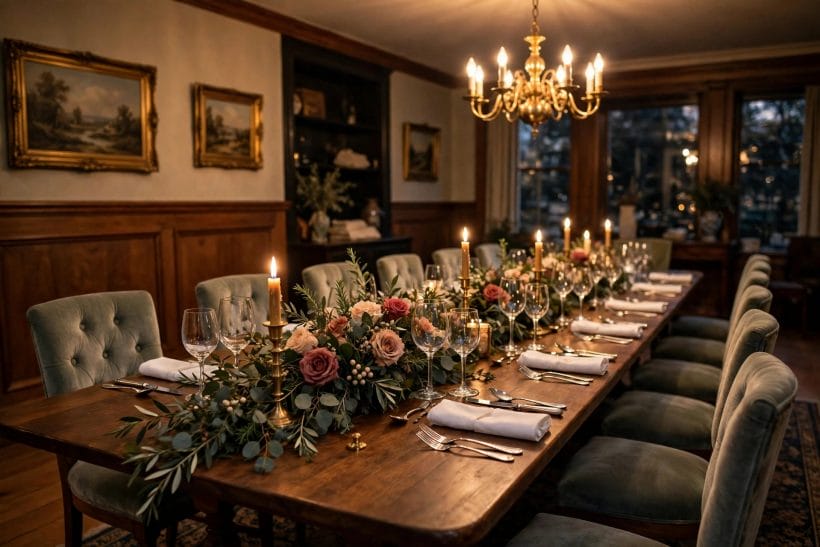
65. Borrow chairs from neighbouring rooms
A small dining room need not own every chair it ever uses. Borrowed chairs, even mismatched, seat a crowd with charm, and the room returns to its everyday calm when guests leave.
66. Serve buffet-style when seats run short
When guests outnumber chairs, let the sideboard carry the meal and guests carry their plates. Buffet service suits large, informal gatherings and keeps the table itself free for conversation and drinks.
67. Use the dining room for homework and letters between meals
A dining table that serves study, correspondence and craft between meals is a table that stays at the heart of the house. Clear it properly for meals, and it will serve both lives without complaint.
68. Keep a foldaway leaf table for overflow
A small folding table stored flat becomes a children’s table, a dessert station or an extra place setting in minutes. It is the cheapest flexibility a dining room can own.
69. Seat children at a small side table
Children enjoy their own table, and adults enjoy their conversation. A small side table dressed with the same care as the main table makes children feel included rather than exiled.
70. Plan the menu around the oven, not the table
A menu that respects the oven’s capacity and the host’s time arrives hot and calm. One generous dish served well beats a crowded table of dishes served late, and the dining room benefits from a relaxed cook.
71. Clear and reset the room the same evening
A room cleared and reset the night of a gathering wakes ready for the next day. Plates washed, linen aired and the table restored to its everyday centrepiece take less time than the morning-after reckoning.
72. Let one room serve breakfast, lunch and supper
The traditional dining room is not a museum. Breakfast in daylight, lunch by the window and supper by lamplight give one room three moods, and each meal gains from the room’s settled character.
73. Keep the room ready, not perfect
A room kept ready — table clear, chairs in place, linen at hand — welcomes a guest at any hour. Perfection kept behind closed doors welcomes nobody, and a lived-in dining room is the point of the whole tradition.
74. Invite neighbours for a simple weekday supper
The finest use of a traditional dining room is an unremarkable supper shared without occasion. Soup, bread and good company need no feast to justify the room, and neighbours become friends at an ordinary table.
75. End every gathering with coffee in the same room
Coffee served where the meal was eaten keeps the party together for its best hour. Move to another room and the evening thins; stay at the table, and conversation finds its second wind.
Final Considerations
A traditional dining room is finished not when it looks complete, but when it works without thinking: the table seats everyone, the light flatters, the serving route runs clear, and the storage answers before it is asked. Hold the room to that test, and the seventy-five ideas above become a checklist rather than a catalogue.
Start with the table and the layout, then let chairs, colour and light follow. Keep the room in everyday use, dress it simply for occasions, and let its traditions be the ones that serve the people who eat there. That is the whole discipline, and it has never needed more than a good table, comfortable chairs and time to linger. For readers planning a room with ceremony at its heart, this guide’s companion is the dining room ideas pillar, and a room built on these principles will serve as a true formal dining room for decades.

0 Comments