

An old door carries more character than most garden ornaments you can buy new: worn paint, honest timber and the marks of a previous life. Old door ideas turn that character into gates, screens, benches and backdrops that cost little and suit gardens of every size. This article gathers the most practical ways to reuse a salvaged door outside, plus the preparation that keeps it handsome for years.
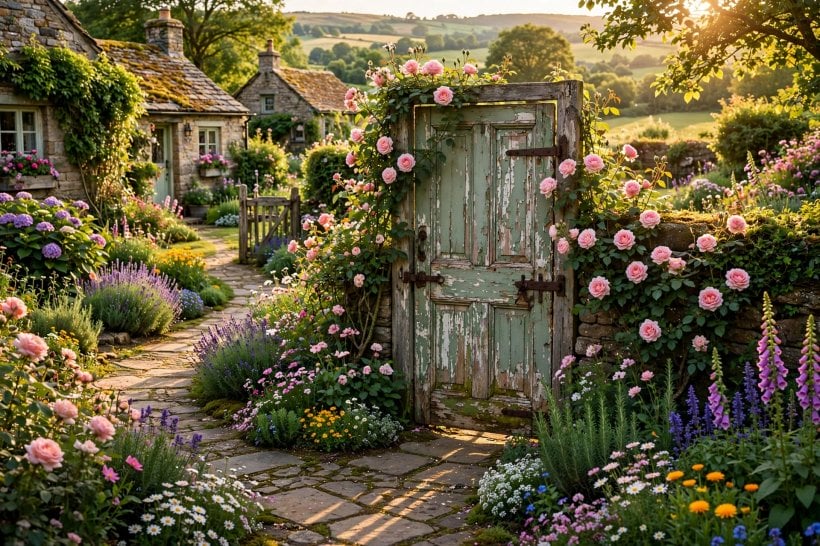
1. Salvaged Doors in the Garden at a Glance
Before the individual projects, here is the short version of what works, what to look for and what a door needs before it can live outside through the seasons.
| Best uses | Gates, trellis panels, privacy screens, potting benches, fence panels, backdrops for seating, planter surrounds and focal points at the end of a path. |
| Best door types | Solid timber doors cope best outdoors. Panelled doors give ready-made sections for planting and display; ledged cottage doors suit rustic schemes; glazed doors work as light screens and cold frame lids. |
| Where to find them | Architectural salvage yards, house clearances, reclamation traders, online marketplaces and skips on renovation streets, always with the owner’s permission before taking anything. |
| Preparation needed | Remove hardware, sand back flaking paint, treat any rot, fill splits, then seal every face and edge with an exterior-grade finish, paying special attention to the bottom edge. |
| Fixings that last | Galvanised or stainless screws, bolts and hinges. Ordinary indoor fixings rust quickly outside and stain the timber around them. |
| Expected lifespan | A sound solid door, kept off the ground, sealed and maintained, can serve for many seasons. Soft or rotten timber shortens that life sharply, so selection matters more than finish. |
| Style fit | Cottage, rustic, shabby-chic and eclectic gardens take doors most naturally, but a single painted door also works as a bold accent in a tidy modern plot. |
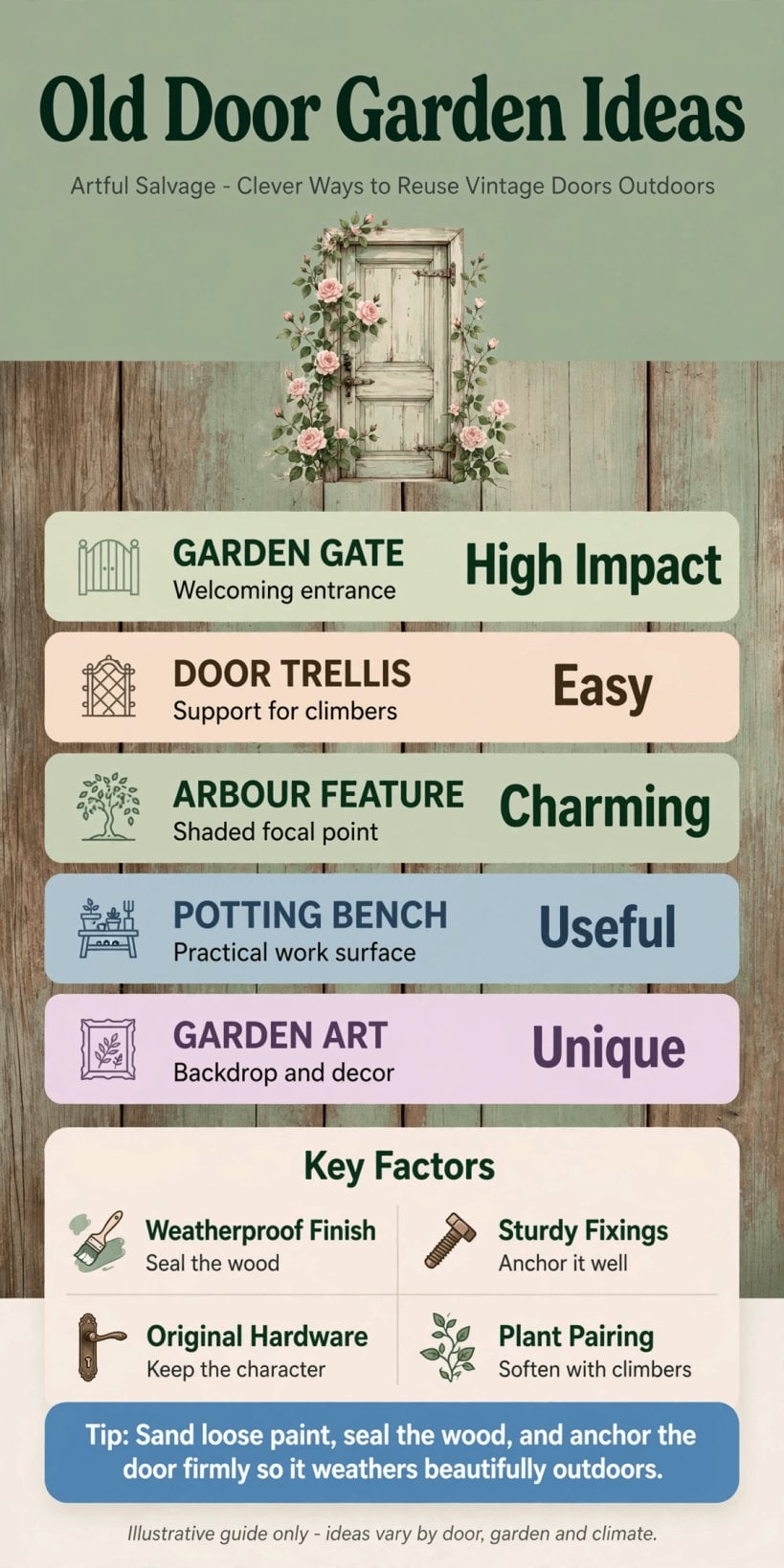
The essentials at a glance: choose solid timber, prepare and seal it thoroughly, fix it with outdoor-grade hardware and keep it clear of the soil.
2. Gates and Grand Entrances
The most natural second life for a door is the job it was built for. A solid salvaged door hung between two sturdy posts makes a garden gate with real presence, the kind that makes visitors pause before they push it open. It suits the entrance from a front garden to a back garden, a side passage, or the opening into a vegetable plot where you want a clear sense of arriving somewhere. Choose a door that is sound at the corners, because a gate takes its strain through the hinges and the latch side.
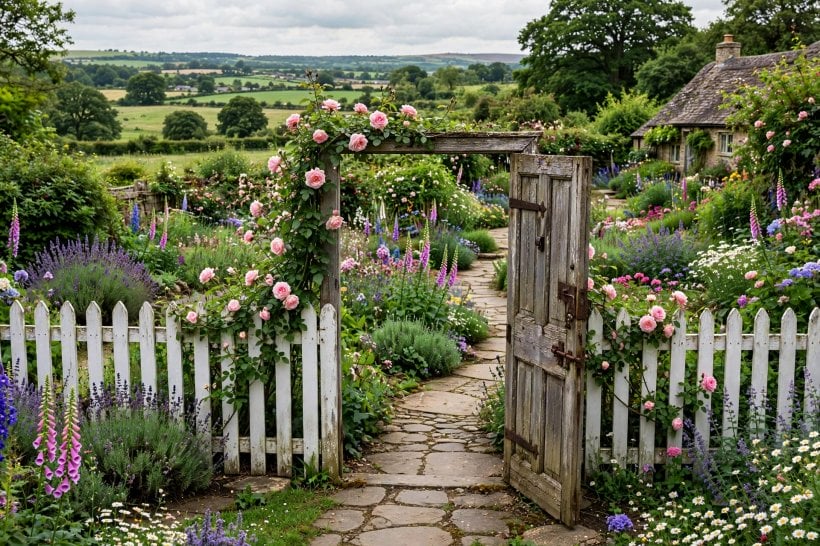
Hang it on galvanised T-hinges or strap hinges rated for outdoor use, and fix the posts deep and firm, since a full-size door is heavier than a typical lightweight gate. Leave a small gap at the bottom so the door clears soil and gravel, and fit a latch you can work with gloved hands. A coat of exterior paint in a colour borrowed from your planting, deep green, oxblood or faded blue, turns the gate into a deliberate feature rather than a leftover. If the garden belongs to a compact home, the entrance treatment matters even more; our ideas for new home exterior design show how much first impressions carry a small property.
3. Trellis Panels and Climbing Plant Support
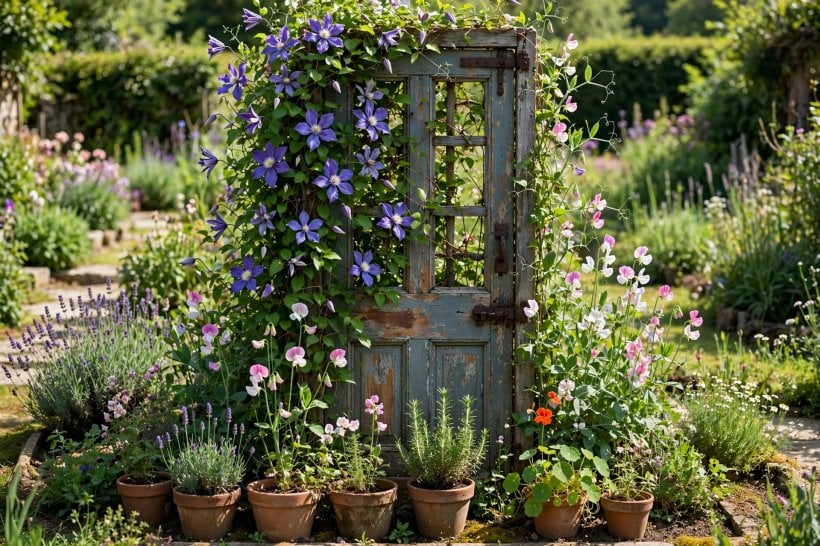
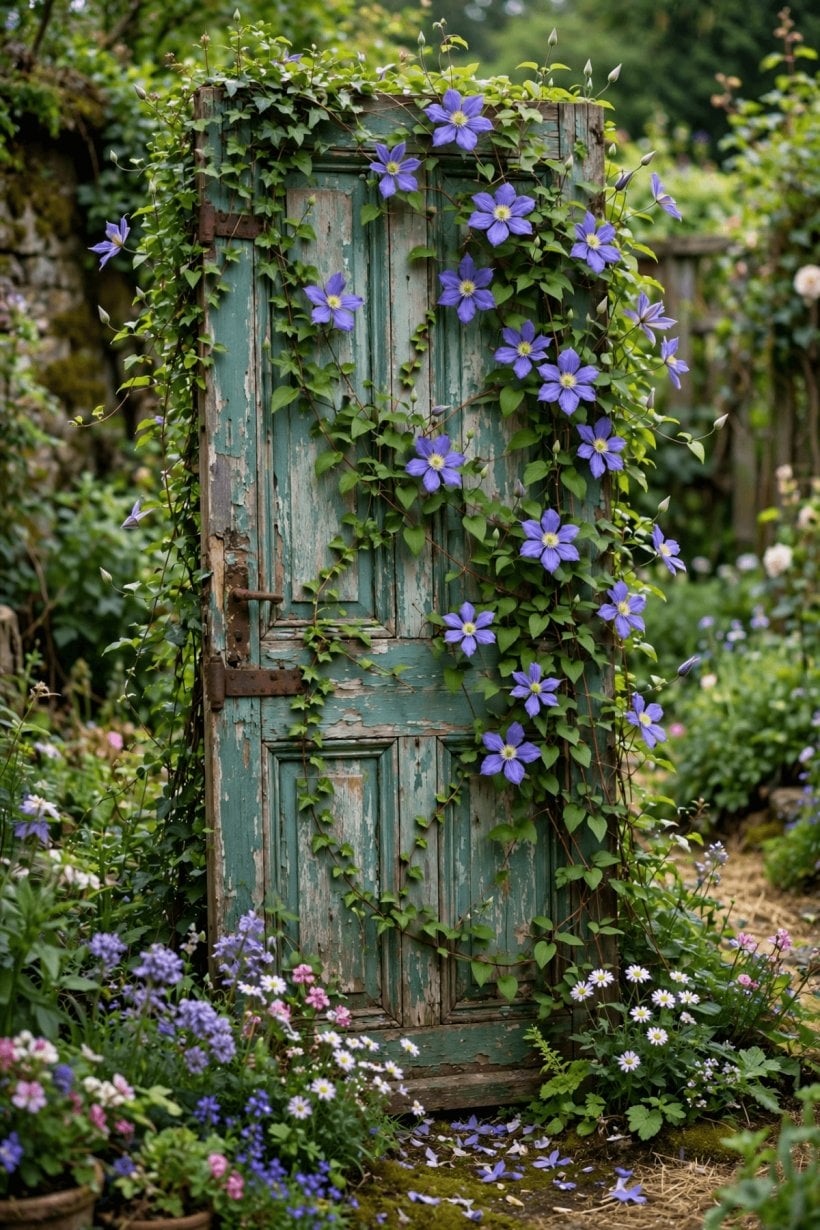
A door stood upright and fixed to a wall or fence becomes an instant trellis with far more structure than wire or lattice. The rails and panels give climbing plants something to weave through, and the frame itself looks intentional even in winter when the climbers are bare. Roses, clematis, jasmine and sweet peas all take to it, and a panelled door is especially good because each recessed panel can hold a different plant or a small mounted pot.
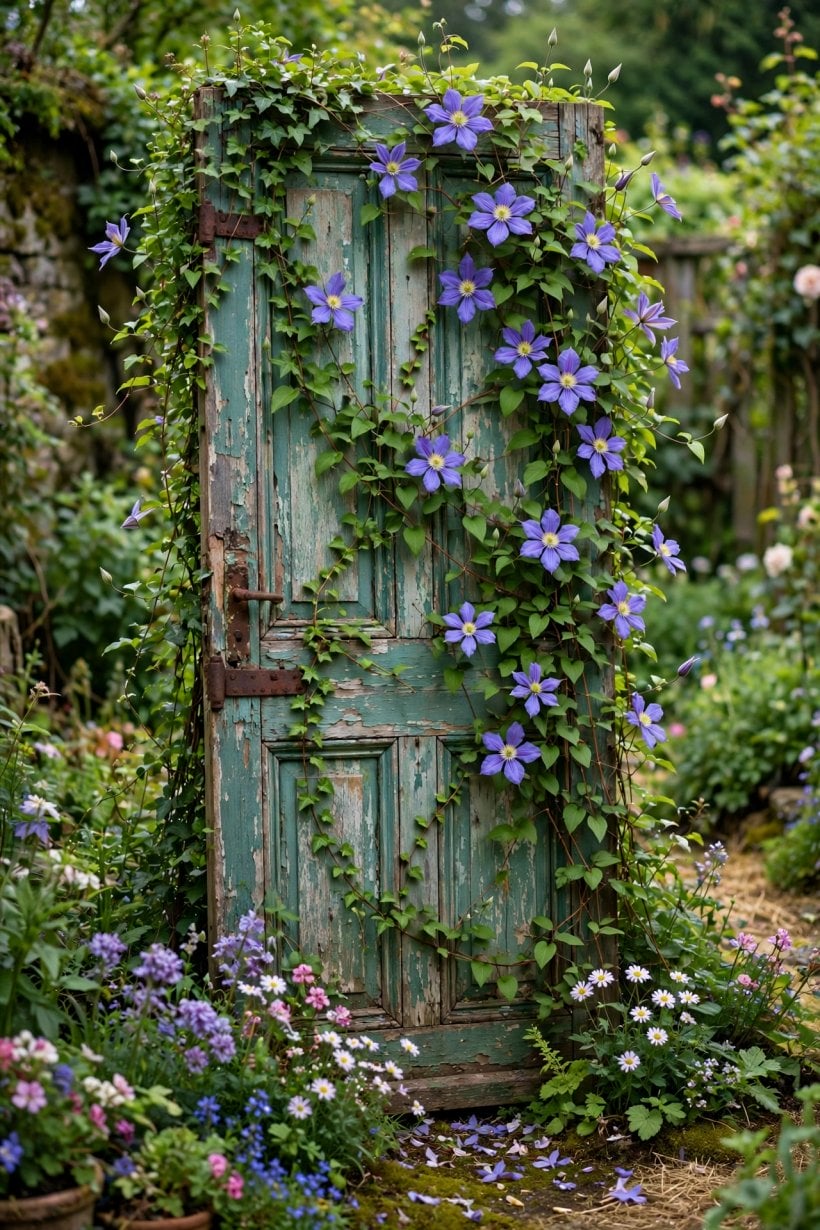
Fix the door so air can move behind it; battens screwed to the wall create a gap that keeps both the timber and the wall drier. Train the main stems loosely with soft ties rather than wire, and let the plant do the decorating. A glazed door works differently but just as well: stood in a border with the glass left in, it catches light and throws reflections among the leaves, although you should site it where falling branches are unlikely. For a coordinated look, repeat the door’s colour in nearby pots and furniture, a trick that also ties together the schemes in our guide to home designing ideas.
4. Potting Benches and Outdoor Worktops
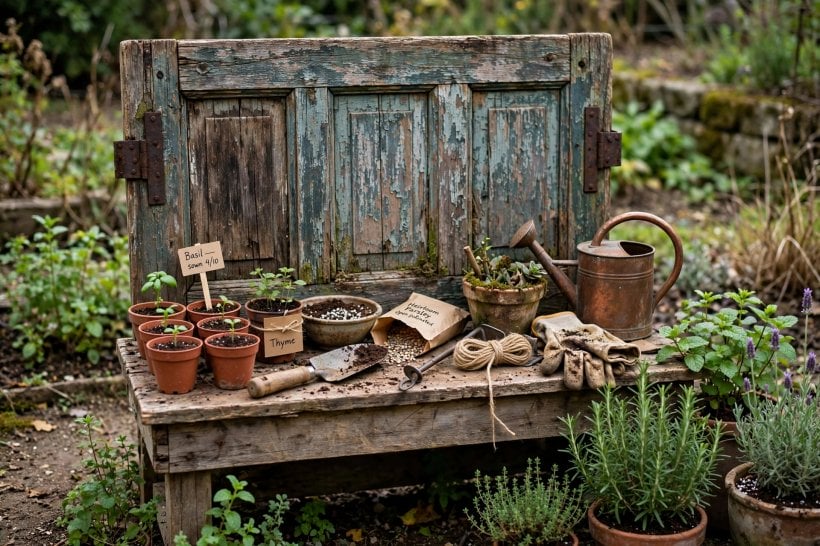
Laid flat on a pair of trestles or a simple frame, a door becomes a generous potting bench. The surface is wide enough for trays, compost and a row of pots, and the raised panels that look so well upright become useful shallow sections that stop small pots sliding off. Fit it under a porch, against a shed wall or beneath a pergola where you have shelter for seedlings and shade for yourself on bright days.
Keep the top easy to clean: a smooth exterior finish wipes down far better than chalky, cracked paint, and a strip of hooks along the front edge holds hand tools where you can reach them. Stand a second door upright behind the bench and you have a complete potting station, with the upright panel serving as a backboard for shelves, twine and labels. This kind of practical, made-from-what-you-have project suits small plots and small homes alike; if you enjoy that approach, our walkthrough on how to build your own tiny house is full of the same resourceful thinking at a larger scale.
5. Privacy Screens and Hidden Corners
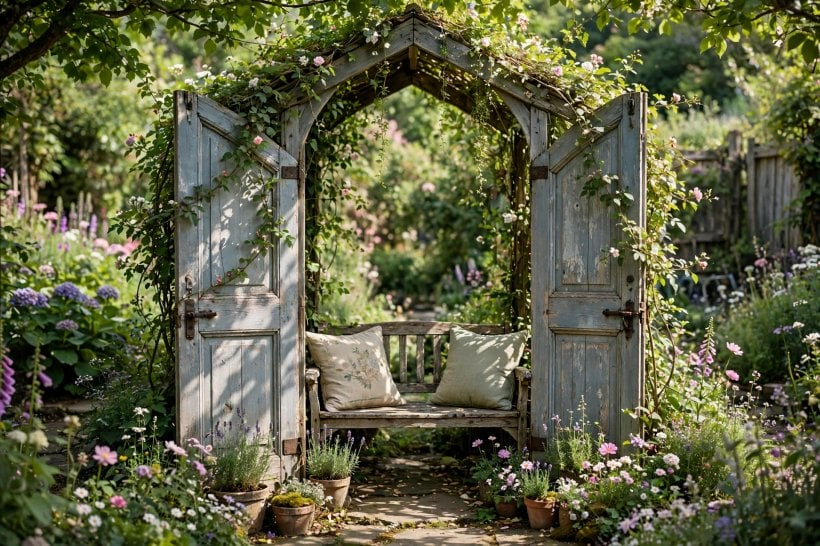
Every garden has a view it would rather hide: bins, a compost corner, a neighbour’s window or the working clutter behind a shed. A door, or a pair of doors hinged together in a shallow zigzag, screens the eyesore without building work. The height that makes a door awkward indoors is exactly what you want here, and because a door is a finished object rather than a raw panel, the screen reads as part of the garden from the day it goes in.
Anchor screens properly. A freestanding door catches wind like a sail, so fix it to posts, a wall or a heavy planter, and never rely on its own weight alone. Two doors hinged in a V are steadier and create a natural nook for a bench and a couple of pots, giving even a tiny plot a private corner for morning coffee. Plant a climber at the base and within a season the screen softens into the planting. The same instinct for carving useful rooms out of small spaces drives the layouts in our tiny house plans and layouts guide.
6. Backdrops for Seating and Dining Areas
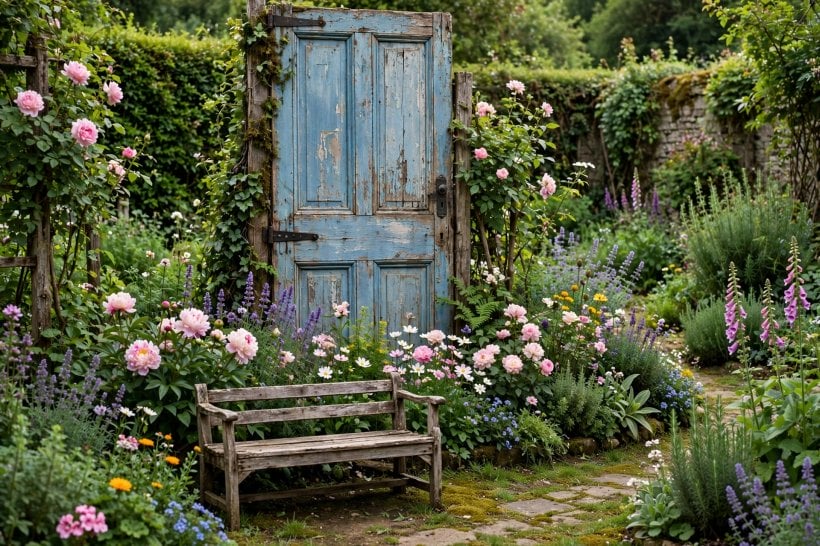
A door makes a superb backdrop behind a bench, a bistro set or an outdoor dining table. It gives a seating area a sense of place, the way a fireplace wall anchors a sitting room, and it photographs beautifully, which is why salvaged doors appear behind so many garden weddings and summer parties. Hang a wreath on it, string festoon lights across the top, or fix a row of small shelves for candles and glasses.
Position matters more than decoration. Place the door where the evening sun falls across it if the seating is used at the end of the day, and angle it to block the least attractive view rather than the best one. A pale, limewashed finish reflects light and keeps the corner feeling airy, while a dark door behind pale furniture gives a smart, deliberate contrast. Lean-to arrangements against a wall are the simplest and safest; secure the top with a discreet bracket so the door can never topple, especially where children play.
7. Fences and Boundary Panels
Doors joined edge to edge make a fence with more personality than any off-the-shelf panel. The run never looks uniform, and that is the charm: different heights can be trimmed level along the top, panel mouldings create rhythm, and a mix of colours, or one colour across them all, sets the tone. It is a particularly good answer for a short boundary, an allotment edge or the side of a front garden where a plain fence would look mean.
Build it like a fence, not like furniture. Set proper posts at intervals, screw the doors to a horizontal rail rather than to each other alone, and cap the top edge if you can, because the top of a door drinks rain. Keep the bottom edges a few centimetres clear of the soil on a gravel board or a line of bricks. Boundaries are structural work, and the carpentry habits involved are the same ones covered in our guide to framing a tiny house on a trailer: measure twice, fix square, and never trust a single screw where a bolt belongs.
8. Planters, Cold Frames and Raised Bed Surrounds
A door also works lying down in the productive garden. Cut into sections, it makes deep, handsome surrounds for raised beds, with the panels giving the bed a finished face. A glazed door laid across a low frame becomes a cold frame lid, letting light reach seedlings while keeping off frost and heavy rain, and it lifts off easily for watering. Even uncut, a door laid as a base under a group of pots keeps them level and off the mud through winter.
Timber in contact with soil lives the hardest life, so choose your least precious doors for these jobs and accept that they are semi-sacrificial. Raise bed surrounds on bricks at the corners, line the inside faces with membrane so wet compost is not pressed against the wood, and use doors that are solid rather than hollow-cored, which swell and fall apart quickly outdoors. Treat these projects as the testing ground: a door that survives two winters as a cold frame lid has earned a more prominent place in the garden.
9. Preparing a Door for Outdoor Life
Preparation decides whether any of these projects last. Start by stripping the hardware: hinges, handles, locks and letterboxes all come off, and the recesses they leave get filled or left as honest scars, depending on the look you want. Wash the door down, let it dry fully, then deal with the surface. Flaking paint must be sanded back to something sound, splits can be filled with exterior filler, and any soft, crumbly patches signal rot that should be cut back to firm wood or treated with a hardener.
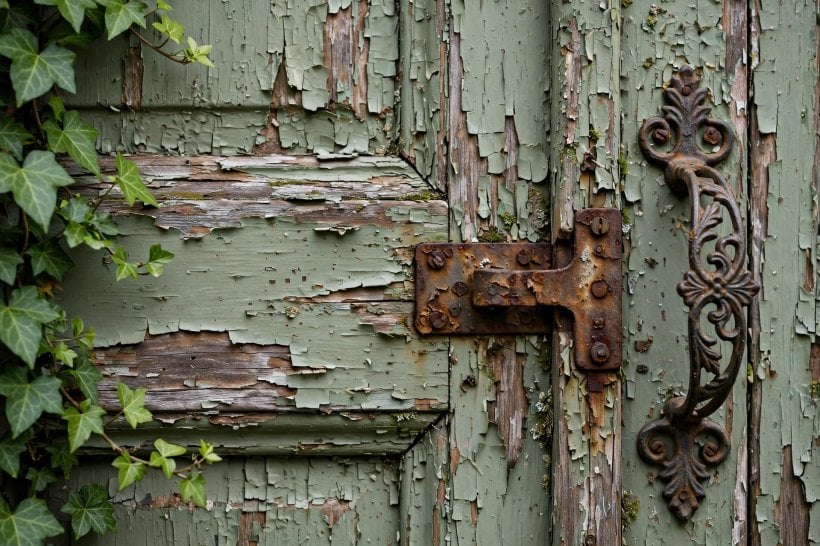
Then seal it as if the weather means harm, because it does. Coat every face, and be most generous on the end grain at the top and especially the bottom, where water soaks in fastest. Exterior paint, a quality wood stain or a clear outdoor oil all work; what matters is completeness and renewal, since a finish renewed each spring quietly outlasts a neglected premium product. Old doors may carry old paint, so sand with a mask and treat dust with respect, particularly on pre-war doors. Good preparation is invisible in the finished garden, but it is the whole reason these old door ideas still look charming three winters later instead of collapsing into the border.
10. Where To Find Good Doors and What To Check
Salvage yards are the reliable source, with rows of doors sorted by size and style, but house clearances, renovation skips and online marketplaces often turn up better bargains. Whichever source you use, check the same things. Sight along the door for twist: a door that has warped badly will never hang or stand well. Press a screwdriver into the bottom corners and around the lock area; firm resistance is good, soft crumbling is not. Check that panelled doors have their mouldings intact and that glazed doors have sound putty, because repairs eat the saving you made.
Price follows rarity and condition rather than size alone. Plain modern doors are often free to collect, while period panelled doors in good order command real money at a yard. Factor in transport, because a door is an awkward load, and the cost of posts, hinges and finish before deciding a bargain is truly one. Finally, measure your space before you shop, and take the measurements with you. The perfect door is only perfect if it fits the gap, the gate posts or the bench frame you have in mind.
Final Considerations
A salvaged door asks for three things: sound timber, thorough preparation and fixings made for outdoor life. Give it those and it will serve as a gate, screen, bench or backdrop with more character than anything you could buy new for the same modest outlay. Start with one door and one corner of the garden, live with it for a season, and you will soon spot the next place a piece of honest, reclaimed timber belongs. Few garden improvements reward a small budget and a free weekend quite as generously.

0 Comments