

Siding gets the glory, but trim does the heavy lifting. Corner boards, window surrounds and fascia stand first in line against water, sun and rain — and on a tiny house they flex, vibrate and bake through every mile. For decades the frame around those openings was wood. Now cellular PVC wants the job. This guide weighs both, board by board, so the frame you choose is the one your climate and colour demand.
1. Exterior Trim Materials at a Glance
Every window, door and corner on a tiny house is edged with trim, and exterior trim materials divide into two families with opposite instincts. Cellular PVC — an extruded plastic with no organic fiber in it — looks and cuts exactly like wood, yet cannot rot, will not absorb water and never needs its paint rescued from moisture cycling. Solid wood — cedar, redwood, cypress or pine — is the traditional frame: paintable any colour, stainable to a natural finish and stiffer in the cold, but it moves moisture and asks for maintenance in return. The table below puts the two side by side.
| Attribute | Detail |
|---|---|
| The Job | Corner boards, window surrounds and fascia — the first line of defense against water intrusion |
| The Contenders | Cellular PVC (Azek, Veranda) against solid wood (Cedar, Redwood, Cypress, Pine) |
| The Make-Up | PVC is an extruded plastic with no organic fiber; wood is natural, organic timber |
| Rot | PVC is 100% rot proof; even Cedar eventually rots where water is trapped |
| Water | PVC absorbs nothing; unprimed wood drinks moisture and blisters its paint |
| Movement | PVC expands and contracts far more than wood as temperatures change |
| Colour | Wood takes any colour, even jet black; PVC is limited on dark colours |
| Cold | Wood stays rigid and impact-resistant; PVC can turn brittle below freezing |
| Cost | Clear, knot-free Cedar now often costs more than PVC trim |
| The Verdict | PVC for white, zero-maintenance, wet-climate builds; wood for dark or stained finishes |
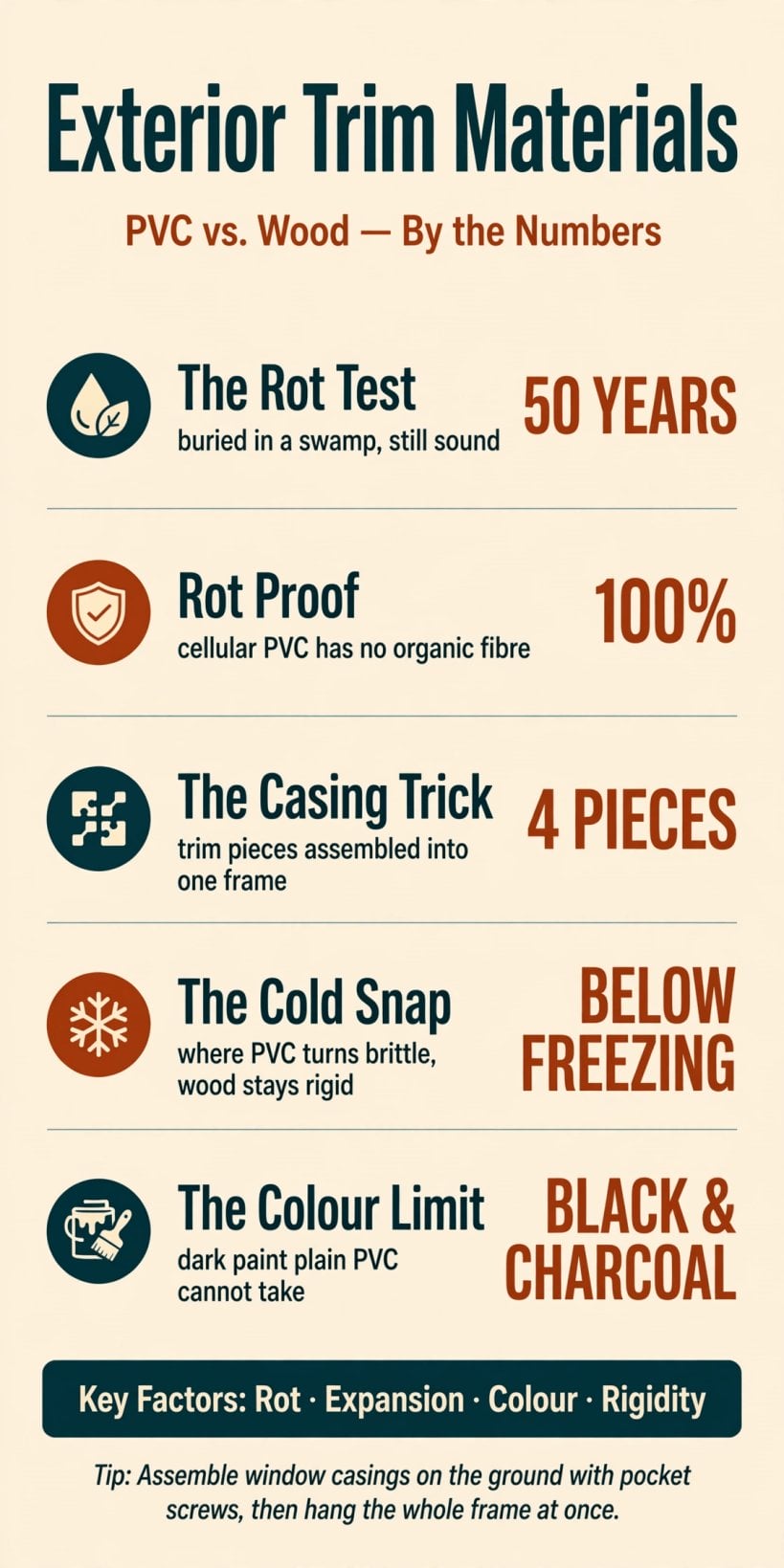
Cellular PVC against solid wood, by the numbers: fifty years in a swamp, four pieces in a casing, and the colours each material can wear.
2. The Trim’s Job: First Line of Defense
Start with what trim actually is, because the word undersells the work. Trim is the frame around everything: the corner boards where two walls meet, the surrounds that edge every window, and the fascia that caps the roofline. Siding covers the field of the wall, but trim covers the seams — and seams are where water gets in. The hierarchy is blunt: siding gets all the glory, but trim does the heavy lifting, standing as the first line of defense against water intrusion while taking the brunt of the sun and rain.
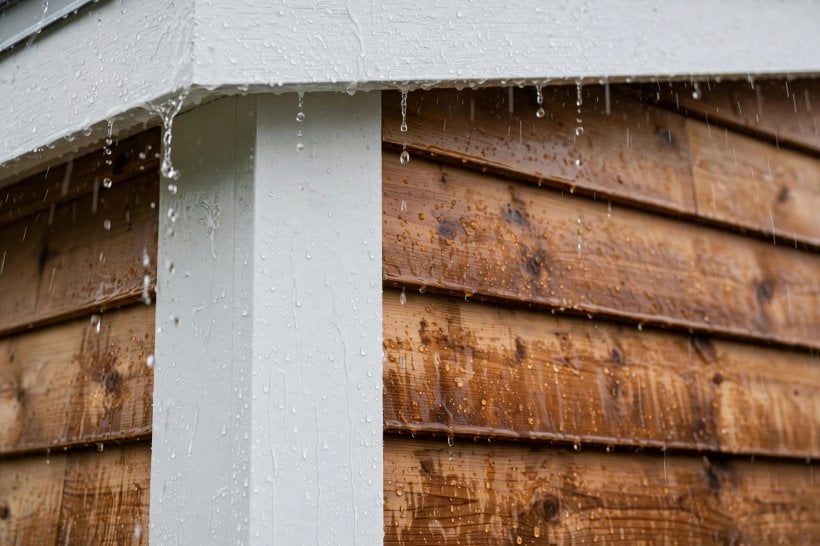
That exposure is why material choice matters here more than almost anywhere else on the house. A siding board lives a sheltered life by comparison — flat, vertical, shedding water down its face. A corner board catches weather from two directions at once. A window surround sits where driven rain probes for gaps. The fascia works directly under the roof edge, in the same firing line managed by eaves and overhangs for tiny homes. And on a tiny house on wheels, add vibration and flexing to the assault: every joint in that frame is worked, mile after mile, in a way a stationary house never experiences. Trim also works as part of a system rather than alone. Behind it, drainage planes and ventilated cavities — the assemblies detailed in a rain screen installation — decide what happens to water that does get past. But trim is the layer that meets the weather first — choose it for the exposure it actually faces.
3. Two Contenders for the Frame
For decades, the contest did not exist. Wood — Cedar or Pine — was the king of trim, the default frame for every corner and opening, chosen because there was nothing else to choose. That reign is what the modern tiny house movement changed: cellular PVC, a plastic, has become a top contender, and the choice between the two is now a real decision on almost every build.
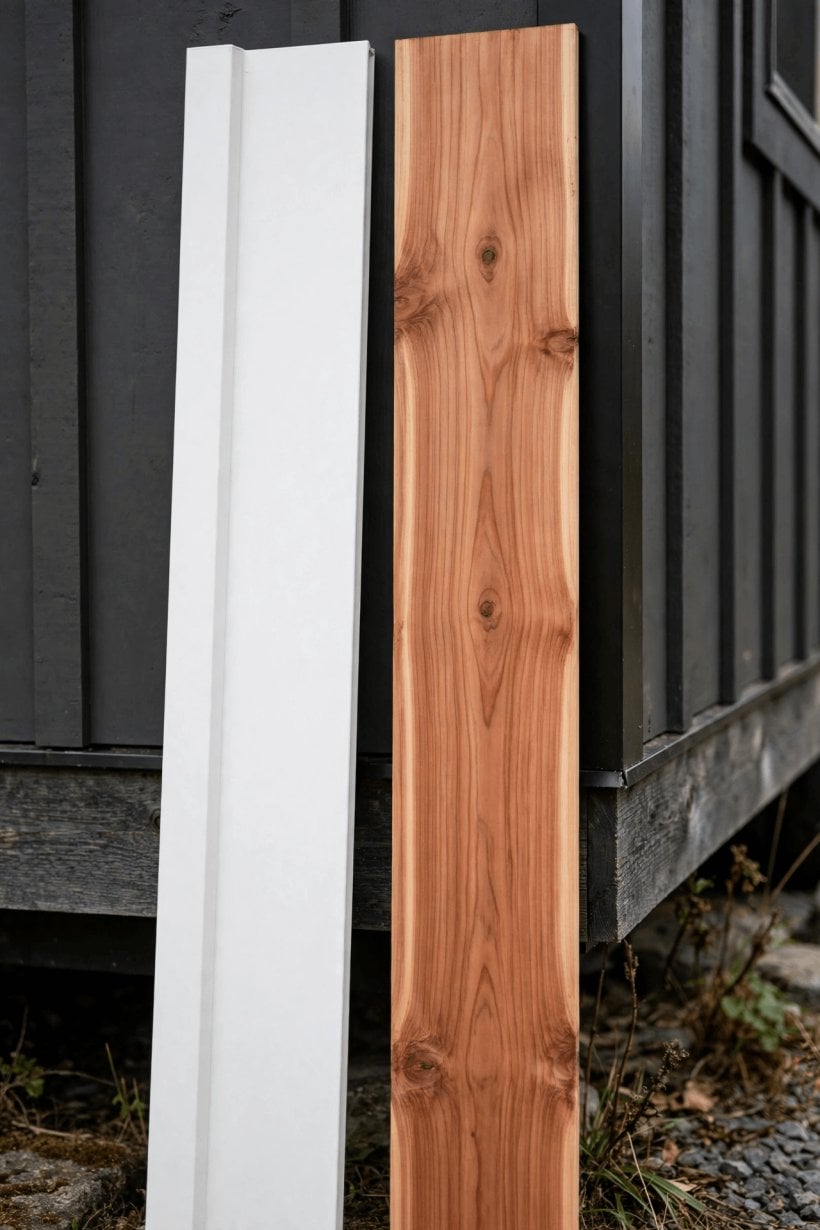
Cellular PVC is an extruded plastic that looks and cuts exactly like wood. Saw it, nail it, shape it — the working behaviour is familiar, and brands such as Azek and Veranda have made it an ordinary, stocked material. The difference is invisible and total: there is no organic fiber in it. Everything PVC does well, and everything it does badly, follows from that single fact — a board with nothing organic in it has nothing in it that can rot, and nothing in it that behaves like timber either. Solid wood answers with the species builders have always reached for: rot-resistant Western Red Cedar or Cypress, Redwood in the same family, Pine as the traditional standby. Wood brings grain, stiffness and a surface that takes any finish a builder can imagine. It also brings biology: fibres that drink water, move with moisture and eventually decay if water is allowed to sit against them. Neither is the upgrade of the other: they are two answers to the same exposure — one engineered, one grown — scored below on rot, water, movement, colour, cold and cost.
4. Cellular PVC: Rot Proof and Waterproof
PVC’s case begins with the claim no wood can match: it is 100% rot proof. The claim comes as a dare — you could bury PVC trim in a swamp for 50 years, and it wouldn’t degrade. That is the no-organic-fiber fact stated as a guarantee. Rot is a biological process that feeds on organic material; a board with none in it offers the process nothing to eat, whatever the climate and however long the trim sits wet.
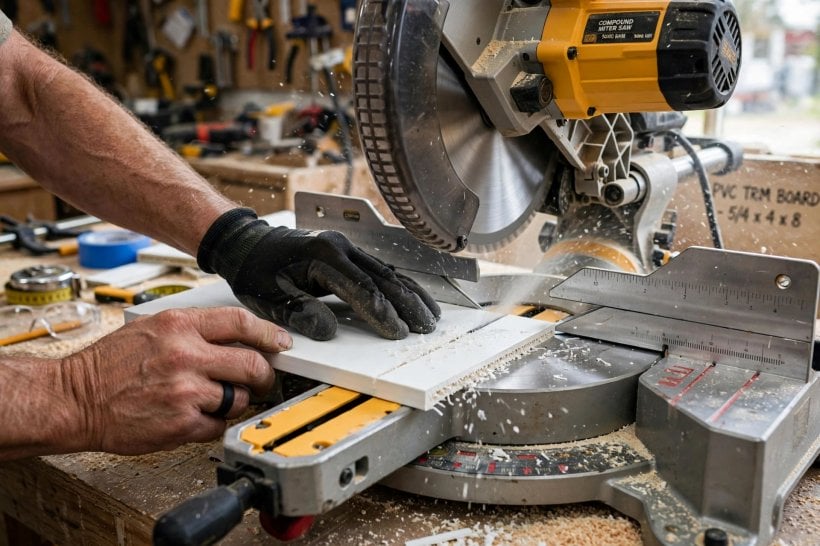
The consistency is the second strength. Every board is perfect: no knots, and no warping — it doesn’t cup, twist, or split like wood does. A builder ordering PVC knows exactly what will arrive, board after board, with no culling of twisted stock and no knot waiting to show through the paint. On a small house, where every corner board is prominent, that uniformity is visible in the finished frame. Third, it is waterproof in the way that matters to paint. PVC doesn’t absorb water, so paint doesn’t peel due to moisture cycling from the inside out — the failure that stalks wood trim, where water enters the board and pushes the coating off from behind, simply has no mechanism here. The board’s moisture content never changes, so the finish on its face is never undermined by the board beneath it. For a tiny house that might face varying climates, that is huge peace of mind. The weaknesses are real too, but they are not about water. They are about heat.
5. PVC’s Weakness: Thermal Expansion and Buckling
The big one is thermal expansion. PVC expands and contracts significantly with temperature changes, much more than wood. A board fixed at one length on a cool morning is a longer board by a hot afternoon, and a frame built from long runs of trim has to put that growth somewhere. Wood moves too, but on a different scale and mostly with moisture; PVC’s movement is thermal, daily and unavoidable.
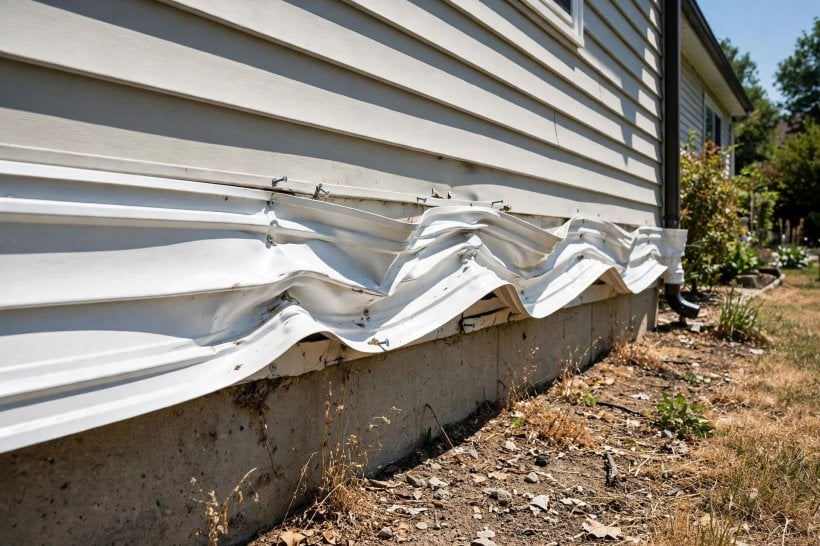
The fix is a discipline rather than a product. Joints must be glued with special PVC cement — the same idea as plumbing cement — so each joint moves as one piece instead of opening. And expansion gaps must be left at the ends of long runs, giving every board somewhere to grow into. Skip either step and the board makes its own room: if you nail it too tight without room to move, it will buckle, waving along the wall in the heat. Fastening, in other words, is where PVC trim succeeds or fails. The material forgives water completely and movement not at all. Treat it exactly like wood — tight joints, hard nailing, no gaps — and the failure is built in on day one. A builder who cements the joints and respects the gaps gets the rot-proof frame the brochure promised.
6. Solid Wood: Any Colour, Real Grain
Wood’s first strength is freedom of finish. You can paint wood any color you want — jet black, bright red, or clear coat — because wood handles heat absorption much better than plastic. There is no colour ceiling on a wooden frame: the darkest, most heat-hungry finish on the palette is available, and the board beneath it tolerates the temperature that comes with it.
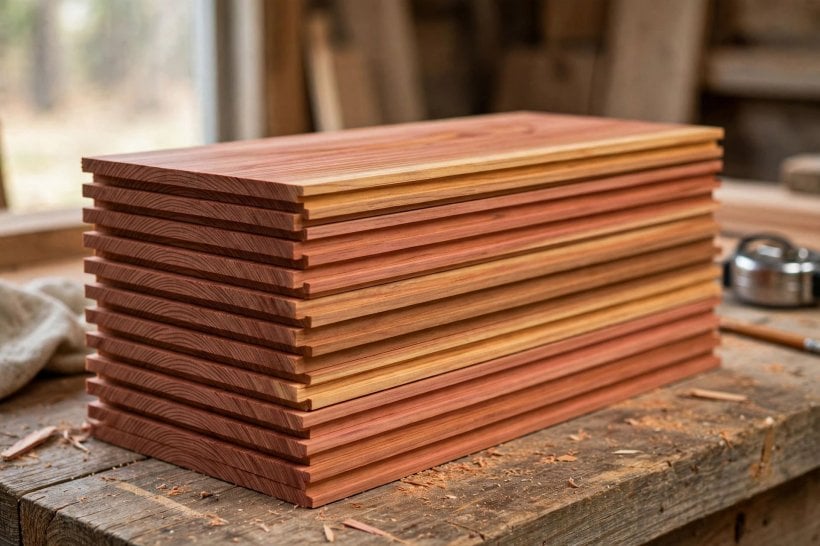
The second strength is one PVC cannot answer at all: you cannot stain PVC. Stain belongs to real grain — a finish that lives in the wood’s own figure rather than sitting on top of it. If you want the natural, rustic tiny house look, you must use real wood. A build whose whole aesthetic is cedar tones and visible grain is not choosing between two trim materials; only one of them can produce the look at all. Third, rigidity. Wood is structurally stiffer than PVC, and it creates a more solid corner board — the piece of trim most likely to take knocks, ladder feet and loading bumps. That stiffness matters most in the cold: wood resists impact better in very cold weather, in exactly the temperatures where PVC can get brittle below freezing. A corner board is armour as well as edging, and wood is the harder armour. Beneath all three strengths sits the material itself: a natural board, in species selected over generations for outdoor work. Where PVC carries an applied wood-grain texture that still looks a bit synthetic up close, wood simply is the texture.
7. Wood on the Wall: Back-Priming and the Maintenance Ledger
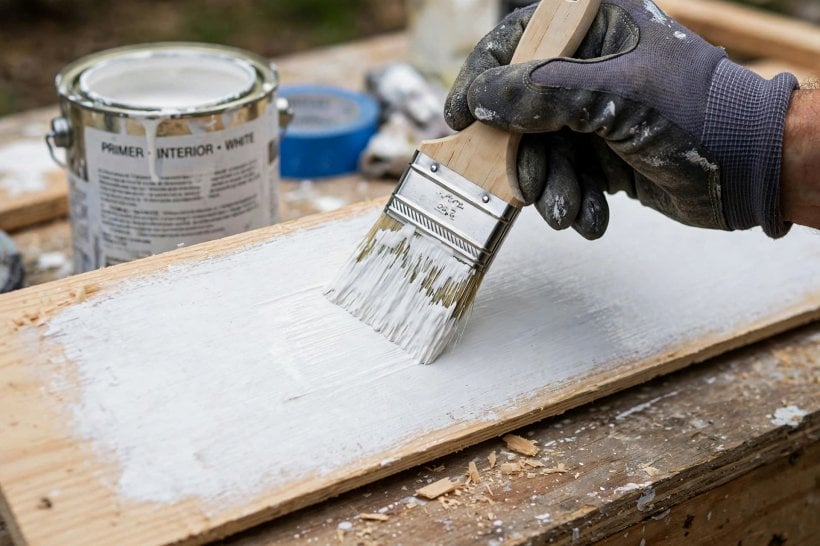
Wood’s weaknesses all flow from one sentence: wood moves moisture. A board absorbs water, releases it, and swells and dries with the seasons — and the finish on its face lives or dies by how that moisture is managed. The critical step happens before the board ever reaches the wall: back-priming, painting the back side before installation. Skip it, and the unprotected back drinks water from the wall cavity; the board absorbs it, and the paint on the front blisters and peels. The failure looks like a paint problem. It is a preparation problem, committed on the hidden face.
Rot is the second entry in the ledger. Even Cedar — the rot-resistant benchmark — will eventually rot if it touches the ground or if water gets trapped behind it. The species buys time, not immunity, and detailing decides how much time: trim held off the soil, water given a way out rather than a pocket to sit in. The maintenance reality is the mirror of the siding reckoning in paint vs. stain for exterior wood — the finish schedule and the material beneath it are one decision, not two. Third, cost, and here the modern market surprises. High-quality, knot-free (clear) Cedar is now often more expensive than PVC trim. The flawless board that PVC guarantees by manufacture, wood supplies only from the clearest part of the log, and it is priced accordingly. Wood’s traditional role as the budget default has quietly inverted at the top of the quality range: the natural frame can be the premium one.
8. The Verdict: Match the Material to the Build
The verdict is a matching exercise rather than a crown. Choose PVC if you are painting your trim White or Off-White — the colours where its dark-paint limitation never bites — and the rot-proof frame is yours. Choose PVC if you want a “Zero Maintenance” exterior, a frame you install and then stop thinking about. And choose PVC if you are building in a wet/humid climate — the Pacific Northwest, Florida — where trim lives wet for months and wood’s moisture movement is punished hardest. In those conditions the board with no organic fiber is not a compromise; it is the specialist.
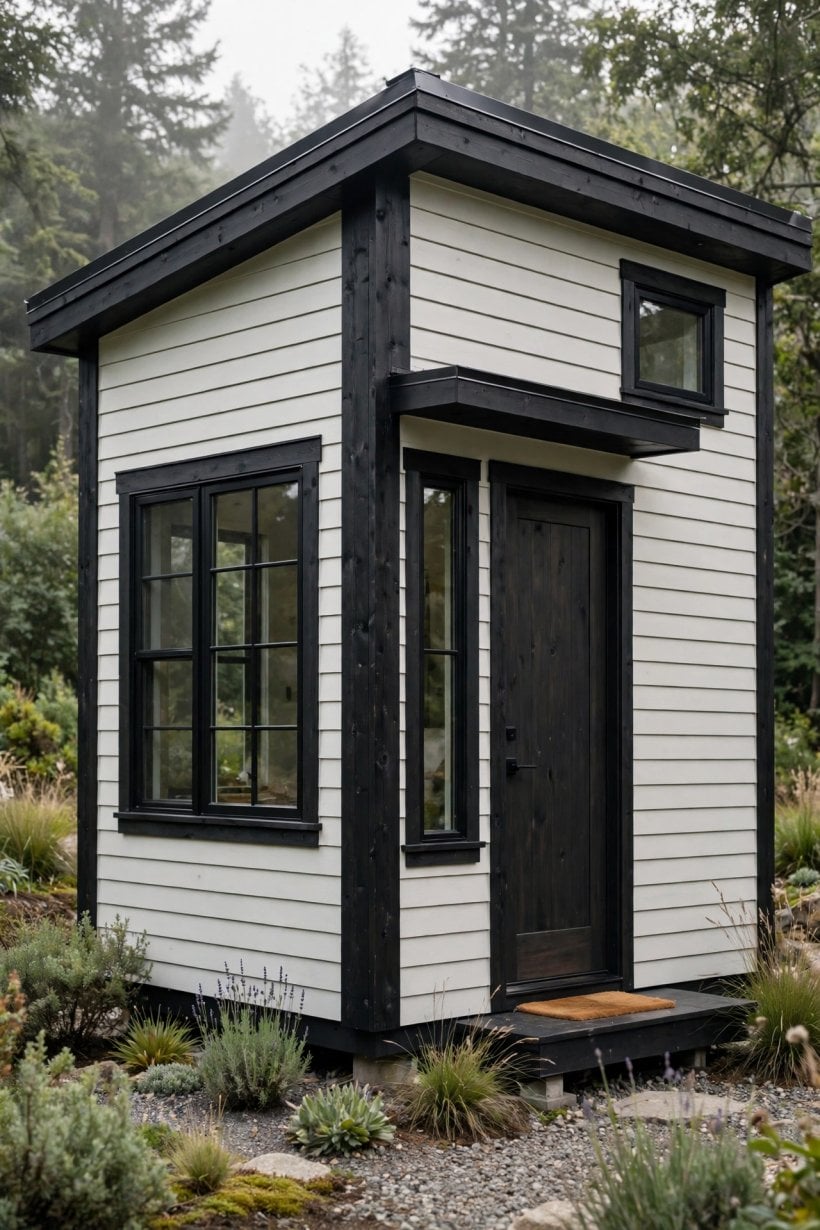
Choose wood if your design runs the other way. Choose wood if you want dark black/charcoal trim — very popular on modern tiny homes, and the one look standard PVC cannot safely wear; the black-trimmed house in corrugated metal siding is a wood-trim build by necessity. Choose wood if you want a natural stained wood look, the finish only real grain can carry. And choose wood if you are sensitive to the use of plastics/chemicals in your build — a values decision, listed plainly and a legitimate one. The pattern is simple: PVC wins where the build is pale, wet and hands-off; wood wins where it is dark, natural or plastic-free.
9. The Pocket-Hole Trick: Casings That Survive the Highway
Whichever material wins, one installation tip applies to both, and it exists because of the highway. Assemble your window casings — the 4 pieces of trim around a window — on the ground using pocket screws, with a Kreg jig. Then install the entire square frame onto the wall at once. The logic is about corners. A casing fixed together piece by piece on the wall is four boards and four joints, each aligned in place, each only as tight as a ladder-top assembly can make it. A casing built flat on the ground is a single rigid square before it ever meets the house: the pocket screws pull each corner closed from inside the joint, the frame can be checked for square on a flat surface, and the wall receives one true unit instead of four hopeful ones.
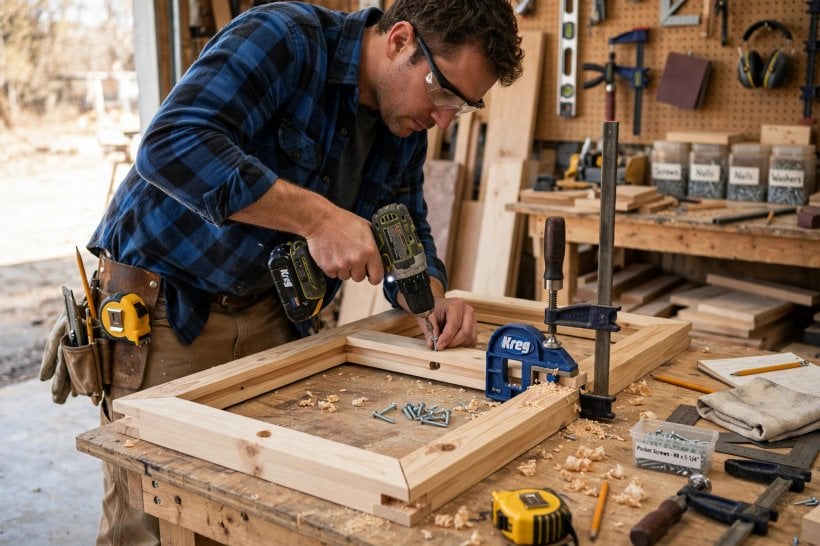
The payoff arrives in transit. This ensures tight corners that won’t open up as the tiny house vibrates down the highway — the joints were closed by screws under tension, and the whole frame moves as one piece rather than working at four seams. The same thinking governs the wall behind the trim, where the air and water barrier — the contest judged in the Tyvek vs. ZIP System comparison — also has to survive being a vehicle. On a house that travels, assemblies beat accumulations: build the frame, then hang the frame.
10. Corners, Fascia and the Frame as a System
A last pass over the whole frame, because trim is bought by the piece but works as a system. The corner boards take weather from two faces and knocks from the world; they are where rigidity — wood’s cold-weather stiffness, PVC’s uniform perfection — is tested first. The window surrounds take the driven rain and the casing trick’s discipline. The fascia caps the roofline, where the roof covering hands its water to the wall — the same edge where cedar shakes on a tiny house meet their trim. Different pieces, one exposure logic: everything at an edge or an opening works harder than everything in the field of the wall.
That is why the material decision should be made once, for the whole frame: expansion gaps are a run-level discipline, back-priming a board-level habit, maintenance a calendar, not an event. A frame in one material behaves, ages and is repaired predictably. And the frame outlasts fashions. Siding is debated and renewed — the territory of the Hardie vs. LP SmartSide siding showdown — but the corner boards and casings underneath tend to stay: the skeleton of the house’s face. The builders who chose well chose for the exposure: water first, sun second, movement always. Get the frame right, and everything hung on it — siding, finish, windows — gets an easier life.
Final Considerations
Trim is where a tiny house shows its judgement. The choice is genuinely binary and genuinely conditional: cellular PVC offers a frame that cannot rot, does not drink water and arrives flawless — at the price of thermal movement that must be cemented and gapped, dark colours it cannot wear, and a synthetic hint up close. Solid wood offers any colour including jet black, a stainable natural grain and a stiffer, harder corner — at the price of back-priming, moisture discipline, and clear cedar that now costs more than the plastic. Neither price is a reason to refuse either material; together they are simply the specification. White trim, a wet climate and a zero-maintenance brief point one way. Black trim, a stained finish and a plastic-free build point the other. And whichever way the choice falls, the pocket-hole casing trick travels with it — because the frame’s last enemy is not weather at all, but the road. Choose by colour, climate and conscience, build the casings as frames, and the trim will do the heavy lifting it has always done: quietly, at every edge, for as long as the house rolls.

0 Comments